The Brooklyn Bridge Opening
New York City, USA
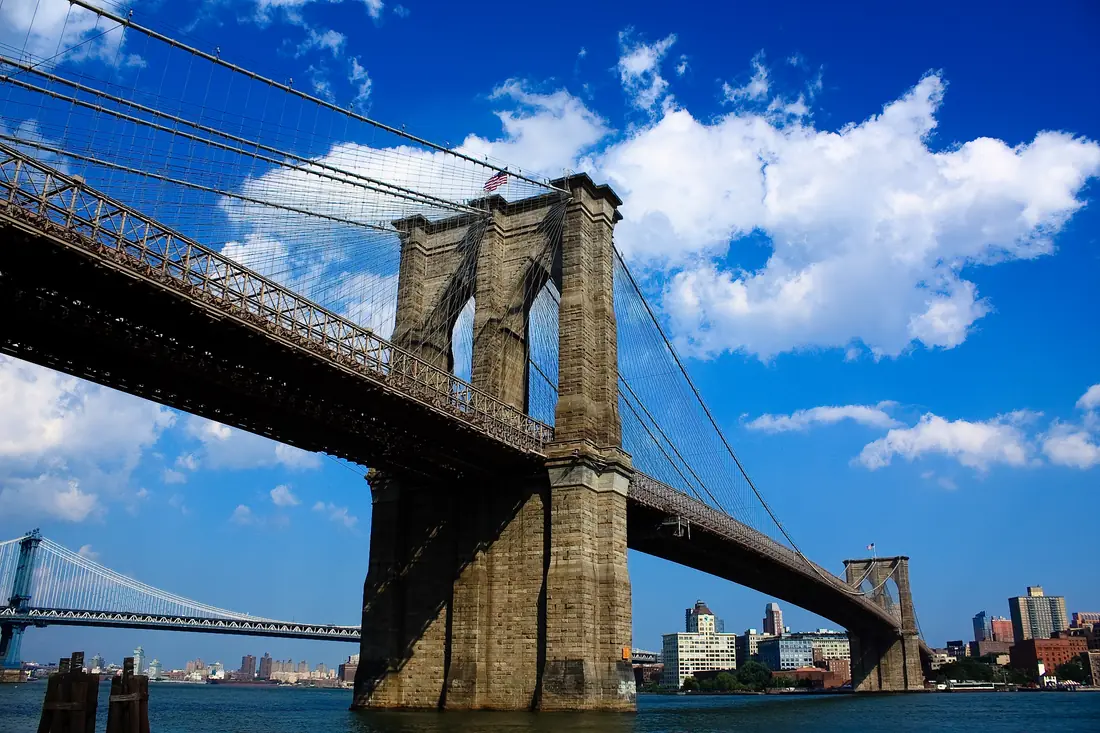
As the sun rises over the East River on May 24, 1883, a sense of excitement and trepidation fills the air. After 14 long years of construction, the Brooklyn Bridge is finally opening to traffic, connecting the bustling cities of Brooklyn and New York. The brainchild of John Augustus Roebling, a German-American civil engineer, the bridge is an engineering marvel, spanning 1,595.5 feet and standing 133 feet above the water. It's a chilly spring morning, but the atmosphere is electric, with thousands of people gathered to witness the historic moment.
The situation before the bridge's construction was one of chaos and disconnection. The East River, which separates Brooklyn and New York, was a major obstacle, with ferry services being the only means of crossing. This led to congestion, delays, and accidents, hindering the growth and development of both cities. The need for a bridge was pressing, and Roebling's design, which used a hybrid cable-stayed/suspension design, was the solution. However, the construction process was plagued by setbacks, including the death of Roebling himself in 1869, who died of tetanus after his foot was crushed in an accident.
The construction of the bridge was a monumental task, requiring over 600 workers, who toiled for 14 years to complete the project. The bridge's towers, which were the tallest structures in the Western Hemisphere at the time, were built using over 25,000 tons of steel and 14,000 cubic yards of stone. The cables, which were spun on-site, were made up of over 14,000 individual wires, each with a diameter of 0.192 inches. The human side of the story is equally fascinating, with Roebling's son, Washington, taking over the project after his father's death. Washington faced numerous challenges, including a debilitating illness that left him bedridden for several years.
As the bridge opens to traffic, it's clear that it's going to change the face of New York City forever. The first person to cross the bridge is Emily Warren Roebling, Washington's wife, who rides in a carriage, accompanied by the Mayor of Brooklyn and other dignitaries. Over 150,000 people cross the bridge on the first day, paying a toll of 3 cents to make the journey. The impact of the bridge is immediate, with trade and commerce between Brooklyn and New York increasing exponentially. The bridge also becomes a symbol of American ingenuity and progress, attracting visitors from all over the world.
In the years that follow, the Brooklyn Bridge becomes an integral part of New York City's infrastructure, with over 120,000 vehicles crossing it every day. The bridge also spawns a new generation of engineers and architects, who are inspired by its design and construction. The bridge's legacy extends beyond New York City, with it influencing the design of bridges all over the world. Today, the Brooklyn Bridge is one of the most iconic landmarks in the world, attracting millions of visitors every year. And yet, despite its importance, the bridge's maintenance and upkeep have been consistently underfunded, with a 2019 report revealing that it would take over $1.5 billion to repair the bridge's crumbling infrastructure, a staggering figure that raises questions about the true cost of progress.