Daily History
Politics & state

Ich bin ein Berliner speech

West Berlin, Germany
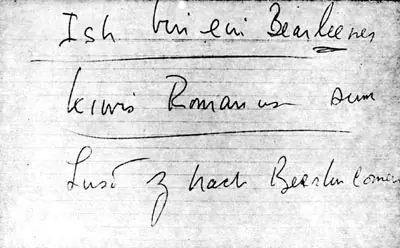
Ich bin ein Berliner speech — West Berlin, Germany
Image: Wikimedia Commons · Public domain

As John F. Kennedy steps up to the microphone in front of the West Berlin city hall, a sea of faces stretches out before him, all eager to hear the words of the American president. It's 26 June 1963, and the crowd is electric with anticipation. The president clears his throat, a slight pause, and then begins to speak in his characteristic Boston accent, 'Two thousand years ago, the proudest boast was to say I am a citizen of Rome. Today, in the world of freedom, the proudest boast is to say Ich bin ein Berliner.'

The crowd erupts into cheers as Kennedy pronounces those now-famous words, a declaration of solidarity with the people of West Berlin, a city that has become a symbol of resistance against communist rule. Behind him, the imposing structure of the Berlin Wall stands as a harsh reminder of the divisions of the Cold War era. As he speaks, Kennedy's words are being translated into German and relayed to the crowd, ensuring that his message reaches every corner of this bustling city.

Kennedy's visit to West Berlin has been a masterstroke of diplomacy, a bold move to reassure the people of this besieged city that they have not been forgotten by the Western powers. Over 450,000 people have turned out to hear him speak, packing the streets and squares around the city hall. The atmosphere is tense but jubilant, a sense of hope and defiance that hangs in the air like the summer sunshine. As the president speaks, his words are punctuated by cheers and applause, the crowd hanging on his every word.
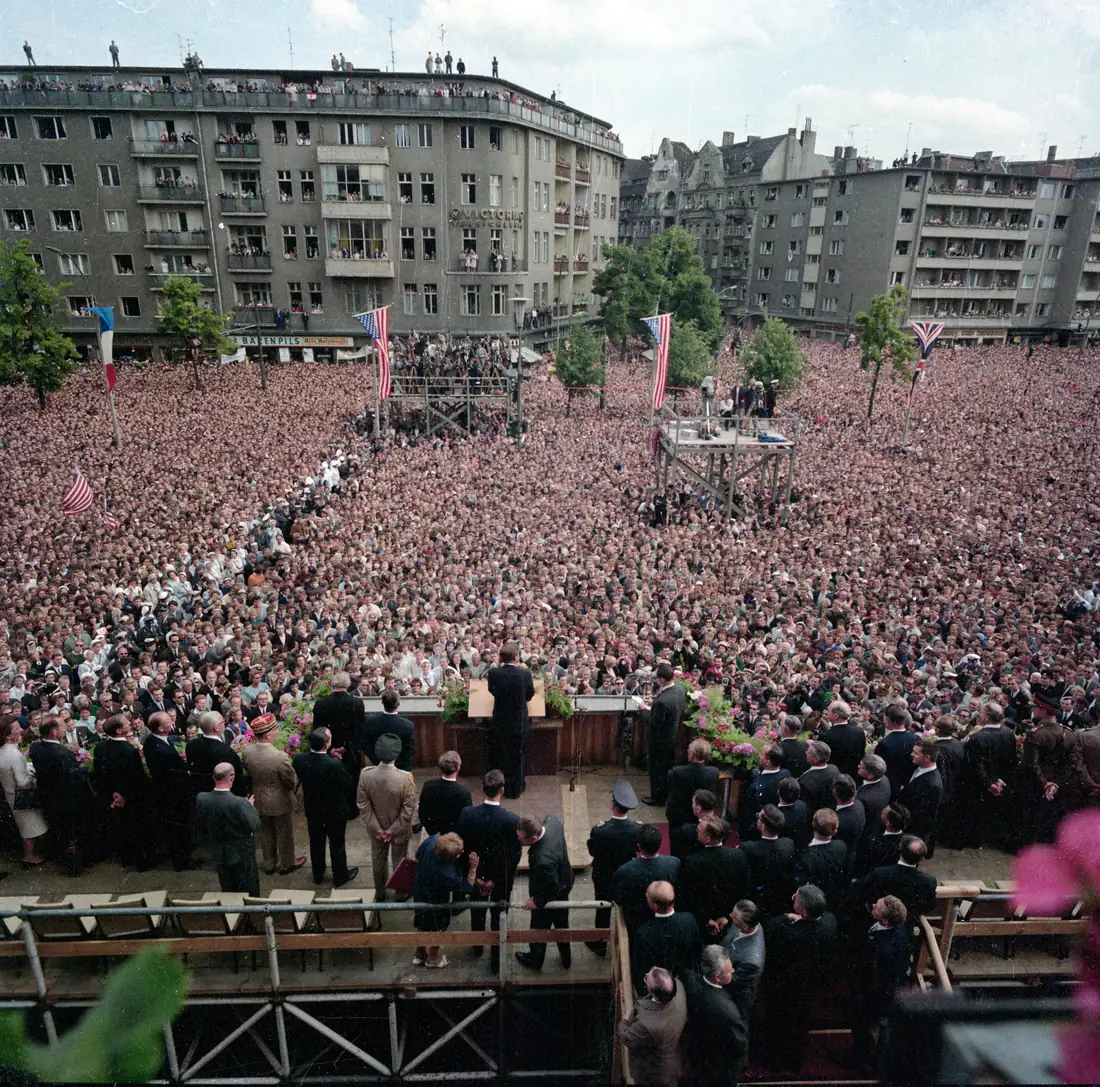
Ich bin ein Berliner speech — West Berlin, Germany
Image: Robert Knudsen, White House · Public domain

But what many in the crowd may not realize is that Kennedy's famous phrase, 'Ich bin ein Berliner,' has been the subject of some debate among his advisors. Some have warned that the phrase could be translated as 'I am a doughnut,' due to the word 'Berliner' being a type of German pastry. However, Kennedy's speechwriter, Theodore Sorensen, has assured him that the phrase will be understood in the context of the speech, and that the crowd will know exactly what he means. As it turns out, Sorensen is correct, and the crowd responds with thunderous applause to Kennedy's declaration.

As the president finishes speaking, the crowd surges forward, eager to catch a glimpse of the American leader. Kennedy smiles and waves, basking in the adoration of the crowd. It's a moment that will be etched in the memories of those present for years to come, a moment of triumph and defiance in the face of communist oppression. And yet, as the crowd begins to disperse, and the city returns to a sense of normality, a small group of people are already thinking about the consequences of Kennedy's words. For in a city divided by a wall, and a world divided by ideology, the ripple effects of this speech will be felt for a long time to come.
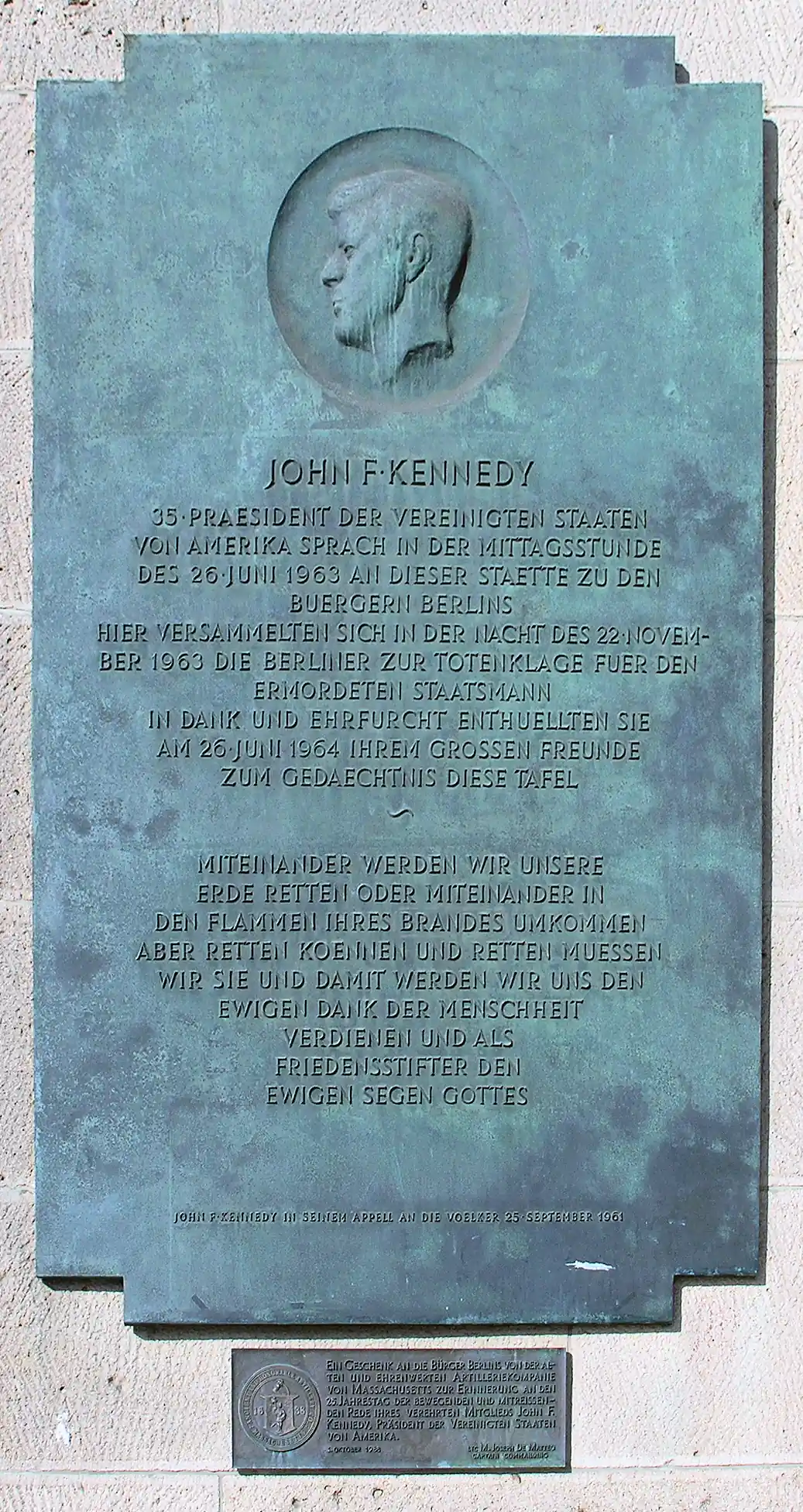
Ich bin ein Berliner speech — West Berlin, Germany
Image: OTFW, Berlin · CC BY-SA 3.0

In the days and weeks that follow, Kennedy's speech will be hailed as a masterpiece of diplomacy, a bold statement of American support for the people of West Berlin. But as the years go by, and the city becomes a focal point of Cold War tensions, the true significance of Kennedy's words will become clear. For in a city that has become a symbol of resistance, the phrase 'Ich bin ein Berliner' will become a rallying cry, a reminder of the power of words to inspire and to unite. And as the wall that divides the city eventually comes tumbling down, Kennedy's speech will be remembered as a moment of triumph, a moment when the power of words helped to bring down the barriers that had divided a city, and a world, for so long.
Source: en.wikipedia.org/wiki/Ich bin ein Berliner

Politics & state

Same-sex marriage ruling

Washington D.C., USA

Same-sex marriage ruling — Washington D.C., USA
Image: Elvert Barnes · CC BY-SA 2.0

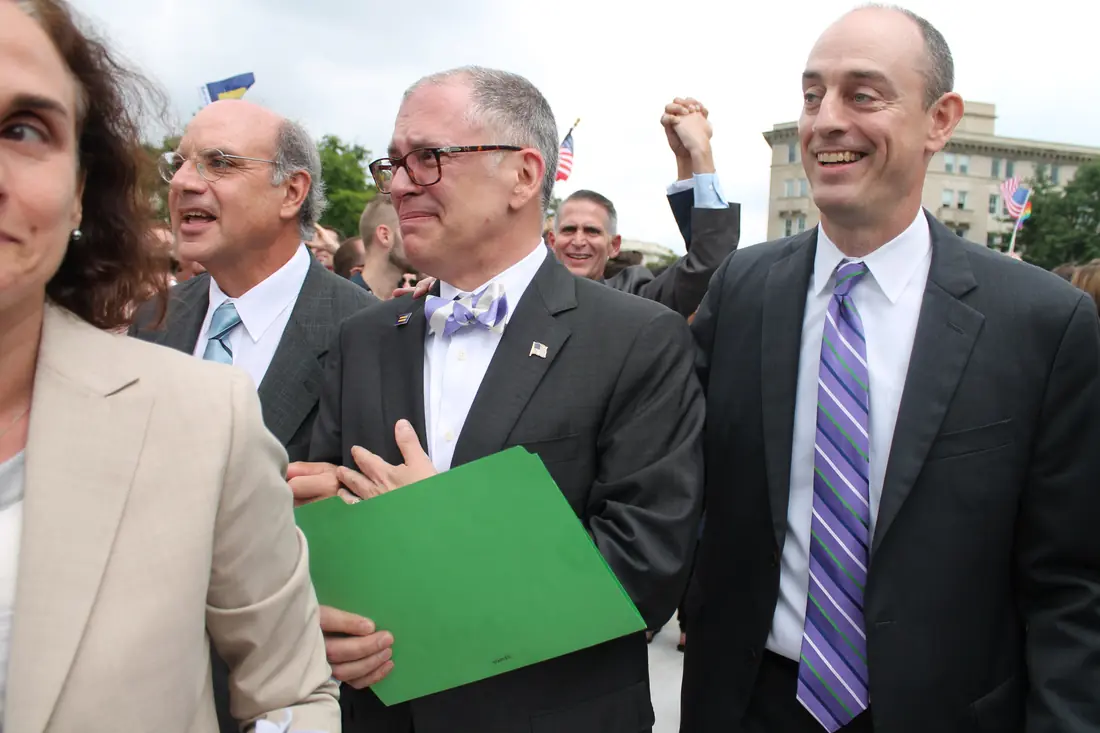
The air was electric on the steps of the U.S. Supreme Court as crowds of people waited anxiously for the ruling that would change the lives of millions of Americans. It was a sweltering summer morning in Washington D.C., the kind of day where the sun beats down on you like a relentless drumbeat, and the humidity makes every breath feel like a chore. But the people gathered outside the court didn't seem to notice, their eyes fixed on the doors, waiting for the decision that would determine the fate of same-sex marriage in the United States.

The case, known as Obergefell v. Hodges, had been building for years, a slow-burning fire that had been smoldering in the hearts of advocates for LGBTQ+ rights. It all started in 2004, when a man named John Arthur was diagnosed with ALS, a devastating disease that would eventually take his life. Arthur and his partner, James Obergefell, had been together for over 20 years, and they wanted to get married, but the state of Ohio refused to recognize their union. This sparked a chain reaction of events that would eventually lead to the Supreme Court, where the justices would have to decide whether the Constitution guaranteed the right to same-sex marriage.

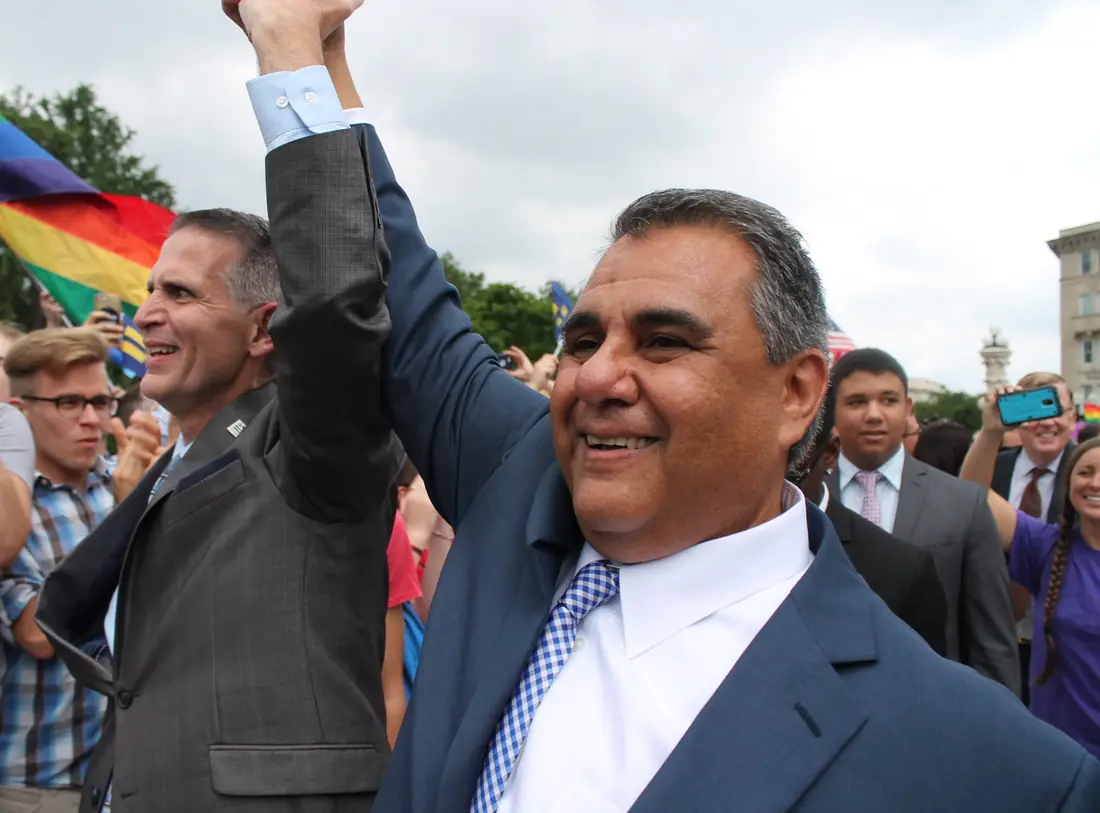
As the clock ticked closer to 10 am, the crowd grew more restless, their conversations hushed and urgent. They knew that the decision was about to be announced, and they were all holding their breath, waiting to see what the justices would say. And then, at 10 am sharp, the doors of the court burst open, and the news spilled out: the Supreme Court had ruled that same-sex marriage was a constitutional right, guaranteed by the 14th Amendment. The crowd erupted into cheers, tears streaming down their faces as they hugged each other, overwhelmed with emotion.

Same-sex marriage ruling — Washington D.C., USA
Image: Elvert Barnes · CC BY-SA 2.0

The justices had voted 5-4 in favor of the plaintiffs, with Justice Anthony Kennedy writing the majority opinion. Kennedy, a conservative justice with a reputation for being unpredictable, had been the swing vote in the case, and his opinion was a masterclass in constitutional law. He wrote that the Constitution's guarantee of equal protection under the law meant that states could not deny same-sex couples the right to marry, and that doing so would be a violation of their fundamental rights. As the news sank in, people began to realize the enormity of what had just happened: 132,000 same-sex couples who were already married would have their unions recognized by the federal government, and thousands more would be able to get married in the coming months.

One of the most surprising facts about the case is that it was almost derailed by a technicality. The plaintiffs had filed their lawsuit in the wrong court, and the defendants had argued that the case should be dismissed on procedural grounds. But the Supreme Court had decided to hear the case anyway, and the rest, as they say, is history. As the celebrations died down, and the crowds began to disperse, a sense of wonder settled over the city. It had taken decades of activism, advocacy, and perseverance, but finally, same-sex marriage was the law of the land. And as the sun began to set on Washington D.C., casting a golden glow over the city, it seemed like anything was possible.

Same-sex marriage ruling — Washington D.C., USA
Image: United States Court of Appeals for the Sixth Circuit · Public domain

The decision would go on to have far-reaching consequences, paving the way for greater acceptance and inclusivity of LGBTQ+ individuals in American society. And as the years went by, the case would be remembered as a landmark moment in the struggle for civil rights, a testament to the power of ordinary people to challenge the status quo and create change. But on that sweltering summer morning, as the crowds cheered and wept outside the Supreme Court, all that mattered was the present moment, and the knowledge that love had finally won out.

Source: en.wikipedia.org/wiki/Obergefell v. Hodges

Use the arrow keys to move between days

Browse the full archive →