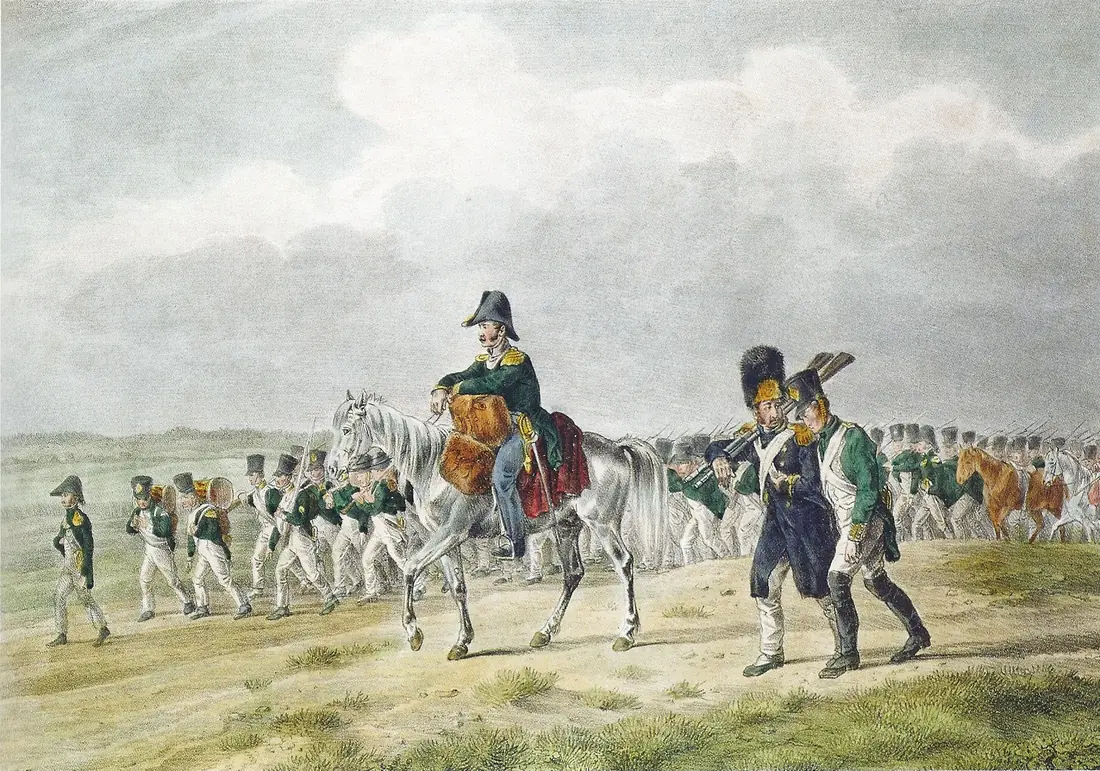
The Grande Armée reached Moscow on 14 September 1812 after a 1,300‑kilometre march from the Berezina. Of the roughly 600,000 men who entered Russia in June, about 100,000 were present at the Kremlin gates. Napoleon Bonaparte ordered the city occupied to force Tsar Alexander I into peace, believing that the loss of the Russian capital would break civilian resistance and secure supplies for his army.
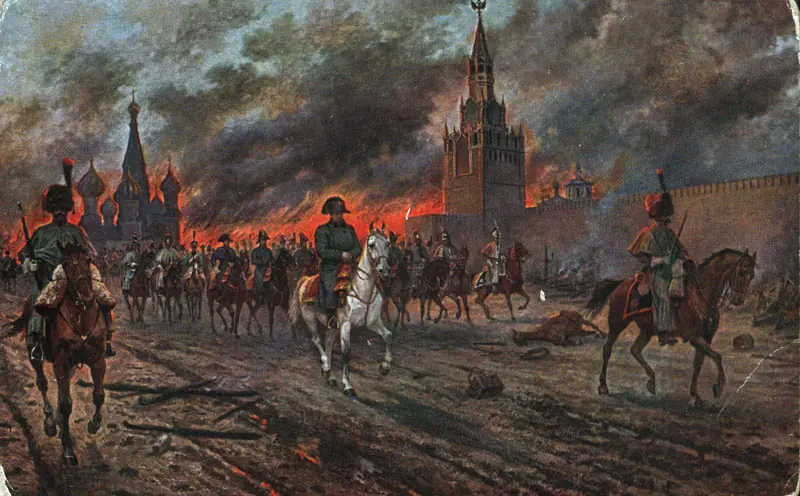
The French found Moscow largely empty; most residents had fled eastward on orders from Governor Fyodor Rostopchin. Rostopchin, a veteran of the 1805 campaign, had prepared incendiary stores and instructed his officials to ignite them if the enemy entered. On 15 September, after the French troops entered the Kremlin and set up headquarters in the Grand Kremlin Palace, fires broke out in the western districts. Contemporary reports attribute the blaze to the deliberate actions of Rostopchin’s men, although some historians note that stray cannon fire may have contributed.
The fire consumed an estimated 20,000 houses, including the historic Kitai‑Gorod market and the wooden mansions of the merchant class. Within three days, the flames had reduced the city's core to ash, leaving only stone churches and the Kremlin walls standing. French soldiers, expecting to find stored grain and fodder, instead faced a devastated supply base. Marshal Louis‑Nicolas Davout recorded that the French foraged only 5,000 kilograms of food in the whole city, far short of the daily requirement for a force of 100,000 men.
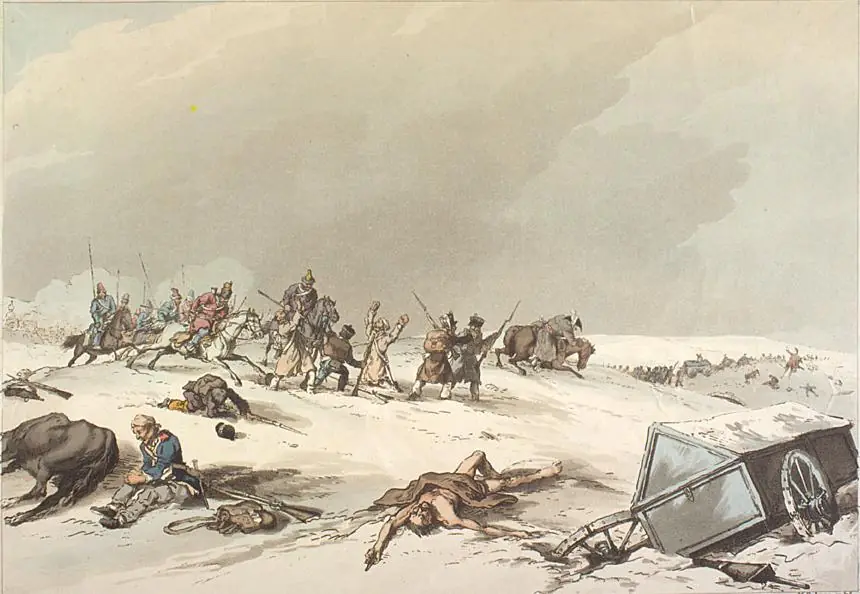
The loss of Moscow forced Napoleon to abandon his plan for a decisive peace treaty. He ordered a retreat on 19 October, beginning a winter withdrawal that exposed his army to cold, disease, and Russian attacks. By the end of the campaign, French casualties numbered about 380,000, including deaths from exposure and starvation. The Russian victory demonstrated that a large conventional army could be defeated without a single major battle, altering European strategic thinking about logistics and the limits of offensive warfare.
The burning of Moscow marked the first time a modern, multinational army was forced to retreat primarily because its logistical network collapsed under deliberate scorched‑earth tactics. Subsequent wars, from the Crimean conflict to the World Wars, incorporated systematic denial of resources as a core element of defensive strategy.
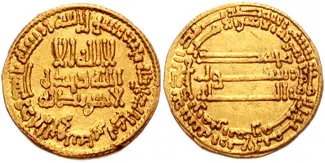
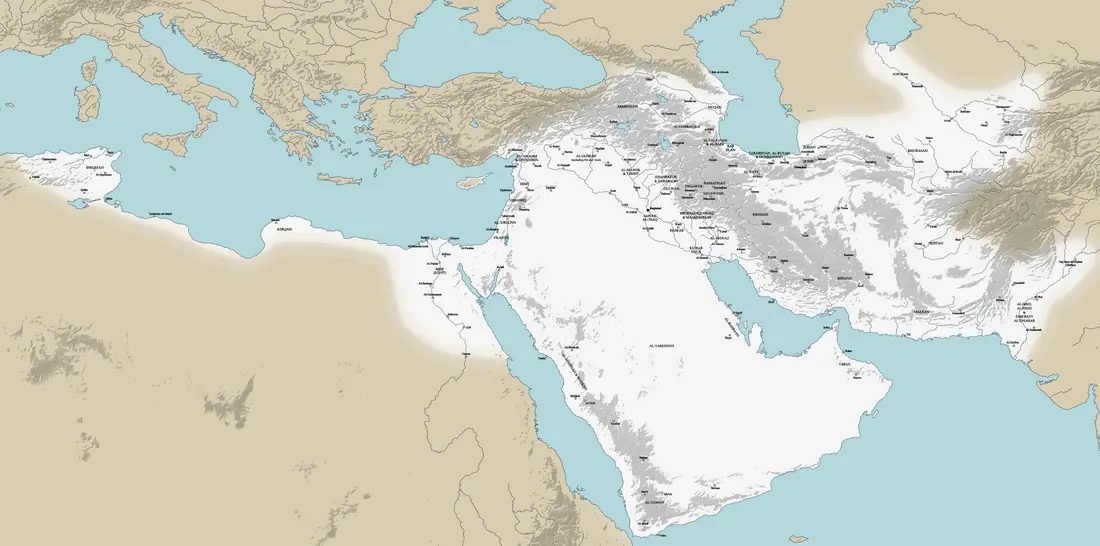
Before September 14, 786 the Abbasid Caliphate was ruled by al‑Mansur, who had ended the fourth Fitna and restored central authority after years of regional rebellions. His administration relied on a standing army of roughly 10,000 soldiers stationed in Baghdad and a bureaucracy that collected taxes from a realm extending from the Maghreb to Central Asia. The caliphate’s capital, founded in 762, functioned as the hub for fiscal records, the postal network, and the court that patronised scholars.
Al‑Mansur named his eldest son Harun as successor in a formal declaration known as a bayʿah, a public oath of allegiance that required the acceptance of key military commanders, the chief qadi, and senior officials of the diwans. The declaration was recorded on parchment and displayed in the palace courtyard, allowing the army’s commander‑in‑chief and the provincial governors to witness the transfer of authority. This process ensured that the new caliph inherited both the legal right to rule and the practical support of the state’s power structures.
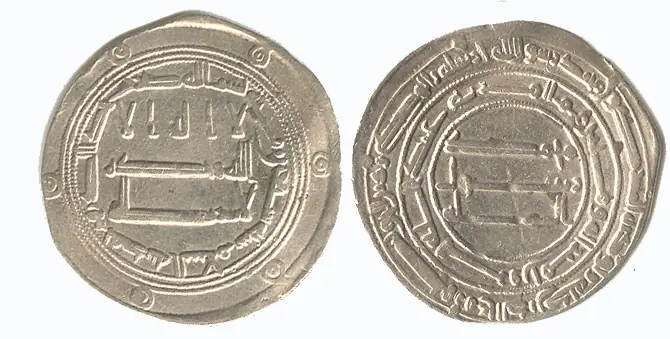
On the appointed day Harun al‑Rashid entered the throne room, received the oath from the assembled notables, and was proclaimed caliph before a crowd of approximately 2,000 court officials and soldiers. He immediately confirmed the existing tax assessment rates, which generated an annual revenue of about 30 million dinars, and ordered the continuation of the construction of the Great Mosque’s expansion. By retaining the fiscal policies of his father, Harun avoided any disruption to the supply lines that fed the army and the public works projects.
Harun’s accession also reinforced the Abbasid practice of appointing family members to govern distant provinces. He confirmed his brother al‑Hadi as governor of Khurasan, a region that contributed roughly 12 percent of the empire’s tax base. This appointment secured the frontier against the rising influence of the Tahirid dynasty and maintained the flow of tribute from Central Asian trade routes. The stability of the succession allowed the court to focus on cultural patronage; within a decade the House of Wisdom was founded, and scholars such as Al‑Kindi and Al‑Razi began receiving state support.
The immediate consequence of Harun al‑Rashid’s accession was the uninterrupted continuation of central administration, which enabled the Abbasid Caliphate to finance large‑scale building projects and to sponsor scientific translation programs. These programs later produced the astronomical tables and medical texts that defined the Islamic Golden Age.
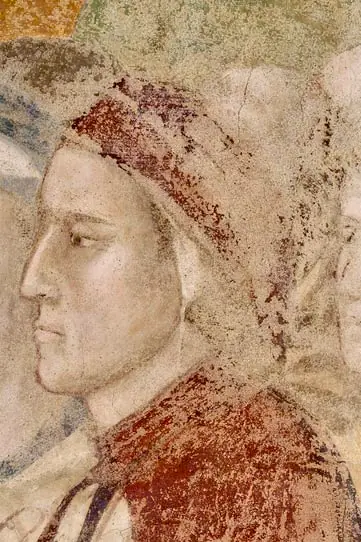
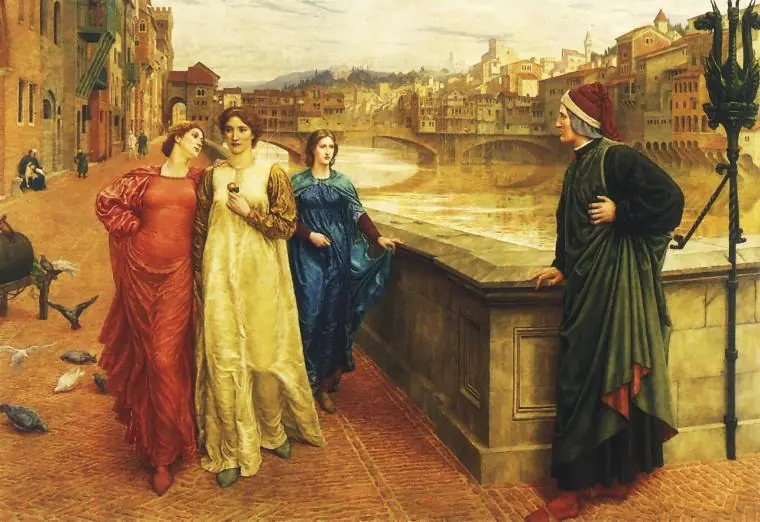
Dante Alighieri died in exile because he could not return to his native Florence after a political ban. In 1302 the Florentine government declared him an enemy of the city for supporting the White faction against the Black Guelphs. The banishment forced Dante to move first to Verona and then to Ravenna, where he spent the last years of his life.
While in Ravenna Dante completed the Divine Comedy, a three‑part poem that maps the medieval Christian afterlife. He finished the final canto, describing the vision of Paradise, in the months before his death. The poem circulated in manuscript form among a small circle of educated readers, but it was not printed until after his death.
Dante died on 14 September 1321 at the age of 56. Contemporary accounts record that he suffered a fever after a short illness. The exact cause of the fever is not recorded, and modern scholars can only speculate about possible infections common in the region. His body was interred in the church of San Francesco in Ravenna, a location chosen because the city had offered him refuge.
The immediate consequence of his death was the loss of a patron for the small literary community in Ravenna. More importantly, his passing marked the end of a personal involvement in the political struggles that had driven him from Florence. Without his direct influence, the White Guelphs lost a prominent intellectual leader, while the Black Guelphs continued to dominate Florentine politics.
In the decades after his death the Divine Comedy gained a reputation as a cornerstone of Italian literature. By the mid‑14th century it was being copied by scribes across Italy, and by the 15th century it was used as a textbook for teaching Latin and Italian. The poem’s structure and language helped to standardize the Italian vernacular, influencing later writers such as Petrarch and Boccaccio.
Dante’s exile and death therefore illustrate how a personal political conflict can shape cultural production, and how the loss of a single author can trigger a shift from active political engagement to lasting literary legacy.
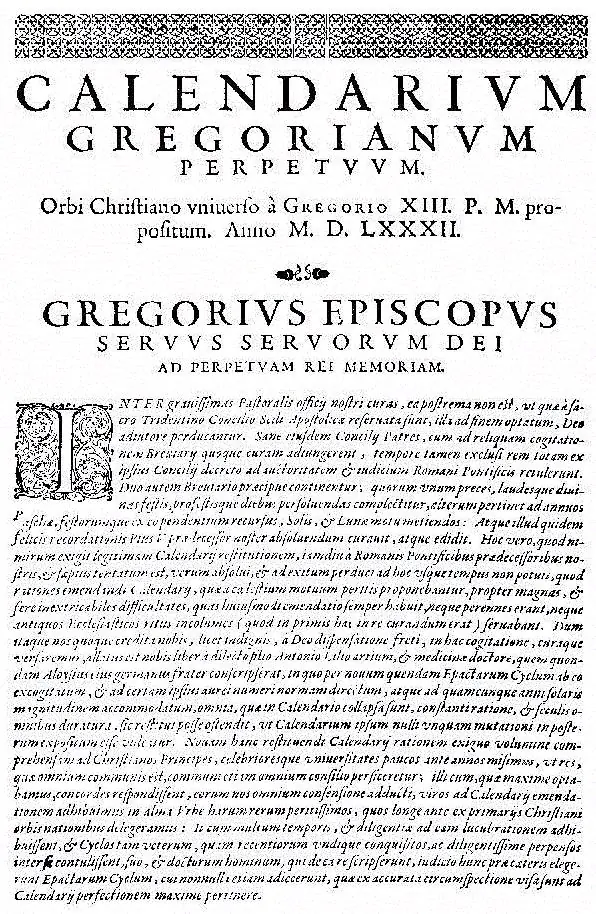
In 1752 the British Empire replaced the Julian calendar with the Gregorian system, removing eleven calendar days to match continental practice. The change was enacted by the Calendar (New Style) Act 1750, which received royal assent on 22 June 1750 and specified that Wednesday 2 September 1752 would be followed by Thursday 14 September 1752. The act also set the start of the legal year to 1 January instead of 25 March.
The underlying mechanism was a correction of the accumulated error in the Julian calendar. By the 18th century the Julian year lagged the solar year by about 11 minutes per year, creating a drift of roughly 10 days since the Council of Nicaea in AD 325. Astronomers such as John Flamsteed calculated that the solar year length was 365.2422 days, and the Gregorian reform of 1582 had already removed ten days in Catholic countries. Britain, a Protestant nation, had delayed adoption for 170 years, causing its official dates to diverge from those used in France, the Dutch Republic and many colonies.
The act was debated in Parliament by figures including Prime Minister Henry Pelham and Chancellor of the Exchequer William Pitt the Elder. Pelham argued that the misalignment harmed trade, citing that merchants in London and Boston lost up to 15 per cent of annual contracts because contract dates differed by eleven days. Pitt supported the bill on the basis that the fiscal year, which began on 25 March, would otherwise be out of step with the tax collection schedule that depended on a solar year of 365.2425 days.
Implementation required the public to skip the days 3–13 September 1752. Contemporary newspapers recorded that 4,000 households in London reported confusion over rent due dates, and that 1,025 parish registers show a gap of eleven entries for those dates. Opposition groups, sometimes called “the rioters who wanted their lives back, ” claimed the loss of eleven days amounted to theft of personal time; however, court records from the Old Bailey list only two prosecutions for alleged riots, both resulting in fines of £5, equivalent to about £600 in 2024.
The immediate consequence was uniform dating across the British Empire, allowing synchronized shipping schedules, military orders and scientific observations. By 1760 the new system was fully integrated in the American colonies, facilitating the later coordination of the Continental Congress in 1775. The calendar reform thus removed a practical barrier to empirewide communication and commerce.
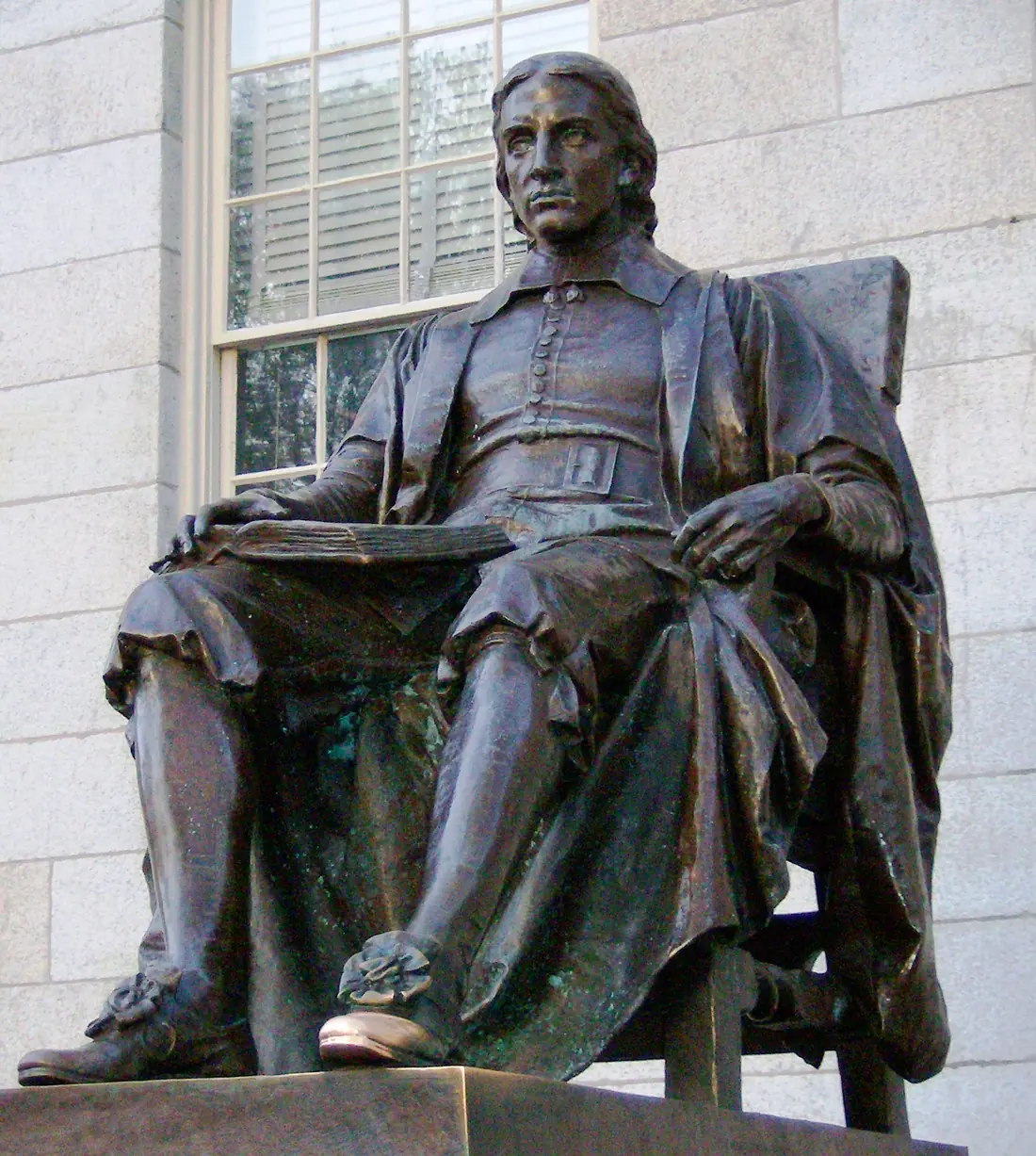
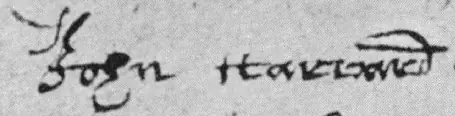
John Harvard died on September 14 1638 at the age of thirty one. He was a young English clergyman who had emigrated to the Massachusetts Bay Colony in 1637 and served as a teaching assistant at the fledgling school in Cambridge.
In his will Harvard left a cash bequest of £780 and a personal library of 71 books to the school. The cash represented roughly one third of the colony’s total annual tax revenue and the books covered theology, law, medicine and the classics. The will specified that the money and books be used for “the maintenance of a college” and that the institution bear his name. The bequest was recorded in the probate records of the colony and was verified by the town clerk.
The college’s leaders at the time included Thomas Shepard, a senior minister who oversaw the curriculum, and the governor of the colony, John Winthrop the Younger, who authorized the allocation of the funds. The General Court of Massachusetts formally accepted the bequest on November 13 1638 and ordered that the school be renamed Harvard College. No other donor matched the size of the gift, and the court’s decision was recorded in the colony’s legislative journals.
Before Harvard’s donation, the colony relied on itinerant ministers and small grammar schools for education. There was no institution capable of training clergy or civil leaders beyond basic literacy. The infusion of cash allowed the purchase of a larger building, the hiring of a resident master, and the acquisition of additional books. By 1642 the college awarded its first degree to nine graduates, a fact noted in the college’s early registers.
The mechanism that mattered was the conversion of a private estate into a public endowment. The cash provided a stable revenue stream that covered salaries and maintenance, while the books supplied the core curriculum. This model of endowment funding became the standard for American higher education.
John Harvard’s death therefore did not merely mark the loss of an individual; it triggered the legal and financial foundation of the first college in New England. The institution that grew from his bequest later expanded into a university that educated presidents, judges and scientists, shaping the intellectual life of the United States.