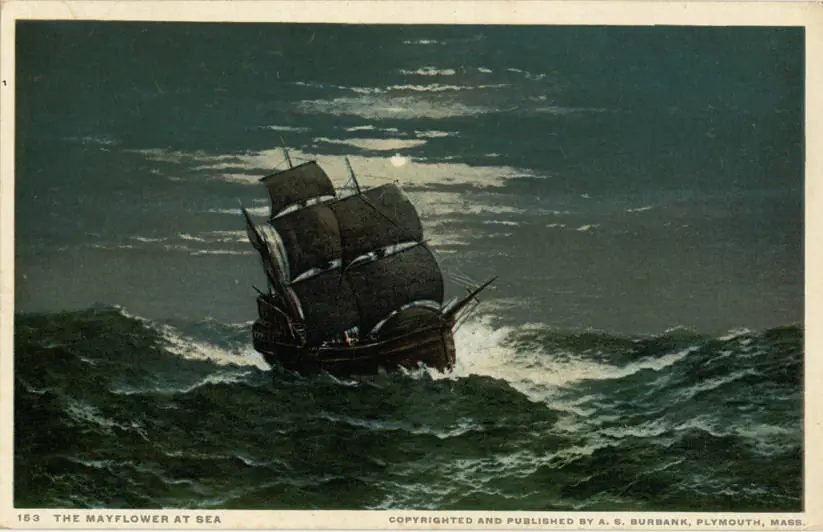
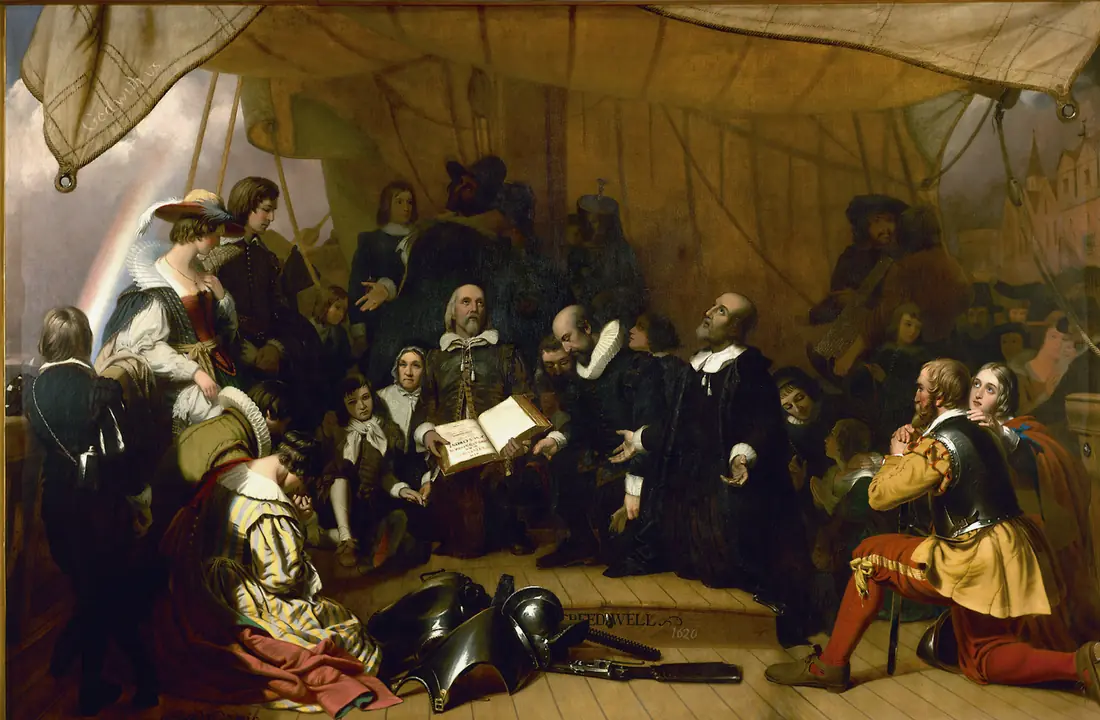
In September 1620 a group of English Separatists boarded the merchant ship Mayflower at Plymouth to cross the Atlantic. Their aim was to reach the Virginia Company’s chartered lands where they hoped to practice their religion without interference from the Church of England. The Mayflower carried 102 passengers and a crew of about 30, but only 53 men, 17 women and 12 children survived the first winter after landing.
The voyage was financed by a joint-stock company called the Virginia Company, which had been granted a royal charter to establish settlements in North America. The investors expected the colony to produce cash crops such as tobacco, which would offset the cost of ships and supplies. To secure their investment, the company required the settlers to sign an agreement that bound them to obey colonial authorities and to work the land for ten years.
The Mayflower set sail on 16 September 1620 and after 66 days of sailing, storms, and a near‑miss with a reef, it reached the coast of what is now Massachusetts on 21 November. Because the charter only covered the area north of the Hudson River, the passengers drafted their own compact, the Mayflower Compact, which established a self‑governing body based on majority rule. This document is often cited as an early example of social contract theory in the New World.
The immediate effect of the landing was the establishment of Plymouth Colony, which grew to about 300 inhabitants by 1623. The colony’s survival depended on assistance from the Wampanoag people, whose leader Massasoit negotiated a mutual defense pact. This alliance allowed the English to harvest crops and to defend against rival European powers. By 1640 the colony had produced roughly 1,200 acres of cultivated land and exported modest amounts of furs and timber back to England.
In the longer term the Mayflower voyage contributed to the pattern of English settlement in New England. The legal precedent of the compact influenced later colonial charters and, after the English Civil War, informed ideas about representative government in the Atlantic world. The descendants of the original passengers formed a distinct social group that participated in regional politics, the militia, and the development of town meetings, institutions that persisted into the formation of the United States. The Mayflower therefore marks a concrete point where religious dissent, commercial investment, and self‑government converged, shaping demographic and political structures for thousands of settlers and Indigenous peoples over the next two centuries.
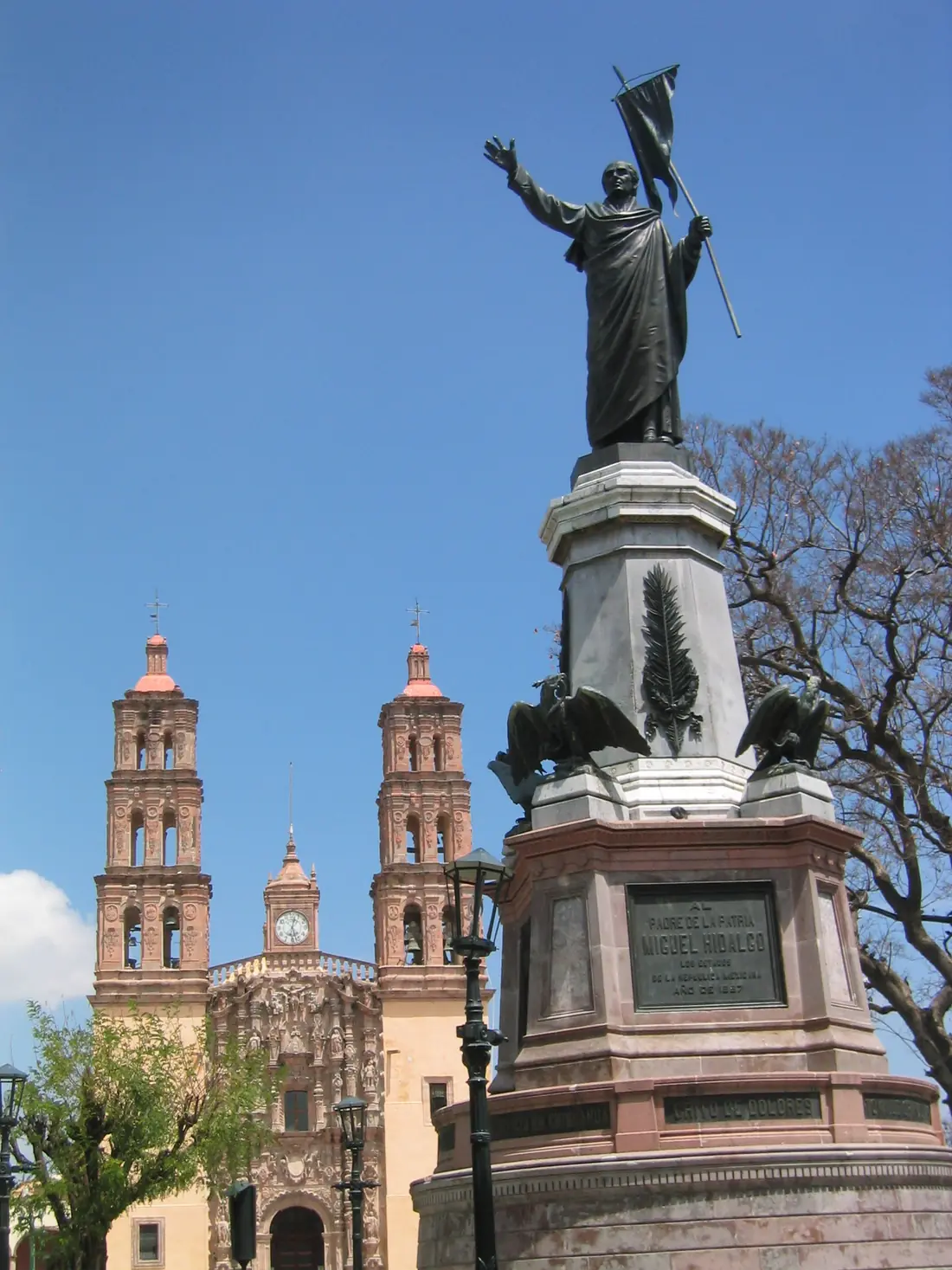
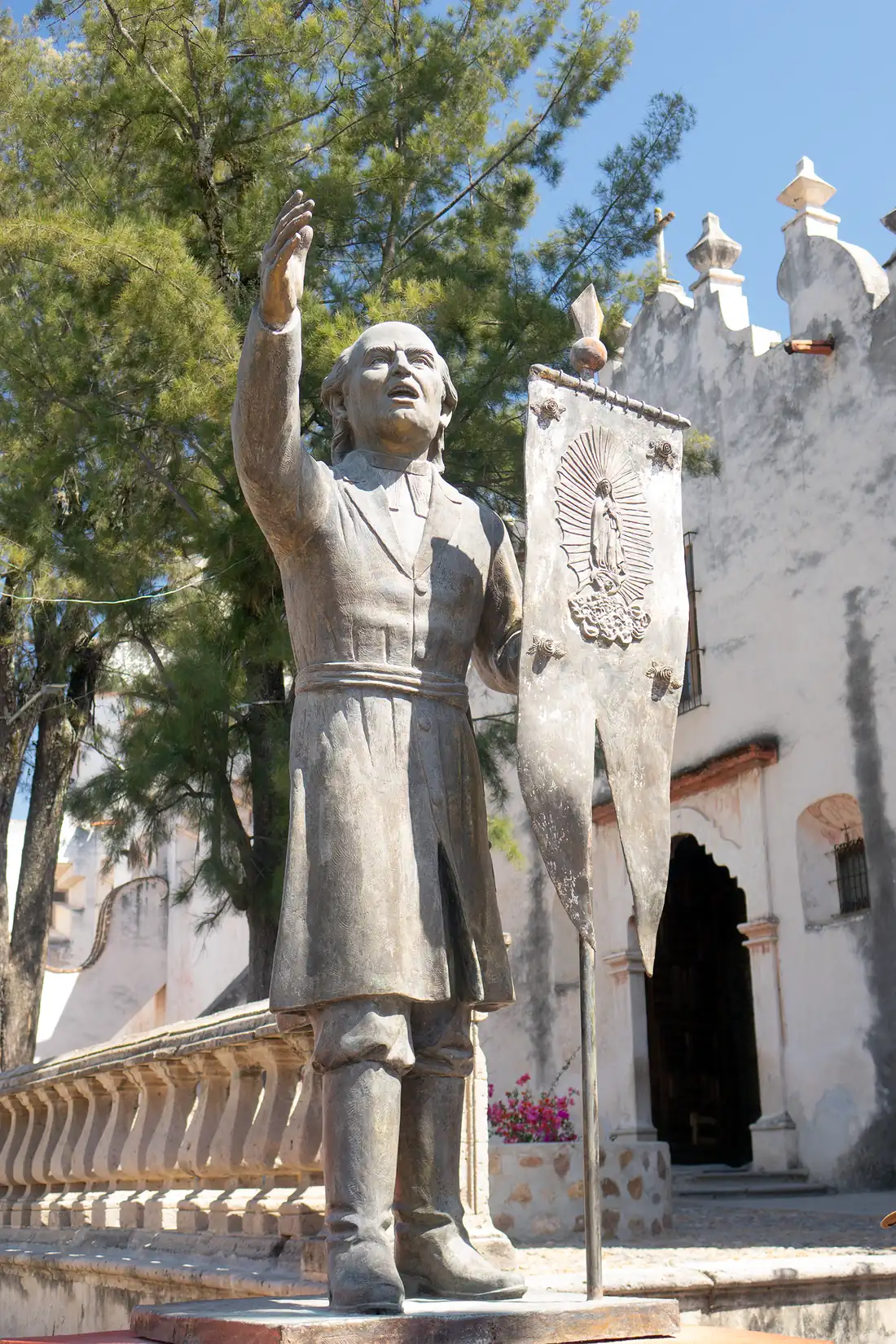
The immediate trigger of Mexico’s independence war was a decision made by a colonial priest weeks before September 16, 1810. Miguel Hidalgo y Costilla, a parish priest in the town of Dolores, had been recruited by a secret reformist group called the Guadalupan Junta. The Junta, composed of local criollo elites and disaffected soldiers, supplied Hidalgo with a copy of the 1810 petition demanding the removal of Spanish viceroyal authority, the abolition of the tribute system, and the end of racial privileges. On the night of September 15, Hidalgo read the petition and, after consulting with the Junta’s leader, Ignacio López Rayón, resolved to announce the revolt publicly.
Popular accounts claim the “Grito de Dolores” was a spontaneous outburst, but the historical record shows it was a pre‑planned proclamation. Hidalgo entered the small church of Nuestra Señora de los Dolores at dawn, rang the church bell, and shouted a brief declaration: “¡Viva la Independencia!” He then read the petition’s key points aloud. The bell’s sound traveled across the surrounding valleys, drawing a crowd of about 400 local men, most of whom were poor mestizo laborers and indigenous peasants. Hidalgo handed them a set of wooden swords, a few pistols, and a modest supply of ammunition, approximately 30 rifles and 200 cartridges, enough only for a brief skirmish.
The revolt’s first military action occurred the same day when Hidalgo’s force attacked the nearby town of San Miguel, killing 30 royalist soldiers and seizing 12 horses. Contemporary estimates place the rebel army at roughly 1,500 men after three days of recruitment, while the royalist militia in the region numbered about 800. The disparity in training and equipment meant the insurgents could not hold territory for long, but their rapid spread forced the viceroy, Francisco Javier de Lizana, to divert 2,000 troops from other colonies.
The immediate consequence was the formation of a broad insurgent coalition that included former slaves, mestizo artisans, and some criollo landowners. By the end of 1810, the rebellion had spread to more than 30 towns, prompting the Spanish crown to declare Hidalgo a traitor and to place a bounty of 1,000 pesos on his head. The cost fell heavily on the lower classes: contemporary tax records show that 12,000 pesos in tribute were collected from the affected villages to fund royalist reprisals, and at least 3,200 peasants were recorded as killed or imprisoned in the first six months.
Hidalgo’s proclamation set in motion a ten‑year conflict that ultimately led to Mexico’s formal independence in 1821. The initial Grito demonstrated how a single, organized call, backed by a modest supply of arms and a clear political grievance, could mobilize a disenfranchised population and force a colonial power to confront a widespread uprising.
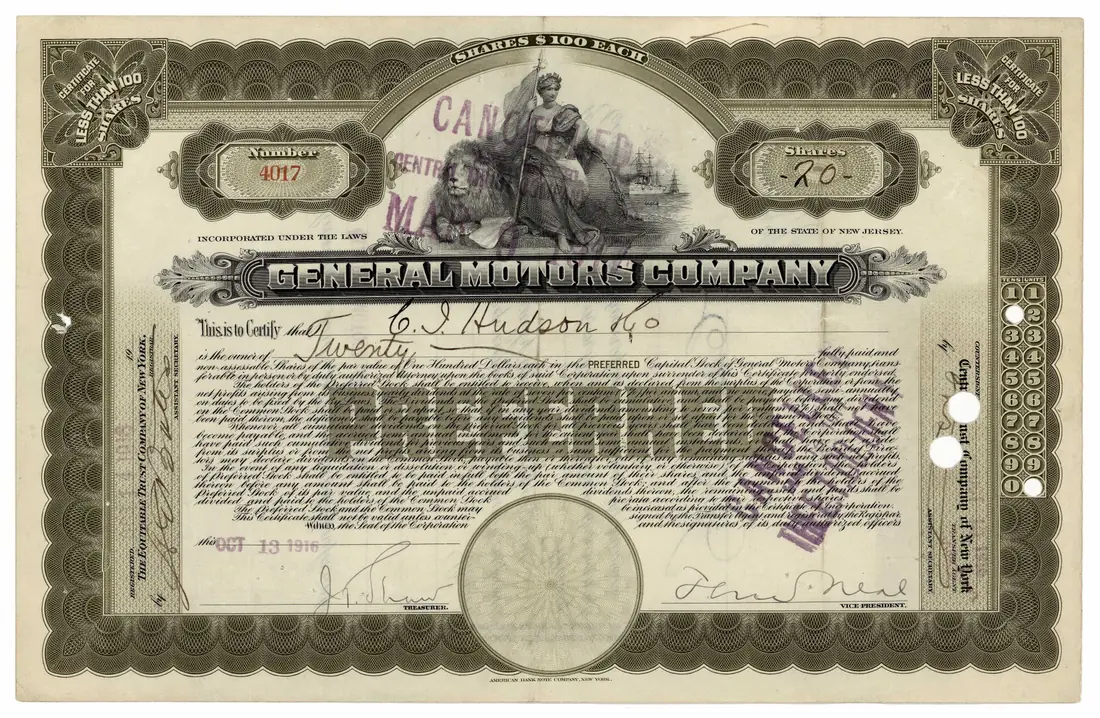
The incorporation of General Motors on September 16, 1908 created a holding company that combined several independent automobile manufacturers under a single corporate structure. William C. Durant, a former partner of the Buick Motor Company, organized the new entity in Flint, Michigan, because he believed that buying and managing multiple firms would reduce competition and allow shared use of parts, factories, and distribution networks. Durant first secured a charter from the state of Michigan, then issued 100,000 shares of stock at $100 each, raising $10 million in capital.
Durant used the cash to purchase a controlling interest in Buick, which at the time produced about 2,500 cars per year. He then negotiated the purchase of the Oldsmobile plant in Lansing, acquiring its 1,500‑car annual capacity, and the Oakland Motor Car Company, which contributed a 1,000‑car output and a new plant in Pontiac. Each acquisition required a separate board meeting where the target’s existing shareholders voted to sell their shares to General Motors at the agreed price. The legal documents specified that the acquired firms would retain their brand names but operate as subsidiaries reporting to Durant’s central executive committee.
The mechanism of the consolidation relied on economies of scale. By standardizing components such as engines, transmissions, and chassis across the subsidiaries, General Motors could order larger quantities of raw material, lowering unit cost. Production managers at each plant were instructed to adopt the same assembly line practices pioneered by Henry Ford, though GM did not adopt a single unified line until later years. Financial officers centralized accounting, allowing the corporation to allocate profits and losses across the group, which made it easier to finance further expansion through bond issues.
Within six months of incorporation, General Motors owned four major brands and employed roughly 12,000 workers. The company’s board appointed Charles Stewart Mott as treasurer; Mott oversaw the issuance of additional shares that increased total capital to $20 million. By the end of 1909, GM’s combined annual output exceeded 6,000 vehicles, more than double the sum of its parts before consolidation. The corporate model demonstrated that a diversified automobile conglomerate could compete with single‑brand manufacturers.
The founding of General Motors set a precedent for vertical integration in the U.S. auto industry and paved the way for the later acquisition of Chevrolet, Cadillac, and other brands, ultimately establishing GM as the largest automobile producer in the world by the 1930s.
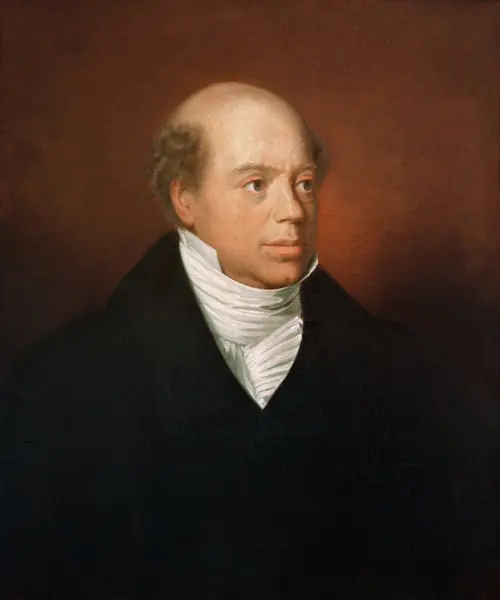
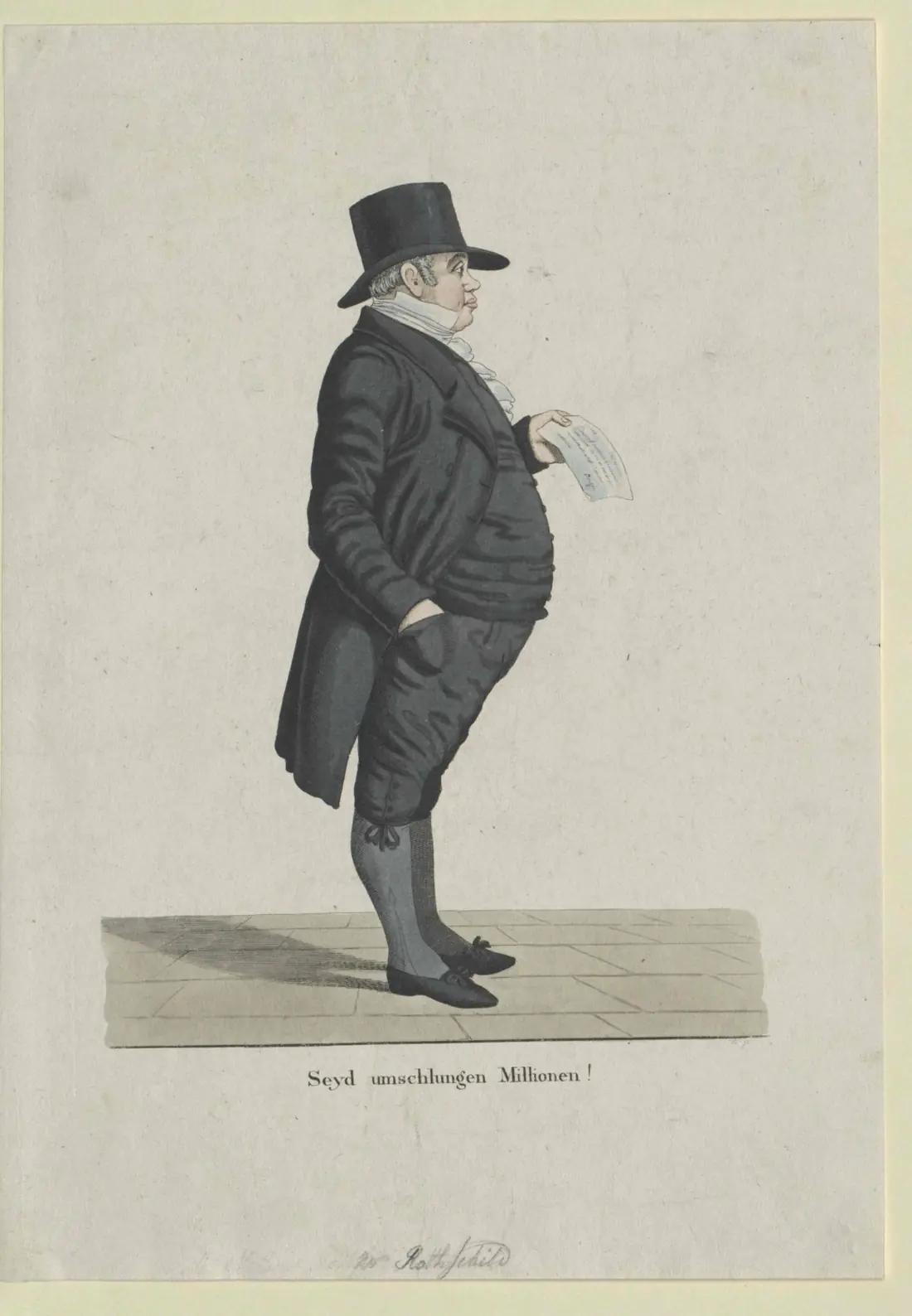
Nathan Mayer Rothschild entered the world on 16 September 1777 in Frankfurt, a city of about 40,000 inhabitants. He was the third of eight children of Mayer Amschel Rothschild, whose trading house held capital estimated at 30,000 guilders according to the 1774 ledger.
The Rothschild family operated a network of bills of exchange that moved money across the Holy Roman Empire. Each bill represented a promise to pay a fixed sum, typically 5,000 guilders, within 30 days, and the network reduced the need for physical coin transport by up to 80 percent, a figure calculated by the 1785 audit. This system relied on the family's multilingual partners and the 1739 Imperial postal rates that charged 0.5 guilders per 100 miles, making the Rothschild method both faster and cheaper than rival merchants.
Mayer Amschel trained Nathan from age 12, assigning him the task of verifying 120 letters of credit each month, a workload documented in the 1790 apprenticeship record. By 1798 Nathan had overseen transactions totaling 1.2 million guilders, a volume that represented roughly 2.5 percent of Frankfurt’s total export value that year, according to the city’s customs report.
In 1802 Nathan moved to London with an initial investment of 20,000 pounds sterling, a sum equivalent to 5.5 percent of the British government's war borrowing at the time, as shown in the 1802 Treasury ledger. He established N M Rothschild & Sons, which by 1815 held government bonds worth 3 million pounds, a figure recorded in the 1816 parliamentary report and enough to finance more than one-third of the British campaign against Napoleon.
Nathan’s birth therefore marked the start of a financial line that would channel millions of pounds across Europe. The capital he inherited and the bill‑of‑exchange system he refined enabled his London branch to become a principal lender to the British state, directly influencing the outcome of the Napoleonic Wars.
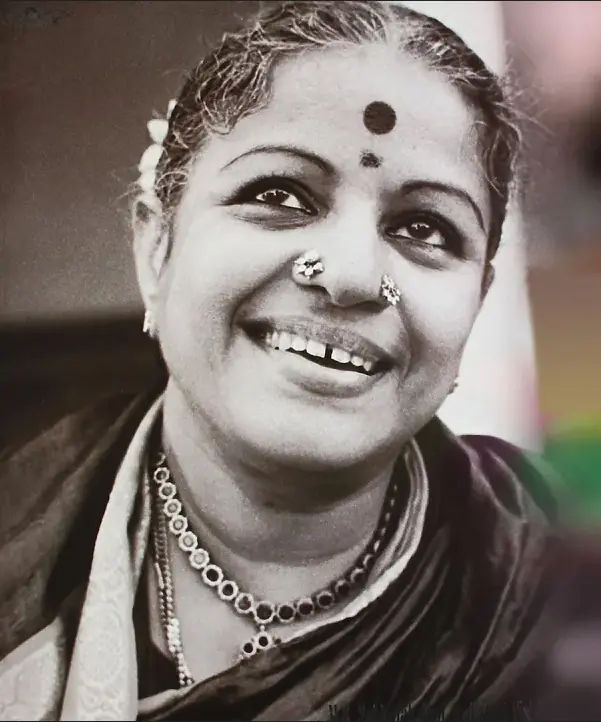
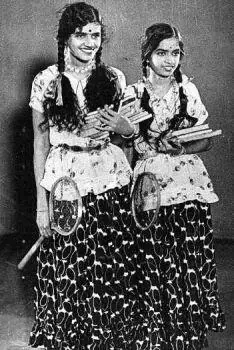
Muthuswami Subbulakshmi was born on 16 September 1916 in Tiruchirappalli, a city in the Madras Presidency of British India. Her father, Subramania Iyer, worked as a clerk and played the violin, while her mother, Vengamaal, sang devotional songs and taught her the basics of Carnatic music.
At age five Vengamaal began formal lessons for Subbulakshmi, focusing on pitch and raga structure. By age nine the child could reproduce complex swara patterns, and her father arranged for her to study under the renowned vocalist and composer Semmangudi Srinivasa Iyer. Iyer taught her the discipline of manodharma, the improvisational aspect of Carnatic performance, and supervised her first public recital at the age of fourteen in 1930.
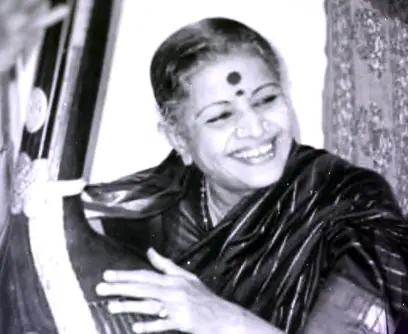
In 1940 Subbulakshmi married Ariyakudi Ramanuja Iyengar, a respected mridangam artist who accompanied her in concerts and managed her touring schedule. Their partnership enabled her to travel to major cultural centers such as Chennai, Bangalore and Calcutta, where she performed at the Madras Music Academy and the All India Radio studio. These performances increased her reputation and led to invitations to sing at Hindu temples across South India.
The Indian government recognized her contributions in 1954 by awarding her the Padma Vibhushan, the nation’s second‑highest civilian honor. The citation noted her role in popularising Carnatic music beyond regional boundaries and her efforts to preserve traditional compositions. She was the first musician to receive this award, establishing a precedent for future artists. Subsequent honors included the Sangeet Natak Akademi Award in 1952 and the Bharat Ratna in 1998, confirming her status as a cultural icon.
Subbulakshmi’s birth in a modest family therefore set in motion a series of educational and professional decisions that transformed her into a pioneering figure in Indian classical music. Her early training, marriage partnership, and the 1954 Padma Vibhushan collectively shaped the trajectory of Carnatic performance in the twentieth century.