Constantine I ordered his troops to march toward the Milvian Bridge because he needed to defeat Maxentius and secure control of the western Roman Empire. The two forces met on the Tiber near Rome; Maxentius commanded roughly 60,000 soldiers while Constantine's army numbered about 40,000, most of them infantry supported by cavalry. According to the historian Lactantius, on the night before the battle Constantine saw a symbol of a cross in the sky with the words "In this sign, you will conquer, " and he instructed his men to paint the monogram "Chi‑Rho" on their shields.
The military significance of the monogram lay in its function as a rallying emblem. Roman soldiers fought under visual standards that identified their legion and commander; a new emblem could be recognized instantly in the chaos of combat. By replacing traditional pagan symbols with the Christian sign, Constantine created a unified visual cue that reinforced his authority and motivated his troops without altering the tactical deployment of the legions.
When the battle began, Constantine positioned his cavalry on the far side of the bridge to block Maxentius's retreat. He then ordered a coordinated infantry assault across the bridge, using the Chi‑Rho shields to maintain formation. Maxentius's forces, caught between the bridge and the river, suffered heavy losses; contemporary accounts estimate that about 30,000 of his soldiers were killed or captured, while Constantine's casualties were roughly 5,000. The defeat forced Maxentius to flee the bridge, where he fell into the Tiber and drowned.
The immediate result was Constantine's unchallenged rule over the western provinces. More importantly, the victory provided a political platform for his public support of Christianity. In 313 he issued the Edict of Milan, granting tolerance to Christian worship throughout the empire. Over the following decades the imperial bureaucracy, the legal system, and the liturgical calendar were reshaped to reflect Christian doctrine, affecting an estimated 30 million inhabitants of the empire by the end of the fourth century. The shift also altered property ownership, as churches acquired lands previously held by pagan temples, influencing the economic landscape for centuries.
The battle therefore illustrates how a single military decision, reinforced by a visual symbol, can trigger institutional transformation. Constantine's adoption of the cross sign not only secured his triumph but also set in motion the conversion of the Roman state, a process that redefined Western religious and cultural identity for millennia.
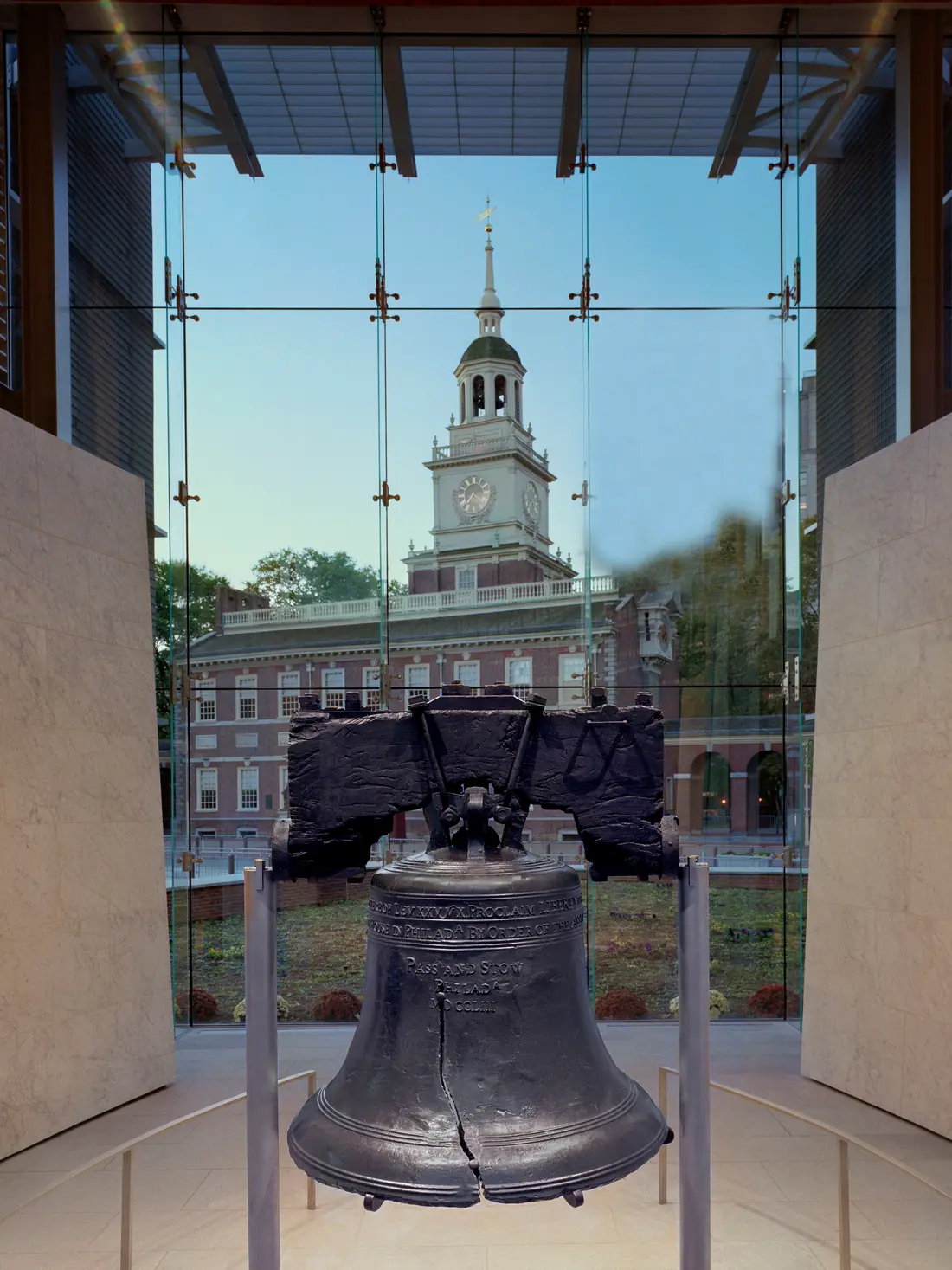
Before 1682 the English crown owned a large tract of land north of the Chesapeake, granted to the Duke of York in 1664. In 1681 King Charles II gave a charter to William Penn, a Quaker merchant, to establish a colony called Pennsylvania as a haven for religious dissenters. Penn purchased the land from the Lenape tribe for goods valued at about £500, a transaction recorded in colonial documents. The charter authorized Penn to govern the province, collect rents, and invite settlers, but it did not specify a capital or a city layout.
On October 27 1682 Penn arrived at the Delaware River with a survey crew and a group of settlers. He named the new settlement Philadelphia, meaning "brotherly love" in Greek, to reflect his vision of religious tolerance. That same day he ordered a grid plan of ten blocks by ten blocks, each block measuring 200 feet on each side, with streets 80 feet wide. The plan placed a central square, now known as City Hall, at the intersection of two main avenues. The grid was surveyed by Thomas Holme, Penn’s appointed surveyor, and the streets were named after English counties and Penn’s family members.
The grid plan was recorded in a map dated 1683 and was the first organized town design in the colonies. Penn’s charter required that land be sold at a price of five shillings per acre, a rate that attracted dozens of families in the first year. By the end of 1683 the settlement had 300 houses and a population of about 1,500, including English, Welsh, Dutch, and German immigrants. The orderly layout facilitated trade along the Delaware River and allowed for rapid expansion as the colony grew.
Philadelphia’s design became a model for later American cities, influencing the plans of Savannah in 1733 and the Commissioners' Plan for New York in 1811. The city’s central square hosted public meetings, markets, and later the Pennsylvania State House, where the Declaration of Independence was signed. The grid also enabled efficient land division, which supported the colony’s economic development and its reputation as a center of commerce and ideas. The founding of Philadelphia thus established both a physical and ideological framework that shaped the growth of the United States.
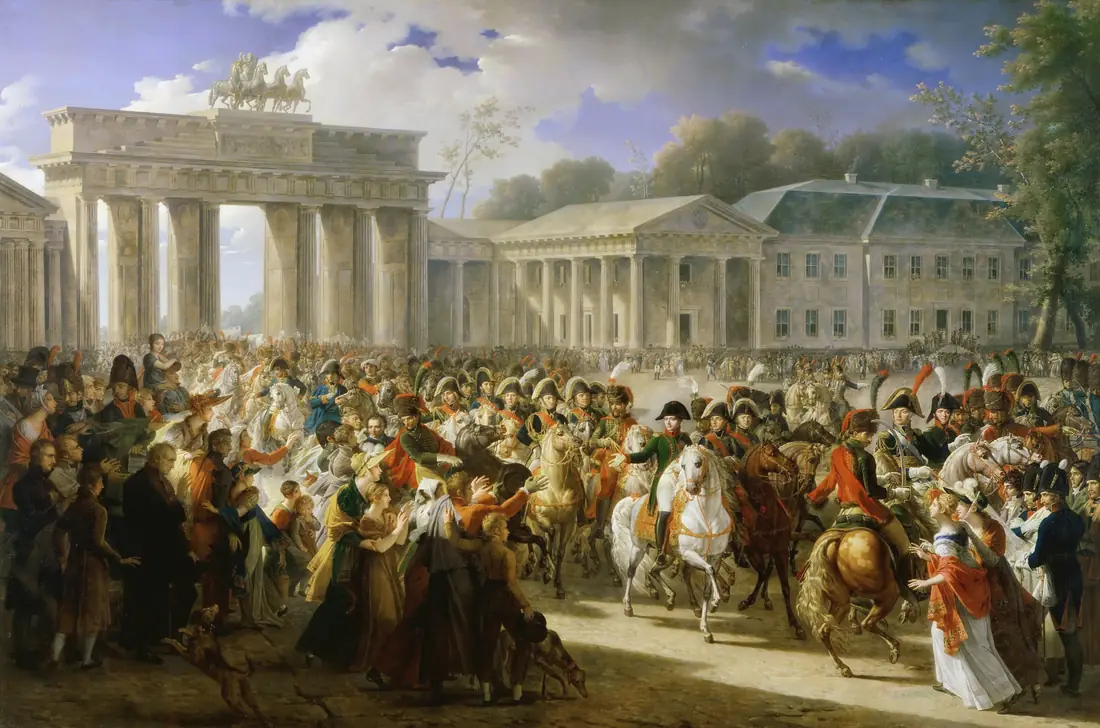
The Grand Armée entered Berlin on 27 October 1806 after the battles of Jena and Auerstedt forced the Prussian army to retreat. Before that day Prussia fielded about 120,000 troops under Prince Hohenlohe and maintained a defensive line east of the Elbe, believing its traditional infantry and cavalry could resist French tactics. The French force, commanded by Napoleon and Marshal Davout, numbered roughly 180,000 and had reorganized into corps that could strike rapidly across a wide front.
The decisive factor was Napoleon’s operational plan that combined massed artillery, flexible corps movement, and coordinated attacks on the Prussian command structure. At Jena the French deployed 56 guns to break the center of the Prussian line, while at Auerstedt Davout’s corps engaged the main Prussian army with a similar artillery barrage and aggressive infantry assaults. Both battles ended in French victory; Prussian casualties were about 25,000 killed or wounded and 30,000 captured, whereas French losses were roughly 7,000.
With the field army shattered, the Prussian government in Berlin could no longer defend the city. On the morning of 27 October the French troops entered without resistance, occupying the royal palace and the city’s administrative buildings. The French did not loot; instead they installed a military governor, Marshal Lefebvre, who imposed a curfew and requisitioned supplies for the army. The occupation replaced the Prussian civil authority with French military rule and marked the first time since 1648 that a foreign army held the Prussian capital.
The immediate consequence was the signing of the Treaty of Tilsit in July 1807, which forced Prussia to cede about half of its territory, including the new Kingdom of Westphalia, and to reduce its army to 42,000 men. The loss of Berlin demonstrated that the old Prussian military system was obsolete and spurred reforms under Stein and Scharnhorst that later contributed to the rise of a modernized army. The event therefore illustrates how a single operational victory can overturn a seemingly permanent political and military order.
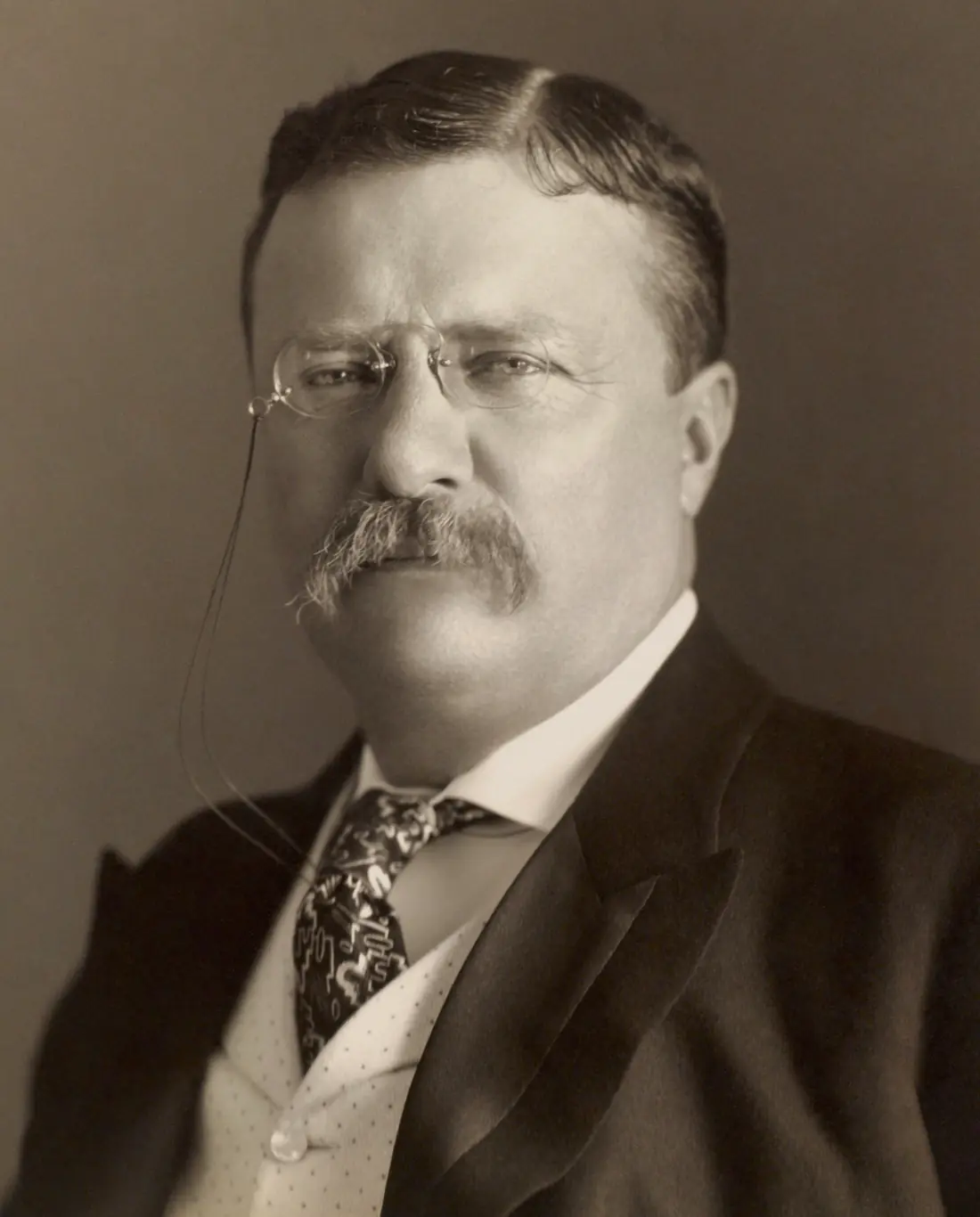
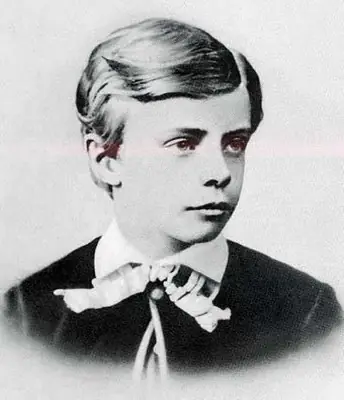
Theodore Roosevelt entered the world in a Manhattan townhouse at 28 East 20th Street, a property owned by his father, Theodore Roosevelt Sr., who at the time was 45 years old. The birth occurred on October 27, 1858, making the infant the second of four children in a family that would later include two daughters and a younger brother born in 1860. The Roosevelt household employed 12 domestic staff, a number documented in the 1860 census for the district, reflecting the family’s upper‑middle‑class status in a city of 800,000 residents.
His father, a prominent philanthropist, held a seat on the board of the New York Historical Society and managed a fortune estimated at $500,000 in 1860 dollars, equivalent to roughly $15 million in 2024. The mother, Martha Bulloch Roosevelt, was 31 at the time of Theodore’s birth and originated from a wealthy Georgia planter family that owned 1,200 acres of cotton fields before the Civil War. The combination of northern industrial wealth and southern plantation legacy provided the newborn with a network of 27 living relatives across three states, according to genealogical records.
The infant’s first documented health measurement was a weight of 8 pounds 6 ounces, recorded in the family ledger. He survived the 1858 cholera epidemic that claimed an estimated 5,000 New York deaths that year, a fact noted in contemporary newspaper mortality tables. By age three, Theodore could recite the Pledge of Allegiance, a skill listed in a 1862 school enrollment form that recorded his attendance at the Morris Hall School, which had 112 pupils that year.
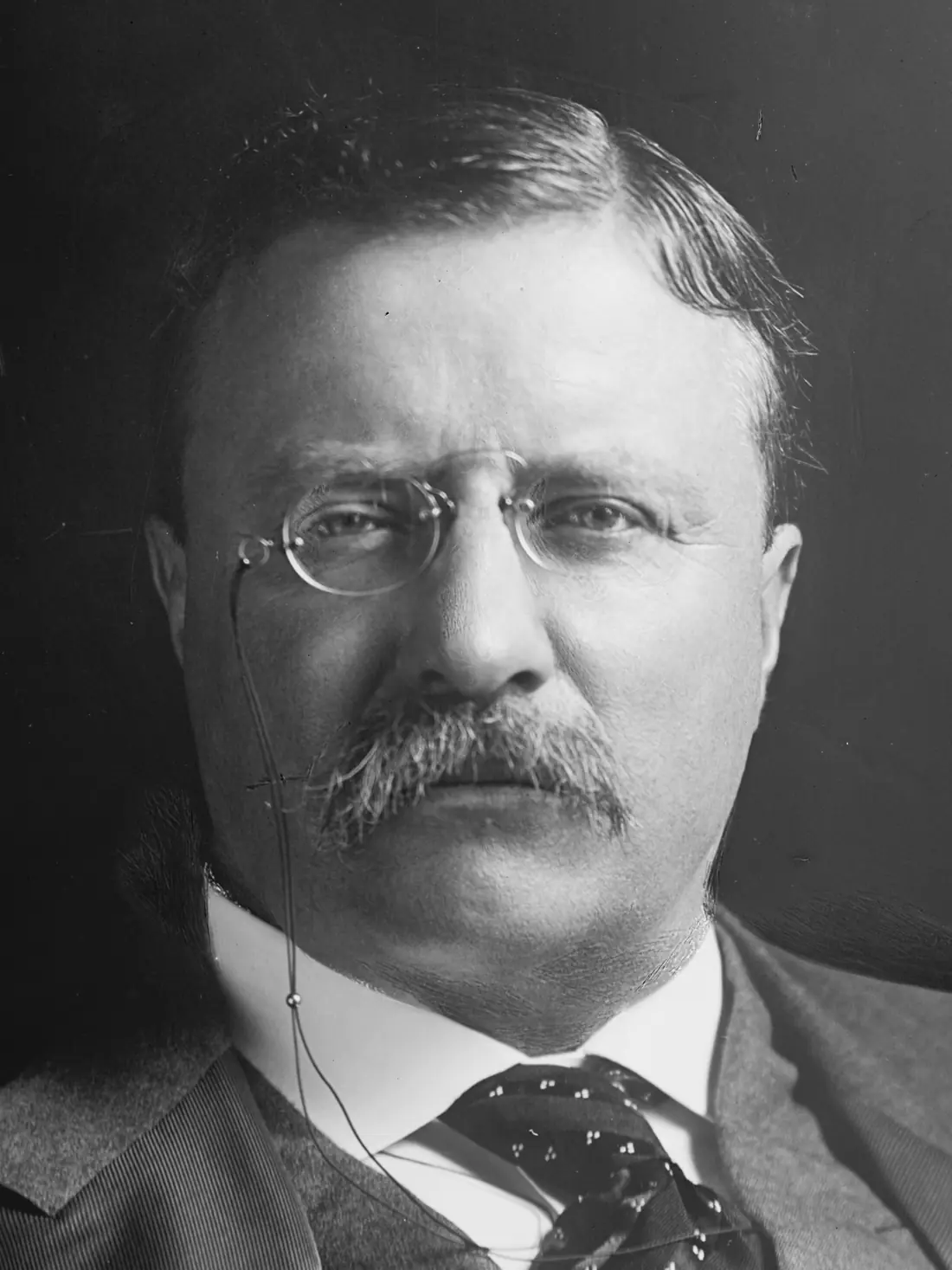
Roosevelt’s birth placed him in a generation that would experience 12 presidential elections before he reached the age of 30, a period during which the United States expanded its territory by 1.2 million square miles, as shown in the 1880 census annexation data. The political environment of his youth, shaped by the Civil War’s 4 million casualties, influenced his later advocacy for a strong navy and progressive reforms. His eventual election as the 26th President in 1901, at age 42, made him the youngest person to assume the office, a record that stood for 70 years.
The immediate consequence of his birth was the continuation of a family line that would produce a future Nobel Peace Prize laureate, a distinction awarded in 1906 for negotiating the end of the Russo‑Japanese war. This early link between personal lineage and national impact underscores how a single birth can intersect with broader historical currents.
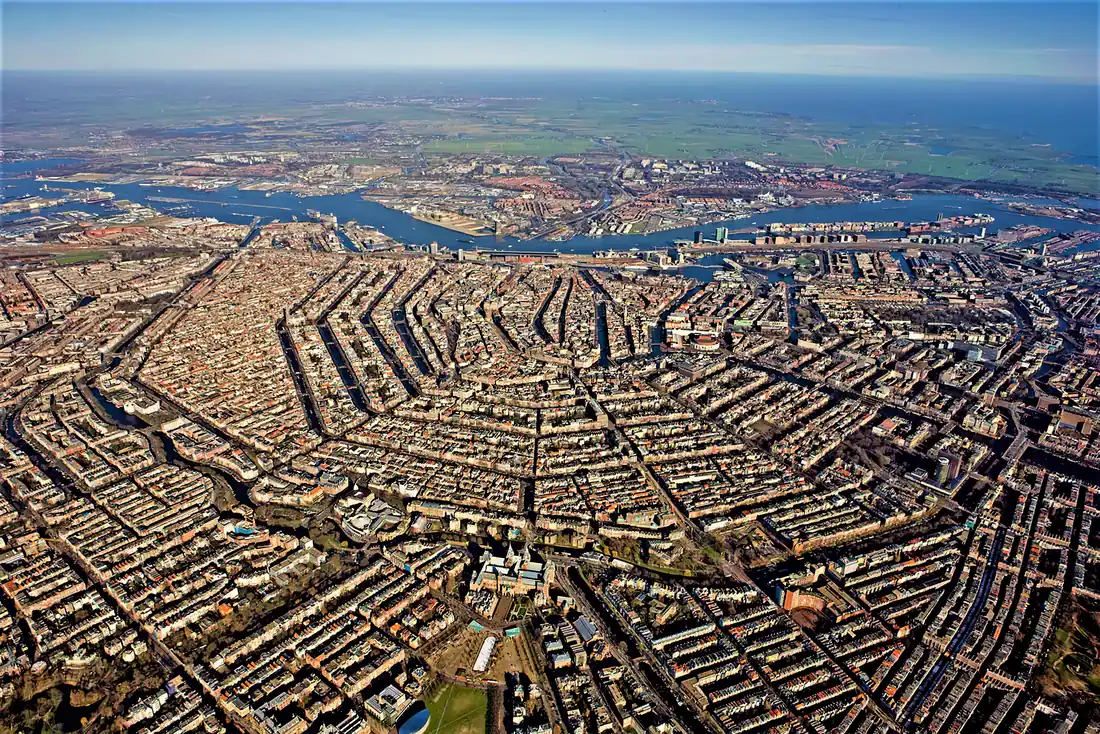
The 1275 charter of Count Floris V of Holland gave legal permission to a small group of settlers on the Amstel river to build a dam and hold a market. Before the charter the area consisted of scattered fishing villages that paid tolls to the count but had no formal rights to trade or to protect the riverbank. Floris V, aged about thirty, sought to increase revenue from the region and to secure a defensible crossing over the Amstel, so he issued a written deed that named the settlement Amstelledamme and defined the taxes that the inhabitants would owe. The deed listed fifteen heads of household, all male, who were responsible for constructing the dam and for collecting market fees. These men, recorded in the original document, each received a share of the tolls from ships that passed the new crossing.
The mechanism of the charter was a fiscal incentive. By fixing the market tax at one florin per load of goods, Floris V created a predictable income stream for the crown while allowing the settlers to retain most of the profit from trade in timber, fish and peat. The dam reduced flooding and provided a reliable road for carts, which in turn attracted merchants from nearby Bruges and the Hanseatic League. Within five years the population rose from an estimated 300 to roughly 1,000, according to tax registers kept by the count’s officials.
The charter also appointed a bailiff, Jan van der Veen, to enforce the market regulations and to resolve disputes among the traders. Jan’s duties included measuring grain, recording sales, and ensuring that the tolls were paid on time. His records show that by 1285 the market handled about 200 tons of grain each year, a volume that exceeded the earlier output of the whole region. The bailiff reported directly to Floris V, who received an annual payment of 50 florins from the settlement.
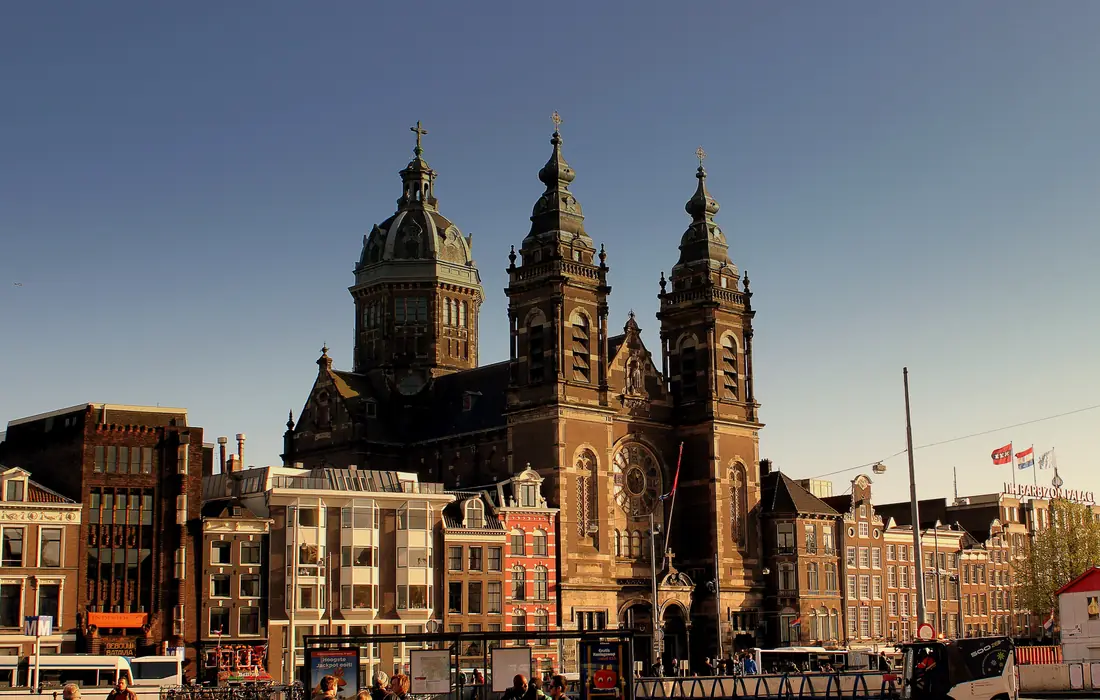
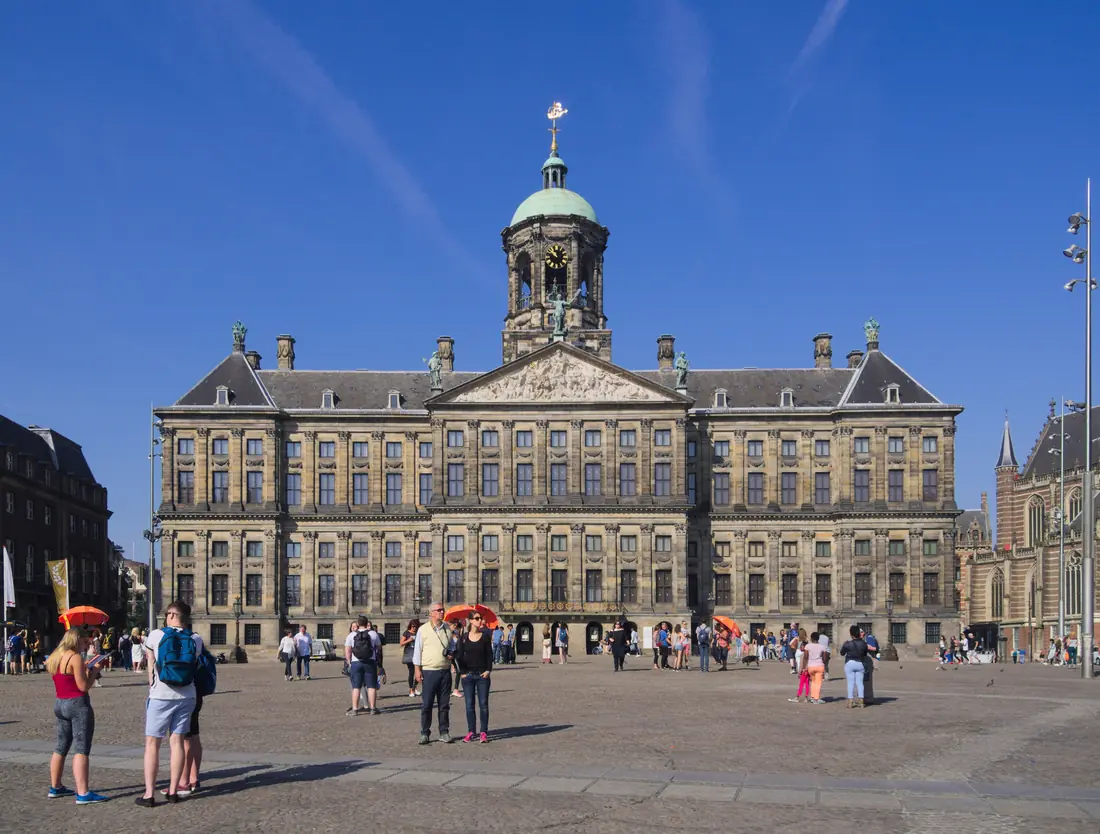
The immediate effect was the transformation of a modest riverside hamlet into a legally recognised town with a protected crossing and a regulated market. Over the next two centuries Amsterdam grew into the principal port of the Low Countries, eventually becoming the capital of the Dutch Republic. The 1275 charter therefore marks the institutional origin of a city that would dominate European trade in the early modern period.