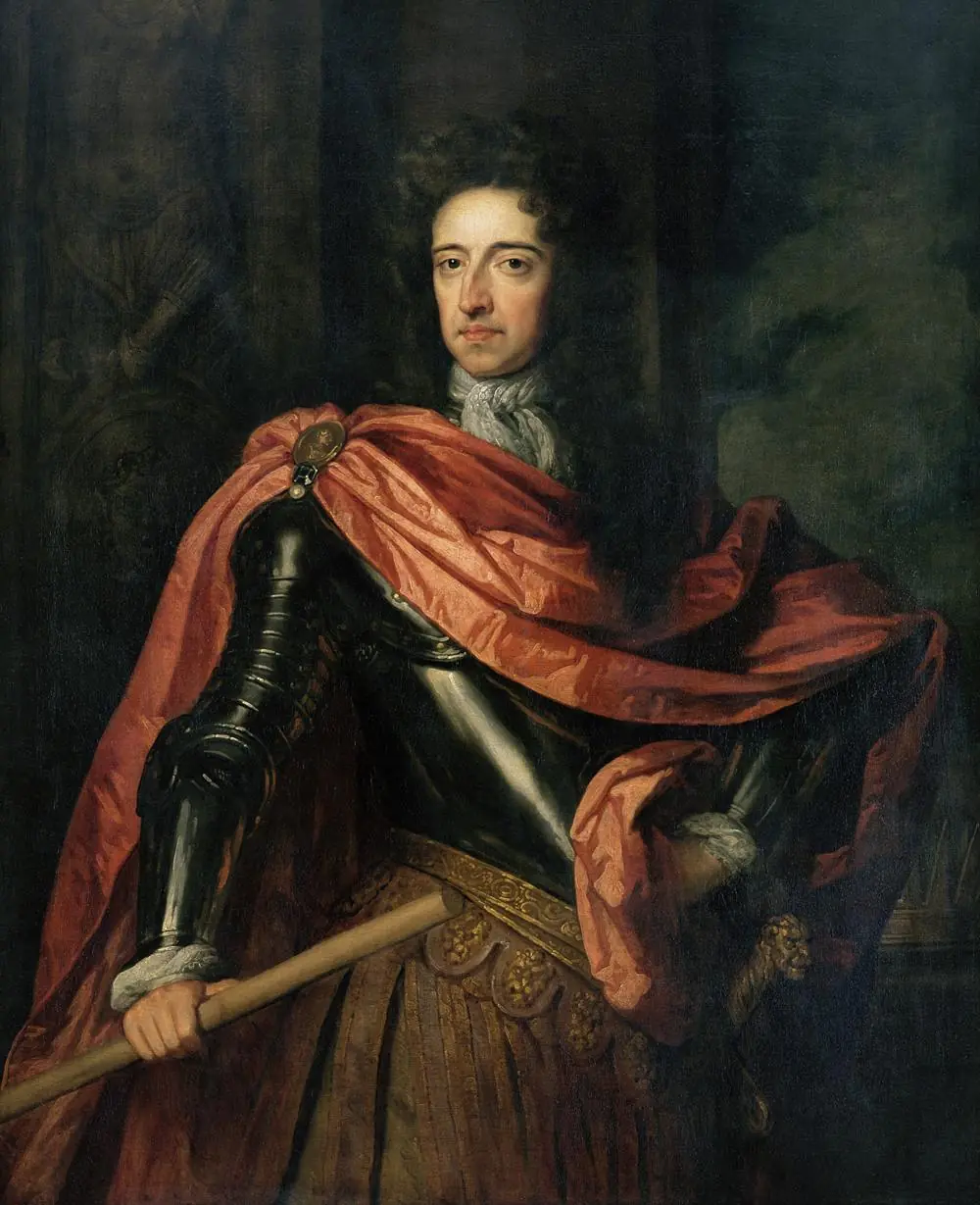
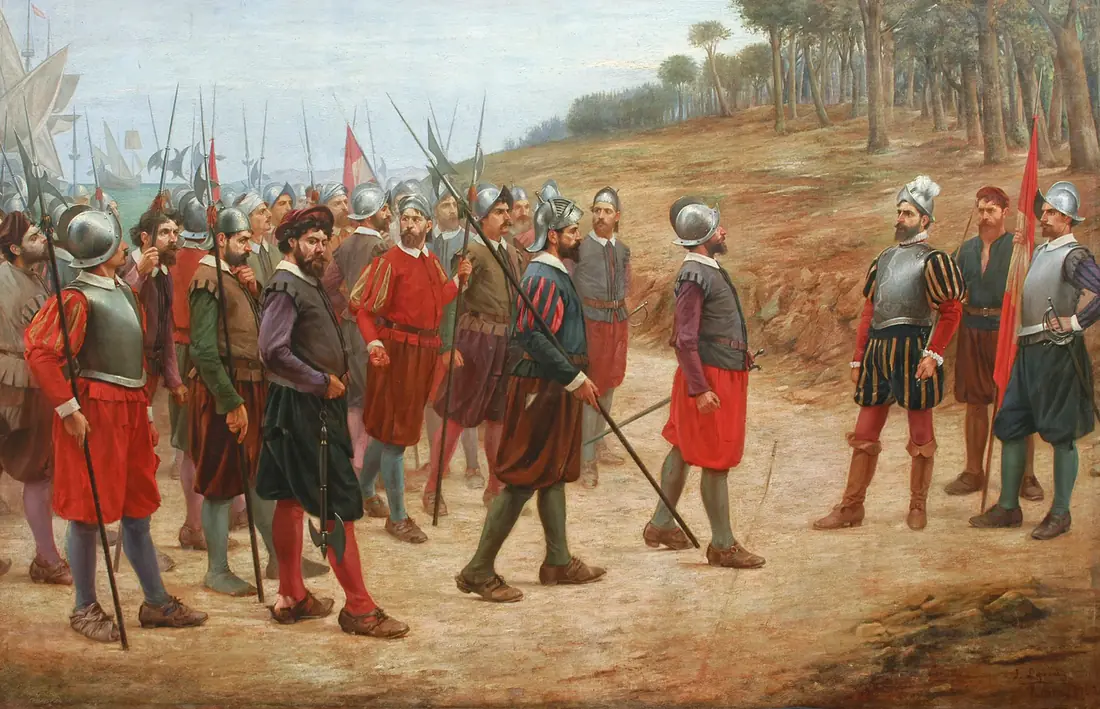
Prince William of Orange landed a Dutch force at Brixham on 15 November 1688, initiating the invasion that forced the removal of James II from the English throne. Before the landing, James held the Crown, commanded the English army of approximately 30,000 men, and relied on the support of the Anglican establishment and the Irish and Scottish militias loyal to him. The political settlement assumed that the monarchy would continue under the hereditary principle and that the king could rule without parliamentary consent on foreign policy.
William assembled about 15,000 troops, including 5,000 infantry, 2,000 cavalry, and 8,000 support personnel, funded by Dutch subsidies and English dissenters who opposed James. The plan called for a rapid coastal landing, establishment of a secure beachhead, and swift movement toward London to link with English forces willing to defect. William personally commanded the expedition, while James remained at Whitehall awaiting a decisive battle that never materialised.
The landing succeeded without resistance; the local militia offered no opposition and the town of Brixham supplied provisions. Within days William’s army marched to Exeter, where the garrison of 3,500 men surrendered after a brief negotiation. News of the invasion spread, and by 20 November a majority of the English Parliament declared James had abandoned his duties. James fled to France on 23 November, leaving the throne vacant.
The immediate result was the proclamation of William and his wife Mary, James’s daughter, as joint sovereigns on 13 February 1689. This altered the constitutional arrangement: the Crown became contingent on parliamentary approval, formalised later in the Bill of Rights 1689, which limited the monarch’s power to levy taxes and maintain a standing army without Parliament’s consent. The English army was reorganised under William’s command, integrating Dutch officers and reducing the influence of Jacobite officers loyal to James.
The Glorious Revolution therefore replaced a hereditary, largely autonomous monarchy with a constitutional monarchy in which Parliament controlled fiscal and military policy. The change secured Protestant succession, realigned England’s foreign policy toward the Dutch Republic, and set a precedent for limited royal authority that shaped later British constitutional development.
In early 1532 the Inca Empire was divided between two rival claimants after the death of Emperor Huayna Capac. The northern ruler Atahualpa controlled the city of Quito and an army estimated at 80,000 men, while the southern ruler Huáscar held the capital Cuzco with a similar force. This civil war weakened central authority and disrupted tribute collection, creating an opening for external actors.
Francisco Pizarro arrived in the Andean highlands in 1532 with a small expedition funded by the Spanish Crown and private investors. His force consisted of 168 men, including 30 cavalry, armed with steel swords, crossbows and a few early firearms. The expedition relied on a legal claim known as the *requerimiento*, a document that declared Spanish sovereignty over newly discovered lands and demanded indigenous submission. Pizarro used this claim to justify demanding tribute and to legitise any seizure of wealth.
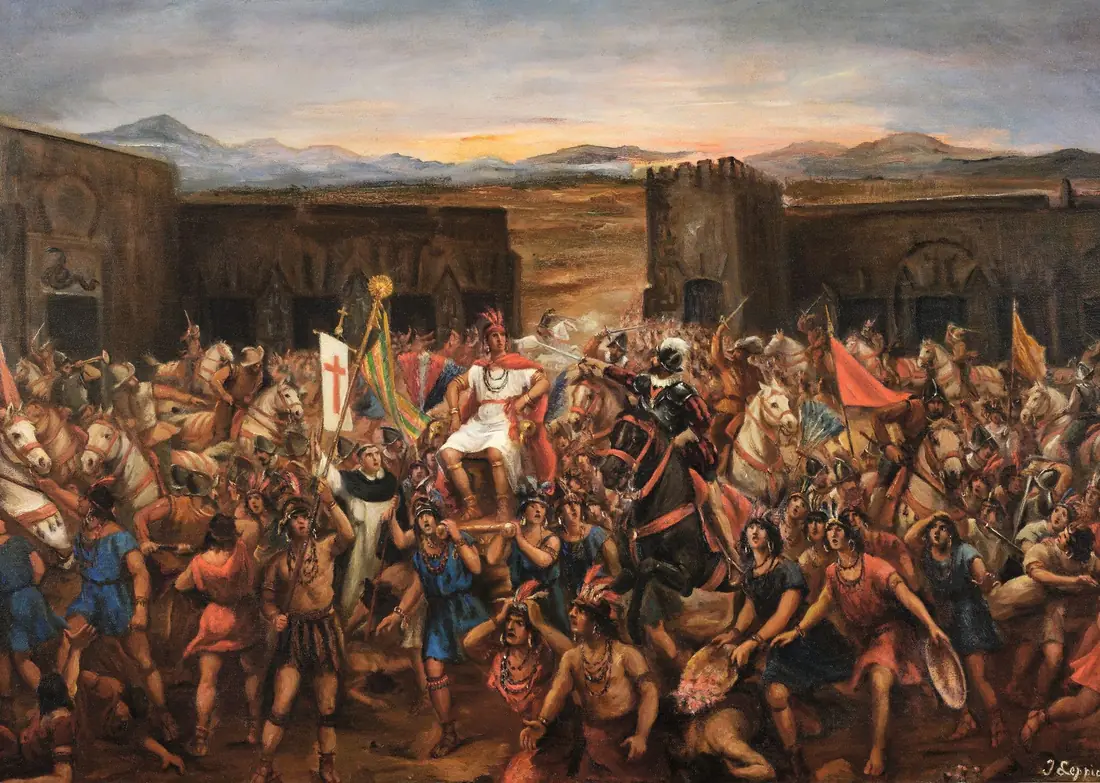
On 15 November Pizarro and his men reached the town of Cajamarca, where Atahualpa was attending a ceremony with his retinue. Pizarro sent a message demanding that Atahualpa submit to Spanish rule and hand over his treasure. The Inca ruler, believing he could negotiate, agreed to meet the Spaniards in the town square with a small escort of about 2,000 unarmed retainers. Pizarro arranged his troops on the surrounding streets, concealed behind stone walls and rooftops, and prepared a cavalry charge.
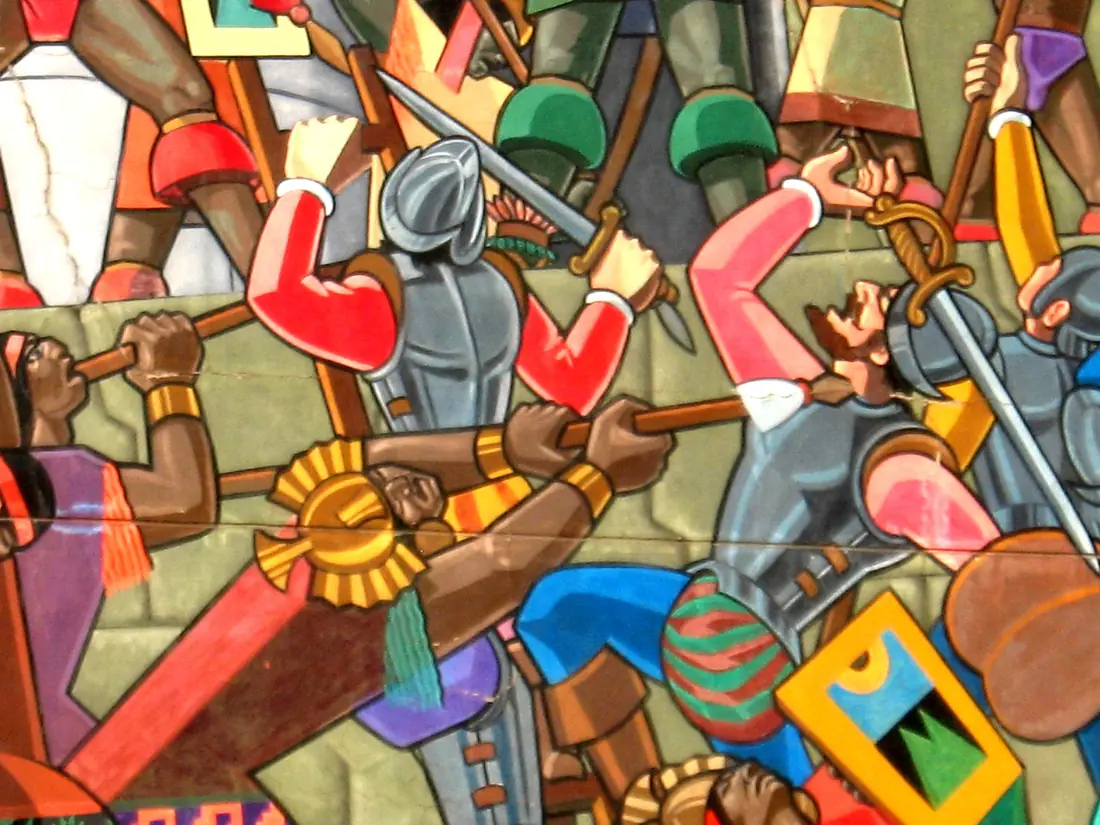
When Atahualpa entered the square, Pizarro ordered the cavalry to rush forward. The Spaniards captured the emperor and his immediate guards within minutes, while the larger Inca force was unable to respond effectively because they were unarmed and lacked a coordinated command structure. Of the 2,000 retainers present, only a handful escaped the melee. The capture yielded a ransom of roughly 2 million pesos in gold, silver and jewels, which the Spaniards melted into coins to fund further operations.
The seizure of Atahualpa marked the decisive shift from exploratory raids to full conquest of the Inca state. By holding the emperor, Pizarro forced the northern and southern factions to negotiate under Spanish terms, and he used the ransom to equip additional expeditions that eventually captured Cuzco in 1533. The event thus initiated the rapid collapse of the Inca political system and the establishment of Spanish colonial administration in Peru.
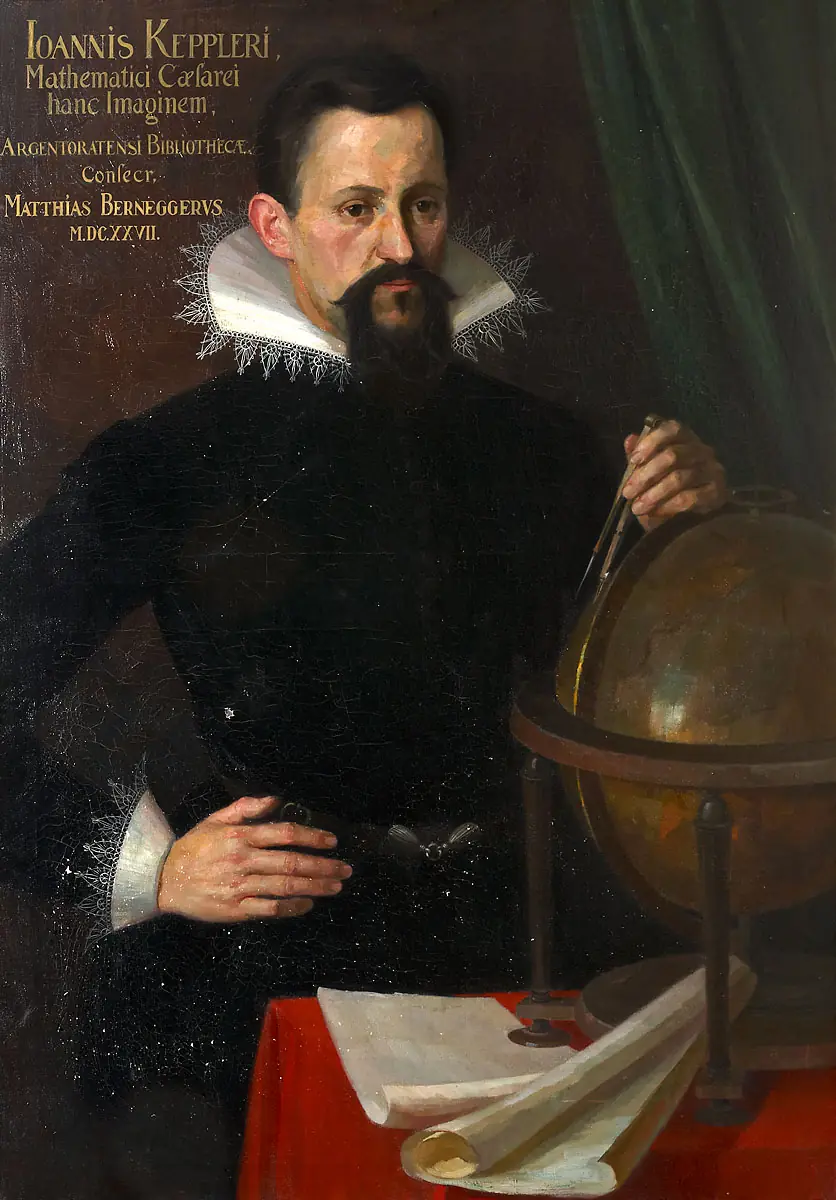
Johannes Kepler died on 15 November 1630 in Regensburg, ending the career of the astronomer whose three laws of planetary motion replaced the Ptolemaic system with a heliocentric model based on precise geometry. Before his death, most scholars still relied on epicycles and circular orbits, and the idea that planets moved in ellipses was considered a mathematical curiosity rather than a physical reality. Kepler’s law of areas, which states that a line joining a planet to the Sun sweeps out equal areas in equal times, provided the mechanism that linked observational data to a predictive framework, allowing astronomers to calculate planetary positions without resorting to arbitrary corrections.
Kepler had been appointed imperial mathematician by Emperor Rudolf II in 1596, a position that gave him access to Tycho Brahe’s observational data of Mars. Using 777 observations of Mars recorded between 1573 and 1597, Kepler derived his first law in 1609, showing that planetary orbits are ellipses with the Sun at one focus. He published the law of areas in 1619 and his harmonic law in 1619 as well, establishing a complete set of relations that linked orbital period to semi‑major axis. These laws were mathematically rigorous; for example, the ratio of the squares of Earth’s orbital period (1 year) to Mars’s period (1.88 years) matches the ratio of the cubes of their average distances (1 AU to 1.52 AU) to within a fraction of a percent. The precision of these relations convinced contemporaries such as Galileo Galilei, who corresponded with Kepler and praised the work despite personal disagreements.
Kepler’s death removed the last living proponent of a systematic, law‑based astronomy in the early 17th century. His surviving manuscripts, including the unpublished "Rudolphine Tables" that predicted planetary positions to within one arc‑minute, were handed to his son, Heinrich, who published them in 1627. The tables became the standard ephemerides for navigators and astronomers for the next half‑century, directly supporting the voyages of discovery that mapped the globe. Without Kepler’s laws, the later work of Isaac Newton in formulating universal gravitation would have lacked the empirical foundation that linked force to orbital motion.
The immediate consequence of Kepler’s death was the consolidation of his mathematical legacy into widely used reference works, which allowed the scientific community to move from descriptive astronomy to a predictive science. This transition made accurate calendar reform, long‑distance navigation, and the eventual launch of space probes possible, turning what was once an abstract theory into a practical tool for humanity.
The Swiss Confederacy forces killed roughly 1,500 Habsburg soldiers in a single ambush at Morgarten. The battle occurred on a narrow defile between the villages of Sattel and Morschach, where the road rose about 300 meters above lake level and was flanked by steep forested slopes. Leopold I of Austria had assembled an army of about 3,000 men, including 1,200 heavily armed knights, to enforce his claim over the cantons of Uri, Schwyz and Unterwalden. The Swiss militia, numbering approximately 1,500 infantry drawn from the three cantons, positioned themselves on the high ground and prepared a trap that relied on the terrain rather than superior weapons.
The Swiss plan exploited the pass’s limited width of roughly 15 meters, which forced the Austrian column to advance in a single file. When the lead knights entered the choke point, the Swiss released a volley of crossbow bolts and stone projectiles from the trees above. Contemporary chronicles estimate that 800 knights were either killed or wounded in the initial strike, and that only about 200 of the original force escaped the valley. The surviving knights were unable to regroup, and the remaining foot soldiers fled toward the lake, where many drowned. The casualty figures come from the 14th‑century chronicle of Johannes von Winterthur, which is considered the most reliable source despite its occasional exaggeration.
Leopold I’s failure to secure the cantons forced him to negotiate a truce later that year, which acknowledged the de facto autonomy of the three cantons. The treaty, signed at the nearby town of Brunnen, required the Habsburgs to pay a fine of 5,000 silver marks, a sum equivalent to roughly three months of royal revenue according to fiscal records of 1316. The payment was collected from the Austrian treasury and distributed among the Swiss cantons, strengthening their economic independence.
The victory at Morgarten established a precedent for infantry tactics against mounted knights, influencing later battles such as the 1386 Battle of Sempach. It also marked the first major military success that allowed the Swiss Confederacy to expand its membership, eventually incorporating eight cantons by 1353. The battle’s outcome demonstrated that a coordinated militia could defeat a numerically superior feudal army when geography and disciplined planning were applied effectively. This shift in military balance contributed directly to the long‑term development of the Swiss political structure as a confederated republic.
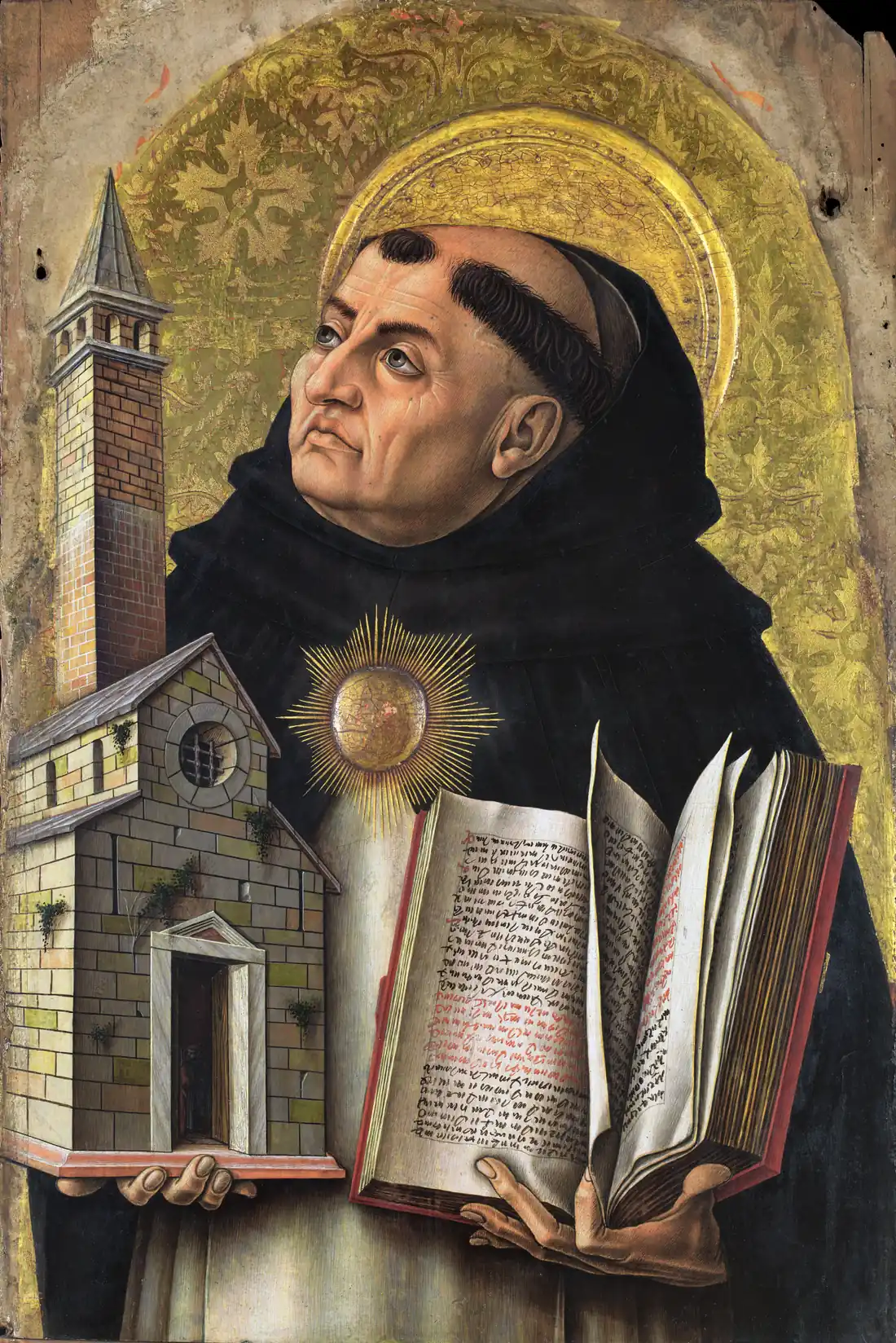
Albertus Magnus died on 15 November 1280, ending a career that linked Aristotelian science to Christian theology. Contemporary records from the Dominican convent in Cologne note that he fell ill after a brief fever and received the last rites on the afternoon of that day. The same documents state that he was buried in the convent chapel the following morning, a ritual performed by his fellow friars who recited the standard funeral Mass for a master of the order.
The significance of his death lies in the closure of a scholarly program that he had directed for more than three decades. As a teacher at the University of Paris, he organized a curriculum that required students to study the complete works of Aristotle in Greek and Latin, then to apply those principles to natural philosophy, medicine, and theology. Evidence from his surviving lecture notes shows that he mandated weekly disputations in which students compared Aristotelian physics with the prevailing Scholastic interpretations. This method produced a generation of scholars who could cite specific passages, such as Aristotle's "Physics" Book II, while also referencing the biblical creation narrative.
Albertus' most influential written work, the "Summa Theologiae, " was completed shortly before his death and circulated among Dominican houses. Manuscript colophons dated 1279 confirm that he supervised the copying of over 200 volumes, a number that far exceeds the output of any earlier medieval scholar. His insistence on empirical observation, recorded in the "De Animalibus, " required that physicians measure pulse rates and record body temperature, practices that later physicians like William of Salicet would adopt.
After his death, his students, including Thomas Aquinas, continued to teach his integrated approach. University records from 1282 list Thomas as a lecturer explicitly identified as a disciple of Albertus. The Dominican order later canonized Albertus in 1931, but the immediate effect in the late thirteenth century was the spread of his textbooks across the emerging university network of Bologna, Paris, and Oxford. This diffusion accelerated the acceptance of Aristotelian natural philosophy in Western Europe and laid groundwork for later scientific inquiry.
Thus, Albertus Magnus' death marked not just the loss of a single thinker but the transition of a systematic educational model from a single master to an institutionalized curriculum that persisted for centuries.