Daily History
War & conflict

Battle of Belleau Wood

Belleau, France
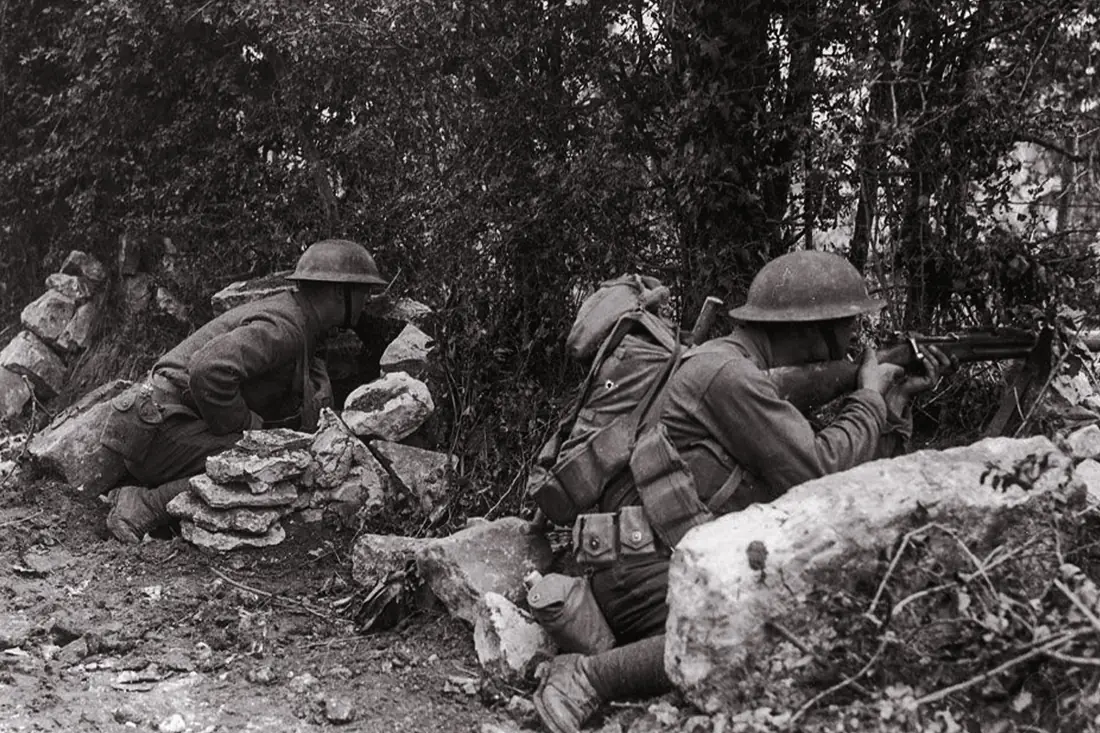
Battle of Belleau Wood — Belleau, France
Image: US Army Signal Corps · CC0

As the sun rises over the small village of Belleau, France, on June 6, 1918, 25-year-old Marine Corporal Daniel D. Pullen peeks out of his trench, gazing at the dense woods ahead. The air is thick with tension, and the smell of mud and blood hangs heavy over the battlefield. Pullen, a young man from Iowa, is about to embark on a journey that will change his life forever. Alongside him are thousands of other Marines, including the famous Major General John A. Lejeune, who will lead the charge into the treacherous woods. The Battle of Belleau Wood is about to begin, and the fate of the war hangs in the balance.

The situation before the battle was dire. The German army had launched a massive offensive in the spring of 1918, pushing deep into French territory. The Allies were struggling to hold their ground, and the Germans were closing in on the strategic city of Paris. The Marines, who had arrived in France just a few months earlier, were tasked with holding the line and preventing the Germans from advancing further. They were stationed in the picturesque village of Belleau, surrounded by dense woods that seemed to stretch on forever. The Germans had been using these woods as a staging ground for their attacks, and the Allies knew they had to take control of the area if they were going to have any chance of winning the war.

As the Marines prepare to charge into the woods, they are met with a hail of machine gun fire and artillery shells. The Germans are well-entrenched, and they have set up a complex network of trenches and bunkers that seem impenetrable. But the Marines are determined to take the woods, and they launch a series of fierce attacks that push the Germans back. The fighting is intense, with both sides suffering heavy casualties. Over the course of the next few weeks, the Marines will launch wave after wave of attacks, slowly but surely gaining ground. They will suffer over 9,000 casualties, including 1,811 killed, but they will ultimately emerge victorious.
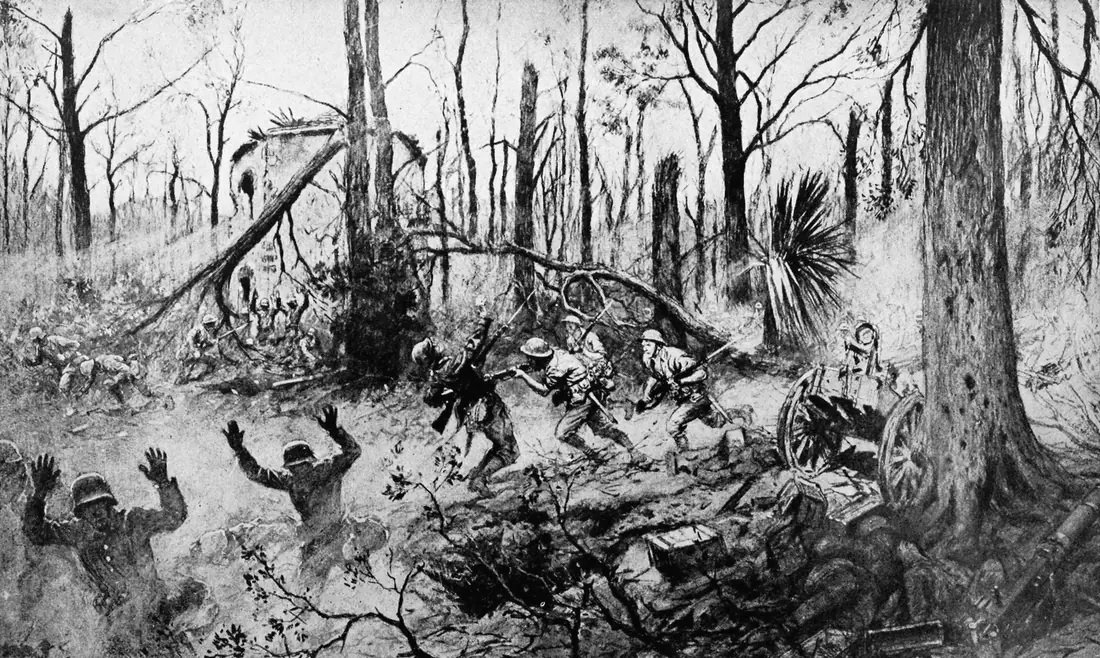
Battle of Belleau Wood — Belleau, France
Image: Georges Scott (painting); Underwood & Underwood (photograph) · Public domain

The human cost of the battle is staggering. Men like Corporal Pullen, who are just barely out of their teens, are being thrown into the meat grinder of war. They are forced to confront the harsh realities of combat, and many of them will not survive. The woods are a maze of death, with bodies strewn about and the sounds of gunfire and screams filling the air. The Marines are exhausted, hungry, and scared, but they refuse to give up. They are driven by a sense of duty and loyalty to their fellow soldiers, and they are determined to take the woods no matter what the cost.

As the battle rages on, the Marines begin to gain the upper hand. They are able to establish a foothold in the woods, and they start to push the Germans back. The fighting is fierce, with both sides suffering heavy casualties. But the Marines are relentless, and they continue to push forward. On June 26, 1918, after 20 days of fighting, the Marines finally secure the woods. They have suffered over 9,000 casualties, but they have won a crucial victory. The Germans will never again threaten Paris, and the Allies will be able to launch a counterattack that will ultimately win the war.
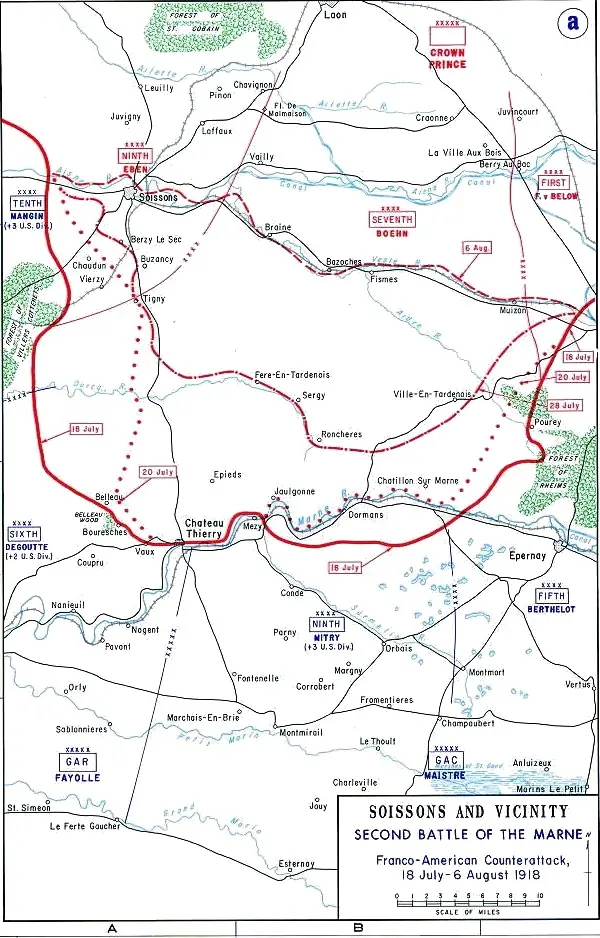
Battle of Belleau Wood — Belleau, France
Image: Department of Military Art and Engineering, at the U.S. Military Academy (West Point) · Public domain

The Battle of Belleau Wood is a testament to the bravery and sacrifice of the Marines who fought there. It is a reminder that war is not just about grand strategy and military tactics, but about the individual soldiers who are willing to risk everything to achieve victory. As Corporal Pullen looks out over the devastated landscape, he knows that he and his fellow Marines have accomplished something truly remarkable. They have taken a strategic piece of territory, and they have paved the way for the Allied victory. But as he gazes out at the sea of broken trees and shattered bodies, he can't help but wonder what the true cost of their victory has been. The Battle of Belleau Wood will be remembered as one of the bloodiest and most brutal battles of the war, and it will serve as a reminder of the devastating consequences of conflict. And as Pullen walks away from the battlefield, he is met with a haunting sight: a sea of white crosses, stretching out as far as the eye can see, each one marking the grave of a fallen Marine.

Source: en.wikipedia.org/wiki/Battle of Belleau Wood

Technology

Founding of Chrysler Corporation

Detroit, USA

Founding of Chrysler Corporation — Detroit, USA
Image: ajay_suresh · CC BY 2.0

On a sweltering summer day, June 6, 1925, Walter Chrysler stood in the heart of Detroit, witnessing the birth of his eponymous corporation, the Chrysler Corporation. This moment marked the culmination of years of dedication and perseverance by Chrysler, who had previously worked at the Buick Motor Company and the Willys-Overland Motor Company. At the age of 46, Chrysler had amassed a wealth of knowledge in the automotive industry and was determined to leave his mark.

As the story unfolds, it becomes clear that the founding of the Chrysler Corporation was not merely the brainchild of one individual, but rather the result of a series of calculated risks and strategic decisions. Before the establishment of the Chrysler Corporation, the automotive landscape was dominated by giants such as Ford and General Motors. However, Chrysler saw an opportunity to capitalize on the growing demand for cars and to provide an alternative to the existing market leaders. With an initial investment of $5 million, Chrysler set out to create a company that would not only manufacture cars but also provide its customers with a unique driving experience.

The science behind the Chrysler Corporation's success lay in its innovative approach to car manufacturing. Chrysler introduced the concept of the 'semi-automatic transmission,' which greatly simplified the driving process and made cars more accessible to the masses. Furthermore, the company's focus on producing high-quality, affordable vehicles helped to establish it as a major player in the industry. In the first year of operation, the Chrysler Corporation produced over 32,000 vehicles, with the Chrysler Six being its flagship model. The car's impressive features, including its powerful six-cylinder engine and sleek design, quickly gained popularity among consumers.

Founding of Chrysler Corporation — Detroit, USA
Image: Historianbuff · Public domain

The human side of the story is equally fascinating, with Chrysler's personal story being one of rags-to-riches. Born in 1875 in Wamego, Kansas, Chrysler began his career as a machinist and eventually worked his way up to become the president of the Buick Motor Company. His experience and expertise in the industry proved invaluable as he navigated the challenges of establishing a new company. Chrysler's leadership and vision inspired loyalty in his employees, who worked tirelessly to ensure the company's success. As the company grew, so did its workforce, with over 10,000 employees being hired in the first five years of operation.

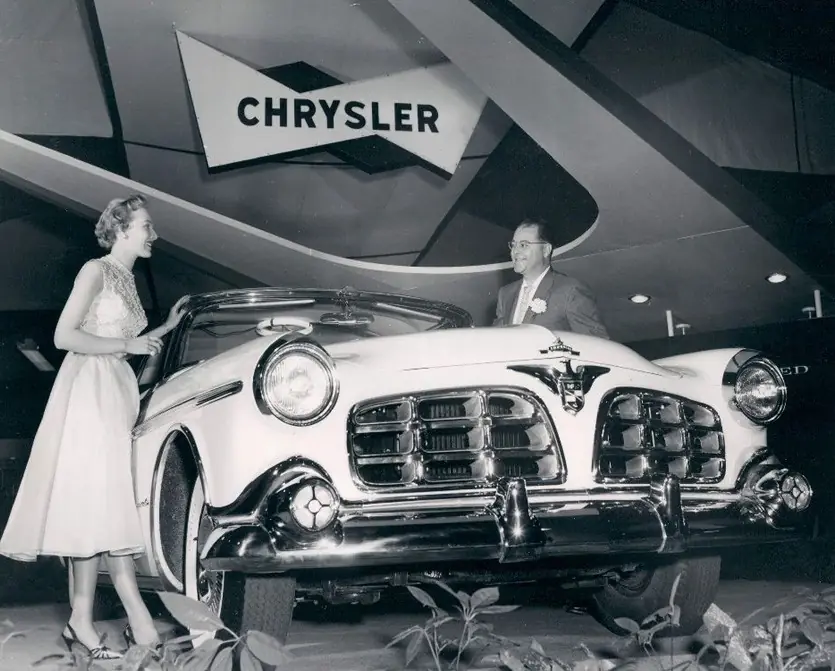
The aftermath of the Chrysler Corporation's founding was nothing short of remarkable. The company's impact on the automotive industry was immense, with its innovative products and manufacturing techniques setting a new standard for the industry. In the years that followed, the Chrysler Corporation continued to expand, with its sales figures skyrocketing to over $1 billion by the end of the 1920s. The company's success also had a profound impact on the city of Detroit, which became a thriving industrial hub, attracting thousands of workers and stimulating economic growth. By the 1950s, the Chrysler Corporation had become one of the Big Three automakers in the United States, alongside Ford and General Motors.

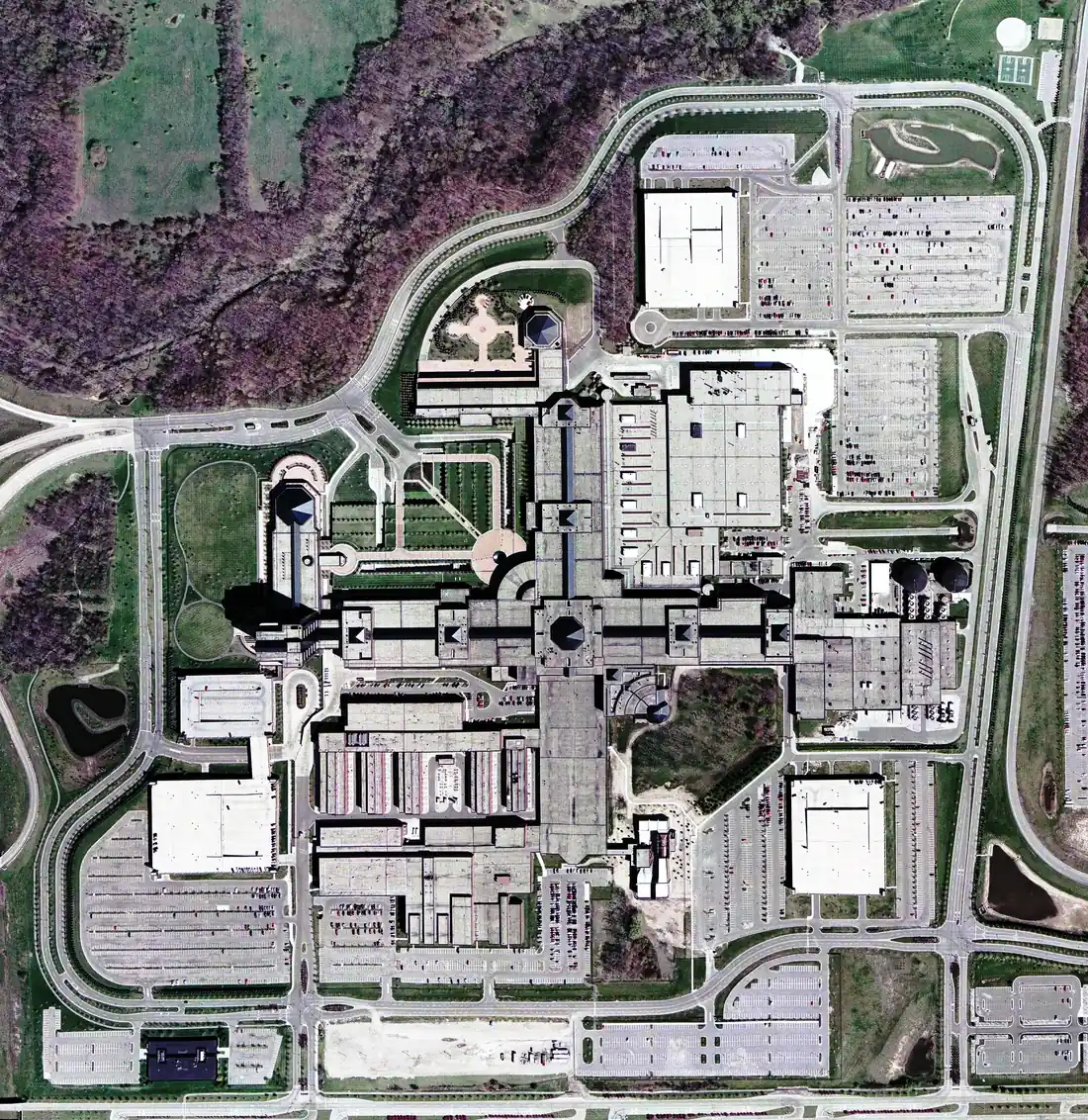
Founding of Chrysler Corporation — Detroit, USA
Image: derivative work: MBisanz talk ChryslerHQ-highres.jpg: USGS · Public domain

As the years passed, the Chrysler Corporation continued to evolve, with the company introducing new models and technologies that further cemented its position in the industry. However, despite its many successes, the company also faced numerous challenges, including increased competition and economic downturns. One of the most significant challenges came in the 1970s, when the company faced bankruptcy and was forced to undergo a major restructuring. Under the leadership of Lee Iacocca, the company was able to recover and regain its position as a major player in the industry.

Today, as we look back on the founding of the Chrysler Corporation, it is clear that the company's impact extends far beyond the automotive industry. The company's innovative approach to manufacturing and its commitment to producing high-quality, affordable vehicles helped to shape the modern automotive industry. Moreover, the company's influence can be seen in the many other industries that it has touched, from the development of new technologies to the creation of thousands of jobs. And yet, as we reflect on the company's legacy, one detail stands out - the fact that Walter Chrysler, the man who founded the company, never actually learned to drive until he was in his 30s, a testament to the power of perseverance and determination.

Source: en.wikipedia.org/wiki/Chrysler

Use the arrow keys to move between days

Browse the full archive →