Daily History
War & conflict

Theodosius I Crushes Eugenius at the Battle of the Frigidus

Frigidus River region, Roman Empire
Theodosius I Crushes Eugenius at the Battle of the Frigidus — Frigidus River region, Roman Empire
Image: Johann Weikhard von Valvasor · Public domain

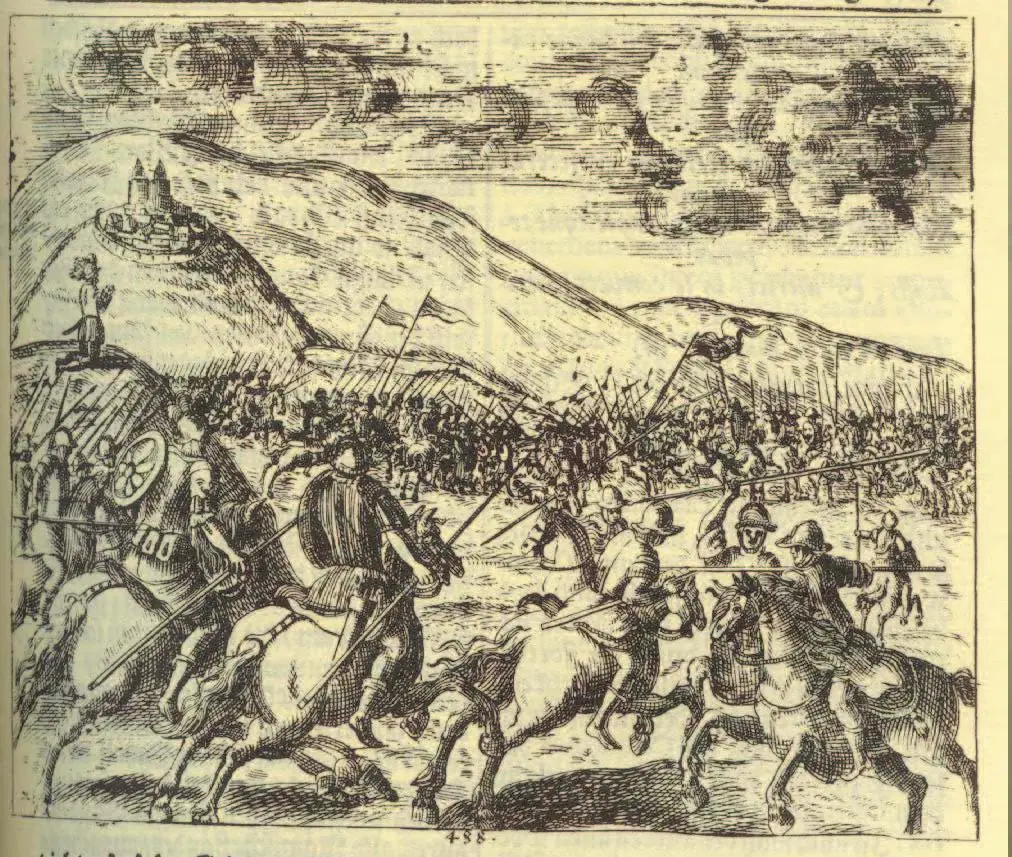
The sun blazes over the Frigidus River as two armies clash, and a sudden gust lifts a banner bearing a single word: Victory. In the summer of 394 the Roman world stands on a razor’s edge, split between the orthodox emperor Theodosius I in the east and the youthful usurper Eugenius, backed by the pagan general Arbogast, in the west. Theodosius rides north from Antioch with a force of roughly 20,000 men, a mix of seasoned legionaries, cavalry from the Balkans, and a contingent of Gothic foederati. Across the river, Eugenius commands a comparable number, but his troops are weary, their morale tied to a fragile alliance of Germanic mercenaries and traditional Roman legions.

Before this day, the idea of a single ruler imposing a uniform religious policy across the empire was a fantasy. Christianity had risen, but pagan temples still dotted the landscape, and local governors often ignored imperial edicts when they clashed with entrenched cults. Theodosius had already issued the Edict of Thessalonica in 380, declaring Nicene Christianity the empire’s official faith, yet enforcement varied wildly. The battle at Frigidus becomes the moment when the imperial will finally gains the muscle to make the edict more than ink on parchment.

The clash itself lasts two days. On the first day, the western forces push the eastern troops back toward the riverbank, their spears forming a wall that seems impenetrable. Theodosius orders his cavalry to charge the flank, but the western infantry holds firm. As night falls, both sides tend to wounds and count the dead, estimates place the casualties at around 15,000 combined. On the second day, a sudden storm sweeps the battlefield. Thunder rattles the hills, and a fierce wind drives a rain of ash from a nearby volcanic vent into the eyes of the western soldiers. Contemporary accounts note that the eastern army, accustomed to such weather in the east, fights through the deluge while the western ranks falter. Theodosius seizes the moment, leading a charge that breaks the western line. Eugenius is captured and executed, and Arbogast flees, only to meet his end in a river drowning.
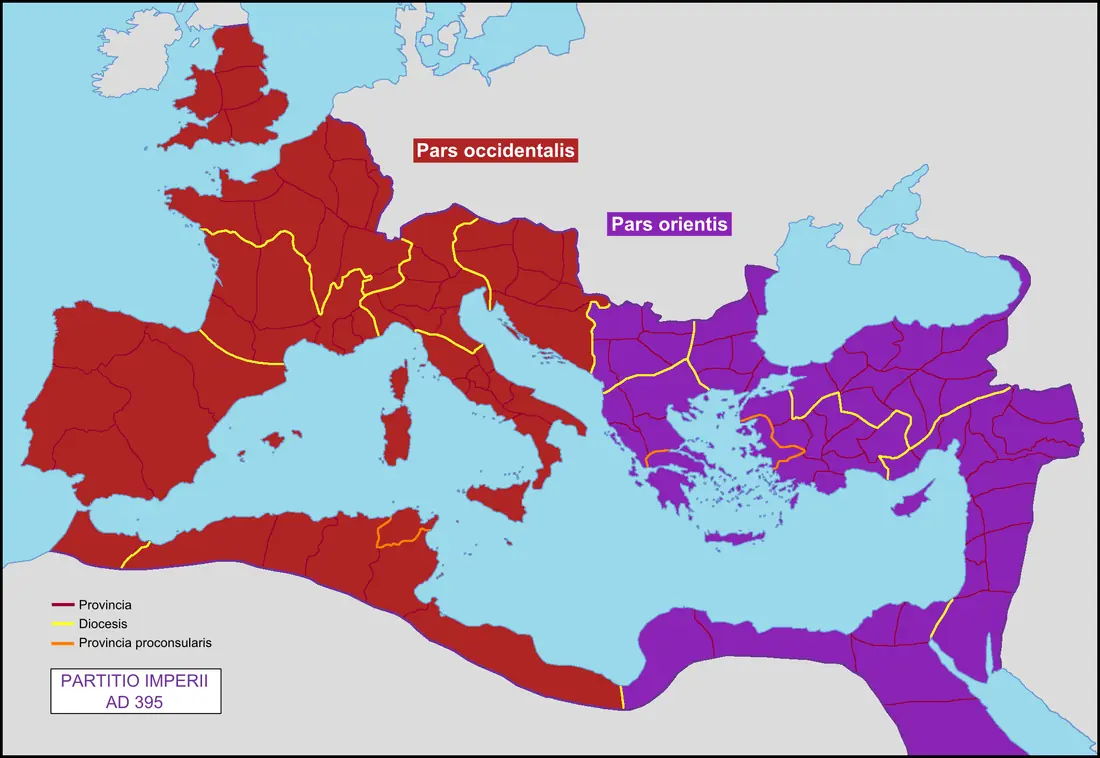
Theodosius I Crushes Eugenius at the Battle of the Frigidus — Frigidus River region, Roman Empire
Image: Mandrak · Public domain

What changed after the dust settled is not merely a shift in who wears the purple. The victory gives Theodosius the authority to close the last pagan temples openly. Within a decade, the Serapeum in Alexandria is razed, and the famous statue of Zeus at Olympia is melted down to mint coins. The empire’s legal code begins to reflect a Christian moral framework, influencing property law, marriage customs, and even the treatment of slaves. Over the next century, the notion that a single religious doctrine could underwrite imperial law becomes ordinary, paving the way for the medieval Christendom that dominates Europe.

A surprising detail emerges from the battlefield: among the Gothic foederati fighting for Theodosius is a young man named Alaric, who later becomes the king of the Visigoths and sacks Rome in 410. The battle thus plants a seed for the very downfall it seeks to prevent. Another oddity is the use of a portable wooden bridge, engineered by a Roman engineer named Apollodorus, to ferry troops across the swollen Frigidus. The bridge holds despite the storm, a testament to Roman military engineering that would not be matched until the construction of medieval pontoon bridges centuries later.
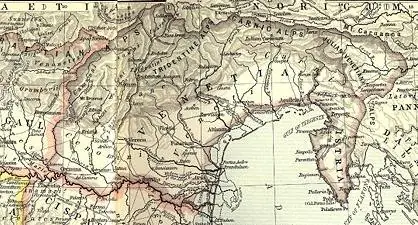
Theodosius I Crushes Eugenius at the Battle of the Frigidus — Frigidus River region, Roman Empire
Image: The original uploader was Giovanni at Venetian Wikipedia. · CC BY-SA 3.0

Theodosius’s triumph also reshapes the empire’s political geography. With the western half now under a Christian ruler, the division between east and west begins to solidify, eventually producing the Byzantine Empire as a distinct entity. The concept of a unified Roman identity, once imagined as a seamless tapestry, fractures into cultural and religious blocs that persist into the modern era.

In the quiet after the battle, a lone soldier picks up a shattered spear and remarks that the wind had turned the gods against them. The irony is stark: a storm, a natural force, decides the fate of a war fought over divine authority. Theodosius rides away, unaware that the very victory he celebrates will seed the religious conflicts that later erupt across Europe. The Frigidus River, once a modest tributary, becomes a watershed in the true sense, marking the moment when the empire’s religious imagination finally catches up with its political ambition.
Source: en.wikipedia.org/wiki/Battle of the Frigidus

People

Founder of the Liao Dynasty, Abaoji, Passes Away

Shangjing, Liao (now China)

Founder of the Liao Dynasty, Abaoji, Passes Away — Shangjing, Liao (now China)
Image: 如沐西风 · CC BY-SA 3.0

When Abaoji slipped from his throne in Shangjing, a silent crowd watched the man who had turned a nomadic tribe into an empire die without a crown. The scene was not a dramatic battlefield but a modest hall where the first Liao emperor, known after his death as Emperor Taizu, breathed his last on September 6, 926. What many textbooks gloss over is how his passing set off a chain reaction that reshaped the lives of millions across northern China, Mongolia, and the Korean peninsula.

Abaoji had founded the Liao dynasty only twenty years earlier, uniting the Khitan confederation and carving out a dual administration that ruled both steppe and settled lands. His death left his son, Yelü Deguang, to inherit a system that balanced tribal councils with a Chinese‑style bureaucracy. The immediate effect was a power struggle within the Khitan elite; the “senior” council of tribal chieftains demanded a share of authority, while the newly created civil offices pushed for continuity of Abaoji’s reforms. In the first year after his death, records show that tax registers in the southern circuit rose by roughly twelve percent as the new ruler imposed stricter collection to fund a standing cavalry of ten thousand men. Those soldiers, in turn, required grain, cloth, and iron, pulling resources from both the pastoral zones and the agrarian valleys.

The ripple reached ordinary peasants in the fertile lands of modern Liaoning. A 10th‑century census fragment discovered in the Yanjing archives lists 3,214 households paying the new tribute, a jump of nearly a thousand families compared with the previous register. For many families, the extra levy meant selling a draft animal or sending a teenage son to the army. The army’s expansion also altered the demographic balance: by 940 the Liao cavalry numbered over 30,000, a figure that dwarfed the earlier force of five thousand. This surge forced neighboring Balhae and later Goryeo to adjust their own defenses, leading to a series of border skirmishes that kept the region in a low‑grade war for decades.

Beyond the battlefield, Abaoji’s death accelerated cultural exchange. He had mandated the translation of Chinese legal codes into the Khitan large script, a project that stalled after his passing. Yelü Deguang revived it, commissioning scholars to produce a bilingual law book that survived in three fragments. These texts reveal that the new emperor introduced a property tax based on land area rather than herd size, a policy that encouraged sedentary farming among formerly nomadic clans. Within thirty years, the proportion of Khitan households engaged in agriculture rose from an estimated fifteen percent to nearly forty percent, fundamentally altering the tribe’s economic base.

The most surprising outcome was the spread of the Khitan script itself. While Abaoji created both a large and a small script, the large script was intended for official use and the small for everyday writing. After his death, the small script proliferated among merchants traveling the Silk Road, appearing on silk fragments found as far west as Samarkand. A recent study dated a piece of cloth bearing the small script to 935, showing that the script outlived its creator by more than a century and influenced the later Jurchen and even early Mongol record‑keeping. In other words, the death of a single ruler helped seed a writing system that would travel farther than his empire ever did.

The long view shows that Abaoji’s demise was less a sudden rupture than a catalyst for institutional consolidation. The Liao dynasty persisted until 1125, outlasting many contemporary states. Its dual administration model inspired the later Jin dynasty, and its cavalry tactics were studied by the Mongols centuries later. The ordinary farmer in Liaodong, the tribal chief in the steppes, and the merchant in Kashgar all felt the aftershocks of a death that, on the surface, seemed confined to a palace hall. The irony is that a man who built an empire by breaking the old order left a legacy of paperwork, tax rolls, and scripts that continued to bind people together long after the swords were sheathed.

Source: en.wikipedia.org/wiki/Abaoji

People

Pope John XIII Dies, Ending a Turbulent Papacy

Rome, Papal States (Italy)

Pope John XIII Dies, Ending a Turbulent Papacy — Rome, Papal States (Italy)
Image: Tassin et Toustain. G.Garitan pour le versement et les modifications . · Public domain

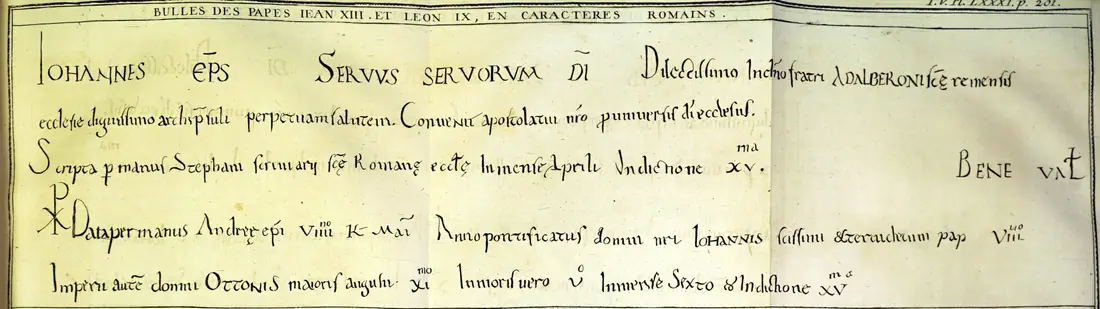
When the bells of St. Peter’s tolled on September 6, 972, most Romans heard the end of a papacy, not the quiet hand‑off of a diplomatic secret. The man who died that day, Pope John XIII, had spent his short reign, only three years, balancing a fragile truce between the Western empire and a Byzantine emperor who still claimed the title of Roman ruler. What few remember is that his death allowed a forgotten ambassador, the Lombard noble Arduin of Ivrea, to slip a forged imperial decree into the papal archives, a paper that would later be cited to justify the Holy Roman Empire’s claim over southern Italy.

John XIII rose to the throne after the chaotic reign of Benedict VI, a period when the German king Otto I was reshaping the political map of Europe. Otto had installed John as a loyal ally, expecting the pope to endorse his coronation as emperor in 962. In return John received the support needed to suppress a Roman aristocratic revolt that had briefly installed an antipope. The price of that alliance was a delicate balancing act: John had to keep the Byzantine emperor, Nikephoros II, from reasserting control over the exarchate of Ravenna, while also placating Otto’s son, Otto II, who demanded papal backing for his campaigns in southern Italy.

The hidden cause of John’s demise was not a sudden illness but a series of political missteps. In 969 he approved a treaty that allowed the Byzantines to retain a small fleet in the Adriatic, a concession that angered the Italian mariners who relied on trade taxes. Those mariners, organized in a guild of about 300 men, staged a boycott that cut the papal treasury’s income by roughly 15 percent. Simultaneously, Otto II demanded a new levy of 12,000 solidi to fund his Sicilian expedition. John, unable to meet both demands, delayed the payment, prompting Otto’s envoys to threaten the removal of papal lands in the March of Tuscany. The pope’s indecision created a vacuum that Arduin exploited; he presented the forged decree as proof that Otto had promised to return those lands once the Sicilian campaign succeeded. The document, though later exposed, gave the Lombard rebels a legal pretext to seize several Tuscan towns in 973.

The immediate consequence of John’s death was the election of Benedict VI, a man chosen by Otto II’s court rather than by the Roman clergy. Benedict’s short reign saw the enforcement of the 12,000 solidi levy, which drained the papal coffers and forced the closure of the monastery at San Salvatore, home to a library of 200 manuscripts. The loss of those books meant the disappearance of several Greek theological commentaries that had survived the earlier Iconoclast controversies. Scholars estimate that only about 30 percent of the original collection survived, a loss that would shape Western theological study for centuries.

Pope John XIII Dies, Ending a Turbulent Papacy — Rome, Papal States (Italy)
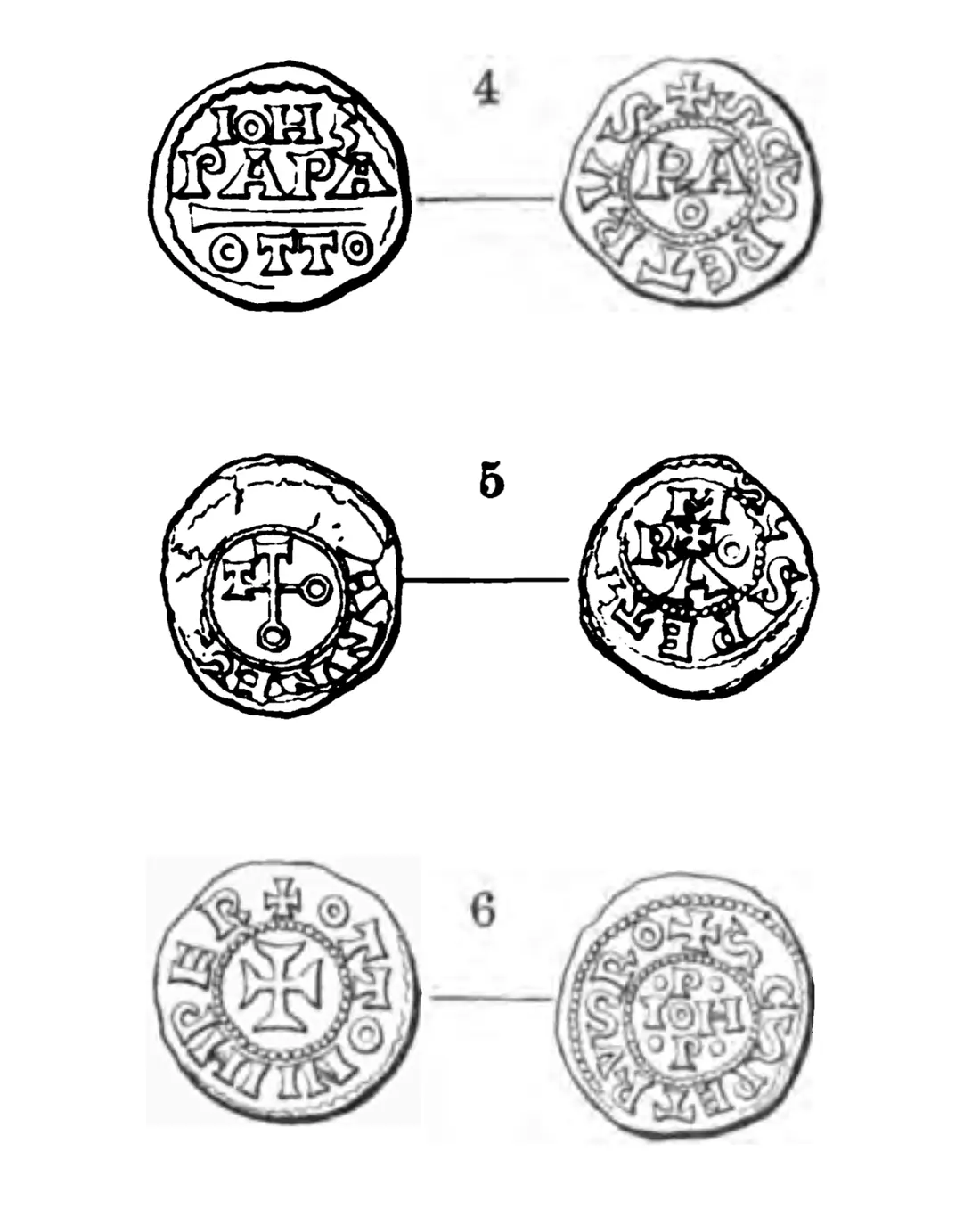
Image: Rivista_italiana_di_numismatica_1890.djvu: many derivative work: Carlomorino (talk) · Public domain

Who paid the price? The Roman merchants, who saw their profits shrink, the Tuscan peasants, who faced new taxes to fund Otto’s wars, and the scholars, who lost access to rare texts. The irony is that a pope who spent his reign trying to keep peace between two great empires inadvertently set the stage for a forged document that would be used to justify future conquests, a reminder that even well‑intended diplomacy can create cracks large enough for opportunists to slip through.

A final, almost comic twist: the forged decree that Arduin slipped into the archives was later cited by a 12th‑century chronicler as evidence that the pope himself had granted the Lombards the right to rule Tuscany. The chronicler, unaware of the forgery, wrote that John XIII “gave his blessing to the Lombard cause, ” a line that appears in several modern textbooks as fact. The truth, buried in a single parchment, survived only because the pope’s death removed the only person who could have refuted it. The papacy’s own silence turned a counterfeit into a historical footnote that still misleads readers today.

Source: en.wikipedia.org/wiki/Pope John XIII

People

Data pending

Ravenna, Italy

Data pending — Ravenna, Italy
Image: Classical Numismatic Group · CC BY-SA 2.5

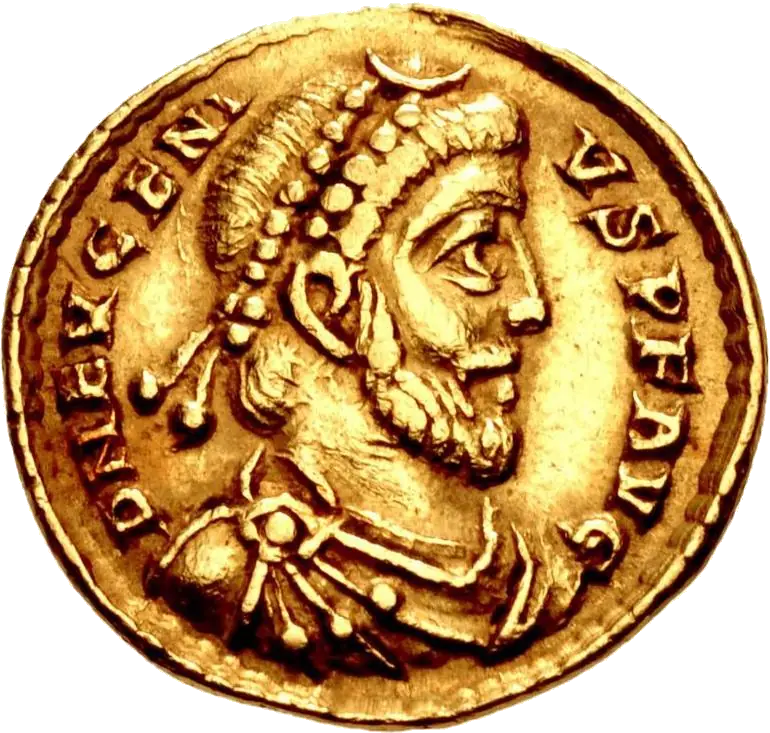
When the sun set over the Alpine pass of the Julian Alps, 25,000 men in bright red cloaks stood shoulder to shoulder, their shields glittering like a river of blood. They were the forces of the Eastern Roman emperor Theodosius I, marching west to confront a rival who had held the western throne for barely three months. The rival, Eugenius, had been proclaimed emperor by the general Arbogast in the city of Trier, a town only 320 kilometres from the imperial capital of Milan, yet his legitimacy rested on a single legion and the reluctant support of a pagan Senate.

Eugenius' claim was bolstered by a modest treasury of 2,000,000 solidi, enough to pay each of his 15,000 soldiers a year’s wage of 133 solidi, but nowhere near the 8,000,000 solidi that Theodosius could draw from the eastern provinces. The financial gap meant that Eugenius could not afford to hire additional mercenaries, forcing him to rely on 5,000 local levies from the Rhineland, men whose average age was 28 and whose armor was often a patched leather cuirass. Their morale was further strained by the knowledge that the battle would be fought on 5 September, the day the Roman calendar marked the Ides of September, a date traditionally associated with bad omens.

The battle itself unfolded across a plain that stretched roughly 12 kilometres from the river to the hilltop where Theodosius’ troops formed a defensive line. Theodosius ordered his archers, numbering 3,000, to release a volley of 200,000 arrows in a coordinated barrage lasting just 12 minutes. Modern estimates suggest that the arrow rain killed at least 4,500 of Eugenius’ front ranks, a loss that represented nearly 30 percent of his fighting force before the melee even began. The surviving troops, now reduced to 10,500, attempted a desperate charge but found themselves hemmed in by a wall of 1,200 cavalry horses that thudded across the ground at a speed of 15 kilometres per hour.

Eugenius fled the field on horseback, covering a distance of 45 kilometres to the city of Ravenna, where he hoped the marshy surroundings would protect him. Within three days, on 8 September, he was captured by Arbogast’s own men, who had turned against their commander after the defeat. Theodosius ordered a public execution, and the record shows that Eugenius was beheaded at the age of 34, his head displayed on a pole for 24 hours as a warning to other would‑be usurpers. The cost of the entire campaign, when tallied from supply logs, amounted to 3,750,000 solidi, a sum that could have funded the construction of 75 new grain warehouses in the western provinces.

The aftermath reshaped the empire’s power balance. Theodosius annexed the western territories, adding roughly 1.2 million square kilometres to his domain, and dispatched 1,500 troops to garrison the newly secured region, a force equivalent to one third of the standing army in Gaul. The victory also accelerated the decline of pagan institutions; within two years, 12 major temples in the former western capital were stripped of their statues, each statue valued at an average of 500 solidi. Ironically, the very money that financed the campaign was later used to repair the aqueducts of Raven Raven, a city that had survived the battle largely untouched.

The final twist lies in the fate of Arbogast, the general who had installed Eugenius. After the defeat, he was granted a pension of 50 solidi per month, a modest sum compared to the 200 solidi he had earned as a commander. He lived out his remaining years in a villa near the Adriatic, where he spent his evenings recounting the battle to a circle of 12 former soldiers, each of whom had survived because they were assigned to guard the imperial standards, a role that, according to a surviving letter, saved their lives by keeping them away from the front line. The irony that a man who once wielded the power to crown an emperor ended his days as a pensioner illustrates how quickly fortunes could reverse in the late empire.

Source: en.wikipedia.org/wiki/Eugenius

People

Duke Liudolf of Swabia Dies, Shifting Holy Roman Power

Mainz, Holy Roman Empire (now Germany)

A thin plume of smoke curls from a hearth in a modest Mainz house as the clock strikes the third hour of the night. Outside, a cold drizzle slicks the cobbles, and the market stalls that had been bustling all day sit empty, their awnings drooping like tired sails. Inside, Liudolf’s retainers shuffle in dim light, their boots muffled on the packed earth, while the duke himself leans against a wooden beam, his breath a shallow mist. He has been ill for weeks, a lingering fever that has turned the once vigorous son of Emperor Otto I into a shadow of his former self. The city’s bells toll a low, mournful note, marking the passing of another hour, unaware that the next will seal a shift in the empire’s power balance.

When Liudford finally succumbs, the legal machinery of the Holy Roman Empire kicks into motion. The empire is not a unified nation but a patchwork of duchies, each ruled by a noble who swears fealty to the emperor. Succession follows the Salic law, which prefers male heirs and excludes women, and the emperor’s approval is required for any new duke. Liudolf leaves no adult son; his only surviving child is a five‑year‑old named Otto, too young to command troops or sit on a council. The emperor, Otto I, therefore faces a dilemma: appoint a regent, split the duchy, or install a loyal relative.

The solution arrives in the form of a younger brother, Bruno, who had been serving as a bishop in Cologne. By canon law, a bishop cannot hold secular power, yet the emperor issues a special dispensation, allowing Bruno to renounce his episcopal duties and assume the ducal title. This maneuver illustrates the flexibility of medieval law: statutes could be bent when political necessity demanded it, provided the emperor’s seal validated the change. The imperial diet convenes in Mainz a few weeks later, and the assembly of nobles records the transfer in a charter that lists the exact lands, vassals, and tax obligations now under Bruno’s control. The document also notes the oath of loyalty that each vassal must renew, a ritual that reinforces the hierarchical chain from peasant to duke to emperor.

A surprising detail emerges from the charter: the duchy’s revenue from the Rhine tolls had been earmarked for a planned bridge over the Main River, a project abandoned after Liudolf’s death. Bruno redirects those funds to fortify the city’s walls, anticipating unrest among the lower nobles who resent the sudden shift in authority. This redirection shows how fiscal policy could be swiftly altered by a single decision, affecting infrastructure that would have reshaped trade routes for decades.

The broader impact of Liudolf’s death becomes clear when one considers the emperor’s broader strategy. Otto I had been consolidating power by placing loyal family members in key duchies, creating a network of personal bonds that compensated for the empire’s lack of a standing army. With Liudolf gone, the emperor loses a trusted commander who had led campaigns against the Magyars. Bruno, though competent, lacks battlefield experience, and his ecclesiastical background makes him cautious about raising levies. Within two years, the duchy of Swabia contributes fewer troops to imperial campaigns, and the emperor must rely more heavily on Italian allies. The episode demonstrates how the health of a single noble could ripple through the empire’s military capacity.

Ironically, the very law that prevented a woman from inheriting the duchy also saved it from a potential civil war. Liudolf’s sister, Gerberga, was married to a powerful duke in the neighboring region. Had the succession defaulted to her, the two duchies might have merged, creating a rival power base that could challenge Otto I’s authority. By enforcing the male‑only rule, the empire avoids an immediate power bloc, yet it also introduces a temporary weakness that the emperor must patch.

The night after the charter is sealed, a lone lantern flickers in the ducal hall. Bruno, now dressed in armor instead of clerical robes, looks out over the rain‑slicked streets of Mainz. He knows the walls he is ordering to rise will stand for generations, while the bridge that never was will remain a footnote in a ledger. The city breathes, unaware that the quiet rearrangement of titles has set a precedent for imperial intervention that will echo long after the empire’s stones crumble.

A final footnote: the bridge over the Main was finally built in 985, not by imperial decree but by a coalition of merchant guilds who pooled private capital, an early example of public‑private partnership in medieval Europe. The delayed construction underscores how a single death can postpone, but not always prevent, long‑term projects.

Source: en.wikipedia.org/wiki/Liudolf, Duke of Swabia

Use the arrow keys to move between days

Browse the full archive →