Daily History
War & conflict

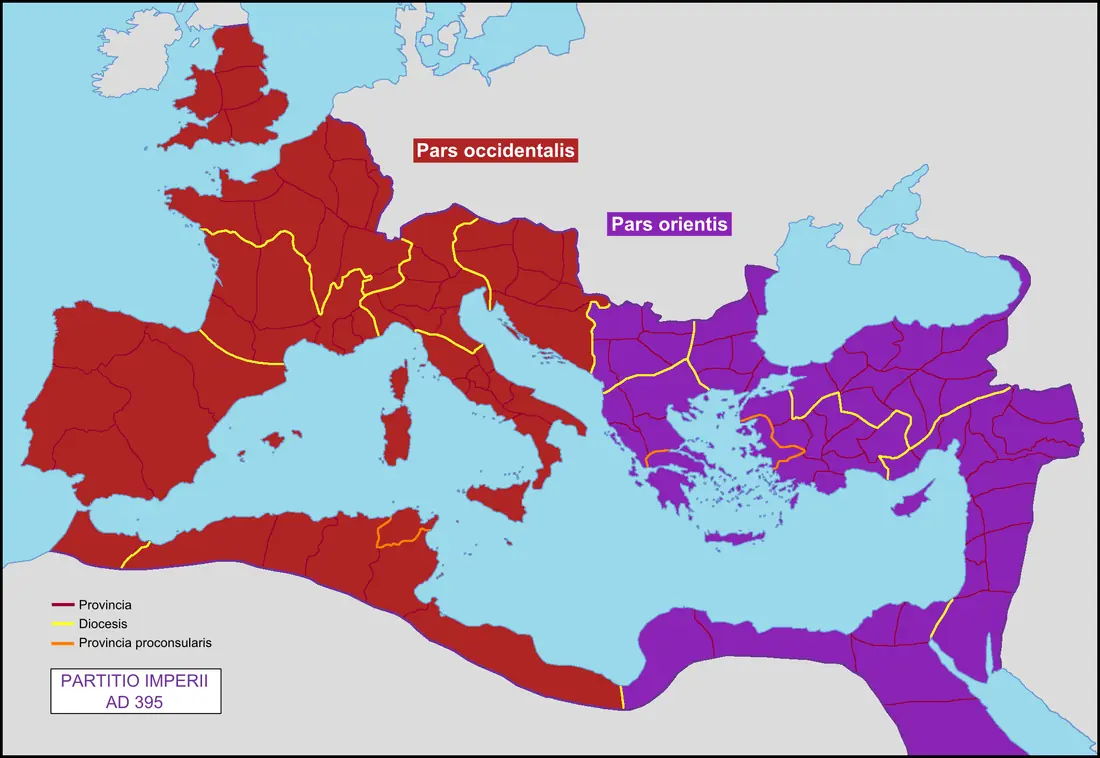
Battle of the Frigidus: Theodosius Secures Christian Empire

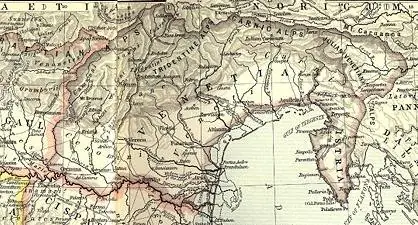
Near the Frigidus River (modern Slovenia)
Battle of the Frigidus: Theodosius Secures Christian Empire — Near the Frigidus River (modern Slovenia)
Image: Johann Weikhard von Valvasor · Public domain

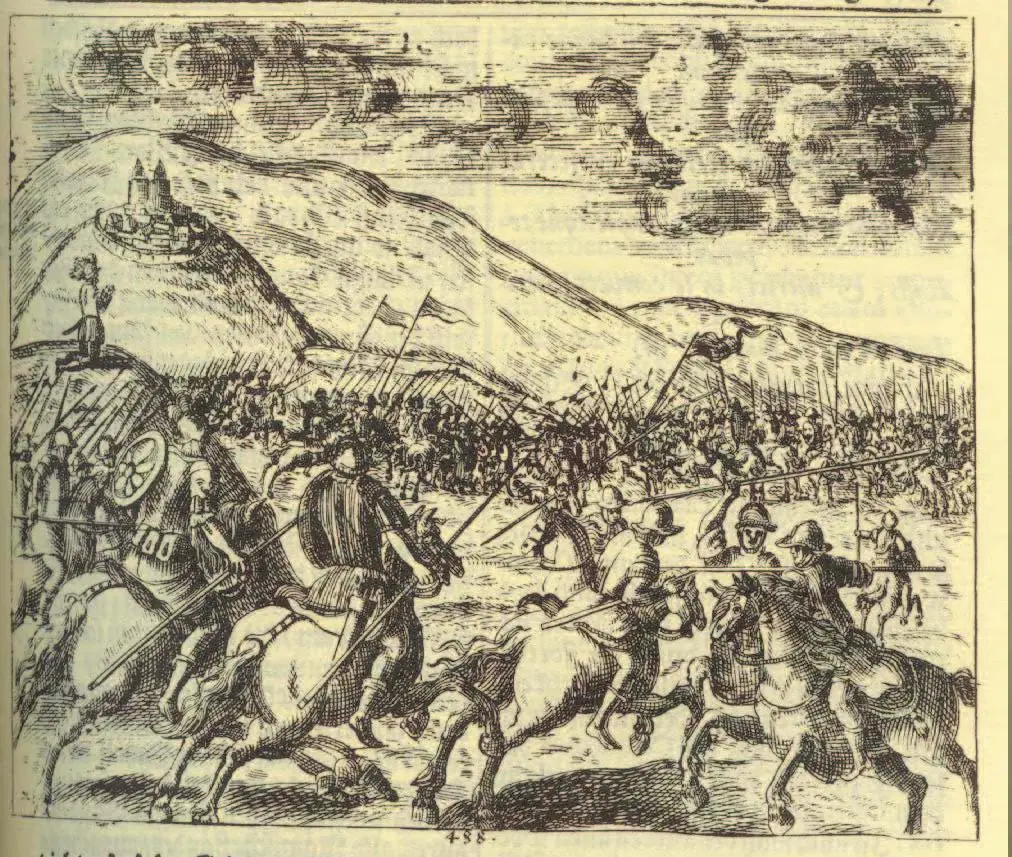
When the sun finally slips behind the snow‑capped peaks of the Julian Alps, the air over the Frigidus River shivers with a strange, electric anticipation. The western sky, a bruised violet, frames a line of Roman soldiers so tightly packed they could be mistaken for a funeral procession—if funerals ever featured bronze helmets and the clatter of iron greaves. At the front, Arbogast, the Germanic magister militum who has held the Western Empire’s reins since the death of Valentinian III, lifts his sword in a silent salute to his men. Across the ridge, Theodosius I, the Eastern emperor, watches from a raised platform, his cloak fluttering like a banner of imperial authority. He whispers, "We shall end this rebellion today," and the words echo off the cliffs, swallowed by the howling wind.

At exactly 9 a.m., the first clash erupts. Arbogast orders his heavy infantry—shield walls of seasoned legionaries and newly recruited foederati—to form a staggered line, their spears thrusting forward in a glinting forest of metal. Theodosius counters with his own phalanx, bolstered by elite cavalry drawn from the imperial guard. The two formations meet at the riverbank, and the ground trembles under the weight of a thousand boots. The first volley of arrows arcs through the cold air, striking the shields of Arbogast’s men and sparking a brief, crimson spray. The western troops hold, their shields overlapping like a living wall.

Then comes the thunderous charge of Theodosius’s cavalry, a sudden wave of polished horses and men shouting "Imperator!" Their lances pierce the western line, but Arbogast had anticipated this. He had placed a reserve of Germanic spearmen behind the front, and they surge forward, spears angled downwards, slamming into the horses’ legs. The cavalry falters, and the battle teeters on a knife‑edge. At this moment, a sudden gust—later recorded by chroniclers as a "storm of the gods"—sweeps down from the mountains, driving rain and hail into the faces of both armies. Theodosius’s troops, drenched and disoriented, lose cohesion; the western soldiers, accustomed to the harsh northern weather, press their advantage.
Battle of the Frigidus: Theodosius Secures Christian Empire — Near the Frigidus River (modern Slovenia)
Image: Mandrak · Public domain

Arbogast, seizing the moment, signals his heavy infantry to tighten the shield wall and push forward. The eastern phalanx, now a soggy mess, cannot hold. Theodosius, realizing his position is untenable, rides to the front and shouts, "Stand firm, men!" His voice is lost in the roar of the storm, but his presence steadies a few wavering units. Yet the western spearmen, driven by the bitter wind, break through the eastern center. Within minutes, the eastern line collapses, and Theodosius is forced to retreat to a nearby hill, his standard slipping from its pole and rolling into the river.

The battle ends not with a triumphant shout but with a grim, exhausted silence. Of the estimated 30,000 combatants, roughly 12,000 lie dead, their bodies scattered across the frost‑slicked meadow. Arbogast’s victory is decisive, but it comes at a cost: his own forces are so depleted that he can barely field a guard to escort Theodosius back to Constantinople. Theodosius, humbled, later convenes the Council of Carthage, perhaps realizing that military might alone cannot bind an empire fractured by religious and ethnic divisions.
Battle of the Frigidus: Theodosius Secures Christian Empire — Near the Frigidus River (modern Slovenia)
Image: The original uploader was Giovanni at Venetian Wikipedia. · CC BY-SA 3.0

A surprising detail surfaces in the aftermath: a cache of Persian silk, captured from a merchant convoy months earlier, is found among the spoils. The silk, dyed a vivid indigo, becomes a prized diplomatic gift, eventually woven into the imperial robes of Theodosius’s successor. It is a reminder that even in the midst of bloodshed, trade routes remain stubbornly alive, slipping through the cracks of empire like threads of gold.

The final image that lingers is not of a battlefield strewn with bodies, but of a lone, battered Roman standard—its eagle broken, its pole bent—lying half‑submerged in the frigid river, reflecting the pale sky. It is a silent testament to the futility of power struggles that hinge on a single day’s weather and a commander’s quick wit.
Source: en.wikipedia.org/wiki/Battle of the Frigidus

People

Louis VIII of France Is Born in Paris

Paris, France

Louis VIII of France Is Born in Paris — Paris, France
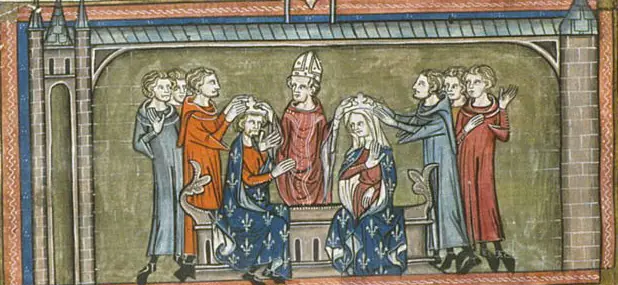
Image: Natalis de Wailly · Public domain

A newborn’s cry slices through the clamor of Saint‑Denis’ courtyard, and the midwife’s sigh carries the weight of a kingdom’s future. Louis, the twelfth son of Philip II, arrives on September 5, 1187, in a Paris that still smells of timber smoke and river mud, a city where the Seine reflects the flickering torches of a court still learning the language of centralized power.

Before his birth, the French crown was a patchwork of feudal loyalties, a king’s authority often limited to the lands around his own castle. Royal administration was a collection of personal retainers, not a bureaucracy. The idea of a king who could command armies across a unified realm, levy taxes in a systematic way, and sponsor a legal code that would outlive his own reign was, at best, a distant aspiration. The very notion of a “nation‑state” was a whisper among scholars, not a reality.

Louis’s arrival set a chain in motion that would turn that whisper into a roar. His father, Philip Augustus, already a shrewd legislator, would soon draft the "Charter of the Forest" (1217) and the "Albigensian Crusade" (1209‑1229), using the crown’s growing fiscal muscle to fund campaigns that stretched French influence from the Pyrenees to the English Channel. By the time Louis ascended the throne in 1223, the mechanisms of royal taxation— the taille, the gabelle, the aides— were being refined into instruments that could support standing armies and large‑scale construction projects. The very idea that a king could order the building of a cathedral and see it rise over centuries, financed by a network of royal officials, would have been unimaginable in 1187.

Louis VIII of France Is Born in Paris — Paris, France
Image: AnonymousUnknown author · Public domain

The newborn’s first wail was recorded by chroniclers as "a sound that foretold thunder." Louis grew under the watchful eye of his mother, Isabella of Hainaut, who ensured he learned Latin, the law of the realm, and the art of the hunt—skills that would later translate into diplomatic leverage. At twelve, he led a contingent of knights at the siege of Château Gaillard, a fortress that had taken Philip years to construct. The siege demonstrated a new French capability: the use of trebuchets capable of hurling 200‑kilogram stones over 300 meters, a technology imported from the Crusader states and now turned against a French stronghold. That same year, a royal accountant named William of Chartres introduced the "cens," a fixed monetary levy that would become the backbone of the future fiscal system.

What seemed a modest birth in a cramped chapel turned out to be the seed of a transformation that would take centuries to bear fruit. The centralized tax network Louis helped expand eventually funded the construction of the Louvre’s foundations in the 1190s, the first stone of a palace that would become the world’s most visited museum. It also financed the professionalization of the French navy, enabling the launch of the first purpose‑built war galleys in the 13th century— vessels that would later challenge the maritime dominance of the Italian city‑states.

Louis VIII of France Is Born in Paris — Paris, France
Image: Chronique de Saint-Denis (ou de France) · Public domain

A surprising footnote: Louis’s baptismal sponsor was none other than the Archbishop of Reims, who whispered a prayer for “the unification of the French tongue.” At the time, France was a mosaic of Langues d’oïl, each village speaking a dialect that could barely be understood by its neighbor. By the time of Louis’s death in 1226, the crown had begun sponsoring itinerant scholars to produce glossaries that would standardize legal terminology—a tiny step toward a common language that would only solidify under his son, Louis IX.

The world before 1187 could not imagine a monarch whose reign would be measured not just in battles, but in ledgers, statutes, and stone. The world after Louis’s birth would gradually accept that a king could be a bureaucrat, a patron of the arts, and a tax collector all at once. The echo of his first cry, once a simple infant’s protest, now reverberates in every French tax register, every vaulted cathedral, and every line of the legal code that still bears his name.

A century later, a monk in a remote abbey would write, "Louis was born with a crown already on his head," unaware that the crown he imagined was less a jeweled diadem and more a ledger bound in leather. The irony is that the child who entered the world amid soot and incense would help forge the very paperwork that would one day record the soot and incense of future kings.

Source: en.wikipedia.org/wiki/Louis VIII of France

People

Birth of Fan Zhongyan, Future Chinese Reformist

Kaifeng, China

Birth of Fan Zhongyan, Future Chinese Reformist — Kaifeng, China
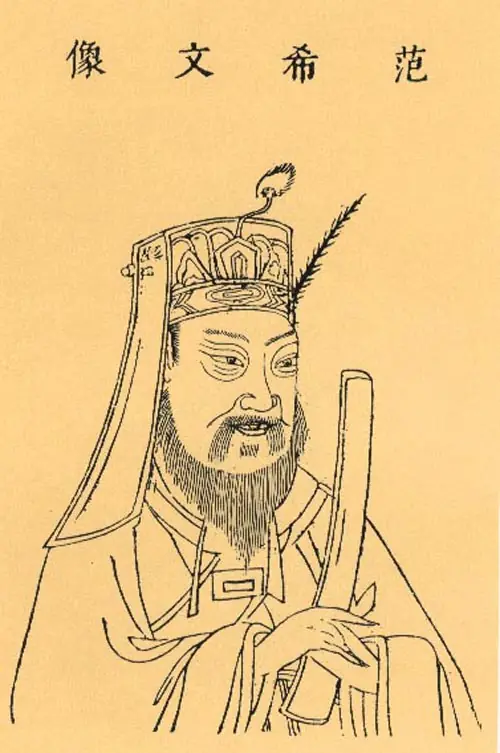
Image: Wang Qi (王圻) and Wang Siyi (王思義) (Life time: Wang Qi died in 1612, Wang Siyi is his son and highly unlikely to have live · Public domain

The night the moon hung low over Kaifeng, a thin-wisp of incense curled from the modest home of a minor official named Fan Yuan, and his wife, Li, whispered a name into the darkness: Zhongyan. It was a name chosen not for its grandeur but for the ancient virtue it invoked—"loyal and upright"—a hope that their newborn son might embody the ideals their modest family barely could afford.

Fan Yuan, a mid‑level clerk in the Department of Rites, was thirty‑two, his fingers calloused from copying edicts on bamboo strips. Li, twenty‑seven, tended the kitchen fire and the family's small garden of millet and radish, her mind already cataloguing the scarce coins they could spare for a proper burial cloth. Their world was the courtyard, the market stalls where a traveling monk sold bamboo scrolls, and the distant echo of imperial drums that reminded them how far the capital’s power lay from their everyday concerns.

On September 5, 989, the infant Fan Zhongyan entered the world with a cry that startled the neighbor’s rooster. The midwife, a woman named Madam Wu who claimed she could read a child's destiny from the shape of its umbilical cord, declared the baby’s fate "bright as the morning sun." In truth, the family’s joy was tempered by the knowledge that a newborn meant another mouth to feed, another mouth to protect from the periodic famines that visited the Yellow River basin every few years.

The city of Kaifeng, then the thriving heart of the Song dynasty, was a mosaic of silk merchants, tea sellers, and scholars who gathered at the Imperial University to debate poetry and statecraft. Among them was a young scholar‑official, Wang Anshi, barely older than Fan Zhongyan’s father, who would later become the architect of the very reforms Fan would champion. At the time of the birth, Wang was still a clerk in the Ministry of Finance, wrestling with the same tax assessments that weighed on Fan Yuan’s modest stipend.

Birth of Fan Zhongyan, Future Chinese Reformist — Kaifeng, China
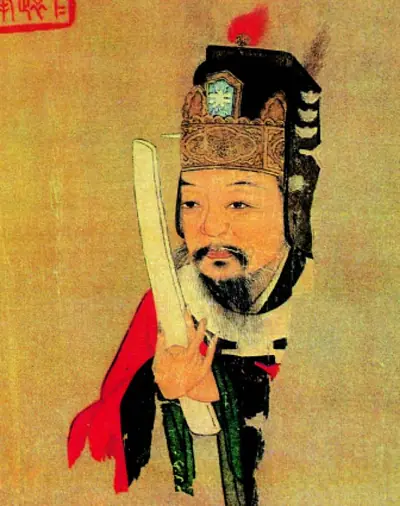
Image: Wikimedia Commons · Public domain

What made this birth quietly remarkable was not the arrival of a future statesman but the confluence of ordinary lives that surrounded it. The wet nurse who would raise the child for the first year, Sun Mei, was a widow who had lost her only son to a river accident the previous spring. Her grief gave her a tenderness that would shape Fan’s early memories of compassion. The village healer, Old Zhou, who kept a jar of powdered tiger bone in his hut, whispered a prayer that the child would live long enough to see the empire’s “great reforms” he had heard whispered in the market.

Fan Zhongyan would grow up hearing the clatter of wooden clogs on the palace’s stone paths and the soft murmur of scholars reciting the *Classic of Filial Piety* in the study hall. By age ten, he could copy the *Analects* without error, a skill that impressed the local magistrate, Liu Qian, who offered the boy a place in his household as a scribe. Liu’s own son, Liu Jun, was a restless teenager who dreamed of joining the imperial army, yet he envied the quiet respect the boy earned simply by writing.

A surprising footnote that few recall: the year Fan was born, the imperial court issued a decree limiting the number of children a household could register for tax purposes to three. This policy, intended to curb population pressure, inadvertently forced many families, including the Fans, to hide births or pay extra levies. The family’s decision to register their son openly reflected both a confidence in their modest means and a subtle defiance of the bureaucracy’s attempt to count human lives like grains of rice.

Birth of Fan Zhongyan, Future Chinese Reformist — Kaifeng, China
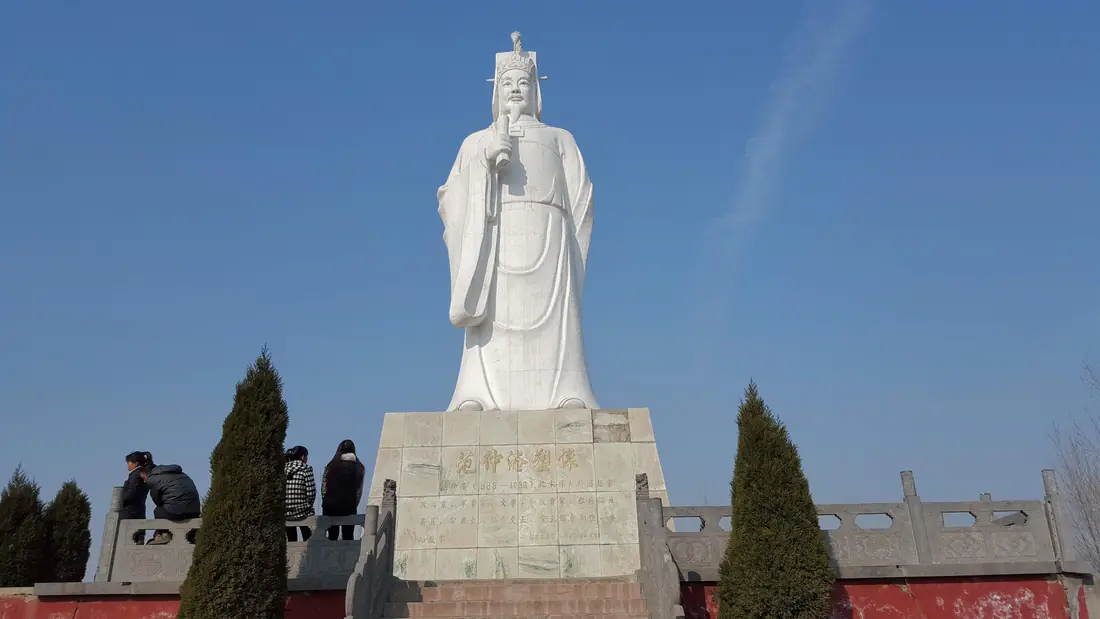
Image: Alan Islas · CC BY-SA 4.0

Fan’s childhood was punctuated by the ordinary and the extraordinary. He watched his mother bargain for a single piece of silk cloth, only to be outbid by a traveling merchant from Hangzhou, and he listened to his father recite verses about loyalty while repairing a broken roof tile. These moments taught him that moral principles were not lofty abstractions but lived in the tension between duty and desire.

When Fan eventually rose to become chancellor, his famous essay “Yueyang Tower” would echo the same humility he learned as a child: “I am but a man, yet I will strive for the world’s betterment.” The irony, perhaps, is that the very reforms he championed—land redistribution, tax relief, educational expansion—were born from the same anxieties that haunted his parents: how to feed a growing family, how to protect a child from famine, how to ensure a name would not be lost in the imperial census.

In the quiet of his study, years later, Fan would write, “If I could lift a single grain of rice for the poor, I would do so without fanfare.” That line, whispered to a young apprentice, carries the weight of a boy born under a modest roof, a mother’s hope, and a mid‑level clerk’s fear of the next tax levy. The world would remember his policies, but the first lesson he ever learned was that history’s grand sweep begins with a single, trembling cry in a cramped courtyard.

Source: en.wikipedia.org/wiki/Fan Zhongyan

Politics & state

Liu Yan Proclaims Empire, Launches Southern Han

Panyu (modern Guangzhou), China

The night Liu Yan slipped a jade seal into his pocket, the crowd in Panyu thought he was merely taking a souvenir from the old Tang governor’s office. In reality he was pocketing the last legal claim to rule the south, a claim that would let him turn the bustling port of Panyu into the capital of a brand‑new empire.

Liu Yan had been a military governor under the waning Tang dynasty, but by 917 the empire was a shattered vase, its pieces scattered among warlords. The real power in the Pearl River delta lay not with the distant emperor in Chang'an, but with the local elite: merchants who shipped silk to the Arab world, rice growers who fed a million mouths, and a cadre of soldiers who owed loyalty to whoever paid their stipends. Liu’s uncle, Liu Yin, had already carved out a semi‑autonomous region, but his sudden death left a vacuum that Liu Yan filled not by brute force alone, but by a calculated marriage alliance with the powerful Liu family of the neighboring state of Chu. That alliance brought him the support of 12,000 troops and the blessing of the influential Buddhist monk, Master Zongmi, whose endorsement was worth as much as any imperial edict.

On September 5, 917, Liu Yan declared himself emperor in the Hall of Ten Thousand Springs, a modest wooden structure overlooking the river. He did not announce a new era name; instead he invoked the ancient title "Han" to suggest continuity with the Han dynasty that had once ruled the south. The proclamation was less a dramatic thunderclap and more a bureaucratic filing: a scroll read, "By the Mandate of Heaven, Liu Yan, Son of the River, establishes the Southern Han." The audience, a mixture of soldiers, merchants, and a few bewildered scholars, responded with a single, synchronized bow. No fireworks, no trumpets—just the sound of a distant river and the rustle of silk.

What most textbooks miss is the role of the Guangzhou salt monopoly. Liu Yan’s father had secured a 30‑year lease on the salt ponds, guaranteeing a steady flow of revenue that dwarfed the tax base of many contemporary kingdoms. When Liu Yan announced his imperial claim, he immediately raised the salt tax by 15 %, a move that funded the construction of a new palace and a modest navy of 28 riverboats. Within a year, Southern Han could field a fleet that outgunned the neighboring Chu’s river forces, turning the Pearl River into a defensive moat rather than a trade artery. The irony is that a policy most would label oppressive actually cemented his legitimacy among the merchant class, who preferred a predictable levy to the chaos of random tribute demands.

Another forgotten figure is Lady Wu, Liu Yan’s chief concubine, who managed the palace’s grain stores. When a famine struck the surrounding countryside in 919, she ordered the release of 4,200 bushels of stored millet to the starving villages. The gesture cost Liu Yan’s treasury 1.2 million copper coins, yet it earned him the nickname "the benevolent emperor" among the common folk—an image that persisted long after his death, even though his reign was marked by relentless military campaigns against the Min and Chu states.

Liu Yan’s empire lasted only 45 years, ending in 971 when the Song dynasty absorbed it. Yet the decision made in that quiet hall reverberated far beyond the short reign. The Southern Han’s emphasis on maritime trade laid the groundwork for Guangzhou’s emergence as a global port in the Song era. The salt monopoly model was later adopted by the Song as a primary source of state revenue. And the very act of reviving the "Han" name set a precedent for later regimes to claim legitimacy by invoking ancient dynasties—a political shortcut that still appears in modern Chinese historiography.

The final twist lands not in a battlefield but in a garden. In 923, Liu Yan ordered the planting of 3,000 plum trees around the palace to symbolize renewal. Those trees survived successive wars, and a single plum blossom still blooms each spring in the ruins of the former imperial garden, unnoticed by tourists who think they are merely admiring a decorative park. The blossom, however, is the living reminder that Liu Yan’s empire was less a grand conquest and more a quiet, calculated reshaping of local power—one that still whispers through the petals each year.

Source: en.wikipedia.org/wiki/Liu Yan (emperor)

People

Emperor Nijō of Japan Dies Young at 22

Heian-kyō (Kyoto), Japan

Emperor Nijō of Japan Dies Young at 22 — Heian-kyō (Kyoto), Japan
Image: Fujiwara no Tamenobu · Public domain

Heian-kyō’s palace corridors hum with the soft rustle of silk, and a teenage emperor—still barely taller than a court lady—leans over a lacquered tea bowl, his eyes half‑closed as he recites a waka his mother, Empress Dowager, whispered last night. Nijō, twenty‑two, has ruled for just three years, but his reign feels as permanent as the cedar trees lining the Kamo River; the Fujiwara regents, especially his grandfather Fujiwara no Tadamichi, move the court’s pieces with the confidence of seasoned players. The capital’s rhythm is predictable: festivals at the Imperial Garden, the annual rice‑tribute procession, the endless cycle of poetry contests that cement a noble’s reputation. Even the fragile balance of power between the cloistered retired emperor Go-Shirakawa and the emerging warrior clans seems settled, as if the Heian aristocracy were a well‑oiled clockwork.

Then, on the night of September 4, a sudden cough—sharp, unrelenting—breaks the court’s composure. Nijō, who had been ill for weeks with a fever that doctors dismissed as a minor ailment, collapses in his own chambers. The courtiers rush in, their polished shoes squeaking on the polished floor, only to find the young sovereign’s pulse already fading. Within hours, the capital receives the news: the emperor has died at twenty‑two, and the throne is vacant. The silence that follows is not the usual reverent hush after a funeral rite; it is a palpable crack in the very air of Heian‑kyō.

What makes this abrupt shift startling is not just the age of the deceased but the intricate succession mechanism that instantly flips. The throne does not pass to a son—Nijō left no heir—but to a cousin, Emperor Rokujō, a child of three years, whose claim is immediately championed by the retired emperor Go‑Shirakawa. Suddenly, the court’s power dynamics tilt dramatically. Fujiwara no Tadamichi, who had enjoyed a comfortable seniority, must now negotiate with a regent who is technically a child but whose mother, the retired empress, wields the real authority. The Fujiwara’s grip on the kanpaku (chief advisor) post, which they have held for decades, becomes precarious; the very institution of regency is tested.

The speed of this transition is astonishing. Within a single day, the imperial regalia—mirror, sword, and jewel—are retrieved from the Imperial Treasury, escorted by a procession of thirty courtiers, each bearing a scroll that records the line of succession. The new emperor’s coronation ceremony, normally a months‑long affair involving elaborate Shinto rites, is compressed into a three‑day emergency rite to legitimize the rule and prevent rival clans from exploiting the power vacuum. The swift rearrangement of court ranks, the rapid issuance of edicts granting the retired emperor Go‑Shirakawa the title of cloistered ruler (insei), and the hurried appointments of new provincial governors illustrate how the Heian bureaucracy can pivot like a reed in a storm.

A curious detail often slips past the usual narratives: the imperial court’s reliance on a network of scribes who recorded every succession in the "Nihon‑Ōdai Ichiran" (Chronicle of the Imperial Line). When Nijō died, the chief scribe, Fujiwara no Kanezane, had to rewrite the entry for the year 1165 on the spot, inserting a footnote that the emperor died of “sudden illness” and that his successor was a "child of three winters." This act of instant historiography underscores how the Japanese court treated history as a living document, mutable at the whim of circumstance.

The aftermath reshapes more than titles. The warrior clan of the Minamoto, observing the fragility of the court’s succession, begins to consolidate its own power in the provinces, anticipating the next opportunity to intervene. Meanwhile, the court’s poets, who had just celebrated Nijō’s patronage of the "Shinkokinshū" anthology, now turn their verses to lament the fleeting nature of youthful rule—a theme that would echo in later generations. The very notion of permanence, so confidently displayed in the daily rituals of Heian aristocracy, collapses under the weight of a single, untimely death.

And yet, the most ironic twist lies in the emperor’s own legacy: despite his brief reign, Nijō commissioned the construction of a small bronze bell for the Kiyomizu‑dera temple, inscribed with a prayer for “the swift return of the sovereign’s health.” The bell, still hanging in the temple today, rings each year on September 5, its tone a reminder that the court once believed in the durability of a young emperor’s rule—only to have that belief literally echo into the future.

Source: en.wikipedia.org/wiki/Emperor Nijō

Use the arrow keys to move between days

Browse the full archive →