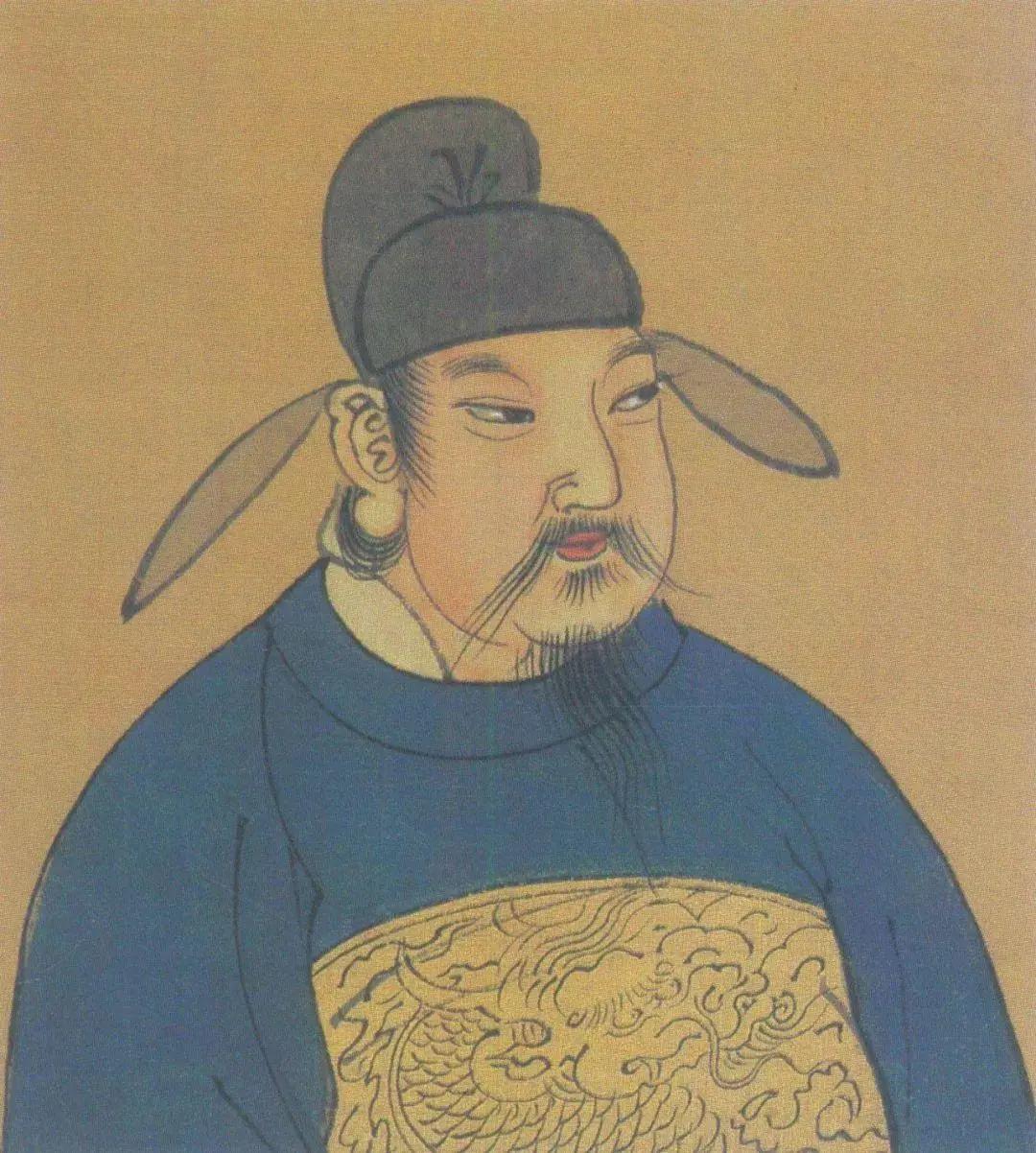
Li Yuan's Victory at Huoyi Opens the Road to the Tang Dynasty
Huoyi, China
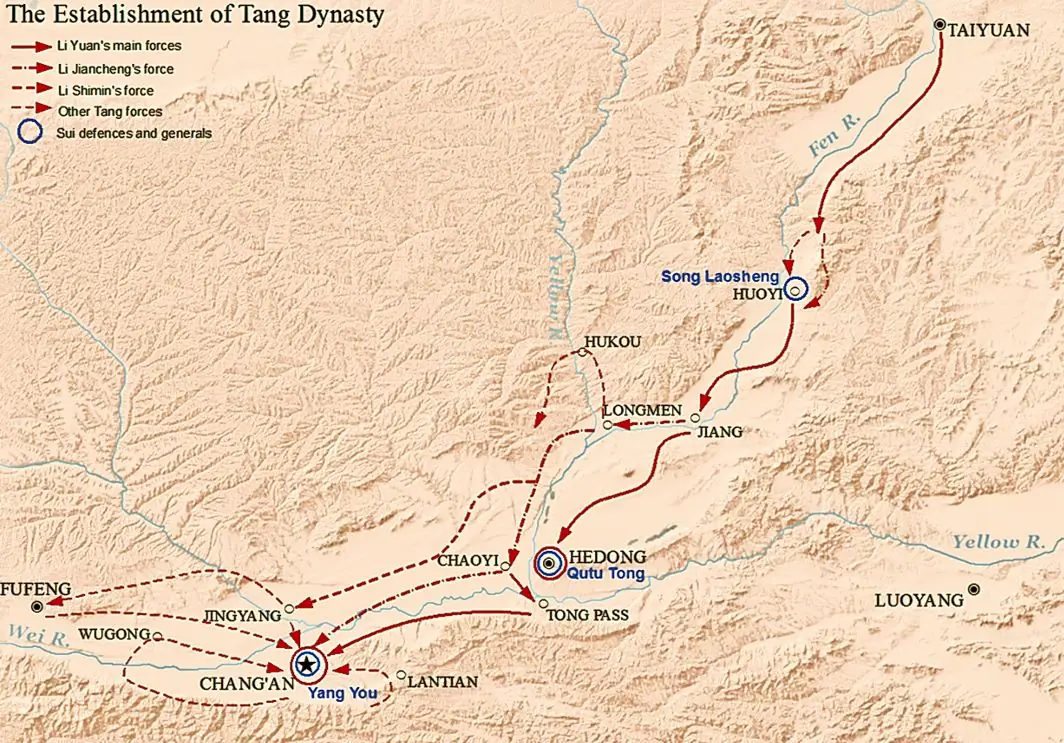
A lone messenger arrives at the Sui outpost at Huoyi, breathless, to report that the rebel banners of Li Yuan have already crossed the Wei River. The day before, the imperial army, under General Song Laosheng, believed the empire’s collapse was a rumor. Grain shipments still moved from Chang'an to Luoyang, tax collectors collected the same heavy levies, and the court in Chang’an clung to the illusion that Emperor Yang’s reforms would steady the realm.
On September 8, 617, Li Yuan’s forces, numbering roughly 30,000 men, met the Sui army of about 20,000 near the village of Huoyi. Li Yuan had declared himself Prince of Tang a month earlier, but his claim rested on a single objective: open the road to the capital. The Sui troops, exhausted from years of forced labor projects and recent floods, formed a defensive line along the shallow riverbed. Li’s cavalry, equipped with composite bows and reinforced armor, charged in tight wedges. Within two hours the Sui front collapsed, and Song Laosheng fled to the nearby hills, leaving his standards on the ground.
The battle produced an unexpected statistic: of the 2,300 Sui soldiers captured, only 57 survived the march to the imperial prison in Chang’an. The rest perished from starvation or execution. Li Yuan’s victory secured the main highway to the capital and allowed his generals, notably Li Shimin, to advance unopposed. Within three weeks the rebel army reached the outskirts of Chang’an, where the emperor’s remaining guards surrendered without a fight.
What changed overnight was not just a road but the entire political landscape. The Sui dynasty, founded only twenty years earlier, vanished as a functioning government. Imperial edicts ceased, and the tax records stopped being updated. In their place, the newly proclaimed Tang dynasty issued its first decree, appointing Li Shimin as commander of the palace guard. The ordinary farmer who had paid his grain tax to the Sui now received a new stamp on his receipt bearing the character "Tang, " a symbol that would soon appear on every official document.
The speed of the transition surprised contemporary observers. Historian Liu Xin recorded that “the market stalls that sold Sui silk a day before now displayed Tang banners the next.” Merchants adjusted prices within hours, reflecting the new regime’s promise of reduced corvée labor. The shift also altered military recruitment: the Tang court began enlisting soldiers from the same peasant families that had once built the Grand Canal, promising land grants instead of endless forced labor.
A curious footnote survived the turmoil: the bronze cauldron used to melt the Sui army’s iron weapons was later repurposed to forge the first Tang ceremonial swords. The object, unearthed in a 1973 excavation near Luoyang, bears an inscription that reads, "From defeat, we forge destiny." It is a literal reminder that the tools of one dynasty can become the symbols of its successor.
Li Yuan’s triumph at Huoyi illustrates how a single battlefield can overturn assumptions of permanence. The day before, the empire’s bureaucracy functioned like a well‑oiled machine; the day after, that machine was dismantled, its parts reassembled under a new name. The contrast is stark: a regime that spent decades constructing massive infrastructure collapsed under the weight of its own projects, while a rebel leader, once a minor governor, became emperor by opening a road. The irony lies in the fact that the very canals built by the Sui to move grain and troops facilitated Li Yuan’s supply lines, turning the dynasty’s own achievements into its undoing.
In the end, the road to Chang’an was not paved with new stone but with the broken spears of the Sui army, and the Tang dynasty rose on a foundation that was, quite literally, the rubble of its predecessor.