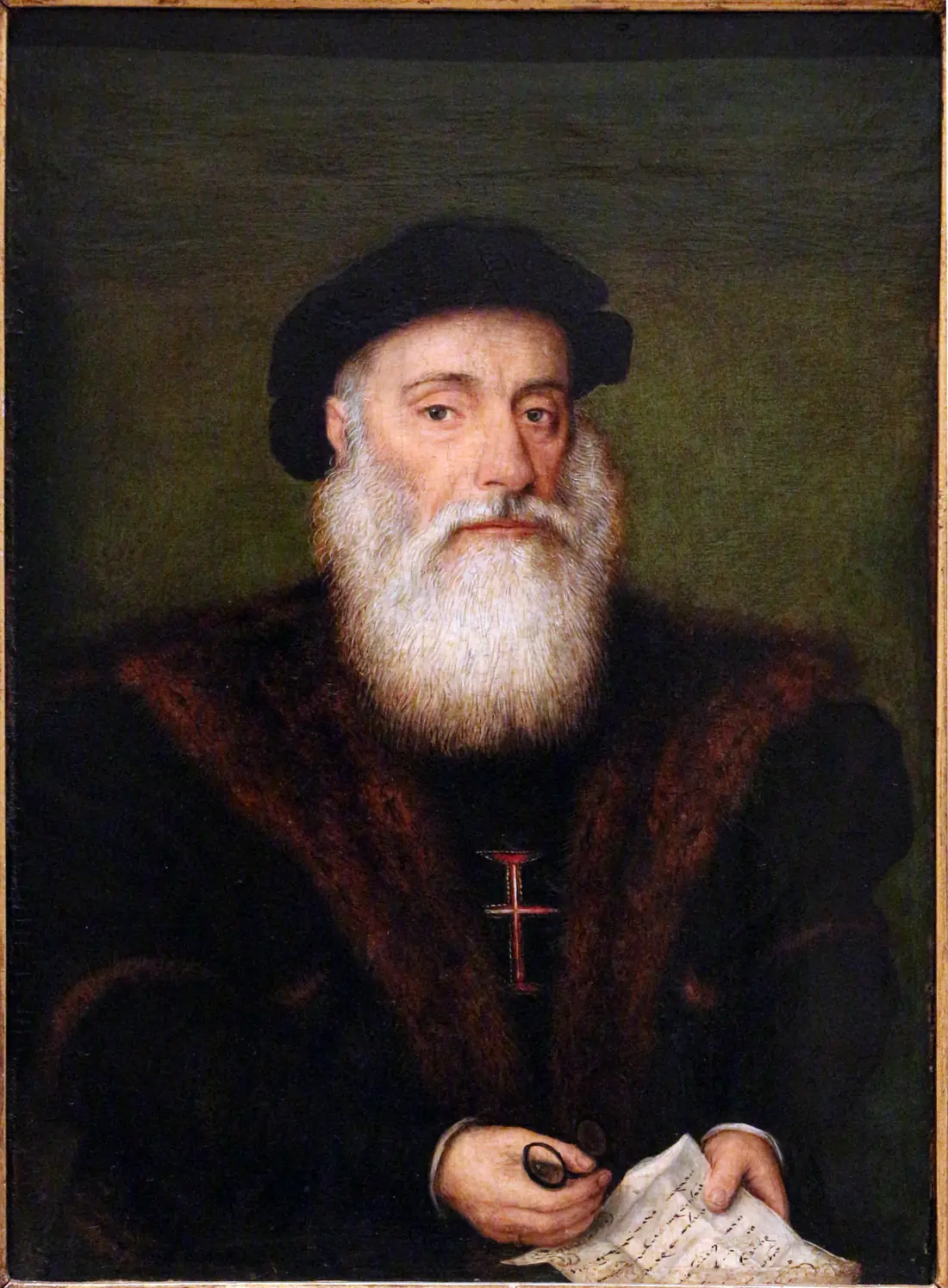
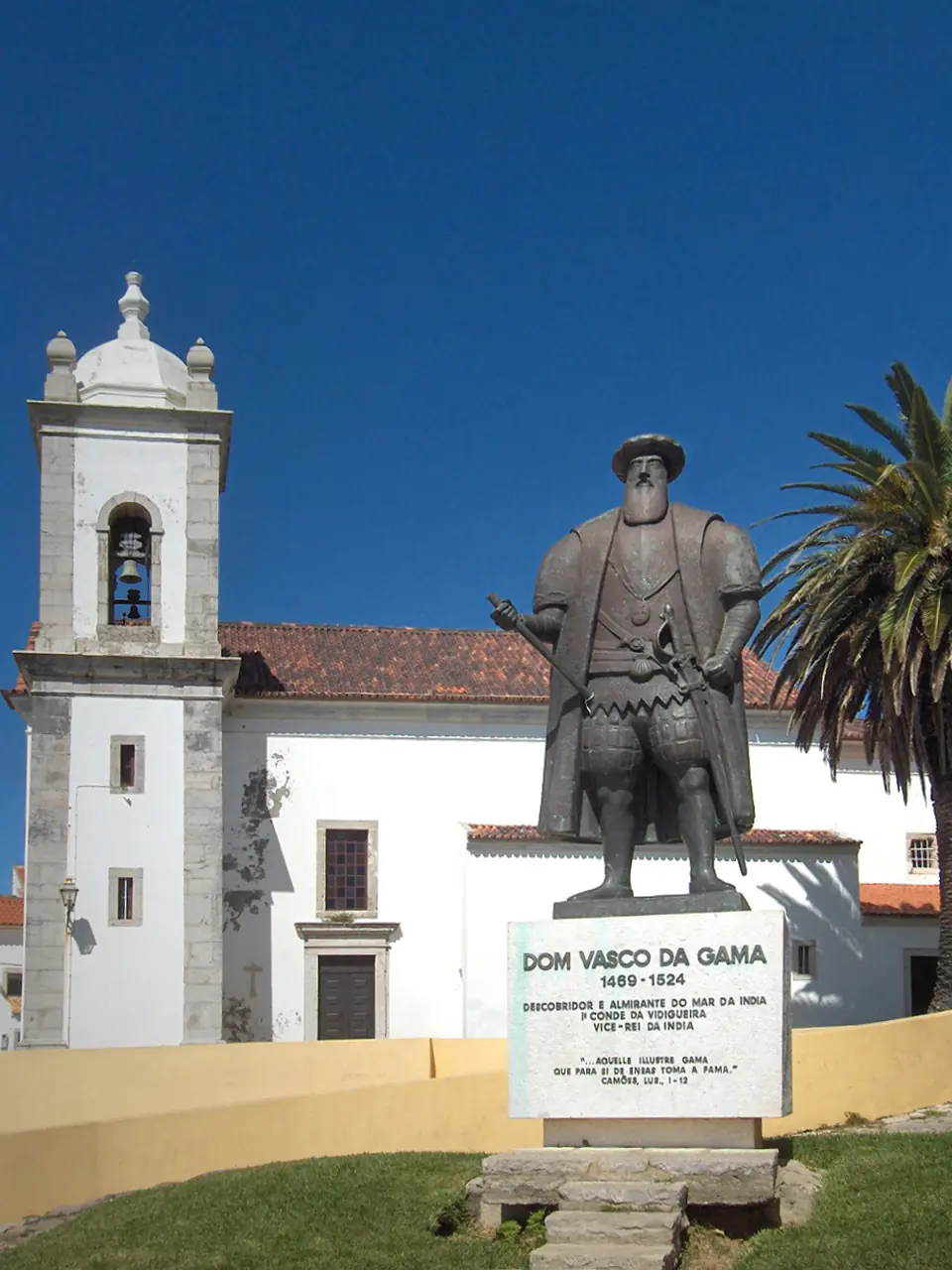
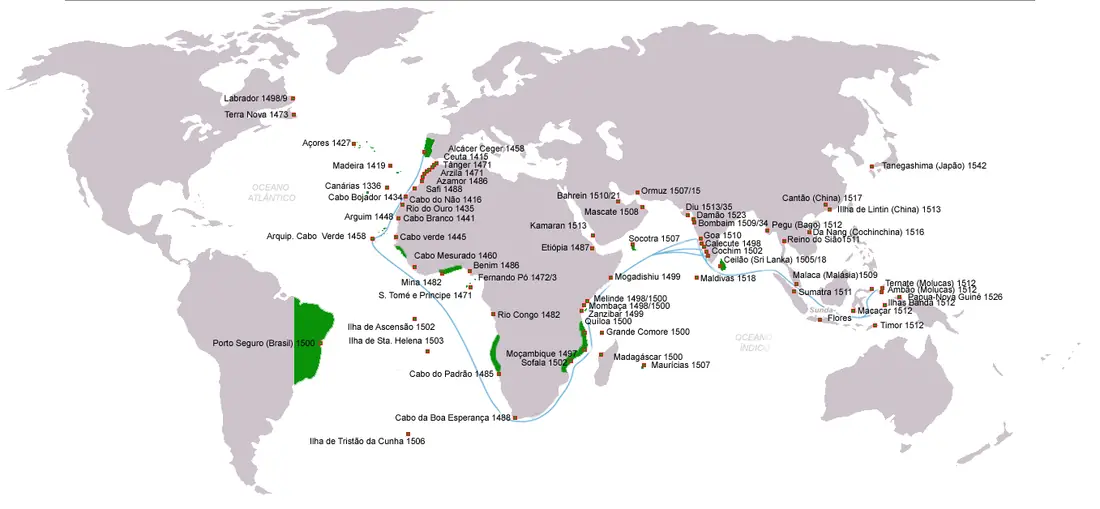
Vasco da Gama returned to Lisbon on 9 September 1499 after a 2‑year voyage that opened a sea route to India. The Portuguese Crown had funded the expedition with an estimated 300,000 cruzados, a sum comparable to the annual revenue of the royal treasury in 1495. The route covered roughly 13,000 kilometres of ocean, from Lisbon around the Cape of Good Hope to the Indian port of Calicut.
The expedition left Lisbon on 8 July 1497 with four ships and a crew of about 170 men. After rounding the Cape on 22 November 1497, the fleet spent 84 days sailing across the Indian Ocean, a period during which scurvy claimed the lives of 12 sailors, as recorded in the ship’s log. Arrival at Calicut on 20 May 1498 marked the first direct European contact with a major Asian market.
Negotiations in Calicut lasted 31 days, during which Da Gama secured a modest trade agreement that allowed the purchase of pepper and other spices for 5,000 cruzados in goods. The agreement was limited because the Zamorin of Calicut restricted Portuguese access to the harbor, a fact noted by contemporary chronicler João de Barros. The fleet then sailed to the island of Socotra, staying 12 days to repair damage, before returning to Portugal.
The return fleet comprised only three ships; the carrack São Gabriel was lost in a storm off the Cape Verde Islands, as documented by the royal archivist. Of the original 170 crew members, 141 survived the journey, giving a mortality rate of 17 %. King Manuel I received Da Gama and his surviving crew in the Ribeira Palace, where the king awarded Da Gama a pension of 30,000 cruzados and the title of “Admiral of the Indian Ocean.”
The successful return demonstrated that a direct maritime link between Europe and Asia was viable. Within two years, the Crown authorized a second fleet of five ships, costing an estimated 400,000 cruzados, to establish a fortified trading post at Goa. By 1510, Portuguese control extended over key coastal cities, shifting the flow of spice trade from overland routes that had previously cost up to 150 % more in transport fees. The 1499 celebration thus marked the beginning of a Portuguese empire that would dominate Indian Ocean commerce for the next century.
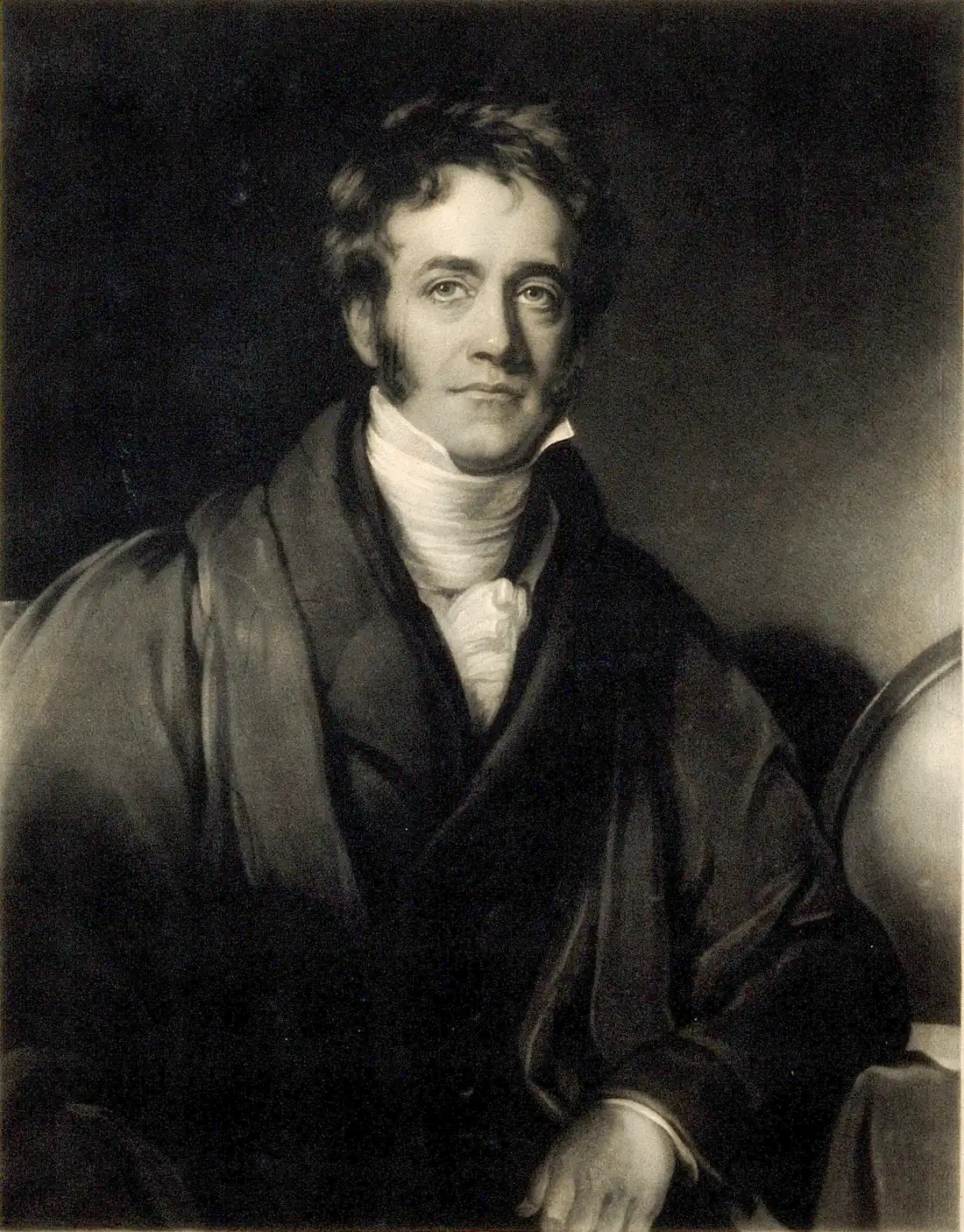
Before September 1839 the only practical way to record a visual scene was the daguerreotype, a silver‑coated copper plate that produced a direct positive image but could not be reproduced. The method required exposure times of several minutes and yielded a single, fragile copy. In 1839 the Royal Society of London received a paper from Sir William Herschel describing the chemical principles of light sensitivity, and his son John Herschel, a chemist and astronomer, was instructed by the Society to test the new silver nitrate process on a larger, more stable support.
John Herschel prepared a glass plate coated with a thin layer of silver nitrate solution, allowing it to dry in a darkroom. He then placed the plate in a wooden camera obscura and exposed it to the southern sky over the harbor of Cape Town on 9 September 1839. The exposure lasted about ten minutes, during which sunlight reduced the silver nitrate to metallic silver in the illuminated areas, forming a latent image. After exposure Herschel developed the plate in a solution of gallic acid and fixed it with a salt bath, producing a permanent negative that could be copied by contact printing.
The experiment demonstrated that glass could support a chemically stable photographic image, that the silver nitrate process could be controlled with precise timing, and that a negative could be reproduced. Herschel recorded the dimensions of the plate as 8 × 10 inches and noted that the resulting image showed the outline of Table Mountain and several ships in the harbor. He reported these results to the Royal Society in a letter dated 20 September 1839, and the Society published the account in its Philosophical Transactions the same year.
The glass‑plate method quickly replaced the daguerreotype for scientific and artistic purposes because it allowed multiple copies and larger formats. By 1841 commercial studios in London and Paris began offering glass‑negative portraits, and the technique spread to America where it underpinned the wet‑collodion process of the 1850s. Herschel’s 1839 experiment is therefore regarded as the first successful use of a glass plate to capture a photograph, marking the start of modern photographic imaging.
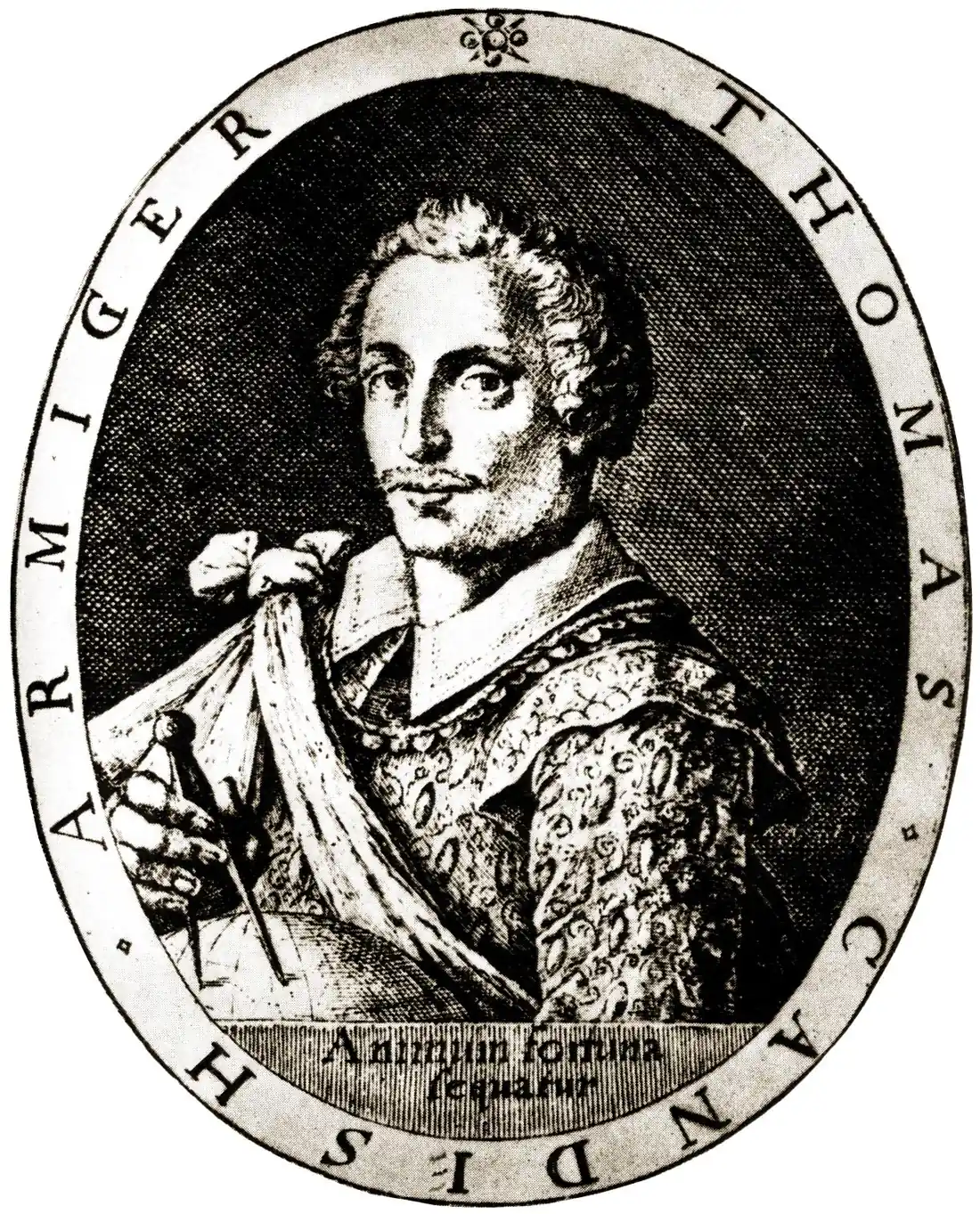
Thomas Cavendish completed the first deliberately planned circumnavigation of the globe when his fleet entered Plymouth harbour on 9 September 1588. The expedition was financed by a group of London merchants who expected profit from captured Spanish treasure and from claims on newly encountered lands. Cavendish set sail from Plymouth in July 1586 with three ships, a crew of about 200 men, and orders to raid Spanish settlements in the Pacific and to claim any islands for England.
The voyage followed the route of Sir Francis Drake but added a systematic search for gold and silver along the coast of South America, then a crossing of the Pacific to the Philippines, and finally a return via the Indian Ocean and around the Cape of Good Hope. Over the two‑year journey the fleet lost one ship, the Desire, to a storm in the Pacific and suffered disease that claimed roughly 30 percent of the crew. By the time the remaining vessel, the Content, reached Plymouth only 11 men were able to walk ashore.
Cavendish’s return demonstrated that a pre‑planned global raid could be executed without the accidental discoveries that characterized earlier voyages. The success proved that a private enterprise could fund a world‑spanning military expedition, a model later used by other English adventurers. It also showed that the Spanish treasure routes were vulnerable, encouraging further English privateering in the Atlantic and Pacific.
The immediate aftermath saw Cavendish awarded a knighthood by Queen Elizabeth I and a share of the captured wealth, though the total loot was far less than the investors had hoped. The expedition’s detailed logs provided new cartographic information about the western coast of South America and the islands of the Pacific, which were incorporated into English maps used by later navigators. The venture also highlighted the human cost of such long voyages, prompting a modest increase in provisions and medical supplies on subsequent English ships.
In the longer view, Cavendish’s circumnavigation shifted the perception of global travel from a rare, accidental feat to a reproducible enterprise. Within a generation English ships regularly attempted similar routes, laying the groundwork for the later establishment of overseas colonies and trade networks that reshaped the world economy.
The Stono Rebellion was the largest slave uprising in the British mainland colonies before the American Revolution. It began when a group of enslaved people, led by a man identified in colonial records as Jemmy, seized a store of firearms near the Stono River on September 9, 1739. Jemmy and about twenty other enslaved men took three guns, several pistols and a substantial amount of gunpowder, then marched south along the river, recruiting additional enslaved people from nearby plantations. Within a few hours the number of participants grew to an estimated one hundred and fifty, and the rebels killed at least twenty white colonists, including a plantation overseer named William Smith, before reaching the coastal settlement of Stono where they hoped to secure passage to Spanish Florida, where freedom had been promised.
Colonial authorities responded quickly. Governor William Bull ordered the local militia, commanded by Lieutenant Colonel William Bull (the governor’s brother), to intercept the rebels. The militia engaged the rebels near the plantation of William Smith, killing an estimated thirty to forty participants and capturing many others. Colonial court records show that thirty five captured rebels were executed by hanging, while a few were sold back into slavery. The rebels suffered far higher casualties than the white colonists, of whom only three were reported killed.
The immediate cause of the rebellion was the harsh conditions of the slave system in South Carolina, especially the recent increase in the importation of enslaved Africans after the 1719 ban on importation was lifted. Contemporary letters from planter John Colleton describe fear of Spanish incitement and the desire of enslaved people for freedom, indicating that the rebels were motivated by the prospect of Spanish protection. The rebellion itself demonstrated the ability of enslaved people to organize and acquire weapons, a fact confirmed by the inventory of stolen arms recorded in the governor’s report.
In the aftermath, the South Carolina legislature passed the Negro Act of 1740. This law prohibited enslaved people from assembling without a white overseer, restricted their education, and required owners to keep detailed records of slave movements. The act remained in force for more than a century, shaping the legal framework of slavery in the colony. The Stono Rebellion thus directly led to harsher legal controls designed to prevent future uprisings.
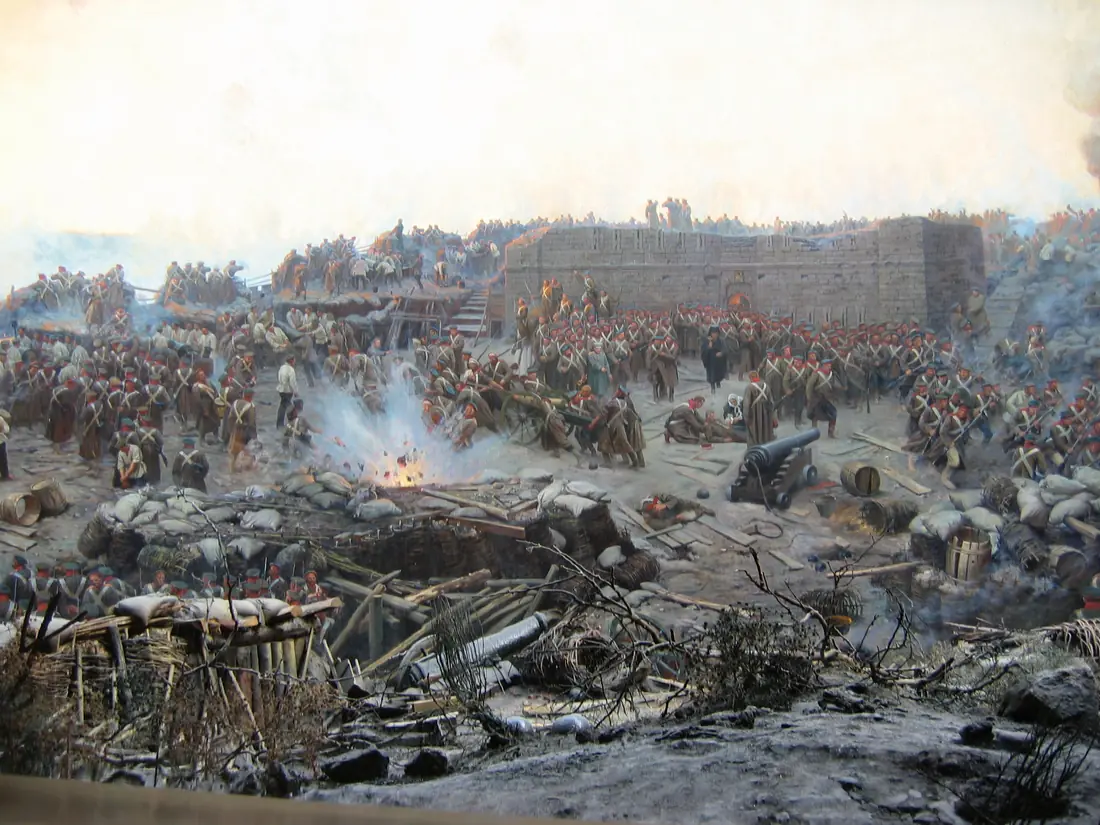
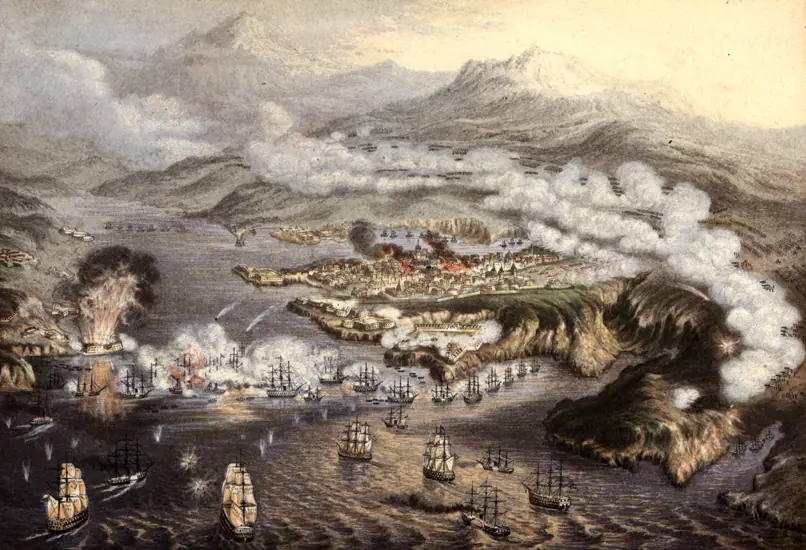
The Russian garrison left Sevastopol on 9 September 1855, ending the longest siege of the Crimean War. The city had been encircled by an Allied army of Britain, France, the Ottoman Empire and Sardinia since October 1854. The Allies had built a continuous line of trenches, artillery batteries and supply depots that gradually tightened around the Russian defenses.
The siege worked by starving the defenders and destroying their fortifications with heavy artillery. Russian troops under General Prince Menshikov defended a network of walls, bastions and the inner harbour. Allied engineers placed 70 mortars and 200 cannon pieces on the high ground of the southern peninsula, allowing them to fire shells that shattered the outer wall on 17 October 1854. Repeated bombardments created breaches that the Allies filled with earthworks, while naval forces blockaded the harbour to stop any resupply.
By spring 1855 the Russian supply stores were exhausted and disease had reduced the garrison to about 30,000 effective soldiers from an original 70,000. Allied commander Lord Raglan ordered a final assault on the Malakoff redoubt on 8 September. The French infantry, led by General Pélissier, captured the redoubt after a brief artillery barrage. The loss of the Malakoff made the inner line of Sevastopol indefensible because it commanded the remaining defensive works.
At 06:00 on 9 September the Russian command sent a telegram to Menshikov stating that further resistance would only increase casualties. Menshikov replied that he would withdraw his remaining forces to the inner harbour and then evacuate by sea. The evacuation began at 09:00 when the last Russian gunboats loaded troops, artillery and ammunition onto three steamers. By 12:00 the Allied artillery ceased fire as the Russian flag was lowered over the citadel. The Allies entered the deserted city at 14:30 and began repairing the damaged fortifications.
The abandonment of Sevastopol forced Russia to seek a peace settlement, leading to the Treaty of Paris in March 1856. The treaty limited Russian naval presence in the Black Sea and recognized the independence of the Ottoman Empire. The siege also demonstrated the effectiveness of modern rifled artillery and rail logistics, influencing military planning in the later European wars.