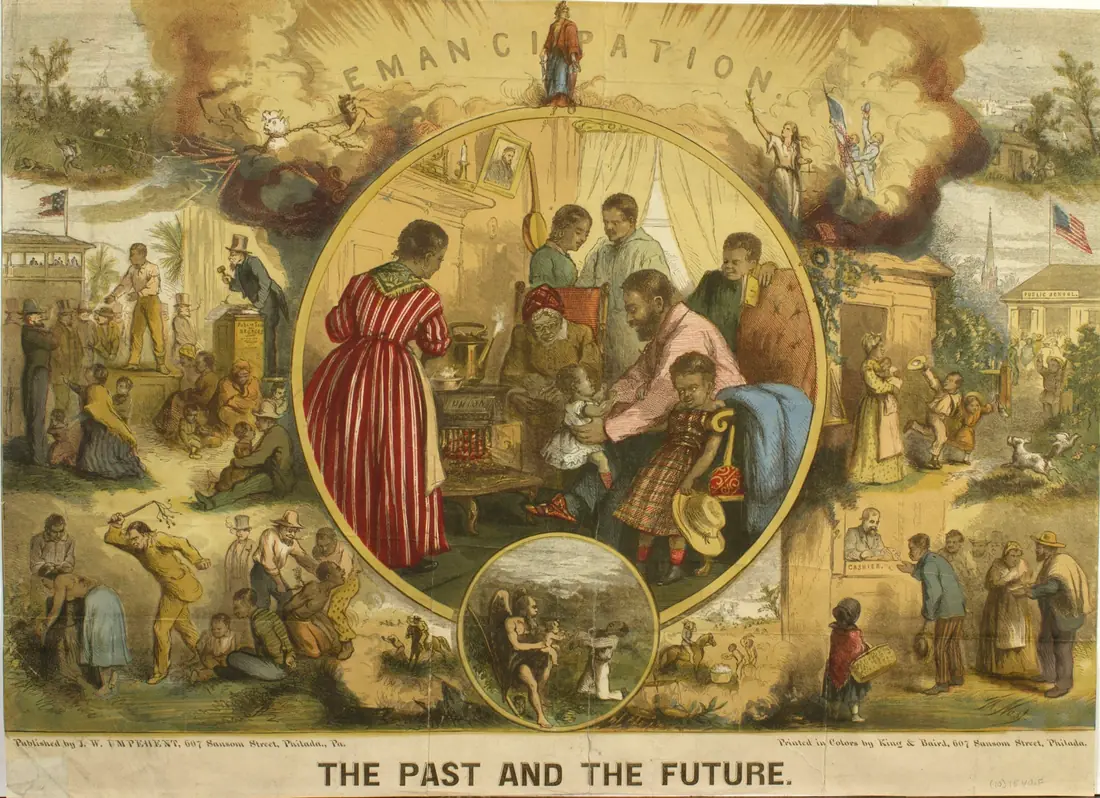
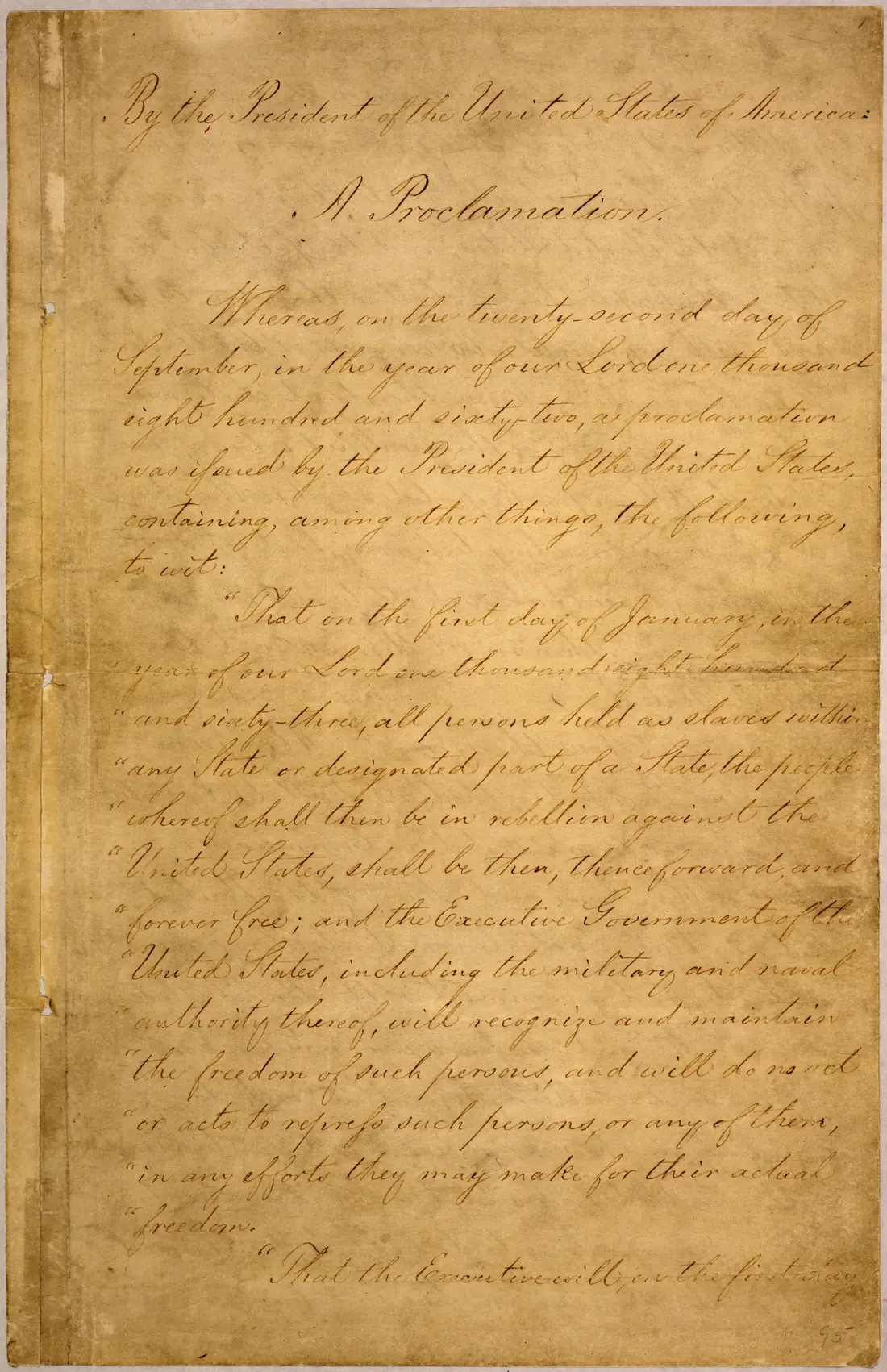
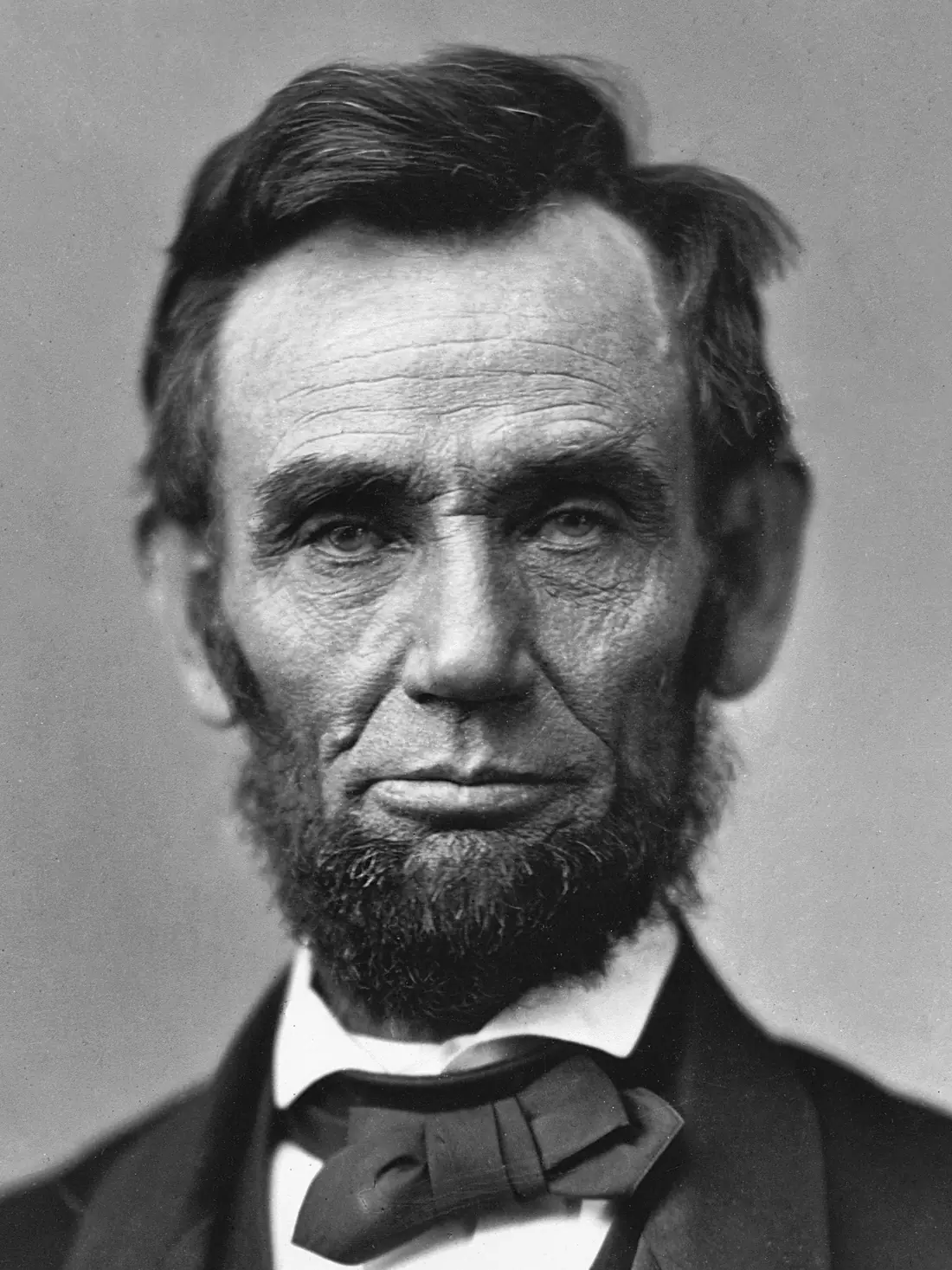
President Abraham Lincoln issued a written proclamation on September 22, 1862 that declared an intent to free all persons held as slaves in states that were in armed rebellion against the United States. The document, known as the Preliminary Emancipation Proclamation, was drafted after Lincoln consulted his Cabinet, including Secretary of State William H. Seward and Secretary of War Edwin M. Stanton, who argued that emancipation could weaken the Confederacy's labor force and strengthen the Union war effort. The proclamation stated that if the Confederate states did not cease hostilities by January 1, 1863, all slaves in those states would be declared forever free.
The legal mechanism relied on Lincoln's war powers as commander in chief, a authority granted by the Constitution to take necessary measures for suppressing rebellion. By framing emancipation as a military measure, the president avoided the need for a constitutional amendment at that moment. The text explicitly named the states of South Carolina, Mississippi, Florida, Alabama, Georgia, Louisiana, and Texas, and it excluded border states that had remained loyal, such as Maryland and Kentucky. It also specified that the proclamation would apply only to areas not already under Union control, leaving about 1.5 million enslaved persons in occupied territories unaffected until later legislation.
The proclamation listed the number of enslaved individuals as approximately four million, a figure derived from the 1860 census. It warned that the Union army would enforce the order, and it promised that freed persons would be received as free laborers. Lincoln's own words in the document read, "If this nation shall endure for a thousand years, the memory of the people who, by their acts of daring and perseverance, made this possible, shall endure with it." The statement was printed in the Washington Evening Star and distributed to state governors, military commanders, and newspaper editors across the North.
The immediate effect was a diplomatic signal to foreign powers, particularly Britain and France, that the Union was committed to ending slavery, reducing the likelihood of foreign recognition of the Confederacy. Within weeks, the proclamation altered Union recruitment, allowing formerly enslaved men to enlist, which added roughly 180,000 black soldiers by the war's end. The preliminary notice set the stage for the final Emancipation Proclamation issued on January 1, 1863, which formally abolished slavery in the rebelling states and laid a foundation for the Thirteenth Amendment passed in 1865.
In 1791 London was the world’s largest city, with a population of about 900,000 and a thriving commercial sector dominated by merchants, artisans and a growing class of factory owners. Scientific societies such as the Royal Society existed, but formal scientific education was limited to the wealthy and to a few university graduates. Apprenticeship remained the principal route for skilled work, and most children of modest families entered the trade system at an early age.
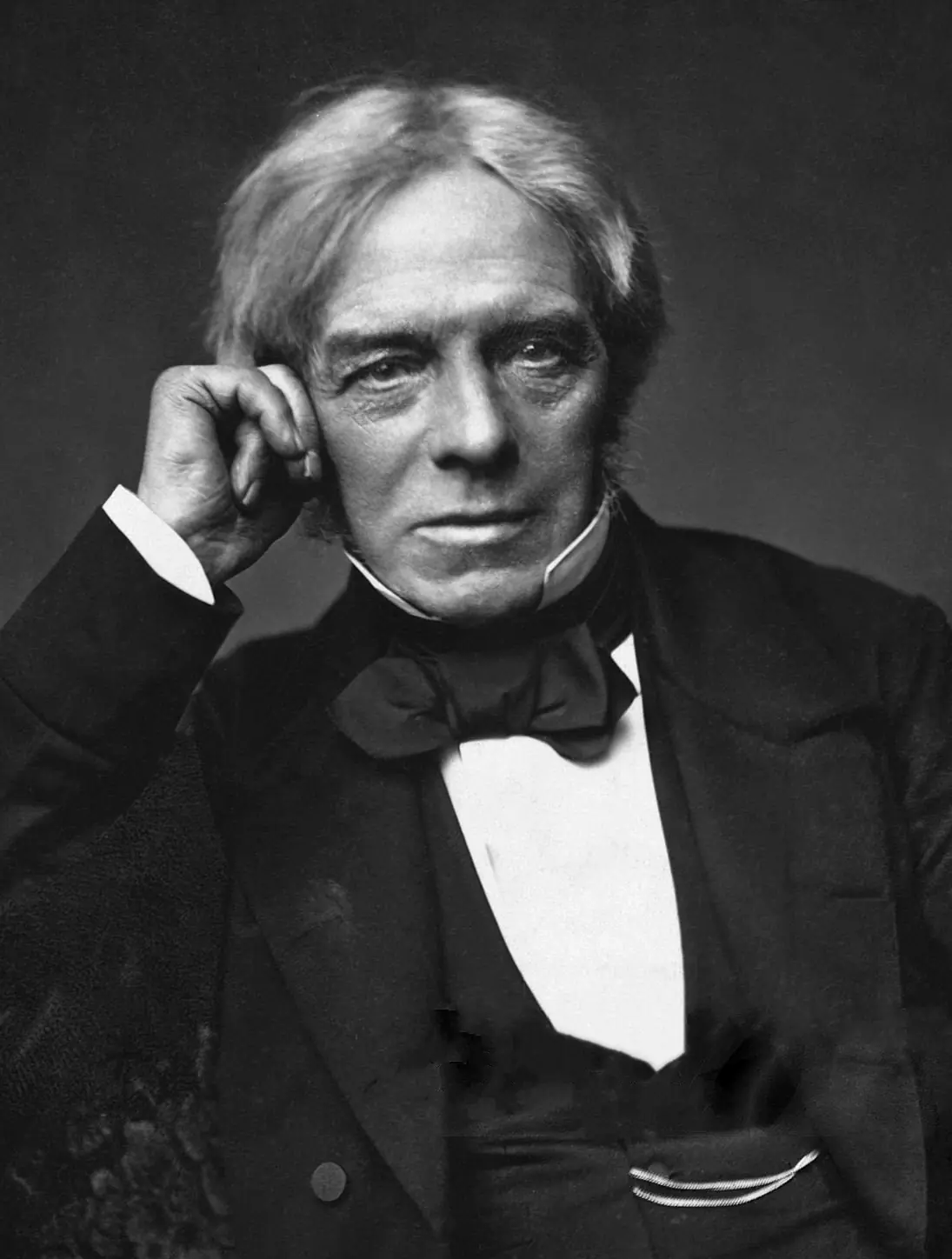
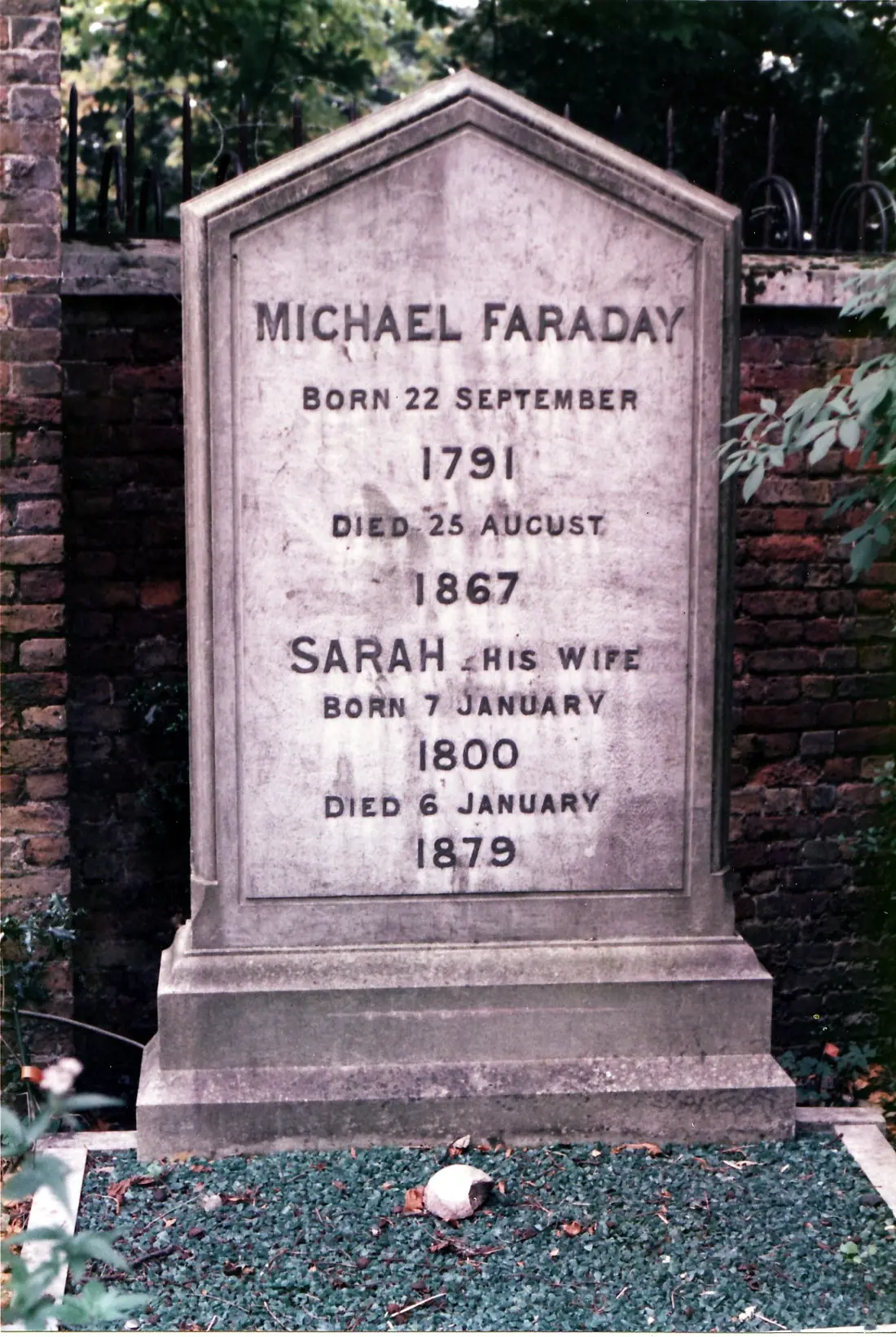
Michael Faraday was born on 22 September 1791 in the district of Newington Butts, a suburb of the City of London. His father, James Faraday, was a blacksmith who earned a modest income by repairing agricultural implements and household metalwork. The family lived in a small house on a narrow street, shared with other working‑class families. Michael was the third of four children and received only a brief elementary education at a local parish school, where he learned basic reading, writing and arithmetic.
The mechanism that later enabled Faraday’s scientific career began with the apprenticeship system. At age fourteen, Faraday entered the workshop of George Rooke, a local bookbinder and paper‑maker. The apprenticeship contract, signed by Faraday’s father and the master, required the boy to work ten hours a day, six days a week, in exchange for room, board and training in the trade. Rooke’s shop also handled the binding of scientific texts, exposing Faraday to contemporary works on chemistry and physics. By reading the margins of these books, Faraday acquired knowledge of the latest experiments, including those of Henry Cavendish and Antoine Lavoisier.
In 1812, after completing his apprenticeship, Faraday attended a public lecture by Sir Humphry Davy at the Royal Institution. Davy announced a competition for a laboratory assistant, offering a salary of £50 per year. Faraday submitted a handwritten essay describing an experiment on the electrical decomposition of water, demonstrating his practical understanding of electrolysis. The judges, including Davy, selected Faraday, who then began work under Davy’s direct supervision. This appointment gave Faraday access to a fully equipped laboratory, a network of scientific correspondents, and the opportunity to conduct original experiments.
Faraday’s birth in a modest London household, combined with the apprenticeship system that introduced him to scientific literature, directly led to his recruitment by Davy. His subsequent discoveries in electromagnetism and electrochemistry would later establish the principles of electric motor design and the laws of electromagnetic induction, foundations of modern electrical engineering.
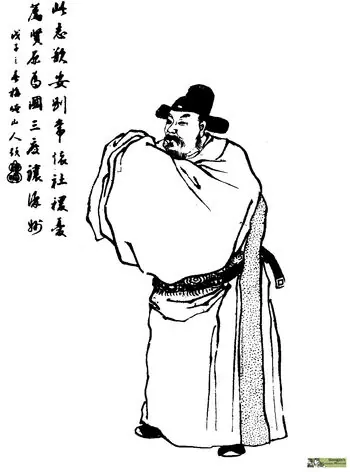
He Jin, commander of the central army and de facto regent of the Eastern Han, was killed by a faction of palace eunuchs on September 22, 189 in Luoyang. His death removed the chief protector of the imperial family and opened a power vacuum in a court that employed roughly 1,000 elite soldiers for palace security.
The immediate cause was the eunuchs' fear that He Jin would eliminate them. He Jin had ordered the arrest of the ten most senior eunuchs and had summoned 5,000 troops from the capital region to enforce the order. The eunuchs responded by setting fire to the palace gate and sending assassins who killed He Jin with a sword. Contemporary records estimate the assassins numbered about 30, though the exact figure is disputed.
Following the assassination, the central army split into two rival groups. One group of about 3,000 soldiers, led by He Jin's brother He Miao, attempted to seize control of the palace but was repelled by a contingent of 1,200 troops loyal to the eunuchs. The conflict resulted in approximately 800 casualties, according to the Book of the Later Han, though modern historians consider the number an approximation.
The power struggle escalated when the warlord Dong Zhuo arrived in Luoyang with a force of 5,000 men, recruited from the surrounding commanderies. Dong Zhuo entered the capital on the 15th day after He Jin's death and installed the 14‑year‑old Emperor Shao as a puppet. Within two weeks he moved the capital to Chang'an, a distance of about 350 kilometers, and ordered the execution of 200 officials who had opposed him. These actions marked the end of centralized Han authority and the beginning of the warlord period that lasted until 220.
He Jin's assassination therefore triggered a chain of military interventions, a shift of the capital, and the fragmentation of imperial power. The immediate outcome was Dong Zhuo's dominance, which set the stage for the later rise of Cao Cao and the formation of the Three Kingdoms. The event illustrates how the removal of a single high‑ranking official can destabilize an entire bureaucratic system.
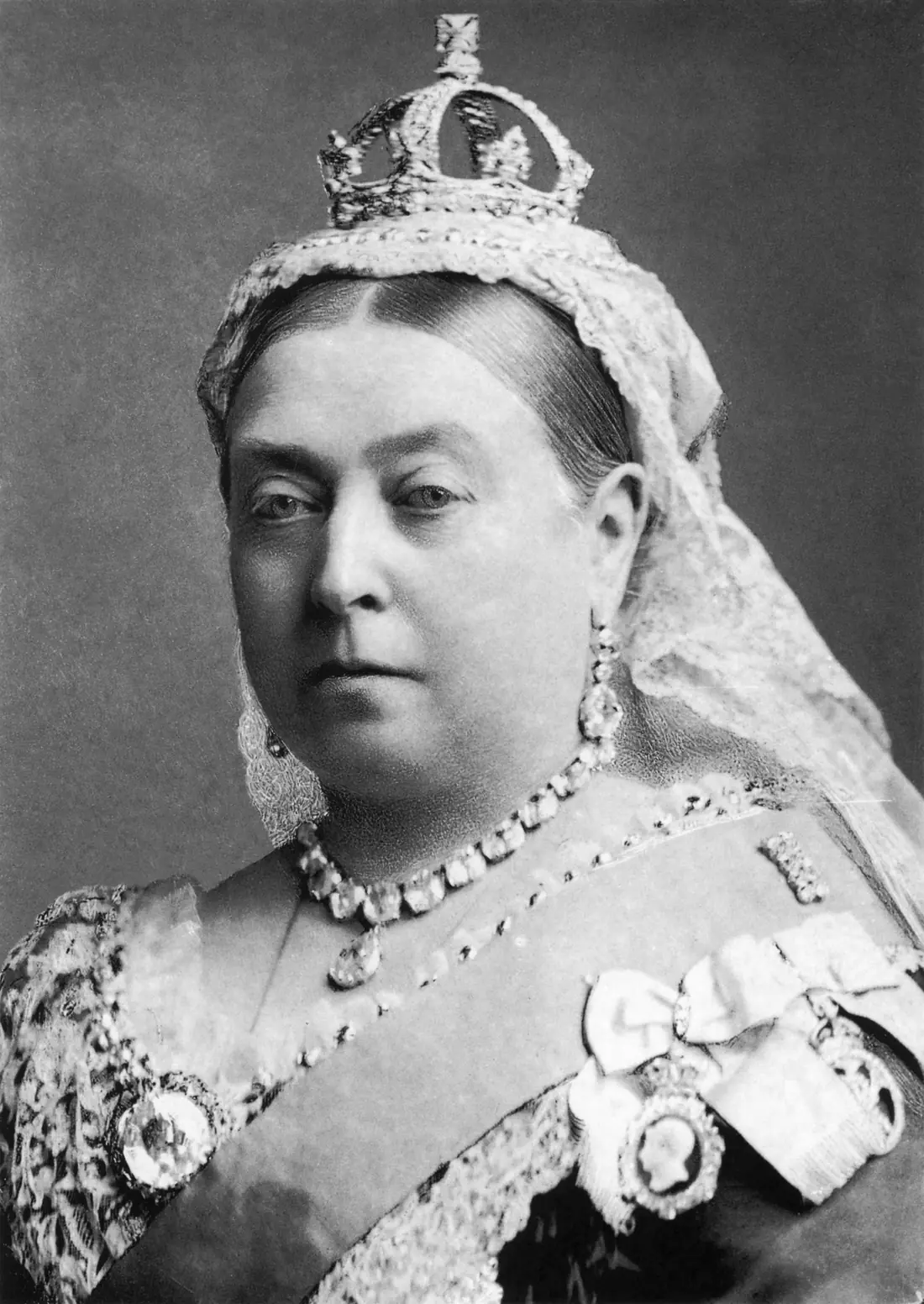
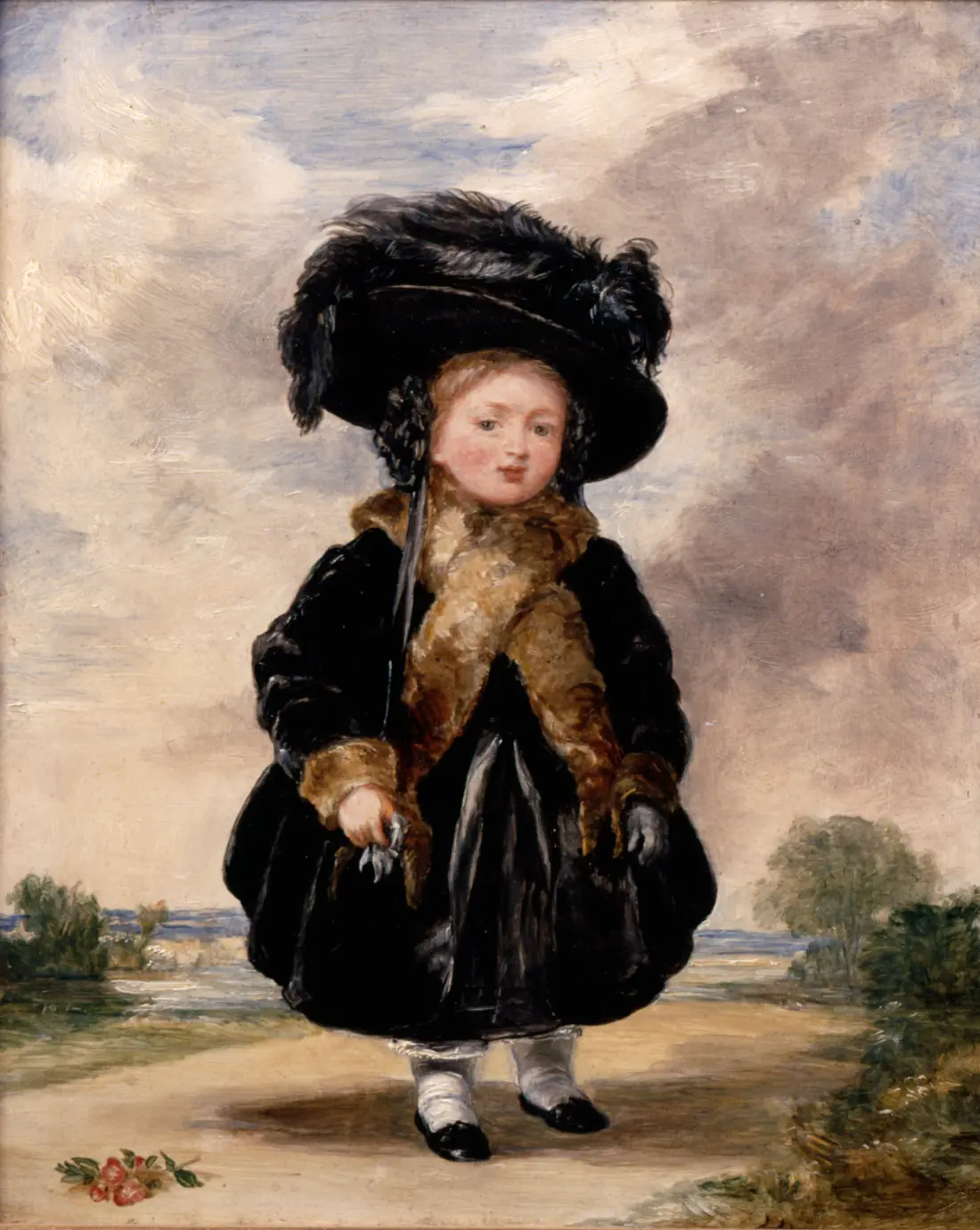
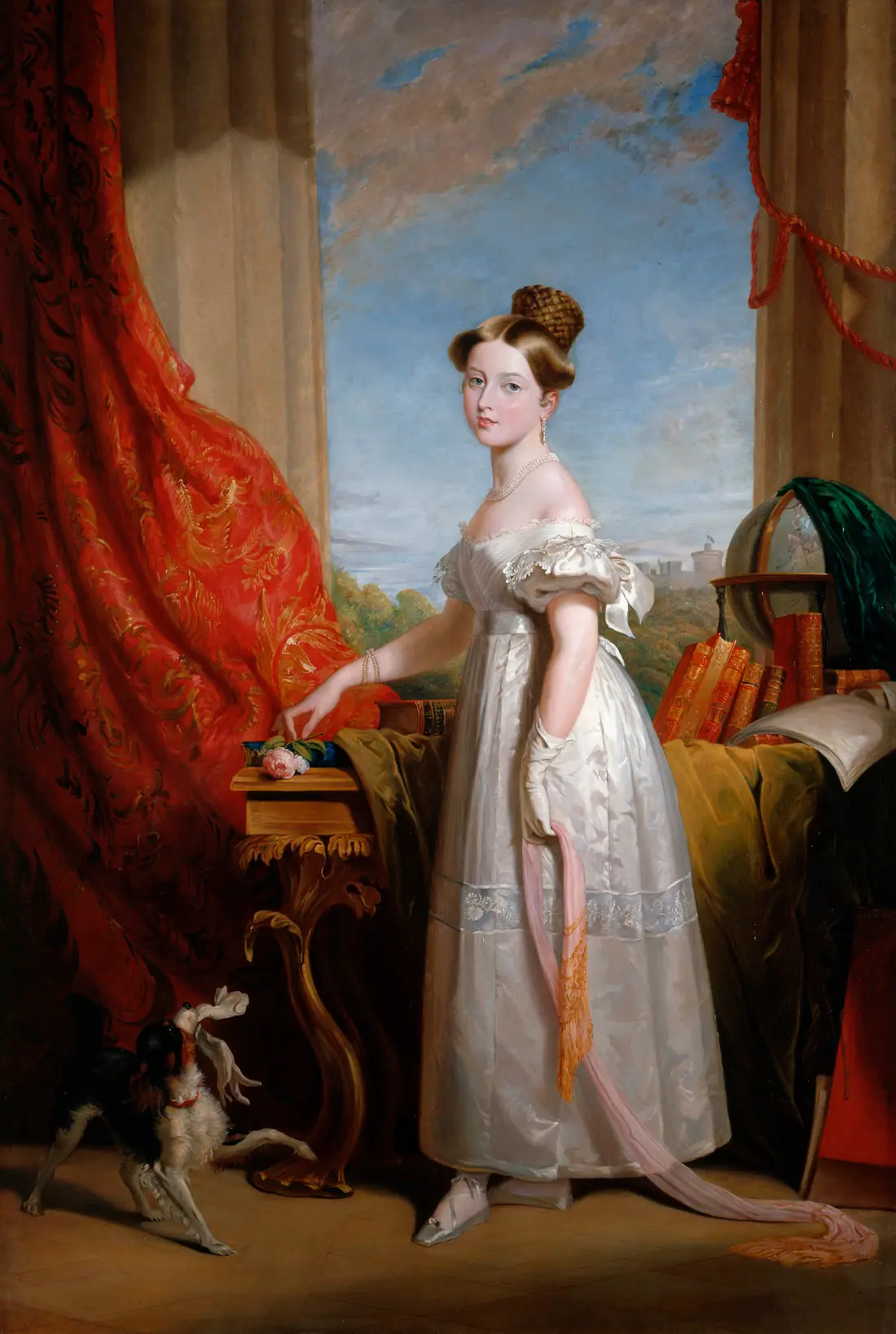
On September 22, 1896, Queen Victoria became the longest‑reigning British monarch, surpassing the 59‑year reign of King George III. The record was calculated from the official accession date of 20 June 1837 and measured against the 1760‑1760 reign of George III, which had been the benchmark for more than a century. Victoria’s achievement was noted by the Royal Household and reported in the London press, where the official tally was confirmed by the College of Arms.
The mechanism that made the record possible was the uninterrupted succession of the constitutional monarchy. Victoria inherited the throne after the death of her uncle, King William IV, and there were no abdications, restorations, or interregnums during her reign. Because the British system does not allow a monarch to be removed except by death, the length of a reign is a simple arithmetic sum of calendar years. The precise count was verified by comparing the dates of accession and death recorded in the official registers of the Crown. No legal or parliamentary action altered the continuity of her rule.
Victoria’s reign encompassed the expansion of the British Empire to its greatest territorial extent, the industrialisation of Britain, and major social reforms such as the 1832 Reform Act and the 1867 Education Act. By the time she broke George III’s record, the empire covered about one‑quarter of the world’s land surface and ruled over roughly 400 million people. The symbolic importance of the longevity was reflected in public celebrations: a special service at St Paul’s Cathedral, a proclamation in the London Gazette, and a commemorative medal struck for the royal household. The medal bore the inscription “Victoria 1837‑1896” and was distributed to members of the armed forces and civil service.
The immediate aftermath saw a surge in public interest in the monarchy, which translated into higher sales of royal portraits and increased attendance at royal events. More substantively, the record highlighted the stability of the constitutional system, reinforcing confidence among colonial administrators and investors. This confidence contributed to the continuation of British economic dominance in the 1900s, facilitating investments that funded railway construction in India and Africa. The record stood until 2015, when Queen Elizabeth II surpassed it, confirming that the longevity of a monarch can serve as a measurable indicator of political continuity.
The event’s lasting consequence is the way it reinforced the perception that a long, stable reign provides a framework for long‑term policy and economic planning, a principle still cited in analyses of modern constitutional monarchies.
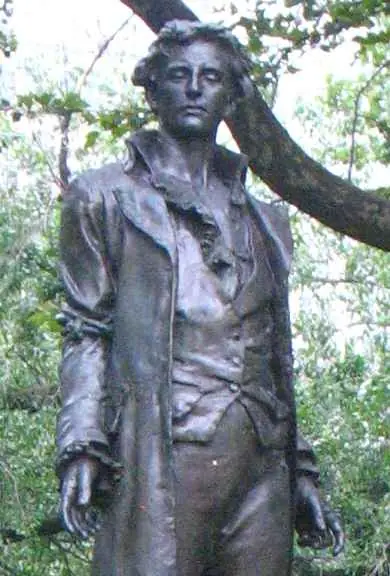
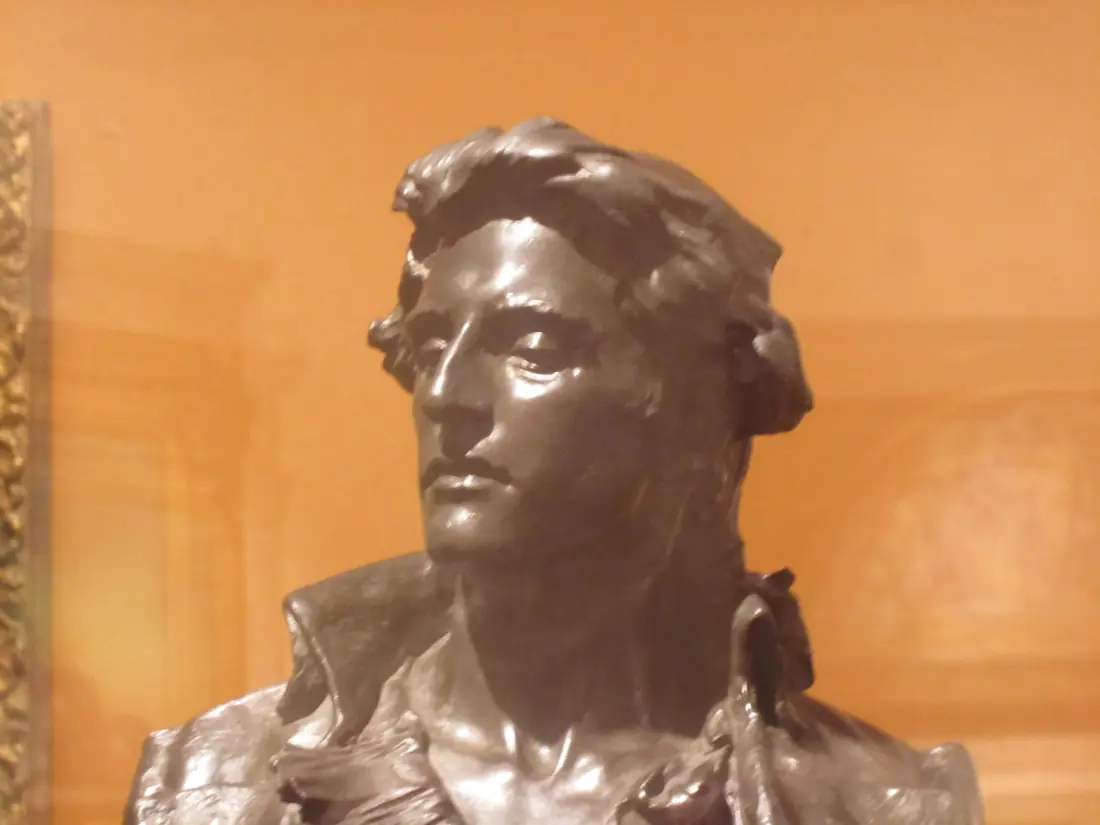
Nathan Hale was a 21 year old schoolteacher who became a Continental Army spy in 1776. The American intelligence network at that time relied on volunteers who crossed the Hudson River to gather British troop movements. Hale was assigned to a small group of twenty three men who were to report the size of General William Howe's forces occupying New York City. The plan required the men to travel in civilian clothes, memorize reports, and return to American lines within a few days.
On September 21, 1776, Hale and his companions crossed the East River near what is now Manhattan. British patrols in the area were heightened after the recent Battle of Long Island, and the Americans expected a high risk of capture. Within twenty four hours the group was intercepted near the town of Rye. Hale was the only one who attempted to flee; the others were seized without resistance. British records indicate that about thirty American civilians were arrested that day, of whom eleven were later released on parole.
Hale was taken to a British headquarters in New York and interrogated by Lieutenant Colonel John Graves Simcoe. The interrogation lasted several hours and produced no useful intelligence. On September 22, a military court sentenced Hale to death for espionage, a crime punishable by hanging under British martial law. The execution was carried out at the foot of a gallows on the north side of the city. As the rope tightened, Hale is reported to have spoken the words, "I only regret that I have but one life to lose for my country." The quote is recorded in the diary of a British officer, though some historians note that the exact wording may have been embellished later.
Before Hale's execution the Continental Army had no public martyr to rally around; the intelligence effort remained a hidden activity with limited public support. After the hanging, pamphlets containing Hale's statement were printed in at least five colonial cities, reaching an estimated circulation of four thousand copies. The narrative of a youthful scholar sacrificing himself became a symbol of patriotic duty and was used by Congress to justify expanding the spy network. Within three months the Continental Congress authorized a formal intelligence committee, and the number of authorized scouts grew from a handful to over one hundred.
Hale's death did not alter the strategic situation in New York, where British forces continued to control the city. However, the event shifted public perception of espionage from a clandestine risk to a celebrated act of patriotism, influencing recruitment and morale for the remainder of the war.