In 1846 astronomers calculated that the known planet Uranus moved in a way that could not be explained by the gravity of the seven recognized planets. French mathematician Urbain Le Verrier derived equations that predicted a new body's position based on the observed deviations. He sent his calculations to the Berlin Observatory on August 31, 1846, specifying a narrow region of the sky where the perturbing planet should appear.
German astronomer Johann G. Galle received Le Verrier's letter on September 23, 1846. That same night he instructed his assistant, Heinrich Louis d'Arrest, to point the telescope at the coordinates provided. Within an hour they recorded a faint object that was not listed on any star chart. Galle announced the discovery to the Royal Academy of Sciences that evening, confirming Le Verrier's prediction.
John Couch Adams, an English mathematician, had independently worked on the same problem since 1845. He sent his own predictions to the Astronomer Royal on August 30, 1846, but his letter arrived after Le Verrier's had been acted upon. Adams' calculations placed the planet within a few degrees of the position Galle observed, demonstrating that two separate analyses arrived at the same result.
The new planet was named Neptune after the Roman sea god. Its discovery validated Newtonian mechanics for predicting unseen masses and demonstrated the power of mathematical astronomy. The event prompted a rapid increase in observational programs aimed at locating other predicted bodies, though none were later found. It also sparked a dispute over priority that was settled by acknowledging both Le Verrier and Adams as co‑discoverers, while Galle received credit for the observational confirmation.
Neptune's orbit, measured soon after, showed a period of 165 years and a mass about 17 times that of Earth. The planet's discovery opened a new era of planetary science, leading to refined models of the solar system and eventually to the identification of the Kuiper Belt and dwarf planets. The 1846 collaboration remains a landmark example of theory guiding observation in astronomy.
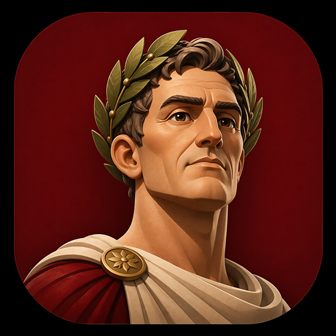
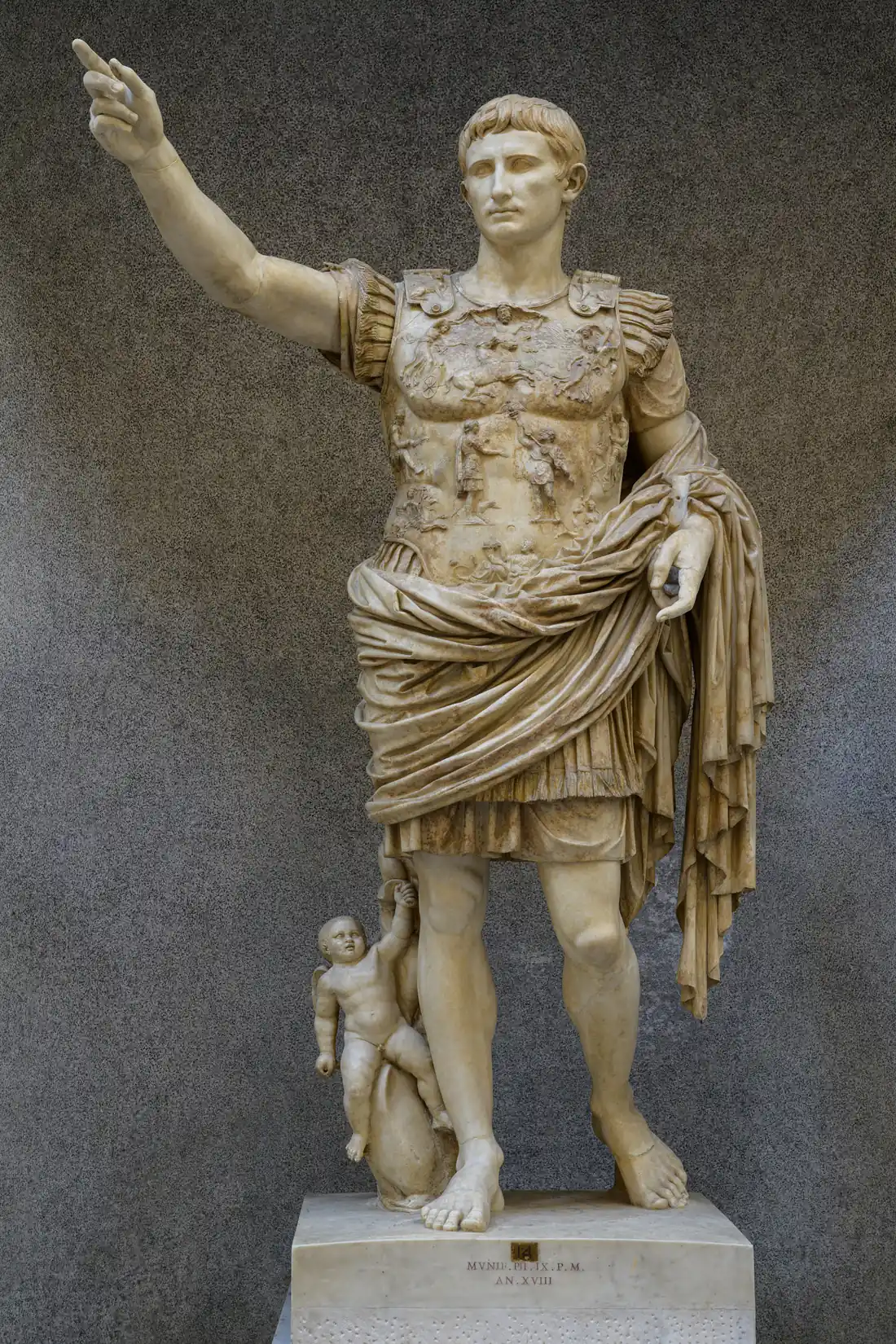
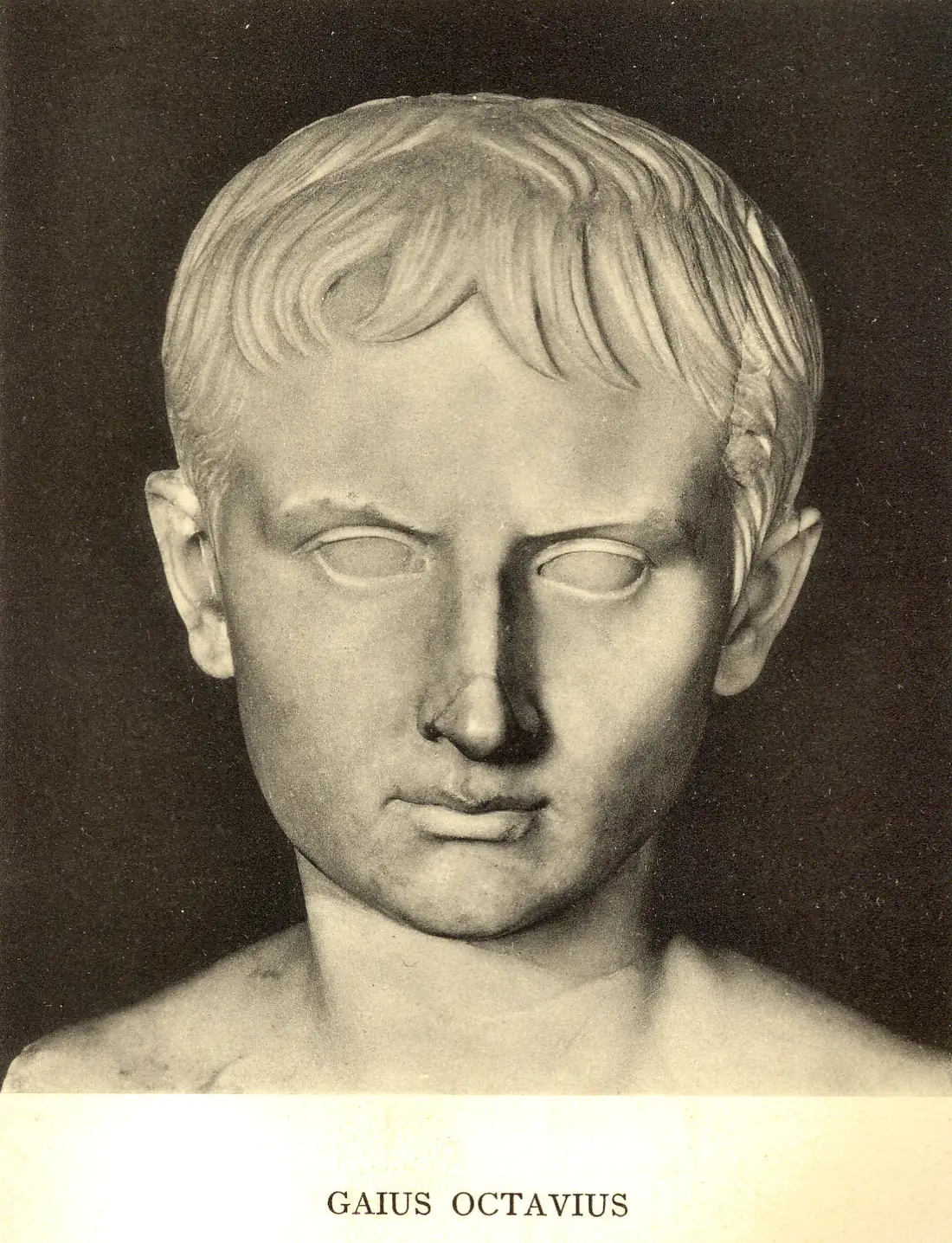
The legal instrument that made Gaius Octavius a future ruler was Julius Caesar’s will, drafted weeks before his assassination and sealed on the Ides of March. The will named Octavius, then a teenager, as chief heir and adopted son, thereby granting him the name Gaius Julius Caesar and the political capital of the late dictator’s name and wealth. Popular narratives often start with the birth of Augustus as the moment of destiny, but the decisive factor was the will, a document that transferred authority to a private citizen rather than a member of the existing senatorial elite.
Gaius Octavius was born on 23 September 63 BC in Rome to Gaius Octavius, a senator of modest means, and Atia, the niece of Julius Caesar. At the time of his birth his father held the office of praetor and owned estates in the town of Velitrae, providing the family with an annual income of roughly 150,000 sestertii, enough to maintain a household of twelve slaves and several freedmen. The birth itself was recorded by the historian Suetonius, who noted that the infant’s first name was Gaius and that his mother gave him the cognomen "Thurinus" after the town of Thurii where his father had served as governor.
The will’s provision that the heir be a "son" rather than a "relative" forced the Senate to confront an unprecedented legal scenario. In the immediate aftermath of Caesar’s death, the Senate debated whether to accept the adoption; they ultimately affirmed it on 1 May 44 BC, allowing the sixteen‑year‑old Octavius to inherit 2,000 talents of silver, 75 ships, and a network of provincial governors. This inheritance gave him control over resources equivalent to 5 % of Rome’s annual tax revenue, a scale that made any rival claim difficult without military backing.
Octavius’s early years after the will were marked by a careful accumulation of political allies. He married Scribonia in 40 BC, a union that produced his only biological child, Julia, and secured the support of the influential Cornelii family. By 31 BC he had defeated Mark Antony and Cleopatra at Actium, after which the Senate awarded him the title "Augustus" and the right to rule as princeps, inaugurating the Pax Romana that would last for two centuries. The birth of Augustus therefore represents the convergence of a legal act, substantial wealth, and strategic marriage, all of which enabled the transformation of the Roman Republic into an empire.
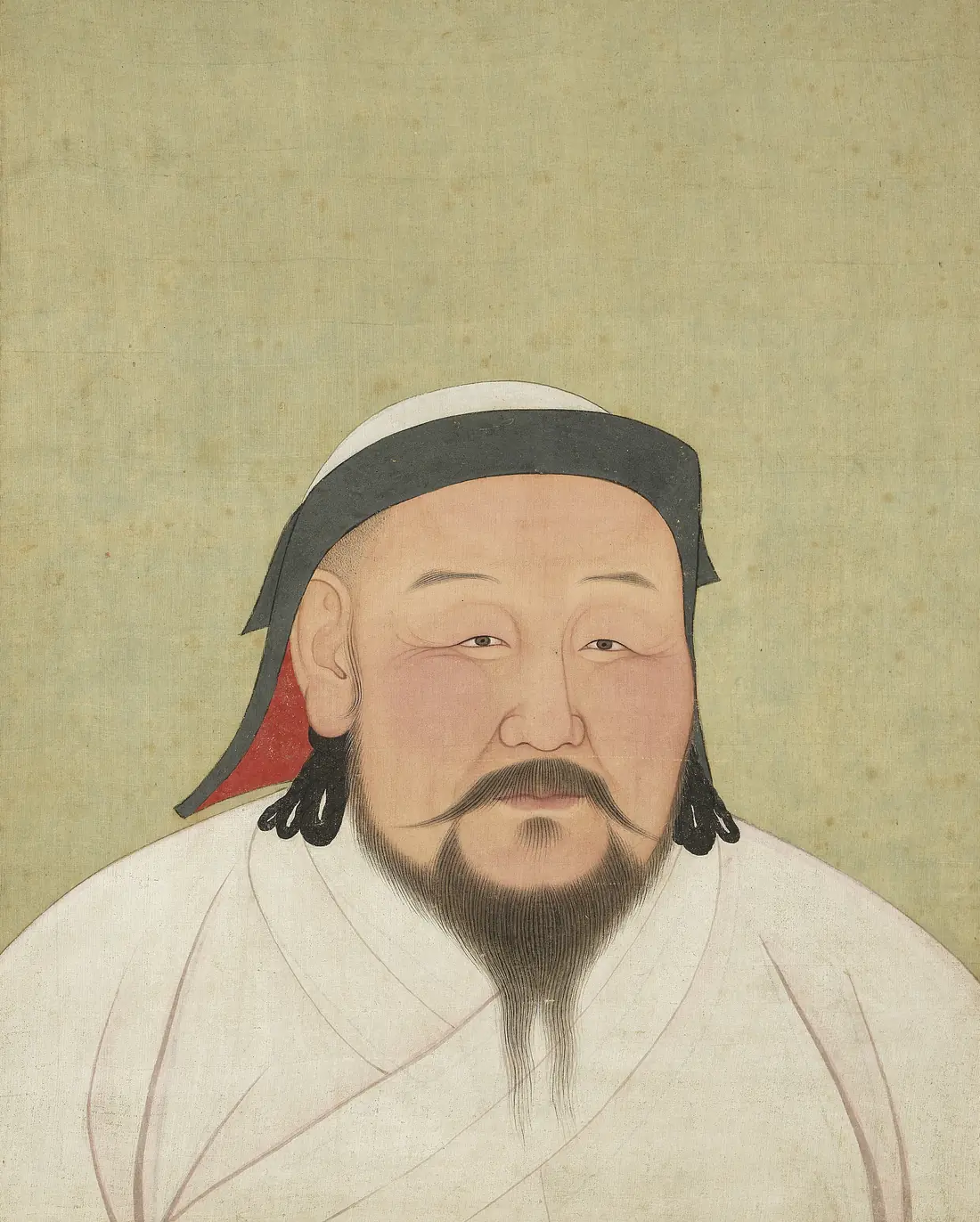
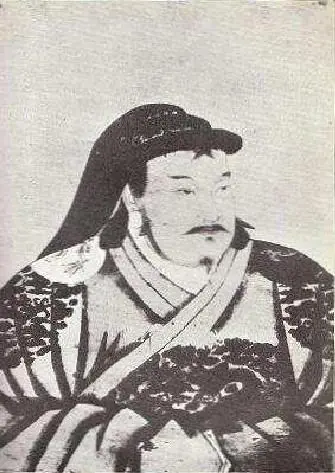
Kublai Khan was born on September 23, 1215 in the Mongolian steppe, the fourth son of Tolui and the grandson of Genghis Khan, who had united roughly 24 million square kilometres of land by his death in 1227. Tolui, aged about 45 at the time, controlled the Mongol heartland and allocated Kublai a share of the family estates that included the capital region of Karakorum.
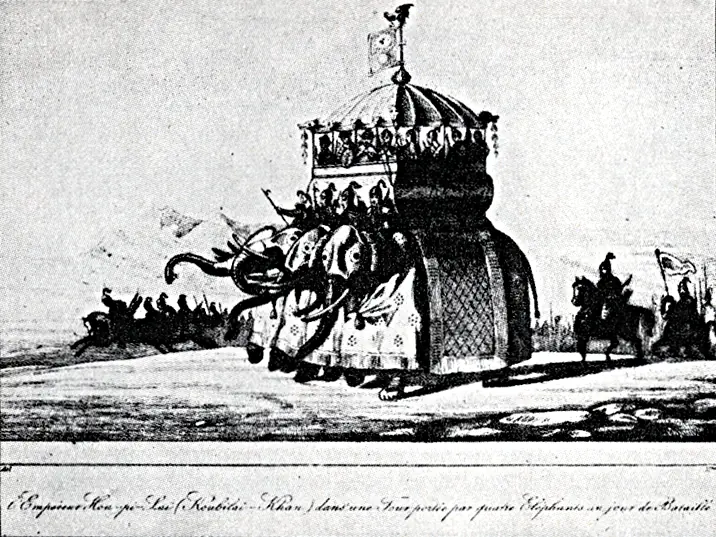
At the time of Kublai's birth the Mongol Empire was divided into four khanates, each governed by a senior member of the family; the western khanate covered about 9 million square kilometres while the eastern khanate, later known as the Yuan, encompassed roughly 5 million square kilometres of China and Manchuria. Kublai inherited the title of Prince of the Khans of the East after his elder brother Möngke was elected Great Khan in 1251, an election supported by 68 of the 100 senior princes recorded in the kurultai minutes.
Kublai's first major administrative reform in 1260 involved the establishment of a tax register that listed 1.2 million households, each assessed at an average tribute of 3 silver taels per year, a figure derived from the Yuan financial archives. This system provided the fiscal base that allowed him to fund a standing army of 200,000 cavalry, a number cited in the 1271 imperial decree that proclaimed the founding of the Yuan dynasty.
The proclamation of the Yuan dynasty in 1271 marked the first time a non‑Han ruler claimed the Mandate of Heaven over the entire Chinese realm, an area measured at about 3.5 million square kilometres. Kublai moved the capital to Khanbaliq, now Beijing, a city that grew from an estimated 500,000 residents in 1265 to 1.2 million by 1290, according to contemporary census records. His reign lasted 29 years until his death in 1294 at the age of 79, a lifespan noted in the Yuan annals as unusually long for a Mongol ruler.
Kublai's birth therefore linked the legacy of Genghis Khan's conquests with the administrative transformation that created the Yuan dynasty, a state that governed a population of roughly 100 million and set the institutional foundations for later Chinese imperial systems.
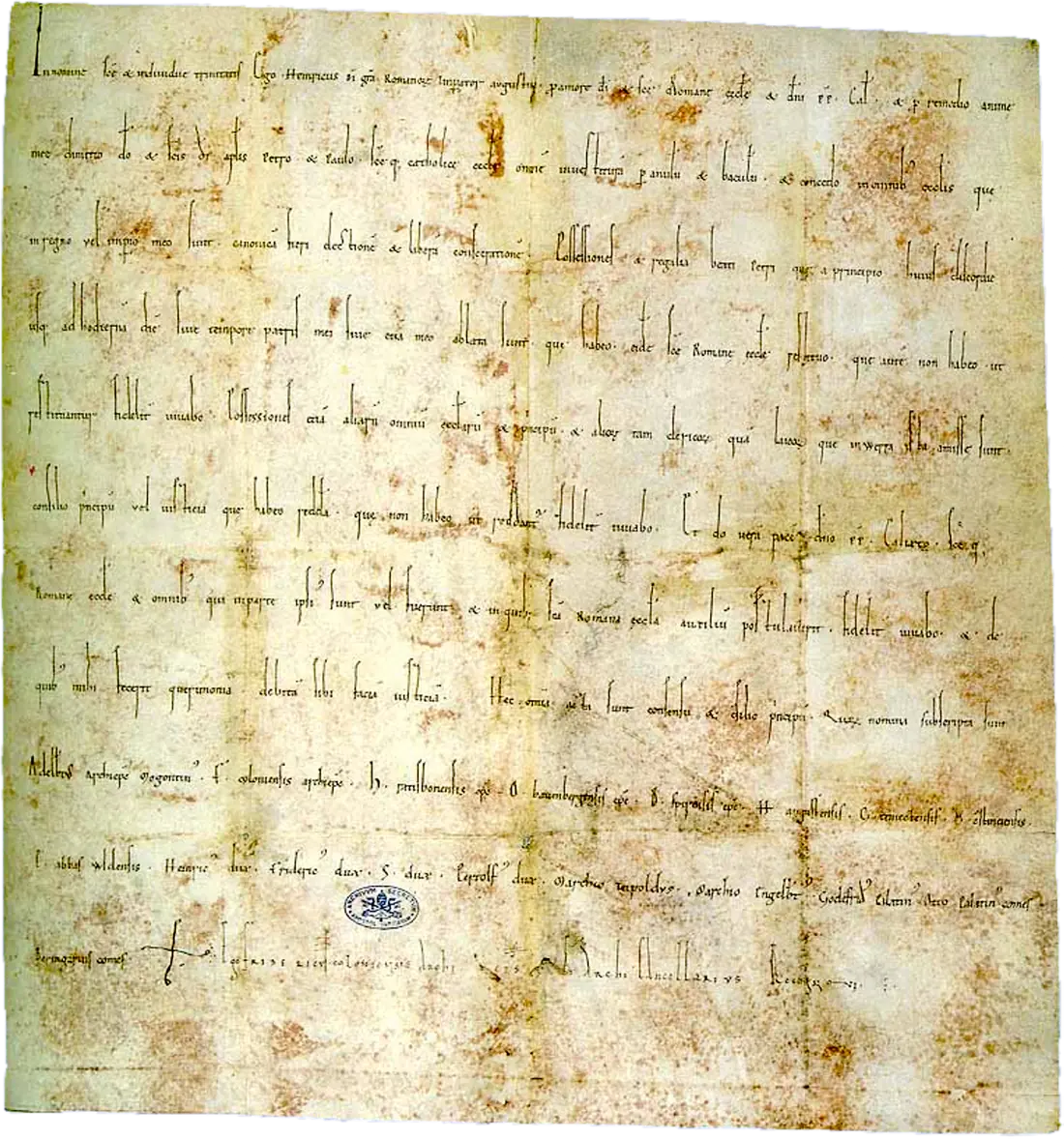
The Concordat of Worms ended a thirty‑year struggle over who could appoint bishops in the Holy Roman Empire. Before the agreement, the emperor claimed the right to invest bishops with the symbols of spiritual authority, while the pope claimed that only the Church could grant those symbols. This dual claim produced repeated conflicts, excommunications, and the loss of royal revenues from vacant sees.
The mechanism that resolved the dispute separated spiritual and temporal powers. The emperor retained the right to invest bishops with the secular ring and staff that conveyed the lands and political duties attached to a bishopric. The pope retained the right to confer the spiritual crozier and mitre that signified religious authority. By assigning each symbol to a different authority, the concordat created a clear legal division: the emperor could grant temporal jurisdiction, the pope could grant spiritual jurisdiction.
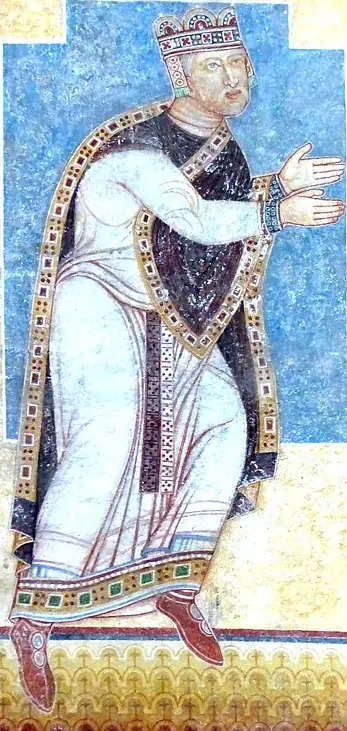
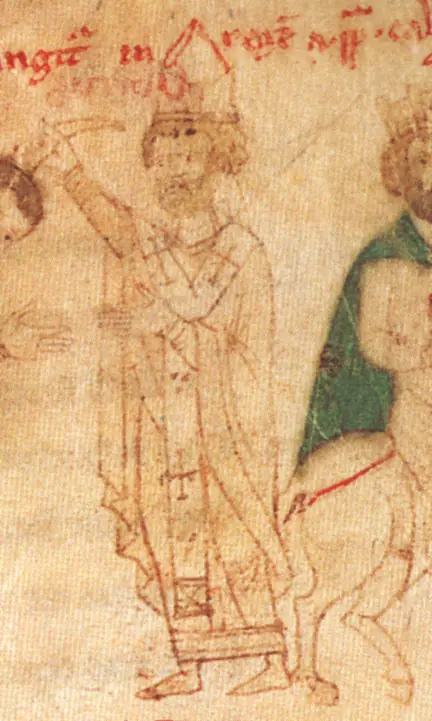
Pope Callixtus II and Emperor Henry V negotiated the terms after a series of meetings in Worms. The emperor agreed to renounce the practice of handing over the spiritual symbols, and the pope agreed that the emperor could still invest bishops with the temporal symbols after a canonical election conducted by the cathedral chapter. The chapter, consisting of local clergy, elected each bishop without imperial interference, after which the emperor confirmed the election and delivered the secular insignia. The pope then performed the spiritual consecration. This arrangement applied to all bishoprics within the empire, including major sees such as Mainz, Cologne, and Speyer.
The concordat excluded the king of England and the French king, who continued to claim investiture rights in their realms, but it set a precedent that was later echoed in the Treaty of Regensburg in 1245. The agreement survived for more than a century, providing a stable framework that allowed the empire to collect taxes from bishoprics while the Church maintained control over doctrinal matters. It also reduced the frequency of papal‑imperial excommunications, which had previously disrupted imperial coronations and crusade funding.
The immediate consequence was the coronation of Henry V as emperor later that year without papal opposition, demonstrating the new balance of power. The concordat’s division of authority became a model for later church‑state negotiations in medieval Europe, influencing the development of distinct legal spheres that persisted into the early modern period.
In 1778 the Continental Navy possessed only a handful of ships and struggled to challenge the Royal Navy, which controlled the seas around the American colonies with dozens of warships. John Paul Jones had been given command of the frigate Bonhomme Richard, a converted merchant vessel armed with 28 guns, and was ordered to raid British shipping along the coast of England.
Jones sailed to the North Sea in early 1779 and learned that a British convoy was protected by the 44‑gun ship HMS Serapis and a smaller armed vessel, the Countess of Scarborough. The British plan was to escort merchant ships from Hull to the Baltic, using the Serapis as a deterrent to any American privateers. Jones intended to capture or destroy a convoy ship to demonstrate that the United States could strike the British Isles directly.
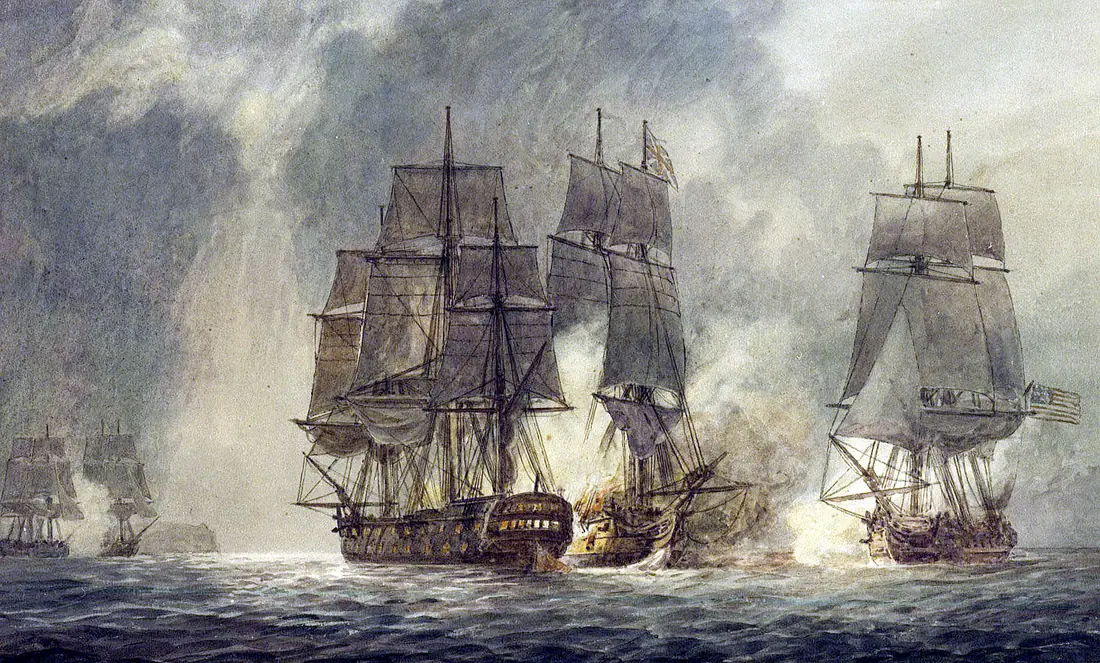
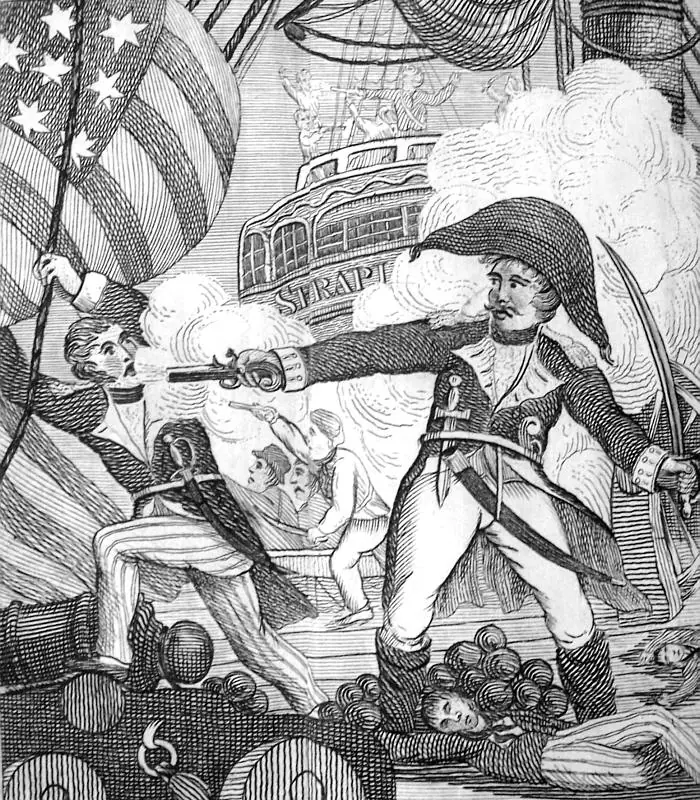
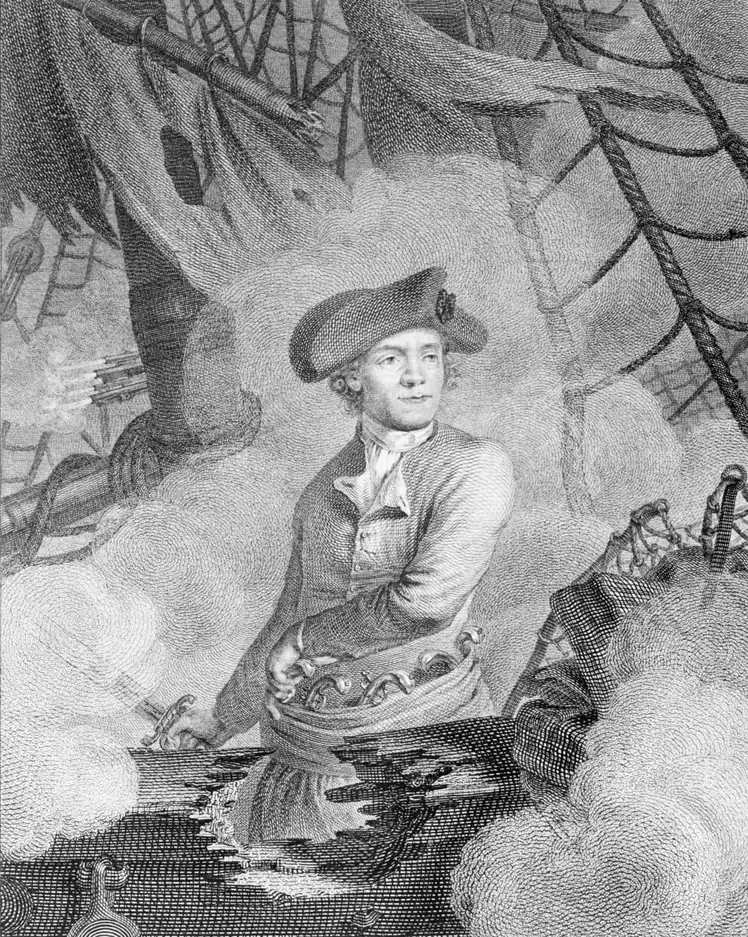
On 23 September the two squadrons met off Flamborough Head. Jones maneuvered Bonhomme Richard close to Serapis and engaged at point‑blank range. The American ship’s hull was heavily damaged, and a cannonball tore a large hole in the deck, but the crew kept the guns firing. Jones ordered the crew to “climb the rigging” and board the Serapis, a tactic that compensated for the Bonhomme Richard’s inferior firepower. After a fierce hand‑to‑hand fight, the British captain, Richard Pearson, surrendered when the American flag was raised on the Serapis’s deck. The Countess of Scarborough escaped, and the Bonhomme Richard sank later that evening because of the damage it had sustained.
The battle involved roughly 300 men on the American side and 250 on the British side. American casualties were 35 killed and 57 wounded; British casualties were 20 killed and 30 wounded. The victory gave the Continental Navy its first major success against a ship of the line and forced the Royal Navy to allocate additional resources to protect its home waters. It also boosted American morale and encouraged foreign observers to view the United States as a viable naval opponent.
In the months after Flamborough Head the United States secured limited French naval support, leading to the joint Franco‑American operations that culminated in the siege of Yorktown in 1781. The battle therefore marked a turning point in the naval dimension of the American Revolution.