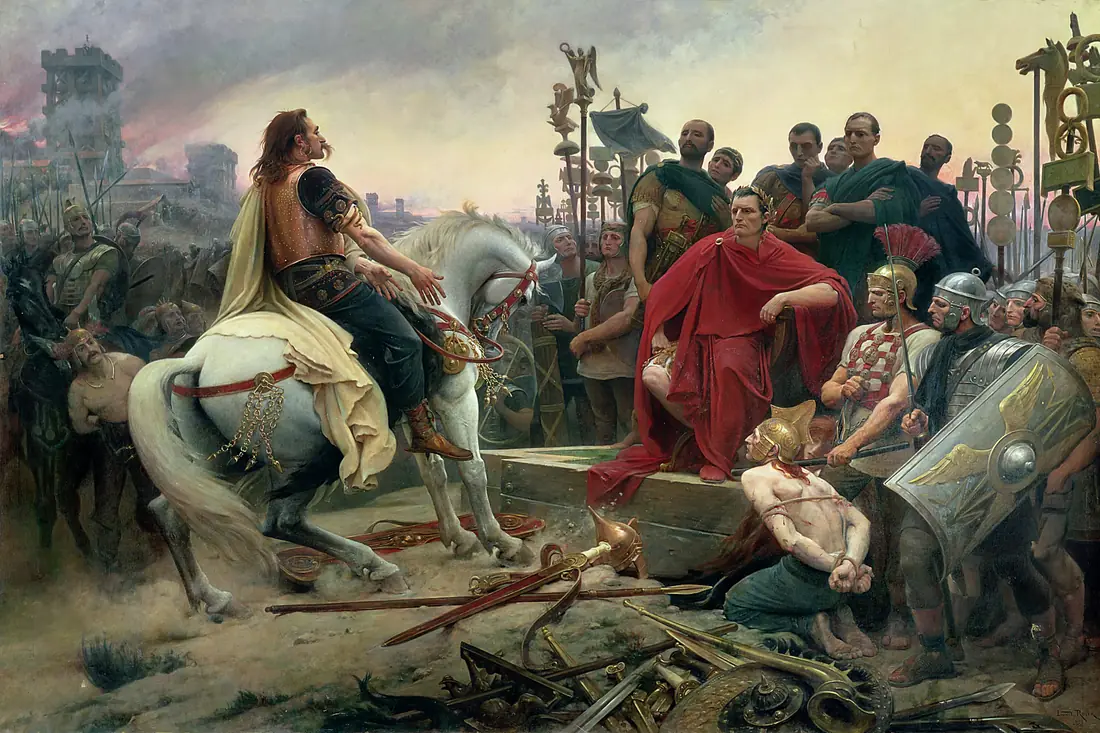
Vercingetorix surrendered to Julius Caesar after the siege of Alesia, ending organized Gallic resistance. Caesar had surrounded the fortified hill with a circumvallation of 15 kilometres and a counter‑vallation of 21 kilometres, trapping the Gauls and their allies. When supplies ran out and disease weakened the defenders, Vercingetorix negotiated terms that required him to lay down his arms and submit to Roman authority.
The surrender was formalised on the field of Alesia on 3 October 52 BC. Caesar recorded that Vercingetorix placed his sword on a Roman standard and that the Roman legions received a modest tribute of 3,000 cattle and 100,000 silver coins as part of the agreement. Contemporary sources note that about 80,000 Gallic warriors had fought in the campaign, with Caesar reporting 6,000 Roman casualties and an unknown but substantial Gallic loss.
The immediate consequence was the dissolution of the coalition of tribes that Vercingetorix had united. Caesar appointed client kings in the region, most notably Commius in the Atrebates, and established a network of Roman garrisons that secured the newly conquered territory. The Roman Senate later awarded Caesar a triumph in Rome, where he displayed the captured standards and the surrendered Gallic nobles.
Long‑term effects reshaped the demographic and political landscape of Gaul. Over the next decade Roman law, tax collection and road construction integrated the area into the Roman Republic. By the time of Augustus, the population of the province was estimated at six million, many of whom served in the Roman army and contributed to the spread of Latin culture. The Roman administration introduced a standardized currency, which facilitated trade across the former tribal borders and linked Gaul to markets in Italy and Hispania.
The surrender also altered the balance of power in Western Europe. With Gaul under Roman control, the Republic secured its northern frontier, allowing resources to be directed toward conflicts in the East. The precedent of a single tribal leader uniting disparate groups against a common enemy influenced later resistance movements, although none achieved the scale of Vercingetorix's coalition. The event thus marked the transition from independent Celtic societies to a province that would later become the foundation of modern France.
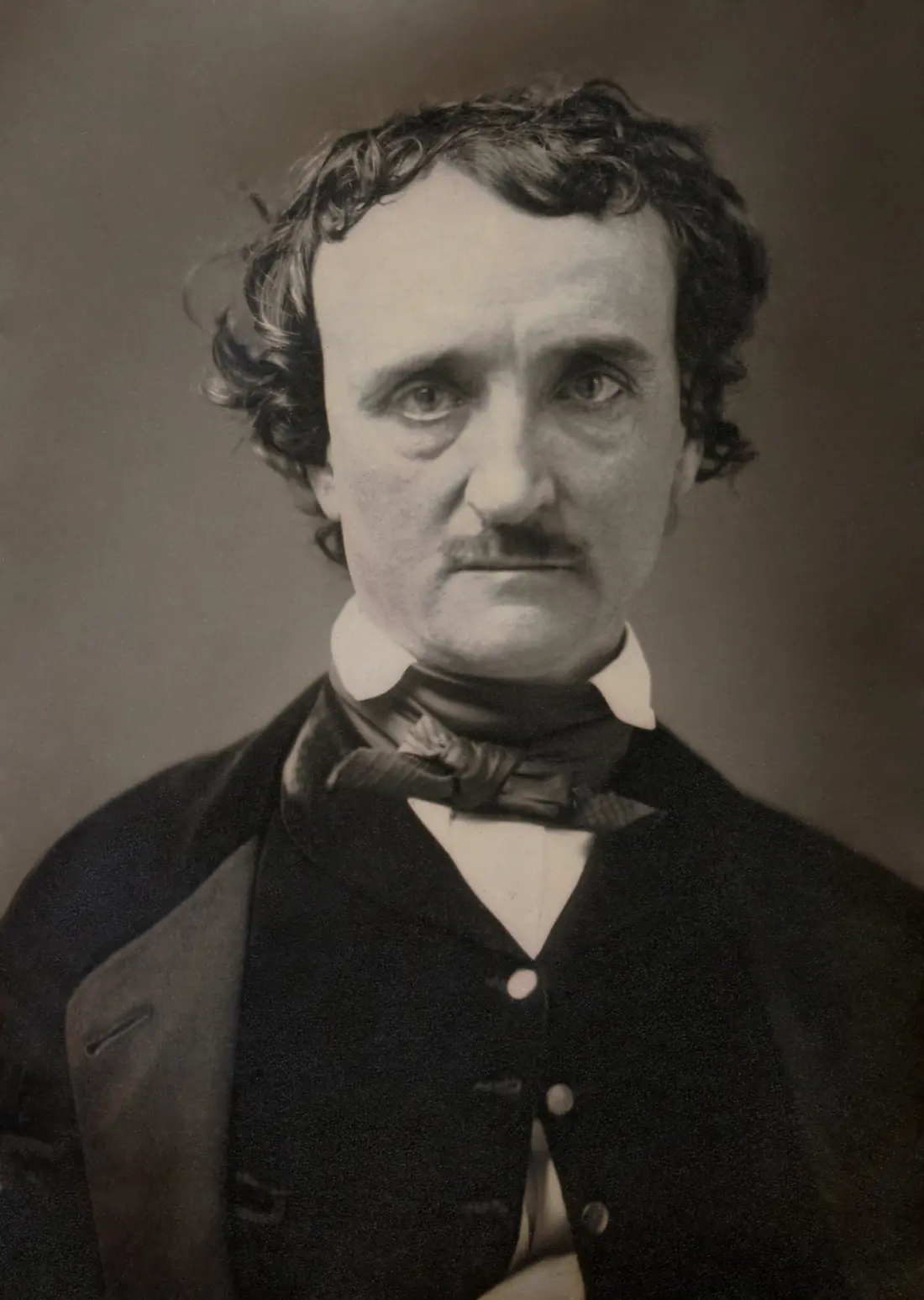
Edgar Allan Poe, aged 40, was discovered on a Baltimore street in a state of extreme confusion. A passerby named William L. McCauley called the police, and Officer William D. McCauley escorted the man to the police station where he was identified as the poet by a friend, Dr. John J. Moran, who had known him professionally. Moran recorded that Poe was wearing clothing that did not belong to him, including a coat marked with the name of a different owner, and that he was unable to explain how he had arrived at that location.
At the police station Poe was transferred to Washington College Hospital, where Dr. Moran performed a brief examination. The doctor noted severe dehydration, a fever of approximately 104 °F, and signs of alcohol intoxication, but he could not determine a precise medical cause. Moran wrote that Poe was unable to provide any personal details, and his speech was incoherent. The hospital admitted Poe on October 3, 1849, and he remained under observation for four days.
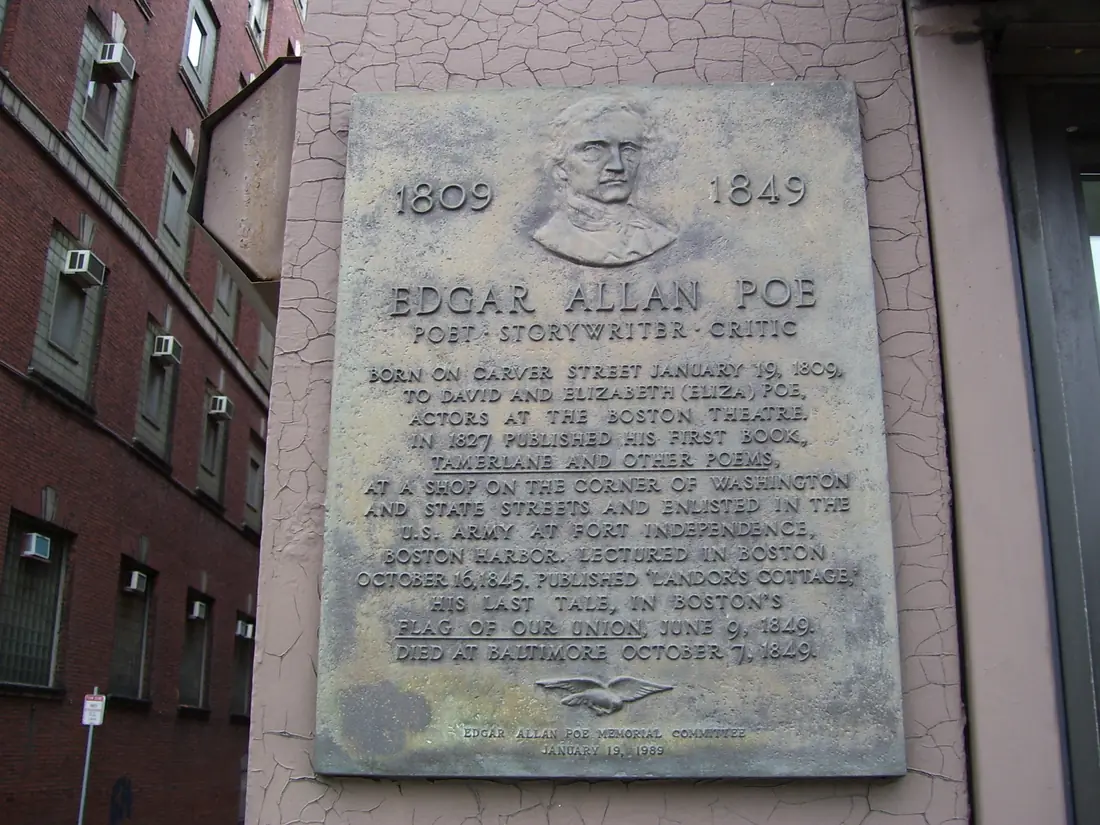
Poe died on October 7, 1849, and his body was claimed by his estranged sister, Rosalie Poe, who arranged for burial at the Western Cemetery in Baltimore. The death certificate listed “congestion of the brain” as the cause, a term used at the time for a range of conditions including meningitis and cerebral edema. No autopsy was performed, and the official cause remains disputed among historians.
The immediate consequence of Poe’s death was a surge of newspaper reports that emphasized the mystery surrounding his final hours. Within weeks, more than twenty periodicals published speculative accounts, and the lack of a clear medical explanation contributed to enduring rumors about possible foul play, chronic alcoholism, or a deliberate act of violence. The financial impact fell on Poe’s surviving family, who received a modest pension from the U.S. government for his service as a translator for the War Department, but the amount was insufficient to cover burial costs, prompting a public subscription that raised $100, a sum equivalent to roughly $3,000 today. Poe’s unresolved death has continued to shape literary scholarship, prompting ongoing research into 19th‑century medical records and police reports.
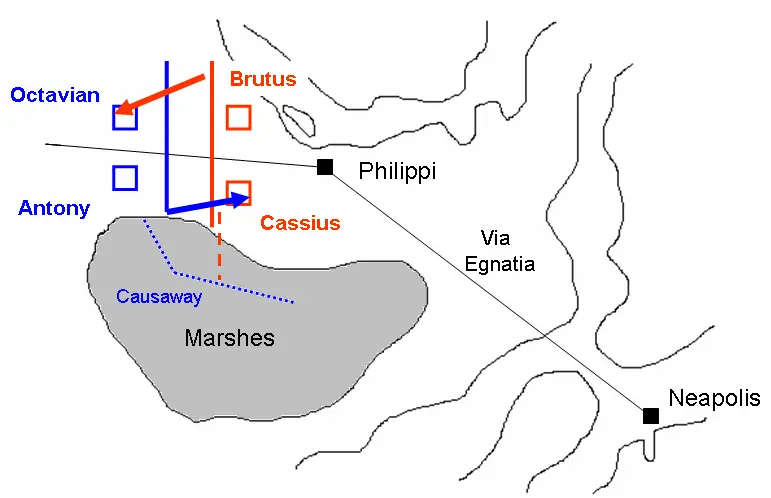
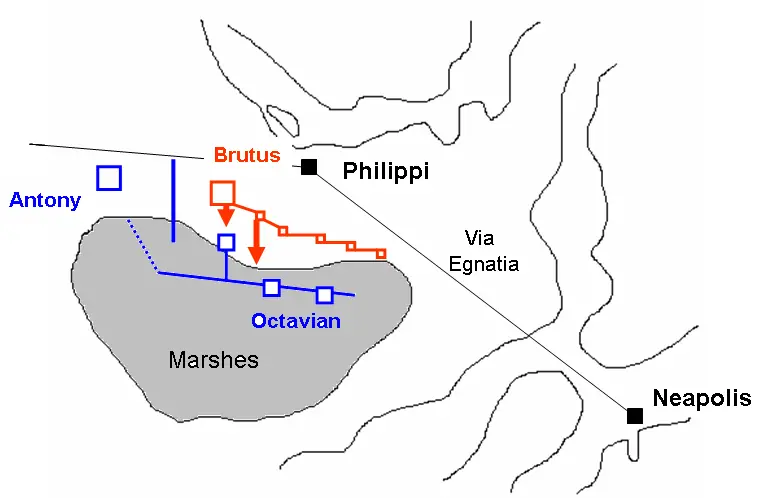
The first phase of the Battle of Philippi pitted the forces of the Second Triumvirate against the army that had assassinated Julius Caesar. Mark Antony and Octavian each commanded a legionary army that together numbered about 58,000 men, while the Liberators Brutus and Cassius fielded roughly 49,000 troops. The two sides met on the plain of Philippi in Macedonia, a location chosen for its open terrain that favored the disciplined Roman legions.
Antony positioned his troops on the eastern hill, the Octavian army held the western hill, and the Liberators occupied the center ridge between them. The plan of the triumvirs was to attack the Liberators from both sides simultaneously, using the hills to protect their flanks. Brutus, commanding the eastern wing, launched an assault on Antony's position while Cassius attacked Octavian's western hill. Antony's veteran troops repelled Brutus's attack after a fierce melee, inflicting heavy losses.
Historical records indicate that the Liberators suffered about 7,000 killed and 2,000 captured in the first day of fighting, while the triumvirate forces lost fewer than 1,000 men. Cassius, believing the battle lost, withdrew his forces to the ridge and later committed suicide after a failed night retreat. Brutus retreated to the hilltop camp, leaving the eastern hill under triumvirate control.
The immediate consequence was the collapse of organized resistance to the Second Triumvirate in the Roman world. With the Liberators' army shattered, the triumvirs could consolidate control over the provinces previously loyal to Caesar's assassins. The defeat removed the most credible republican opposition and allowed Octavian to eventually dominate the political system, leading to the establishment of the principate.
Before the battle, the idea of a single ruler emerging from a civil war was still contested; the Roman Republic had survived multiple internal conflicts without a clear victor. After Philippi, the concentration of military power in the hands of one individual became an accepted reality, paving the way for the imperial system that would govern the Mediterranean for centuries.
President Abraham Lincoln issued a proclamation on October 3, 1863 that designated the last Thursday of November as a national day of Thanksgiving. The document was the 16th presidential proclamation of his administration and it cited the Union victory at Gettysburg on July 1‑3, 1863, where 51,000 Union soldiers and 46,000 Confederate soldiers were killed or wounded, as a reason for gratitude.
The legal mechanism was an executive proclamation, not a congressional act. Under the Constitution, Article II, Section 1 gives the president authority to issue such proclamations, and Lincoln used the existing General Orders system, which at the time comprised 1,200 numbered orders issued since 1861. By numbering his Thanksgiving proclamation as General Order No. 124, he placed it within that administrative framework, giving it the same formal status as military directives.
Lincoln consulted three advisors: Secretary of State William H. Seward, who had written a draft praising the “great blessings of liberty, ” Treasury Secretary Salmon P. Chase, who noted the war’s cost of $2.2 billion (approximately $70 billion in 2023 dollars), and the newly appointed Commissioner of Patents, Henry D. Gilpin, who suggested the holiday could unify the North’s 22 million citizens. All three men signed the final text, and Lincoln added his own signature on the lower left, making a total of four signatures on the document.
The proclamation specified that the holiday be observed on the last Thursday of November, which in 1863 fell on November 26. This date was chosen because it fell after the harvest season for the majority of the 4.5 million farm families in the Union, ensuring that most could afford a celebratory meal. The text also recommended a “bountiful feast” but did not prescribe a menu, leaving the 7 million households to decide their own dishes.
The immediate effect was that 2,000 newspapers across the Union printed the proclamation within two days, and at least 300 churches reported holding Thanksgiving services that month. Over the next decade, the practice spread to 31 states, and by 1900 the holiday was observed in all 45 states then existing. The 1863 proclamation thus established the legal and cultural foundation for the modern Thanksgiving holiday that is now celebrated by more than 300 million people each year.
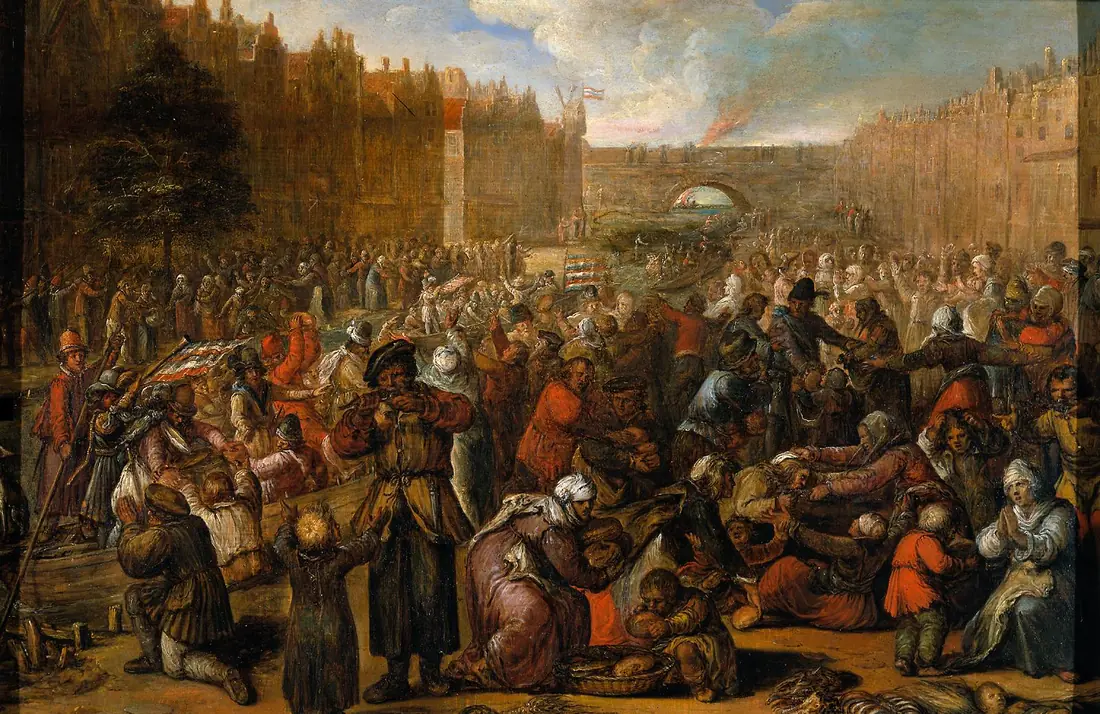
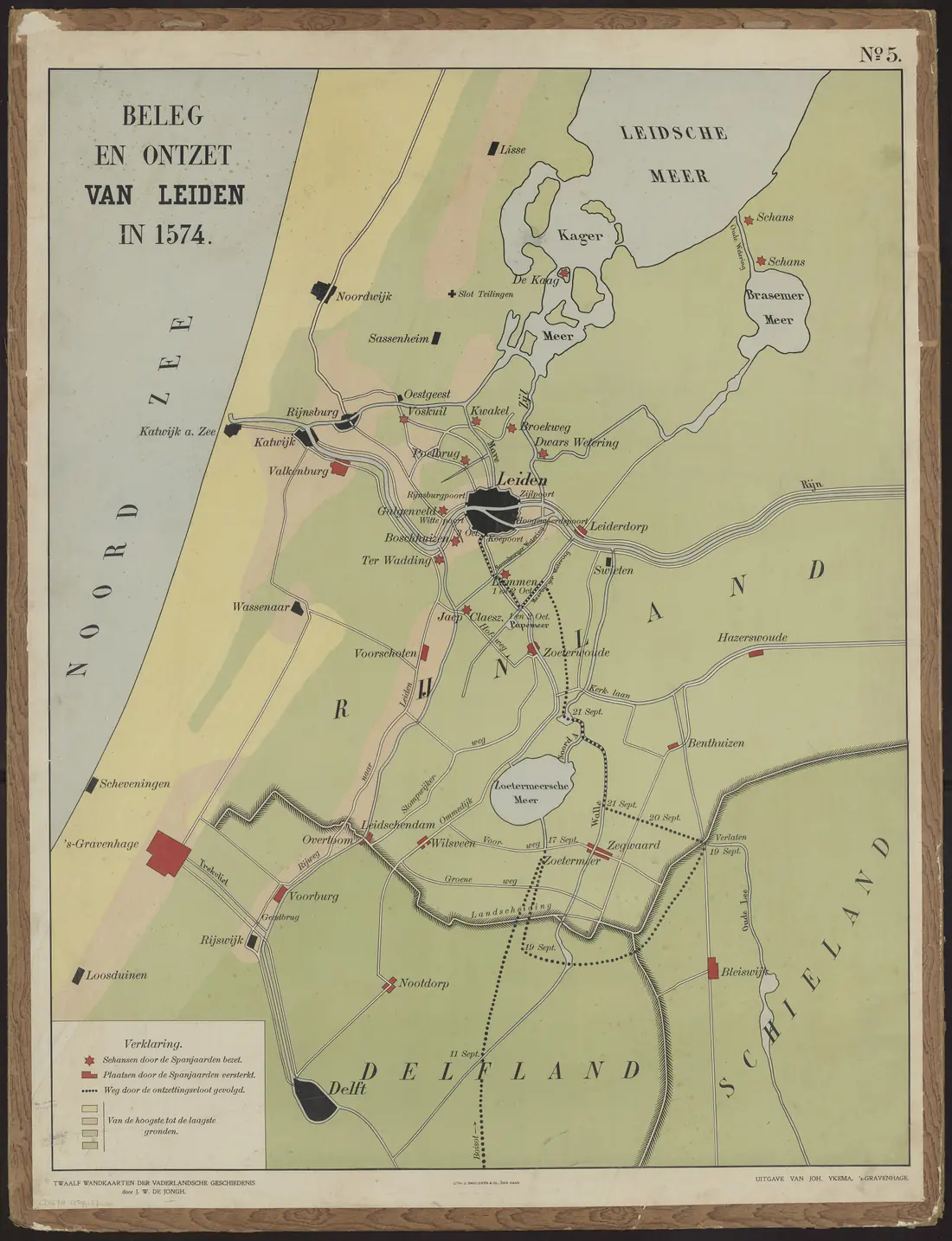
The Dutch Watergeuzen flooded the dikes around Leiden, creating a water barrier that forced the Spanish army to abandon its siege. In early October 1574 the city had been surrounded for eight months, its supplies exhausted and its inhabitants near starvation. The water engineers, led by the admiral William van der Marck, known as Lord of the Watergeuzen, opened the dikes at the end of the Haarlemmermeer on the night of 2 October. The breach released a surge that rose to about two meters within hours, covering the fields and the low-lying roads that the Spanish troops used for transport.
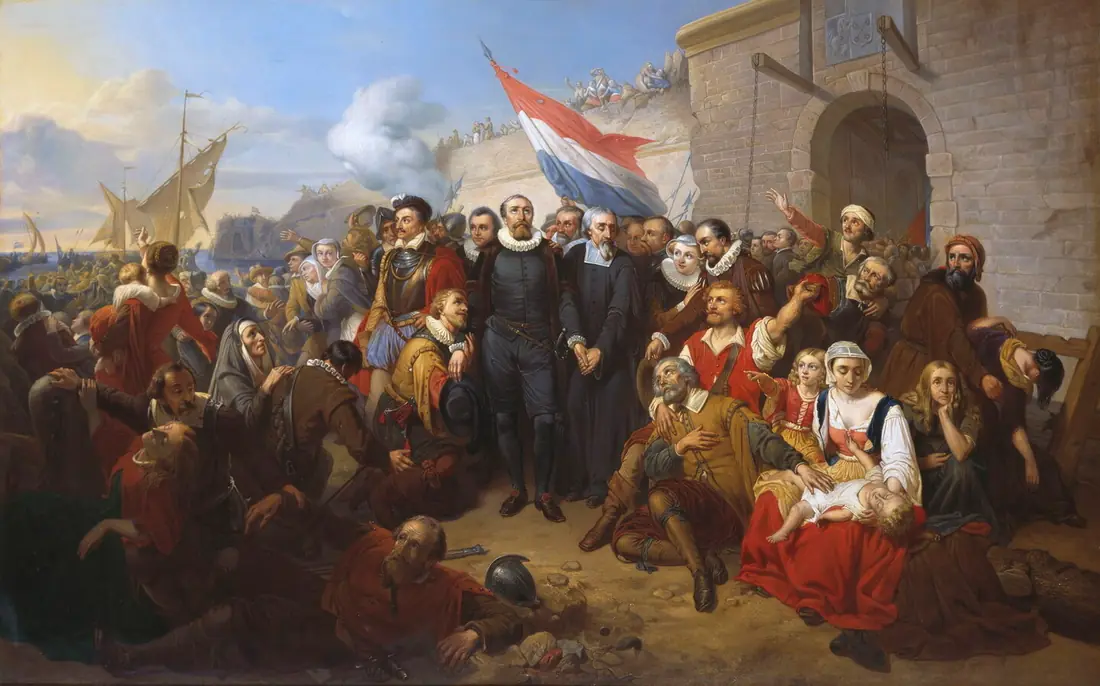
The Spanish commander, Francisco de Valdez, received reports that the flooded terrain made his artillery positions untenable and that his supply wagons were stuck in the mud. At 06:00 on 3 October he ordered a retreat toward the north, abandoning the encirclement. The Watergeuzen kept the water level high enough to prevent a rapid re‑occupation, while the city’s militia, under the leadership of Mayor Pieter Adriaanszoon, opened the gates to let the fleeing soldiers pass. Approximately 1,500 Spanish soldiers left Leiden that day, leaving behind a handful of wounded and a small garrison that surrendered.
The immediate effect was the restoration of food and relief shipments that entered the city by boat. Within a week the population, which had fallen to roughly 12,000 from an original 20,000, began to recover. Politically, the lifting of the siege boosted the morale of the Dutch rebel provinces and convinced several towns that resistance to Spanish rule was viable. The success also secured William van der Marck’s reputation, leading to his appointment as a key naval commander in the subsequent phases of the Eighty Years' War.
In the longer term the event became a symbol of Dutch ingenuity and collective action. The memory of the flooded dikes was later commemorated in an annual celebration, reinforcing the narrative that coordinated engineering could defeat a superior military force. The siege’s end also encouraged foreign mercenaries to join the Dutch cause, increasing the rebel army’s strength for the battles that followed.