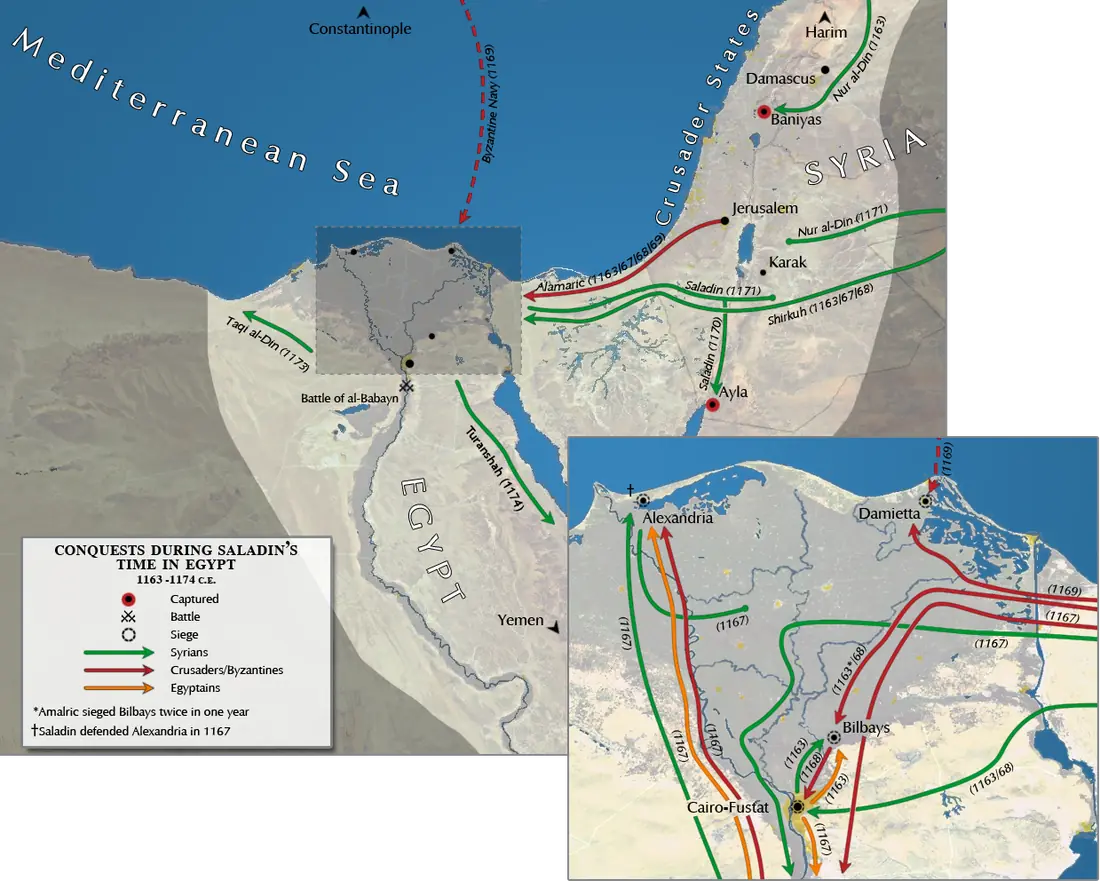
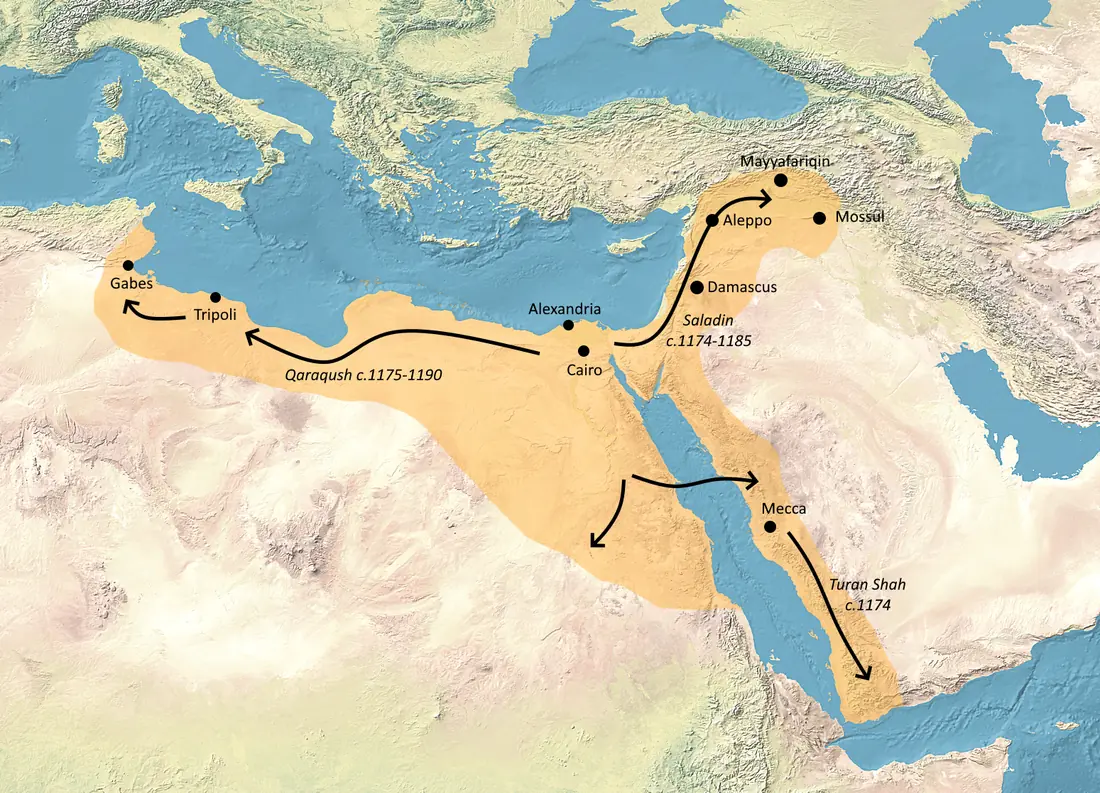
Saladin's army forced the surrender of Jerusalem after a siege that lasted from September 20 to October 2, 1187. The Ayyubid leader, Sultan Ṣalāḥ ad‑Dīn Yūsuf ibn Ayyūb, was about fifty‑three years old and had united Egypt and Syria to present a single military front against the Crusader states. He ordered his commander al‑Afdal ibn Salah al‑Dīn, his nephew and governor of Damascus, to block the city's northern gates while siege engines battered the walls.
The defending force was led by Balian of Ibelin, lord of the city and a veteran of earlier battles, who was roughly fifty years old. Balian negotiated with Saladin after the walls were breached on October 1. Contemporary Muslim chroniclers record that Saladin offered terms: the inhabitants could leave with their belongings for a fee of ten dinars per person, and the holy sites would be spared from desecration. Balian accepted because the garrison, estimated at three hundred men, could not repel the attackers, and civilian casualties would have been high.
The surrender was formalised on October 2 in the Church of the Holy Sepulchre. Saladin entered the city on foot, a symbolic act recorded by the chronicler Ibn al‑Athīr, to demonstrate humility. He ordered the demolition of the Crusader citadel, which had housed a garrison of about one hundred soldiers, and redistributed its stones for new city walls. The Muslim administration appointed al‑Maqrīzī as the new governor, tasked with collecting taxes and restoring order.
The capture ended nearly ninety years of Latin Christian rule in Jerusalem. It forced the Kingdom of Jerusalem, reduced to a coastal strip, to appeal to Europe for assistance. Within months, King Richard I of England and King Philip II of France organized the Third Crusade, which began in 1189. The loss also shifted trade routes, as merchants rerouted goods through Acre, increasing its importance as a port. The financial burden of the ransom and rebuilding fell largely on the remaining Crusader nobility, while the Muslim populace faced new tax assessments to fund the garrison. Saladin’s control of Jerusalem remained until the city was retaken by Crusader forces in 1229 during the Sixth Crusade, illustrating the volatility of the region after 1187.
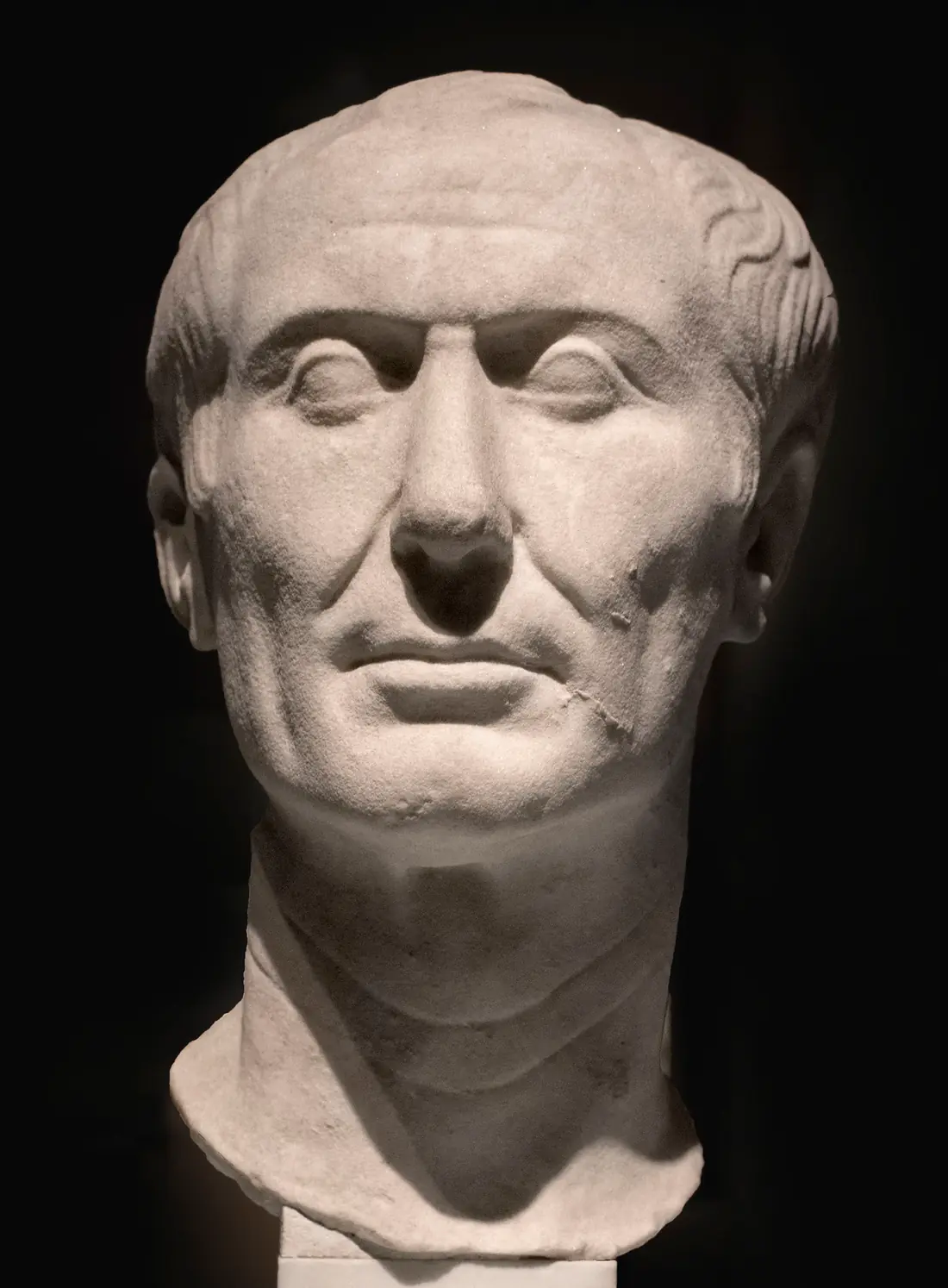
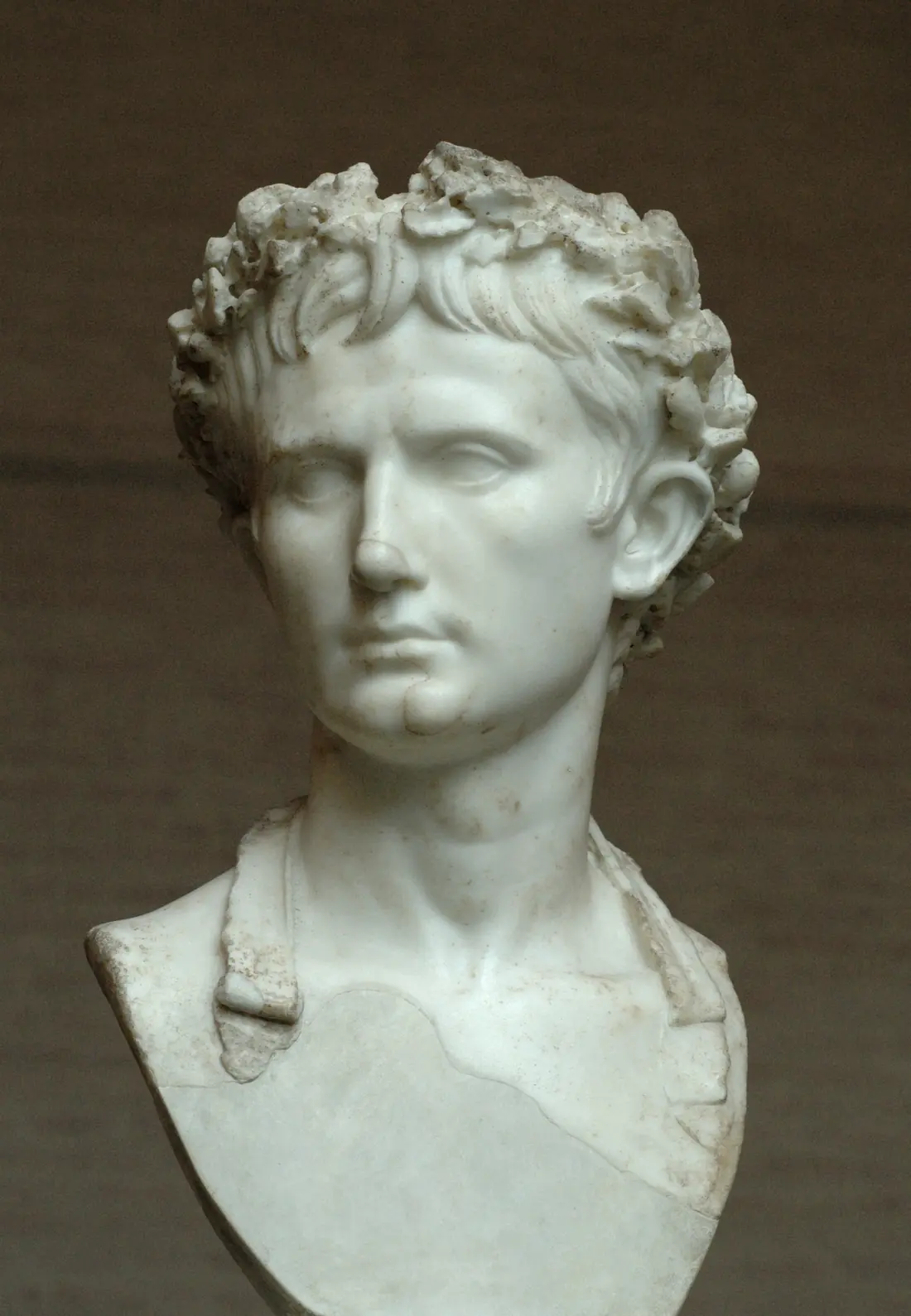
Julius Caesar reached Alexandria with a fleet of twelve ships carrying roughly 5,000 legionaries after marching 2,000 kilometres from Rome. The arrival on 2 October 48 BC was prompted by his pursuit of Pompey, who had fled the decisive battle at Pharsalus on 2 July 48 BC. Caesar’s force was organized into three squadrons, each commanded by a senior centurion, a structure recorded in his own commentaries.
The immediate purpose of the landing was to secure a base for further operations in the Eastern Mediterranean. Alexandria’s harbour could accommodate vessels up to 30 metres in length, and the city’s grain warehouses held an estimated 200,000 tonnes of wheat, a supply that could feed Caesar’s army for several months according to contemporary logistical estimates. Control of this resource would also influence the Roman Senate’s grain imports, a factor noted by the historian Suetonius.
Within two days of disembarking, Caesar was informed that Pompey had been assassinated on 28 September 48 BC, a fact reported by the Egyptian court scribe and later confirmed by the Roman historian Appian. The news arrived via a messenger who covered the 80‑kilometre distance from the city of Pelusium in approximately three days, a travel time consistent with average marching speeds of 25 km per day for a single rider.
The death of Pompey eliminated the primary political rival who had commanded the Senate’s opposition since the civil war began in 49 BC. Caesar’s subsequent meeting with King Ptolemy XIII, who was co‑ruler with his sister Cleopatra VII, was recorded as occurring on 5 October 48 BC. In that meeting, Caesar demanded the return of the 30‑million denarii owed to Rome for previous grain shipments, a sum calculated from the standard Roman price of one denarius per modius of wheat. Ptolemy’s inability to pay forced him to concede a treaty that placed a Roman garrison of 500 soldiers in the city, a detail noted in the Alexandrian archives.
The consequence of Caesar’s arrival and the confirmation of Pompey’s death was the rapid shift of power in the Eastern Mediterranean. Within six weeks, Caesar had installed Cleopatra as co‑ruler, secured the Roman grain supply, and begun the re‑organization of the province that later became the basis for the Roman Empire’s eastern administration.
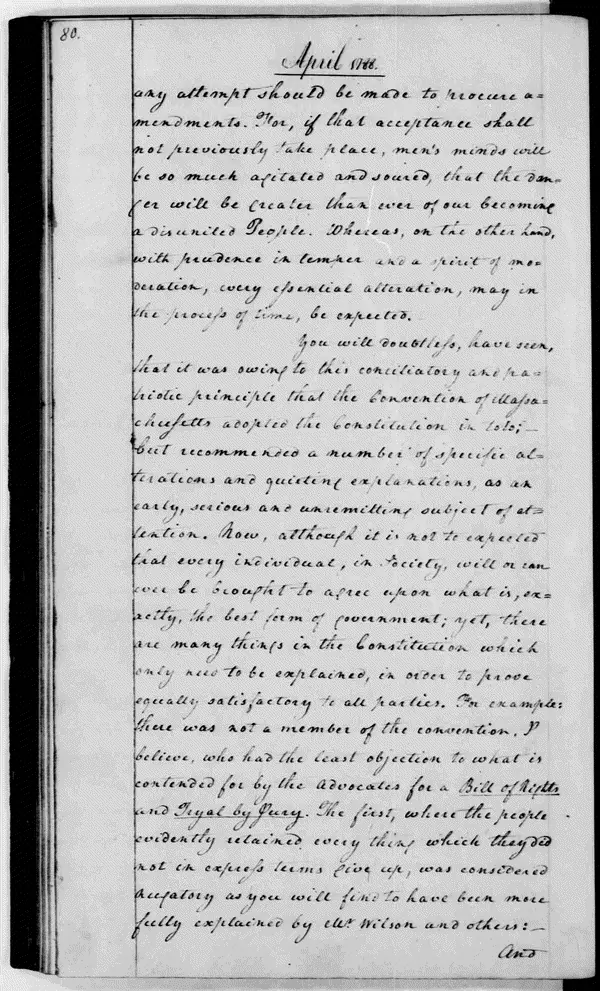
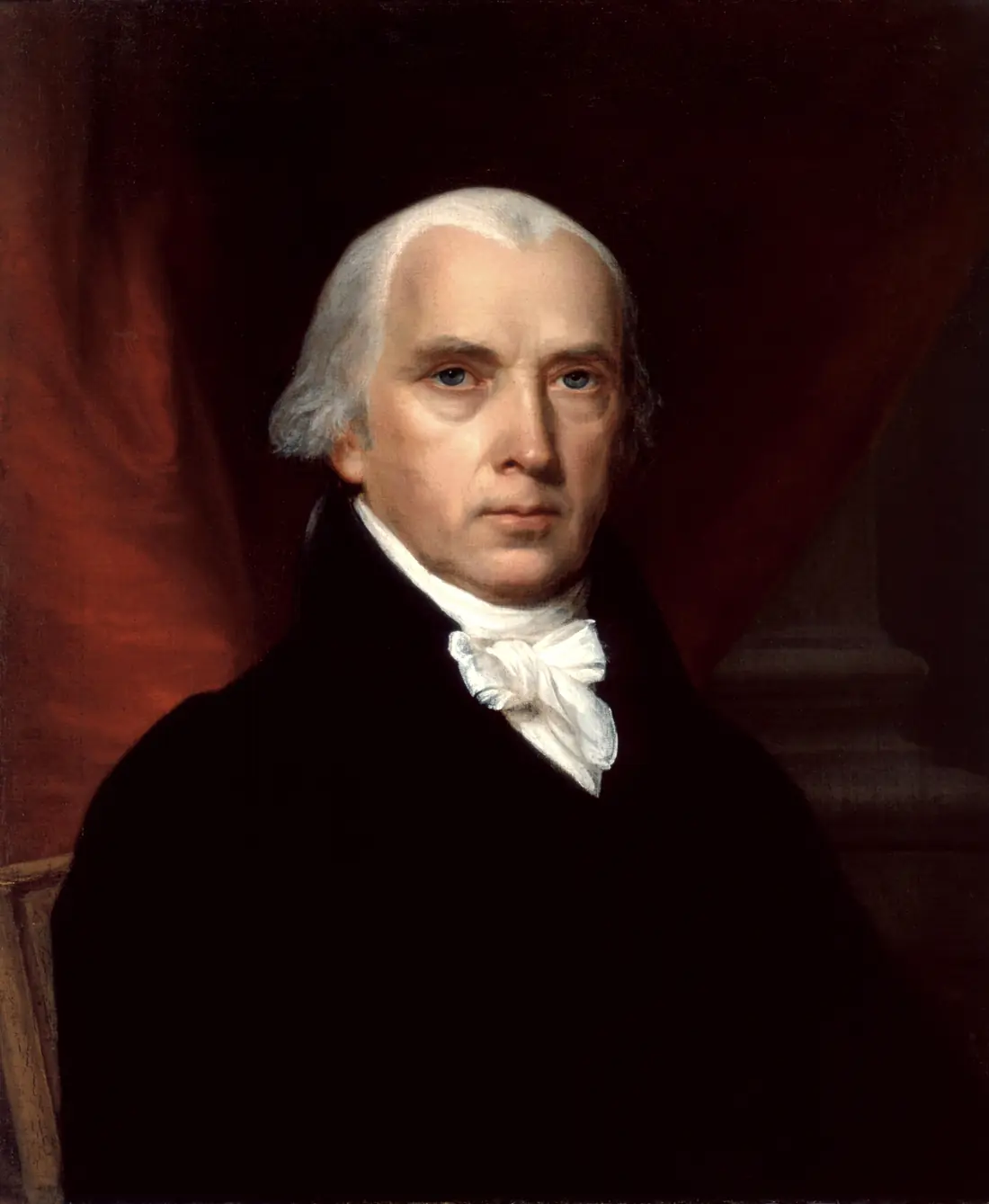
On October 2, 1789 the United States Congress transmitted the ten amendments that would become known as the Bill of Rights to the states for ratification. The Constitution that had taken effect on March 4, 1789 created a federal government with powers to tax, regulate commerce, and raise an army, but it contained no explicit protection of individual liberties. The absence of such protections had been a major point of contention during the ratification debates, and many state ratifying conventions demanded a declaration of rights before they would accept the new government.
The mechanism for adding the amendments was provided by Article V of the Constitution. Article V allows either two thirds of both houses of Congress or a convention called by two thirds of the state legislatures to propose amendments, and then requires ratification by three fourths of the states. In 1789 James Madison introduced the amendments in the House on June 8, arguing that they would "preserve the liberties of the people" and that they were necessary to secure the support of the states. The House approved the amendments on September 25, 1789 with a vote of 211 to 46, and the Senate concurred on September 28 with a vote of 20 to 10.
After congressional approval, the amendments were formally dispatched to the states on October 2. The transmission required the Secretary of State to send certified copies to each state governor, who then forwarded them to their legislatures. Ratification required each state legislature, or in two states a convention, to pass a resolution accepting the amendments. By December 15, 1791, eleven of the thirteen states had ratified the ten amendments, meeting the three fourths threshold. New Hampshire, Virginia, and Rhode Island were the last to join, completing the process on March 30, 1791.
The immediate effect was that the federal government was now bound by specific prohibitions: no law could abridge freedom of speech, press, religion, or the right to a fair trial, and the states could not quarter soldiers in private homes without consent. These constraints altered the balance of power by limiting congressional authority and providing a legal basis for later judicial review. The Bill of Rights also set a precedent for future amendments; the Constitution has been amended twenty seven times, each following the same Article V process established in 1789.
The transmission of the Bill of Rights thus transformed a Constitution that had been criticized for lacking explicit civil liberties into a document that explicitly enumerated them, shaping American law and political culture for subsequent generations.
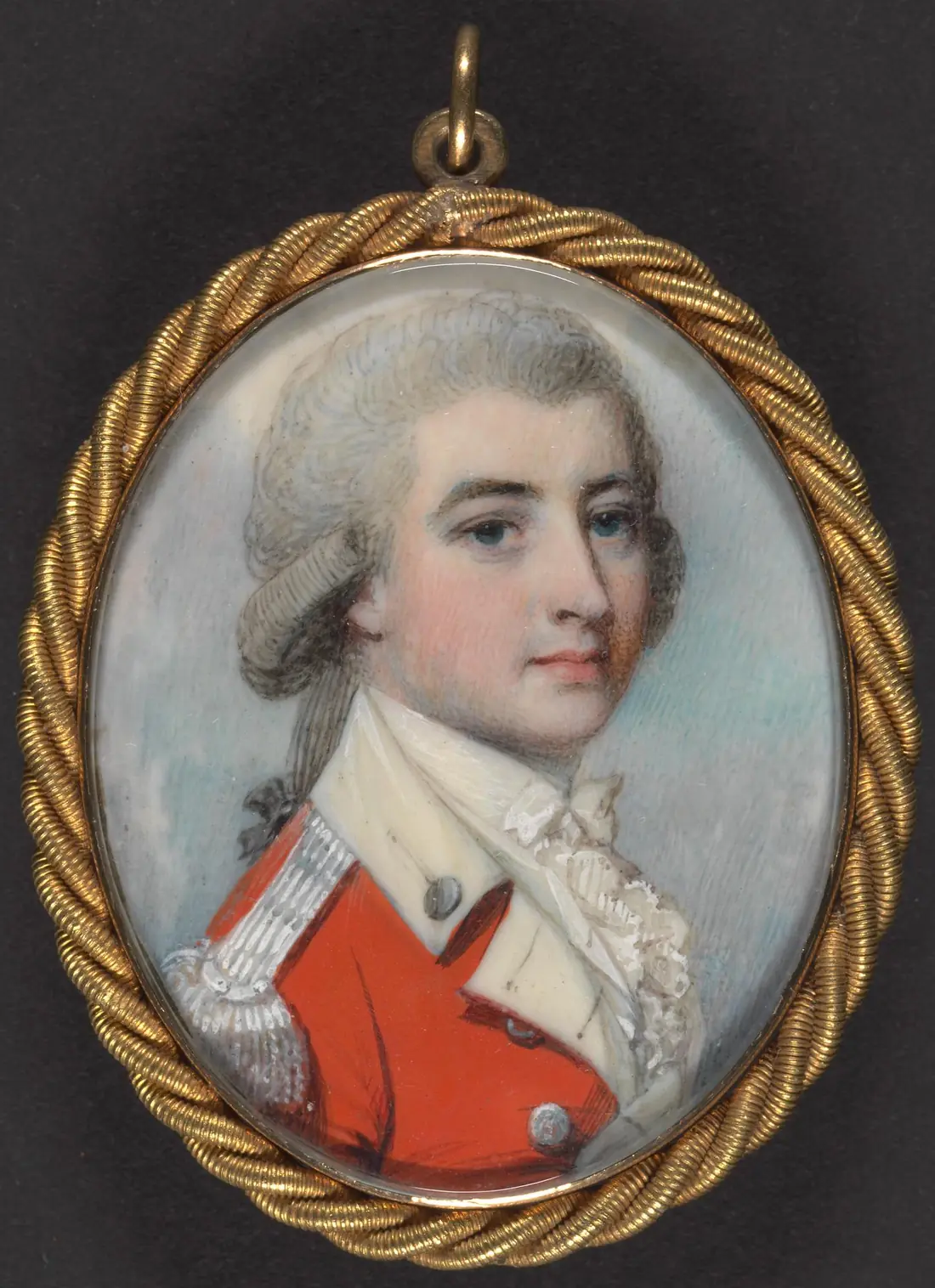
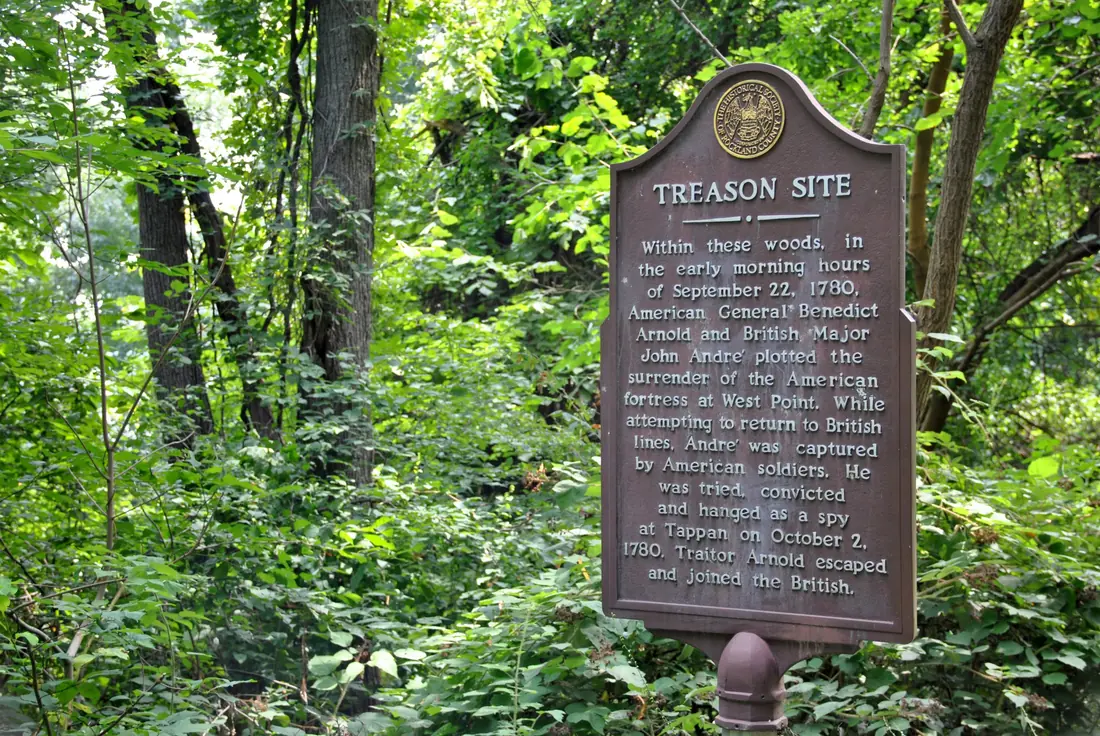
John André, a British major, was captured on September 23, 1780 while traveling in civilian clothes near Tarrytown, New York. He carried papers that proved he was negotiating the surrender of West Point to General Benedict Arnold, a senior officer of the Continental Army. The documents identified the fort, its garrison strength, and the timing needed for a British assault.
General George Washington ordered a military trial because André was a commissioned officer of an enemy army. The tribunal, composed of three Continental officers, found him guilty of espionage on September 29. Washington declined to intervene, noting that the law of war required a spy to be punished by death, regardless of rank.
André was taken to the north side of Manhattan and hanged at the foot of what is now Broadway on October 2. He was 26 years old and requested a formal burial; his remains were later interred in Westminster Abbey after the war. The execution was witnessed by a few soldiers and a handful of civilians, and it was recorded in the Continental Army’s journals.
The mechanism behind the execution was the established wartime practice that a person who gathers intelligence while in disguise forfeits the protections granted to uniformed combatants. By applying this rule to a British officer, the Continental Army affirmed that espionage would be treated as a capital offense, a stance previously applied only to irregular combatants. The decision also reinforced Washington’s authority to enforce discipline and legal uniformity across the army.
Before André’s hanging, the American colonies had limited experience with formal trials of enemy spies. The event created a clear legal precedent that espionage was a punishable crime, not a matter of diplomatic negotiation. After the war, the United States incorporated this principle into the Articles of Confederation and later the Constitution, which granted Congress the power to define and punish treason and espionage. The practice influenced later statutes, such as the Espionage Act of 1917, which codified the death penalty for certain acts of spying.
The immediate consequence was that the West Point plot was aborted, preventing a major strategic loss for the Continental forces. Arnold’s betrayal became public, and he fled to British lines. The execution also sent a deterrent message to British intelligence networks, limiting their ability to operate openly in the colonies. The case remains a reference point for military tribunals dealing with espionage.
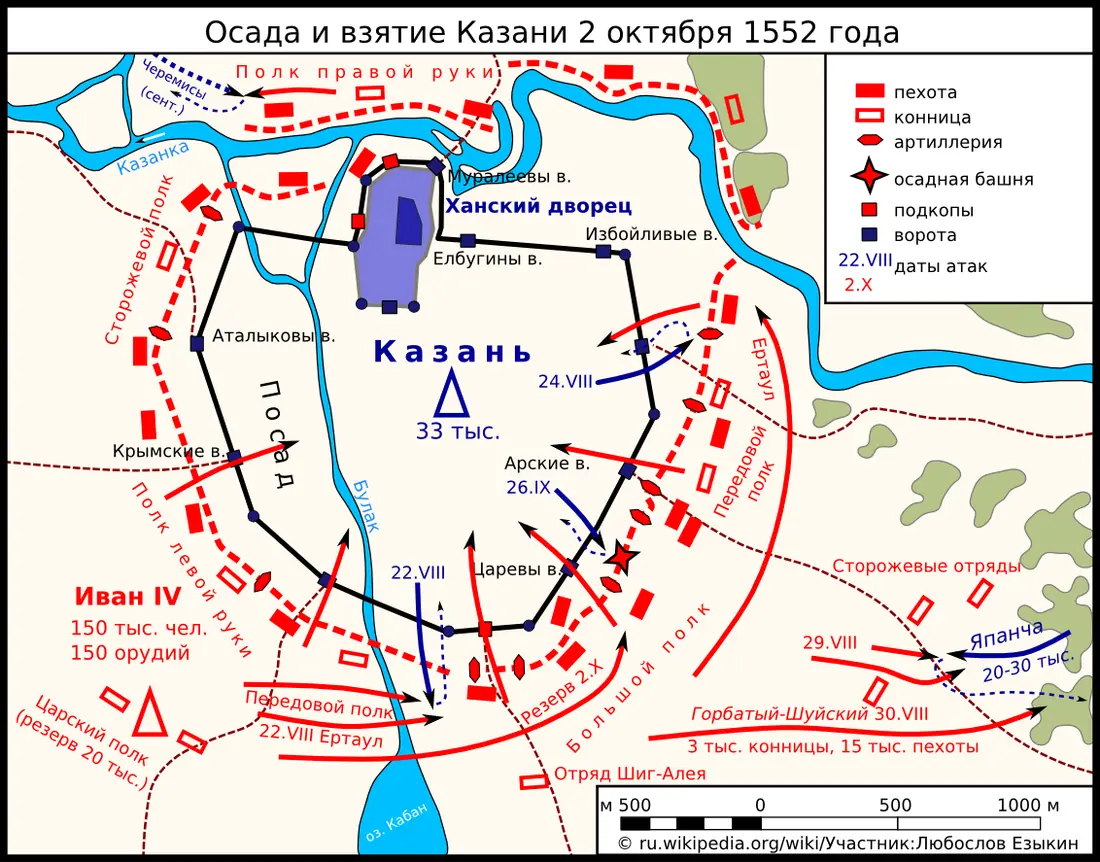
The fall of Kazan ended the independent Tatar state that had controlled the Volga middle ground for two centuries. Ivan IV assembled an army of about 150,000 men, equipped with 30 heavy cannons, and moved them from Moscow to the eastern frontier in the spring of 1552. The Russian command, led by Prince Alexander Gorbatyi-Shuisky, planned to breach the city walls with artillery before ordering an infantry assault.
On September 4 the Russian forces reached the outer earthworks of Kazan and began constructing a series of trenches to protect their cannons from counter‑fire. By September 22 the first cannonball had shattered a section of the stone wall near the Tatar citadel, creating a breach 12 meters wide. That same day the Russian engineers placed a wooden tower, known as a bastion, against the opening to shield the troops advancing through the gap.
At 06:00 on October 2 the infantry, organized into three regiments of roughly 5,000 soldiers each, moved forward from the bastion. The first regiment secured the breach and pushed into the inner courtyard, while the second regiment cleared the western gate. The third regiment pursued the fleeing defenders toward the palace. Contemporary Russian chronicles record that 20,000 Tatar fighters were killed or captured, while Russian casualties numbered about 2,000 dead and wounded.
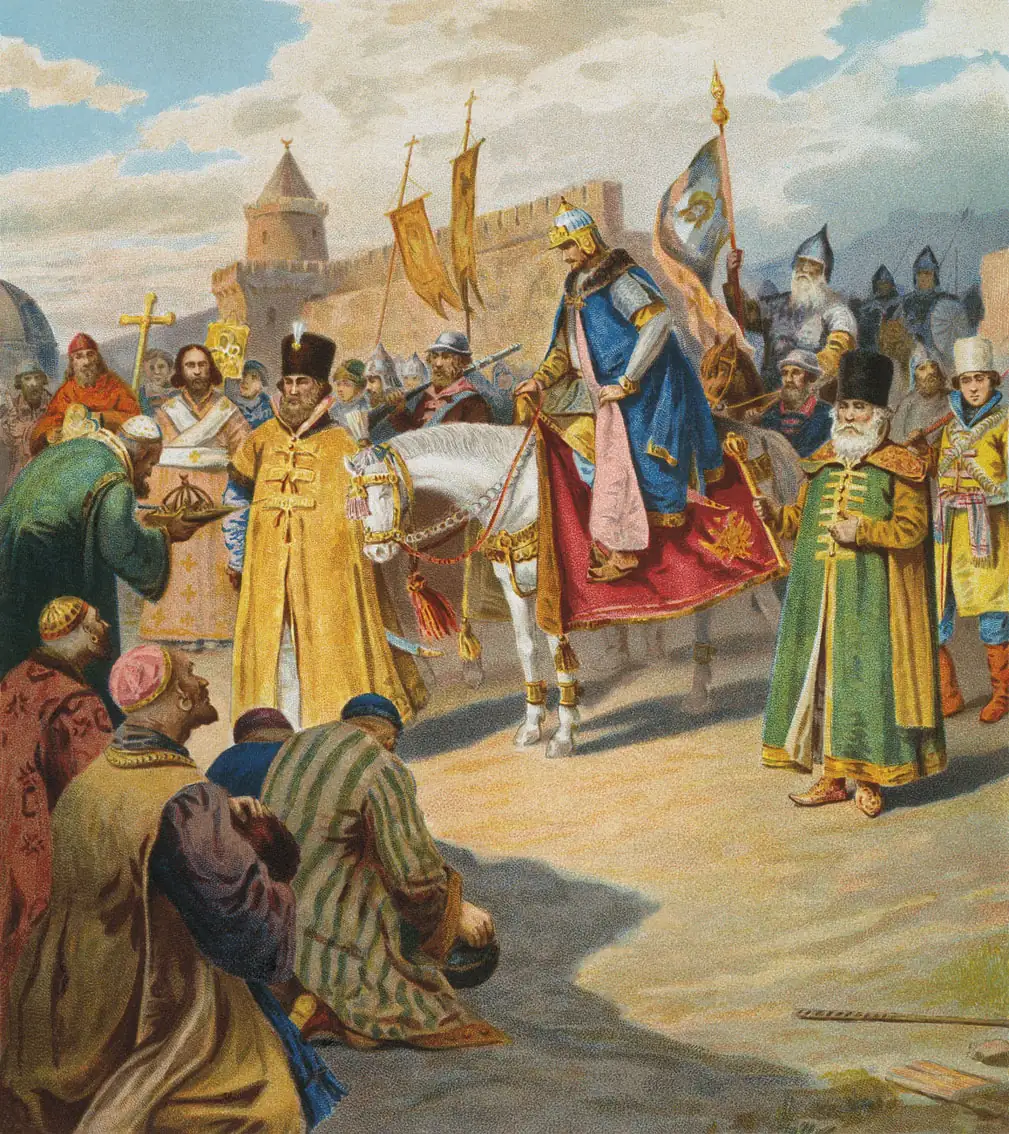
Ivan entered the palace of the khan on the same day and proclaimed the annexation of the Kazan Khanate to the Tsardom of Russia. He ordered the demolition of the main mosque and the construction of an Orthodox cathedral on its site, signalling a policy of religious and cultural integration. The conquest gave Russia direct control of the middle Volga, opened a permanent trade route to the east, and removed the last major Tatar obstacle to expansion into Siberia.
In the months after the siege the Russian administration reorganized the region into the Kazan Governorate, appointing a Russian governor and installing a garrison of 10,000 troops. The former khan, Yadegar Mokhammad, was taken prisoner and later executed. The fall of Kazan is therefore regarded as the decisive moment that completed Ivan’s campaign to unify Russian lands under a single authority and to secure the empire’s eastern frontier.