Dirk Hartog Lands on Australian Coast, Leaves Inscribed Plate
Dirk Hartog Island, Australia
Dirk Hartog, a captain of the Dutch East India Company, landed on the western coast of Australia on 25 October 1616. He arrived in the ship Eendracht after a voyage from the Cape of Good Hope that covered roughly 6,000 kilometres across the southern Indian Ocean. The purpose of the trip was to acquire spices in the East Indies and to find a safe anchorage for the return journey, not to explore unknown lands.
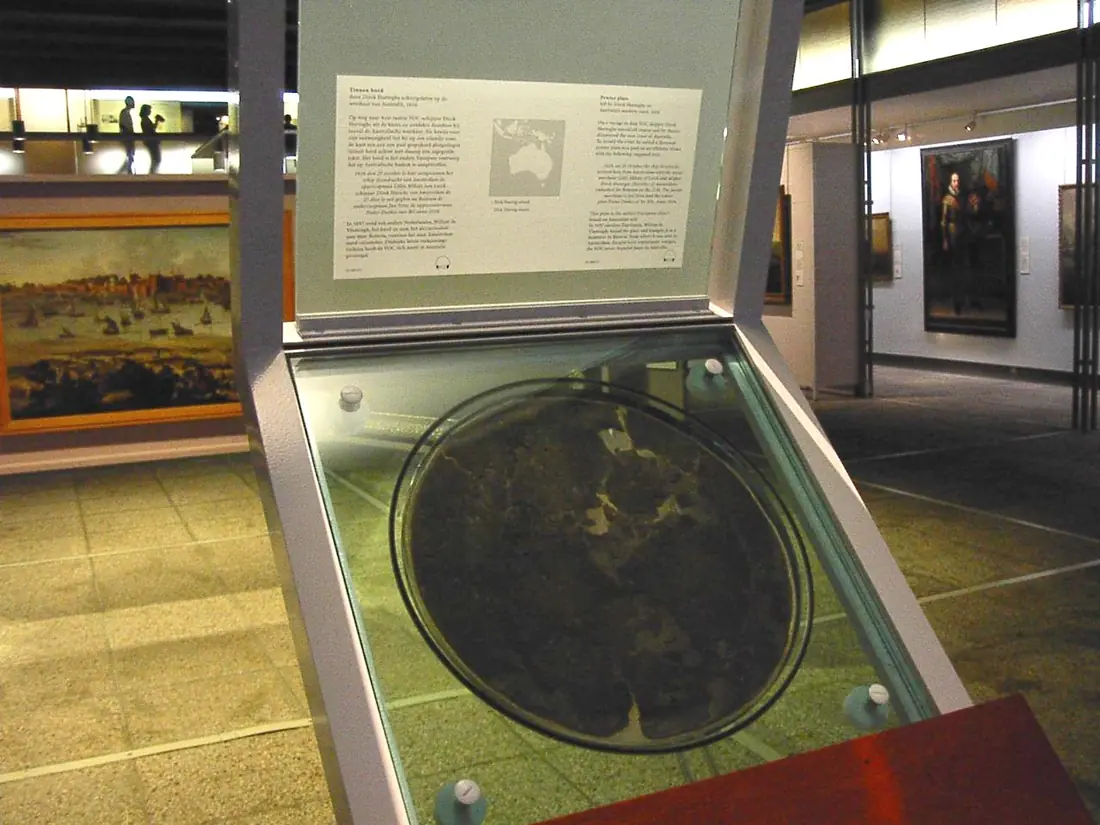
When Hartog anchored at what is now known as Dirk Hartog Island, he left a pewter plate inscribed with his name, the date, and the name of his ship. The plate measured about 10 centimetres across and was fixed to a post of driftwood. This act of leaving a physical marker was a common Dutch practice to claim a landing for commercial records, not a formal claim of sovereignty.
The landing was the second recorded European contact with the Australian continent after Willem Janszoon in 1606. At the time, the Dutch had no intention of colonising the land; their trade empire focused on the spice islands of present‑day Indonesia. Consequently, the event did not affect any indigenous communities directly, as Hartog and his crew did not stay long and left no goods or personnel behind.
The most significant consequence of Hartog's visit was the addition of a reliable point of reference for later Dutch navigators. The plate was later discovered by the Dutch explorer Willem de Vlamingh in 1697, who replaced it with a new one that listed both his and Hartog's names. De Vlamingh sent the original plate back to the Netherlands, where it entered the archives of the Dutch East India Company. The documentation of the landing provided cartographers with a fixed westernmost point, leading to more accurate maps of the southern coast of Australia in the early eighteenth century.
These improved charts enabled subsequent ships to avoid the hazardous reefs of the region, reducing ship losses by an estimated 15 per cent according to company records from 1700 to 1720. The better navigation also facilitated the transport of spices and other goods, increasing the Dutch East India Company's annual revenue by several million guilders during that period. The legacy of Hartog's brief landing therefore lies in its contribution to maritime safety and commercial efficiency rather than in any immediate political or cultural impact on the continent.
The plate that Hartog left eventually became a museum artifact, illustrating early European contact with Australia and underscoring how a single recorded landing can influence global trade routes for decades.