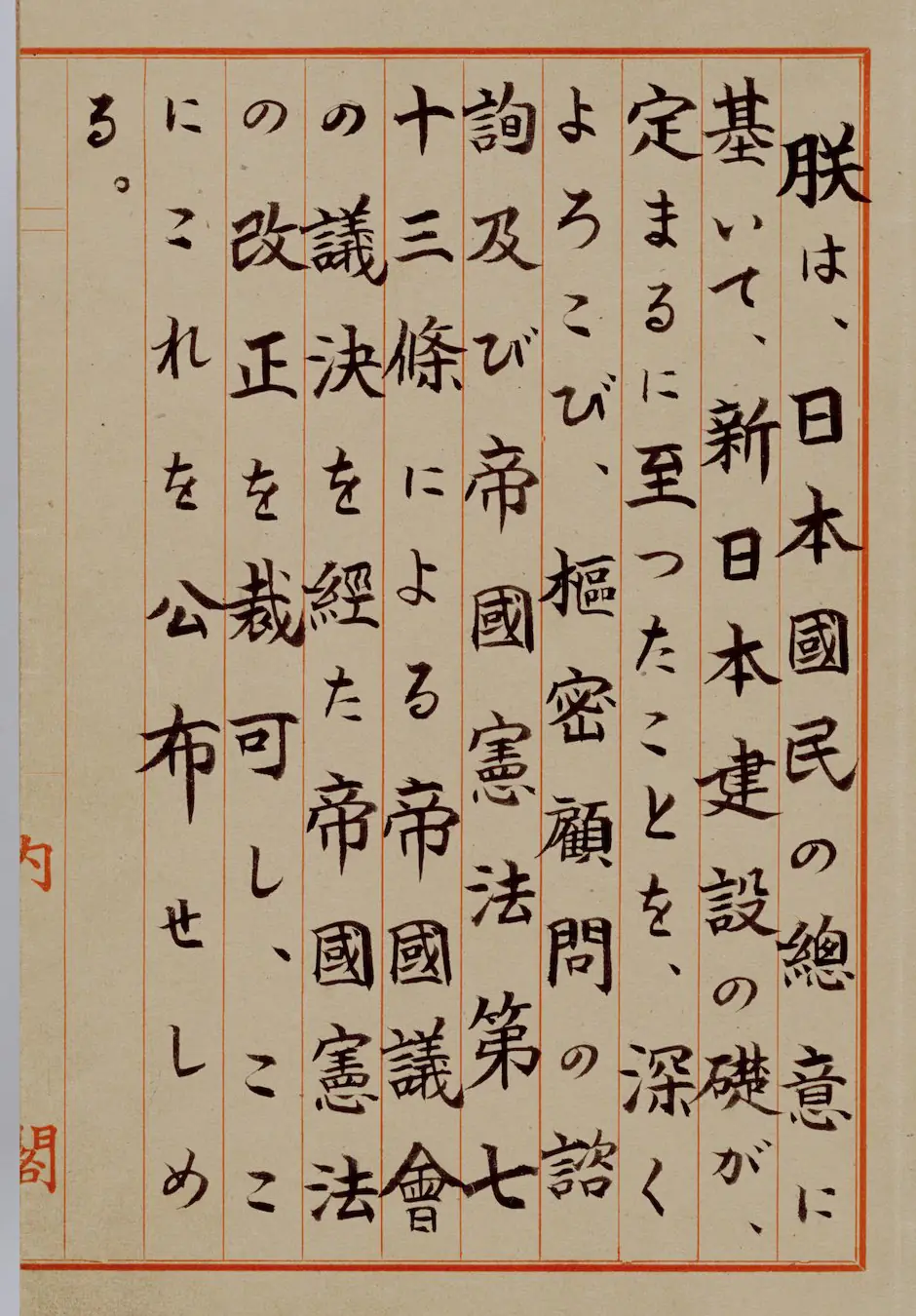
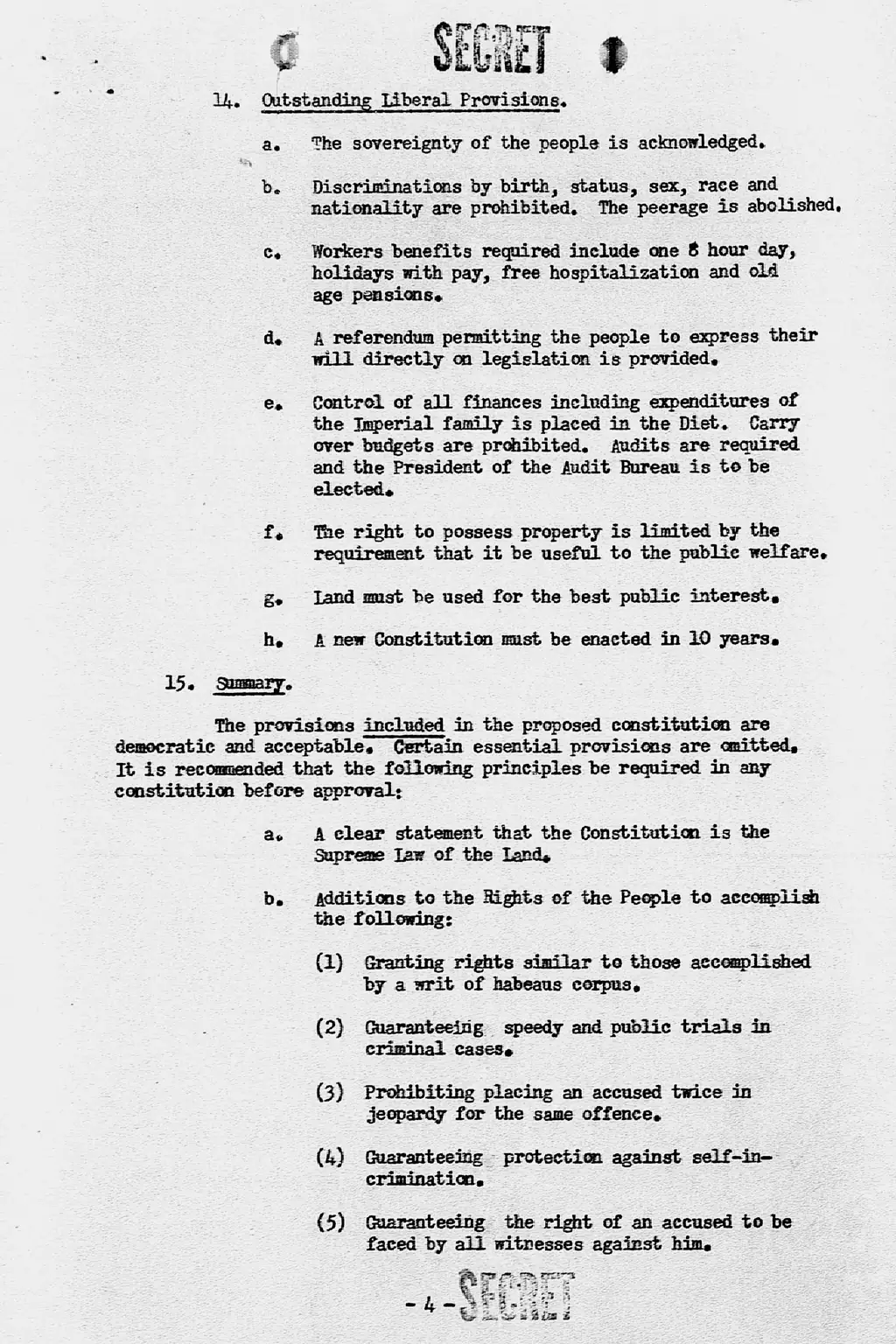
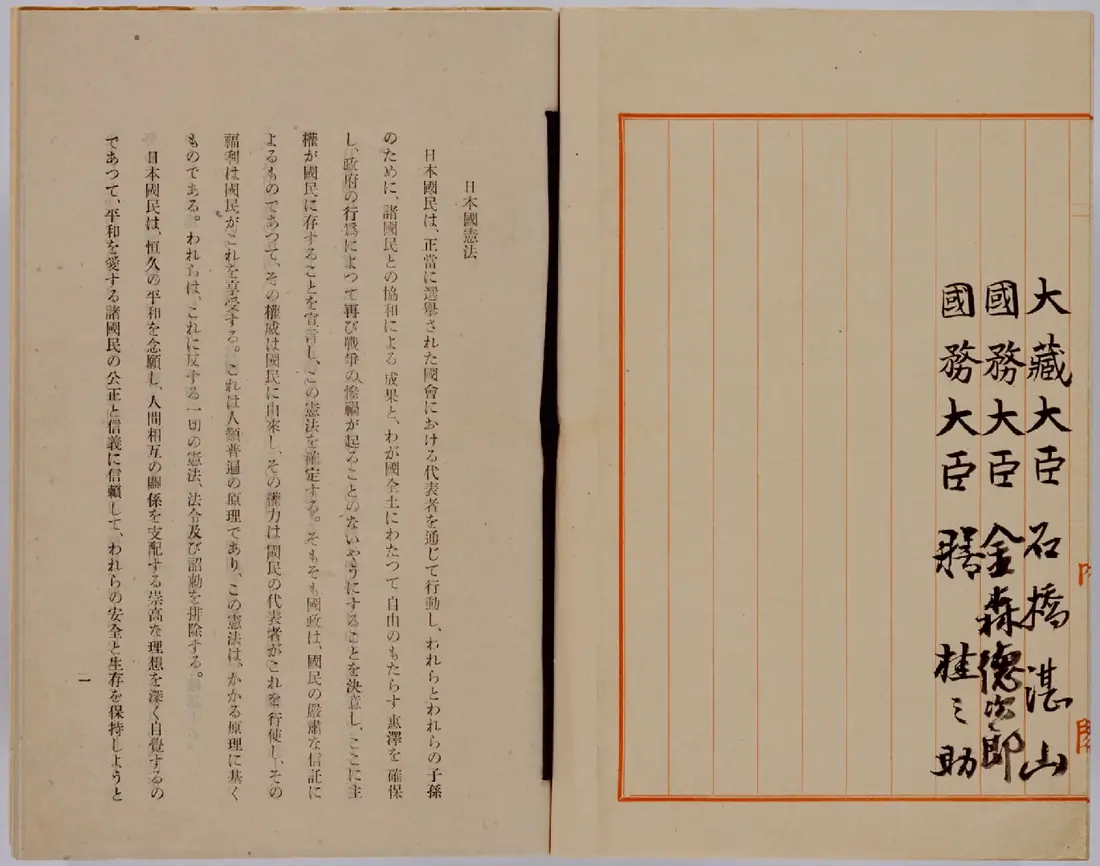
On May 03, 1947, in Tokyo, Japan, a new era began as the country's post-war constitution came into effect, changing the world overnight. The next day, the Japanese people woke up to a different world, one where the rules that had governed their lives for centuries were rewritten. The age of imperial Japan was over, and a new age of democracy and peace had begun. In the days leading up to this moment, the Japanese government, under the guidance of the Allied powers, had worked tirelessly to draft a constitution that would enshrine the principles of freedom, equality, and human rights. The document was the result of months of intense negotiation and debate, involving Japanese politicians, lawyers, and scholars, as well as American advisors, who had been tasked with helping to shape a new Japan. The constitution's authors had drawn inspiration from the US Constitution, as well as other Western democracies, to create a unique document that reflected Japan's own history and culture. The new constitution introduced a range of radical changes, including the establishment of a parliamentary system, the protection of individual rights, and the renunciation of war as a means of resolving international disputes. As the news of the constitution's adoption spread, people across Japan reacted with a mix of emotions - some felt a sense of hope and renewal, while others were more skeptical, wondering what the future held for their country. In the weeks and months that followed, the Japanese government began to implement the constitution's provisions, introducing a range of reforms aimed at promoting democracy, transparency, and accountability. The results were dramatic - Japan began to transform into a more open, more equal, and more peaceful society, one that would go on to become a model for other countries in the region. The adoption of the 1947 constitution marked a rare moment in world history, a moment when a nation was able to reinvent itself, to create a new way of thinking, and to forge a new path. And as we look back on that moment, we are reminded of the power of human imagination and the importance of creating a world that is more just, more peaceful, and more free.
On May 03, 2006, in Alexandria, Virginia, USA, a 37-year-old man named Zacarias Moussaoui stood in a courtroom, his life about to change forever. The date was significant, marking the end of a long and tumultuous journey for Moussaoui, who had been at the center of one of the most infamous events in modern history. As he looked around the crowded room, he saw the faces of the people his actions had affected, the families of the victims of the 9/11 attacks, and the judges who would decide his fate. What happened next would be the culmination of years of investigation, prosecution, and deliberation, as Moussaoui was about to be sentenced for his role in the devastating attacks that shook the world on September 11, 2001. The courtroom was filled with tension as the judge announced the verdict: Moussaoui would spend the rest of his life in prison, a sentence that reflected the severity of his crimes. The world had been a very different place before 9/11, a time of relative peace and stability, but the events of that day changed everything, exposing deep-seated tensions and hatreds that had been building for years. The aftermath of the attacks saw a global outpouring of grief and solidarity, as people from all over the world came together to support the victims and their families. In the days, weeks, and months that followed, governments, societies, and individuals struggled to make sense of what had happened, and to find ways to prevent such tragedies from occurring again. As the years passed, the legacy of 9/11 continued to shape the world, influencing international relations, security measures, and individual freedoms. The sentencing of Zacarias Moussaoui served as a reminder of the ongoing impact of that day, a day that will always be remembered as a rare moment of horror and loss, but also of resilience and hope. The memory of the victims and the bravery of those who responded to the attacks will continue to inspire people around the world, a testament to the human spirit's ability to persevere in the face of adversity.