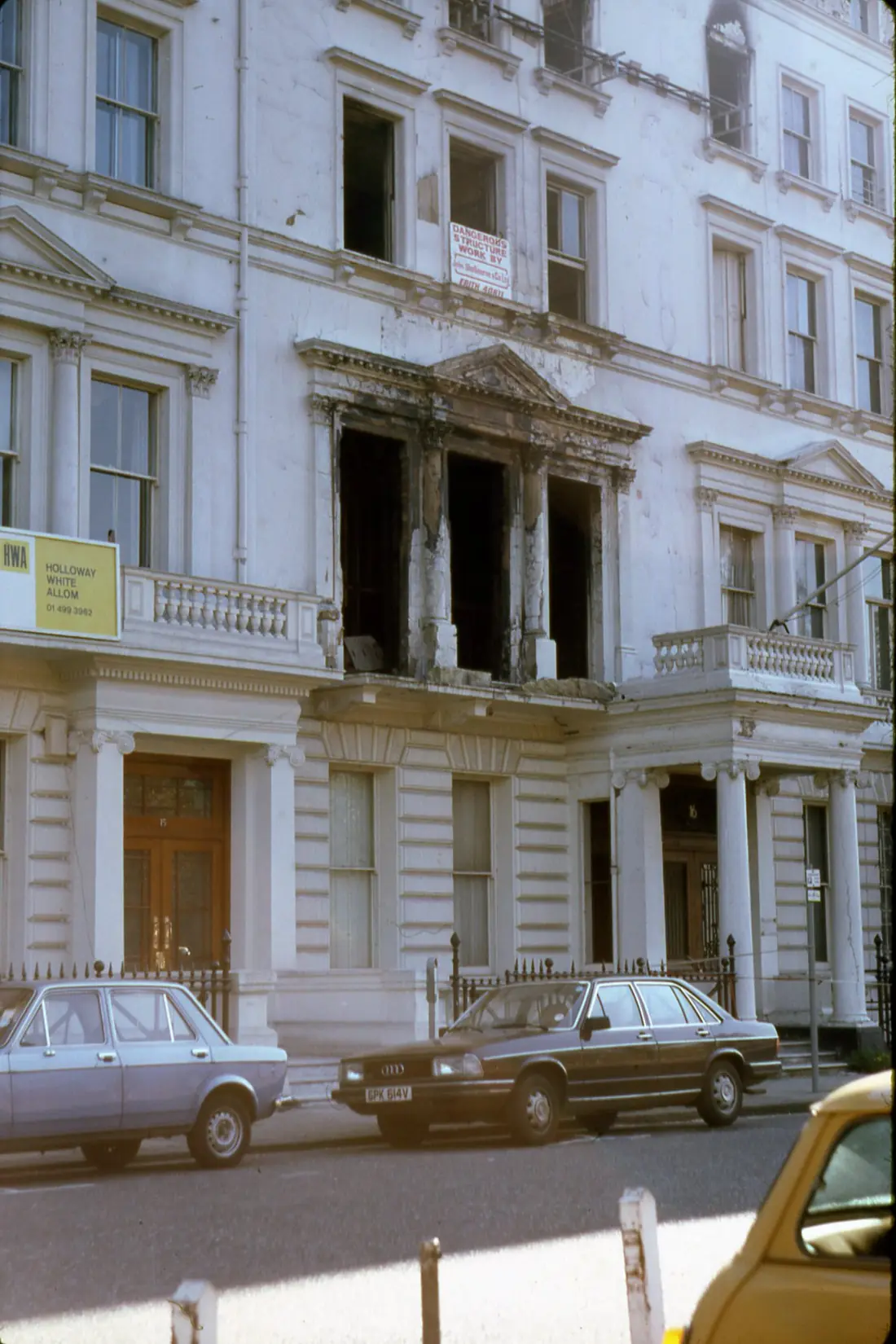
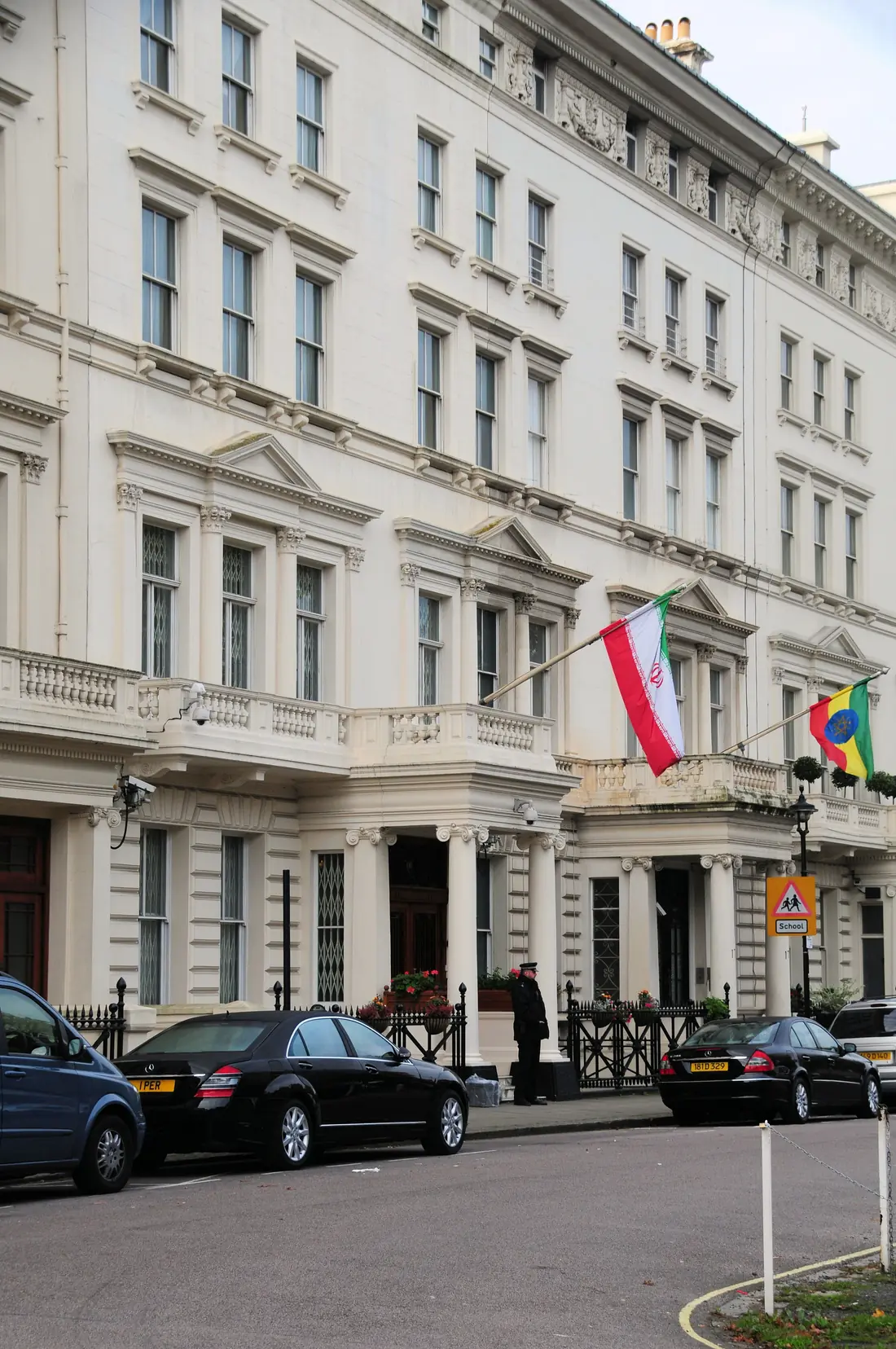
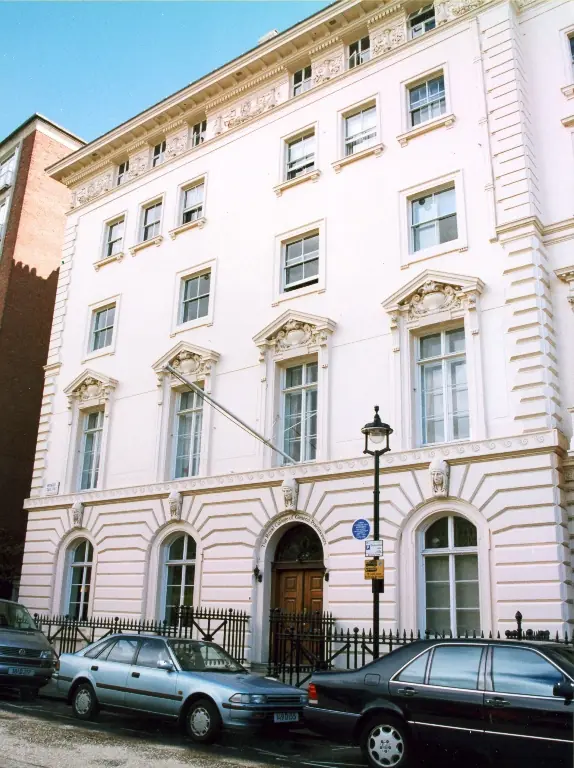
It was a quiet spring morning in London, United Kingdom on May 05, 1980. Across the city, people were going about their daily routines, unaware that a dramatic event was about to unfold. The streets were filled with the sounds of cars and chatter, as people headed to work or school, enjoying the mild spring weather. On this particular day, a group of six armed men, later identified as members of the Democratic Revolutionary Movement for the Liberation of Arabistan, stormed the Iranian Embassy, taking 26 people hostage. The men, dressed in casual clothes and carrying guns, quickly secured the building, sparking a tense six-day standoff with British authorities. As the siege began, police and negotiators tried to establish communication with the hostage-takers, but their demands for autonomy for the Arab-speaking region of Khuzestan in Iran were not met. The world was a complex and volatile place in 1980, with the Iranian Revolution still fresh in people's minds, and the region was plagued by political and social unrest. The Iranian Embassy siege was a result of these tensions, as various groups sought to draw attention to their causes and push for change. After six days of intense negotiations and rising tensions, British special forces stormed the embassy, ending the siege. The aftermath was marked by a mix of relief and sadness, as two hostages and five of the hostage-takers were killed in the raid. The British government faced questions about its handling of the crisis, but the swift action was largely seen as a necessary measure to protect the hostages. The legacy of the Iranian Embassy siege can still be felt today, as it marked a turning point in the way authorities respond to hostage situations and highlighted the need for effective communication and negotiation strategies. The event also served as a reminder of the complex and often fraught nature of world politics, where the actions of a few can have far-reaching consequences.
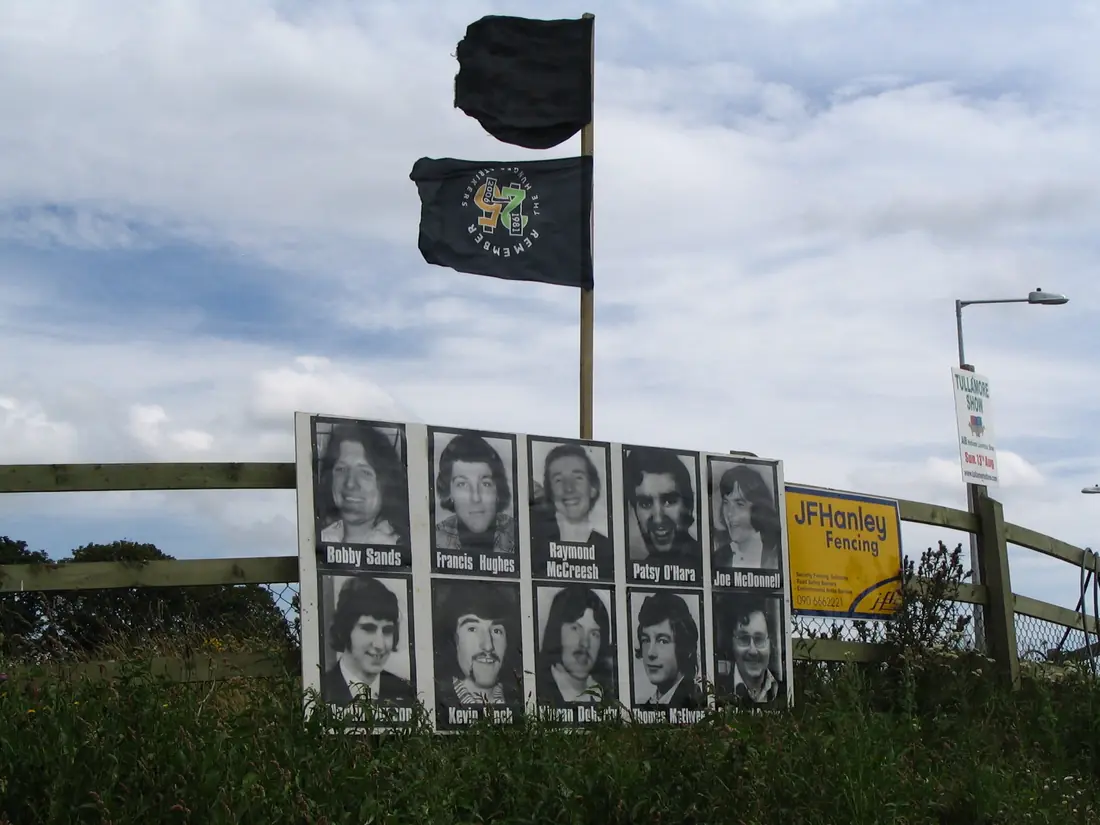
On May 05, 1981, a 27-year-old man named Bobby Sands lay in the Maze Prison in Northern Ireland, his body weakened by 66 days of refusing food. The prison, also known as Long Kesh, was a place of stark concrete and steel, where the sounds of clanging gates and murmured conversations filled the air. As the days turned into weeks, Sands' determination to draw attention to the plight of Irish republican prisoners like himself only grew stronger. He was a member of the Provisional IRA, and his hunger strike was a desperate attempt to protest the British government's treatment of him and his fellow prisoners. The British government, led by Prime Minister Margaret Thatcher, had introduced a policy of 'criminalization' for prisoners like Sands, refusing to recognize them as political prisoners and instead treating them as ordinary criminals. This move was deeply resented by the IRA and its supporters, who saw it as an attempt to strip them of their political legitimacy. The world outside the prison walls was one of tension and conflict, with the Troubles in Northern Ireland escalating into a full-blown crisis. After Sands' death, riots broke out in cities across Northern Ireland, and the international community began to take notice of the hunger strikers' cause. In the days and weeks that followed, nine more prisoners would die on hunger strike, including Sands' close friend and fellow IRA member, Francis Hughes. The British government eventually relented, granting many of the prisoners' demands and recognizing their status as political prisoners. The legacy of Bobby Sands' sacrifice can still be felt today, a powerful symbol of the human spirit's capacity for endurance and defiance in the face of overwhelming oppression. His story continues to inspire people around the world, a reminder of the importance of standing up for what one believes in, even in the face of overwhelming adversity.