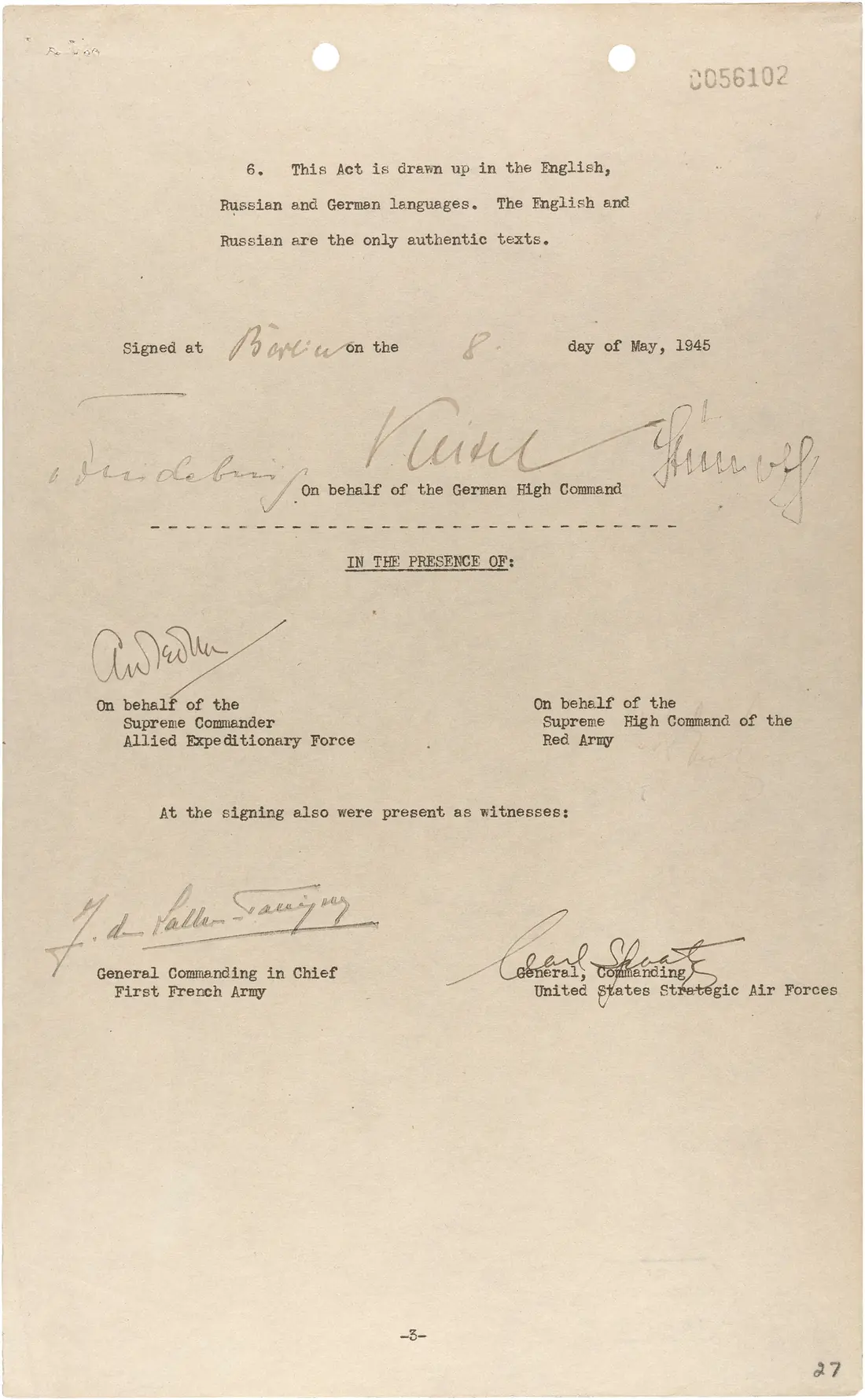
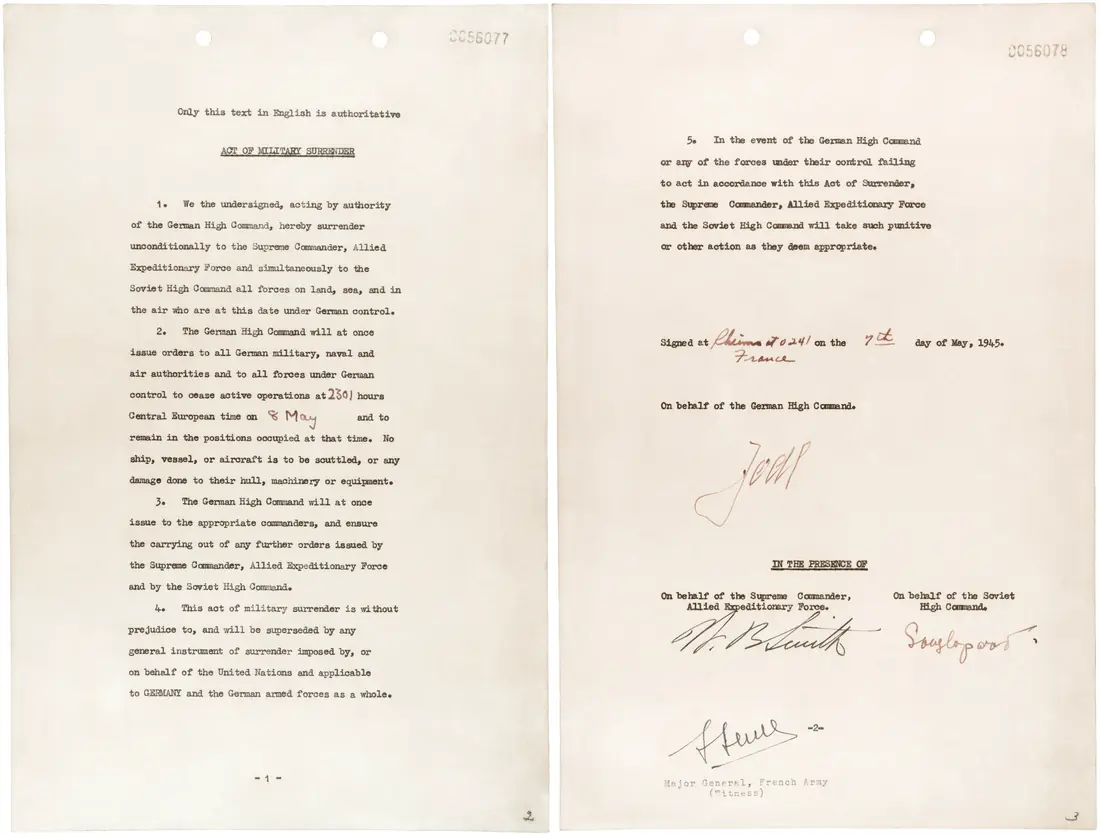
On the morning of May 07, 1945, the people of Berlin, Germany, were going about their daily lives, despite the looming presence of war. At a location in Berlin, a sense of calm hung in the air, but it was about to be shattered. The city, once the epicenter of Nazi power, was now a shadow of its former self, with Allied forces closing in. As the day unfolded, a group of high-ranking German officials, including General Alfred Jodl, arrived at the Supreme Headquarters Allied Expeditionary Force in Reims, France, to sign the German Instrument of Surrender. The room was filled with tension as the officials, flanked by Allied leaders, including General Dwight D. Eisenhower, put pen to paper, marking the beginning of the end of World War II in Europe. The surrender was the result of months of intense fighting, as the Allies pushed deep into German territory, and the Soviet Union closed in from the east. The world had been plunged into chaos by the aggressive expansion of Nazi Germany, led by Adolf Hitler, who had promised his people a return to greatness, but instead led them down a path of destruction and devastation. As the news of the surrender spread, people across Europe began to emerge from their homes, blinking in the bright light of freedom, and wondering what the future held. In the days and weeks that followed, Allied forces worked to establish order, and provide aid to those who had been affected by the war. The surrender marked a turning point in world history, as the world began to rebuild and redefine itself. It led to the emergence of the United States and the Soviet Union as superpowers, and set the stage for the Cold War. The legacy of that day continues to shape our world, a reminder of the devastating consequences of war, and the importance of working towards peace and understanding.
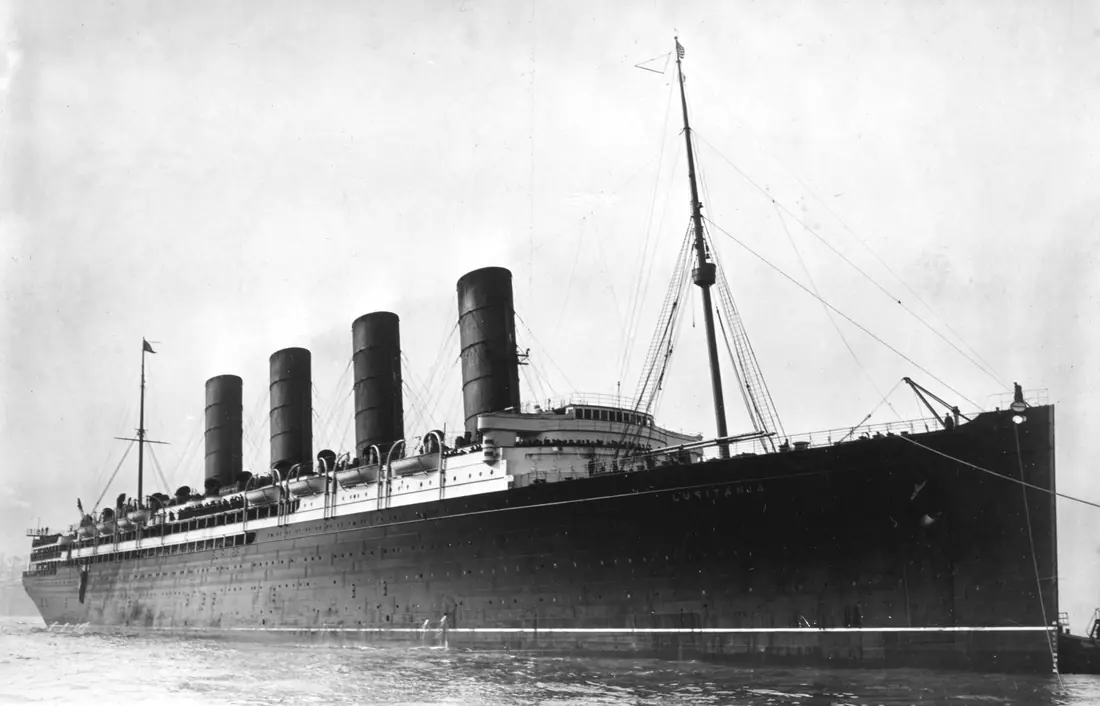
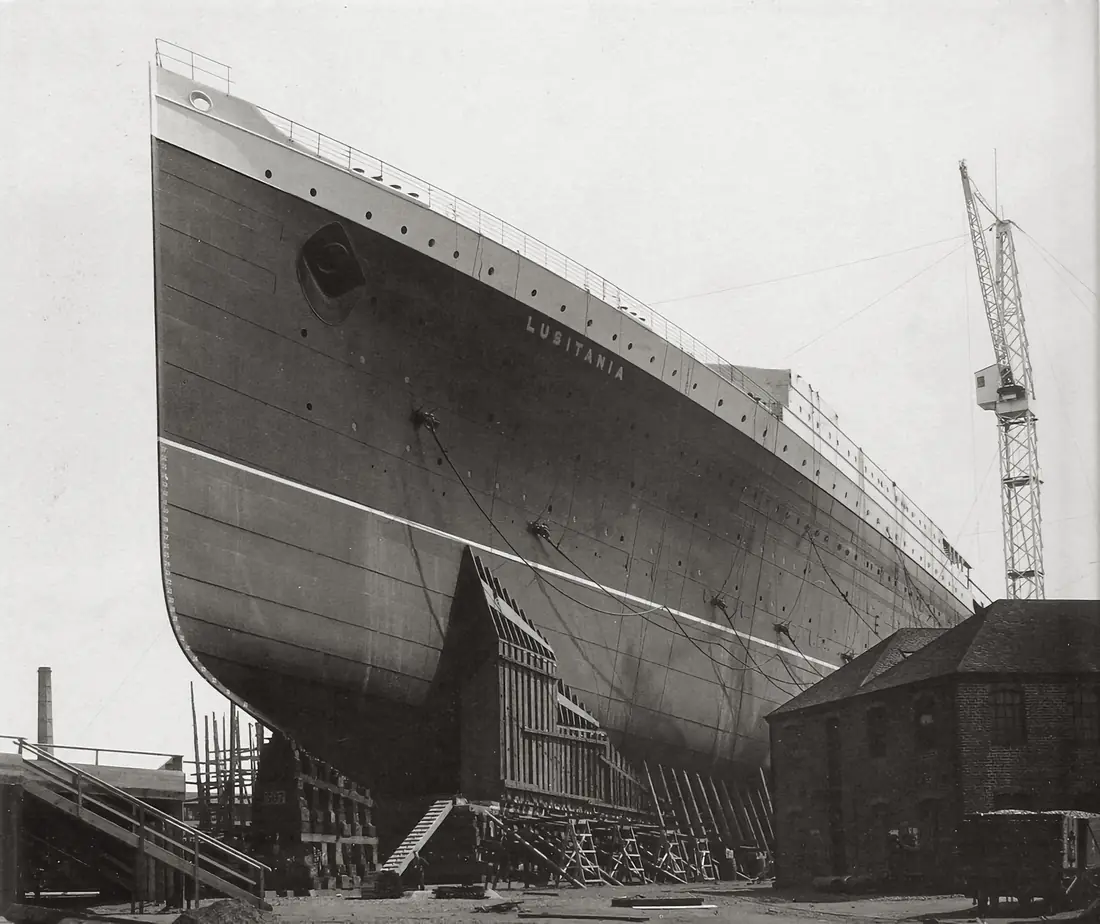
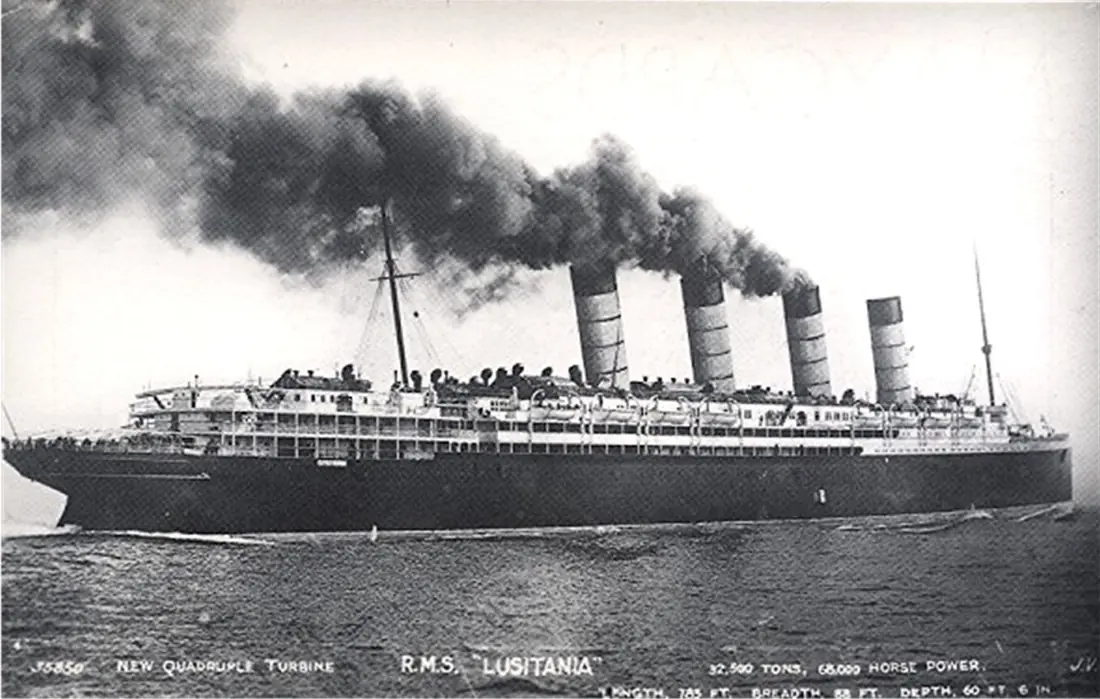
On May 07, 1915, off the coast of Ireland, a tragedy was unfolding that would change the course of history. The British passenger ship Lusitania, known for its luxury and speed, was on its way from New York to Liverpool, carrying over 1,900 people, including women and children. As it sailed through the waters, a German U-boat, U-20, was lurking beneath the surface, its crew on high alert for any sign of enemy ships. The Lusitania, unaware of the danger that awaited it, continued on its journey, its passengers enjoying the finer things in life, from lavish meals to elaborate entertainment. Suddenly, at 2:10 pm, the U-boat fired a torpedo that struck the ship with devastating force, causing massive damage and chaos. Panic set in as passengers and crew scrambled to save themselves, but it was too late, and the ship sank just 18 minutes later, taking over 1,000 people with it. The world was a complex and tense place in 1915, with World War I raging on and countries taking sides. Germany, in an attempt to cut off Britain's supply lines, had declared the waters around the British Isles a war zone, and its U-boats were on the hunt for any ship that entered these waters. The Lusitania, despite being a civilian ship, was seen as a threat, and its sinking was a result of this policy. In the days and weeks that followed, the world was in shock and outrage, with many countries condemning Germany's actions. The United States, which had previously maintained a policy of neutrality, began to shift its stance, and the sinking of the Lusitania played a significant role in its eventual entry into the war. The aftermath of the tragedy was marked by widespread grief and anger, with families of the victims demanding justice and governments scrambling to respond. The sinking of the Lusitania remains a pivotal moment in history, one that highlights the horrors of war and the importance of protecting civilian lives. It serves as a reminder of the devastating consequences of conflict and the need for countries to work towards peace and understanding. The legacy of the Lusitania lives on, a testament to the enduring power of human resilience and the need for nations to come together in the face of adversity.