
Daily History
Media

The Dow Jones Industrial Average is first published

New York City, USA

The Dow Jones Industrial Average is first published — New York City, USA
Image: Wikideas1 · CC0

On May 26, 1896, Charles Dow, a 46-year-old journalist, is sitting at his desk in the New York City office of The Wall Street Journal, painstakingly calculating the average stock price of twelve major companies, including American Cotton Oil, American Sugar, and U.S. Leather. The result of his labor will become the first published Dow Jones Industrial Average, a number that will go on to shape the global economy and influence the financial decisions of millions of people around the world.

As the editor of The Wall Street Journal, Dow had been searching for a way to provide investors with a simple and reliable measure of the overall performance of the stock market. He believed that by averaging the stock prices of a representative sample of companies, he could create an index that would reflect the general trend of the market. The twelve companies he chose for his initial index were all major players in their respective industries, with a combined market capitalization of over $1 billion, a staggering amount at the time.

The initial Dow Jones Industrial Average was calculated by adding up the stock prices of the twelve companies and dividing by 12. The result was 40.94, a number that would become the benchmark for the stock market. Over the next few weeks, the average fluctuated wildly, rising to 43.77 on June 1 and falling to 38.33 on June 16. Despite the volatility, the Dow Jones Industrial Average quickly gained popularity among investors, who saw it as a valuable tool for tracking the performance of their portfolios.
The Dow Jones Industrial Average is first published — New York City, USA
Image: Jashuah · CC BY-SA 3.0

In the years that followed, the Dow Jones Industrial Average became an integral part of the global financial landscape. It was widely quoted in the press, and its daily fluctuations were closely watched by investors, economists, and policymakers. The average was also used as a benchmark for the performance of mutual funds and other investment vehicles, and it played a key role in the development of modern portfolio theory. Today, the Dow Jones Industrial Average is one of the most widely recognized and closely watched stock market indices in the world, with a global audience of millions.

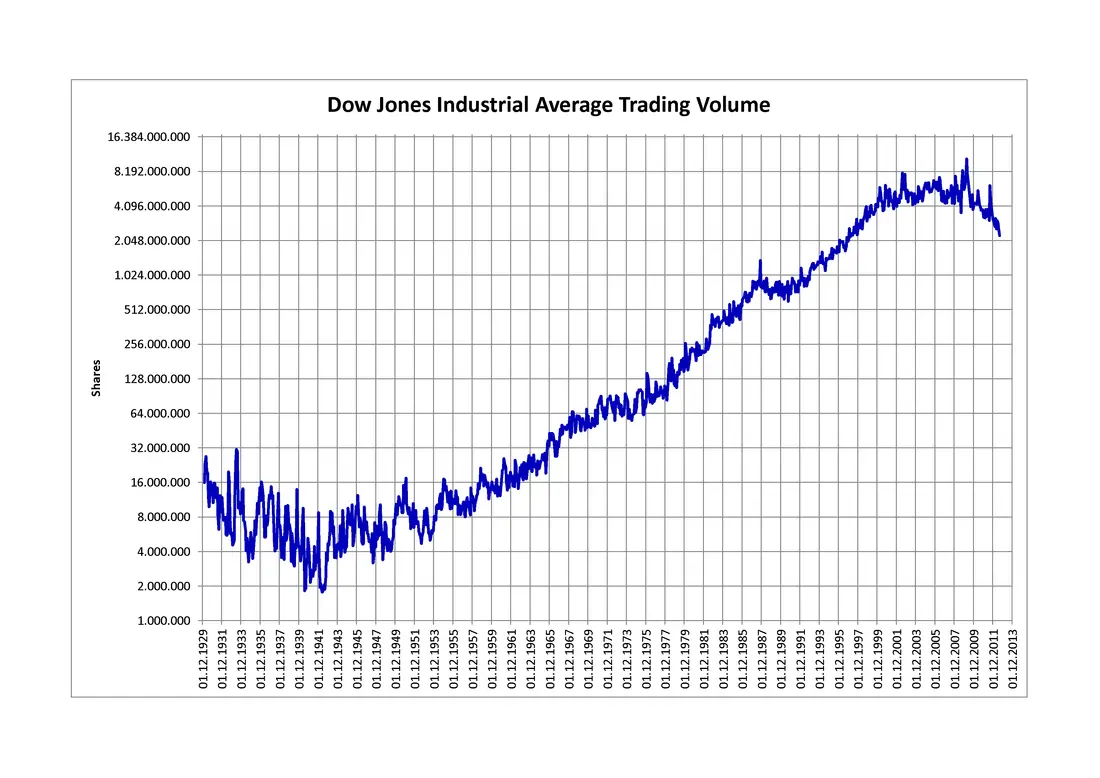
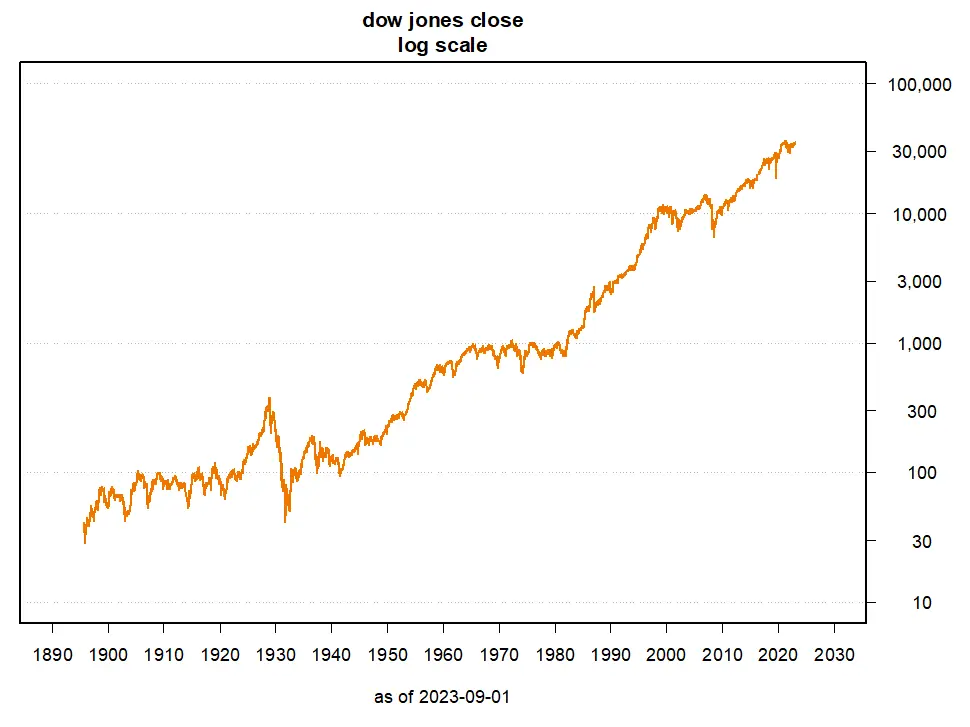
The impact of the Dow Jones Industrial Average extends far beyond the world of finance. It has been used to measure the overall health of the economy, and its fluctuations have been closely watched by policymakers and business leaders. During times of economic uncertainty, the Dow Jones Industrial Average has often been seen as a barometer of investor sentiment, with sharp declines in the average sparking fears of recession and sharp increases fueling hopes of economic growth. In the 1920s, for example, the Dow Jones Industrial Average rose by over 400%, fueling a speculative bubble that ended in the devastating crash of 1929.
The Dow Jones Industrial Average is first published — New York City, USA
Image: Ldecola · CC BY-SA 4.0

The man behind the Dow Jones Industrial Average, Charles Dow, remained humble and dedicated to his work throughout his life. He continued to edit The Wall Street Journal until his death in 1902, and his legacy as the father of the Dow Jones Industrial Average has endured for over a century. As the average continues to shape the global economy and influence the financial decisions of millions of people around the world, it is a reminder of the power of a simple idea to change the course of history. And yet, despite its enduring influence, the Dow Jones Industrial Average remains a relatively simple concept, a testament to the enduring power of Charles Dow's innovative idea.

Source: en.wikipedia.org/wiki/Dow Jones Industrial Average

War & conflict

The last Confederate army surrenders to the United States

Galveston, Texas, USA

On May 25, 1865, the day before the last Confederate army surrendered, the city of Galveston, Texas, was a bustling port, filled with the sounds of merchants and traders, all conducting business as if the war had already ended for them. The streets were lined with people from all walks of life, going about their daily routines, unaware that the next day would bring a significant change to their lives. The Army of the Trans-Mississippi, led by General Edmund Kirby Smith, was the last remaining Confederate army, and its surrender would mark the end of the American Civil War.

The situation before the surrender was complex, with the Confederate army still holding out in the Trans-Mississippi region, despite the fall of Richmond and the surrender of General Robert E. Lee at Appomattox. The war had been raging for four years, with over 600,000 casualties, and the nation was exhausted. The Confederacy had been weakened, and its economy was in shambles, with inflation running at over 4,000 percent. The Union army, on the other hand, was strong and determined, with over 1 million soldiers, and a well-organized supply chain.

As the day of the surrender approached, the tension in Galveston was palpable. The city was filled with Union troops, who had been sent to occupy the city and secure the surrender of the Confederate army. General Smith, realizing that the war was lost, and that further resistance would only lead to more bloodshed, decided to surrender his army. On May 26, 1865, at 2:00 pm, General Smith met with Union General Edward Canby, and signed the instrument of surrender, marking the end of the Civil War.

The surrender of the Army of the Trans-Mississippi was a significant event, marking the end of the Confederacy and the beginning of the Reconstruction era. It meant that the institution of slavery, which had been the central issue of the war, was finally abolished, and that the nation could begin to heal and rebuild. The surrender also marked the end of a long and bloody conflict, which had lasted for four years, and had caused immense suffering and destruction. Over 3,000 Confederate soldiers were paroled, and allowed to return to their homes, marking the beginning of a new era of peace and reconciliation.

The human side of the story is also worth noting. General Smith, who was just 43 years old at the time of the surrender, had been a staunch supporter of the Confederacy, and had fought bravely throughout the war. He was a complex figure, who had been educated at West Point, and had served in the United States Army before joining the Confederacy. He was also a man of strong principles, who believed in the cause of the Confederacy, and was willing to risk everything to defend it. His surrender was a poignant moment, marking the end of an era, and the beginning of a new chapter in American history.

As the news of the surrender spread, it was met with a mix of emotions. Many people in the North were jubilant, seeing the surrender as a victory for the Union, and the end of the rebellion. Others were more somber, realizing that the war had caused immense suffering, and that the nation would take a long time to heal. In Galveston, the city was filled with a sense of relief, as people realized that the war was finally over, and that they could begin to rebuild their lives. The city's economy, which had been devastated by the war, began to recover, as trade and commerce resumed.

The surrender of the Army of the Trans-Mississippi also had a significant impact on the city of Galveston, which had been a major port and commercial center before the war. The city's economy, which had been devastated by the war, began to recover, as trade and commerce resumed. The city's population, which had been reduced by over 50 percent during the war, began to grow again, as people returned to the city, and new businesses were established. The city's infrastructure, which had been damaged during the war, was rebuilt, and new buildings were constructed.

One detail that reframes the story is that the surrender of the Army of the Trans-Mississippi was not the last shot of the Civil War. On June 19, 1865, over three weeks after the surrender, a group of Confederate soldiers, who had not heard about the surrender, clashed with a group of Union soldiers in a small town in Texas, resulting in the death of several soldiers. This event, known as the Battle of Palmito Ranch, was a poignant reminder that the war was not yet over, and that the process of reconciliation and healing would take a long time.

Source: en.wikipedia.org/wiki/Army of the Trans-Mississippi

Use the arrow keys to move between days

Browse the full archive →