
Daily History
Science & discovery

Launch of Mars Express

Baikonur, Kazakhstan
Launch of Mars Express — Baikonur, Kazakhstan
Image: NASA/JPL/Corby Waste · Public domain

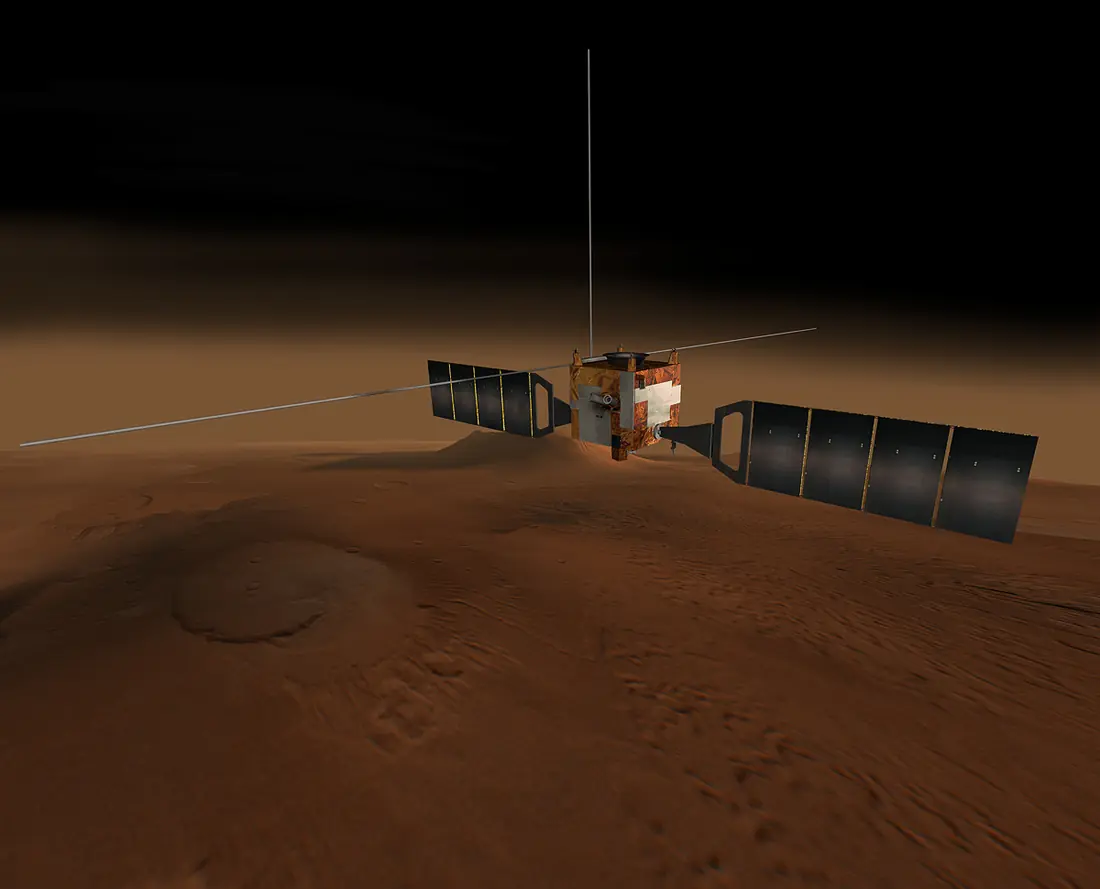
As the clock strikes 17:45 local time on June 2, 2003, at the Baikonur Cosmodrome in Kazakhstan, a Soyuz-FG rocket is standing tall on the launchpad, ready to embark on a historic journey to Mars. The European Space Agency's Mars Express orbiter, perched atop the rocket, is about to begin its 6.7-month journey to the Red Planet, a voyage that will cover over 400 million kilometers. The mission control team, led by ESA's Director of Science, David Southwood, is holding its collective breath as the final countdown begins. At 17:45:26, the rocket's engines roar to life, and the spacecraft lifts off, leaving a trail of fire and smoke in its wake.

The situation before the launch was one of intense anticipation and preparation. The Mars Express orbiter had been in development for over 5 years, with a team of over 1,000 engineers and scientists working tirelessly to ensure its success. The spacecraft was designed to study the Martian geology, climate, and atmosphere, and its payload included a high-resolution stereo camera, a radar altimeter, and a planetary Fourier spectrometer. The total cost of the mission was around 300 million euros, a significant investment for the European Space Agency.

As the Mars Express orbiter soars into the sky, it is carrying the hopes and dreams of the entire European space community. The spacecraft's principal investigator, Agustin Chicarro, had spent years advocating for a European mission to Mars, and his dedication had finally paid off. The orbiter's launch is a major milestone in the history of space exploration, marking the first time a European spacecraft had been sent to another planet.

The journey to Mars is not an easy one, and the Mars Express orbiter faces numerous challenges along the way. The spacecraft must survive the harsh conditions of space, including extreme temperatures, radiation, and debris. It must also navigate through the vast distances between Earth and Mars, using a combination of gravity assists and propulsion systems to stay on course. On December 25, 2003, the Mars Express orbiter finally arrives at Mars, and begins its scientific mission, sending back a wealth of data and images that will help scientists to better understand the Red Planet.
Launch of Mars Express — Baikonur, Kazakhstan
Image: user:geni · CC BY-SA 4.0

One of the most significant discoveries made by the Mars Express orbiter is the presence of water ice on Mars. The spacecraft's radar altimeter and planetary Fourier spectrometer reveal extensive deposits of water ice at the Martian poles, a finding that has major implications for the search for life on Mars. The discovery is a major breakthrough, and it sparks a new wave of interest in Mars exploration. As the Mars Express orbiter continues to orbit Mars, it is collecting a vast amount of data that will help scientists to unravel the secrets of the Red Planet.

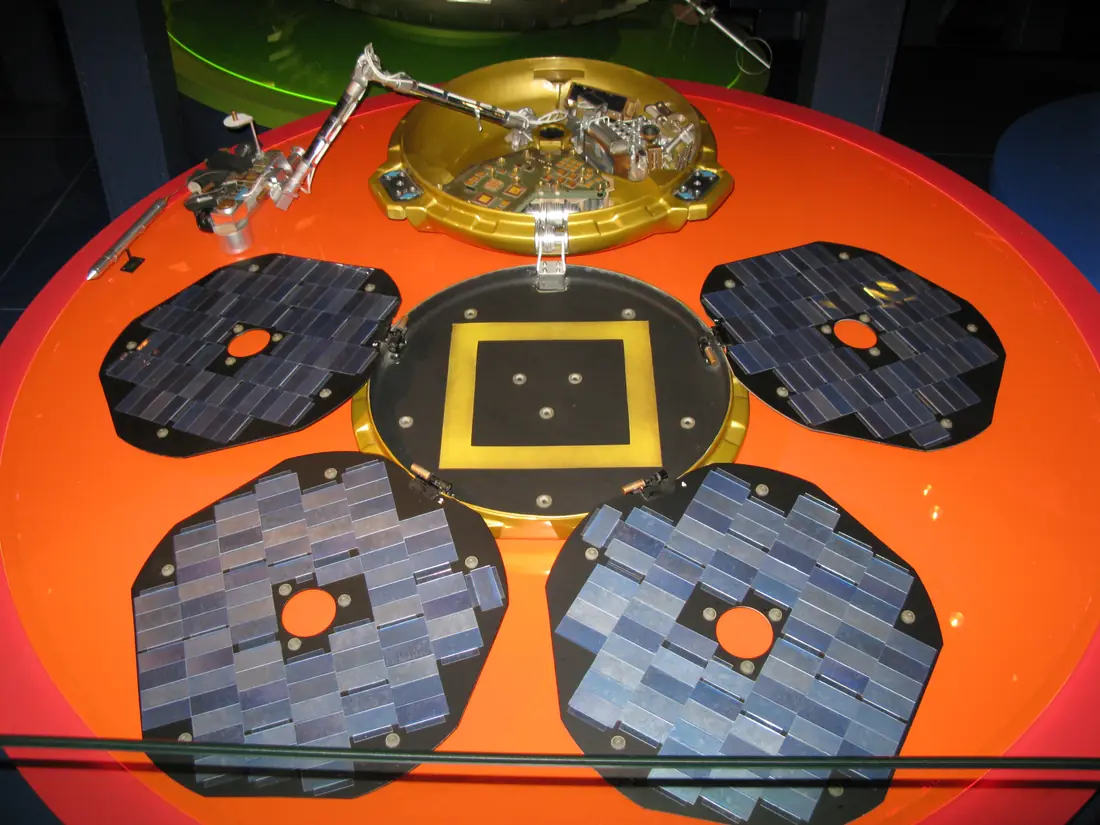
And yet, despite all the fanfare surrounding the Mars Express mission, one detail remains largely forgotten - the Beagle 2 lander, a small robotic probe that was carried to Mars aboard the Mars Express orbiter, failed to establish communication with Earth after landing on the Martian surface on December 25, 2003. The lander's fate remains a mystery to this day, a poignant reminder of the risks and uncertainties of space exploration.
Source: en.wikipedia.org/wiki/Mars Express

Technology

Launch of Intelsat I

Cape Canaveral, United States

Launch of Intelsat I — Cape Canaveral, United States
Image: NASA · Public domain

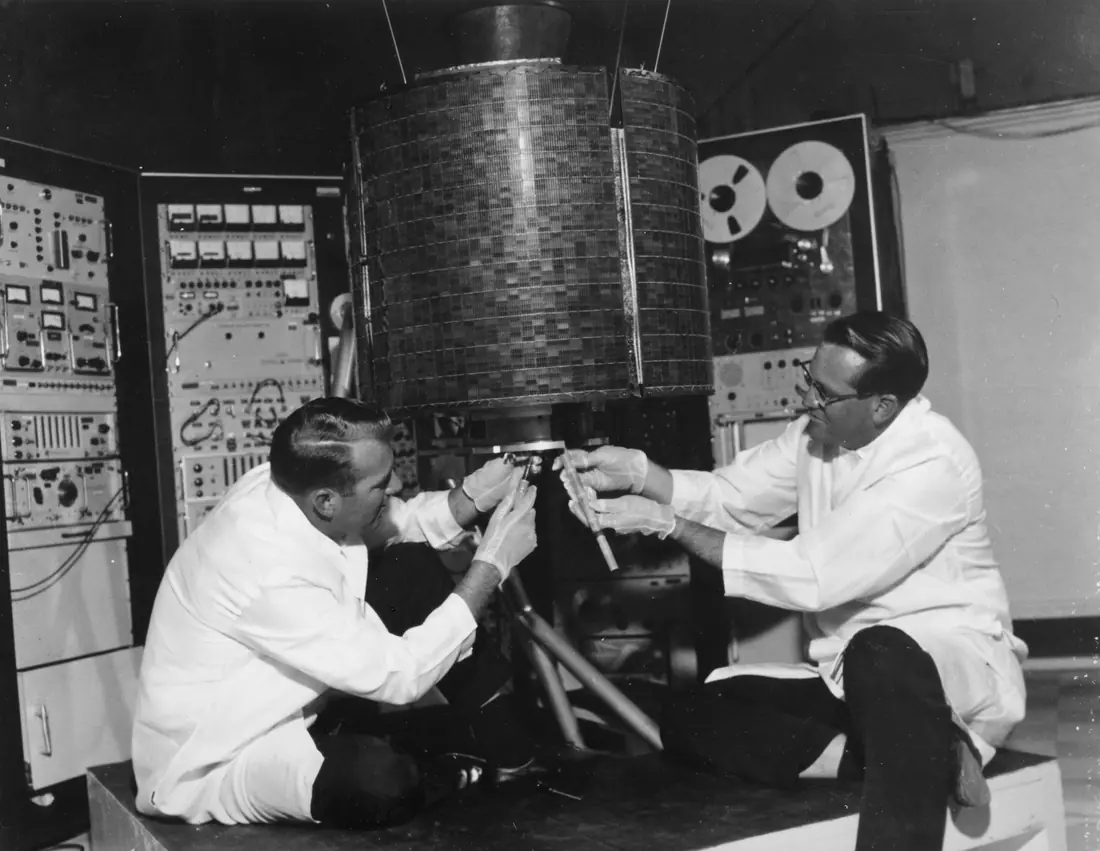
As the countdown begins, the atmosphere at Cape Canaveral is electric. It's June 2, 1965, and the world is about to witness a revolution in global communication. The first commercial communications satellite, Intelsat I, also known as Early Bird, is ready to be launched into space, carrying with it the dreams of a more connected world. The brainchild of NASA and the International Telecommunications Satellite Organization, Intelsat I is the result of years of research and development, with a price tag of $15 million, a staggering amount for the time.

The situation before the launch was bleak. Transatlantic communication was a tedious process, relying on undersea cables and radio waves that were prone to interference. A phone call from New York to London could take up to 30 minutes to connect, and the quality was often poor. The need for a reliable and efficient communication system was pressing, and Intelsat I was the answer. The satellite was designed to provide a high-gain antenna, allowing it to transmit signals with greater precision and strength. This technology, developed by a team of engineers led by Sidney Metzger, would enable Intelsat I to relay signals between two points on the Earth's surface, regardless of the distance between them.

As the rocket soars into the sky, it carries the hopes of the people involved in the project. The launch is a tense moment, with the team holding their breaths as the rocket gains altitude. Intelsat I is launched into a geosynchronous orbit, 22,300 miles above the equator, from where it can see almost a third of the Earth's surface. The satellite is equipped with a single transponder, which can handle up to 240 phone calls or a single television channel. The first signal transmitted through Intelsat I is a phone call between President Lyndon B. Johnson and the British Prime Minister, Harold Wilson. The call is a historic moment, marking the beginning of a new era in global communication.

The impact of Intelsat I is immediate. Within weeks, the satellite is relaying signals between Europe and North America, providing a reliable and efficient communication system. The number of transatlantic phone calls increases exponentially, with over 100,000 calls made in the first year alone. The satellite also enables the transmission of live television signals across the Atlantic, allowing people to watch events in real-time. The 1968 Mexico City Olympics are the first global event to be broadcast live via satellite, with an estimated 600 million people watching around the world.

As the years go by, the Intelsat system expands, with more satellites launched into orbit. The number of channels increases, and the quality of the signals improves. The system becomes a vital part of global communication, enabling international news agencies to broadcast live from anywhere in the world. The Intelsat system also plays a crucial role in the development of the internet, providing the backbone for global data transmission. Today, there are over 500 commercial communications satellites in orbit, providing a wide range of services, from television broadcasting to mobile phone networks.

The launch of Intelsat I is a pivotal moment in the history of global communication. It marks the beginning of a new era, one where people can connect with each other instantly, regardless of the distance between them. As we look back, it's astonishing to think that this revolution was made possible by a single satellite, weighing just 145 pounds, and measuring only 6 feet in length. The irony is that the same technology that was designed to bring people closer together has also enabled the spread of misinformation and propaganda, highlighting the double-edged nature of technological advancements.

Source: en.wikipedia.org/wiki/Intelsat I

Use the arrow keys to move between days

Browse the full archive →