Daily History
War & conflict

Six-Day War

Middle East
Six-Day War — Middle East
Image: Zvikorn · CC BY-SA 4.0

Nasser's words still echo through the chambers of history: 'We will not accept any... ceasefire until the enemy troops withdraw from our territory.' These defiant words, spoken on June 4, 1967, would set the stage for one of the most pivotal conflicts of the 20th century - the Six-Day War. The backstory to this event is a complex web of alliances, rivalries, and miscalculations, with Egypt's Gamal Abdel Nasser at its center.

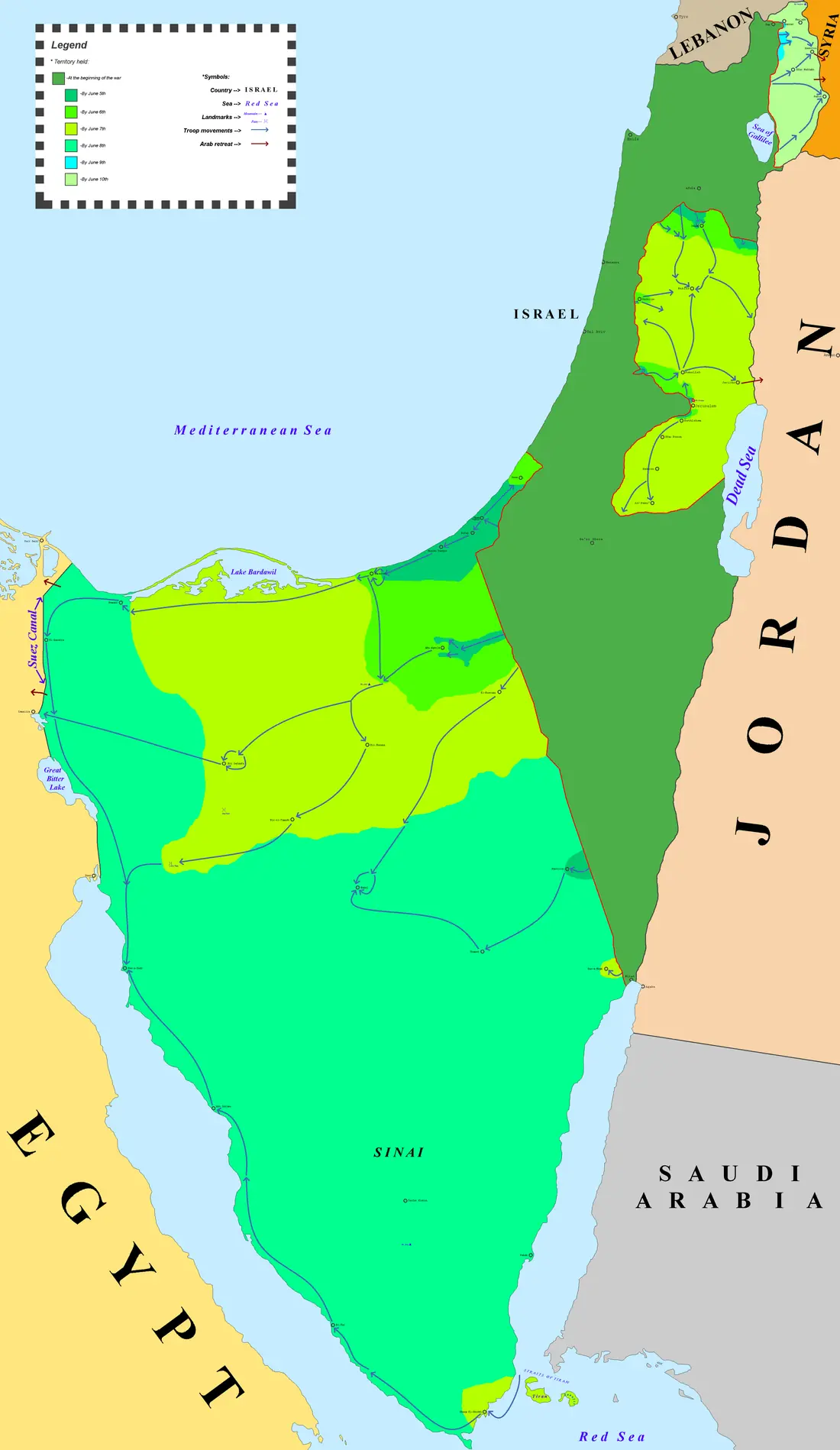
The war began on June 5, 1967, when Israel launched a surprise attack on Egyptian airfields, destroying nearly 90 percent of Egypt's air force. This bold move caught the Egyptian military off guard, and their forces were quickly overwhelmed. As Israeli troops pushed into the Sinai Peninsula, they encountered fierce resistance, but ultimately, the Egyptian army was no match for the Israeli military machine.

In the midst of this chaos, a forgotten figure emerges - King Hussein of Jordan. Initially, King Hussein had chosen to remain neutral, but after being misled by Nasser into believing that the Egyptians were gaining the upper hand, he decided to join the fray. This decision would prove disastrous, as Israeli forces quickly overran the West Bank, capturing key cities like Jerusalem and Hebron. Of the 300 Jordanian soldiers who defended the city of Jerusalem, only 11 managed to escape.
Six-Day War — Middle East
Image: American reconnaissance satellite KH-4 CORONA · Public domain

One surprising fact about the Six-Day War is that it was nearly averted. In the months leading up to the conflict, Israeli Prime Minister Levi Eshkol had been secretly negotiating with King Hussein, attempting to avoid a war. However, these efforts ultimately failed, and the war began. This little-known diplomacy adds a layer of complexity to the traditional narrative of the conflict.

As the war drew to a close, Israeli forces had captured not only the Gaza Strip and the West Bank but also the Golan Heights from Syria. The ceasefire, which went into effect on June 10, 1967, marked the end of the Six-Day War, but it also marked the beginning of a new era of occupation and conflict in the region. The irony is that the war, which was meant to bring security to Israel, ultimately created a whole new set of problems. Today, as we look back on the Six-Day War, we are reminded that even the most seemingly decisive victories can have far-reaching and unintended consequences.
Source: en.wikipedia.org/wiki/Six-Day War

Technology

Apple II

San Francisco, USA

Apple II — San Francisco, USA
Image: Rama & Musée Bolo · CC BY-SA 2.0 fr

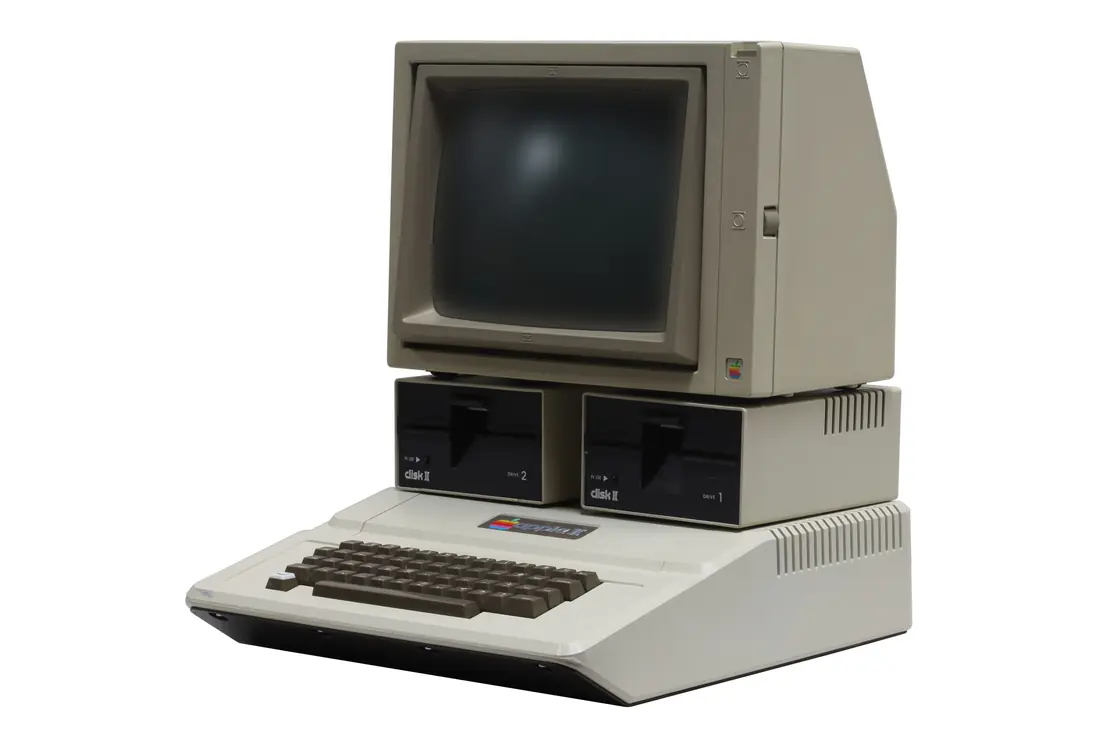
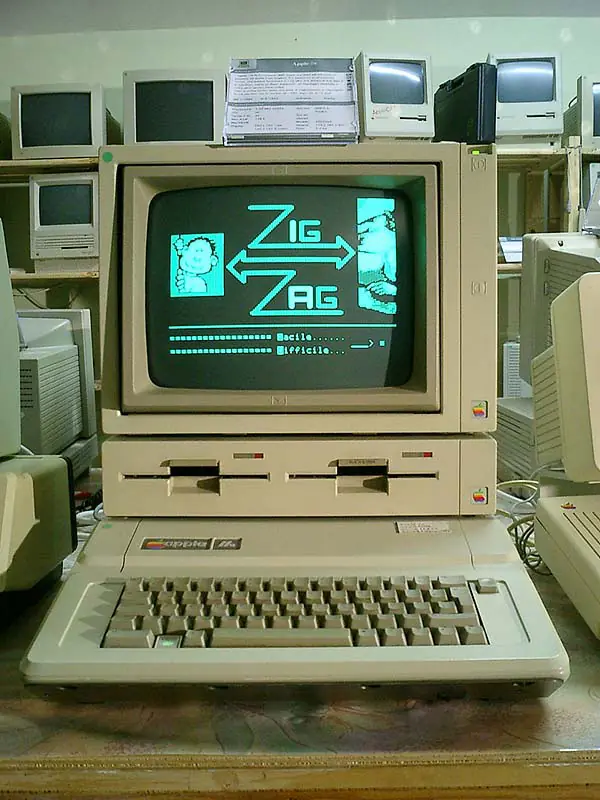
Imagine a computer that can fit on your desk, with a sleek design and a price tag of around $1,300. This was the Apple II, one of the first highly successful mass-produced personal computers, which was introduced at the West Coast Computer Faire in San Francisco. As Steve Wozniak, the co-founder of Apple, takes the stage to present their new product, the crowd is filled with excitement and curiosity.

The Apple II was not just any ordinary computer, it was designed to be user-friendly and aesthetically pleasing, with a plastic case that housed the circuit board, power supply, and a keyboard. The computer came with 4KB of RAM, which could be expanded to 64KB, and it used a MOS Technology 6502 microprocessor that ran at a speed of 1 MHz. The Apple II also had color graphics capabilities, which was a major innovation at that time, and it could display 280x192 pixels with a palette of 6 colors.

Before the Apple II, computers were mostly used by hobbyists and professionals, and they were often difficult to use and expensive. However, the Apple II was designed to be a consumer product, and it was marketed as a device that could be used by anyone. As Steve Jobs, the co-founder of Apple, said, 'We're going to make it so easy, so elegant, that everybody will want one.' The Apple II was indeed elegant, with its sleek design and user-friendly interface, and it quickly became popular among consumers.

Apple II — San Francisco, USA
Image: All About Apple museum official web site · CC BY-SA 3.0

One of the surprising facts about the Apple II is that it was initially designed to be a hobbyist computer, and it was only later that Steve Jobs and Steve Wozniak decided to turn it into a consumer product. The Apple II was also the first computer to popularize the concept of a 'personal computer,' which was a term coined by Steve Jobs. As Jobs said, 'We're not just making a computer, we're making a tool that will change people's lives.' And indeed, the Apple II did change people's lives, as it made computing accessible to a wide range of people and paved the way for the development of the modern personal computer.

The Apple II was a huge success, with over 5 million units sold during its production run, and it played a major role in launching the personal computer revolution. As the years went by, the Apple II became a iconic symbol of the 1970s and 1980s, and it remains one of the most influential computers in history. The Apple II also had a significant impact on the development of the software industry, as it created a huge demand for software applications and games.

Apple II — San Francisco, USA
Image: Bilby · CC BY 3.0

Today, the Apple II is mostly remembered as a relic of the past, a reminder of the early days of personal computing. However, its impact on the world of technology cannot be overstated. As we look back on the introduction of the Apple II, we are reminded of the power of innovation and the importance of making technology accessible to everyone. The Apple II may be an old computer, but its legacy lives on, and it continues to inspire new generations of technologists and entrepreneurs. And as we reflect on the significance of the Apple II, we are left with a lasting image: a group of enthusiasts gathered around a computer, marveling at its capabilities and wondering what the future holds.

Source: en.wikipedia.org/wiki/Apple II

Use the arrow keys to move between days

Browse the full archive →