Daily History
War & conflict

Napoleon's Defeat at Waterloo

Waterloo, Belgium
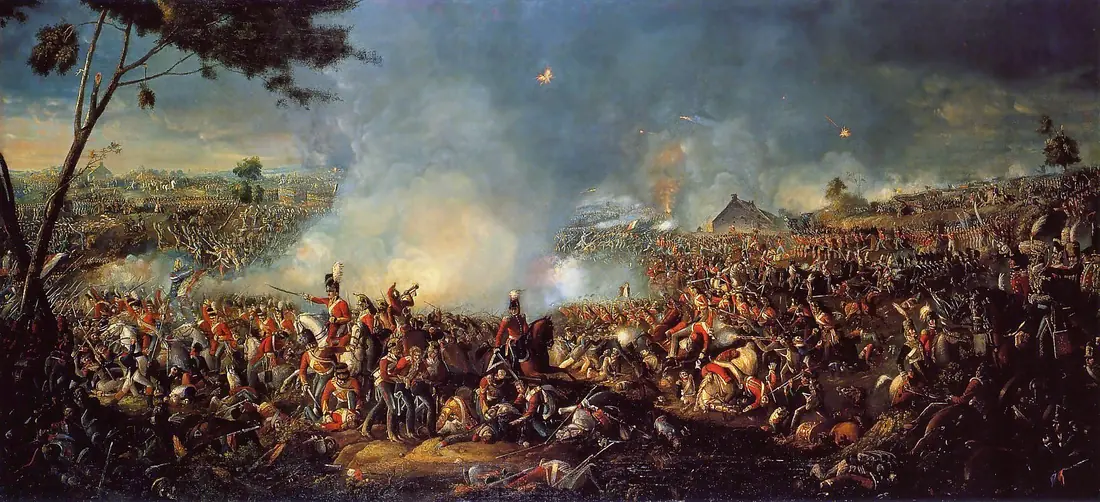
Napoleon's Defeat at Waterloo — Waterloo, Belgium
Image: William Sadler · Public domain

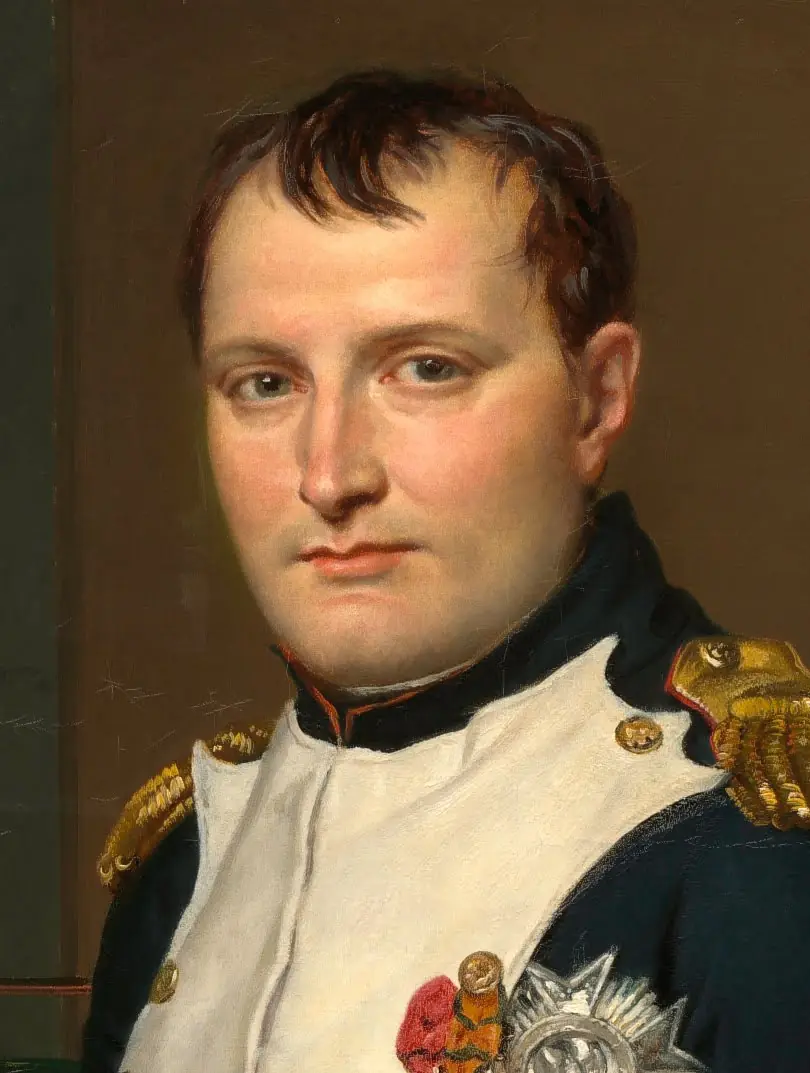
Imagine standing on the muddy fields of Waterloo, Belgium, with over 200,000 soldiers from France, Britain, and Prussia, all ready to clash in a battle that would decide the fate of Europe. The air is thick with tension as Napoleon Bonaparte, the French emperor, is about to face his biggest challenge yet. The day before, June 17, 1815, the world seemed to be at Napoleon's feet - he had conquered most of Europe, and his military prowess was unmatched. But by the end of the next day, everything would change.

As the battle rages on, the sound of cannons and muskets fills the air, and the smell of gunpowder and blood hangs over the fields. The French army, with around 72,000 soldiers, is facing off against a coalition of British and Prussian forces, totaling over 120,000 men. The odds are against Napoleon, but he's a master strategist, and his troops are well-trained and loyal. However, the coalition forces, led by the Duke of Wellington and Field Marshal Gebhard von Blücher, have a few tricks up their sleeves.

One of the most surprising facts about the Battle of Waterloo is that it was almost won by the French. If Marshal Grouchy, one of Napoleon's most trusted generals, had arrived on the battlefield with his 30,000 troops, the outcome might have been very different. But Grouchy was delayed, and by the time he arrived, the battle was already lost. Napoleon's famous Old Guard, a contingent of around 1,500 elite soldiers, fought valiantly, but they were vastly outnumbered. As the day wears on, the French army begins to falter, and the coalition forces sense victory within their grasp.
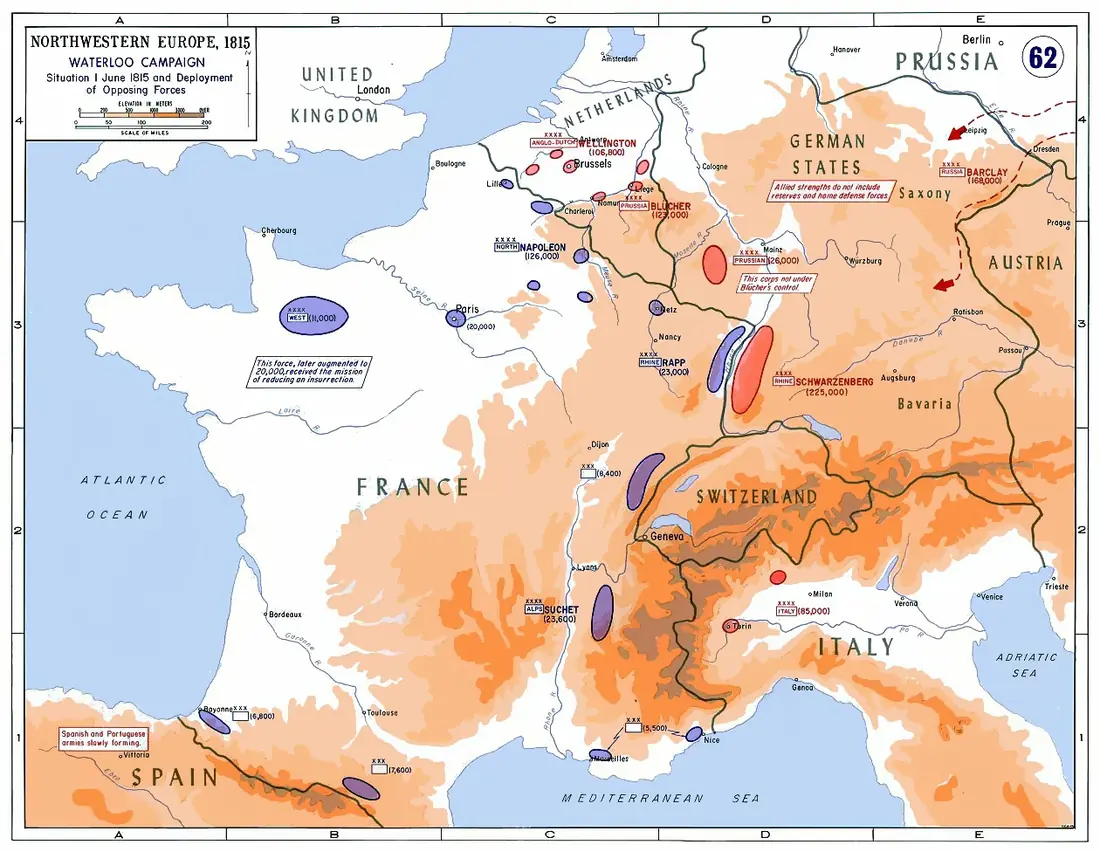
Napoleon's Defeat at Waterloo — Waterloo, Belgium
Image: Wikimedia Commons · Public domain

As the battle reaches its climax, the outcome is far from certain. The French cavalry, with their gleaming armor and thundering hooves, charges forward, only to be met by the steady volleys of the British infantry. The noise is deafening, and the chaos is palpable. In the end, it's the Prussian forces, led by Blücher, that deliver the decisive blow, attacking the French right flank and sending Napoleon's army into full retreat. By the end of the day, over 47,000 soldiers have been killed or wounded, and Napoleon's reign is effectively over.

The aftermath of the battle is just as fascinating as the battle itself. Napoleon, realizing his time is up, abdicates the throne and is exiled to the island of Saint Helena, where he will remain until his death in 1821. The coalition forces, on the other hand, are hailed as heroes, and their leaders become legends in their own right. The Duke of Wellington, in particular, is lauded for his strategic brilliance, and his name becomes synonymous with bravery and cunning. And yet, despite the significance of the battle, it's a small, almost forgotten detail that reframes the entire event - the fact that Napoleon's defeat was, in part, due to a combination of bad weather, poor communication, and a series of minor mishaps that, when added together, proved disastrous for the French army. It's a reminder that even the greatest battles are often decided by the smallest of factors, and that history is always full of surprises.
Napoleon's Defeat at Waterloo — Waterloo, Belgium
Image: Jacques-Louis David · Public domain

Source: en.wikipedia.org/wiki/Battle of Waterloo

War & conflict

Declaration of War of 1812

Washington, D.C.

Declaration of War of 1812 — Washington, D.C.
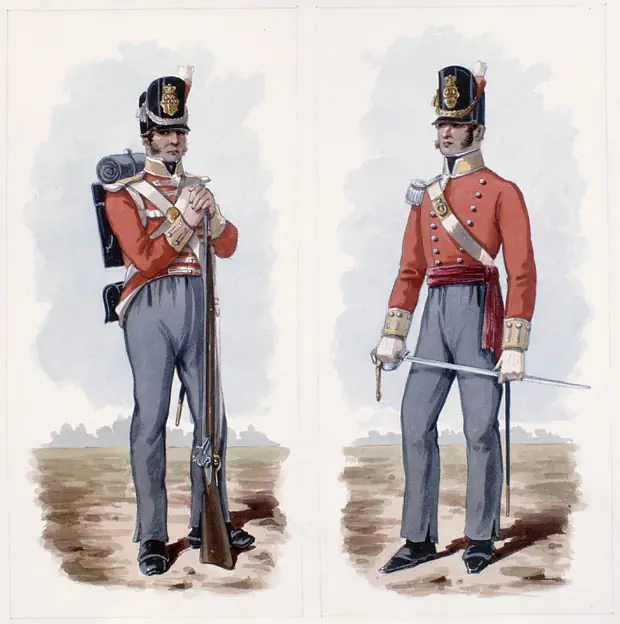
Image: Clockwise, from top: George Munger, John David Kelly, Anton Otto Fischer, William Emmons, Edward Percy Moran · Public domain

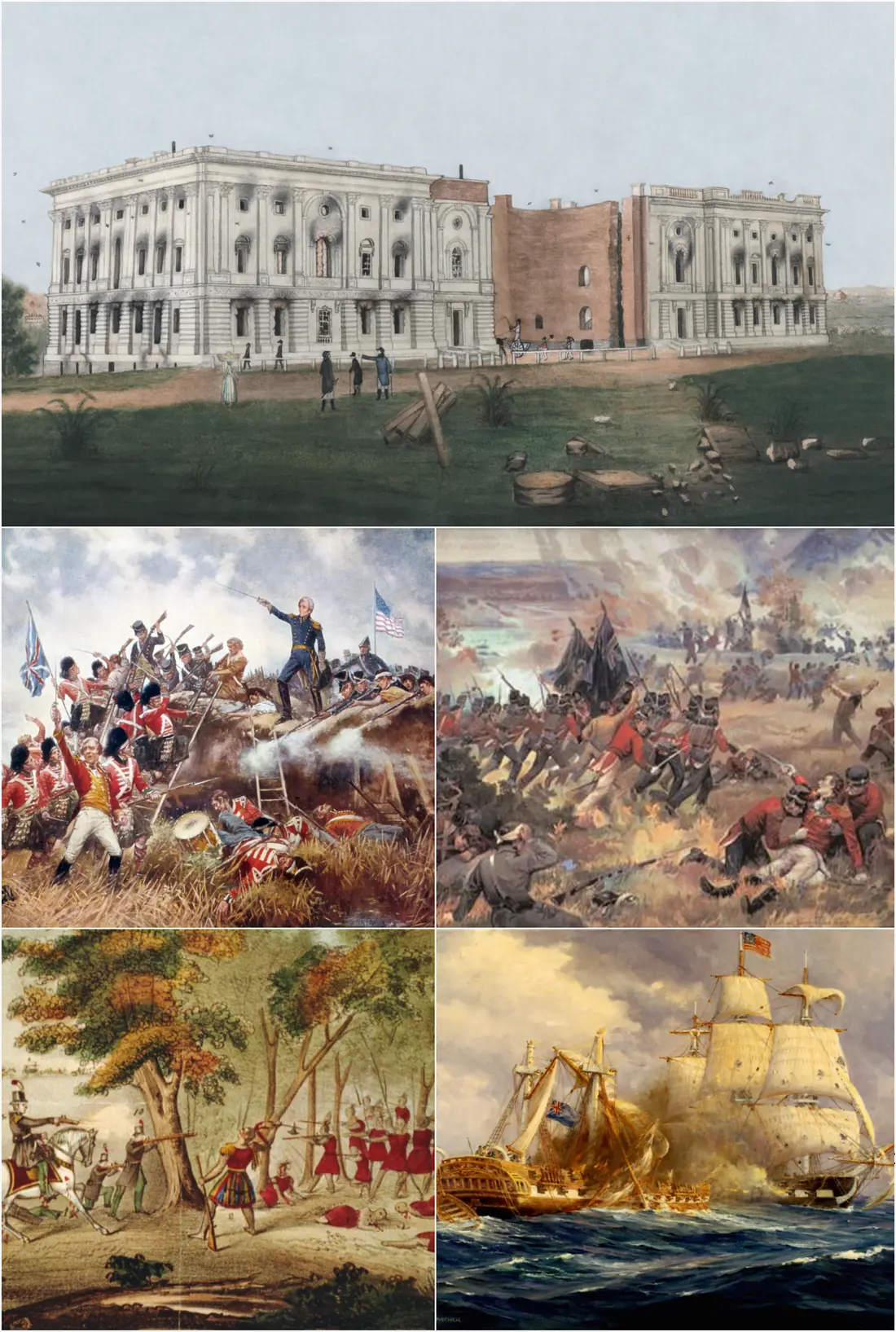
As President James Madison stood before Congress, he uttered a sentence that would shatter the fragile peace between the United States and the United Kingdom: 'We behold, in fine, on the side of Great Britain a state of war.' It's a line that has been largely forgotten, lost in the annals of history, but one that marked the beginning of the War of 1812.

The roots of the conflict were complex, with the British Navy's practice of impressment – essentially kidnapping American sailors and forcing them into service – being a major point of contention. The British Navy, which was the dominant naval power at the time, needed men to crew its ships, and it didn't much care where they came from. Of the approximately 140,000 sailors in the British Navy, around 10,000 were American citizens who had been impressed into service. This was a staggering number, and one that the Americans were not willing to tolerate.

The war itself was a brutal and bloody affair, with both sides suffering heavy losses. The Americans, despite being outgunned and outmanned, managed to secure several key victories, including the Battle of Lake Erie, where Oliver Hazard Perry's fleet defeated a British squadron, and the Battle of New Orleans, where Andrew Jackson's troops inflicted heavy casualties on the British. Of the 8,000 British soldiers who took part in the Battle of New Orleans, over 2,000 were killed or wounded, while the Americans suffered just 71 casualties.

Declaration of War of 1812 — Washington, D.C.
Image: Artist: Milner, Frederick M., 1889-1939. · Public domain

One of the most surprising aspects of the War of 1812 is the role that trade played in the conflict. The British Navy's blockade of France, which was then under the control of Napoleon, had a devastating impact on American trade. The British Navy would often seize American ships and cargo, claiming that they were trading with the enemy. This led to a significant decline in American trade, with exports falling by over 80% between 1807 and 1808. It's estimated that the war cost the American economy around $40 million, a staggering sum at the time.

As the war drew to a close, the Americans and British signed the Treaty of Ghent, which effectively restored relations between the two countries to what they were before the war. The treaty was signed on December 24, 1814, but it wouldn't be until February 1815 that the news would reach the United States. In the meantime, the Battle of New Orleans would take place, a bloody and pointless conflict that would result in the loss of over 2,000 British soldiers. It's a stark reminder that even in the age of modern communication, news can travel slowly, and the consequences can be devastating.

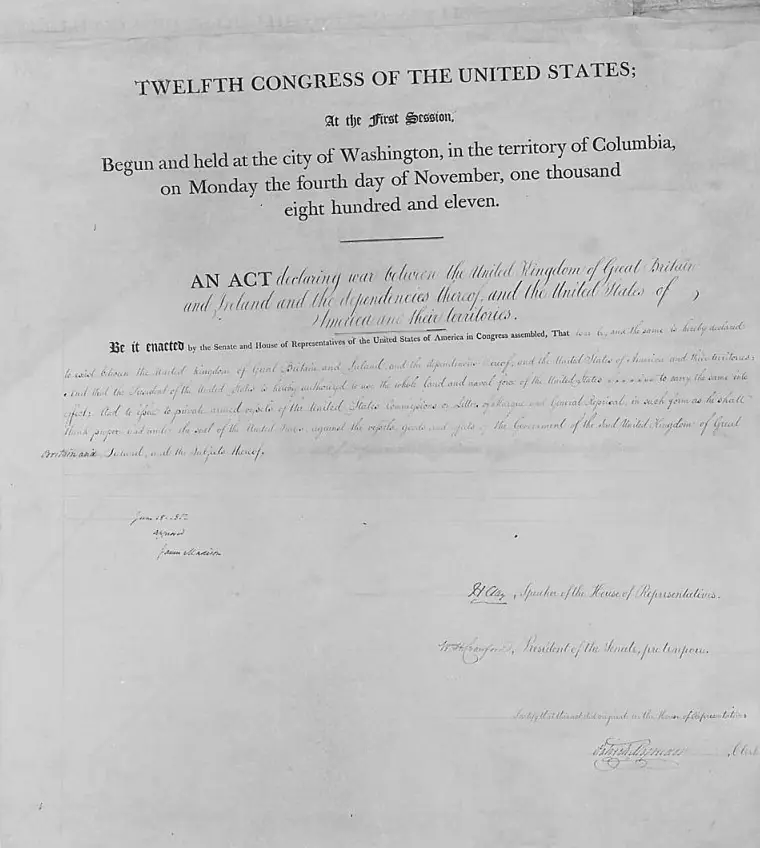
Declaration of War of 1812 — Washington, D.C.
Image: US · Public domain

The War of 1812 may seem like a footnote in the grand narrative of American history, but its impact was significant. It marked a turning point in the country's development, as it began to assert its independence and establish itself as a major world power. And it's a reminder that even the most seemingly insignificant events can have far-reaching consequences, shaping the course of history in ways that we are still feeling today.

Source: en.wikipedia.org/wiki/War of 1812

Use the arrow keys to move between days

Browse the full archive →