Transfer of Wernher von Braun to the United States
Washington, D.C., USA
Wernher von Braun, a 33-year-old German rocket scientist, stands in a room filled with the weight of war, his future hanging in the balance. He's about to take a gamble that will change his life forever. The United States Secretary of State, Edward Stettinius, Jr., has just approved the transfer of von Braun and his team of Nazi rocket scientists to the United States. This is Operation Paperclip, a secret U.S. Joint Intelligence Objectives Agency (JIOA) program aimed at recruiting scientists from Nazi Germany for U.S. employment.
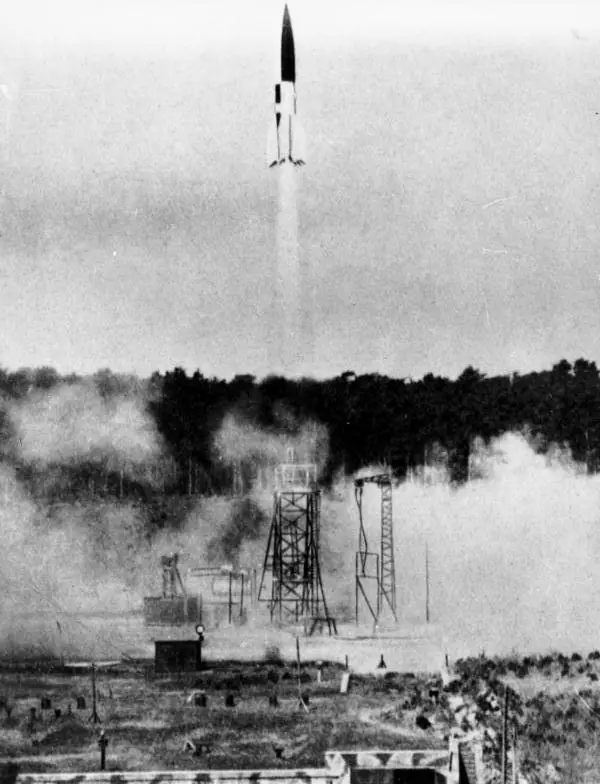
The story of how this unlikely transfer came to be is one of intrigue, politics, and a dash of luck. After the war, the Allies were left to pick up the pieces, and the United States was particularly interested in the technological advancements made by the Nazis. The V-2 rocket, designed by von Braun, was a marvel of engineering, and the U.S. wanted to get their hands on it. The problem was, von Braun and his team were not exactly the kind of guys you'd want to invite to dinner – they were, after all, Nazi party members who had worked on projects that resulted in the loss of thousands of lives.
As the transfer is being approved, von Braun is in a state of limbo. He's been detained by the U.S. Army, along with about 120 other German scientists, in a small town in Bavaria. The U.S. is trying to figure out what to do with them – prosecute them for war crimes or recruit them for their expertise. Von Braun, being the charismatic leader that he is, begins to woo his American captors, convincing them that he and his team can be valuable assets in the Cold War against the Soviet Union. He's a smooth talker, and it works – the U.S. decides to bring him and his team on board, and Operation Paperclip is born.
What's fascinating about this story is the sheer number of people involved – over 1600 scientists and their families are eventually transferred to the U.S. as part of Operation Paperclip. It's a massive undertaking, with the U.S. government going to great lengths to scrub the scientists' Nazi pasts and integrate them into American society. The scientists are given new identities, and their backgrounds are whitewashed to make them more palatable to the American public. It's a clever trick, and it works – the scientists begin to work on U.S. projects, including the development of the Saturn V rocket that will eventually take Americans to the moon.
One of the most surprising facts about Operation Paperclip is that it was not just limited to scientists – the U.S. also recruited former Nazi spies and intelligence officers. It's a strange twist, considering the U.S. was supposedly fighting against the Nazi ideology, but it's a testament to the pragmatic approach the U.S. took during the Cold War. The ends justified the means, and if that meant recruiting former Nazis to fight against the Soviets, then so be it.
As the years go by, von Braun becomes a celebrated figure in the U.S., known for his work on the Saturn V rocket. He's a media darling, and his charismatic personality makes him a natural in front of the camera. But despite his success, there's always a tinge of irony to his story – the man who once designed rockets to bomb London is now working on a project to take Americans to the moon. It's a strange kind of redemption, but it's one that von Braun seems to have embraced. And as he stands on the launchpad, watching the Saturn V rocket blast off into space, he can't help but feel a sense of pride – he's come a long way from his days as a Nazi rocket scientist.