
Daily History
War & conflict

The Battle of Gettysburg begins

Gettysburg, Pennsylvania, USA
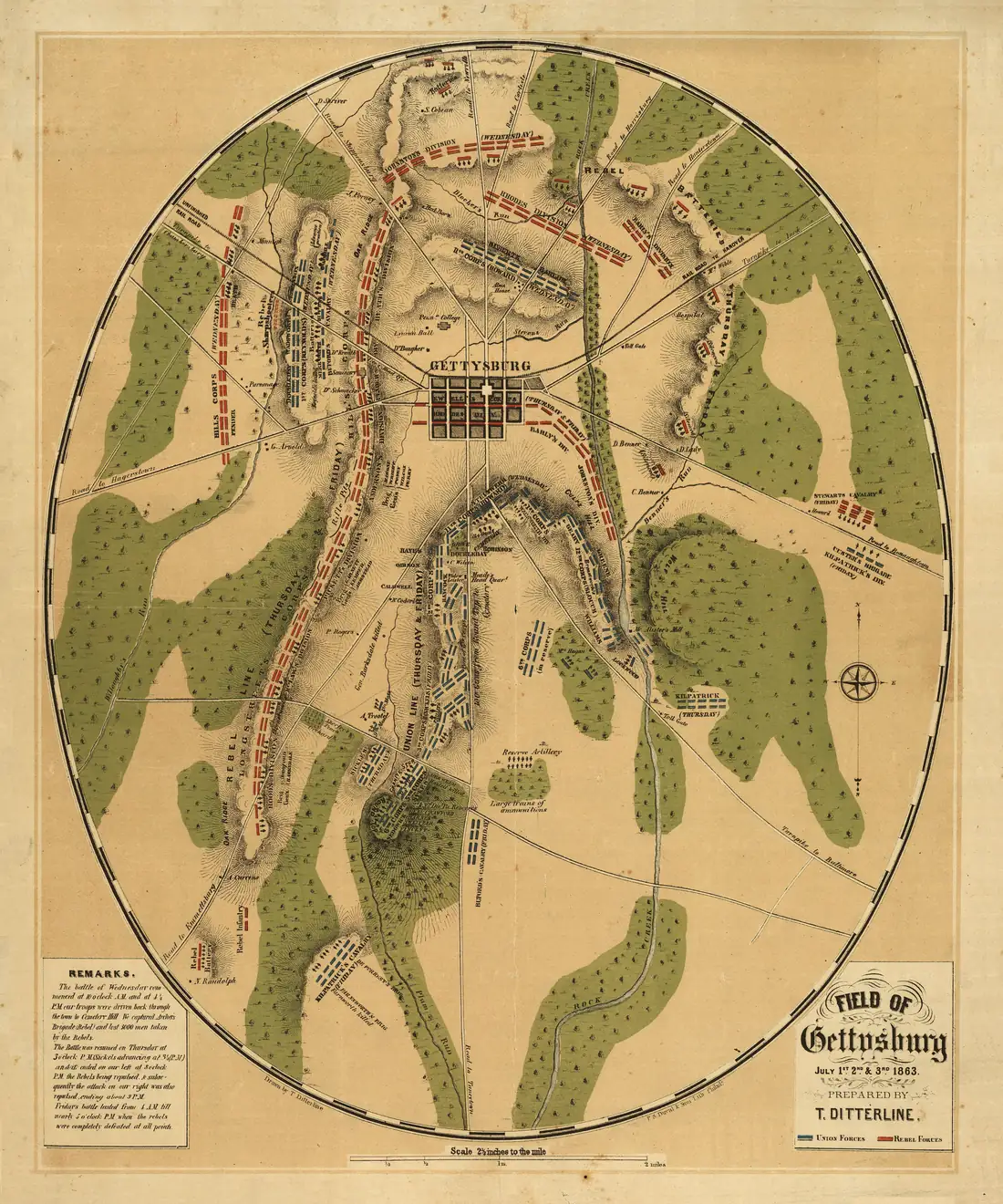
The Battle of Gettysburg begins — Gettysburg, Pennsylvania, USA
Image: Theodore Ditterline · Public domain

As Confederate General Robert E. Lee stood atop a ridge, gazing out at the unfamiliar Pennsylvania landscape, he whispered to his aide, 'If the enemy is there tomorrow, we must attack him.' The year was 1863, and the small town of Gettysburg was about to become the unlikely epicenter of a clash that would leave over 50,000 casualties in its wake.

The Confederate invasion of the North had been months in the making, with Lee's army of 75,000 soldiers pushing deep into Union territory in search of a decisive victory. But as they converged on Gettysburg, they found themselves face to face with a formidable force of 82,000 Union soldiers, led by General George Meade. The stage was set for a battle that would rage on for three days, with the fate of the war hanging precariously in the balance.

In the end, it was the Union lines that held, though at a staggering cost: of the 12,000 soldiers who charged Cemetery Ridge on the third day of battle, a mere 300 made it back to their own lines. As the dust settled, Lee's army slunk back into the South, their dreams of a Northern victory shattered. But the real aftermath of Gettysburg was only just beginning to unfold. Over the next few weeks, the town would struggle to cope with the sheer scale of the devastation, as thousands of wounded soldiers flooded the local hospitals and makeshift medical centers.
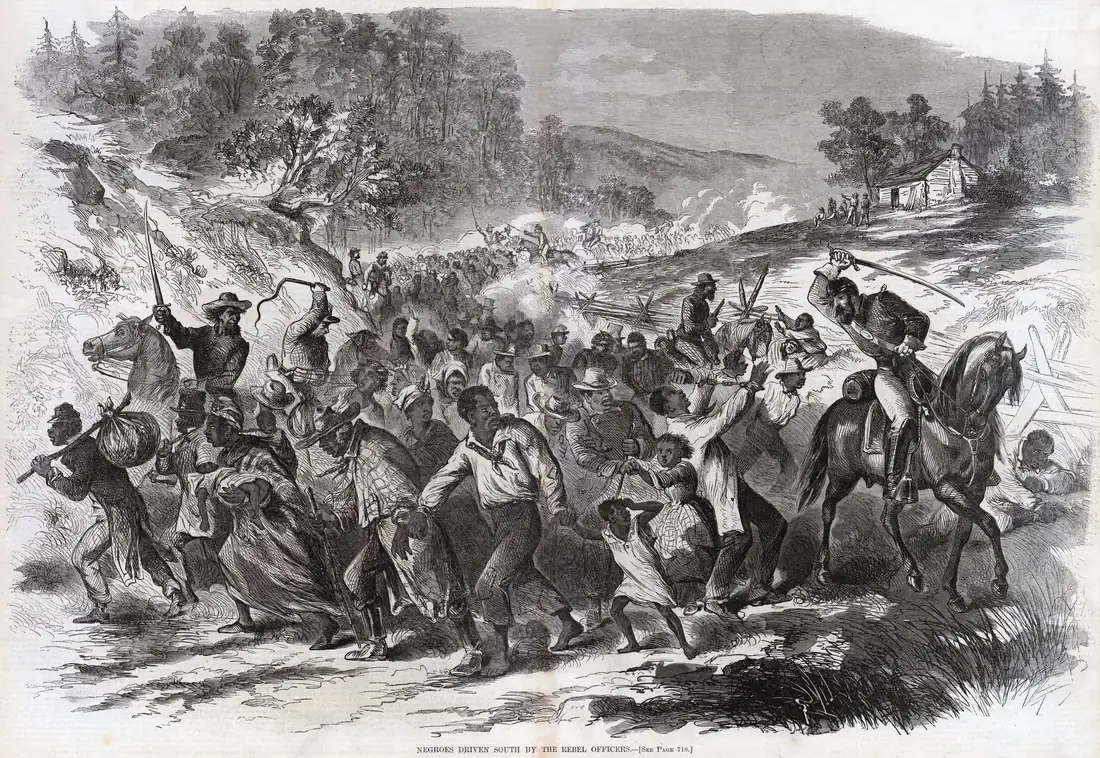
The Battle of Gettysburg begins — Gettysburg, Pennsylvania, USA
Image: Harper's Weekly Magazine, November 8, 1862, pp. 712-713., p. 16. · Public domain

The Battle of Gettysburg would go on to become a defining moment in the American Civil War, a turning point that marked the beginning of the end for the Confederacy. And yet, it's a curious fact that the battle itself was almost an accident – a chance encounter between two armies that had been maneuvering in the dark, each trying to outflank the other. As one historian wryly observed, 'The Battle of Gettysburg was a collision between two armies that didn't want to fight there, at a time when neither side was ready.' It's a testament to the unpredictable nature of war, where the best-laid plans can go awry in an instant.

As the years went by, the legacy of Gettysburg would only continue to grow, with the battle becoming an enduring symbol of American sacrifice and courage. And yet, it's the smaller, more human details that truly bring the story to life – the fact that Lee's invasion of the North was prompted in part by a desire to capture the North's vast agricultural resources, or that the battle itself was fought in part over a disputed shoe factory on the outskirts of town. It's a reminder that even in the midst of war, the mundane and the absurd are never far behind.
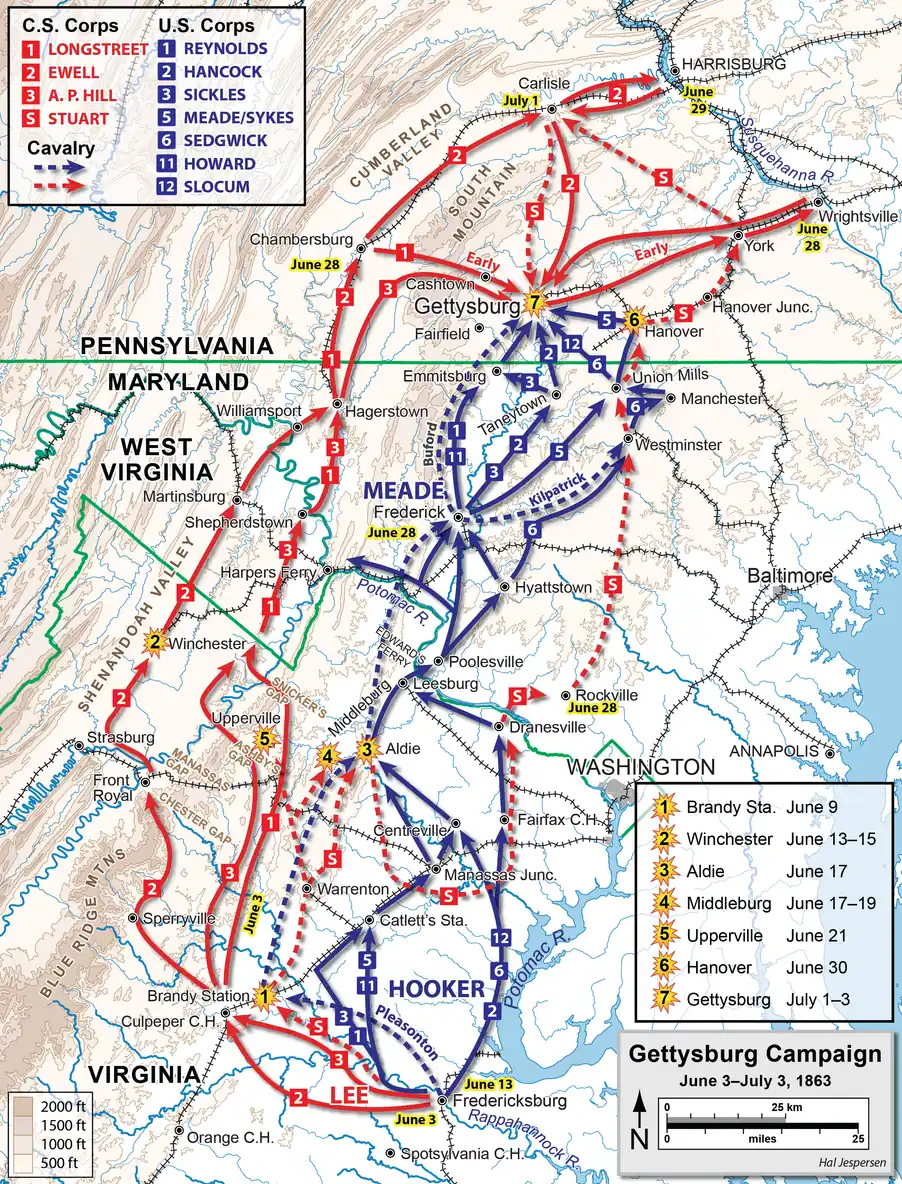
The Battle of Gettysburg begins — Gettysburg, Pennsylvania, USA
Image: [[:en:User:Hlj licence= This file is licensed under the Creative Commons Attribution 3.0 Unported license.Attribution: M · CC BY 3.0

In the end, it's not the grand strategies or the sweeping historical narratives that linger in the mind, but the simple, haunting image of a small town, forever changed by the collision of two armies on a sweltering summer day. As one Gettysburg resident would later recall, 'The battle was over, but the war would stay with us for a long, long time.' And as the last of the soldiers departed, leaving behind a scarred and battered landscape, the people of Gettysburg were left to ponder the true cost of victory – and the enduring power of a single, brutal, and transformative moment in time.
Source: en.wikipedia.org/wiki/Battle of Gettysburg

Politics & state

The Treaty on the Non-Proliferation of Nuclear Weapons

Washington D.C., USA

The Treaty on the Non-Proliferation of Nuclear Weapons — Washington D.C., USA
Image: Marc Baronnet · CC BY-SA 4.0

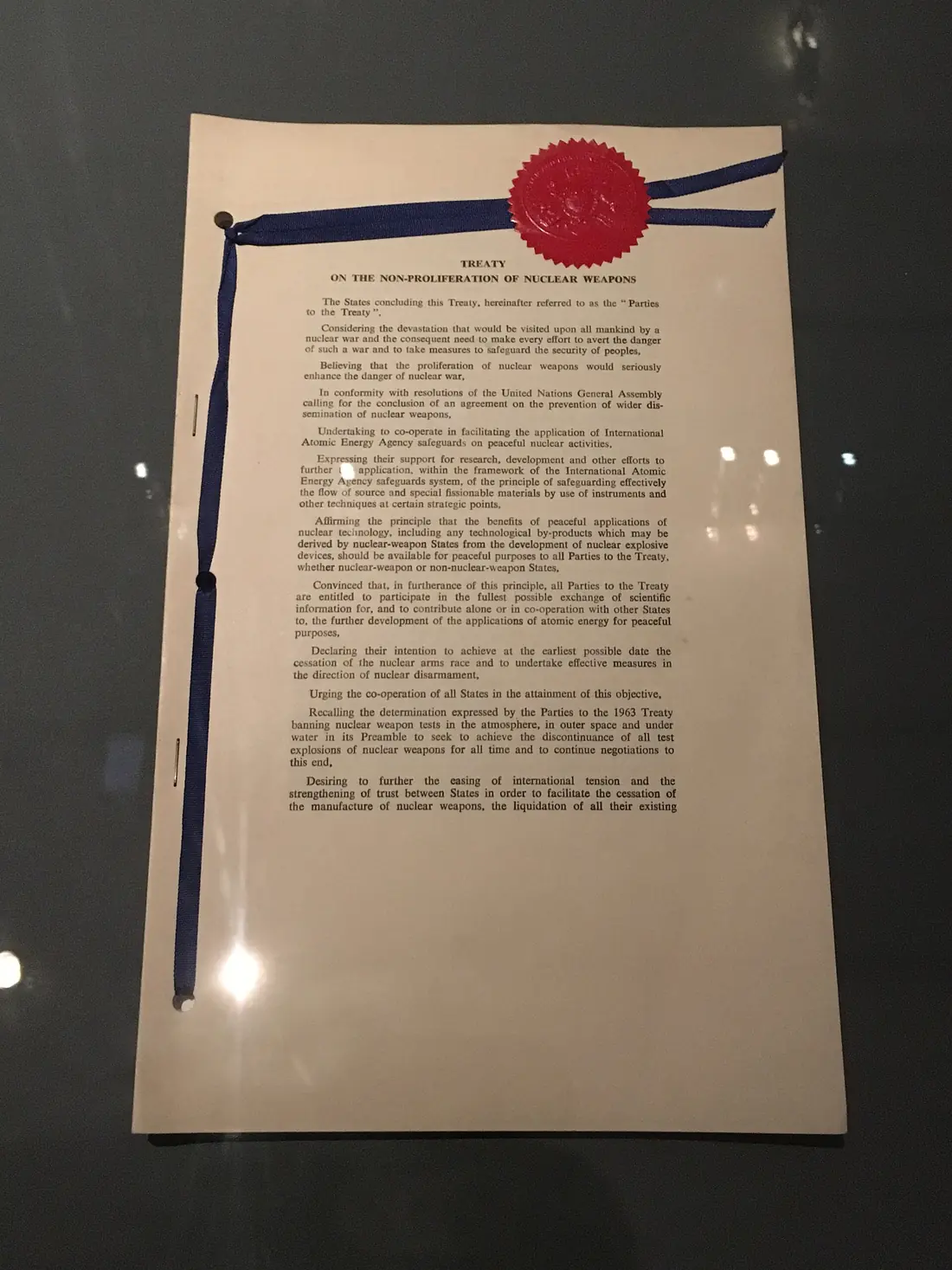
In a crowded conference room in Washington D.C., three men sit at a long wooden table, pens poised over a historic document: the Treaty on the Non-Proliferation of Nuclear Weapons. The air is thick with tension as they prepare to sign away the possibility of nuclear proliferation, a threat that has hung over the world since the atomic bombs were dropped on Hiroshima and Nagasaki in 1945.

This treaty is the culmination of years of negotiations between the United States, the United Kingdom, and the Soviet Union, three nations that have been locked in a Cold War for decades. The aim is simple: to prevent the spread of nuclear weapons to other countries, thereby reducing the risk of a catastrophic nuclear war. As the three men - William Foster for the United States, Anatoly Dobrynin for the Soviet Union, and Dennis Greenhill for the United Kingdom - put their pens to paper, the room falls silent, the only sound the scratch of nib on paper.

The treaty itself is a complex document, the result of months of painstaking negotiations between diplomats and scientists. At its heart is a simple bargain: the non-nuclear states agree not to develop or acquire nuclear weapons, while the nuclear states - the United States, the Soviet Union, and the United Kingdom - agree not to help them do so. It is a fragile balance, but one that has been deemed necessary in a world where the threat of nuclear war is ever-present. As the treaty is signed, the number of nuclear warheads in the world stands at around 30,000, a staggering figure that highlights the urgency of the situation.

One surprising fact about the treaty is that it was nearly derailed at the last minute by a dispute over the wording of a key clause. The Soviet Union had insisted on including a provision that would have allowed them to withdraw from the treaty if they felt their security was threatened, a move that the United States and the United Kingdom saw as a loophole that could be exploited. In the end, a compromise was reached, but not before the negotiations had come close to collapse. As the signing ceremony comes to a close, the three men shake hands, a gesture that is both a symbol of cooperation and a reminder of the challenges that lie ahead.

The Treaty on the Non-Proliferation of Nuclear Weapons — Washington D.C., USA
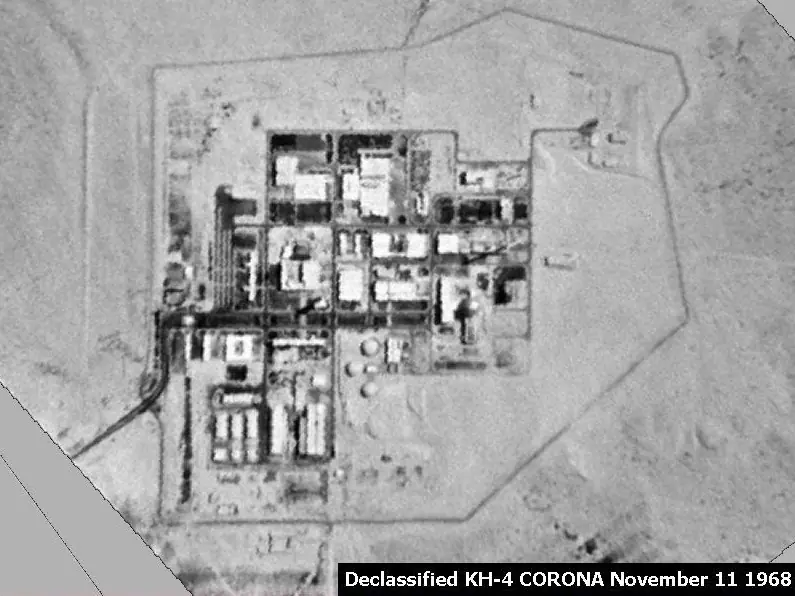
Image: American reconnaissance satellite KH-4 CORONA · Public domain

The treaty will have far-reaching consequences, shaping the course of international relations for decades to come. It will lead to a reduction in the number of nuclear warheads in the world, from 30,000 in 1968 to around 10,000 today, a decrease of 67%. It will also pave the way for further disarmament talks, including the Strategic Arms Limitation Talks (SALT) between the United States and the Soviet Union. As the delegates leave the conference room, they are met with a sea of reporters, all clamoring for a quote or a photo opportunity.

And yet, despite the significance of the treaty, there is a sense of irony that hangs over the proceedings. The treaty is being signed at a time when the world is still reeling from the aftermath of the Cuban Missile Crisis, a near-miss that brought the world to the brink of nuclear war. As the delegates celebrate their achievement, they know that the threat of nuclear war is still very real, and that the treaty is only the first step in a long journey towards disarmament. The last image is of the three men walking out of the conference room, the treaty held aloft like a beacon of hope in a world still haunted by the specter of nuclear destruction.

Source: en.wikipedia.org/wiki/Treaty on the Non-Proliferation of Nuclear Weapons

Use the arrow keys to move between days

Browse the full archive →