Daily History
Technology

Galileo Demonstrates First Telescope

Venice, Italy
Galileo Demonstrates First Telescope — Venice, Italy
Image: Justus Sustermans · Public domain

The Venetian air on August 25, 1609, was thick with the usual late-summer humidity, carrying the scent of salt, human endeavor, and the occasional whiff of something less savory from the canals. Gondolas slipped silently past palaces, merchants haggled loudly beneath the Rialto, and the Doge’s palace stood, as ever, a monument to the Republic’s enduring power. It was, by all accounts, a perfectly ordinary day in the bustling maritime city, the kind of day that unfolded countless times before and after, marked by the rhythms of trade and governance. Yet, high above the pigeon-flecked Piazza San Marco, inside the Campanile, something utterly extraordinary, though deceptively mundane, was about to unfold.

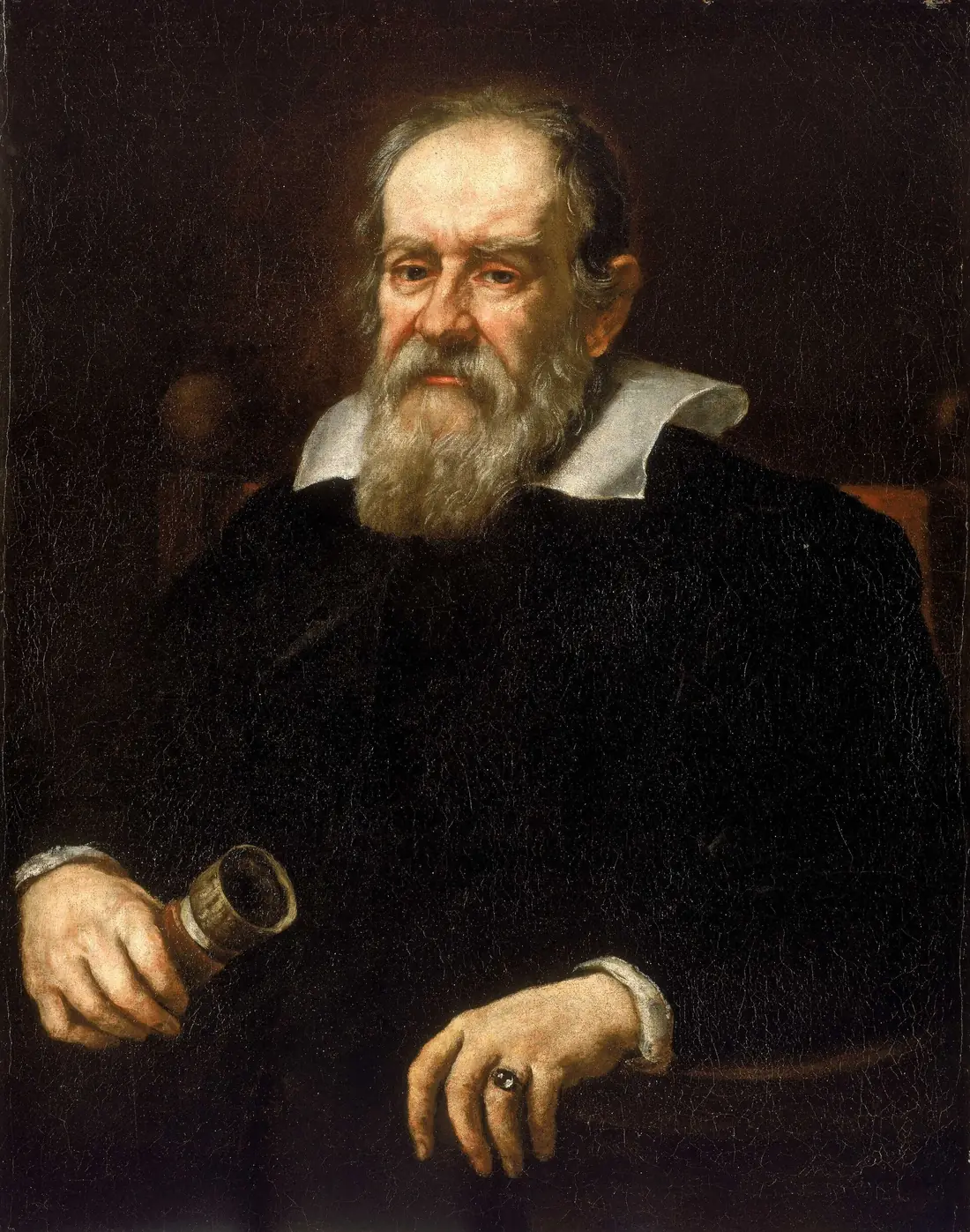
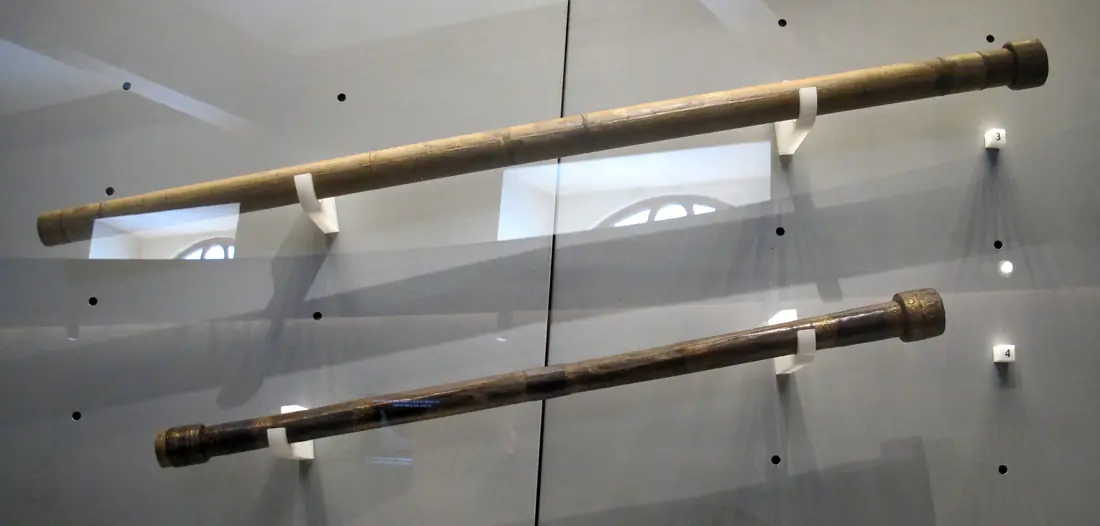
Galileo Galilei, a man whose mind perpetually buzzed with the mechanics of the world, stood before a gathering of Venice’s most powerful senators and the venerable Doge Leonardo Donà. He wasn't there to discuss statecraft or commerce. Instead, he presented a peculiar contraption: a tube, perhaps three feet long, with a lens at each end. This, he declared, was his *occhiale*, or “eyeglass” – a device rumored to have originated in the Netherlands, but which Galileo, upon hearing vague descriptions, had set about reconstructing and improving upon with a furious, almost obsessive, energy. He hadn't just copied it; he'd reverse-engineered the *idea* of it, grinding his own lenses to perfection.

“It makes distant objects appear closer,” he stated, with the quiet confidence of a man who knows he holds a secret to reality. The senators, accustomed to the finest silks and the most intricate maps, looked at the crude brass-and-wood cylinder with a mixture of skepticism and polite curiosity. Then, one by one, they peered through it. The effect was immediate, visceral. Ships sailing into the lagoon, still distant blurs to the naked eye, sprang into astonishing detail, their sails and rigging suddenly sharp. Figures on the distant island of Murano became discernible individuals. The Campanile, usually just a vantage point, became a stage for a revelation.

Galileo Demonstrates First Telescope — Venice, Italy
Image: Unknown authorUnknown author · CC BY 4.0

So, how did this "eyeglass" work? The trick lay in the precise arrangement of two types of lenses. At the far end, facing the distant object, was a convex lens – thicker in the middle, it gathered light and bent it inward. Closer to the eye was a concave lens – thinner in the middle, it spread the light out. Placed correctly, these two simple pieces of ground glass manipulated light in such a way that it seemed to originate from a much closer, larger object. Galileo’s initial instruments offered a magnification of about three times, which he quickly improved to eight or nine. By late 1609, he had achieved a 20x magnification, a staggering leap in observational power.

The Venetian senators, shrewd pragmatists to a fault, grasped the immediate utility. Imagine spotting enemy ships hours before they reached the harbor, or identifying friendly vessels laden with precious cargo. This wasn't abstract science; this was a strategic advantage worth its weight in ducats. They promptly offered Galileo a lifelong professorship at the University of Padua and doubled his salary. They saw a better spyglass, a military marvel, a commercial boon. They saw the horizon, now closer. What they didn't see, couldn't possibly fathom, was that this tube, this brass-and-wood contrivance, wasn't just bringing distant ships closer. It was about to tear open the heavens themselves, revealing moons orbiting distant planets, phases on Venus, and untold stars – a universe far grander and more complex than anyone had ever dared to imagine. That, however, was for Galileo to discover alone, in the quiet solitude of his study, long after the Venetian senators had gone back to their ordinary, earthbound concerns.
Galileo Demonstrates First Telescope — Venice, Italy
Image: Sailko · CC BY-SA 3.0

Source: en.wikipedia.org/wiki/Galileo Galilei

Exploration

First Europeans Arrive in Japan

Japan

First Europeans Arrive in Japan — Japan
Image: Hokusai · Public domain

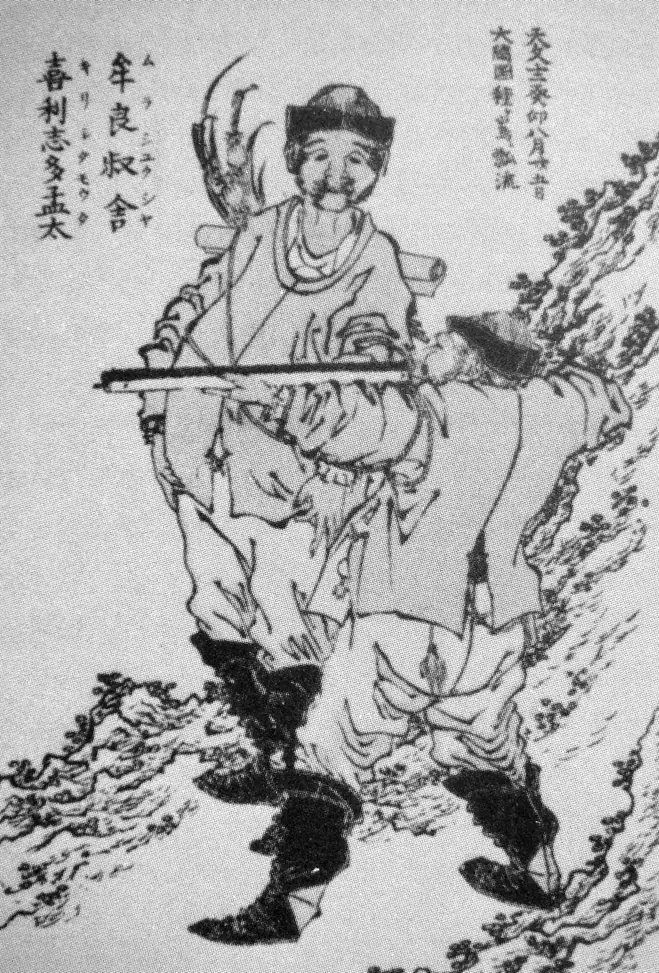
A typhoon, as it often does, makes a mess of things. Not just sails and rigging, but plans, expectations, and sometimes, the entire map of the world. On a blustery August day in 1543, three Portuguese men — António Mota, Francisco Zeimoto, and António Peixoto — are certainly having a bad day, or rather, a bad month. They are aboard a Chinese junk, not the stout carracks of their homeland, blown far off course from their intended destination of Ningbo, China. Instead, after weeks of being tossed about like dice in a cup, they find themselves drifting towards an unfamiliar coastline, a series of green islands rising from the mist.

Now, the junk glides into a small bay on an island called Tanegashima, just south of Kyushu. It’s a quiet place, or it was. The hull scrapes against the shallows. A small crowd of islanders, curious but cautious, gathers on the shore. They are a sight to behold, these foreigners. Hairy, oddly dressed, and with noses that seem to defy gravity. But it’s not their appearance that truly captures attention.

From the junk, two of the Portuguese, likely Mota and Zeimoto, step onto the sand. They carry with them something unlike anything the Japanese have ever seen. Not silk, not spices, but two long, slender tubes of metal, each with a wooden stock. They are arquebuses, primitive firearms, and they are about to change everything.

The local lord, Tokitaka, a man of keen intellect and perhaps even keener ambition, approaches. He’s intrigued. The language barrier is formidable, a wall of incomprehension, but a Chinese passenger on the junk, presumably a merchant, bridges the gap, translating the Portuguese into Chinese, then into a local dialect. It’s a game of linguistic telephone, but the message gets through: these strange implements make thunder and spit fire.

Tokitaka, ever the pragmatist, asks for a demonstration. One of the Portuguese men levels his arquebus towards a duck swimming serenely in the bay. A flash, a deafening crack, and the duck vanishes in a spray of water and feathers. The islanders gasp. Tokitaka’s eyes, however, narrow in calculation. This is not magic; this is power. He immediately understands the military potential of such a device in a Japan then convulsed by the brutal Sengoku Jidai, a century of incessant civil war. Suddenly, every daimyo in Japan needs one of these.

The Portuguese, ever the shrewd traders, are happy to oblige. They teach Tokitaka’s smiths how to replicate the mechanism, how to mix the gunpowder. It’s not long before Japan, a nation that had never before seen a firearm, is producing them in vast quantities. Within a decade, Japanese-made arquebuses are a common sight on battlefields. Within thirty years, Japan will possess more firearms than any European nation, a direct and rather astonishing consequence of a lost ship and three very lost, very opportunistic Portuguese.

The original intention of our three intrepid, if geographically challenged, travelers was simply trade, perhaps a bit of smuggling. They wanted to buy Chinese silks and porcelain. Instead, they sold fire and noise, inadvertently igniting a technological revolution that would forever alter the course of Japanese warfare and, eventually, its political landscape. One might say they really blew their cover.

Source: en.wikipedia.org/wiki/António Mota

Use the arrow keys to move between days

Browse the full archive →