Daily History
War & conflict

Seljuks Crush Byzantines at Manzikert, Claim Anatolia

Manzikert, Anatolia
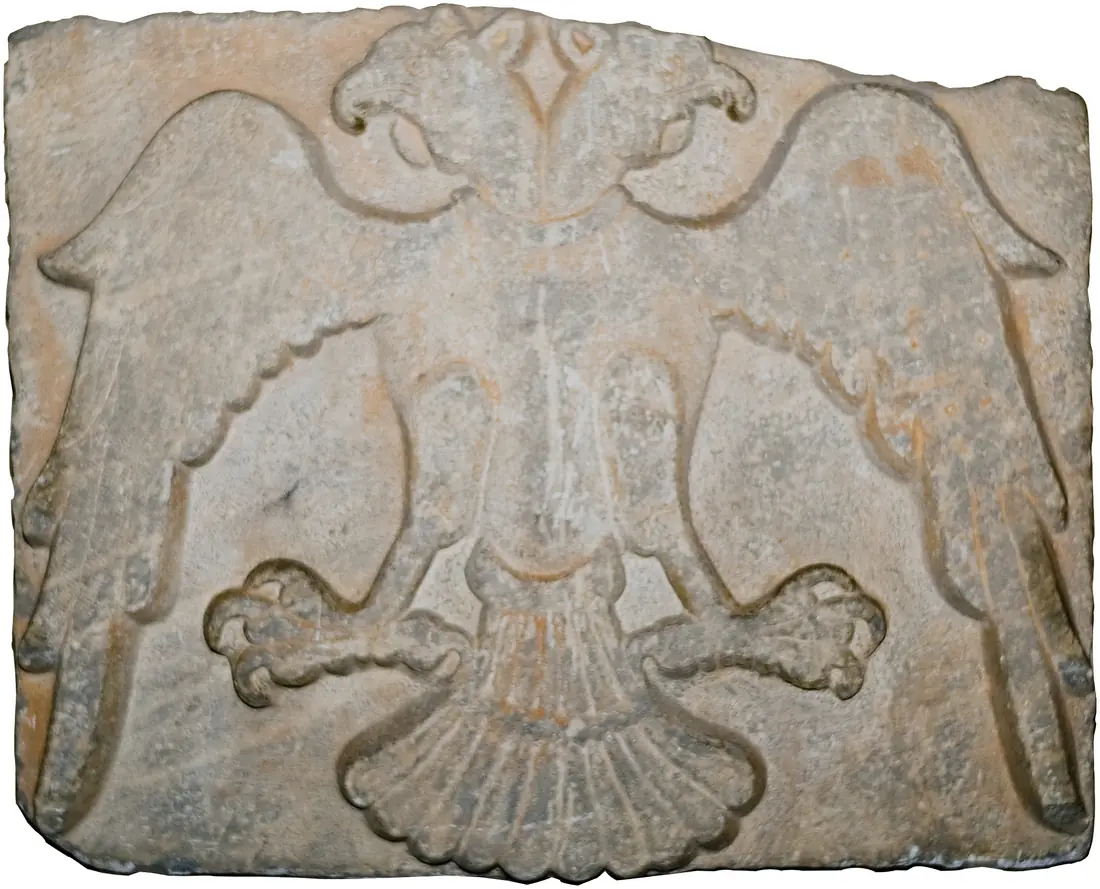
Seljuks Crush Byzantines at Manzikert, Claim Anatolia — Manzikert, Anatolia
Image: Fabienkhan modified by Ewan ar Born · CC BY-SA 2.5

Sultan Alp Arslan looked at the Byzantine emperor, Romanos IV Diogenes, whom he had just captured, and made a decision that would reshape the map of the world. Not the immediate decision to defeat him at Manzikert, but the astonishing choice to *release* him. This act of magnanimity, intended to secure peace and tribute, instead became the fuse that lit the slow, self-destructive fire of the Byzantine Empire, handing Anatolia to the Turks almost by accident.

On August 26, 1071, near the town of Manzikert in eastern Anatolia, Romanos IV, an emperor desperate to restore Byzantine prestige, led an army of perhaps 40,000 to 70,000 men against the Seljuq Turks. His forces were a motley collection: elite Byzantine heavy cavalry, but also a significant contingent of Norman, Frankish, and Pecheneg mercenaries, and even Armenian and Georgian auxiliaries, many with questionable loyalty. Facing him was Alp Arslan, whose Seljuq forces, though perhaps smaller, were highly mobile and united under a charismatic leader.

Romanos had marched deep into Seljuq territory, hoping to reclaim lost ground and cement his rule. He underestimated Alp Arslan’s tactical brilliance and the Seljuq army’s discipline. The battle itself was a classic example of nomadic cavalry tactics: feigned retreats, enveloping maneuvers, and relentless arrow volleys. As the day wore on, Romanos ordered a retreat, but confusion reigned. Andronikos Doukas, a rival general and nephew to Romanos’s political enemies, deliberately withheld his reserve troops, abandoning the emperor and accelerating the collapse of the Byzantine lines. Romanos’s personal guard fought to the last, but the emperor himself was captured, a humiliation almost unthinkable for a Byzantine basileus.
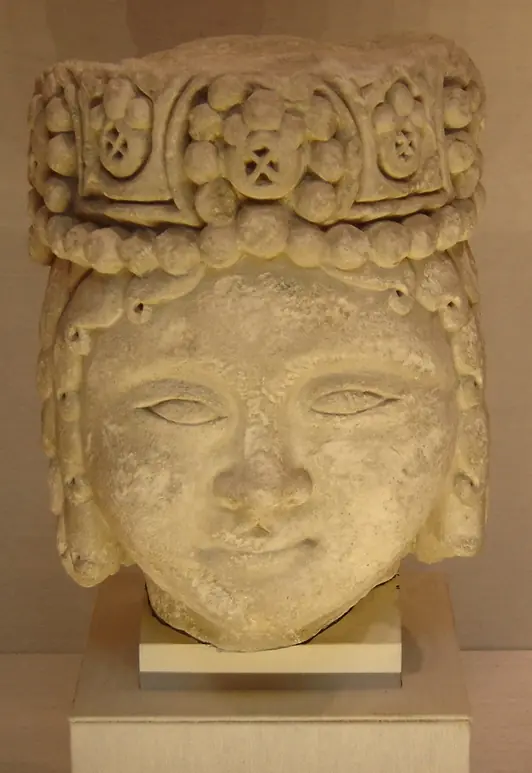
Seljuks Crush Byzantines at Manzikert, Claim Anatolia — Manzikert, Anatolia
Image: Zereshk · CC BY 3.0

What followed was unprecedented. Alp Arslan, instead of executing Romanos or holding him for a massive ransom indefinitely, treated him with remarkable respect. After a brief, symbolic moment where Romanos kissed the ground before the Sultan, they negotiated. Romanos promised a substantial ransom of 1.5 million gold pieces, an annual tribute, and military support. In return, Alp Arslan released the Byzantine emperor. Romanos was even given an escort and funds for his journey home. It seemed, for a moment, that the battle was a setback, but not a disaster.

But the true disaster lay not with the Turks, but within Byzantium itself. While Romanos was a captive, his political enemies in Constantinople, led by the Doukas family, had already declared him deposed. When he returned, they refused to recognize him, sparking a brutal civil war. Romanos, weakened and betrayed, was eventually defeated, captured, and, in a truly cruel twist of fate, blinded with a red-hot iron, dying from his wounds. The blinding was so poorly executed that it became infected. The man who had faced the Seljuq Sultan with dignity was undone by his own countrymen, blinded and left to die in a monastery.
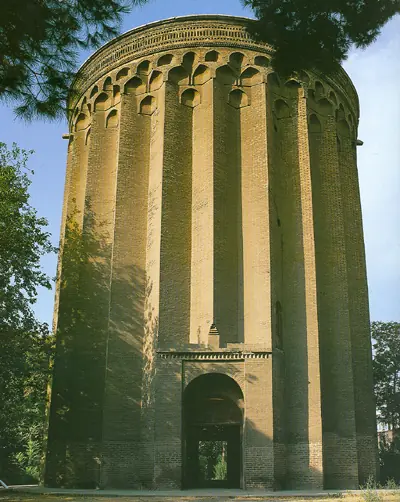
Seljuks Crush Byzantines at Manzikert, Claim Anatolia — Manzikert, Anatolia
Image: User Zereshk on en.wikipedia · Public domain

This internecine struggle, not the battle itself, was the true undoing of Byzantine Anatolia. The civil war raged for years, draining the empire’s resources, scattering its armies, and leaving its eastern frontier utterly undefended. While Byzantine factions fought each other for the throne, the Seljuqs, seeing the power vacuum, simply walked into Anatolia. They weren't conquering a unified empire; they were filling a void created by Byzantine self-destruction. Manzikert wasn't the end of Byzantium, but the moment it chose to look inward and tear itself apart, leaving the door wide open for an unexpected new neighbor.
Source: en.wikipedia.org/wiki/Seljuk dynasty

War & conflict

English Longbowmen Decimate French at Battle of Crécy

Crécy, France

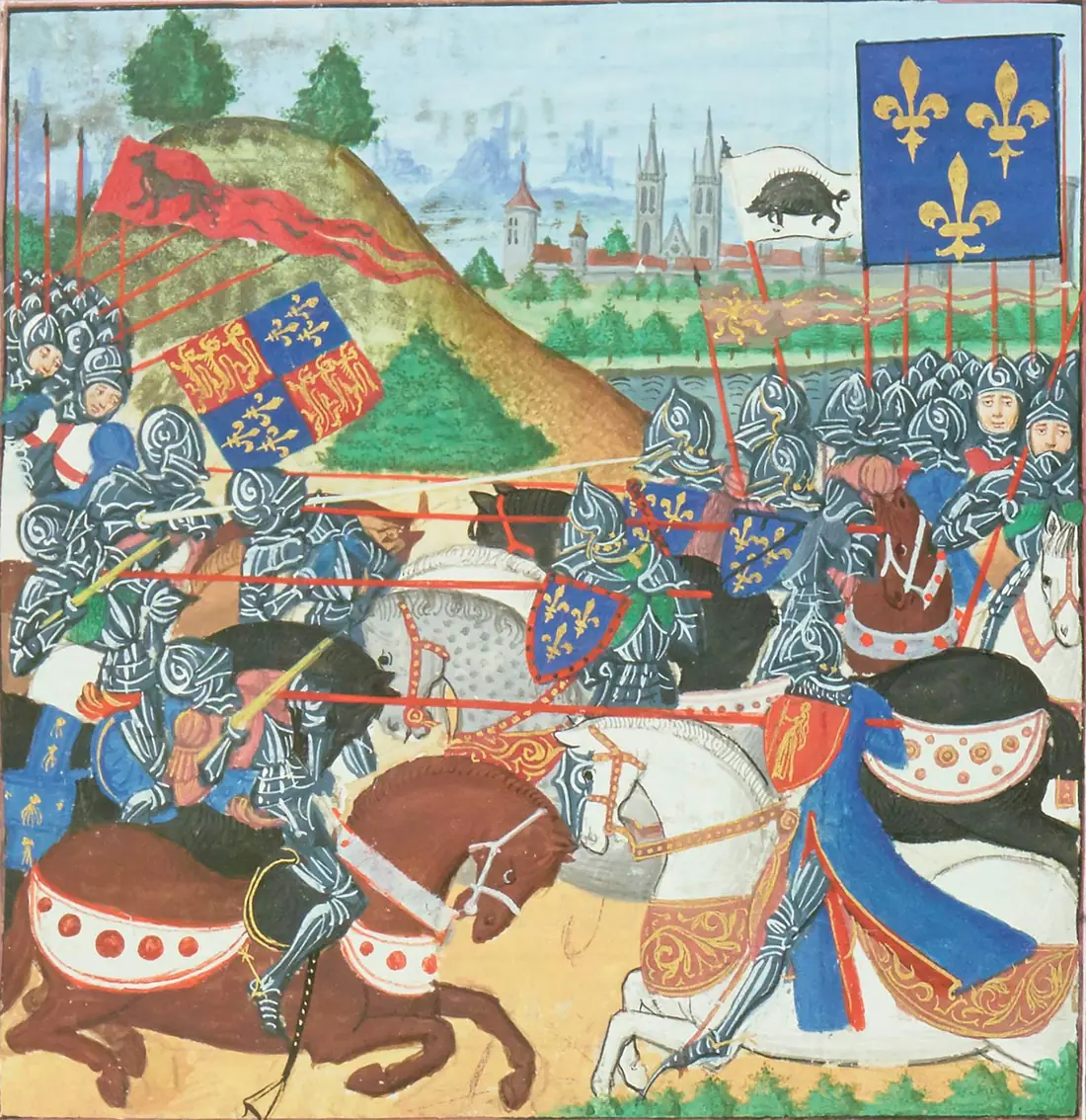
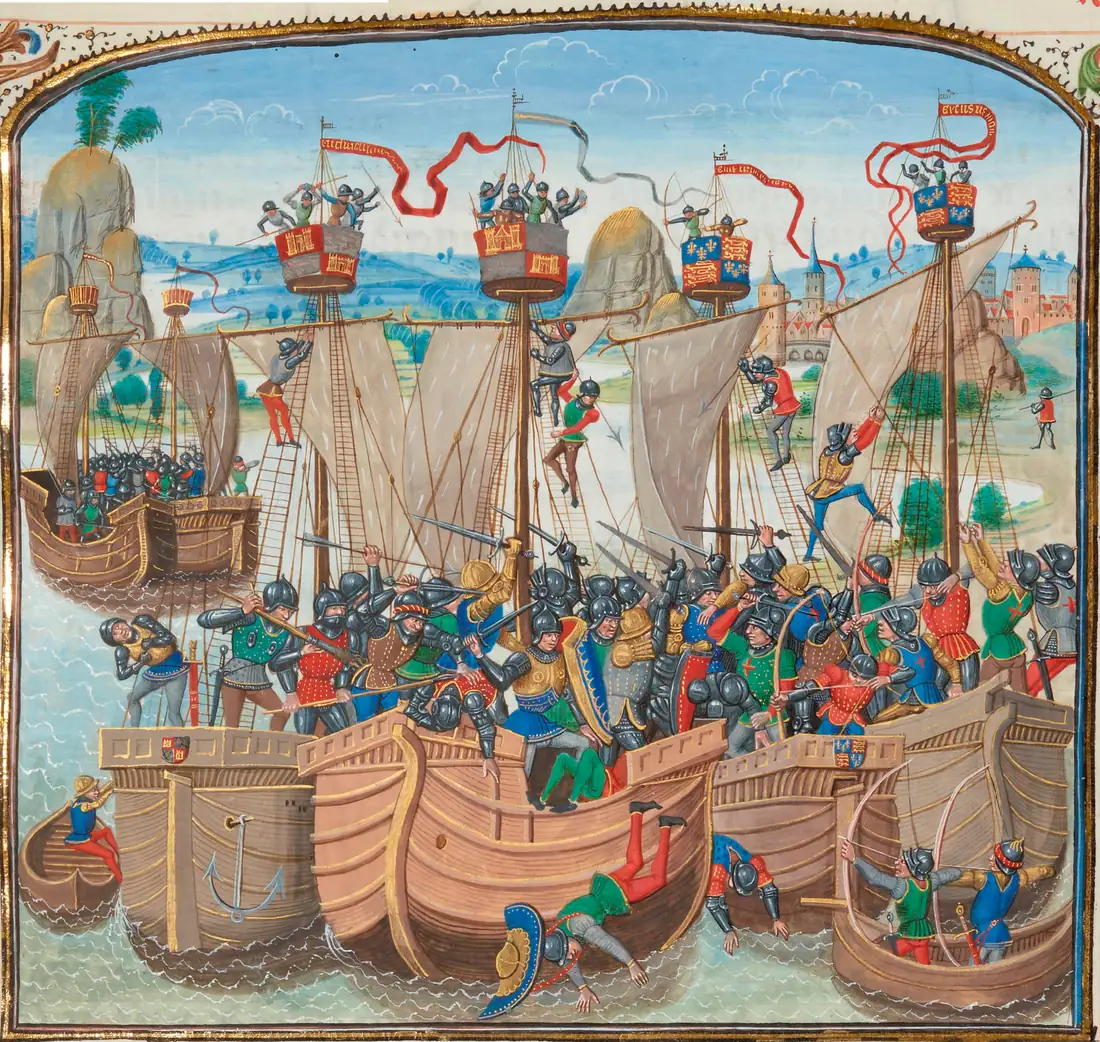
English Longbowmen Decimate French at Battle of Crécy — Crécy, France
Image: Jean Froissart · Public domain

The rain had fallen, a steady, chilling sheet that morning, turning the fields of Crécy into a quagmire. By late afternoon, August 26, 1346, as the sun began its descent, the ground was still heavy and slick, a detail that would prove more consequential than any strategic decree. On one side, King Philip VI of France, leading an army estimated at upwards of 30,000 men, a glittering, impatient mass of chivalry. On the other, Edward III of England, with perhaps half that number, his troops dug in, waiting.

Philip’s advance was less a march, more a colossal, drunken stumble. His vanguard, a weary contingent of Genoese crossbowmen, had tramped 18 miles that day, their crossbow strings — critical for tension and power — now sodden and slack from the downpour. As they reached the English lines, Philip, in his eagerness, ordered them to attack. Their bolts, propelled by damp strings, fell short, harmlessly into the mud. Before they could reload, the English longbowmen, sheltered under their waterproof leather hoods, let loose their first volley. A sound like a thousand angry hornets filled the air.

But the real horror for the Genoese came from behind. Philip, seeing his Italian mercenaries falter, roared, “Kill me those rascals! They are only getting in our way!” French cavalry, thousands of pounds of horse and armored man, trampled their own retreating crossbowmen into the earth, creating a grotesque, living barrier for the next wave. This wasn't strategy; it was a fit of aristocratic pique, a decision born of impatience and contempt for common foot soldiers.

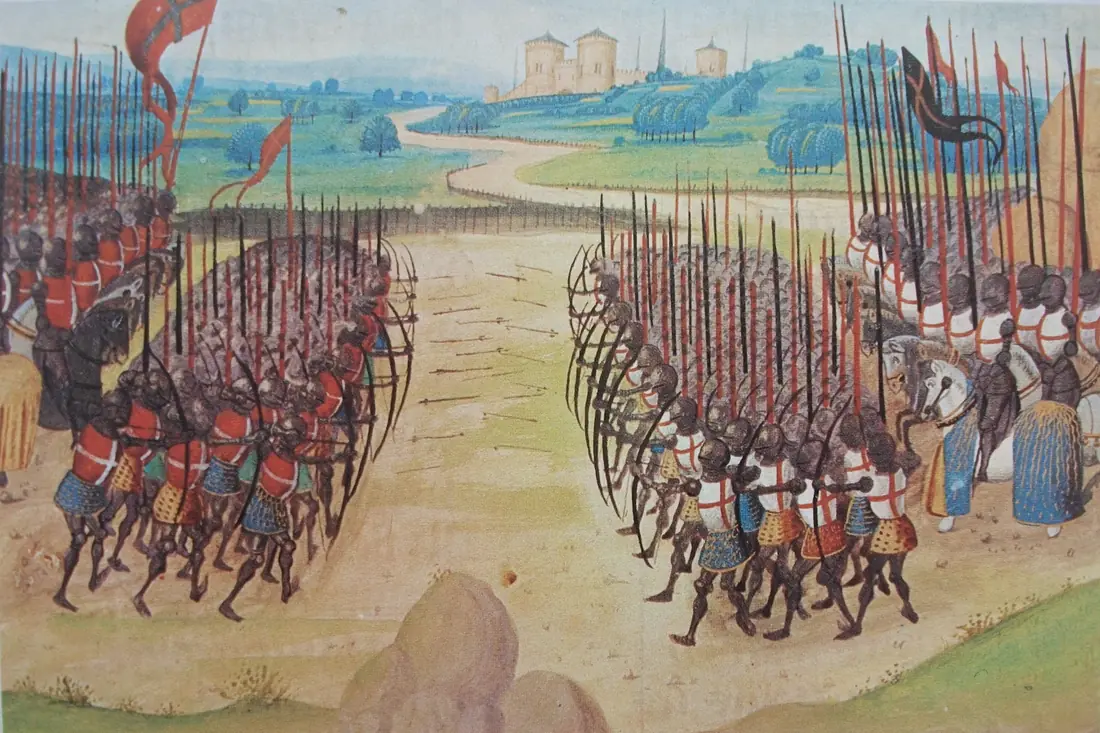
English Longbowmen Decimate French at Battle of Crécy — Crécy, France
Image: Wikimedia Commons · Public domain

Then came the French knights, wave after wave, a testament to courage and catastrophic tactical blindness. Each charge was a suicide pact. The longbows, firing ten to fifteen arrows a minute per man, created a storm of steel. The English had driven sharpened stakes into the ground, and as the French horses plunged into these hidden traps, their riders were dismounted, becoming easy targets. Armor, once a symbol of invincibility, now became a death trap, its weight pinning men to the mud as arrows found the gaps at joints and visors. The air smelled of wet earth, iron, and blood.

In the thick of it was Edward, the Black Prince, all of sixteen years old, fighting his first major battle. He was reportedly unhorsed at one point, his standard-bearer falling over his body. Messengers rode back to his father, Edward III, for aid. The King, watching from a windmill on a hill, reputedly replied, “Let the boy win his spurs, for I want all the honor and glory of this day to be his.” A proud father, or a cold calculator gambling with his son’s life? Perhaps both.

English Longbowmen Decimate French at Battle of Crécy — Crécy, France
Image: Attributed to Philippe de Mazerolles · Public domain

Among the fallen was King John of Bohemia, blind for a decade, who, refusing to sit idle, had his retainers tie his bridle to theirs and rode into the maelstrom, declaring, “It shall never be said that the King of Bohemia fled from such a battle!” They found him dead the next day, still tied to his comrades, his crest – three ostrich feathers and the motto “Ich dien” (I serve) – later adopted by the Black Prince, a strange inheritance from a fallen foe.

By nightfall, the field was a charnel house. The French lost an estimated 10,000 to 12,000 men, including eleven princes and twelve hundred knights. English losses were in the low hundreds. The immediate aftermath saw the English, guided by the cries of the wounded, dispatching any surviving French nobles for ransom and killing the common soldiers outright. A war for chivalry, indeed, decided by the efficiency of a wooden bow and the cold logic of ground advantage, leaving behind a silence broken only by the whimpering of dying horses and the distant, unseen work of scavengers.

Source: en.wikipedia.org/wiki/Hundred Years' War

Use the arrow keys to move between days

Browse the full archive →