Daily History
Politics & state

Fall of Rome: Odoacer Dethrones Last Western Emperor

Ravenna, Italy
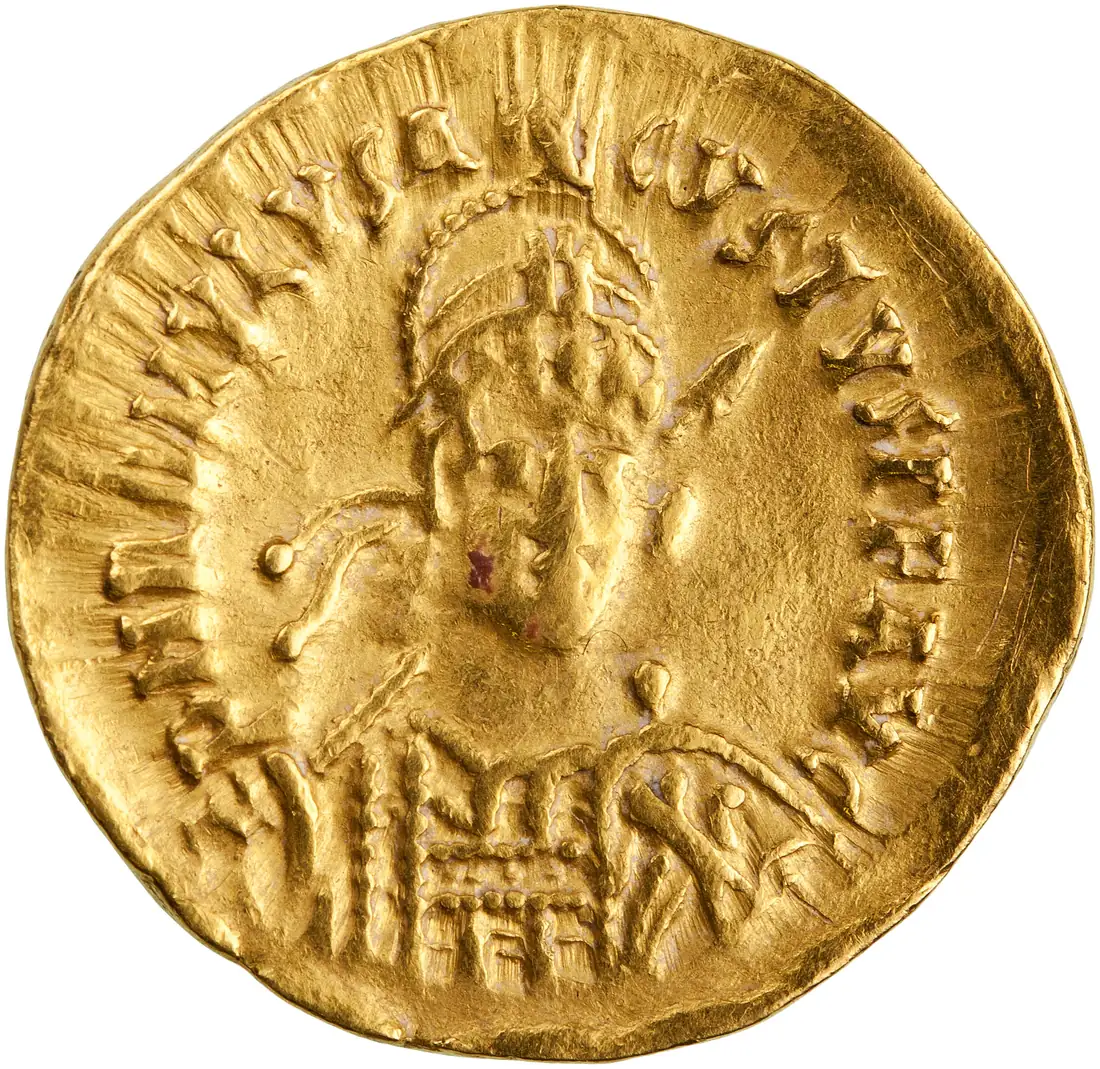
Fall of Rome: Odoacer Dethrones Last Western Emperor — Ravenna, Italy
Image: ANS · CC0

The bronze crown on Romulus Augustulus’ head rattles as Odoacer’s men push the teenage emperor into a modest house on the outskirts of Ravenna, and the last Roman consul watches the doors close behind him. The boy‑king, barely fifteen, never even knows he’s the final link in a chain that once stretched from Britain to Mesopotamia.

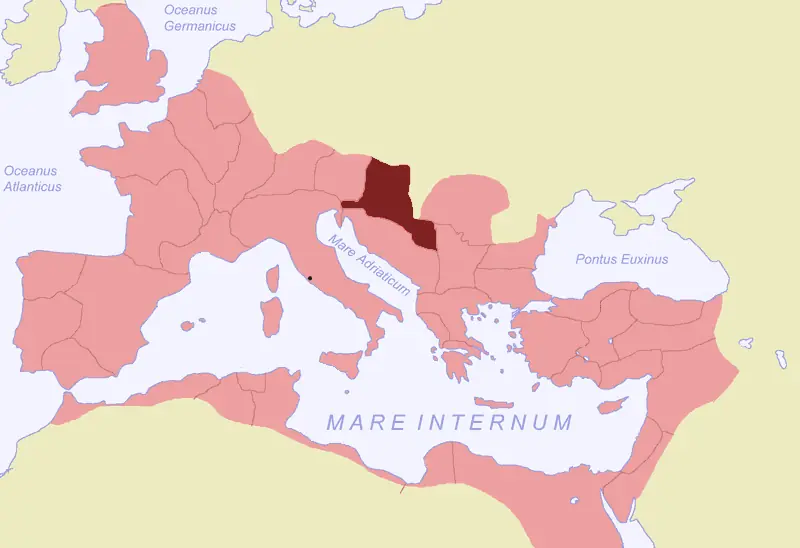
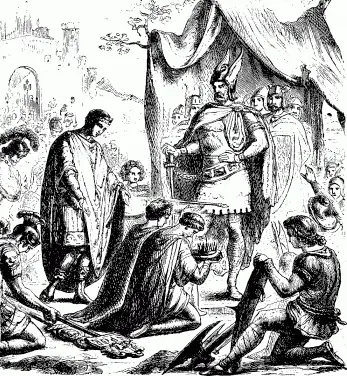
What actually happened that September morning? The Western Empire, a shadow of its former self, had been a collection of tax‑draining provinces, a handful of mercenary legions, and a court that sold titles like cheap pottery. Odoacer, a Germanic commander in the Roman army, had been promised the title of magister militum by the dying emperor, but the Senate in Rome refused to ratify it. In response, he marched on Ravenna, the imperial capital since 402, and forced the boy‑king to “abdicate” – a word that meant nothing more than “step aside while I take the reins.” The formal act was simple: Odoacer sent a messenger to the Eastern Emperor Zeno, offering to rule Italy as his vassal in exchange for recognition. Zeno, preoccupied with wars on his own front, accepted. The Western Empire, as a political entity, ceased to exist.

Why does this matter beyond the drama of a teenager being tossed out of power? The immediate ripple touched roughly 30 million souls living in Italy and the surrounding provinces. Their tax obligations shifted from a distant emperor in Constantinople to a Germanic warlord who demanded tribute in swords, not gold. The Roman bureaucracy, which had kept roads, grain shipments, and legal courts running, was gradually replaced by local Germanic customs. In the first decade after 476, the average peasant in the Po valley found his annual dues cut by half because the new rulers could not muster the same tax‑collecting apparatus. Yet, they also lost the protection of a navy that once patrolled the Adriatic, leaving coastal towns vulnerable to pirate raids.
Fall of Rome: Odoacer Dethrones Last Western Emperor — Ravenna, Italy
Image: Thomas Pusch · CC BY-SA 3.0

A surprising detail: Odoacer did not immediately sack Ravenna. He kept the existing Roman Senate, allowing it to meet in the palace and even appointing a Roman as his chief administrator, a man named Flavius Petrus. This hybrid government persisted for twelve years until Theodoric the Great arrived. The continuity meant that Roman law, still written in Latin, governed property disputes well into the 6th century, and many Roman elites simply swapped one master for another while retaining their estates.

The long‑term consequences are even more striking. By the time the Lombards entered Italy in 568, the population had adapted to a patchwork of Germanic kingdoms that still used Roman legal codes. This legal continuity is why modern Italian law can trace its roots to the Corpus Juris Civilis, a document compiled centuries before Odoacer’s sword. Moreover, the loss of a Western imperial throne freed the Eastern Empire to focus on its own survival, allowing Emperor Justinian to launch his ambitious reconquest of North Africa and parts of Italy a century later. In other words, the fall of the West set the stage for a brief, spectacular resurgence that would never happen if the Western bureaucracy had lingered.
Fall of Rome: Odoacer Dethrones Last Western Emperor — Ravenna, Italy
Image: Yonge, Charlotte Mary, (1823-1901) · Public domain

The irony is palpable: the “fall” was less a cataclysm than a bureaucratic handoff. No massive battle shattered cities; no plague wiped out millions. It was a teenage emperor, a Germanic commander, and a Senate that chose the lesser of two evils. The empire’s end did not instantly plunge the Mediterranean into darkness; instead, it rewrote who collected the grain tax and who decided whether a Roman citizen could appeal a verdict in Latin. The world did not end – it merely changed its administrative address.

A final, almost forgotten twist: Odoacer’s own reign ended not with a Roman defeat but with a duel of swords. Theodoric, invited by Zeno to replace Oda, defeated him in 493, and the victor buried Odoacer’s head on the Via Cassia, a road the Romans had built a millennium earlier. The same stone that once carried legions of empire now carried the corpse of the man who ended it. The road persists today, a silent reminder that empires rise and fall on the same thoroughfares they build.
Source: en.wikipedia.org/wiki/Romulus Augustulus

People

Birth of Al‑Biruni: Future Pioneer of Science and Geography

Kath, Khwarezm (now Uzbekistan)

Birth of Al‑Biruni: Future Pioneer of Science and Geography — Kath, Khwarezm (now Uzbekistan)
Image: The original uploader was Romanm at Slovenian Wikipedia. · Public domain

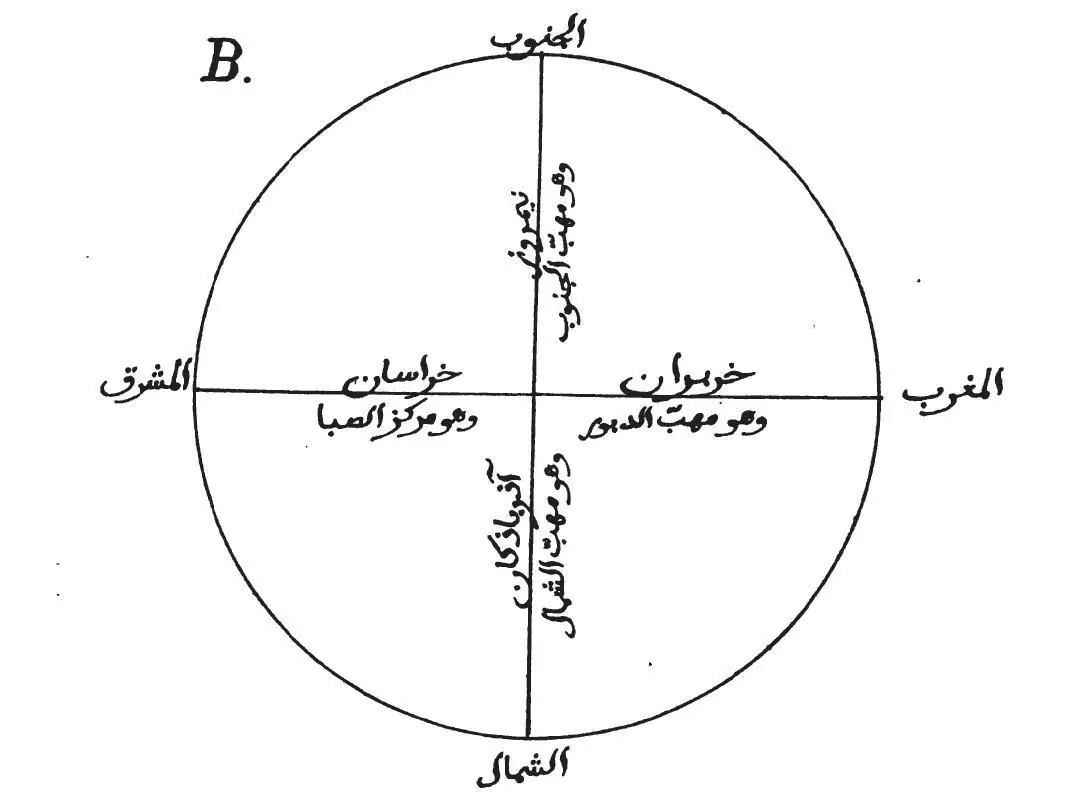
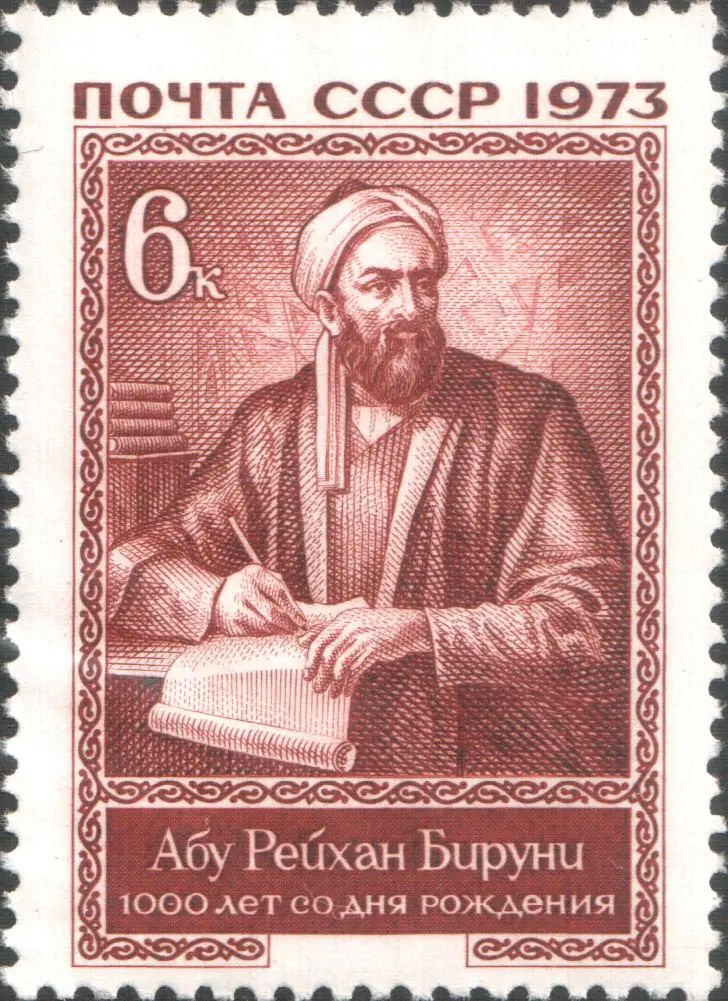
A newborn in Kath, Khwarezm, is swaddled with a wooden abacus and a copy of Ptolemy's Almagest. That infant is Al‑Biruni, and his arrival in 973 marks the moment a world that measured the heavens with crude sight‑lines begins to count them with precision.

Before his birth, the Islamic Golden Age already prized translation, but its scholars were still wrestling with a basic paradox: they could recite the circumference of the earth in verses, yet their maps showed continents as vague blobs. Astronomers used armillary spheres that resembled ornamental jewelry more than instruments. Geographers relied on travelers' tales, often exaggerating distances to impress patrons. The idea that a single mind could systematically reconcile Greek, Indian, and Persian knowledge into a unified, testable framework was, for most, an impossible dream.

Al‑Biruni grows up under the patronage of the Samanid court, learning Arabic, Persian, and Sanskrit. By his twenties he is already measuring the latitude of his hometown with a sextant he fashions from a simple plumb line and a sighting tube. He writes, "The sun at noon gives a shadow that tells me where I stand on the globe," a sentence that would have sounded like sorcery to a farmer in 10th‑century Khwarezm. Yet his method is nothing more than geometry and careful observation—tools any educated person could replicate with enough patience.

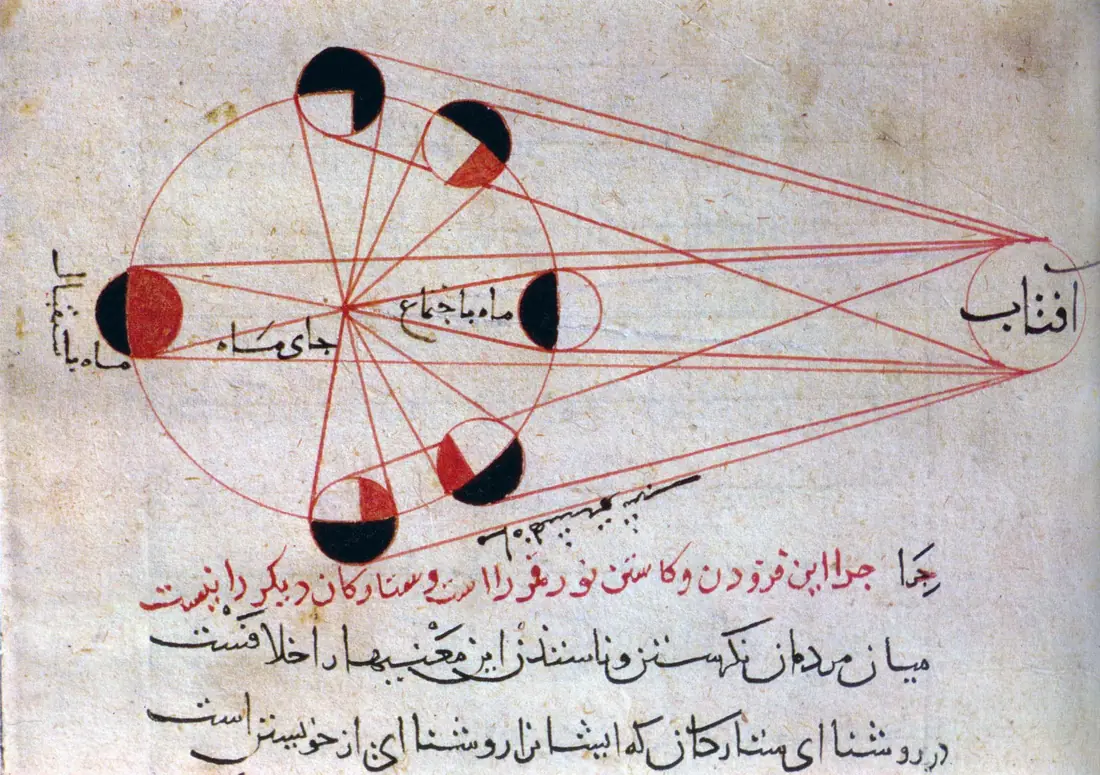
The breakthrough comes when he travels to India in 1017. There he discovers a Hindu astronomer’s table of planetary motions that predicts eclipses with an accuracy his own calculations lack. Instead of dismissing it as foreign superstition, Al‑Biruni translates the tables, compares them to Ptolemy’s models, and publishes the *Kitab al‑Tahqiq* (The Book of Verification). In it he demonstrates that the Indian method for calculating the length of a solar year is off by only 0.0001 days compared to the Persian method—an error so tiny that the two systems can be merged into a single, more reliable calendar. For the first time, the world has a cross‑cultural, mathematically verified chronology.

Birth of Al‑Biruni: Future Pioneer of Science and Geography — Kath, Khwarezm (now Uzbekistan)
Image: Al-Biruni · Public domain

What was unimaginable before 973? A scholar who could stand on a steppe, point a simple instrument at the sky, and produce numbers that matched the most sophisticated Greek treatises. What becomes ordinary after? The practice of field measurement, the use of trigonometry to compute distances, and the acceptance that knowledge is portable across languages and religions. Within two centuries, European navigators will chart the globe using the very techniques Al‑Biruni refined, and his insistence on empirical verification will echo in the scientific method that underpins modern physics.

A surprising fact often slips past the usual biographies: Al‑Biruni wrote a treatise on the mineral composition of the Tajikistan mountains, noting that the region’s iron ore contained trace amounts of nickel—something not documented in European metallurgy until the 18th century. Another footnote: he measured the height of Mount Damavand by timing how long a stone took to roll down its slope, arriving at a figure within 5% of today’s GPS reading. These anecdotes illustrate his relentless curiosity; he treated every rock, star, and language as data points awaiting systematic inquiry.

Al‑Biruni’s legacy is not a single invention but a paradigm shift. He proved that the world could be understood through disciplined observation rather than mythic authority. The centuries that followed built libraries, observatories, and universities on that foundation, yet the seed was planted the day a child in Kath was named after the ancient Persian word for "the one who brings forth knowledge."

Birth of Al‑Biruni: Future Pioneer of Science and Geography — Kath, Khwarezm (now Uzbekistan)
Image: Al-Biruni · CC BY-SA 3.0

He once wrote, "The earth is a sphere, and we are its passengers," a line that would have sounded blasphemous to a medieval cleric but now reads like a travel brochure. The irony is that his most influential works survived not in grand palaces but in the modest libraries of Samarkand, copied by scribes who likely never imagined their copies would travel to the libraries of Oxford and Harvard. The world changed not because a star was born, but because a mind chose to count the stars.

In the quiet of his study, Al‑Biruni sketches a globe with a compass rose that points not north, but toward the magnetic pole—a detail that would only be confirmed by explorers a millennium later. That final, almost mischievous line of his manuscript reminds us that the past is never static; it is a map constantly being redrawn by those daring enough to measure it.

Source: en.wikipedia.org/wiki/Al-Biruni

People

King Bermudo III Falls in Battle, Shifting Iberian Power

León, Spain

King Bermudo III Falls in Battle, Shifting Iberian Power — León, Spain
Image: Jose Luis Lamigueiro · CC BY-SA 4.0

The morning fog clings to the stone walls of León like a damp veil, and the market stalls are already humming with the clatter of wooden carts and the low murmur of merchants haggling over wool and olives. A thin drizzle has turned the cobblestones slick, so a child slipping on a puddle draws a few chuckles from the passersby. In the courtyard of the royal palace, a dozen men in chainmail tighten their gauntlets while the scent of roasting pork wafts from the kitchens, promising a modest feast before the day’s business. All the while, the distant hills beyond the city bear the faint, steady echo of horns—cavalry units gathering, their banners fluttering in the damp wind.

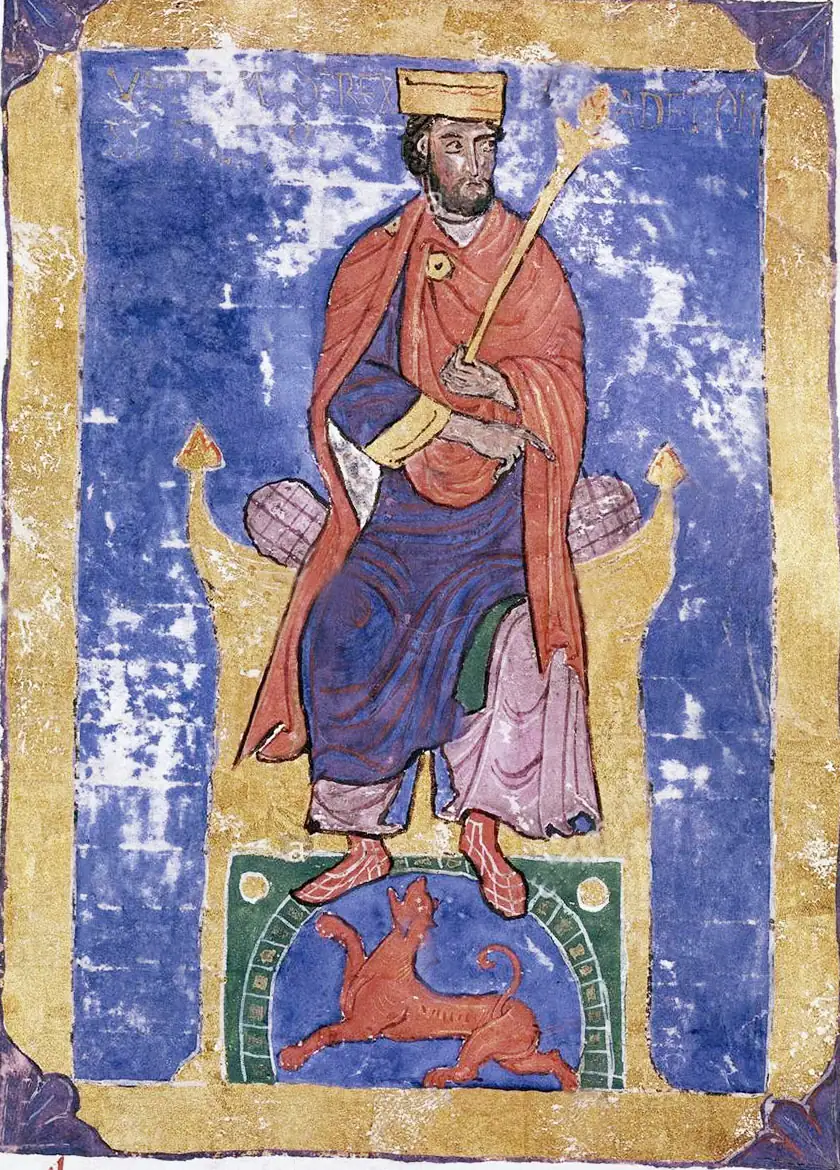
For weeks the tension between León and Castile has been a slow‑burning ember. Bermudo III, barely thirty, inherited a kingdom that was more a patchwork of frontier lordships than a unified realm. His cousin Alfonso VI of Castile, a shrewd and ambitious ruler, has been eyeing the rich lands of the Tierra de Campos, and a dispute over the town of Valcárcel has escalated from diplomatic notes to marching troops. The two cousins, both descended from the great Sancho III of Navarre, now stand on opposite sides of a field that will be remembered not for its grass but for the sudden, brutal end of a dynasty.

At precisely noon, the armies clash near the river Esla. Bermudo, mounted on his trusted destrier named “Albor,” leads a charge of roughly 1,200 men, hoping to break the Castilian line before it can fully deploy. Alfonso, wearing a crimson surcoat embroidered with a golden lion, watches from a ridge with his own force of about 2,500 seasoned warriors. The clash is a thunderous roar of steel, a spray of mud, and the sharp cries of men who had only weeks ago been sharing wine in the same tavern. Within the first hour, the Leonese spearhead falters; the Castilian right wing sweeps around, encircling the king’s men.

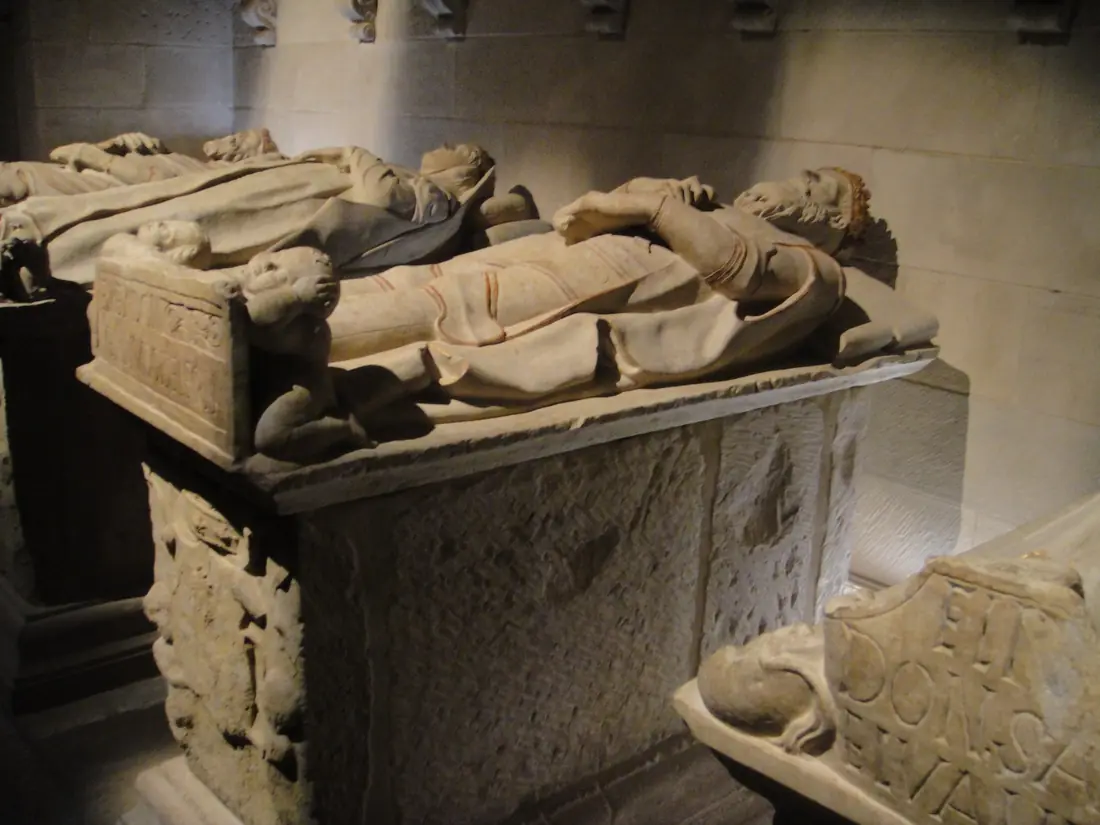
History records that Bermudo fell in the melee, his helmet cracked and his sword slipping from his grip. A chronicler named Pelayo writes, “The king fell as a leaf in the wind, and the kingdom mourned the loss of its own shadow.” The exact moment is almost cinematic: a stray arrow pierces his breastplate, and he collapses onto the blood‑stained earth, his crown rolling a few paces away, catching the light before being trampled.

What is striking, beyond the tragedy, is that the battle lasted barely two hours, yet it reshaped the Iberian political map. In the aftermath, Alfonso VI claims the throne of León, uniting the two realms under his rule—a union that will later pave the way for the Reconquista’s greatest advances. Moreover, the death of Bermudo ends the direct male line of the Leonese dynasty; his sister Sancha, a widowed countess, becomes a pawn in the marriage negotiations that cement the new order.

King Bermudo III Falls in Battle, Shifting Iberian Power — León, Spain
Image: Lancastermerrin88 · CC BY-SA 4.0

A lesser‑known fact surfaces in the royal archives: the rain that day was the heaviest in a decade, and the swollen river Esla flooded the battlefield, washing away a cache of 30,000 gold maravedís that Alfonso had intended as a war fund. The loss forced him to levy a tax on the newly acquired Leónese towns, a burden that sparked the first recorded peasant revolt in the region. Another curiosity: the very helmet Bermudo wore was later melted down and recast into a ceremonial chalice for the cathedral of Santiago de Compostela, a silent testament to how quickly symbols of power can be repurposed.

The battlefield, now a soggy plain, bears no monuments to the clash, yet the echo of that September morning lingers in the stone arches of León’s cathedral, where a faint inscription—"Bermudo, son of Sancho—" was later chiseled over a century after his death. It serves as a reminder that the grand narratives of kings are often built on the rain‑slicked boots of ordinary soldiers, and that the fate of a kingdom can hinge on a single, ill‑timed arrow.

In the quiet that follows the bloodshed, a lone shepherd passes the site weeks later, pausing to stare at the discarded crown, now half‑buried in mud. He mutters, "Even kings get lost in the mud," before moving on, unaware that his offhand remark will be the line quoted by future chroniclers when they try to capture the absurdity of power’s fleeting grip.

Source: en.wikipedia.org/wiki/Bermudo III of León

War & conflict

Saxon Triumph at Lenzen Halts Slavic Advance

Lenzen, Brandenburg, Germany

Saxon Triumph at Lenzen Halts Slavic Advance — Lenzen, Brandenburg, Germany
Image: Anonymous plate · Public domain

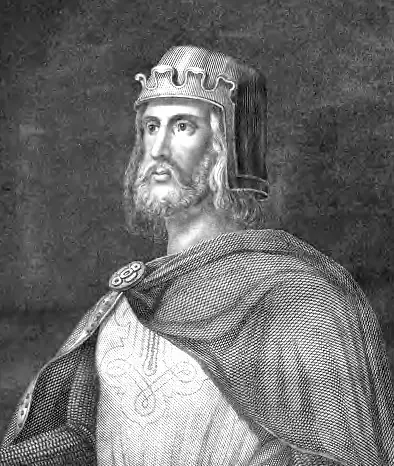
A thin line of mist clings to the Havel as the Saxon warband of 2,000 men shuffles toward Lenzen, their shields glinting like cold coins in the early September light. The river, only 30 meters wide at this bend, has already swallowed three of their scouts, their bodies disappearing beneath a current that runs at 4 km/h. The Slavic confederation, a motley force of perhaps 1,500 warriors, watches from the opposite bank, their war cries muffled by the reeds that have grown 2 meters tall over the winter.

The Saxons, led by Duke Henry the Fowler, have spent the past 12 months consolidating a network of wooden forts spaced roughly 10 kilometers apart—a logistical feat that required 150,000 board feet of timber, each felled by hand. Their cavalry, 300 strong, is equipped with iron-banded horses whose hooves have been shod with nails forged in a single furnace over 30 days. The Slavs, under the chieftain Mistiwoj, rely on rivercraft: 20 dugout canoes, each capable of carrying 12 men, that can cross the Havel in under five minutes.

At 0900, the Saxon infantry forms a shield wall 25 meters wide, the front row tightening their grips on the iron rivets that bind the wooden planks. The Slavic archers, perched on the bank, release a volley of 400 arrows, each tipped with a poison derived from the belladonna that grows in the nearby woods. The Saxons’ front line absorbs the barrage; only 12 men are felled, a casualty rate of 0.6%, a figure that would make any modern commander smile despite the blood.

The battle pivots when a Saxon scout, 23 years old, spots a shallow ford just 200 meters downstream. He signals with a horn that sounds for 3 seconds, a tone that carries across the water and into the ears of the Slavic commander. The Saxons rush the ford, their 500 foot soldiers splashing through water no deeper than 0.5 meters, while the Slavs scramble to reposition. In the chaos, a single Slavic warhammer—measuring 1.2 meters in length—splinters against a Saxon shield, sending a spray of wood shavings into the air, a fleeting reminder of how fragile the tools of war can be.

By noon, the Saxons have secured the far bank. Their casualties stand at 68 killed and 140 wounded, roughly 9% of their force, while the Slavs have lost an estimated 300 men, a loss of 20% of their fighting strength. The disparity is stark: for every Saxon soldier who fell, the Slavs lost nearly four. The battlefield, now littered with 1,200 broken spears and 85 discarded helmets, smells of iron and river mud, a scent that would linger in the memory of any survivor.

In the aftermath, Henry orders the construction of a wooden palisade stretching 150 meters along the riverbank, a fortification that will cost 45,000 marks—enough to fund a small town for a year. The Slavic survivors retreat to their villages, carrying with them a grim tally: 12 of their children, aged between 5 and 12, were lost in the fighting, a demographic detail that would affect the tribe’s labor force for the next decade. The battle, while a tactical Saxon victory, also cements a pattern: the Saxons’ methodical use of numbers—troops, timber, time—against the Slavs’ reliance on mobility and local knowledge.

The final image is a lone Slavic drum, 0.7 meters in diameter, left on the riverbank, its skin torn by the floodwaters. It drifts downstream, echoing a hollow beat that fades into the evening mist, a reminder that even victorious armies leave behind the remnants of their opponents’ culture, silently rolling toward an uncertain future.

Source: en.wikipedia.org/wiki/Battle of Lenzen

Use the arrow keys to move between days

Browse the full archive →