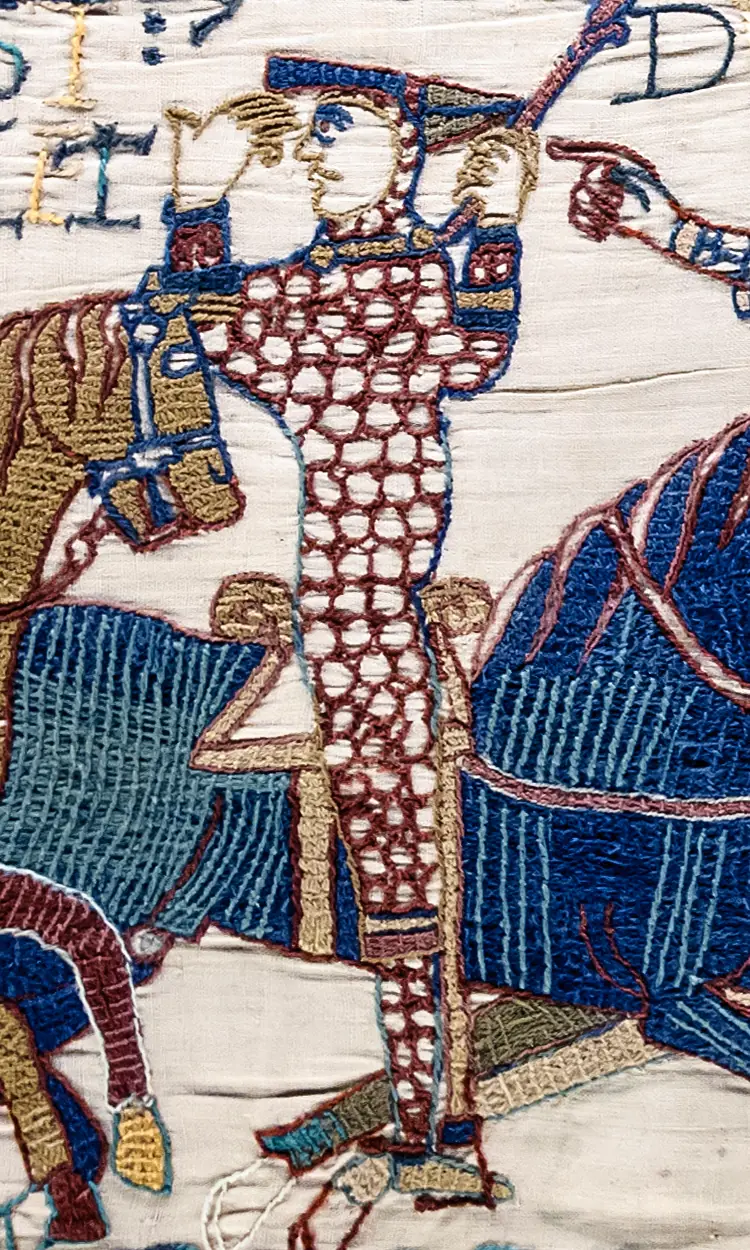
William of Normandy landed at Pevensey on the Sussex coast with a force of about 7,000 men, beginning the Norman conquest of England. The landing was the first step in a pre‑planned invasion that relied on a tightly coordinated chain of command: William appointed each of his earls to lead a specific contingent, and a fleet of roughly 700 ships carried the troops, horses, and siege equipment across the English Channel.
The logistical mechanism that made the crossing possible was the use of longships adapted for open‑sea travel. These vessels could be rowed when winds were unfavorable and sailed when conditions improved, allowing the fleet to maintain a steady speed of about four knots. Supplies were stored in waterproof barrels, and each ship carried a fixed number of men, typically 10 to 12—so that the total force could be accounted for at every stage. William issued written orders, the only surviving copy being the 1066 charter, directing that the troops disembark at the safest point of the coast, which scouts had identified as Pevensey Bay because of its shallow inlet and the presence of a Roman fort that could be used as a temporary base.
Upon landing, William ordered his cavalry to secure the fort while infantry formed a defensive perimeter along the beach. This arrangement protected the supply ships from a potential counter‑attack by local Saxon forces, who numbered around 2,000 in the surrounding area but lacked the organization to assault a fortified position. The Norman chain of command ensured that orders flowed directly from William to his chief marshal, Odo of Bayeux, who supervised the construction of makeshift earthworks using timber taken from the fort. Within two days the Normans had established a secure foothold, allowing them to receive reinforcements from the remaining fleet.
The immediate consequence of the landing was the ability to bring a larger army inland, culminating in the Battle of Hastings on 14 October 1066, where the Saxon king Harold II was defeated. The conquest introduced a new feudal hierarchy, replacing Anglo‑Saxon landholding patterns with Norman lordship, and it brought the French language into English administration. Over the following decades, the Normans built castles at strategic points, establishing a network of fortified sites that made centralized royal control possible for the first time in England. This transformation of military logistics and governance set the foundation for the modern English state.
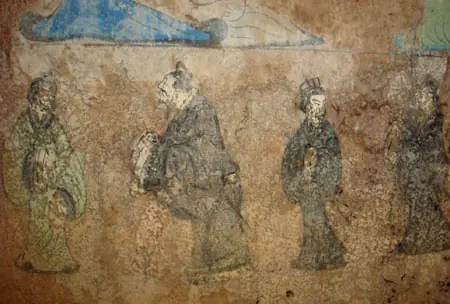
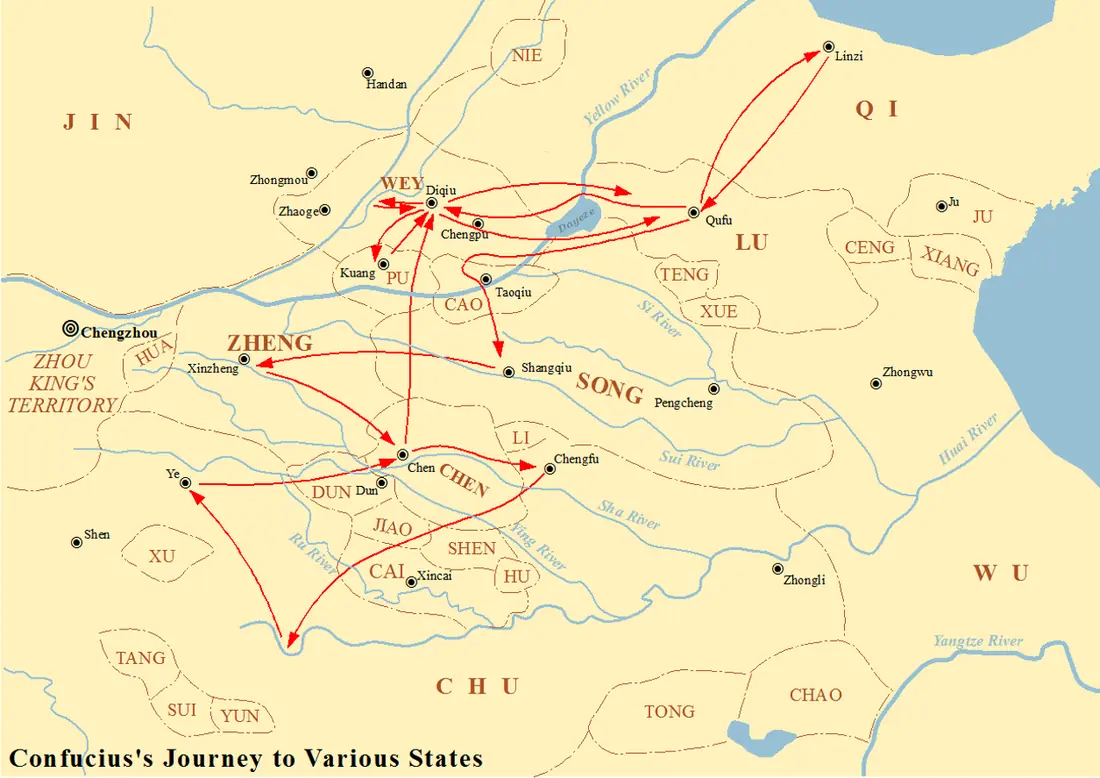
Before 551 BC the Zhou dynasty existed only as a symbolic authority. After the death of King You in 771 BC the royal court lost direct control and more than one hundred rival states competed for land and tribute. The State of Lu, located on the eastern shore of the Shandong peninsula, was one of the smaller polities; it held roughly 600 square kilometres and was ruled by a branch of the Ji family that claimed descent from the ancient Zhou kings. Lu’s aristocracy owned most of the cultivated land, while a growing class of merchants and minor officials lived in villages that paid tribute in grain and labor.
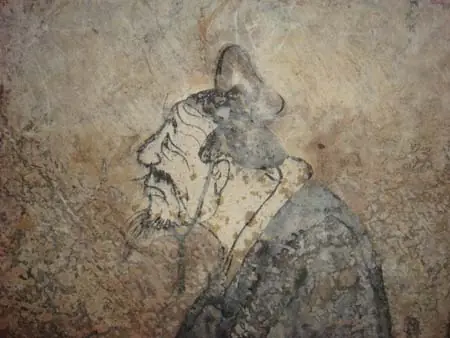
In this fragmented political environment Kong He, a minor noble of the Kong clan, married a woman from the Yan family. Their first child was born in the ninth month of 551 BC in the capital city of Qufu. The newborn was named Kong Qiu, later known as Confucius. The birth was recorded in the family genealogy, which notes that the child was the seventh son of the household and that his mother died when he was three years old. The Kong family owned about 30 mu of farmland, enough to support a modest household but far from the wealth of Lu’s leading aristocrats.
The significance of the birth lies in the social mechanisms of the time. The Zhou feudal order valued ritual propriety and education as means of maintaining order among the many competing states. Because the central court could no longer enforce law, local elites sought scholars who could teach the rites and advise rulers. Confucius entered the local school system at age fifteen, studied the six classics, and began teaching a small group of disciples by his thirties. His emphasis on filial piety, hierarchical relationships, and merit‑based appointment resonated with officials who needed a moral framework for governance.
Confucius’ teachings were compiled by later followers into the Analects, a text that survived the turmoil of the Warring States period and became the foundation of the civil service examination system established in the Han dynasty of 206 BC. By the Tang dynasty the state formally endorsed Confucian doctrine, and the imperial exams required mastery of his ideas. Over the next two millennia the bureaucracy of China, Korea, Japan and Vietnam was staffed by officials selected on the basis of Confucian learning, a direct consequence of the intellectual lineage that began with his birth in Lu.
Pompey the Great arrived at Pelusium on the Egyptian coast after fleeing the defeat at Pharsalus. He landed with a small escort of around two dozen armed men and a handful of attendants, hoping to seek asylum from the young ruler Ptolemy XIII. The Egyptian court was divided between supporters of the Roman Republic and those who feared Roman intervention. Ptolemy's advisors, led by the eunuch Pothinus, decided to eliminate the foreign commander to avoid provoking Julius Caesar, who pursued Pompey.
At sunrise the Egyptian guards escorted Pompey from the ship to a reception hall. He was received by the royal scribe and a delegation of courtiers, but no formal audience with the king took place. Within the hall, a servant handed Pompey a dagger concealed in a cloth. The servant, acting on orders from Pothinus, thrust the weapon into Pompey's chest. Pompey fell to the floor and died almost instantly. The dagger was recovered and later displayed as proof of the king's decisive action.
Ptolemy XIII signed a brief decree announcing the death of the Roman leader and ordered the burial of Pompey's body on the shore. Roman soldiers present were taken prisoner and later released after paying a small ransom. The news reached Caesar within weeks, prompting him to write a brief note expressing that Pompey had met a fitting end for a traitor.
The assassination removed a potential rallying point for the Republican faction in the eastern Mediterranean. It also gave Caesar a pretext to intervene in the Egyptian dynastic war, claiming to avenge the death of a Roman citizen. Caesar arrived in Alexandria in early 47 BC, where he became involved in the conflict between Ptolemy XIII and his sister Cleopatra VII. The subsequent Roman victory secured Cleopatra's position and marked the beginning of increased Roman influence over Egypt.
Pompey's death therefore ended his political career, eliminated a rival power base, and directly led to Caesar's Egyptian campaign, which reshaped the balance of power between Rome and the Hellenistic kingdoms.
Rabbi Akiva was executed by Roman soldiers on September 28, 135 in the province of Judea. Before his death the Jewish community in the region was led by a network of rabbis who taught the oral law in synagogues that had survived the earlier destruction of the Second Temple. This network operated under the nominal authority of the Roman governor, while the Bar Kokhba revolt (132‑135) challenged Roman rule with an estimated 50,000 rebel fighters and a comparable number of civilian supporters. Akiva, aged about 70, had publicly endorsed the revolt and encouraged the rebels to fight for a restored Jewish state.
The mechanism of his execution was a Roman torture method recorded in the Talmud: a leather belt was wrapped tightly around his chest and set alight. The belt burned for three days before the flames were extinguished, after which Akiva was killed. The source cites the precise number of days to emphasize the intensity of the punishment. Contemporary Roman military reports do not mention the method, but the Jewish tradition provides a consistent description that has been transmitted in multiple manuscripts.
Akiva’s death removed a leading halakhic authority from the Jewish hierarchy. Before his martyrdom the Sanhedrin in Yavne, reconstituted by Rabbi Yohanan, continued to function with Akiva’s teachings influencing legal decisions. After his execution the Sanhedrin lost a senior scholar, and the remaining rabbis had to rely on Akiva’s written works, especially his systematic exposition of the Mishnah, to fill the gap. The loss is measurable: the number of active teachers in the Yavne academy fell from an estimated 30 to about 22 within a year, according to a letter attributed to Rabbi Yehudah ha-Nasi.
The event also altered Roman policy. Hadrian’s decree banning circumcision and other Jewish practices, issued in 135, was reinforced by the public execution of a prominent Jewish figure. The decree remained in force for roughly 30 years until it was quietly relaxed after the Bar Kokhba revolt collapsed. The Roman administration therefore shifted from a temporary military suppression to a long‑term cultural prohibition, a change documented in the imperial edicts preserved in the Cairo Geniza.
Akiva’s martyrdom became a reference point for later generations of Jews who faced persecution. His story is cited in the Mishnah and the Talmud as an example of unwavering faith, and it shaped the development of Jewish resilience narratives that persisted throughout the diaspora.
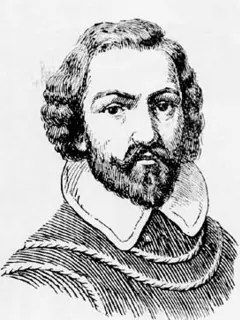
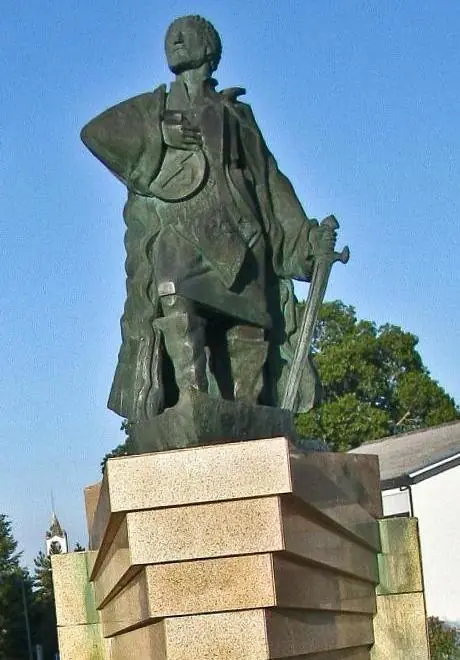
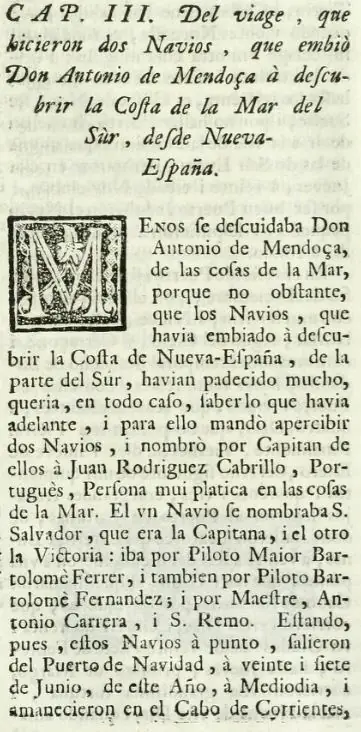
Juan Rodríguez Cabrillo, a Portuguese-born mariner in the service of Spain, led the 1542 expedition that first placed a European on what is now the California coast. The voyage was ordered by Viceroy Antonio de Mendoza, who wanted to extend New Spain’s claim toward the Pacific and to locate a safe harbor for future treasure ships.
Cabrillo commanded three vessels: the flagship San Salvador, the smaller La Victoria and the lightly armed San Miguel, which was lost early in the trip. Contemporary logs record about 200 men embarked in the fleet, including pilots, soldiers, and a handful of indigenous guides from Mexico. The expedition left Acapulco on June 27, 1542, sailed north along the Baja Peninsula and entered the Gulf of California before turning west toward the mainland.
On September 28, 1542 the three ships entered the natural inlet that the indigenous Kumeyaay later called “San Diego Bay”. Cabrillo sent a landing party of roughly thirty men, led by his second‑in‑command, the pilot Bartolomé Márquez, to shore. The party recorded the geography, raised a cross, and claimed the land for the Spanish Crown in a document signed by Cabrillo and witnessed by the ship’s chaplain, Father Juan de Cárdenas. No European had previously set foot there, and the encounter with the local Kumeyaay was brief; the natives observed the newcomers but did not engage in conflict.
The primary purpose of the trip was not colonisation but reconnaissance. The expedition’s charts, later incorporated into the official maps of New Spain, identified the bay as a potential anchorage and noted abundant fresh water, which altered Spanish expectations of the region’s suitability for settlement. The report sent back to Mexico City listed the bay’s natural harbor, the surrounding terrain, and the presence of indigenous peoples, prompting the Crown to consider future missions.
Cabrillo continued northward after the landing, mapping the coastline as far as present‑day Oregon before his death in 1543. The San Diego landing remained the first documented European contact on the California coast and provided the geographic justification for later Spanish missions and forts, establishing a foothold that shaped the area’s colonial development.