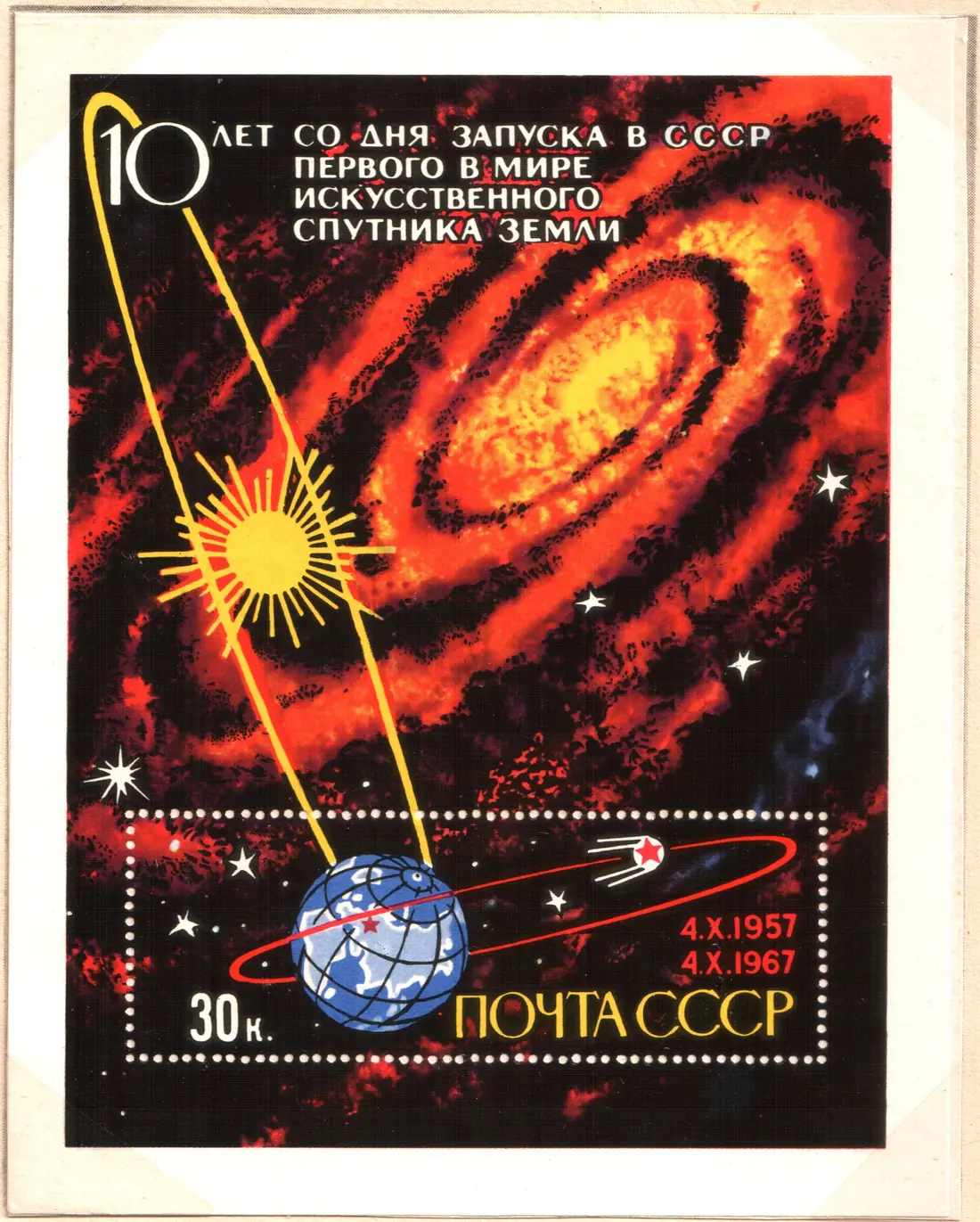
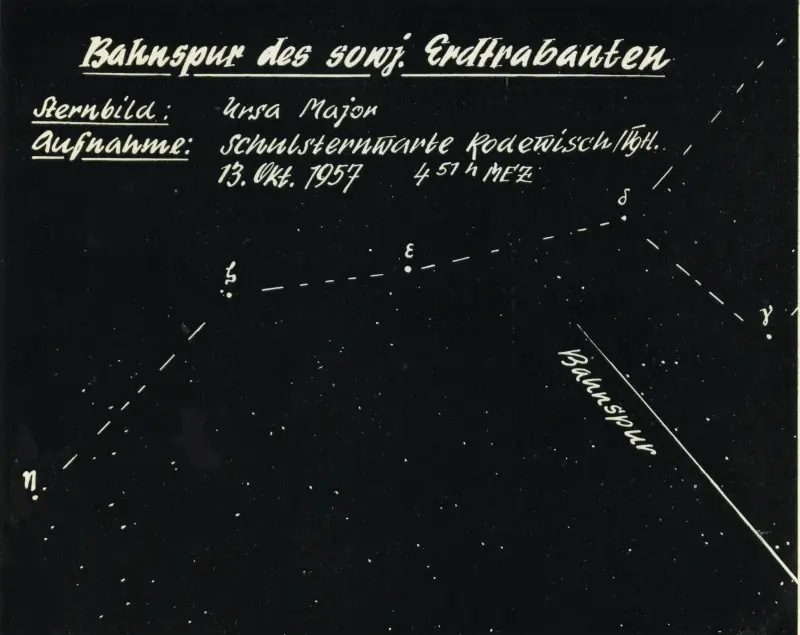
The Soviet Union placed an eight‑kilogram metal sphere into orbit, proving that a human‑made object could travel around Earth. The project, called Sputnik, was directed by Chief Designer Sergei Korolev, who oversaw the development of the R‑7 rocket that would launch the satellite. On 4 October 1957 at 19:28 UTC the R‑7 lifted off from Site 1/5 at Baikonur Cosmodrome in the Kazakh SSR. The rocket’s four strap‑on boosters burned for 118 seconds before separating, after which the central core continued for another 260 seconds before shutting down at an altitude of about 576 kilometers.
Sputnik 1 itself was a polished aluminium sphere 58 centimetres in diameter, equipped with a 20‑watt radio transmitter that emitted a beeping signal every 108.2 seconds. The beacon was powered by internal batteries designed to last for 21 days, but the satellite remained functional for three months before its batteries depleted. The simple design, no scientific instruments, only a radio beacon, served to demonstrate the reliability of the launch vehicle and the ability to place a payload in a stable low‑Earth orbit.
The launch occurred after a period of intense rivalry between the United States and the Soviet Union, known as the Cold War, during which each side sought technological superiority. Prior to Sputnik, the United States had led in rocketry with the Vanguard project, but those efforts had not yet produced an orbital vehicle. The Soviet decision to prioritize a straightforward beacon over a more complex scientific satellite reflected a strategic choice to achieve a clear, demonstrable first.
The immediate reaction was global. Radio operators in Helsinki, Helsinki, and other stations reported the beeping signal within minutes, confirming the satellite’s orbit. The United States government convened an emergency meeting of the National Advisory Committee for Aeronautics, later establishing the Advanced Research Projects Agency (ARPA) to coordinate future research. Within weeks, the United States accelerated its own satellite program, leading to the launch of Explorer 1 on 1 February 1958.
Sputnik’s success altered the geopolitical balance of the 1950s. It forced the United States to increase funding for science education, resulting in the National Defense Education Act of 1958, and it spurred the creation of NASA later that year. The satellite also demonstrated that the Soviet Union possessed the capability to deliver nuclear warheads via intercontinental ballistic missiles, reshaping strategic planning on both sides. The event thus marked the beginning of the Space Age and set a precedent for subsequent orbital missions.
In the early 1850s the Ottoman Empire controlled the Black Sea coast while the Russian Empire sought access to warm water ports and influence over the declining Ottoman territories. The 1828 Treaty of Adrianople gave Russia the right to protect Orthodox Christians in Ottoman lands, and successive Russian wars in the Caucasus expanded its border to the Danube Delta. By 1853 the Ottoman navy possessed about 90 warships, whereas Russia fielded roughly 150 ships and a standing army of 300,000 men in the region. Tensions rose when Russia occupied the Ottoman provinces of Moldavia and Wallachia in July, claiming to defend the Orthodox population there.
The Ottoman government, led by Grand Vizier Mustafa Reşid Pasha, responded by demanding Russian withdrawal. When Russia refused, the Ottoman council of war voted to declare war on 4 October 1853. The declaration was transmitted to the Russian ambassador in Istanbul, who formally informed his government the same day. This act marked the official start of the Crimean War, a conflict that quickly involved Britain and France, who feared unchecked Russian expansion.
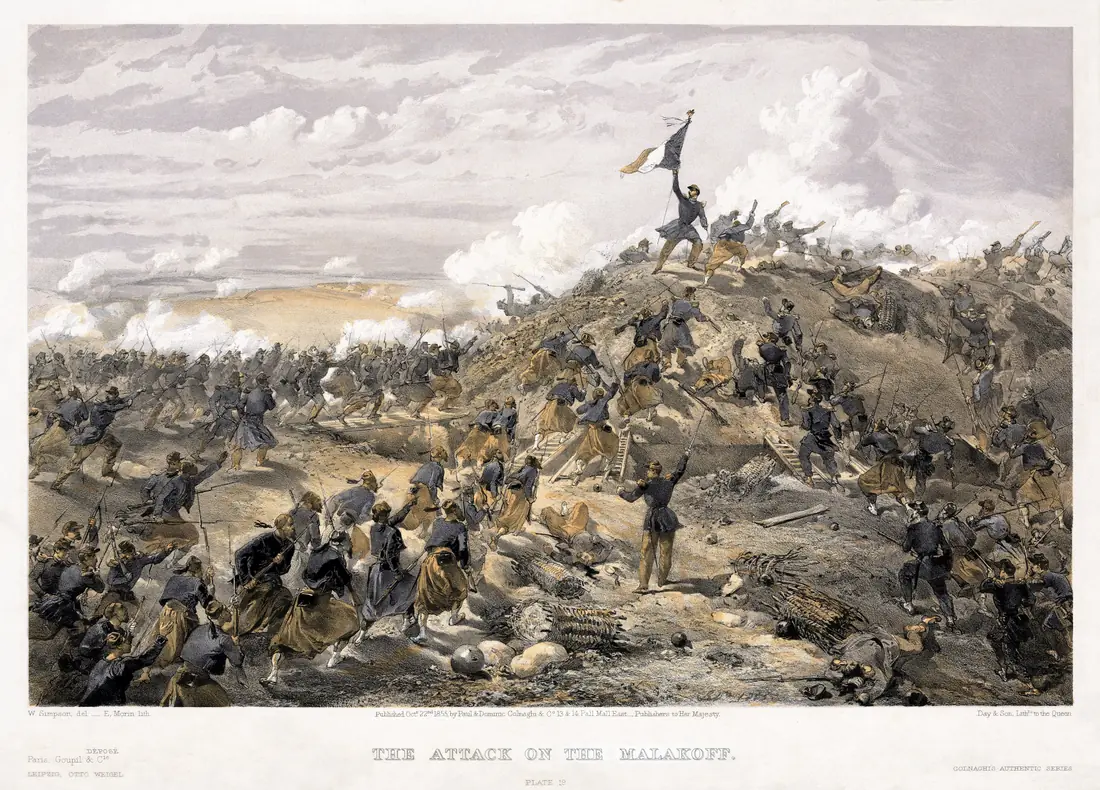
Russia’s initial plan was to seize the strategic fortress of Sevastopol on the Crimean peninsula and use it as a naval base to dominate the Black Sea. Ottoman forces, however, were unable to match Russian numbers and retreated to the fortified city of Istanbul. The British and French governments, under Prime Minister Lord Aberdeen and Emperor Napoleon III, authorized naval squadrons to support the Ottomans in the Mediterranean. By March 1854 they landed troops in the Crimean port of Balaklava, beginning a joint siege of Sevastopol that would last until September 1855.
Casualties rose sharply: Russian military deaths reached an estimated 400,000 by war’s end, while Ottoman losses numbered about 250,000, and British and French forces suffered around 100,000 combined. Disease, especially cholera, claimed more lives than combat. The war exhausted the Ottoman treasury, forcing a loan of 80 million francs from French banks. Russian finances were also strained, contributing to domestic unrest that later sparked reforms under Tsar Alexander II.
The conflict concluded with the 1856 Treaty of Paris, which demilitarized the Black Sea and restored the Ottoman Empire’s territorial integrity. The war demonstrated the limits of Ottoman military power, accelerated the decline of the Concert of Europe, and prompted modernizations in military medicine and logistics that influenced later conflicts.
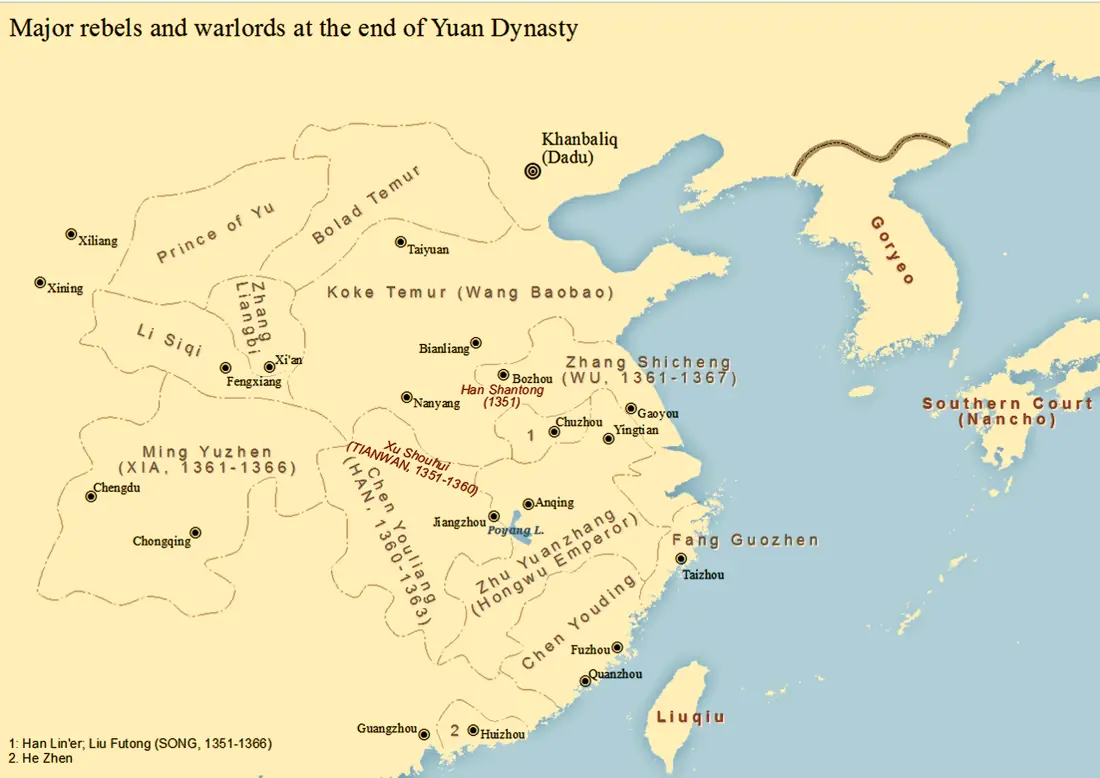
Zhu Yuanzhang’s victory at Lake Poyang was made possible by a logistical decision taken weeks before the clash: he ordered the construction of a floating bridge to move his supply wagons across the lake’s shallow northern shoals. This preparation allowed his 200,000 troops to receive food and ammunition without exposing the supply line to the Yuan navy’s raids, a factor that most popular accounts omit.
The battle itself pitted Zhu’s rebel forces against the Yuan commander Chen Youliang, who commanded roughly 300,000 men and a fleet of 1,000 ships. Zhu arranged his infantry in three concentric rings on the western bank while his navy, consisting of 800 smaller vessels, positioned itself to block Chen’s larger warships from crossing the central channel. The rebel infantry’s outer ring held fire arrows that disrupted the Yuan advance, while the inner ring launched a coordinated charge once the Yuan front line faltered.
Casualty figures recorded in the Ming Shilu indicate that Chen’s forces lost about 120,000 men, including 200 ships sunk, whereas Zhu’s side suffered roughly 30,000 deaths, most of which occurred during the initial naval skirmish. The decisive moment occurred when Zhu ordered the floating bridge to be lowered, flooding the northern shoals and trapping the Yuan fleet in a narrow channel where Zhu’s fire ships could strike effectively. Contemporary reports note that the fire ships set ablaze three Yuan command vessels, causing panic and a rapid collapse of morale.
The outcome reshaped the power map of southern China. Chen Youliang was killed in the melee, and his surviving commanders surrendered within weeks, leaving Zhu in control of the Jiangxi and Hunan provinces. This territorial gain provided the tax base and manpower that later financed the establishment of the Ming dynasty in 1368. Historians also note that the victory demonstrated Zhu’s ability to integrate engineering, naval tactics, and mass infantry coordination, a combination that would become a hallmark of his later campaigns.
In the months after Lake Poyang, Zhu issued edicts that reorganized the rebel armies into a formal standing force, standardizing weapons and introducing a chain of command that reported directly to his headquarters in Nanjing. These reforms solidified his authority and set the administrative foundations for the new dynasty.
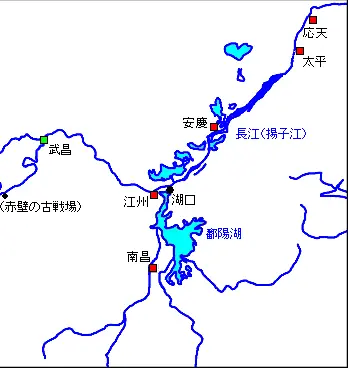
The Battle of Lake Poyang in October 1363 was the largest naval clash of its era, involving tens of thousands of combatants on the waters of China's largest freshwater lake. The conflict pitted the forces of Zhu Yuanzhang, a former monk who led a rebel army, against the fleet of Chen Youliang, who controlled the dominant southern power of the Red Turban rebels. Zhu commanded about 200,000 men overall, but only around 100,000 were deployed on ships; Chen's fleet numbered roughly 200,000 troops, with an estimated 1,200 vessels ranging from small junks to massive tower ships. Both sides used fire ships, but Zhu's commander, Zhang Xing, ordered a coordinated attack that linked smaller boats to larger ones, creating a floating wall that protected his crews while they boarded enemy ships. Chen's flagship, a massive tower ship called the "Heavenly Dragon, " was set ablaze by a fire ship and sank, causing panic among his crews. The battle lasted over a month of intermittent fighting, but the decisive engagement occurred on October 4, when Zhu's forces broke through Chen's defensive line and captured the remaining enemy vessels. Casualties are uncertain, but contemporary records suggest that Chen lost at least 200,000 men, while Zhu's losses were far lower, estimated at 30,000 to 40,000. The victory gave Zhu control of the Yangtze River and the surrounding provinces, allowing him to collect taxes and recruit new soldiers. Within a year he captured Nanjing, declared it his capital, and began the process of unifying China under the Ming dynasty. The battle also demonstrated the effectiveness of combined fire ship tactics and the strategic importance of naval power in a region dominated by rivers. Formerly, the Red Turban rebels had fragmented control over southern China, but after the defeat they lost their naval capacity and could no longer challenge Zhu's advance. Over the next decade Zhu consolidated power, eliminated rival warlords, and in 1368 proclaimed the Ming dynasty, ending the Yuan dynasty's rule. The scale of the battle, the loss of life, and the shift in control of riverine trade routes affected millions of peasants, merchants, and soldiers, reshaping the political landscape of East Asia for centuries.
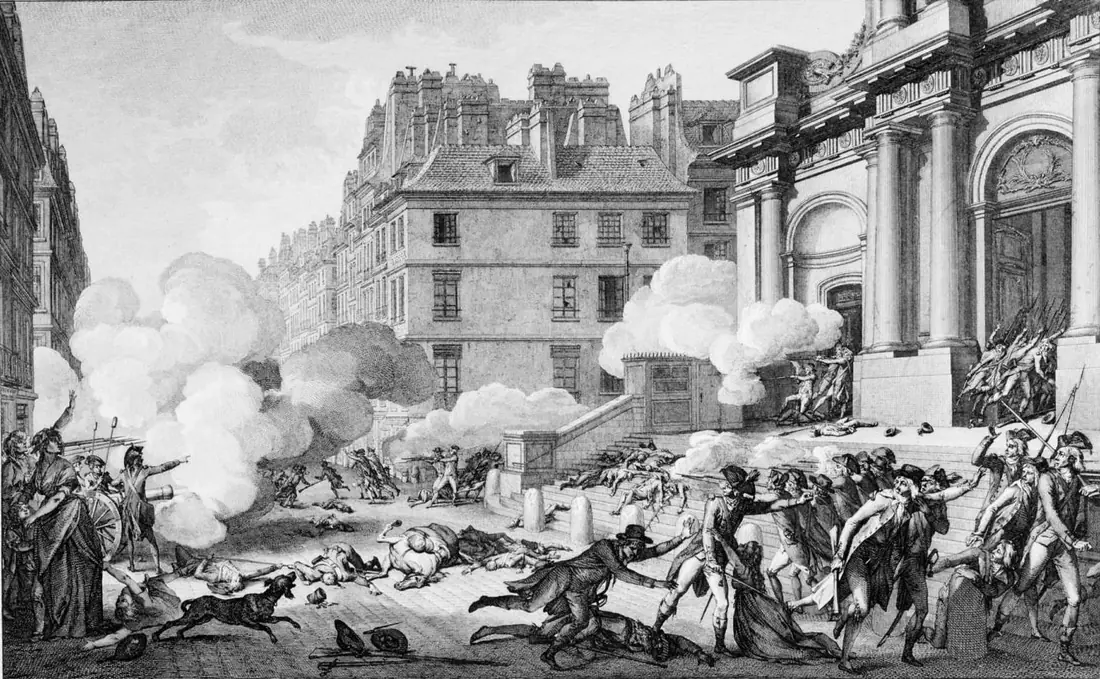
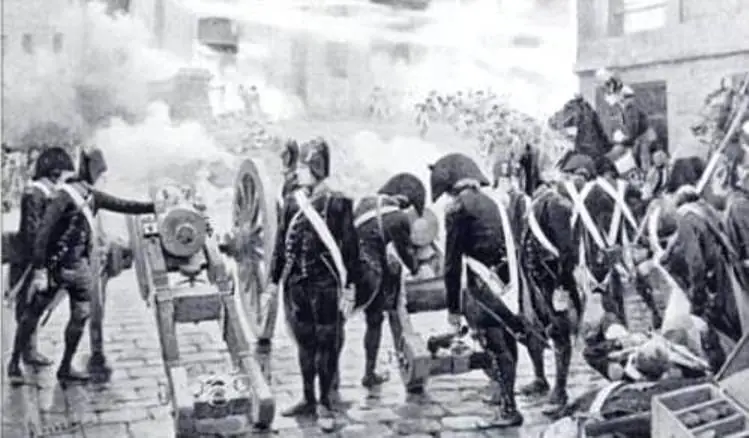
The National Convention ordered the 13th of Vendémiaire troops to disperse the armed crowd that had seized the Tuileries and the Hôtel de Ville. The crowd, composed of royalist veterans, former army officers and unemployed workers, numbered about 2,000 and carried muskets, pistols and a few cannons captured from the city arsenal. Their aim was to overturn the Thermidorian government and restore the monarchy after the failure of the earlier insurrection of 1793.
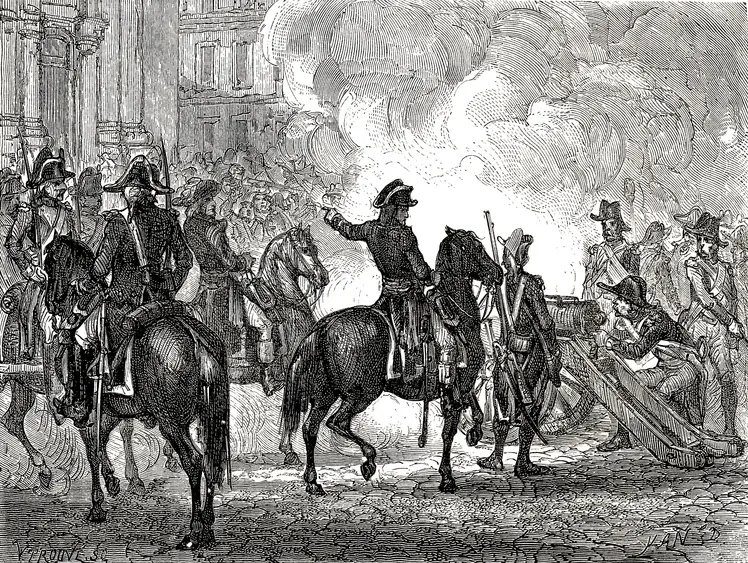
The Convention appointed General Napoleon Bonaparte, then a 26‑year‑old artillery commander, to command the forces defending the government. Bonaparte received an order dated 5 Vendémiaire Year IV (October 27, 1795) that instructed him to use “the most energetic measures” against the insurgents. He placed 30 cannons in the Place du Carrousel, arranged them in a battery, and ordered the crews to fire grapeshot at a range of 100 meters. The artillery fire began at 5 a.m. on 13 Vendémiaire and lasted fifteen minutes, killing an estimated 300 insurgents and wounding many more. Of the 2,000 who attacked, fewer than 100 escaped the immediate area.
Bonaparte’s decisive use of artillery demonstrated that disciplined firepower could suppress a mass uprising in an urban setting. The Convention recorded the casualty figures in the minutes of the session of 14 Vendémiaire, noting 300 dead and 400 wounded among the royalists, while government forces lost eight men. The success of the cannon battery earned Bonaparte the nickname “the saviour of the Republic” and led to his promotion to general of division on 19 Vendémiaire.
The suppression of the Vendémiaire uprising ended the last serious royalist threat to the French Republic until the coup of 1799. It also established a precedent for using artillery as a tool of internal security, a practice that later governments adopted during the July Revolutions of 1830 and 1848. By demonstrating that a well‑placed battery could break a popular insurrection, the event made the concept of “cannon in the streets” an ordinary option for state authorities, reshaping the balance between civilian protest and military response in modern Europe.