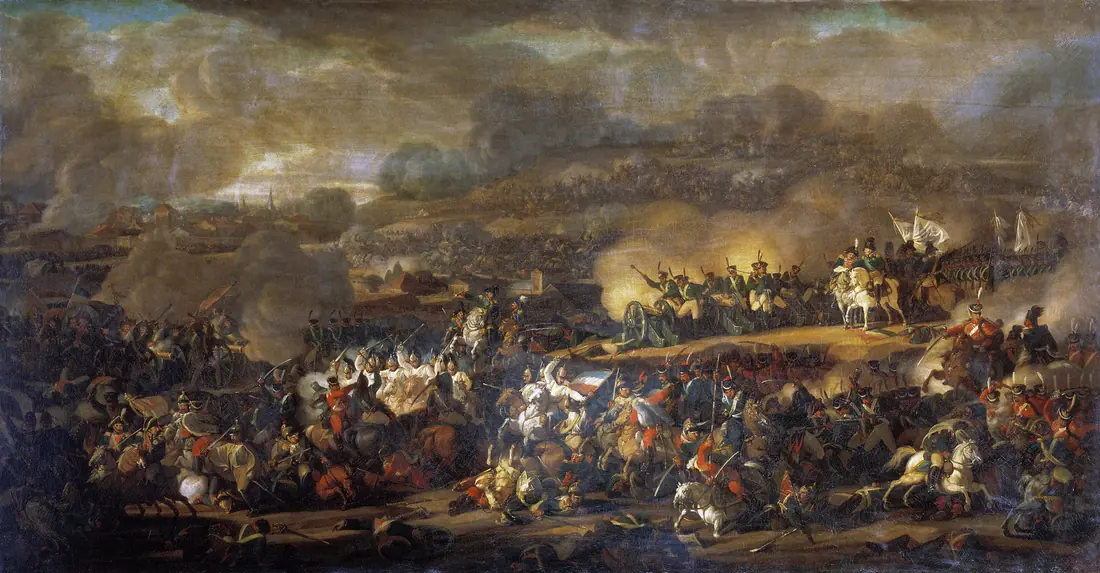
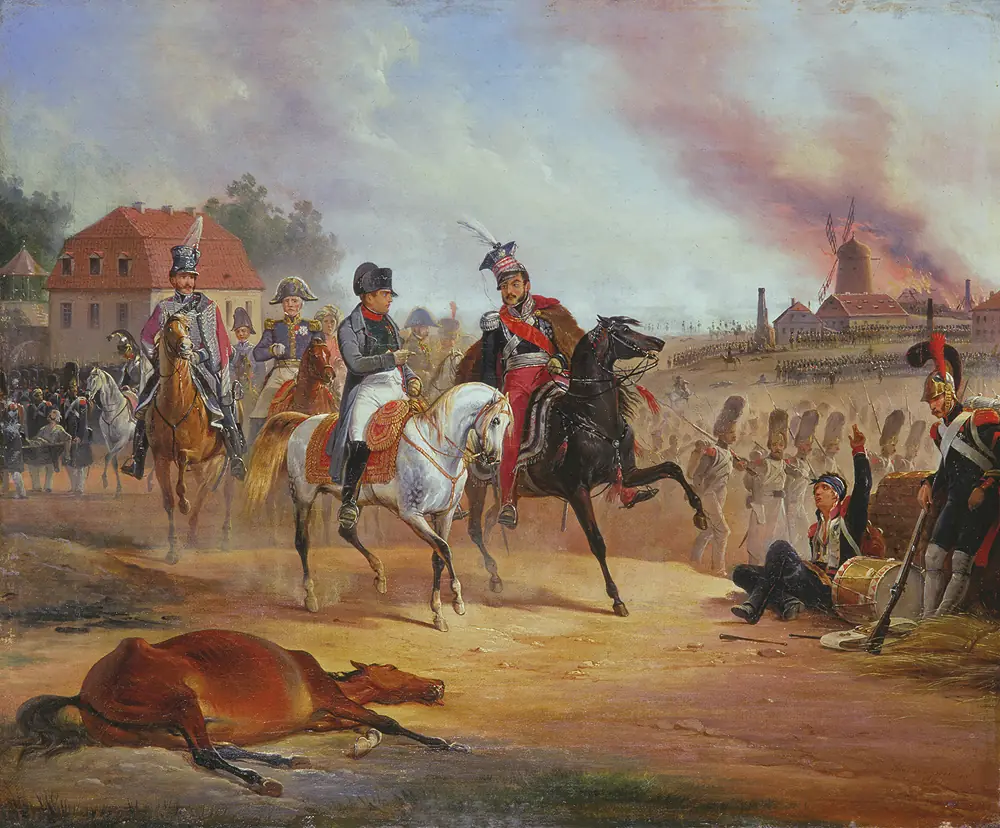
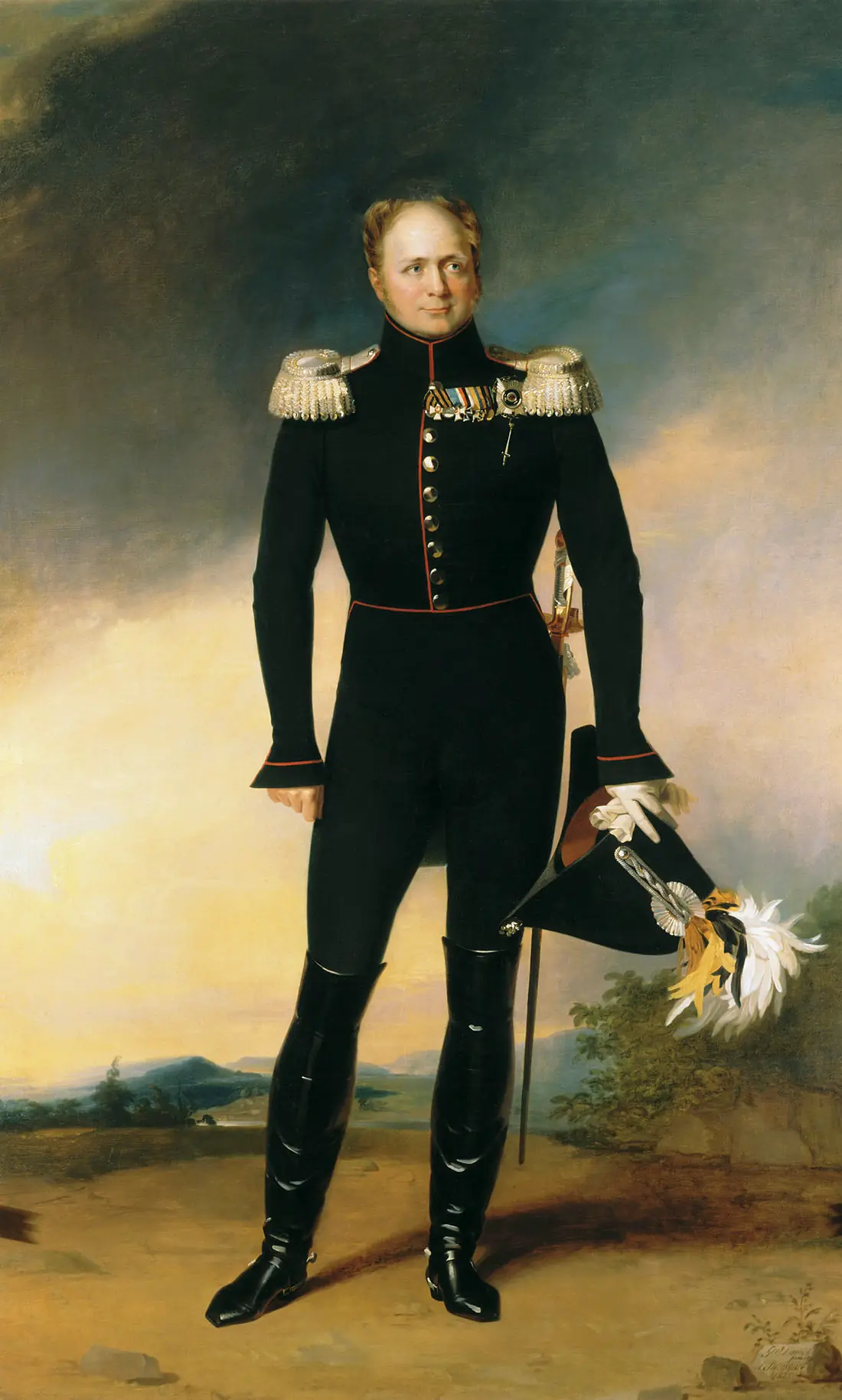
The Battle of Leipzig forced Napoleon’s army to retreat from Central Europe for the first time after years of expansion. The clash involved about 190,000 French troops under Napoleon and roughly 350,000 soldiers from Russia, Prussia, Austria and Sweden commanded by Tsar Alexander I, King Frederick William III and Emperor Francis I. The Coalition arranged a double‑envelopment: one force attacked from the north while another pressed from the south, cutting the French supply lines across the Elster River. Napoleon ordered a series of counter‑attacks to hold the high ground at Leipzig, but repeated assaults exhausted his infantry and cavalry, and the loss of the bridges at the city’s western edge sealed the French defeat.
Casualties were unprecedented for the era. French losses totaled about 38,000 killed or wounded and 30,000 captured, while Coalition casualties reached roughly 54,000. The battle lasted four days, from October 16 to 19, and concluded with the French withdrawal across the Rhine. The defeat shattered the myth of French invincibility and triggered a rapid collapse of French control in Germany. Within weeks, the armies of Prussia and Russia entered French‑occupied territories, and the German states that had previously allied with Napoleon switched to the Coalition.
The political fallout was immediate. The Holy Roman Empire, dissolved by Napoleon in 1806, was formally replaced by the German Confederation, a loose association of 39 states under Austrian leadership. The defeat also forced Napoleon to raise the so‑called “Army of the North” from depleted reserves, a move that left France vulnerable to the Allied invasion of 1814. For the Coalition, Leipzig demonstrated that coordinated multinational forces could defeat a larger, experienced army, encouraging further joint operations that culminated in the invasion of France itself.
In the longer term, the battle altered the balance of power in Europe. The Congress of Vienna, convened in 1814, built on the post‑Leipzig settlement to redraw borders and create a diplomatic framework that prevented major continental wars for nearly a century. The massive loss of life, over 90,000 combatants killed or wounded, also contributed to a growing awareness of the human cost of large‑scale warfare, influencing later military reforms and the development of more systematic medical care for soldiers. The Battle of Leipzig therefore stands as a turning point that reshaped European geopolitics and set precedents for coalition warfare.
The political maneuver that made Wu Zetian's accession possible was the removal of the Tang emperor Zhongzong in a palace coup orchestrated by her son Li Chongrun and the powerful chancellor Zhang Jianzhi. Their plot forced Zhongzong to abdicate in favor of his brother Ruizong, who was then compelled to grant Wu the title of supreme ruler. This behind‑the‑scenes power shift is rarely mentioned in popular accounts that focus only on Wu declaring herself emperor.
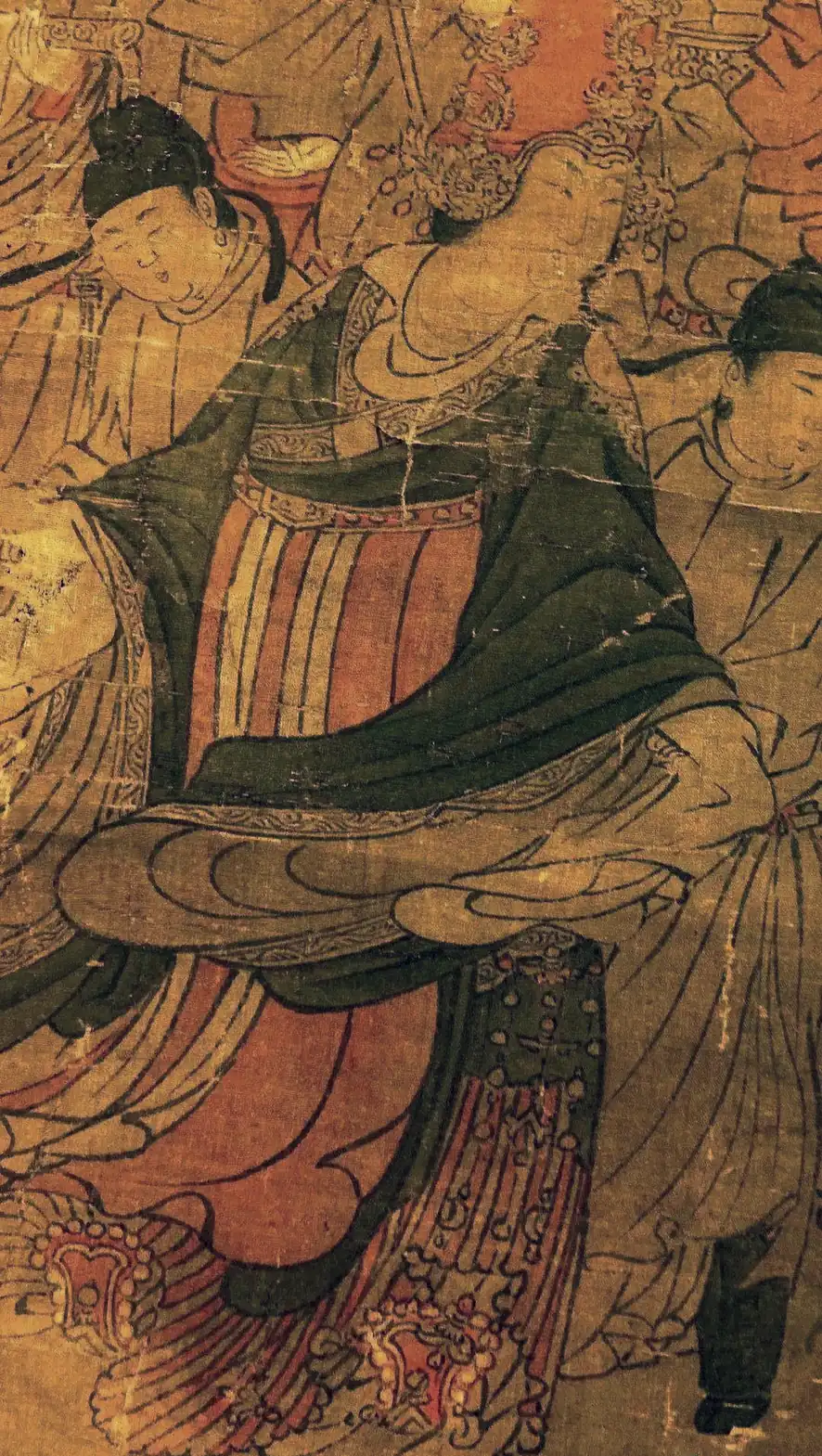
Wu Zetian had been a concubine of Emperor Taizong and later the wife of his successor Gaozong. After Gaozong's death in 683, she acted as regent for her sons, but her authority was challenged by court factions loyal to the traditional male line. By 690 she had eliminated rival princes, including the former emperor Zhongzong, who was exiled and later poisoned. The decisive legal instrument was the issuance of the "Zhou" dynasty edict on October 16, which renamed the empire and placed Wu at its head as the "Huangdi" of a new era.
The edict cited the Mandate of Heaven, arguing that the dynasty's decline justified a ruler who could restore order. It also reorganized the bureaucracy: the traditional three‑department system was expanded to include a secret police office directly under Wu's control, increasing the number of officials loyal to her from roughly 5,000 to over 7,000 within two years. These figures show how the administrative overhaul cemented her power base.
Wu's reign immediately altered the balance of power among regional military governors. The governor of the Shu region, Li Liu, who had commanded 120,000 troops, was forced to submit a tribute of 200,000 catties of grain, demonstrating the central government's new fiscal reach. The cost of maintaining the expanded secret police and court ceremonies is recorded as 2.5 million copper coins per year, a burden that strained the peasantry and led to a recorded increase in tax arrears from 12% to 27% between 690 and 695.
The most direct consequence of Wu's accession was the establishment of the only female‑ruled Chinese empire, which lasted until 705 when she was forced to abdicate in favor of her son Ruizong. Her rule set a precedent for later claims of imperial legitimacy based on moral authority rather than lineage alone, influencing subsequent dynastic succession debates.
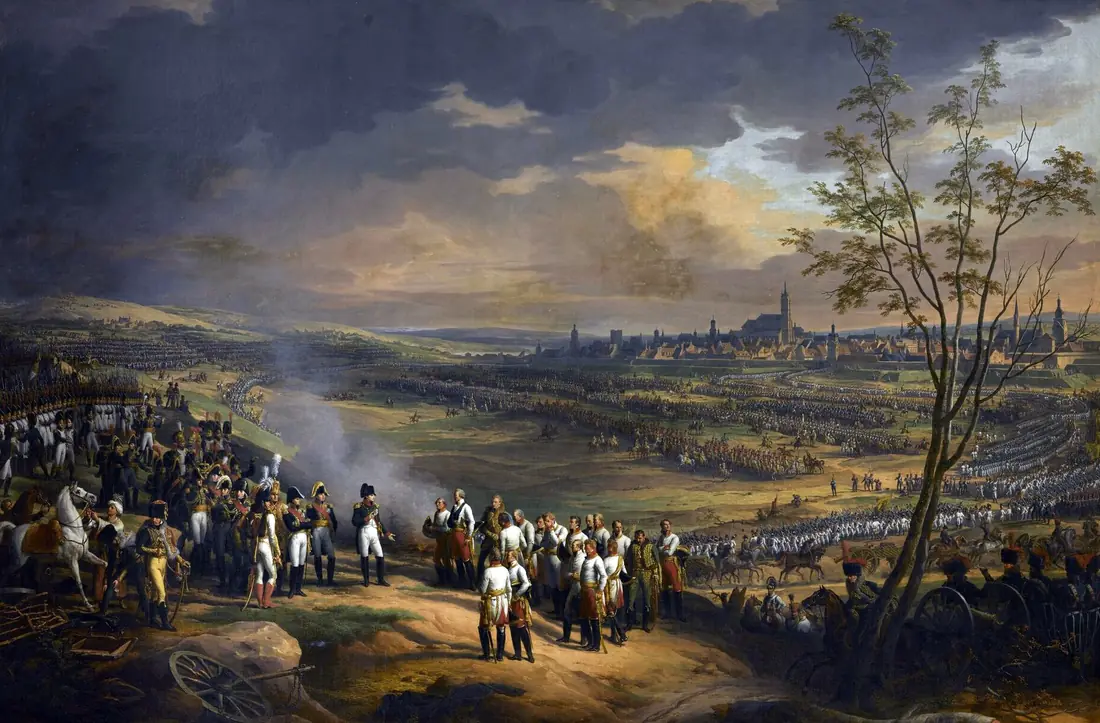
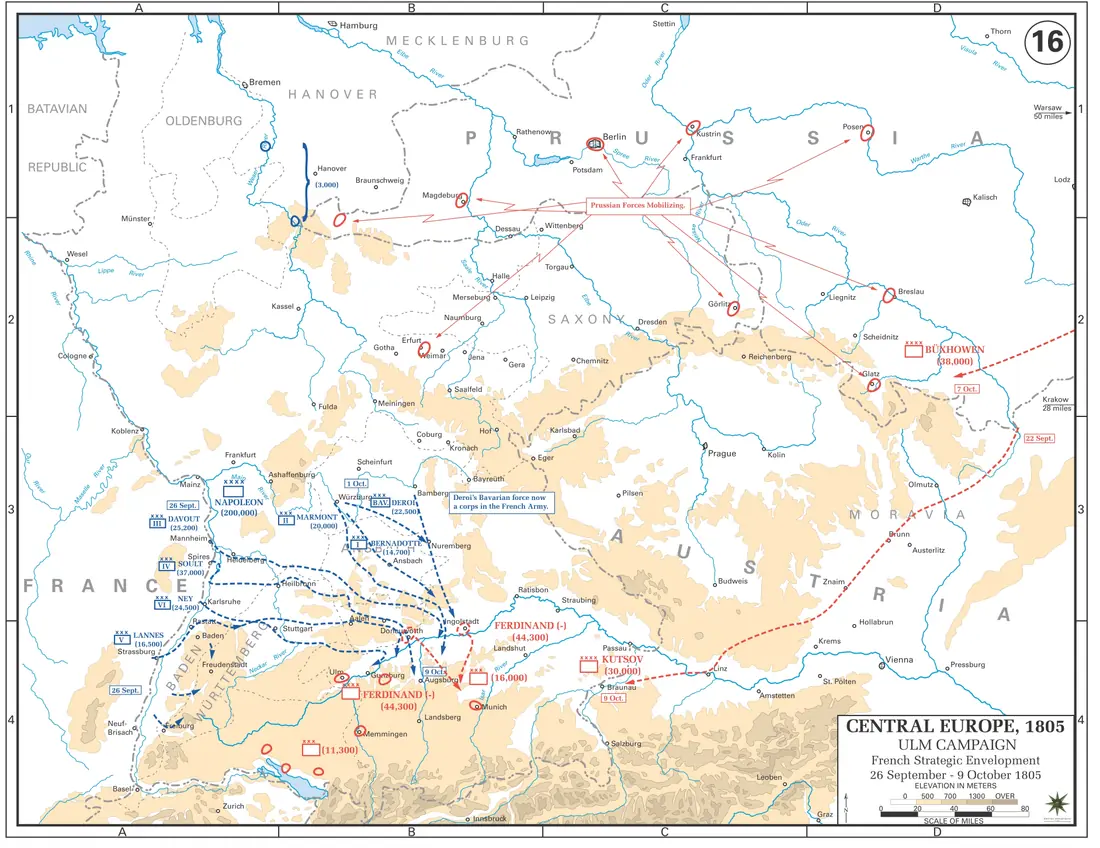
Napoleon Bonaparte, commander of the French Grande Armée, executed a rapid envelopment that forced the Austrian army under General Karl Mack von Leiberich to surrender at Ulm. Mack, born in 1752, commanded about 60,000 troops who were marching east to join Russian forces. Napoleon, age 36, directed his forces from the headquarters in Strasbourg and relied on Marshal Louis Alexandre Berthier, chief of staff, to coordinate movements.
Berthier organized three corps to advance on parallel routes: Marshal Joachim Murat led the cavalry of the III Corps, Marshal Jean Lannes commanded the IV Corps, and Marshal Jean-Baptiste Bessières headed the VI Corps. By 16 October the French columns had converged on the Danube, cutting the Austrian line of retreat. Murat’s cavalry captured the bridge at Günzburg, preventing Mack from crossing eastward. Lannes seized the road to Augsburg, while Bessières blocked the route to Ingolstadt. The coordinated blocking of all exits left the Austrian army surrounded without a fight.
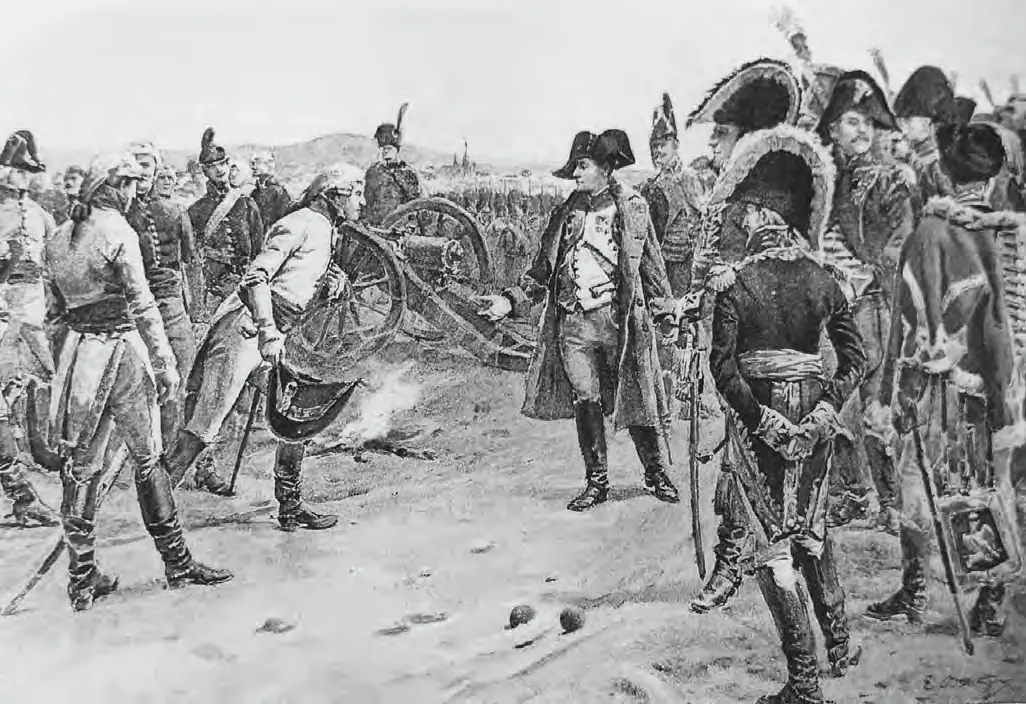
Mack decided to hold his position in Ulm rather than retreat, a decision recorded in his dispatches to Emperor Francis II. On 18 October he sent a request for terms, and the next day 20,000 Austrian soldiers, including 5,000 wounded, laid down arms. French casualties were minimal, with fewer than 500 reported killed or wounded. The surrender added 25,000 rifles, 300 artillery pieces, and significant supplies to the French inventory.
The capitulation cleared the way for Napoleon to march on Vienna. Within two weeks the French army reached the Austrian capital, forcing the Austrian and Russian monarchs into negotiations that culminated in the decisive Battle of Austerlitz on 2 December. The Ulm operation demonstrated the effectiveness of rapid maneuver, interior lines, and centralized command, principles that shaped French military doctrine for the remainder of the Napoleonic Wars.
Abd al‑Rahman III assumed the throne of Córdoba on 16 October 912 after the death of his half‑brother, Abd al‑Muhammad III, who had ruled for less than a year. The previous ruler had been unable to control rival factions within the Umayyad family and faced a rebellion by the powerful hajib (chief minister) al‑Mansur, who was deposed shortly before the succession. The emirate at that moment consisted of the core Andalusian provinces of Al‑Andalus, a standing army of roughly 30,000 men, and a tax system that collected tribute from both Muslim and non‑Muslim subjects in the form of grain, wool and silver.
Abd al‑Rahman III reorganised the military by creating a permanent professional corps known as the *jund* that drew soldiers from the Arab, Berber and Saqaliba (slave) populations. He appointed loyal commanders and introduced a central payroll that paid each soldier a fixed stipend of 10 gold dinars per month, replacing the earlier practice of land grants that varied by tribal affiliation. This payroll required accurate records of household incomes, so he ordered the compilation of a new census that listed over 200,000 taxable units across the emirate. The reform gave the ruler direct control over the army and reduced the influence of regional warlords.
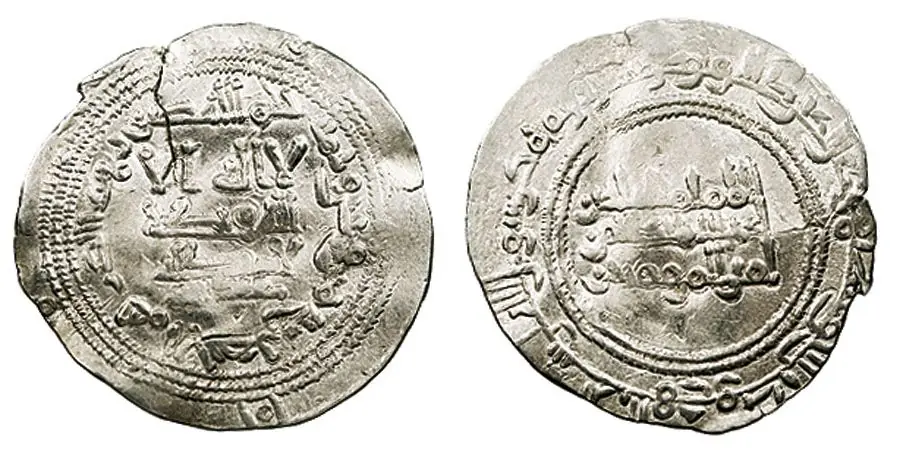
In parallel, Abd al‑Rahman III re‑established the authority of the central administration by reviving the *diwan* (state bureau) that managed finance, justice and correspondence. He appointed a new chief vizier, Ibn Mansur, who oversaw the issuance of standardized coinage bearing the ruler's name and the title "Emir of Córdoba". The coins replaced the previous variety of locally minted pieces and facilitated trade throughout the Mediterranean. By unifying the fiscal and military structures, the emir could fund public works such as the expansion of the Great Mosque of Córdoba, which employed more than 5,000 laborers over a decade.
The most visible change after the accession was the proclamation of the caliphate in 929. Abd al‑Rahman III claimed the title of caliph to assert religious legitimacy equal to the Abbasid and Fatimid caliphs. This declaration transformed the political landscape: the previously recognised emirate became a self‑declared caliphate, attracting scholars, poets and merchants who settled in Córdoba, and marking the beginning of a cultural flourishing that lasted for more than a century.
Before 1843 mathematicians used complex numbers, pairs of real numbers that represented points on a plane and allowed rotation through multiplication. The theory of three‑dimensional space lacked an algebraic system that could encode rotations as a single operation, and attempts by others such as John Clifford had not produced a consistent product rule for three independent units.
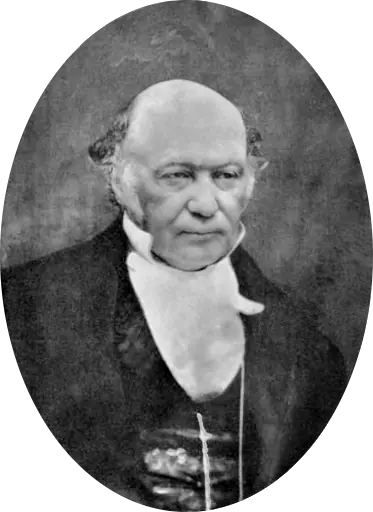
A common belief is that Hamilton shouted the fundamental formula on a Dublin bridge while riding a carriage. Contemporary reports show that on 16 October 1843 he read a paper before the Royal Irish Academy in Dublin and later inscribed the formula on the Brougham bridge. The record of the Academy meeting confirms the public presentation, and the bridge inscription, still legible, records the words "i²=j²=k²=ijk=-1".
Hamilton introduced a new algebraic entity called a quaternion, written as a + bi + cj + dk where a, b, c, d are real numbers and i, j, k are imaginary units. He defined multiplication by the rules i j = k, j k = i, k i = j and the anti‑commutative relations j i = ‑k, k j = ‑i, i k = ‑j. These rules ensure that the product of two quaternions combines both scalar and vector parts and that the norm of a product equals the product of the norms. This property allowed a quaternion of unit length to represent a rotation in three‑dimensional space by conjugation, a mechanism that replaces the older method of using Euler angles.
The immediate impact was limited to a small circle of mathematicians, but the quaternion algebra quickly entered the work of William Killing and later Peter Gibbs, who used it to formalize vector calculus. By the late 19th century the quaternion notation was adapted by James Clerk Maxwell in his electromagnetic theory, and in the 20th century it underpinned the development of computer graphics and spacecraft attitude control. The discovery therefore extended the reach of algebra from planar geometry to spatial transformations.
Hamilton’s publication also sparked a broader interest in hypercomplex systems, leading to the later discovery of Clifford algebras and the modern field of geometric algebra. The concrete consequence of the 16 October event is that the quaternion framework remains a standard tool for representing rotations in engineering, physics and computer science, directly tracing back to Hamilton’s definition of i, j and k.