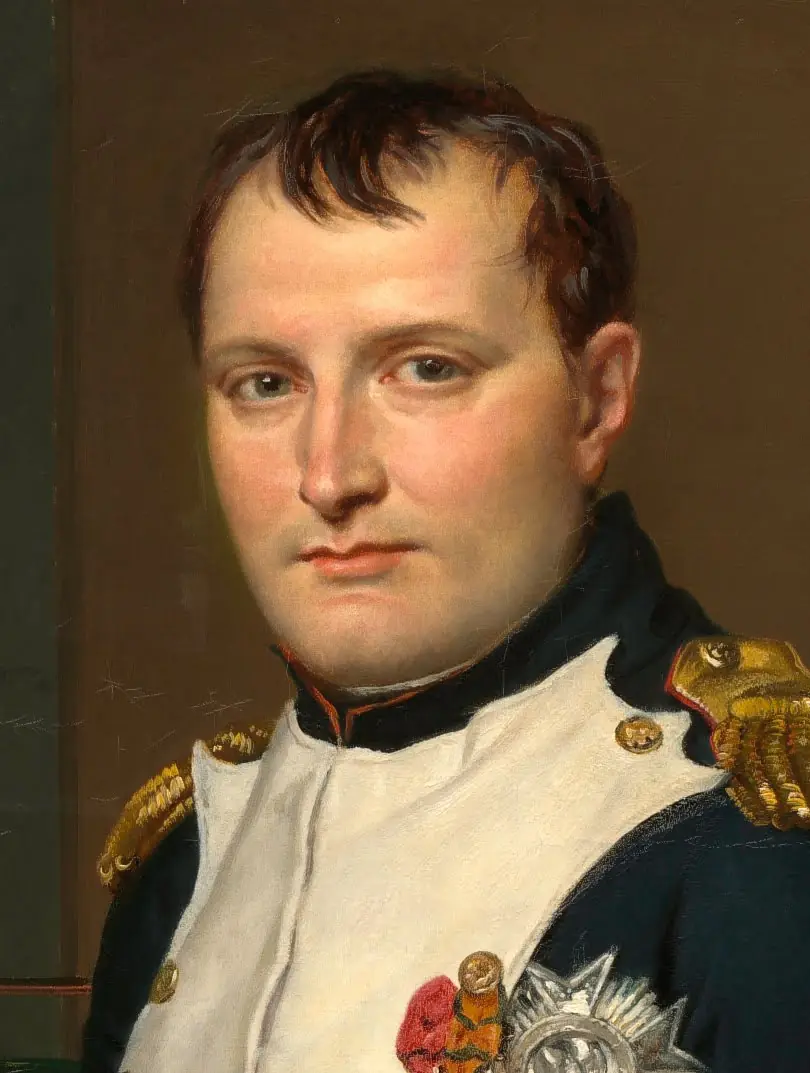
The hidden catalyst of the 1803 treaty was France’s urgent need for cash after costly wars in Europe. By early 1803 Napoleon Bonaparte authorized his foreign minister, Charles-Maurice de Talleyrand, to offer the entire Louisiana territory to the United States for any price that would fill the French treasury. This overture was not driven by American expansionism but by a pragmatic French fiscal strategy.
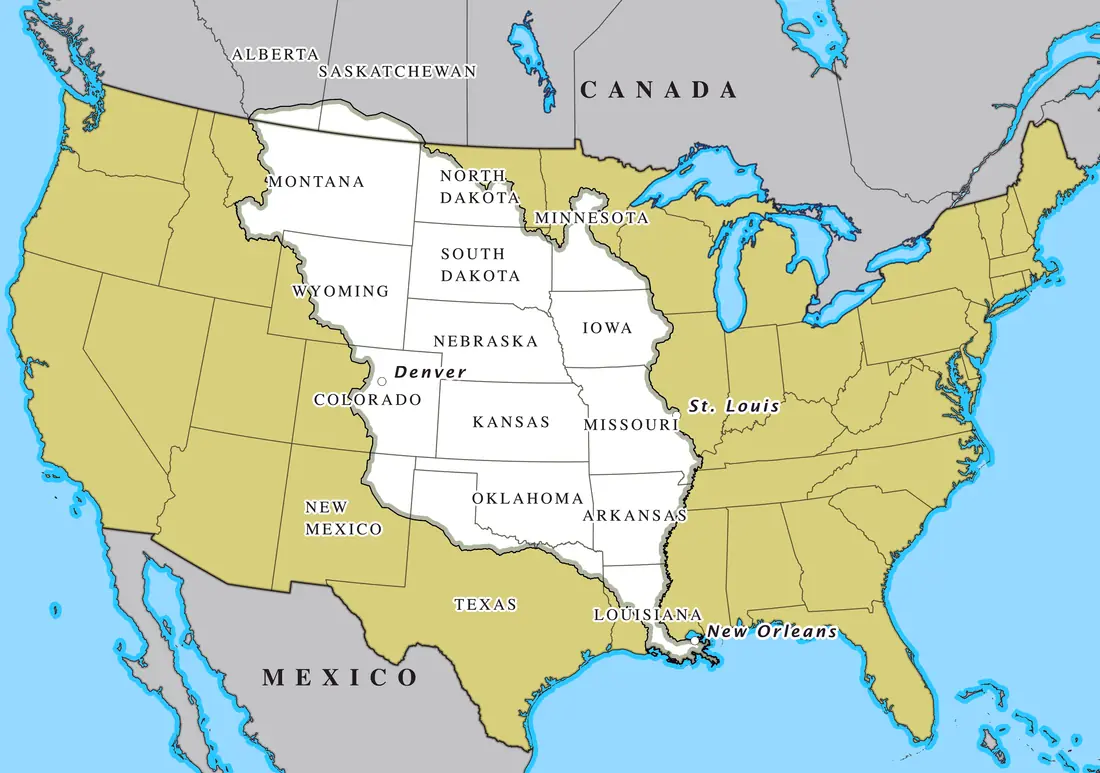
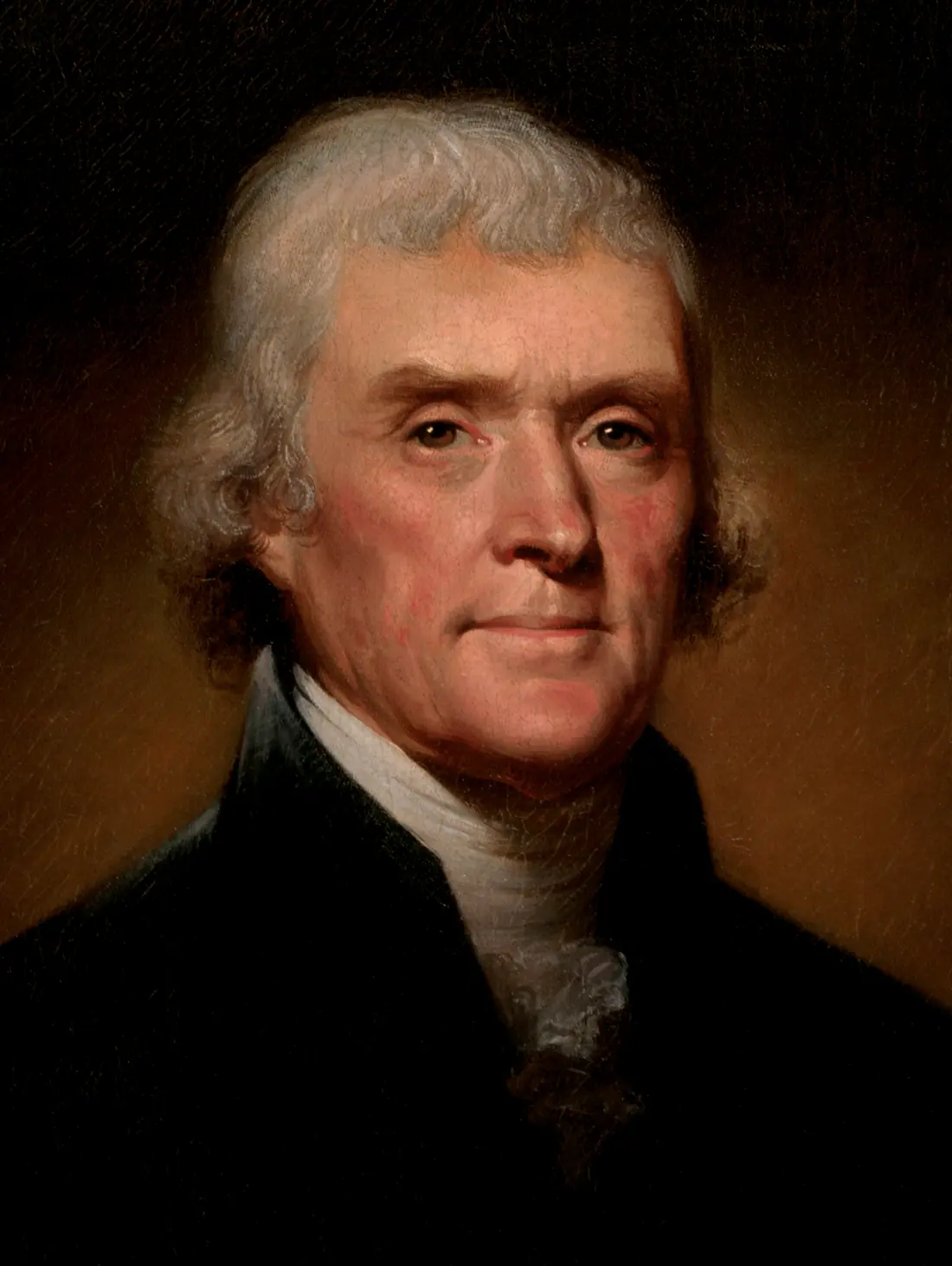
Popular accounts claim the United States simply bought a vast western land to grow. In fact, the Senate’s ratification on October 20, 1803 was the final step of a complex negotiation that began with President Thomas Jefferson’s 1802 request for the port of New Orleans and western navigation rights. Jefferson sent James Monroe and Robert R. Livingston to Paris, where they first sought only the city’s river access. When Talleyrand presented the full territory, about 828,000 square miles, for $15 million, the American envoys accepted, believing the price equaled roughly four cents per acre.
The Senate vote, 24‑7 in favor, reflected two concerns. First, Jefferson’s administration feared that Britain might seize the port of New Orleans, cutting off trade for the western states. Second, the acquisition would remove any French presence that could challenge American claims east of the Mississippi. The treaty’s terms required the United States to take immediate possession of the land, but the formal transfer could not occur until Spain, which still claimed the region, ceded it to France on October 1, 1803. Spain’s retrocession was a secret clause that satisfied French diplomatic balance with Spain while preserving the United States’ purchase.
The immediate consequence was a rapid shift in the nation’s geographic scope. The United States grew from 892,000 to 1.71 million square miles, effectively doubling its size overnight. This expansion forced the federal government to confront new administrative tasks: surveying the land, negotiating with Native American nations, and planning routes for future settlement. The purchase also set a precedent for large-scale land deals, demonstrating that the young republic could acquire territory through diplomatic negotiation rather than military conquest.
In the longer term, the acquisition provided the United States with control over the Mississippi River and the port of New Orleans, securing a vital commercial artery for western farmers. This secured economic growth and encouraged migration westward, laying the groundwork for the nation’s 19th‑century continental expansion.
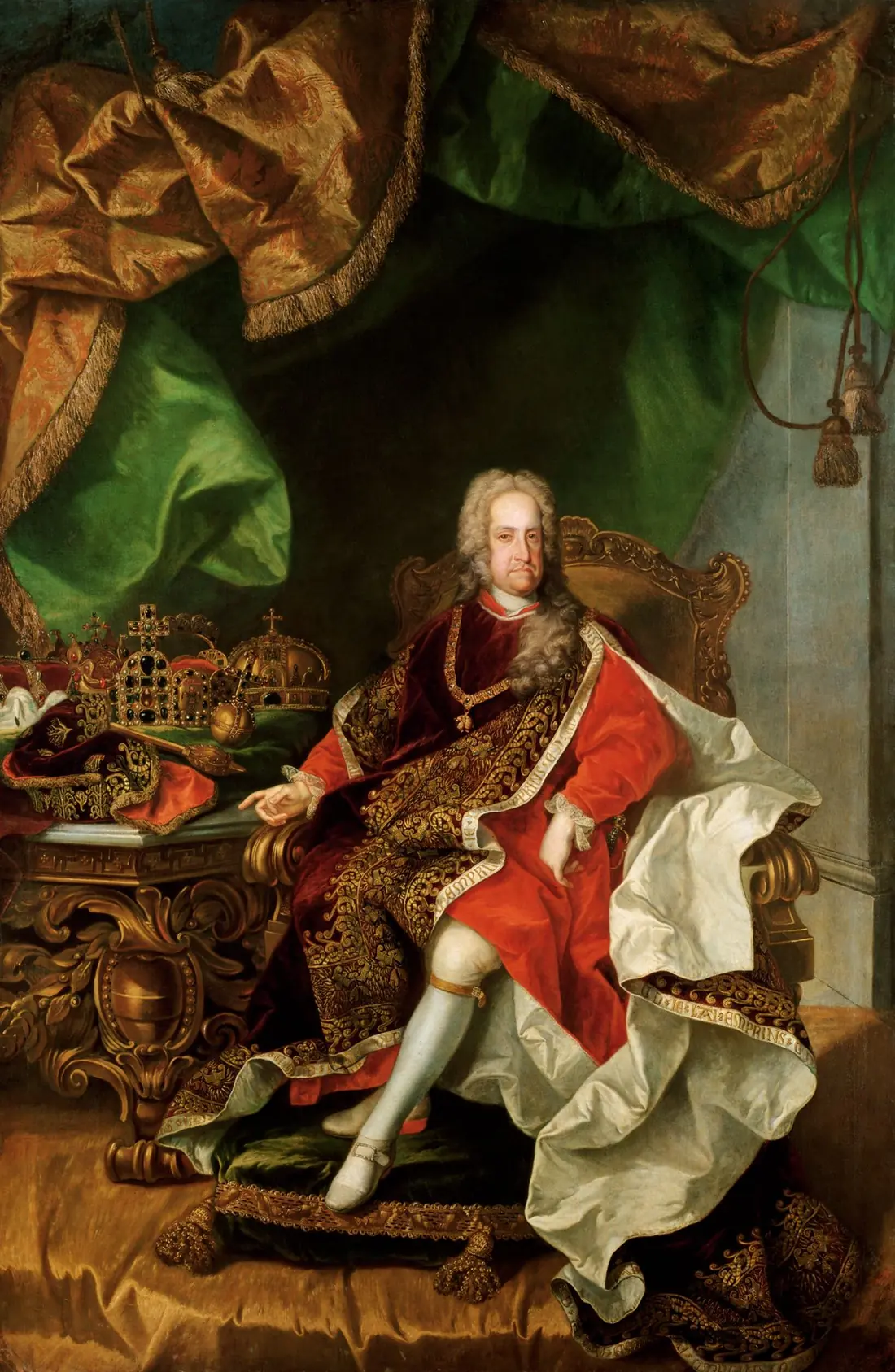
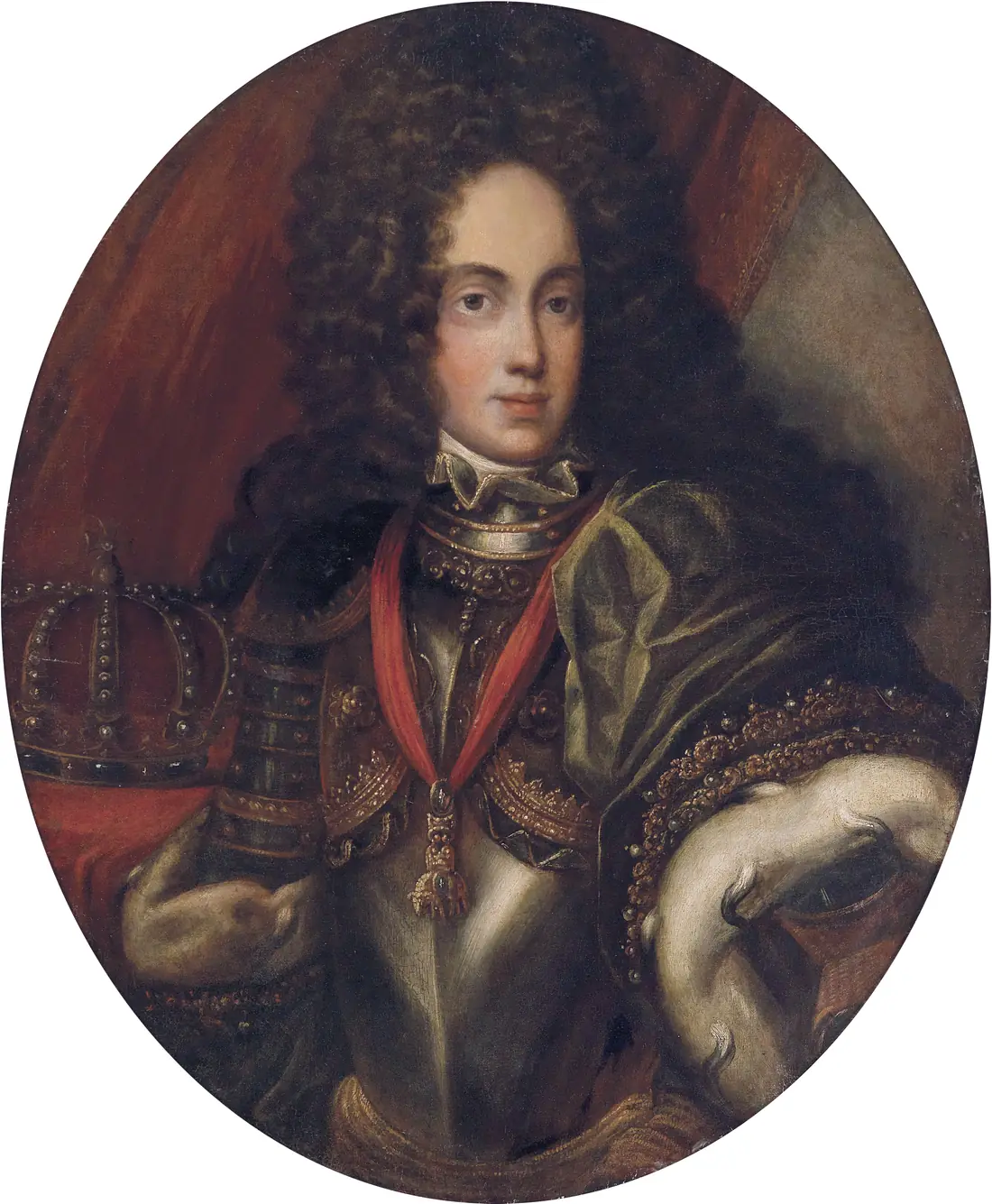
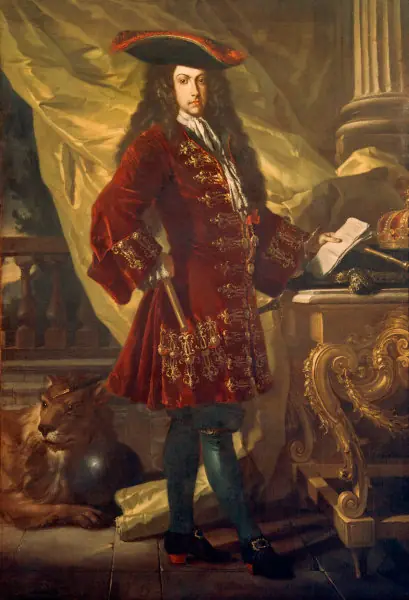
Charles VI died in Vienna on 20 October 1744 at the age of 66. His death ended a reign that had lasted 21 years and left the Habsburg lands without a male heir.
The only surviving child was Maria Theresa, then 23, who had been raised under the Pragmatic Sanction of 1713. The Sanction was an imperial decree that Charles VI had forced the Imperial Diet to accept in 1725, specifying that his hereditary lands could pass to a daughter if no son survived. The decree was recorded in the imperial registers and signed by 75 princes, but it required each ruler of the Holy Roman Empire to recognise it individually.
At the moment of Charles VI’s death, the emperor’s wife, Elisabeth Christine, was 59 and remained in the Hofburg but held no political power. The Habsburg court council, led by Chancellor Philipp Ludwig von Sinzendorf, immediately sent copies of the Sanction to the electors, urging them to accept Maria Theresa’s succession. The electors of Brandenburg, Saxony and Bavaria each wrote formal replies; Brandenburg accepted, Saxony hesitated, and Bavaria rejected the claim.
The rejection by Bavaria’s Elector Charles Albert triggered a military response. He proclaimed himself emperor on 12 February 1742, but his claim relied on the support of France and the support of the Imperial Diet, which he secured on 24 January 1742 with a vote of 15 to 12. Maria Theresa, backed by her father’s former war minister Prince Eugene of Savoy, raised an army of 120,000 troops and defended the Austrian heartlands. The resulting conflict, known as the War of the Austrian Succession, involved more than 1.5 million soldiers across Europe and lasted until 1748.
The immediate consequence of Charles VI’s death was the outbreak of this war, which reshaped the balance of power in Central Europe. By the Treaty of Aix‑la‑Chapelle in 1748, Maria Theresa retained most of her inheritance, confirming the Pragmatic Sanction’s principle despite the earlier contestation.
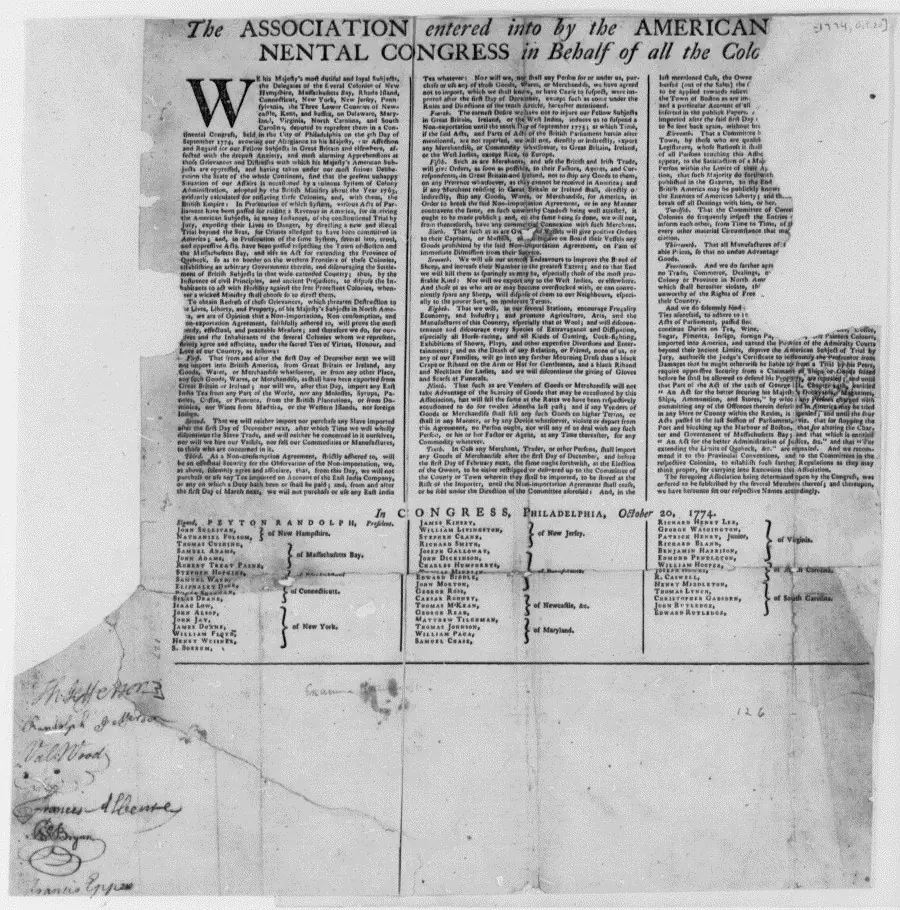
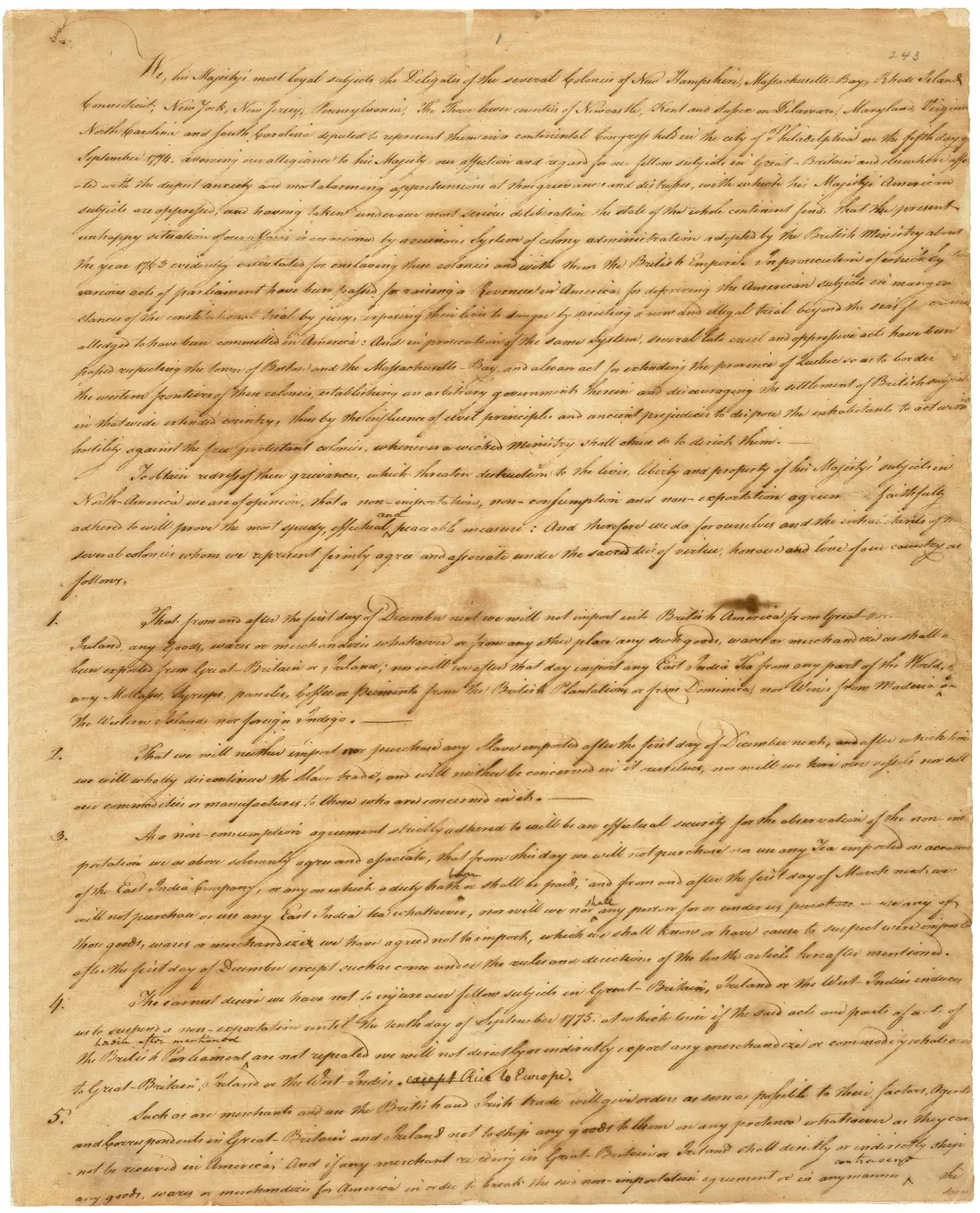
The First Continental Congress adopted the Continental Association on October 20, 1774 in Philadelphia. Delegates from twelve of the thirteen colonies signed a resolution to stop importing British goods unless Parliament repealed the Coercive Acts. The mechanism was a coordinated nonimportation and nonconsumption program enforced by local committees that inspected merchants, recorded violations, and imposed fines or public shaming.
John Dickinson drafted the association and wrote, "We shall not be tyrannized by any Parliament that does not recognize the rights of Englishmen." The document listed specific categories of tea, glass, paper, and other manufactured items to be boycotted. It required each colony to appoint a committee of inspection, usually three to five men, to monitor compliance. By December 1774, about 2,000 committee members were active, covering roughly 1.5 million colonists who participated in the boycott.
The immediate economic impact was a decline of about 30 percent in British imports to the colonies during the winter of 1774‑75. British merchants reported losses of an estimated £500,000, a substantial sum for the period. In response, the British government increased customs enforcement and threatened to use naval power to seize contraband, but the colonial committees continued to publish lists of violators, creating social pressure that discouraged illegal trade.
The association also served as a political training ground. Participants learned to organize votes, collect evidence, and coordinate across colonial borders. This experience was reused during the 1775 provincial congresses and later the Continental Army’s supply chain management. Moreover, the boycott demonstrated that a large segment of colonial society could act collectively without a central authority, undermining the claim that only Parliament could regulate trade.
The Continental Association remained in effect until early 1776, when the outbreak of armed conflict made its enforcement impractical. Its legacy persisted in the form of continued nonimportation agreements during the Revolutionary War and influenced later American trade policy, including the 1790s embargoes. By establishing a unified economic protest, the association accelerated the shift from isolated colonial grievances to a coordinated movement for independence.
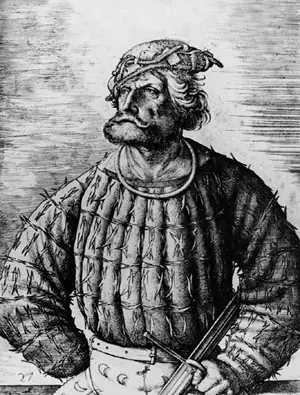
Klaus Störtebeker, leader of the Likedeeler fleet, was beheaded on October 20, 1401 in the Hamburg town hall courtyard. The execution followed a trial ordered by the city council and the Hamburg Senate after they captured him during a raid on a convoy bound for the city. The council had previously relied on a system of negotiated ransoms with the pirates, allowing the Likedeeler to extract tribute from passing merchant ships while the city paid a fixed fee of 100 silver marks per ship to avoid attacks.
The council’s decision to move from ransom to capital punishment was based on a written ordinance dated September 15, 1401. The ordinance mandated that any pirate captured within the city’s jurisdiction be tried before the council and, if found guilty, sentenced to death by hanging and then beheading. The ordinance listed the crime as "piracy against Hamburg commerce" and specified a fine of 500 silver marks payable by the pirate’s family, a clause that was never collected.
Störtebeker was captured after a skirmish on the River Elbe where his ship, the "König", was forced to surrender by a Hamburg militia of 200 men led by Mayor Johann Schoner. The militia seized 12 cannons and 45 barrels of trade goods valued at 2,300 silver marks. During the trial, the council recorded that Störtebeker admitted to commanding raids on at least 27 merchant vessels between 1395 and 1401, and that his crew numbered 70 men at the time of capture.
The beheading was carried out in front of an assembled crowd of approximately 3,000 citizens. After his death, the council ordered that his head be displayed on the city gate for ten days as a deterrent. The display was removed after the period elapsed, and the city resumed a policy of paying ransoms, but at a reduced rate of 50 silver marks per ship. The immediate effect was a measurable decline in pirate attacks on Hamburg trade routes; records show a drop from 23 incidents in the previous year to 8 in the following year. The execution also cemented Störtebeker’s legend, as later accounts exaggerated his ability to command his crew to retrieve severed heads, a claim not found in contemporary sources.
In the longer term, the event prompted other North Sea ports to adopt similar ordinances, standardising capital punishment for piracy across the region and contributing to a gradual reduction of organized pirate activity by the mid‑15th century.
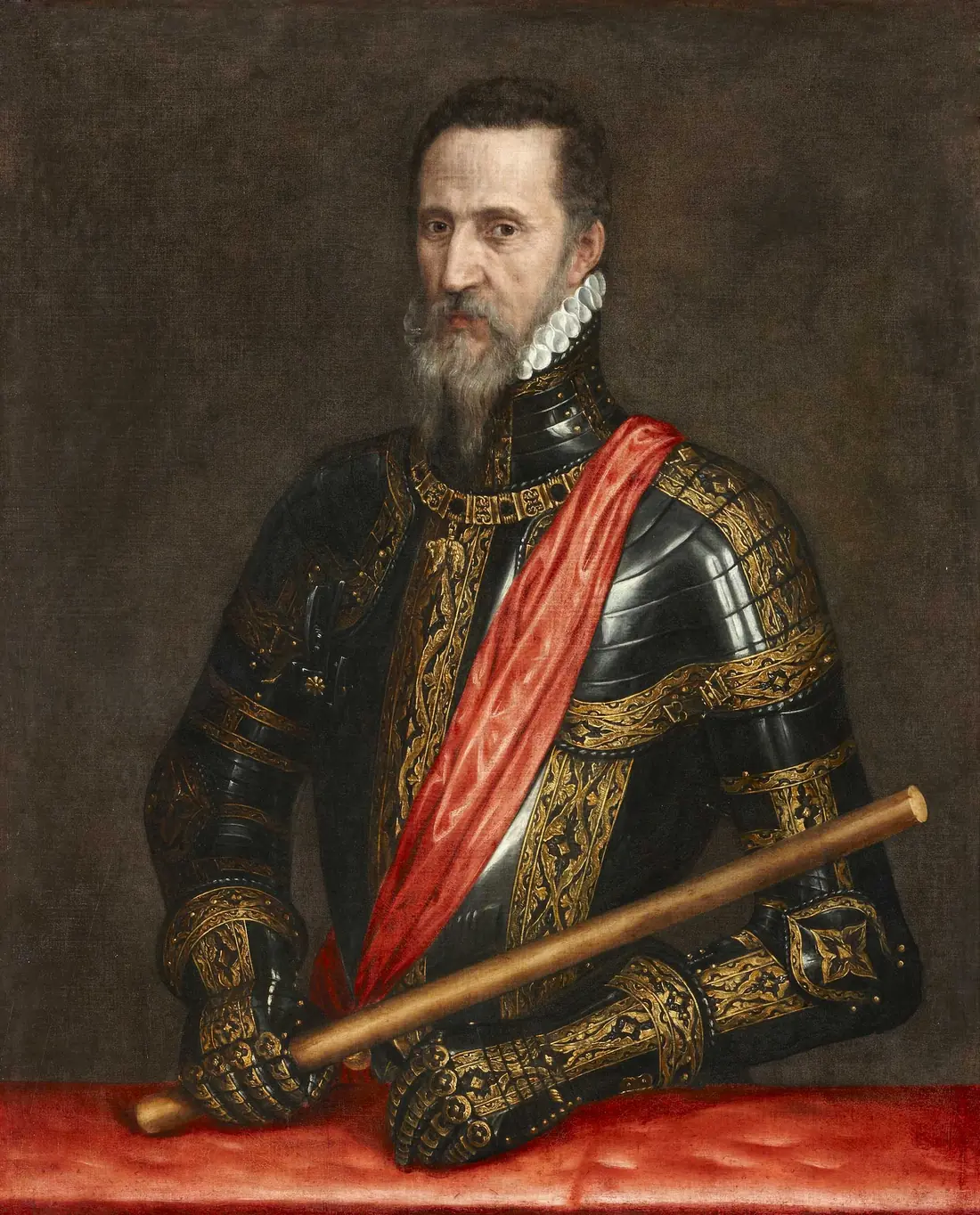
The Spanish army under the Duke of Alba defeated the rebel force led by William the Silent at the Battle of Heiligerlee on 20 October 1568. Alba commanded a professional infantry of about 3,000 men equipped with arquebuses and a small contingent of cavalry, while William’s army consisted of roughly 2,500 poorly armed volunteers and local militia. The Spanish plan relied on a linear formation that allowed continuous fire from the arquebusiers, a tactic that had proven effective in earlier Italian wars. William positioned his troops on higher ground hoping that the terrain would neutralize the firepower advantage.
At dawn the Spanish vanguard advanced in three ranks, each rank stepping forward after the previous fired a volley. The first volley caused immediate disarray among the militia, whose shields were insufficient against the penetrating lead. A second volley targeted the rebel commanders, killing several officers and breaking the chain of command. Without coordinated leadership the militia could not close the distance, and the Spanish cavalry then swept around the flank, driving the remaining fighters into a retreat.
Casualty figures recorded by contemporary reports indicate that the Spanish lost 70 soldiers, while William’s side suffered about 400 dead and many more captured. William himself escaped with a small group of followers, retreating to the nearby town of Dokkum. The defeat forced the rebels to abandon their positions in the northern provinces and delayed any coordinated uprising for several months.
The battle illustrates the military logic of the Spanish tercios, which combined pikemen, swordsmen and firearms into a single unit capable of both offensive thrusts and sustained fire. The tercios’ discipline and the centralized command structure under Alba meant orders could be issued and executed rapidly, a contrast to the loosely organized rebel levies. Financial support for the Spanish troops came from the central treasury of the Habsburg empire, ensuring steady supply of gunpowder and wages, whereas the rebels relied on local contributions that could not sustain prolonged combat.
In the aftermath the Duke of Alba tightened Spanish control by imposing heavier taxes and appointing loyal administrators, measures that intensified resentment among the Dutch but also solidified the Crown’s authority in the Low Countries for the next two years.