On 19 October 1900 Max Planck presented a formula that described how a perfect absorber of radiation emitted energy at each wavelength. Before this date physicists relied on the classical Rayleigh‑Jeans law, which predicted that energy would increase without limit as wavelength shortened, a result known as the ultraviolet catastrophe. The classical view assumed that energy could be divided arbitrarily, so the total emitted power grew to infinity, contradicting experimental measurements of black‑body spectra.
Planck derived his law by assuming that the energy of oscillators in the walls of a cavity could only change in discrete steps. He introduced a constant, later called h, and expressed the spectral energy density as \(u(λ, T)=\frac{8πhc}{λ^5}\frac{1}{e^{hc/(λkT)}-1}\). In this expression the numerator contains the speed of light c and the constant h, while the denominator contains the Boltzmann constant k and the temperature T. The key mechanism was the quantisation of energy: each oscillator could emit or absorb only integer multiples of hν, where ν is frequency. This step broke the continuity assumed by classical physics and matched measured spectra for temperatures from 300 K to 3000 K.
Planck’s result was based on data from experiments by Lummer, Pringsheim and Rubens, who measured radiation intensity at wavelengths between 0.5 µm and 10 µm. The fit required a value of h≈6.626×10⁻³⁴ J·s, a number that later defined the scale of quantum effects. Planck himself described the hypothesis as a mathematical trick, not a claim about physical reality, but the accuracy of the formula forced the scientific community to accept that energy exchange could not be continuous.
The immediate consequence was the abandonment of the Rayleigh‑Jeans law for high frequencies. Within a few years Albert Einstein used the same constant to explain the photoelectric effect, showing that light itself could be quantised. By 1913 Niels Bohr incorporated quantised energy levels into his model of the atom, and the new framework grew into modern quantum mechanics. The cost of this shift was intellectual: many established physicists resisted the idea that nature was fundamentally discrete, and Planck’s own reputation suffered temporary criticism. However, the institutions of German physics, especially the University of Berlin where Planck taught, gained prominence as the birthplace of quantum theory.
Planck’s law therefore replaced an infinite, untested prediction with a finite, experimentally verified description, establishing the quantum of action as a universal constant and opening the path to technologies such as lasers and semiconductor devices.
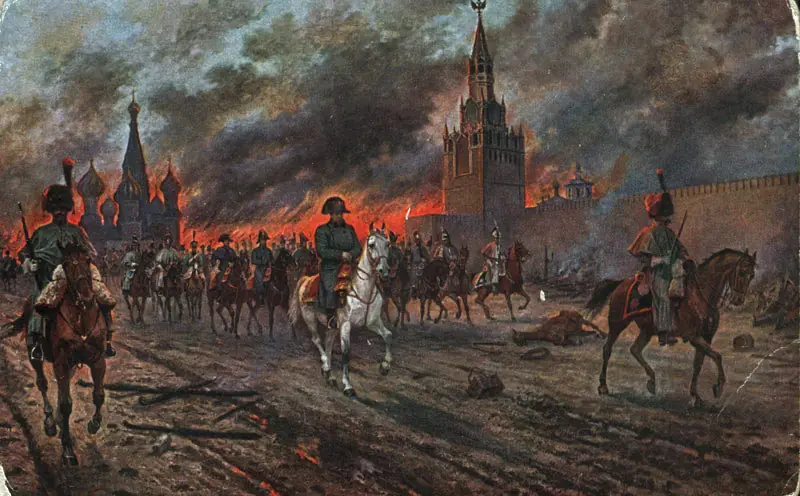
The Grande Armée abandoned Moscow on October 19, 1812, beginning a retreat that destroyed the core of Napoleon's Russian campaign. After the French occupied the city on September 14, they found it largely emptied and set fire to supplies. Napoleon ordered his troops to remain for winter, hoping to force the Russians to negotiate. By mid‑October the supply depots were exhausted, the weather fell below minus 20 °C, and the army faced starvation and disease. On the morning of the 19th the emperor issued a written order to withdraw along the Smolensk road, the only viable route back to western Russia.
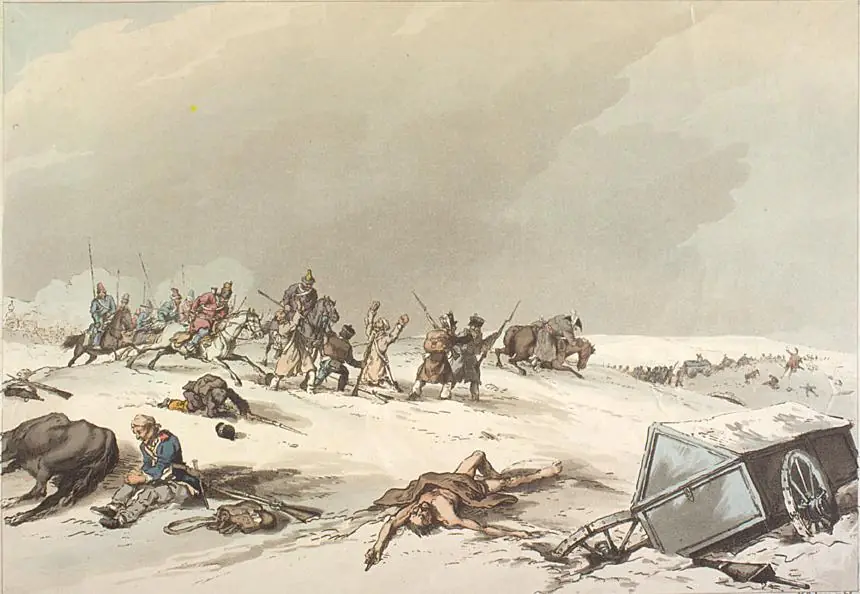
The retreat started with roughly 100,000 men, including 30,000 cavalry and 70,000 infantry, plus 150,000 horses. Marshal Davout's I Corps led the column, followed by Ney's III Corps, then the main body under Napoleon. Each unit was instructed to travel in single file to reduce exposure to Russian cavalry attacks. At 6 a.m. the first wagons left the Kremlin area, and by noon the rear guard was already under fire from Cossack patrols near the village of Tarutino. The French responded by forming defensive squares, but the cold rendered gunpowder unreliable and many muskets failed to fire.
Logistical collapse accelerated the loss of men. Within three days the army lost 20,000 soldiers to frostbite, dysentery, and desertion. By the time the column reached the Berezina River on November 26, only about 30,000 remained, and they were forced into a desperate crossing that cost another 7,000 lives. Napoleon arrived at the Russian border on December 5 with fewer than 20,000 troops, a fraction of the original force that had entered Russia in June.
The retreat marked the decisive turning point of the 1812 invasion because it eliminated the French strategic reserve, shattered morale, and exposed Napoleon's inability to sustain a campaign in hostile winter conditions. The loss weakened the French Empire, encouraged the Sixth Coalition to resume hostilities, and ultimately led to Napoleon's abdication in 1814. The disastrous retreat also demonstrated the effectiveness of Russia's scorched‑earth policy and the vulnerability of large armies dependent on long supply lines.
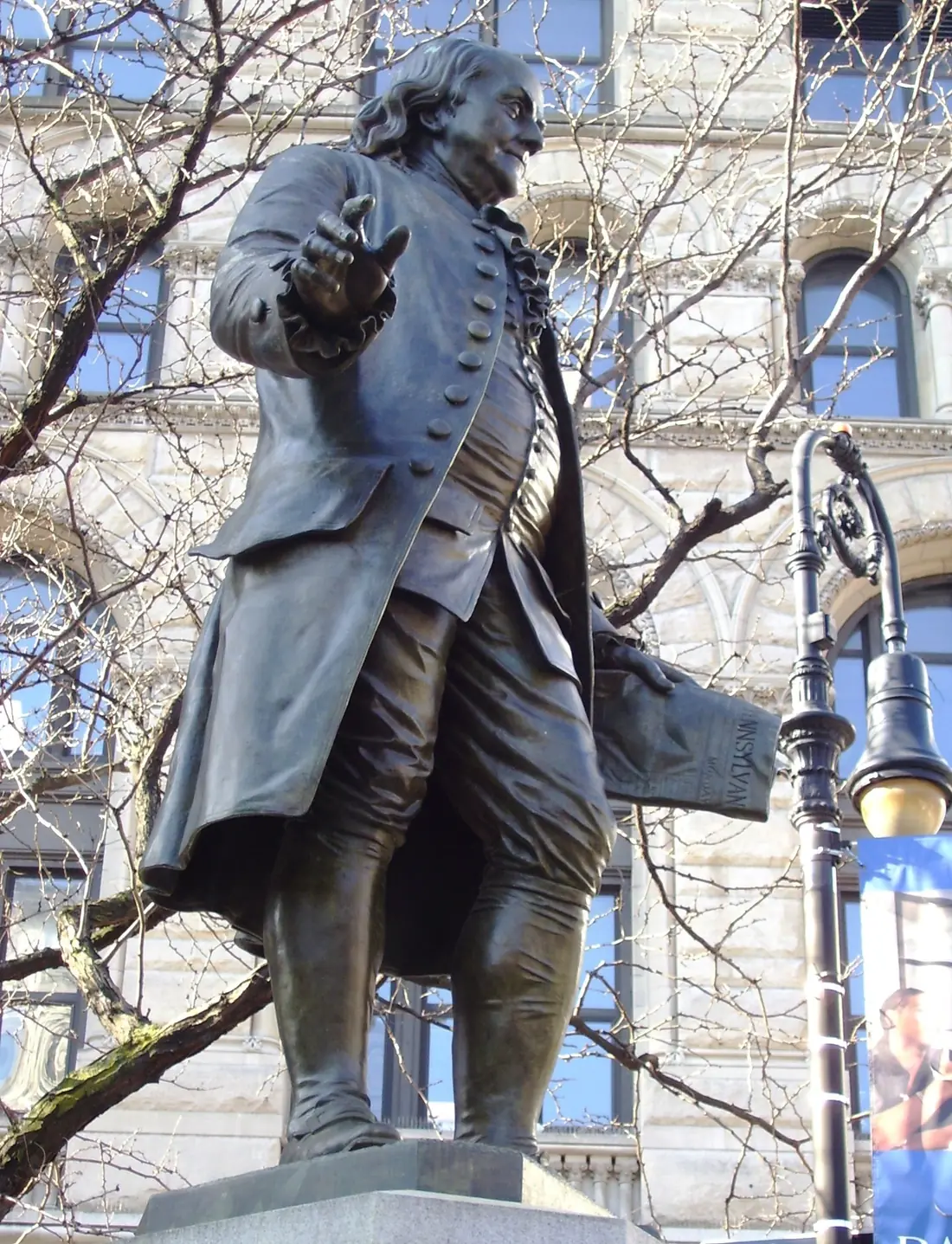
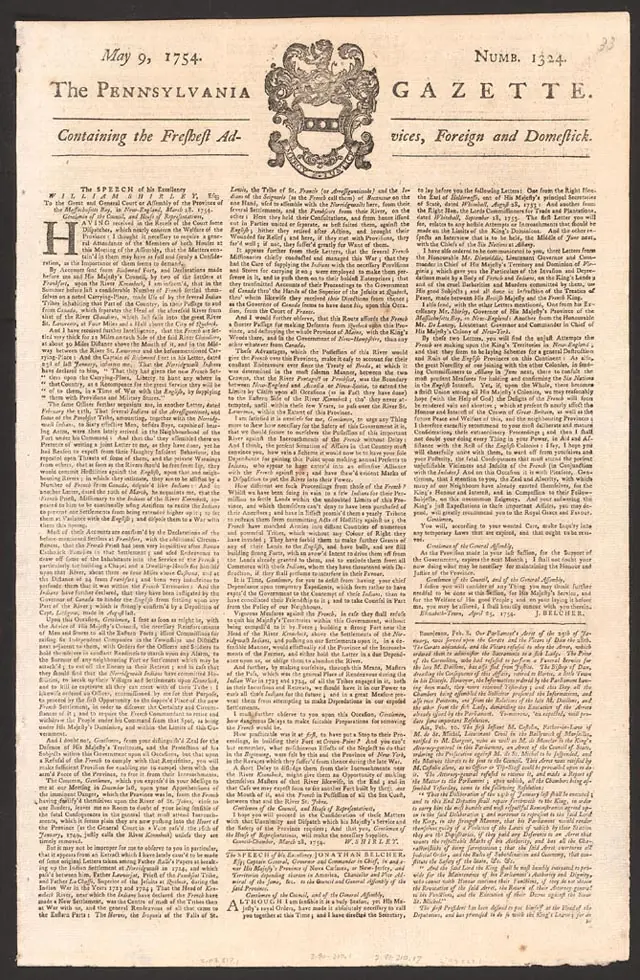
Benjamin Franklin demonstrated that lightning is a form of electricity when he reported a spark from a metal key attached to a kite string in a rainstorm. The experiment was carried out in Philadelphia in June 1752 and the description appeared in the Pennsylvania Gazette on October 19, 1752.
Franklin, then 46, was a printer, author and member of the American Philosophical Society. He designed the apparatus: a silk kite, a hemp string soaked in rain, a metal key tied to the string, and a Leyden jar to store charge. His son William Franklin, age 19, helped by holding the kite and monitoring the string. The kite was launched from the roof of the Gazette office, a location documented in Franklin’s own letter to Peter Collinson of the Royal Society.
The prevailing belief before the experiment was that lightning was a mysterious fire or a divine phenomenon. Franklin’s hypothesis, outlined in a 1751 letter, held that lightning was an electrical discharge similar to that produced by static electricity. The key’s spark, observed when the wet string conducted charge to the metal, provided the direct evidence. Franklin wrote that “the key was drawn toward the string and a spark leapt out, ” a phrase recorded in the Gazette article. No contemporary source confirms that a full lightning strike hit the kite; the account relies on the smaller discharge observed.
Joseph Priestley, a chemist who later corresponded with Franklin, noted the experiment in a 1753 letter, confirming the key spark and the use of a Leyden jar. Another minor figure, the Gazette’s publisher James Parker, provided the rooftop and printed the report, thereby disseminating the result to a wide readership. The Pennsylvania Gazette’s circulation of about 1,500 copies ensured that the finding reached both colonial scientists and the educated public.
The immediate consequence was that the Royal Society elected Franklin as a foreign member in 1753, and his electrical theories gained international credibility. Within a decade, lightning rods based on his design were installed on public buildings, reducing fire damage from storms. The experiment also spurred further research into electricity, leading to the development of the first batteries by Alessandro Volta in 1800. Franklin’s kite test thus transformed a speculative idea into a demonstrable fact and laid groundwork for modern electrical science.
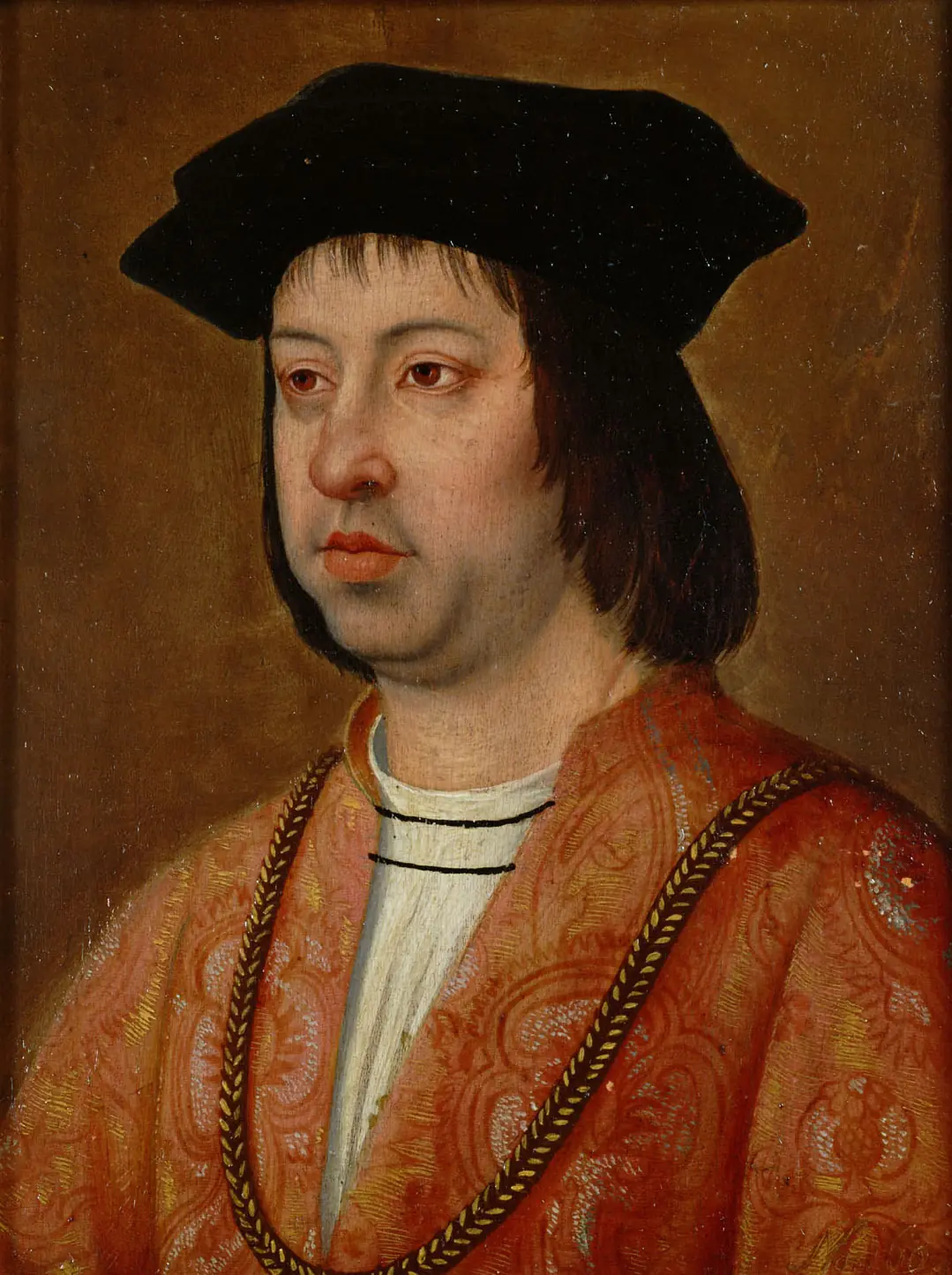
The marriage of Ferdinand of Aragon and Isabella of Castile was the result of a diplomatic pact negotiated in early 1469, not a spontaneous romance. After the death of King Henry IV of Castile in 1474, the Castilian nobility feared a succession crisis; they therefore pressed Henry's half‑sister, Isabella, to secure an alliance that would bind Castile to a powerful neighbor. Meanwhile, King John II of Aragon, Ferdinand's father, sought to strengthen Aragon's position against the expanding French influence in the Pyrenees. The two courts met in Valladolid and signed a marriage contract on October 19, 1469, which stipulated joint rule over their respective kingdoms while preserving each kingdom’s laws and institutions. This legal mechanism, known as a personal union, allowed two sovereign states to remain distinct entities under one monarchic pair, avoiding the annexation that would have required papal approval for a formal merger.
The contract required Isabella to inherit the Castilian crown only if she produced a male heir, and it obliged Ferdinand to respect Castilian customs, including the Castilian Cortes' right to consent to taxation. In return, Aragon gained a claim to the strategic port of Algeciras, enhancing its Mediterranean trade. The agreement also excluded the Kingdom of Navarre, which remained a separate polity, a detail often omitted from popular retellings that portray the marriage as a simple step toward a unified Spain.
When Isabella was proclaimed queen of Castile in 1474 and Ferdinand became king of Aragon in 1479, they exercised their authority as co‑monarchs, each presiding over their own courts and councils. Their joint military campaigns, such as the conquest of Granada in 1492, were funded by separate treasuries but coordinated through a council of advisers drawn from both kingdoms. This coordination required a complex chain of command: the Castilian army answered to Isabella’s chief minister, the Marquess of Villena, while the Aragonese forces reported to Ferdinand’s constable, the Duke of Medina de Rioseco. The shared decision‑making process was documented in the 1492 *Capitulaciones de Santa Fe*, which outlined the division of spoils from the newly discovered lands.
The personal union created a de‑facto Spanish monarchy that survived the death of their only surviving son, John, in 1497, because their daughter Joanna inherited both crowns. The union persisted through the Habsburg and Bourbon dynasties, shaping the political geography of the Iberian Peninsula for centuries.