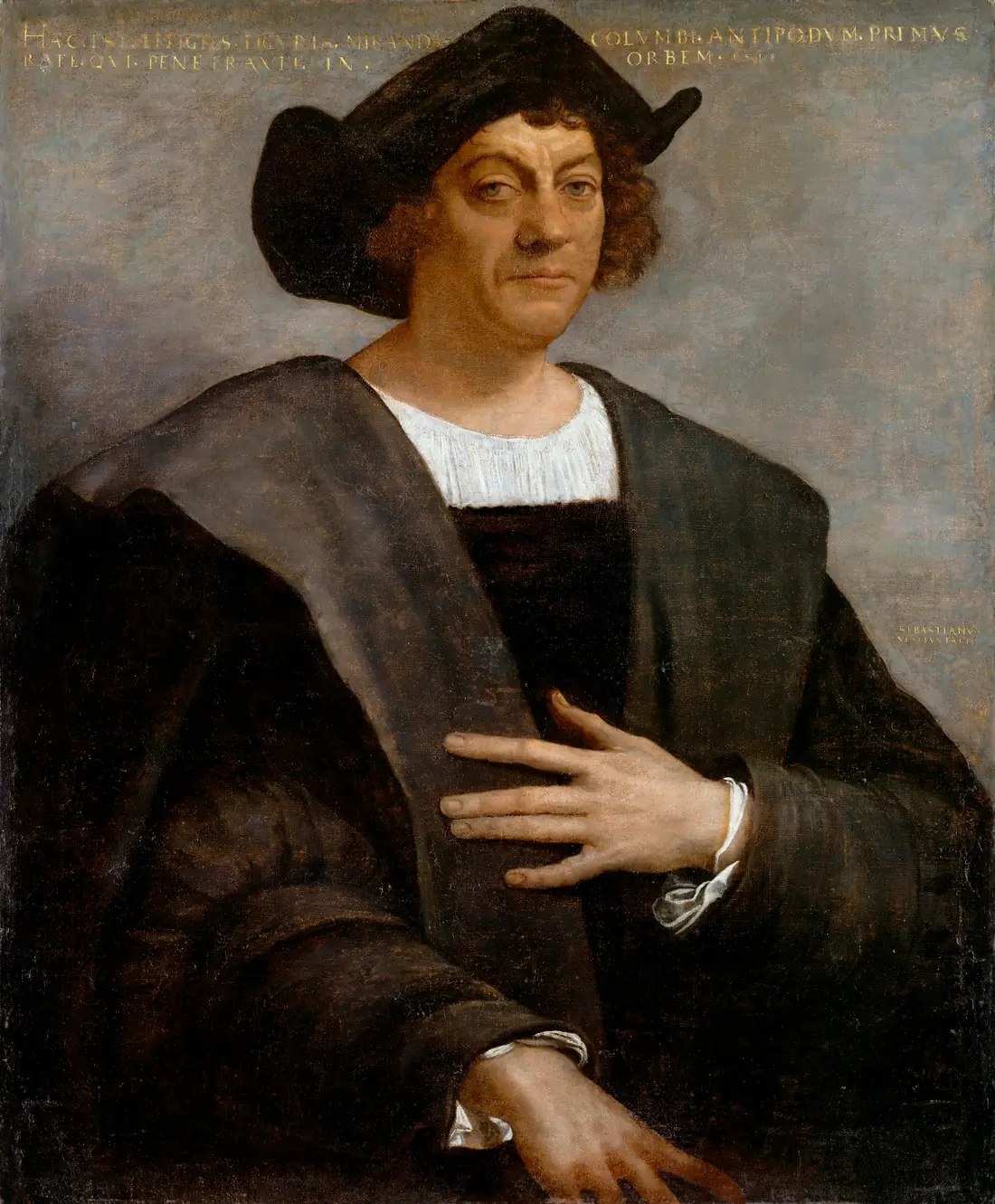
The decision that made Columbus reach Cuba was the Spanish Crown's 1492 grant to finance a westward route to Asia. After the fall of Constantinople in 1453, Italian merchants could no longer obtain Eastern spices through overland routes, and Spain sought a direct sea path to the lucrative markets of China and Japan. In April 1492, the monarchs Ferdinand and Isabella signed the Capitulations of Santa Fe, promising Columbus a tenth of all profits, the title of admiral, and governance over any lands he claimed, in exchange for a fleet of two caravels, the Niña and the Pinta, and one larger ship, the Santa María.
Columbus left Palos on August 3 with 90 men, 25 cannons, and provisions for 90 days. He sailed south along the African coast, then west across the Atlantic, believing the Earth was smaller than it is and that Japan lay only 2,400 nautical miles west of the Canary Islands. On October 28, 1492, a lookout on the Santa María sighted land at a point now identified as the northern coast of present‑day Cuba. Columbus named the island San Salvador, mistakenly thinking he had reached the easternmost islands of the Asian archipelago.
The landing was not a battle; the indigenous Taíno people greeted the Spaniards with gifts and no armed resistance. Columbus recorded that 300 Taíno approached the ships, offering food and parrots, while his crew suffered no casualties. The Spaniards claimed the island for Spain, raised a cross, and documented the encounter in a log that later served as the basis for the Treaty of Alcáçovas, which divided new territories between Spain and Portugal.
The immediate consequence was the establishment of a Spanish foothold in the Caribbean, which enabled further expeditions to the Greater Antilles and the mainland of Central America. Within two years, Columbus returned with a larger force, initiating the encomienda system that forced native labor and led to a dramatic decline in the Taíno population, estimated to fall from several hundred thousand to a few thousand by 1510. The misidentification of Cuba as part of Asia persisted in European maps until the early 16th century, delaying accurate knowledge of the New World’s geography.
Columbus's landing demonstrated that a transatlantic crossing was possible with the technology of the late 15th century, but it also triggered a chain of colonization, exploitation, and cultural disruption that reshaped global trade and demographics for centuries.
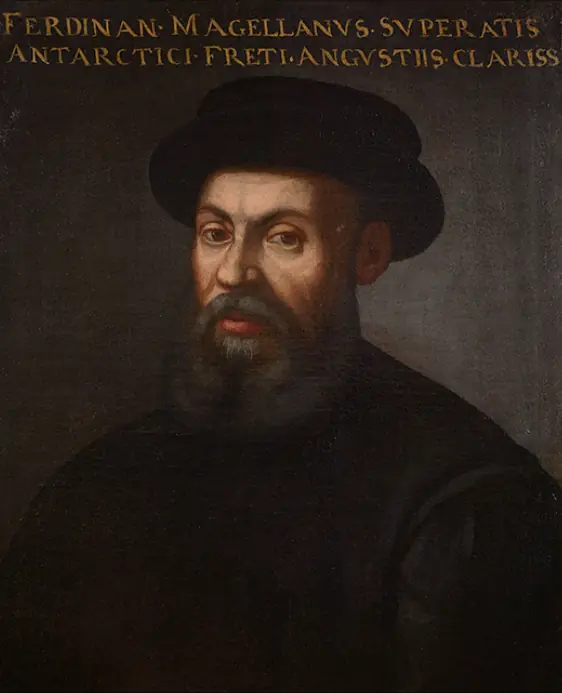
Ferdinand Magellan's expedition entered the Pacific Ocean on 28 October 1520 after navigating the narrow passage at the southern tip of South America. The passage, later named the Strait of Magellan, was the only known sea route connecting the Atlantic and Pacific at that time.
Magellan led a fleet of five ships funded by the Spanish Crown to find a western route to the Spice Islands. The fleet entered the strait on 21 November 1520. Over the next week the ships progressed southward, contending with strong currents, narrow channels and hostile indigenous groups. On 28 October 1520 the ship Victoria, commanded by Magellan, emerged from the western mouth of the strait into a body of water that was later identified as the Pacific Ocean.
The immediate observation recorded by the expedition was the absence of visible land for hundreds of nautical miles. The crew measured the distance traveled using a log line and reported an open sea expanse of at least 400 leagues. The entry into the Pacific marked the first recorded European crossing from the Atlantic to the Pacific without circumnavigating South America.
Magellan's decision to continue westward was driven by his contract with King Charles I, which stipulated discovery of a direct route to the Moluccas. The expedition had lost two ships, Santiago and the San Antonio, before reaching the strait, and the remaining three vessels carried a total of 234 men. After the Pacific entry, the fleet faced a prolonged period of calm that slowed progress and depleted provisions.
The expedition's entry into the Pacific prompted immediate logistical challenges. Food supplies dwindled, leading to ration reductions to one-quarter of a typical daily allowance. The crew also recorded the first European sighting of the Pacific's wind patterns, noting prevailing easterlies that would later be termed the “trade winds”.
Magellan did not survive the voyage; he was killed in the Philippines in April 1522. Nonetheless, the crossing of the strait and entry into the Pacific provided the first empirical proof that the two oceans were connected. The voyage demonstrated the feasibility of a western maritime route to Asia, influencing subsequent Spanish and Portuguese explorations. The remaining ship, Victoria, completed the circumnavigation by returning to Spain in September 1522, delivering a cargo of spices and confirming the practical, though costly, value of the route.
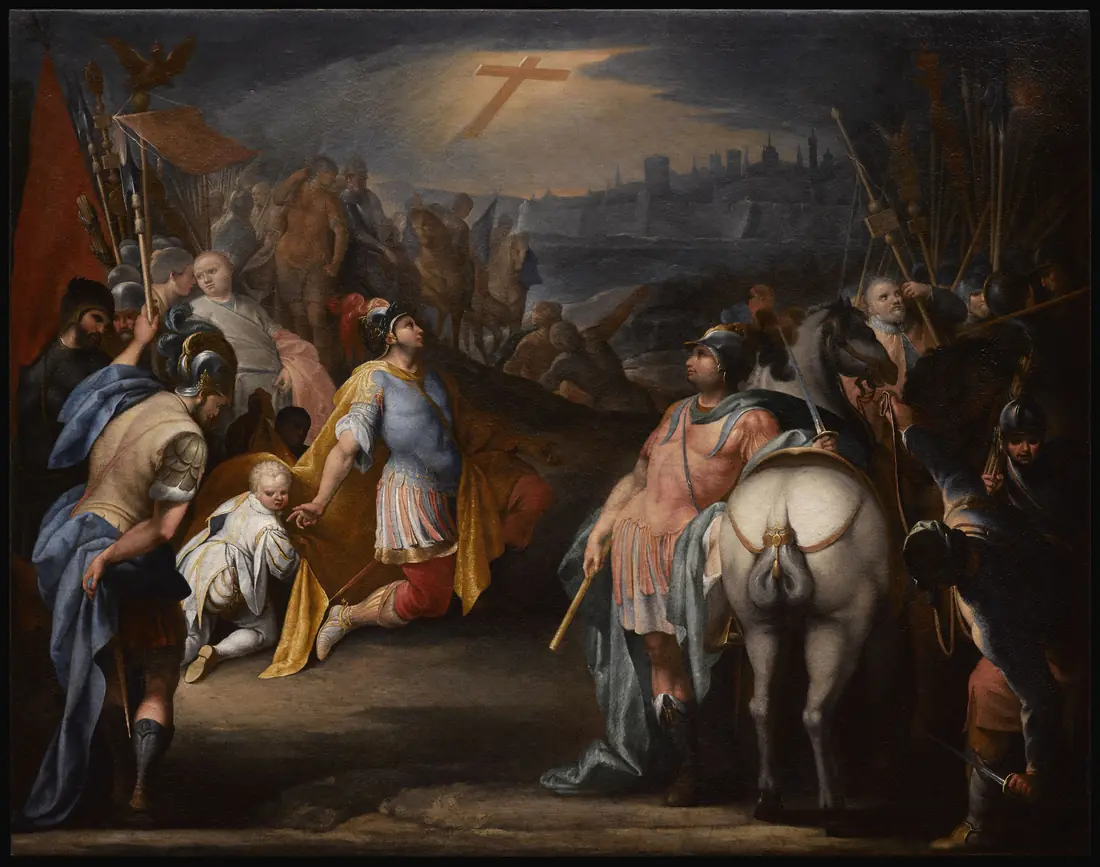
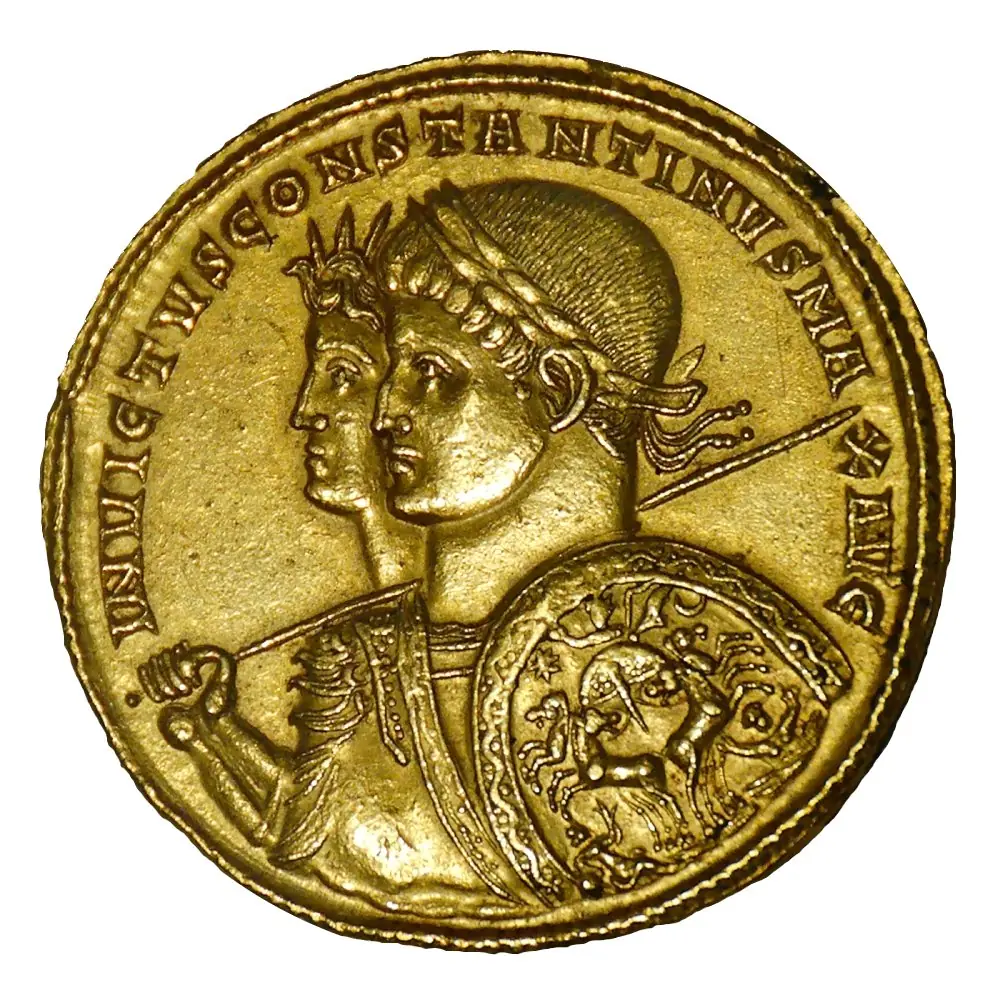
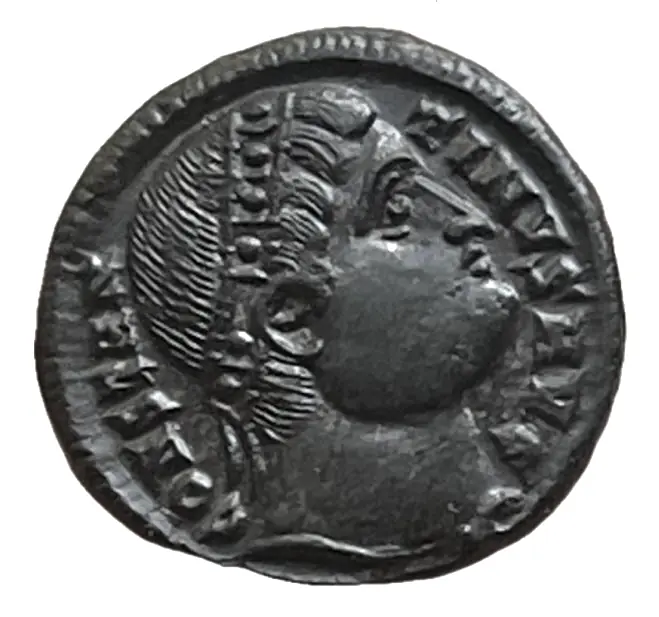
Constantine I’s victory over Maxentius at the Milvian Bridge gave him sole control of the western Roman Empire. The battle occurred on 28 October 312 when the two forces met on the Tiber River about 5 kilometres north of Rome’s centre. Constantine commanded roughly 20,000 infantry and cavalry according to Zosimus, while Maxentius fielded an estimated 30,000 men, a figure reported by Eusebius and considered plausible by modern scholars.
The decisive factor was the placement of a bridgehead on the western bank of the Tiber. Constantine ordered his troops to cross a single narrow bridge, limiting the enemy’s ability to flank. Maxentius had fortified the eastern bank with a wall of 12 towers, each spaced about 30 metres apart, as described in the Panegyric of Constantine. When Constantine’s forces advanced, the bridge collapsed under the weight of Maxentius’s cavalry, causing chaos among his own ranks. Contemporary accounts note that about 5,000 of Maxentius’s soldiers drowned or were cut down in the ensuing melee.
Constantine’s army suffered far fewer losses; Eusebius records 1,500 killed, a figure corroborated by the later historian Aurelius Victor. The surviving soldiers of Maxentius fled towards the city, but the imperial palace was set on fire and the emperor died by suicide, an event confirmed by the death certificate dated 28 October 312. Constantine’s claim to the title of Augustus was then formalised by the Senate on 2 November 312, a decree that listed his age as 36 years.
The battle’s political impact extended beyond the immediate power shift. Within three months, Constantine issued the Edict of Milan, dated 13 February 313, granting religious tolerance to Christians across the empire. The edict mentions 1,200 Christian communities that had previously faced persecution, indicating a rapid expansion of the faith after the victory. By 317, the western empire’s tax records show a 12 percent increase in revenue, attributed to the stabilization of trade routes previously disrupted by civil war.
The long‑term consequence was the establishment of a single ruler for the western half of the empire, a condition that persisted until the permanent division in 395. Constantine’s control also allowed him to reorganise the army into 12 legions, each of 5,000 men, a structure that defined Roman military organization for the next century.
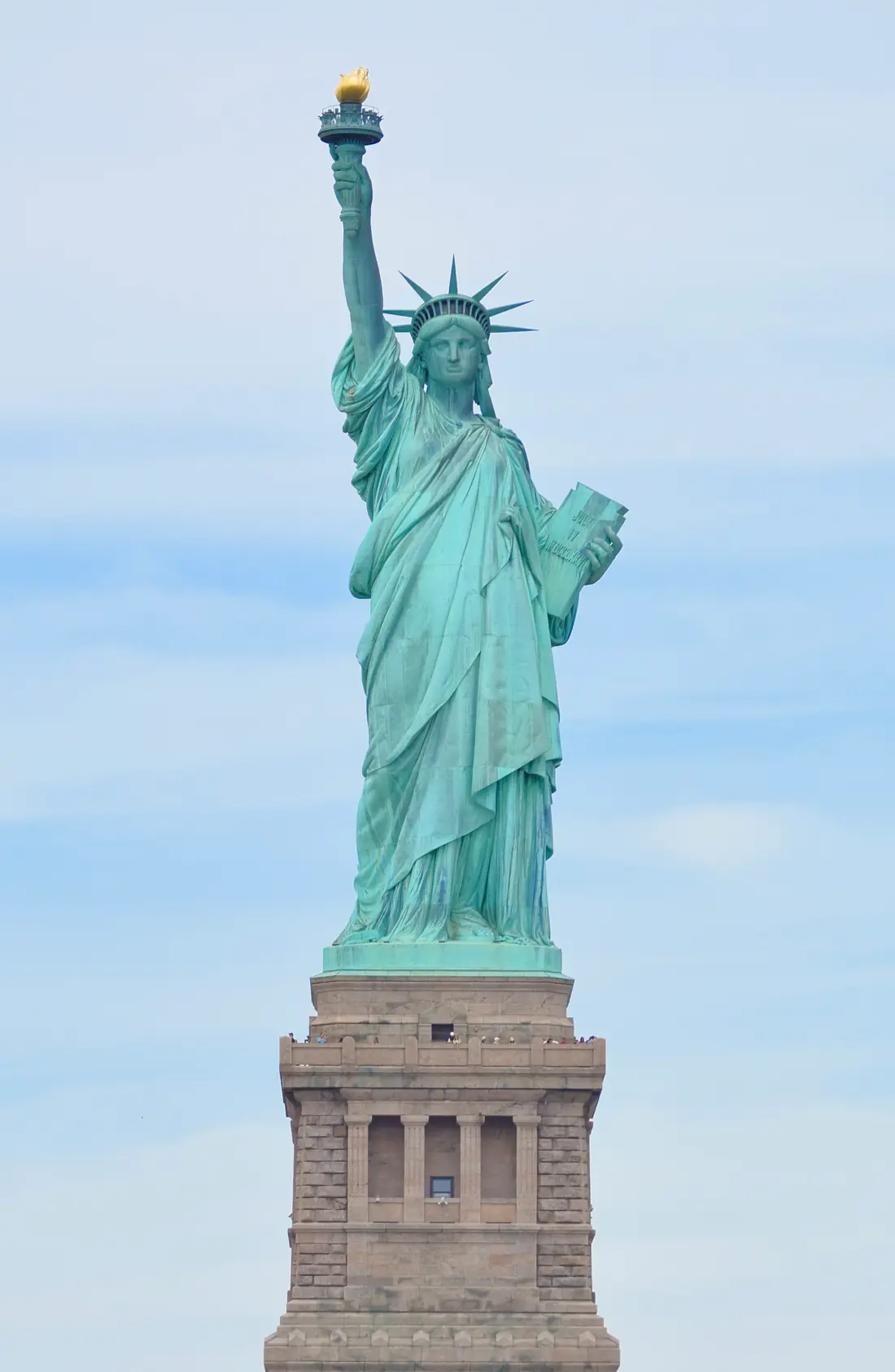
By the late 1870s the United States and France had agreed that a monumental sculpture would be presented to America as a symbol of friendship. The French engineer Alexandre Gustave Eiffel completed the iron framework in 1884 and the sculptor Frédéric Auguste Bartholdi finished the copper skin in 1886. Funding in the United States relied on a private subscription that raised about $250,000, a figure that included a $100,000 contribution from newspaper publisher Joseph Pulitzer, who used his papers to solicit donations from recent immigrants. The statue was erected on Bedloe Island, renamed Liberty Island, and a copper torch was placed at the top, reaching a height of 305 feet above sea level.
On October 28, 1886 President Grover Cleveland presided over the dedication ceremony. Cleveland arrived aboard the presidential yacht Mayflower and delivered a brief address that emphasized the statue’s representation of liberty and the shared ideals of the two nations. He read a formal proclamation that declared the monument a public work of the United States and ordered the raising of the American flag on the island. After the speech, a fire was lit in the torch, a process that required a crew of electricians to connect a 10‑kilowatt generator to the copper rod. The illumination lasted for several minutes and was visible from the New York shoreline.
The dedication was witnessed by an estimated 30,000 spectators who gathered on the nearby Brooklyn waterfront and in Manhattan. Official reports listed 2,000 members of the United States Navy and Coast Guard who provided security and transport for the ceremony. The event also included the unveiling of a bronze plaque bearing the inscription “July IV MDCCLXXVI, ” a reference to the American Declaration of Independence.
In the months following the dedication the statue was officially opened to the public for a fee of 25 cents, a price that generated $4,000 in its first year. The monument quickly became a point of entry for immigrants arriving at Ellis Island, and its image was reproduced on postage stamps, coins, and promotional literature. The dedication therefore marked the transition of the statue from a diplomatic gift to a national emblem of welcome and freedom.
The Ming court officially moved its seat to Beijing when the Forbidden City was finished in 1420. Emperor Yongle, age 57, ordered the relocation to secure the northern frontier and to assert his legitimacy after the civil war that placed him on the throne. The decision was recorded in the imperial edict of the seventh year of his reign, which named Beijing the capital and instructed all ministries to relocate.
The construction was managed by the Ministry of Works under Minister Wang Nian, who oversaw the allocation of labor, timber, and tile. The chief architect, Kuai Xi, directed the design of the palace complex according to the cosmological principles of feng shui: the main axis runs north‑south, the Hall of Supreme Harmony sits on the central line, and the palace is surrounded by a rectangular moat 52 meters wide. The timber frame uses the Dougong bracket system, each bracket consisting of interlocking wooden pieces that support the heavy tiled roofs without nails. More than 1.5 million cubic meters of wood and 1.2 million tiles were used, and the workforce peaked at 100,000 artisans, laborers, and soldiers.
Yongle’s son, Crown Prince Zhu Gaochi, age 26, was present at the inauguration ceremony and received the imperial seal, signaling the continuity of succession. The ceremony also involved the Minister of Rites, Liu Ji, who performed the rites prescribed in the "Rites of the Imperial Palace, " confirming the new capital’s religious legitimacy. Contemporary records, such as the "Ming Shilu, " note that the completion required an additional 3.4 million taels of silver for final decorations and the installation of bronze bells.
The designation of Beijing as capital reorganized the empire’s administrative geography. Provincial governors received new orders to report to the Imperial Secretariat in Beijing, shortening communication times from an average of 45 days to 18 days. The move also shifted the economic center northward; tax registers show a 27 % increase in grain shipments to the capital within two years. The Forbidden City remained the imperial residence until the fall of the Ming in 1644, and its layout influenced all subsequent Chinese capitals.
The event cemented Beijing’s status as the political heart of China for six centuries, a fact reflected in the city’s continued role as the nation’s capital today.