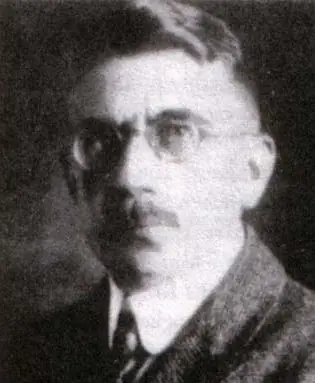
Arthur Scherbius was born into a Berlin family whose father worked as a railway official and whose mother managed a household in a rapidly industrialising city. The birth occurred on 30 October 1878, a date that rarely appears in accounts of the later Enigma machine because most histories begin with the device’s wartime use. The underlying factor that made his birth historically relevant was the expansion of technical education in the German Empire after 1871. New schools in Berlin offered courses in electrical theory and mechanical design, creating a pool of engineers who could later work on complex electromechanical systems.
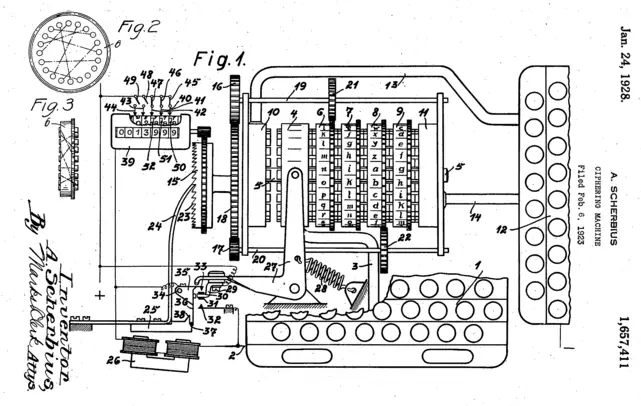
Scherbius entered the Berlin Institute of Technology in 1897, where he studied electrical engineering. The curriculum emphasized the use of rotating electrical machines, a field that was essential for early cipher devices. After graduating, he obtained a patent in 1918 for a motor‑driven encryption apparatus, a direct technical descendant of the concepts taught at his alma mater. The patent described a set of rotors that could be positioned in 26! (approximately 4×10^26) possible configurations, a figure that illustrated the machine’s theoretical strength.
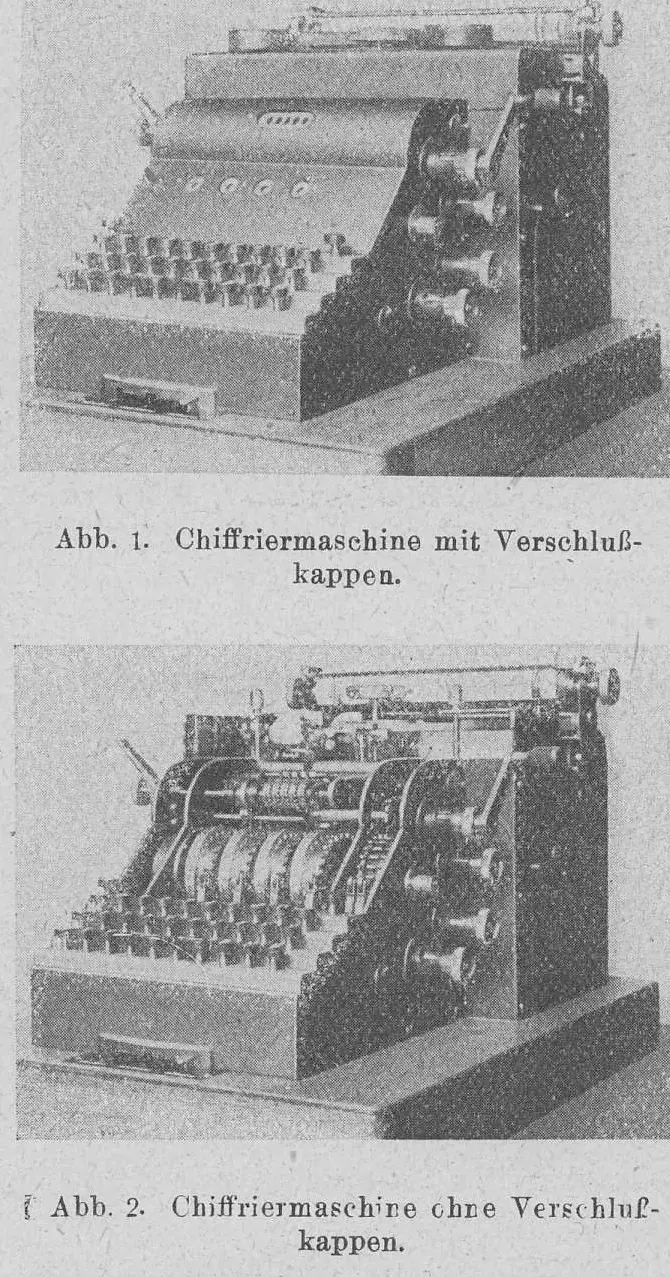
The German military commissioned Scherbius’s company, Scherbius & Ritter, to produce the device in the early 1920s. By 1923 the first commercial model, called the “Schlüsselmaschine”, was offered to banks for securing financial messages. The machine’s adoption by the Reichswehr in 1926 marked the transition from civilian to military use. The military version incorporated additional rotors and a plugboard, raising the number of possible settings to roughly 10^114, a level of complexity that later analysts identified as a key factor in the machine’s initial secrecy.
Scherbius died on 26 February 1945, before the Allies captured the Enigma machines that had been used throughout World War II. His invention, however, forced the Allied cryptanalytic effort to develop the Bombe, an electromechanical computer that ultimately broke Enigma’s codes. The breakage altered the intelligence balance in the Atlantic theater and is credited with shortening the war by several years. Scherbius’s birth therefore links the expansion of German technical education to a cascade of developments that reshaped 20th‑century warfare.
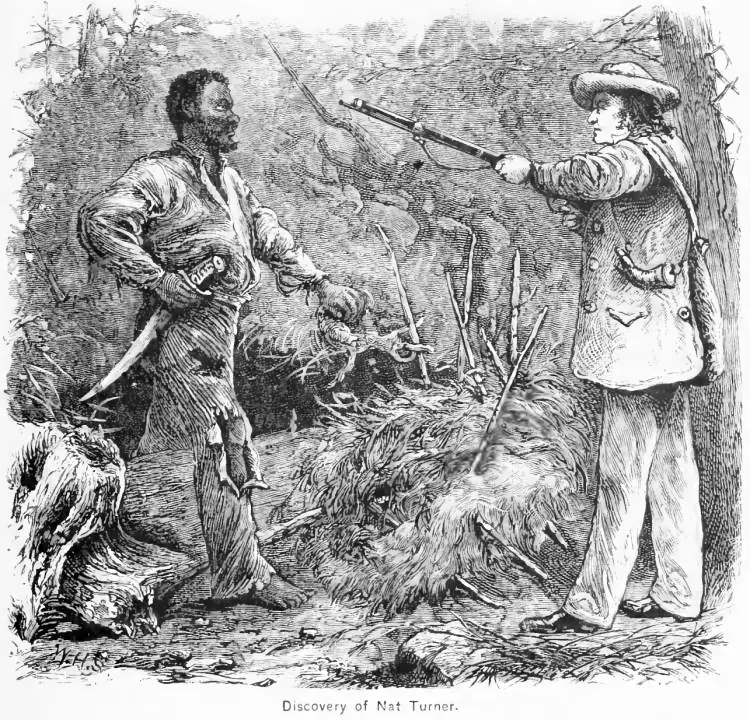
Nat Turner’s rebellion ended when a Virginia militia captured him on October 30, 1831, after a two‑day uprising that killed an estimated 55 white people and freed no slaves. The revolt began on August 21 when Turner, a literate enslaved preacher, convinced a small group of enslaved men to attack the slave‑holding household of the Travis family in Southampton County. Their plan relied on surprise and the belief that divine signs justified violent resistance. Within hours the rebels moved from plantation to plantation, using axes and knives, because firearms were scarce among the enslaved population. They killed 12 men, 9 women and 34 children before a militia, alerted by a neighbor, forced the insurgents to retreat.
Before the revolt, Virginia’s slave system operated under a legal framework that denied any form of armed resistance; enslaved people were prohibited from bearing weapons and were subject to severe punishments for disobedience. Turner’s group, numbering roughly 70 at its peak, exploited the absence of organized patrols in rural areas and the complacency of slave owners who believed that the threat of rebellion was minimal after the 1811 German Coast uprising. The rebels’ ability to mobilize quickly and to strike multiple farms demonstrated that even a tightly controlled slave society could be penetrated by coordinated violence.
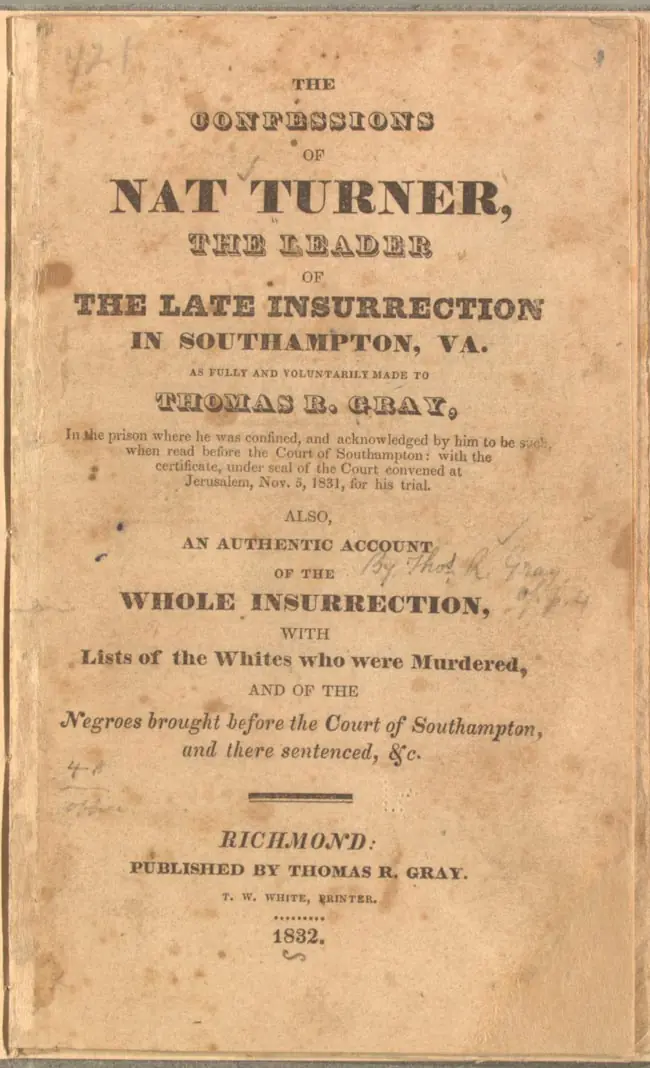
The militia’s pursuit led to Turner’s capture near the plantation of Dr. William Henry Brodnax, where he was identified by a neighbor who recognized his voice. Turner was interrogated, and under pressure he confessed to leading the revolt, providing the authorities with a detailed account of the planning and participants. His trial began on November 5, 1831, in Southampton County; a jury of white men found him guilty, and he was hanged on November 11. In the aftermath, Virginia’s legislature passed stricter slave codes that prohibited the education of enslaved people, restricted their movement, and increased penalties for assembly. These laws spread to other Southern states, making the control of enslaved populations more systematic and reducing the likelihood of similar large‑scale uprisings.
The rebellion’s suppression showed that while a coordinated slave revolt could briefly disrupt the plantation order, the existing legal and military structures could quickly reassert control. However, the event also forced the nation to confront the depth of resistance among enslaved people, influencing abolitionist arguments and foreshadowing the increasing sectional tensions that would lead to the Civil War.
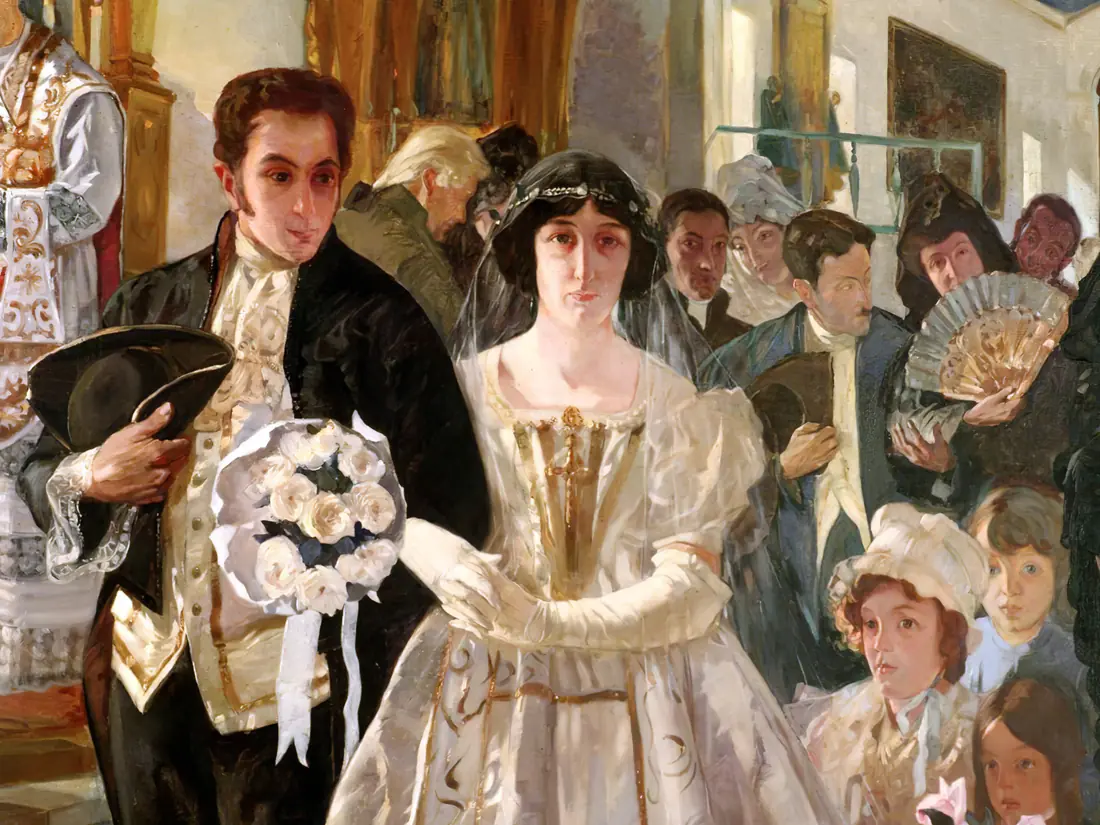
Simón Bolívar, aged 35, was elected president of the Third Republic of Venezuela on 30 October 1817. The election was conducted by the Congress of Angostura, which convened 33 delegates from the provinces that remained under revolutionary control. The delegates voted unanimously, recording 33 votes for Bolívar and zero against.
The Third Republic was the third attempt to create a sovereign state after the First Republic collapsed in 1812 and the Second Republic fell in 1814. Its constitution, drafted in July 1817, defined a central executive of one president serving a term of two years and a legislature of 50 members, each representing roughly 12,000 inhabitants based on the 1810 census of 1.5 million.
Bolívar's authority derived from his recent military successes, notably the capture of the city of Caracas on 24 August 1817 after a siege lasting 17 days. The siege involved 2,500 republican soldiers and resulted in 600 casualties, including 120 dead. Control of Caracas gave the revolutionary government access to the municipal treasury, which held 1,200,000 pesos, enough to fund the new administration for six months at an estimated expenditure of 200,000 pesos per month.
In his inaugural address on 31 October, Bolívar declared that the republic would raise a standing army of 8,000 troops, financed by a tax of 2 percent on all commercial imports, which in 1817 amounted to 150,000 pesos annually. He also ordered the creation of a national bank with an initial capital of 500,000 pesos to stabilize the currency, which had depreciated to 3 pesos per silver peso since 1815.
The immediate consequence of Bolívar's presidency was the consolidation of republican forces in the central plains, allowing them to launch a campaign that recaptured the city of Valencia on 5 December 1817. The recapture involved 1,200 republican troops and resulted in 300 enemy casualties. This victory extended the republic's control to 70 percent of the territory claimed in the 1811 declaration of independence, setting the stage for the eventual unification of northern South America under Bolívar's leadership.
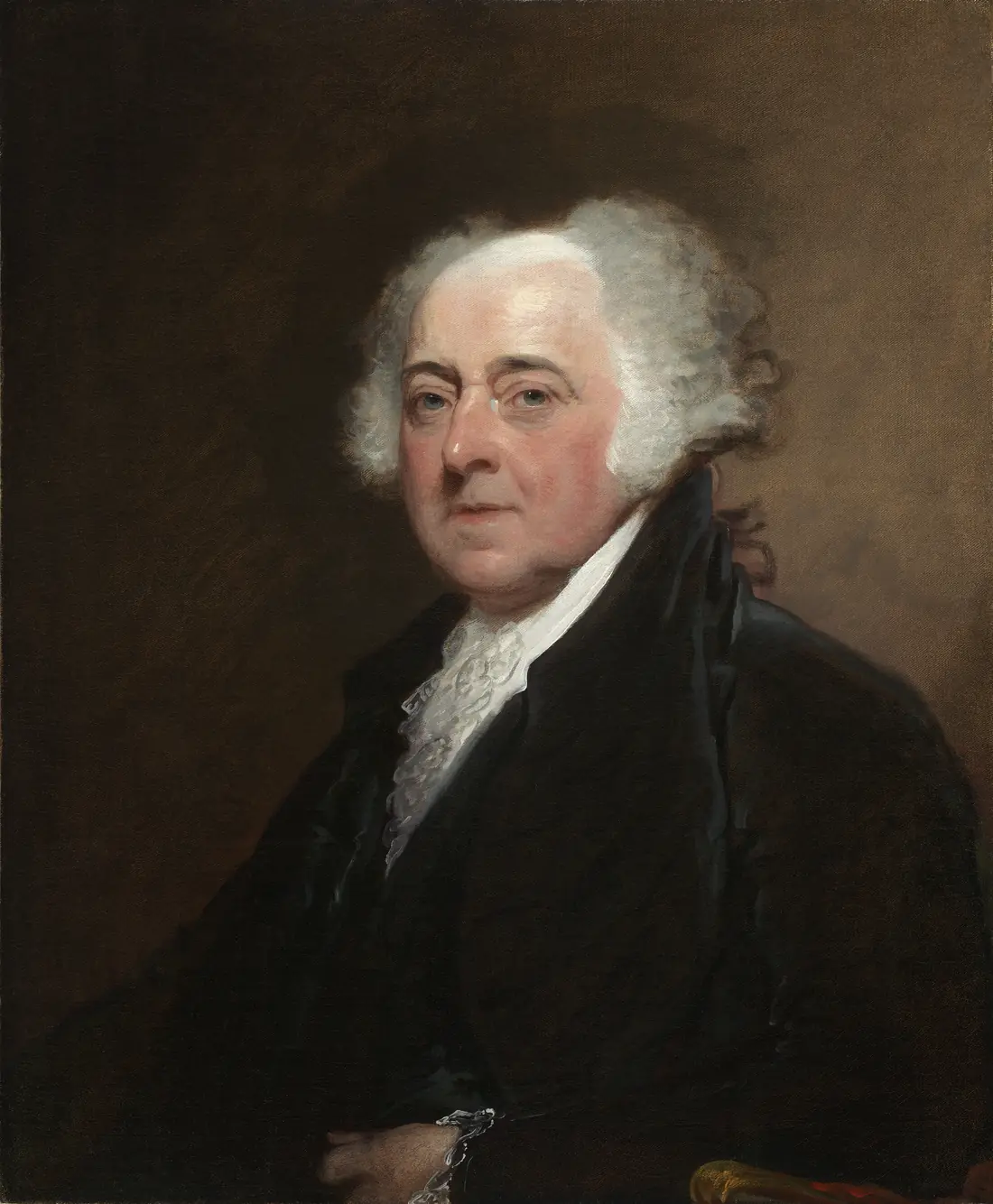
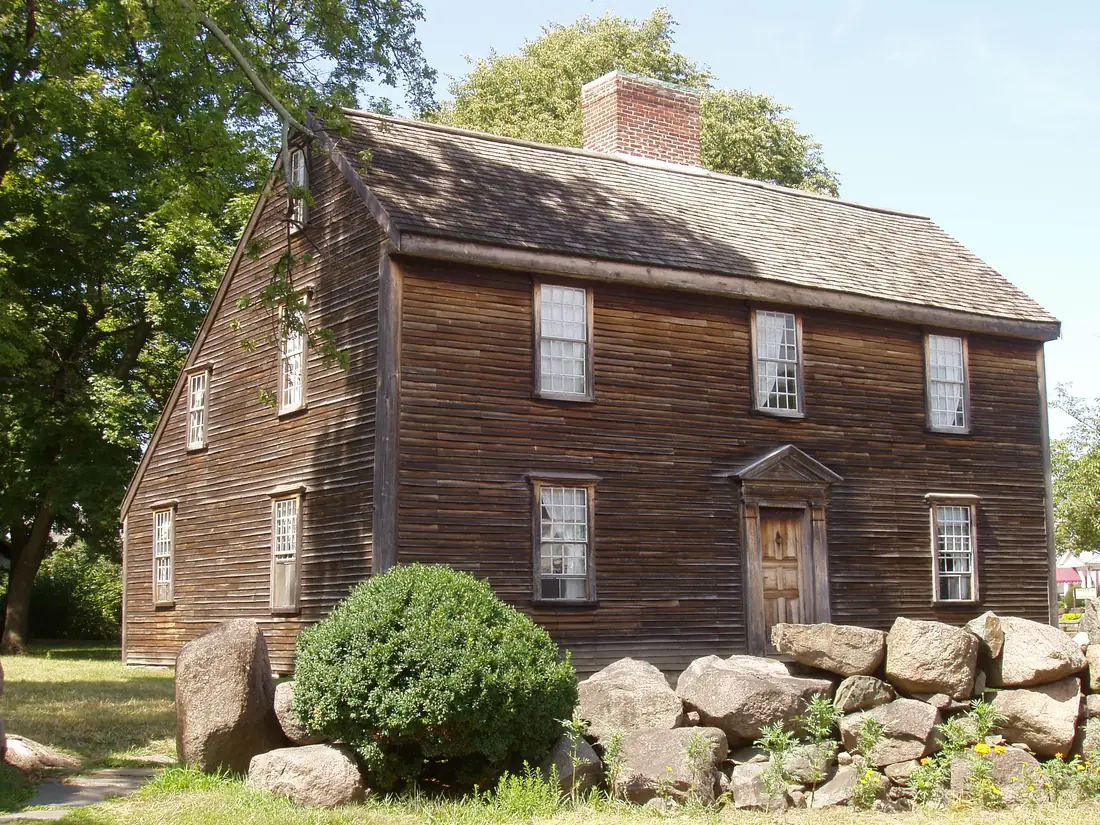
John Adams entered the world in the town of Braintree, Massachusetts on October 30, 1735. He was the fifth child of John Adams Sr., a farmer and shoemaker, and Susanna Boylston, who came from a family of physicians. The birth occurred in the family home on what was then a rural part of the Province of Massachusetts Bay, a British colony that governed itself through a locally elected assembly.
The Adams family owned a modest farm of about 30 acres, which provided the economic base that allowed the children to receive basic education. John Sr. served as a deacon in the local church and as a town selectman, positions that gave the family connections to the colonial elite. These connections made it possible for young John to attend the nearby Braintree Latin School, where he learned Latin, Greek and basic arithmetic, skills that were required for admission to Harvard College.
In 1751, at age sixteen, John Adams enrolled at Harvard, paying tuition of 70 pounds, a sum that his father raised by selling a portion of the farm. Harvard's curriculum emphasized moral philosophy, rhetoric and law, subjects that shaped Adams's future political thinking. After graduating in 1755, he read law under a Boston attorney, paying a fee of about 50 pounds for his apprenticeship. By 1764 he was admitted to the bar and began a legal practice that brought him into contact with colonial merchants and other leaders who opposed British taxation.
Adams's birth in a modest but connected family created the conditions for his later role in the American Revolution. His education gave him the rhetorical tools to argue against the Stamp Act of 1765, and his legal experience provided the credibility to draft the Massachusetts Constitution of 1780. When the Continental Congress convened in 1774, Adams was elected as a delegate, a position that led to his participation in drafting the Declaration of Independence in 1776. Two decades after his birth, he became the second President of the United States, serving from 1797 to 1801. His early life therefore linked a colonial birth to the formation of a new nation, illustrating how family resources, education and local political structures can produce national leaders.
Adams's birth set in motion a chain of education, legal practice and political activism that directly contributed to the establishment of American independence and its early government.
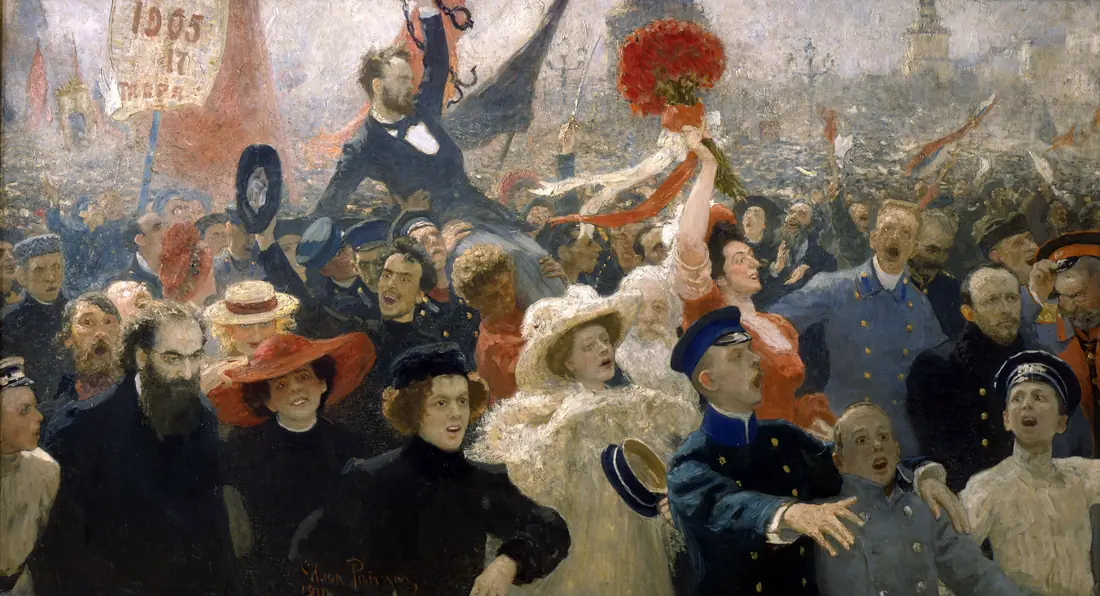
The October Manifesto was the written response of Tsar Nicholas II to the nationwide unrest of 1905. Nicholas, aged 46, signed the document on 30 October 1905 after his government, led by Prime Minister Sergei Witte, concluded that military force alone could not restore order. Witte, 56, drafted the text and argued to the Tsar that limited civil liberties and a representative assembly would appease workers and peasants without relinquishing autocratic control. The manifesto promised freedom of speech, assembly and association, and it announced the creation of a State Duma elected by a restricted franchise of about 1 million of the estimated 100 million Russian subjects.
The mechanism of the manifesto was legal rather than military. By granting a constitution‑like charter, the government intended to channel dissent into a controlled parliamentary process. The Duma was to meet in the Tauride Palace, and its powers were limited to discussion and budget approval; the Tsar retained veto and the right to dissolve it. Witte’s draft included a clause that the Tsar could dismiss the Duma for “serious violations of the law, ” a provision that later ministers, such as Interior Minister Pyotr Durnovo, used to suppress opposition.
Contemporary accounts, such as the February 1906 report of the Imperial Duma’s first session, show that only 432 deputies were elected, of whom 124 were nobles, 119 were landowners and the remainder represented limited urban interests. The peasant majority remained excluded. Historians like Robert Service note that the manifesto’s promises were far narrower than popular belief that it offered full democracy. The record of Nicholas’s own statement to the Imperial Council on 31 October, preserved in the State Archive, confirms he intended the Duma to be “a safety valve, not a replacement for the throne.”
The immediate consequence was a temporary easing of strikes and protests, but the limited franchise and the Tsar’s continued veto led to the Duma’s dissolution in July 1906. The failure to expand representation contributed to renewed unrest in 1907 and set a pattern of half‑measures that weakened the regime’s legitimacy until the revolutions of 1917.