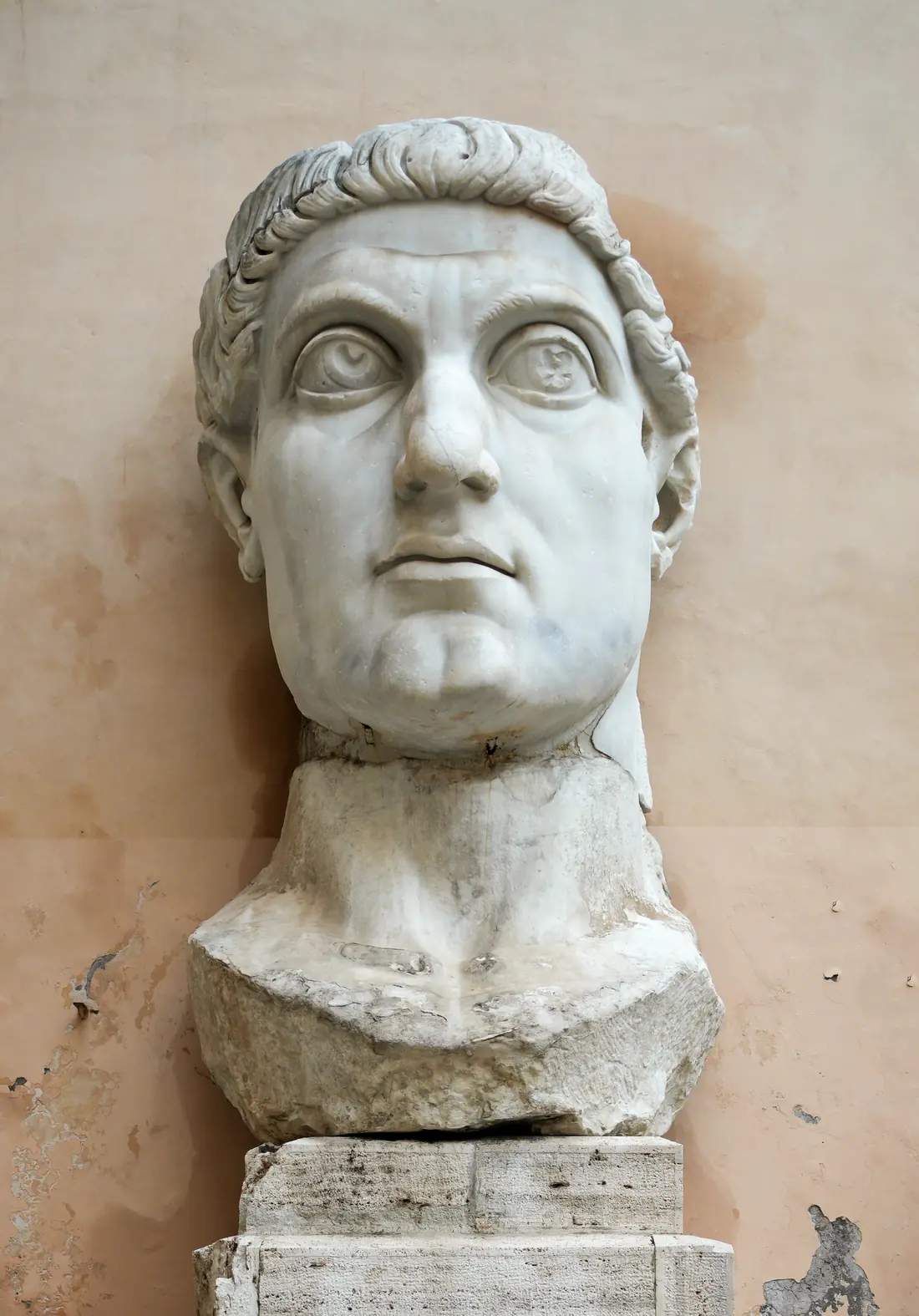
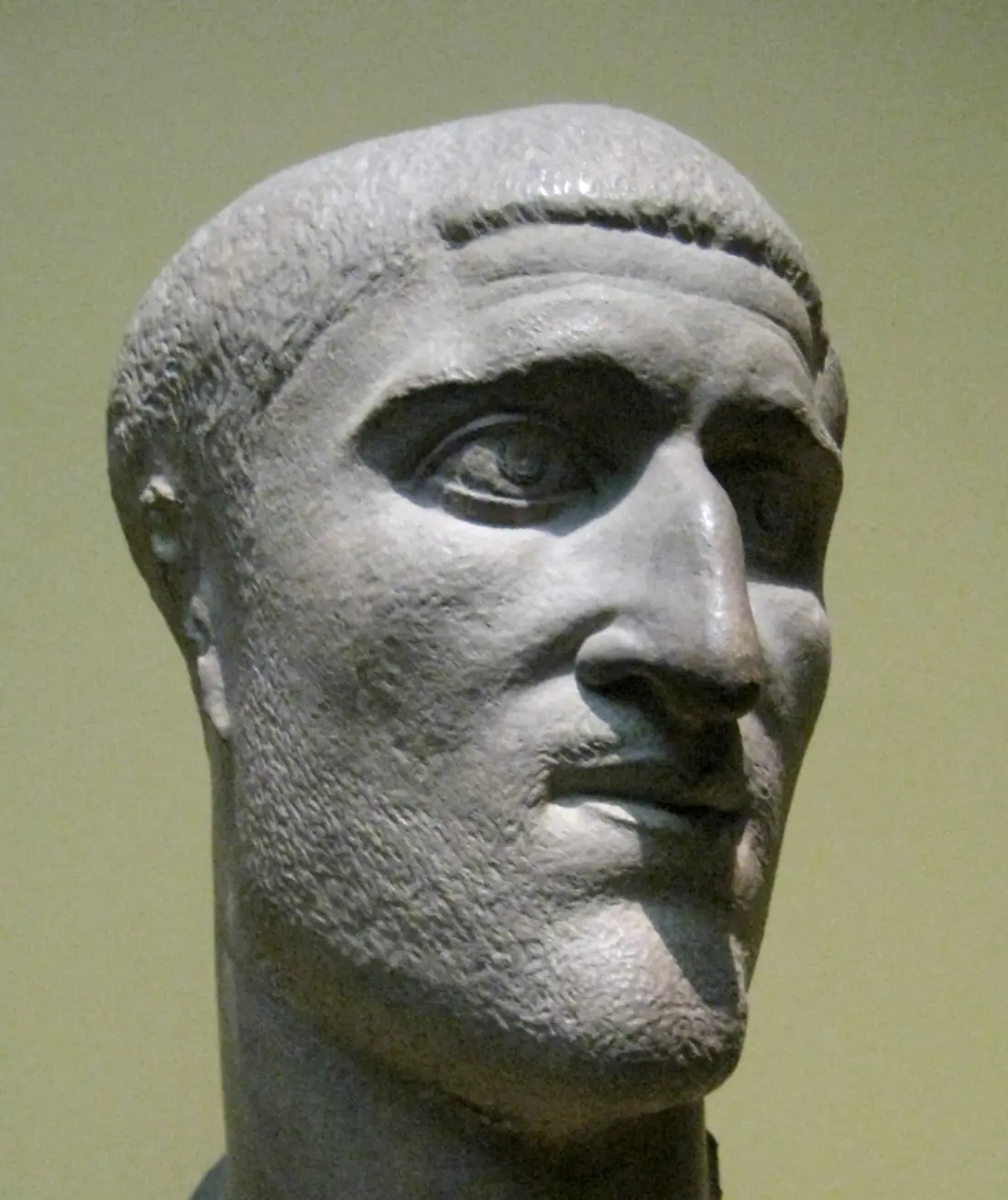
Constantine's entry into Rome on October 29, 312 marked the first imperial triumph after a civil war that united the western empire under a single ruler. The triumph was possible because Constantine's forces defeated Maxentius at the Milvian Bridge on October 28, a battle in which the eastern army of about 40,000 men crossed the Tiber and broke the defensive line of Maxentius' 30,000 troops. The decisive moment was the collapse of Maxentius' bridgehead, which forced his troops to flee and left the emperor trapped on the far side of the river. Historical sources such as Lactantius and Eusebius record that Maxentius drowned while trying to escape, but the popular image of him being killed in combat is inaccurate. Archaeological evidence and contemporary accounts confirm that his body was recovered from the river the next morning and later displayed in the Forum before being beheaded. This act was not a spontaneous act of vengeance; it was a calculated political statement meant to demonstrate the end of Maxentius' claim and to legitimize Constantine's authority.
The triumph itself was a carefully staged public ceremony. Constantine rode in a chariot drawn by four white horses, the traditional symbol of a victorious commander, and displayed the captured imperial regalia of Maxentius. The crowd of Roman citizens, estimated at several hundred thousand, witnessed the display of the severed head, which was placed on a pole as a warning to other potential rivals. By presenting the head publicly, Constantine reinforced the message that opposition to his rule would be met with the same fate. The triumph also allowed him to claim the title of Augustus without contest, consolidating his control over the western provinces.
The longer impact of the triumph was the acceleration of Constantine's religious policies. Within months he issued the Edict of Milan, granting tolerance to Christians, a move facilitated by his unchallenged position after the victory. The removal of Maxentius eliminated a major patron of pagan cults in Rome, allowing Christian leaders to acquire former imperial properties. Over the next decade, the shift in religious patronage contributed to the gradual Christianization of the empire, affecting millions of subjects across the Mediterranean. The triumph thus served not only as a celebration of military success but also as a turning point that enabled Constantine to reshape the empire's religious landscape.
In the years following the triumph, Constantine founded Constantinople in 330, establishing a new capital that would become the center of Eastern Christianity. The precedent set by his public display of power in Rome demonstrated that military victory could be leveraged to enforce sweeping cultural changes, a pattern repeated by later emperors.
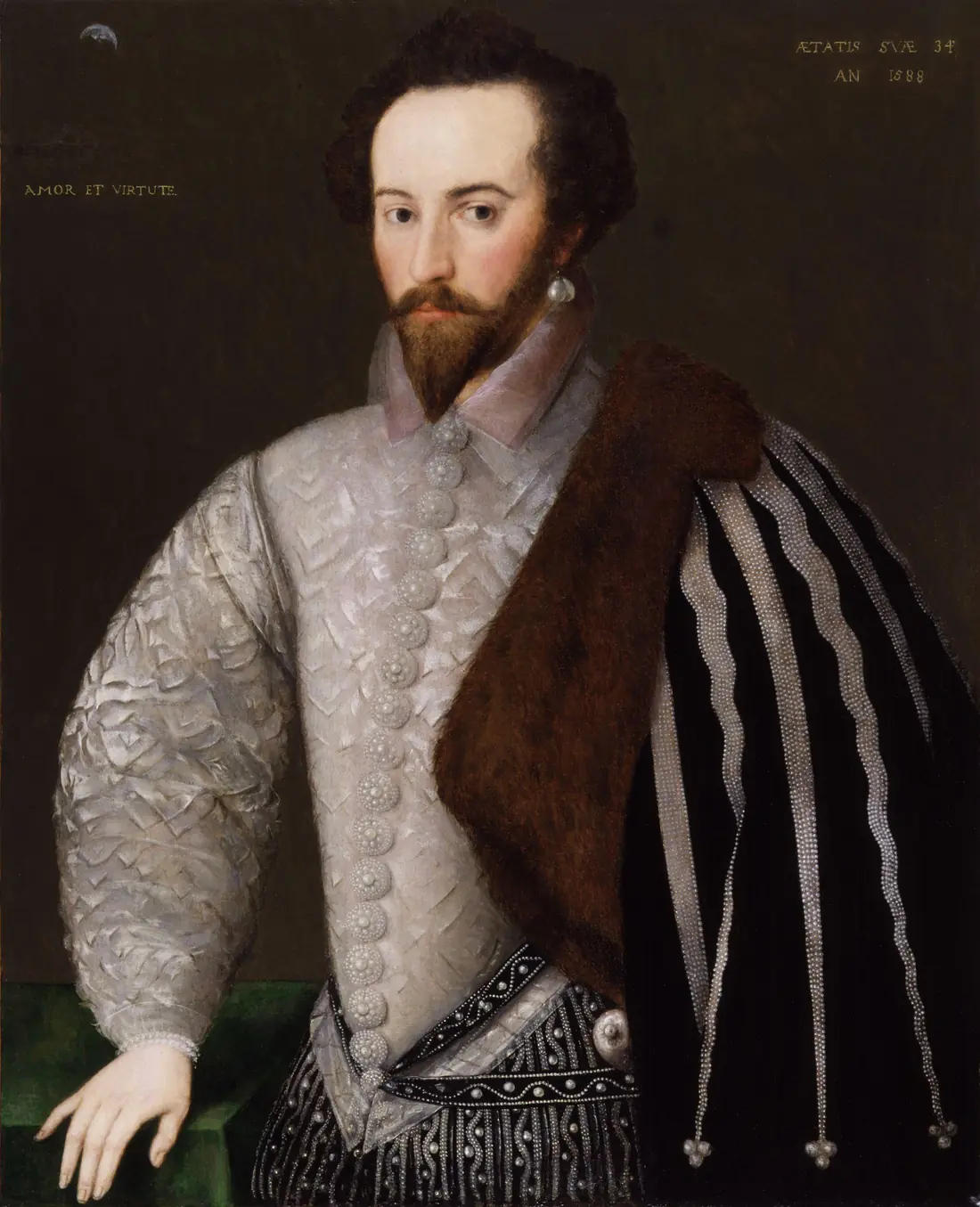
Sir Walter Raleigh was put to death by hanging in the Old Palace Yard of the Westminster Hall. The execution was the final act of a legal process that began when the Crown charged him with violating the 1604 proclamation that forbade any English subject from mounting a private armed expedition against Spain. The law required a formal indictment, a trial before the King's Bench, and a sentence that could be carried out only after the monarch’s explicit consent. Raleigh’s trial on 24 July 1618 produced a guilty verdict on the count of treason because he had organized the ill‑fated 1617 raid on San Juan in the Caribbean, a venture that breached the peace treaty with Spain and resulted in the capture of several Spanish ships.
The court’s reasoning rested on the principle that a subject could not wage war without the sovereign’s permission. The judges cited the 1559 Treason Act, which defined levying war against the king’s peace as high treason, punishable by death. Raleigh’s defense argued that the raid was a private commercial venture, but the judges rejected that distinction, emphasizing that any armed aggression altered diplomatic relations and therefore fell under the king’s exclusive prerogative. King James I signed the death warrant on 28 October, confirming that the execution was a state decision, not a personal vendetta.
Raleigh’s execution altered the balance of power between the monarchy and the emerging class of private explorers. Before 1618, English adventurers could hope that royal favor would protect them even after a failed expedition; the Crown often issued pardons or restored lands after negotiations. After the hanging, the precedent was clear: the Crown would enforce the treason statutes rigorously, and private overseas aggression without explicit royal charter became a legal risk that most investors could no longer ignore. This shift made state‑sanctioned companies, such as the later East India Company founded in 1600 but expanded after 1618, the normal vehicle for overseas trade and colonisation.
The immediate consequence was the confiscation of Raleigh’s estates, including the manor of Sherborne, which passed to the Crown and later to Sir Robert Carr. The loss of his patronage network also discouraged other nobles from sponsoring unsanctioned raids, channeling English expansion into corporate structures that required parliamentary approval and royal licences. This legal and financial realignment laid the groundwork for the systematic empire‑building that defined the 17th and 18th centuries.
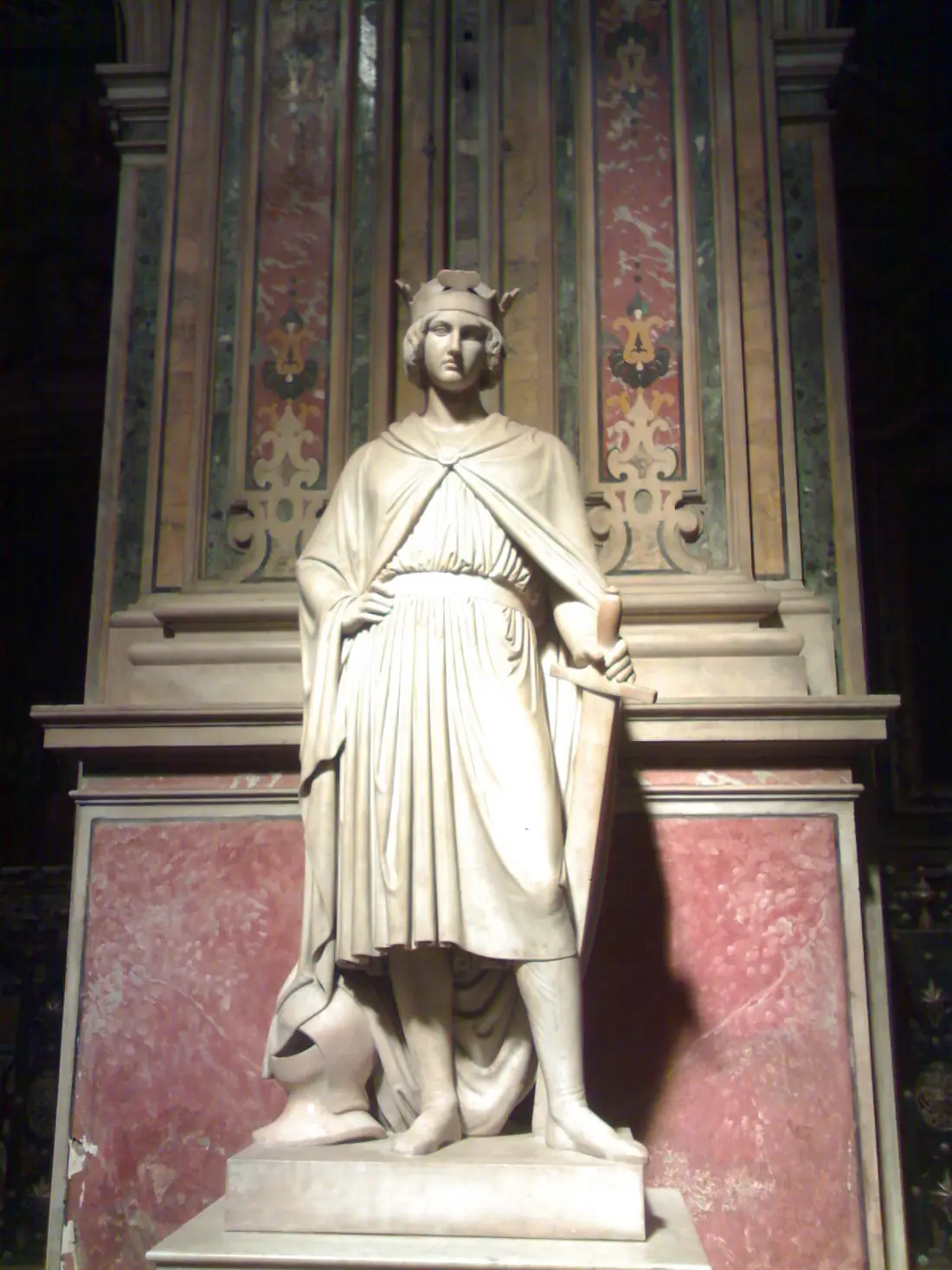
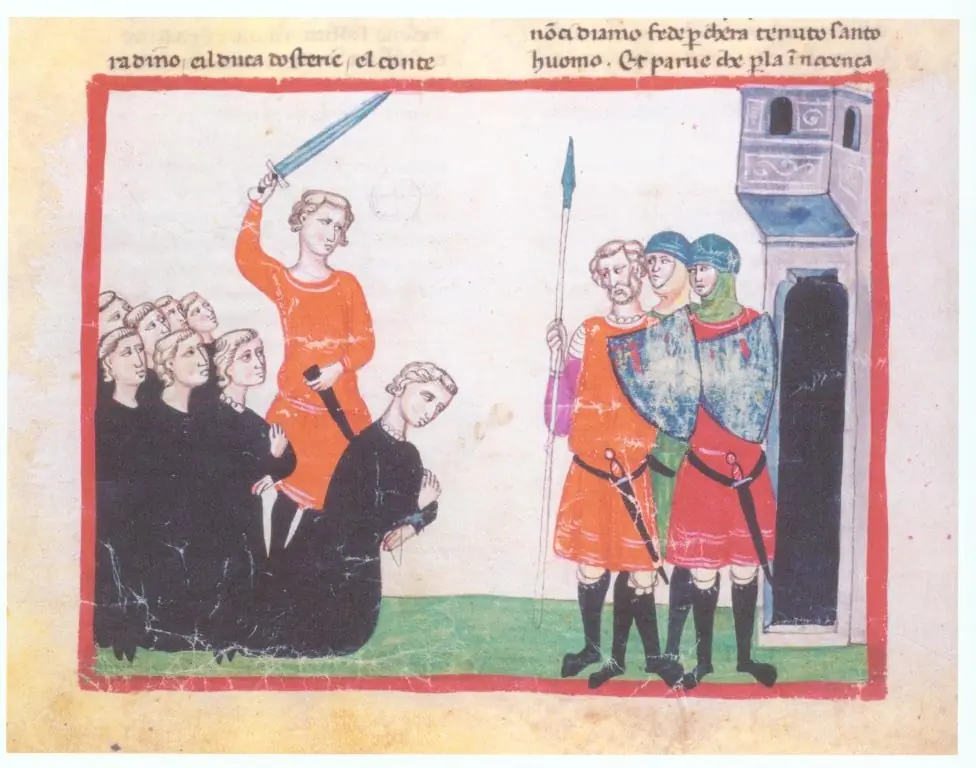
Conradin, the last male of the Hohenstaufen dynasty, was executed in Naples on 29 October 1268. After the defeat of his forces at the Battle of Tagliacozzo in August 1268, he fled south hoping to raise support in the Kingdom of Sicily, which the papacy and the Angevins claimed as a fief. His capture occurred on 23 September at Torre Astura, where a small garrison loyal to Charles of Anjou handed him over to the Angevin authorities.
Charles, King of Naples and son of King Louis IX of France, ordered a formal trial in the Castel dell'Ovo. The tribunal consisted of three judges: the papal legate Guglielmo Fieschi, the Neapolitan chancellor Pietro della Vigna, and the Angevin marshal Jean de Clermont. The charges were treason against the crown of Sicily and violation of the papal bull that had excommunicated the Hohenstaufen claimants. Conradin pleaded that he acted to reclaim his hereditary rights, but the judges found him guilty and sentenced him to death.
The execution was carried out at the Castel Nuovo at dawn on 29 October. Two executioners, identified in contemporary chronicles as Giovanni and Matteo, placed the 15‑year‑old duke on a wooden scaffold. The method was beheading with a sword, a practice reserved for noble prisoners. The executioner’s sword broke on the first blow, requiring a second strike to complete the decapitation. Witnesses recorded that the crowd numbered about 2,000, many of them local merchants and soldiers.
The death of Conradin eliminated the last legitimate Hohenstaufen claimant to the Holy Roman Empire and the Kingdom of Sicily. It allowed Charles of Anjou to consolidate his rule over southern Italy without a rival dynastic claim. The papacy, which had supported Charles, gained a decisive victory in its struggle against imperial influence in the peninsula. In the longer term, the extinction of the Hohenstaufen line contributed to the rise of the Guelph‑Ghibelline conflicts, as Italian city‑states aligned with either papal or imperial factions.
Financially, the confiscation of Conradin’s estates added an estimated 200,000 florins to the Angevin treasury, funds that were used to fortify Naples and to fund further campaigns in the Balkans. The execution also set a precedent for the use of public beheading as a tool of political control in medieval Italy, influencing later actions against rebellious nobles. The removal of Conradin therefore reshaped the balance of power in Italy and marked the end of a dynasty that had ruled the empire for more than a century.
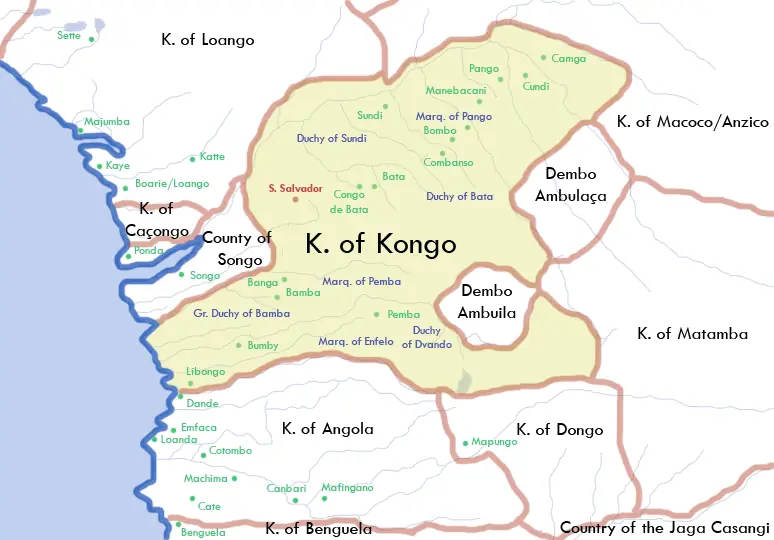
The Portuguese governor of Luanda, António de Saldanha, ordered a large expedition to force the Kongo kingdom to accept a reduced tribute after Kongo had stopped sending the agreed tribute of slaves and ivory. The decision was made in early September 1665 and involved three carracks, two smaller vessels and about 1,200 Portuguese soldiers, plus a contingent of African allies. Their target was the Kongo stronghold at Mbwila, a mountain pass that controlled the road between the interior kingdom and the Atlantic coast.
Kongo’s king, António I, assembled an army that historians estimate at 15,000 men, including 5,000 infantry armed with muskets supplied by the Dutch, and a cavalry of about 1,000 horsemen. He chose to meet the Portuguese in the narrow valley near the Mbwila river, hoping the terrain would neutralise the Portuguese cannons and prevent their ships from providing fire support. The Kongo plan relied on a swift charge that would break the Portuguese line before they could form a defensive square.
On 29 October the two forces clashed. Portuguese artillery fired a volley that killed roughly 800 Kongo warriors before the infantry could close. The Kongo cavalry then attempted a charge but became disordered in the marshy ground and suffered heavy losses; contemporary reports list 3,200 dead and 1,500 captured. Portuguese casualties were about 150, including several officers, but the decisive moment was the death of King António I, who was hit by a cannonball that shattered his skull. His body was displayed on the battlefield, and the Kongo banner was seized.
The immediate result was the collapse of Kongo’s central authority. The king’s nephew, Pedro III, claimed the throne but faced rival claimants and could not restore the tribute system. Portuguese control of Mbwila gave Luanda a permanent foothold in the interior, allowing further expansion of the slave trade. Within two years the Portuguese established a fortified outpost at the pass, and Kongo’s influence over the region waned permanently. The battle thus marked the end of Kongo’s status as a regional power and accelerated the Portuguese monopoly on Atlantic slave exports from Angola.