By late 1799 the French government was the Directory, a five‑member executive elected by the legislature. The Directory controlled the army but depended on costly subsidies from the Treasury, which was chronically short. Inflation and food shortages had eroded public confidence, and royalist and Jacobin factions each claimed the Directory was failing. Napoleon Bonaparte, then commander of the Army of Italy, had returned to Paris with a reputation for rapid victories and a personal treasury of about 2 million livres earned in Italy.
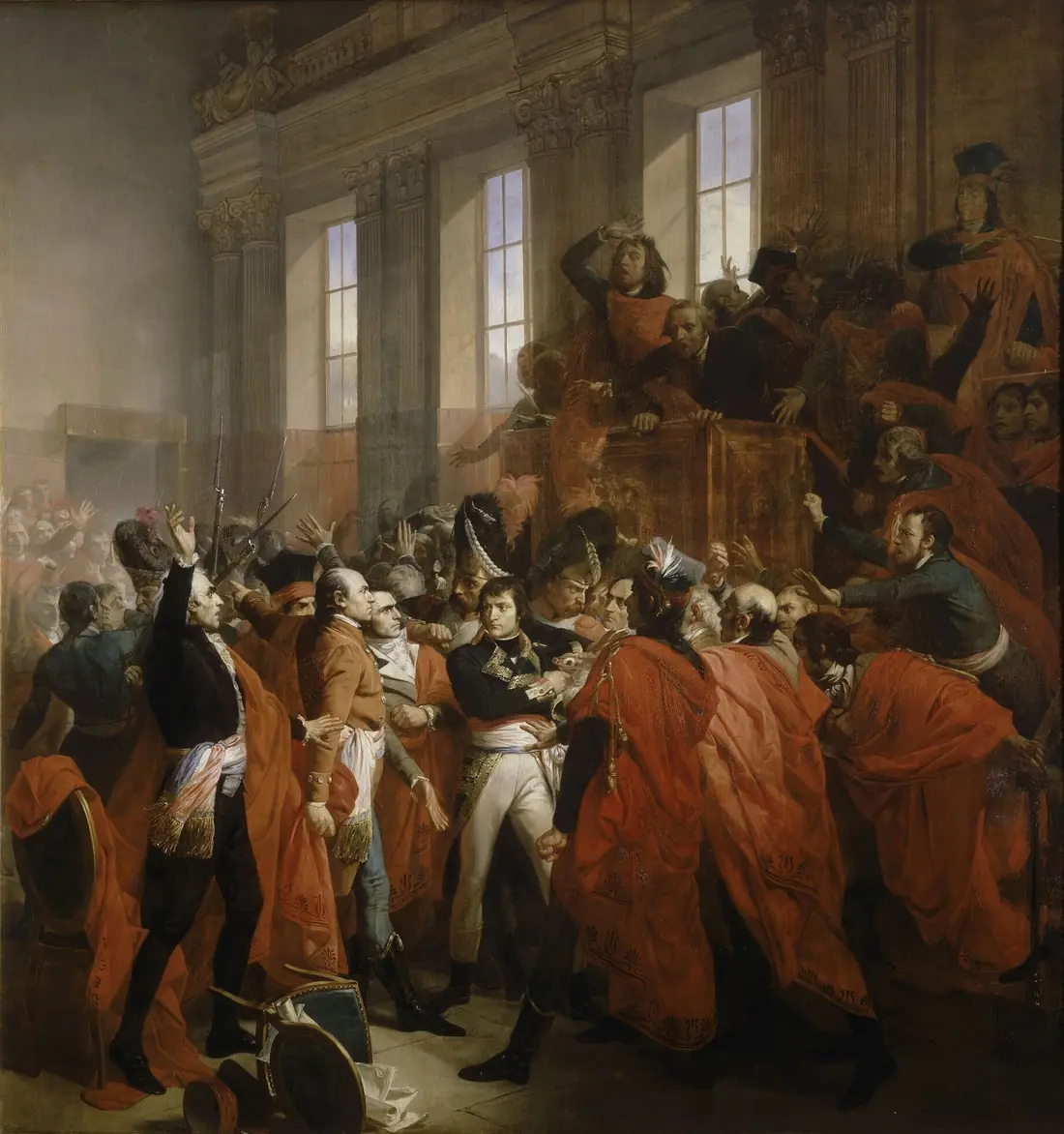
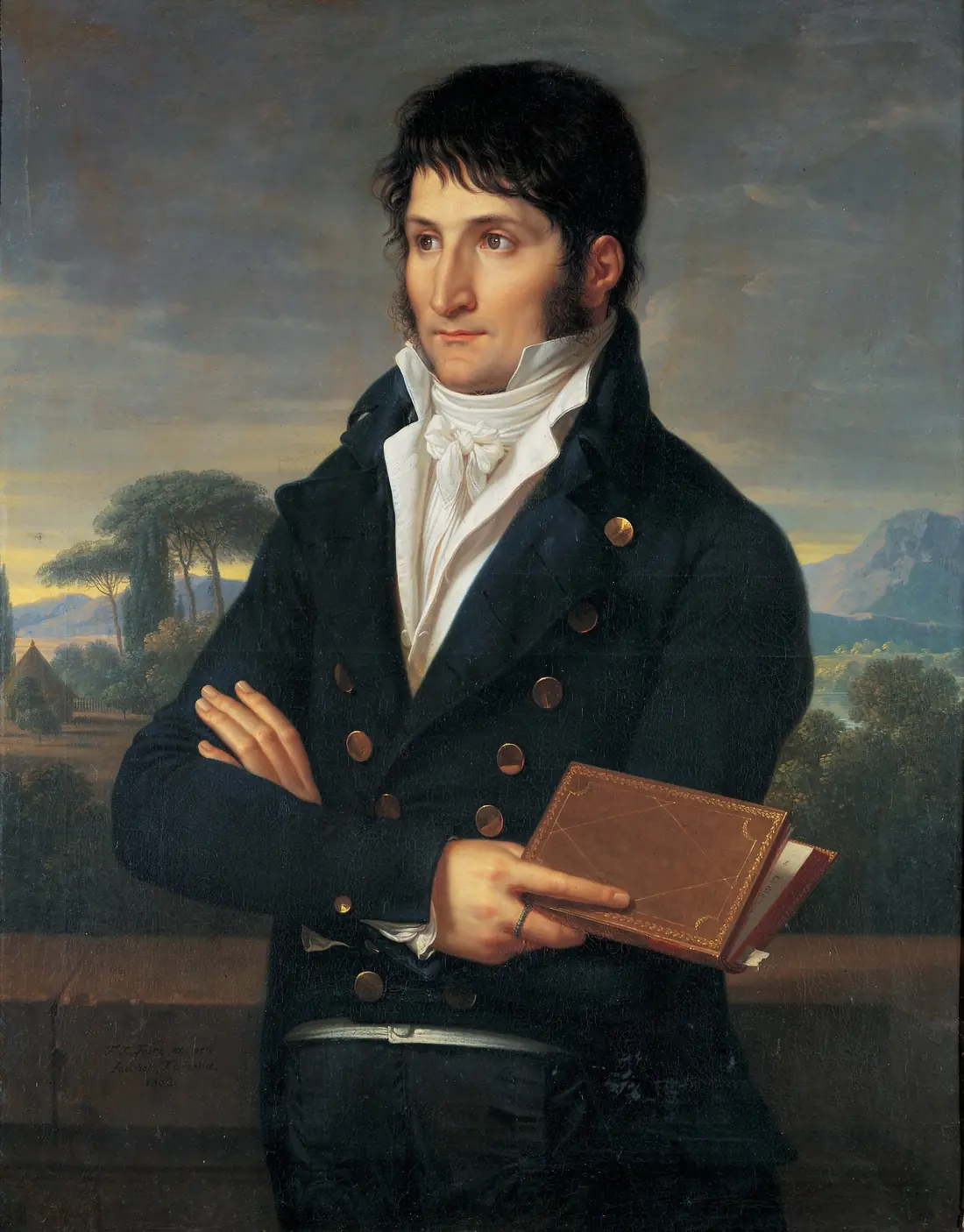
On 9 November 1799 the Directory called a meeting of the Council of Ancients and the Council of Five Hundred to discuss a new constitution. Napoleon entered the council chamber with 80 loyal troops, a force sufficient to intimidate but not to engage in open combat. He addressed the council, arguing that the current system could not manage the war effort. The president of the Council of Five Hundred, Lucien Bonaparte, his brother, declared the meeting suspended and ordered the doors sealed.
The following day Lucien, acting as president of the Council of Ancients, announced the dissolution of the Directory. The three remaining directors were placed under guard and later retired to private life. A provisional government of three consuls was created, with Napoleon designated First Consul, Emmanuel Joseph Sieyès as Second Consul, and Pierre‑Roger Ducos as Third Consul. The new constitution concentrated legislative power in a single chamber of 400 members and gave the consuls authority to appoint ministers and direct foreign policy.
The coup was accomplished without large‑scale bloodshed; official reports list fewer than a dozen injuries among the troops present. The army remained under Napoleon’s command, ensuring that the military would support the new regime. The financial crisis was addressed by a new tax on property valued over 3,000 livres, raising about 150 million livres in the first year. The political re‑organization ended the Directory’s rotating executive and created a central authority that lasted until Napoleon proclaimed himself Emperor in 1804.
In the immediate aftermath the Consulate stabilized the French state, restored order in Paris, and prepared the legal reforms that would become the Napoleonic Code. The coup thus marked the transition from a collective revolutionary government to a singular leadership that would dominate France for the next decade.
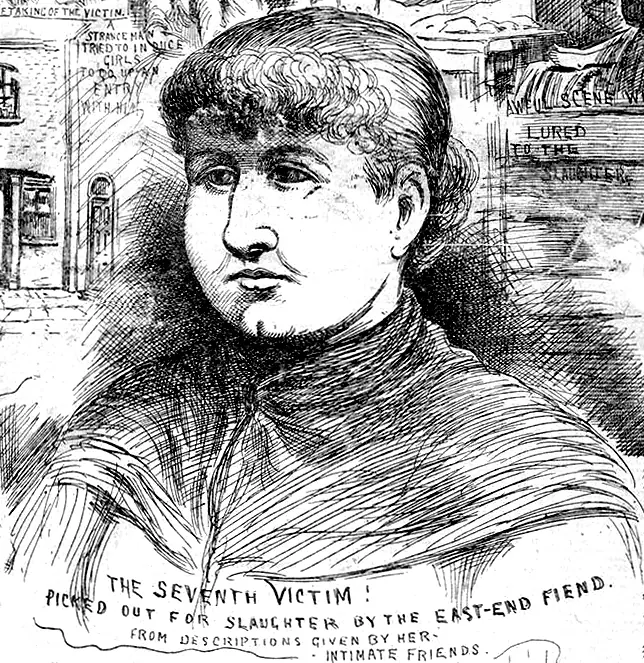
Mary Jane Kelly was the last confirmed victim of the unidentified killer known as Jack the Ripper. By November 1888 the East End of London was already experiencing a series of murders in which five women, all prostitutes, had been found with their throats cut and their bodies mutilated. Police investigations had focused on the Whitechapel district because the victims lived and worked there, and the community was accustomed to frequent police patrols and public inquiries.
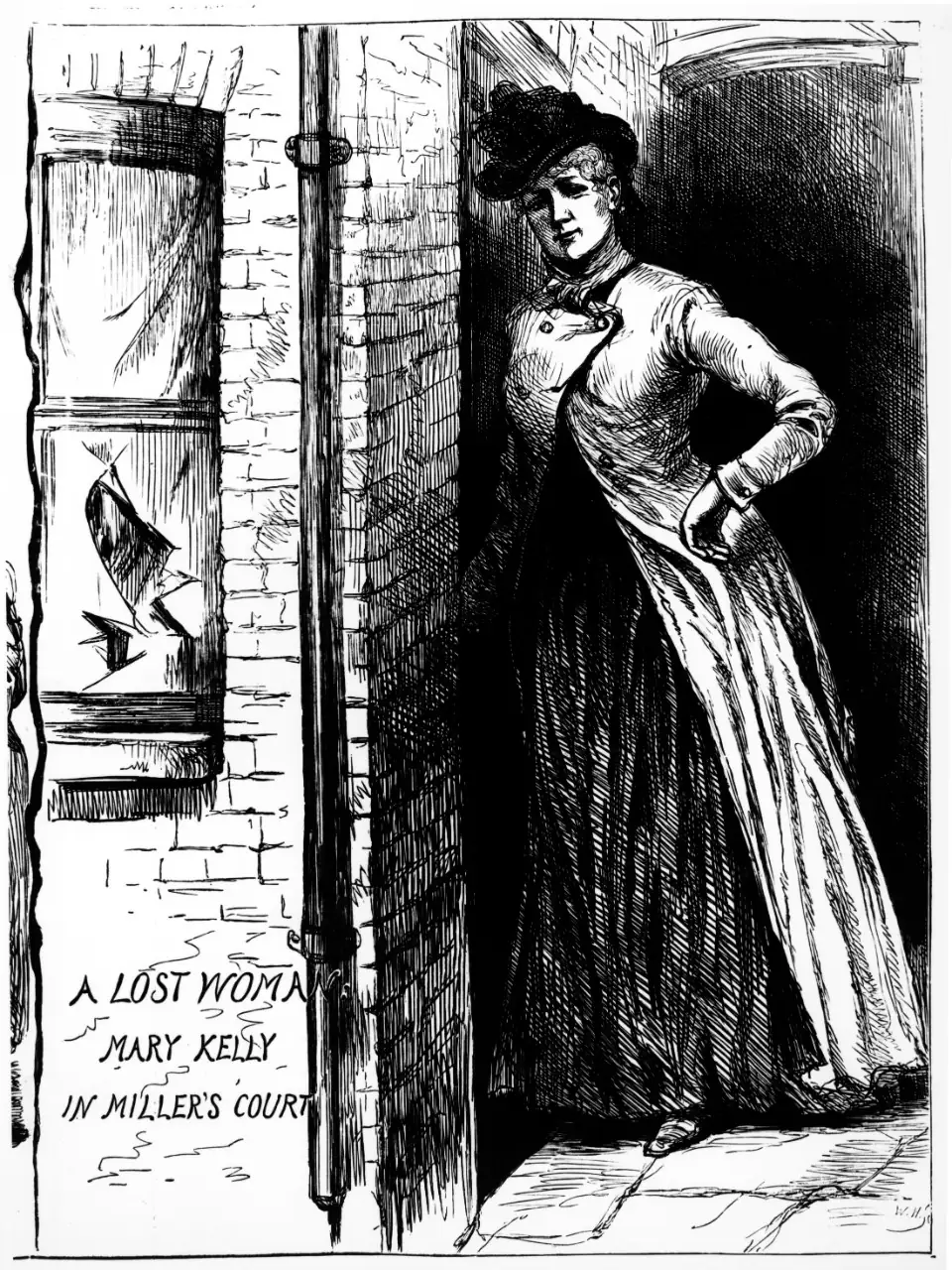
On the night of 8 November 1888 Kelly, a 25‑year‑old Irish immigrant, rented a single room at 13 Miller's Court, a courtyard behind 26 Dorset Street. She paid a weekly rent of five shillings and shared the premises with a man named Joseph Barnett, who had previously lodged there. At approximately 2 a.m. on 9 November a neighbour heard a scream and knocked on the door. The neighbour reported the disturbance to the police at 3 a.m.
Inspector Frederick Abberline and Sergeant William Thicke arrived at 3 a.m. and forced entry after hearing a metallic clatter. Inside they found Kelly lying on a mattress, her torso exposed, her abdomen and genitals extensively mutilated, and her face covered with a handkerchief. The murder scene contained over thirty pieces of flesh removed with a sharp instrument, most likely a knife. Police noted that the room was heavily blood‑stained and that the blood had soaked the floorboards and the mattress. A small brass key found on the floor matched the lock of the front door, linking the crime to the interior of the court.
Barnett was arrested at 4 a.m. after being identified by the neighbour who had heard the scream. He was taken to the Metropolitan Police Station, interrogated for three hours, and released without charge because he could not account for the presence of a knife or the extensive cuts. No weapon was recovered; the only forensic evidence was a fragment of a torn fabric that matched the material of a dress found in a nearby rubbish heap. The coroner’s inquest, held on 14 November, recorded the cause of death as multiple abdominal wounds and noted that the victim had been strangled before the mutilation began.
The murder of Kelly ended the known series of Whitechapel killings. Public fear peaked, prompting the Home Office to increase the number of patrols in the district from 120 to 200 officers. The case remained unsolved, and the lack of a conviction contributed to enduring speculation about the killer’s identity. The investigation also led to reforms in police record‑keeping, including the systematic cataloguing of crime scene photographs, a practice that became standard in later Metropolitan investigations.
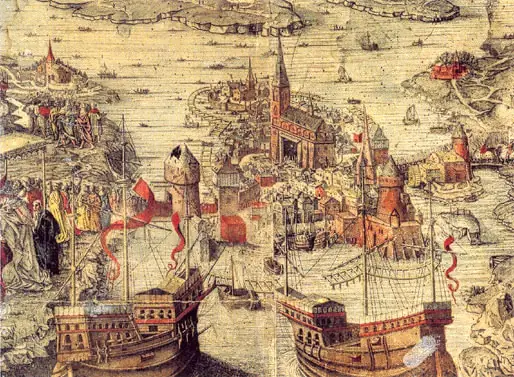
The Swedish city of Stockholm became the site of a legally sanctioned execution of more than fifty nobles and clergy on 9 November 1520. The executions followed a trial convened by Christian II of Denmark, who had seized the Swedish capital after a brief siege. The trial was based on accusations of heresy and treason against those who had supported the recently deposed Swedish regent, Sten Sture the Younger. Christian II used the existing Swedish church courts, which were required by canon law to hand over accused heretics to secular authorities, to legitimize his actions.
Before the trial, the Swedish political structure consisted of an elected regent supported by a council of nobles and a clergy that answered to the Pope. The Danish king claimed the Swedish throne through his marriage to the former queen, but he lacked a clear legal claim. By invoking the heresy charge, Christian II forced the Swedish council to submit to a process that combined ecclesiastical condemnation with royal execution orders. The mechanism required a formal verdict from the archbishop, after which the royal sword was legally permitted to carry out the death sentences.
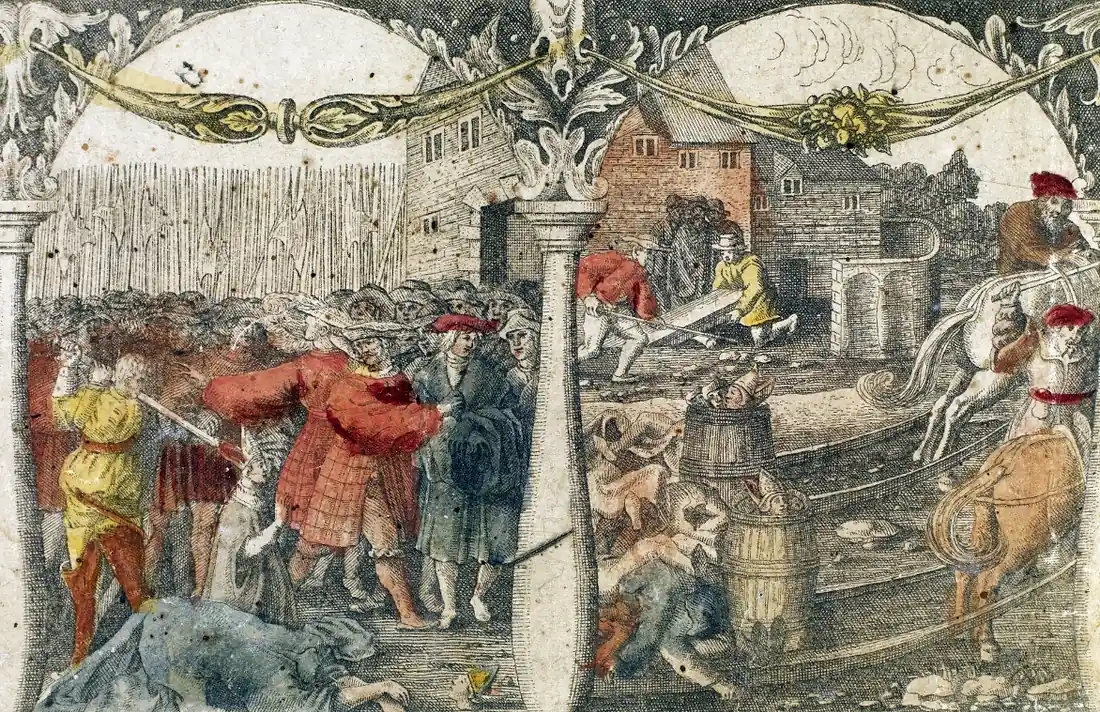
The trial produced 73 verdicts, of which 58 resulted in death sentences. Among those executed were Archbishop Gustav Trolle, Bishop Hans Brask's nephew, and several members of the Sture family. The executions were carried out by beheading or hanging in the Stortorget square, a public display intended to eliminate opposition and to deter future resistance. Contemporary records note that the executions took place over three consecutive days, and that the total number of victims exceeded fifty, with some estimates reaching seventy.
The immediate effect was the removal of the Swedish elite who could organize armed resistance. Within weeks, Danish forces occupied the city and imposed a union that placed Christian II as king of both Denmark and Sweden. However, the bloodshed provoked a national backlash. In early 1521, a rebellion led by Gustav Vasa gathered support among peasants and remaining nobles, culminating in the liberation of Stockholm later that year. The failed Danish rule marked the end of the Kalmar Union and initiated the establishment of an independent Swedish monarchy under Vasa. The Stockholm Bloodbath thus transformed Sweden from a contested territory under a nominal union to a sovereign kingdom governed by a native dynasty.
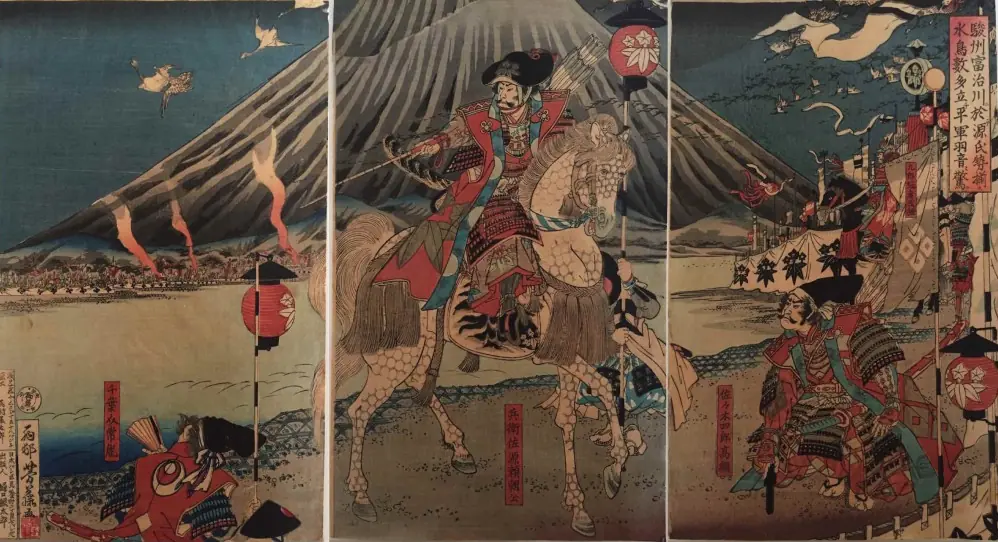
The night of November 9, 1180, gave Minamoto no Yoritomo a decisive tactical edge over the Taira clan. Yoritomo ordered his troops to cross the Fuji River under darkness and launch a surprise assault on the Taira camp near the riverbank. The Taira forces, estimated at 1,200 mounted warriors, were caught while arranging their camp and could not form a coherent defense. Minamoto units, numbering about 800, used the river’s fog and the terrain’s steep banks to approach unseen, then attacked the Taira’s left flank. The resulting melee lasted less than an hour, after which the Taira commander, Taira no Tomomori, withdrew with the surviving soldiers, leaving roughly 300 dead or wounded. Yoritomo’s losses were reported as under 50, a stark contrast that highlighted the effectiveness of his night maneuver.
The battle’s outcome rested on Yoritomo’s control of local supply lines and his ability to mobilize provincial allies. He had secured rice stores from Kai and Shinano provinces, allowing him to sustain a force that could move quickly. In contrast, the Taira relied on imperial tax revenues that were delayed by seasonal harvest cycles, limiting their capacity to reinforce remote positions. This logistical disparity made the Taira vulnerable to rapid, localized strikes such as the one at Fujigawa.
Strategically, the victory shattered the Taira’s perception of invulnerability in the central provinces. After the battle, Yoritomo recruited an additional 3,000 samurai from the surrounding districts, expanding his army to over 5,000 by early 1181. The Taira responded by recalling troops from the western front, weakening their hold on Kyushu and contributing to a series of defeats in the following months. Contemporary records note that the battle caused the displacement of at least 1,200 peasants from the river valley, who fled to nearby temples for refuge.
The longer‑term effect of Fujigawa was the consolidation of Minamoto political authority in the Kanto region. Yoritomo used the victory to petition the emperor for the right to appoint a military governor, a request granted in 1185 when he established the Kamakura shogunate. This new military government shifted power from the court aristocracy to a warrior elite, redefining Japanese governance for the next three centuries. The shogunate’s land‑allocation system, the shoen, originated from the redistribution of estates confiscated after Fujigawa, altering the economic base of thousands of rural households. The battle therefore marked a turning point that enabled a new ruling class to emerge and restructure the nation’s political and fiscal architecture.
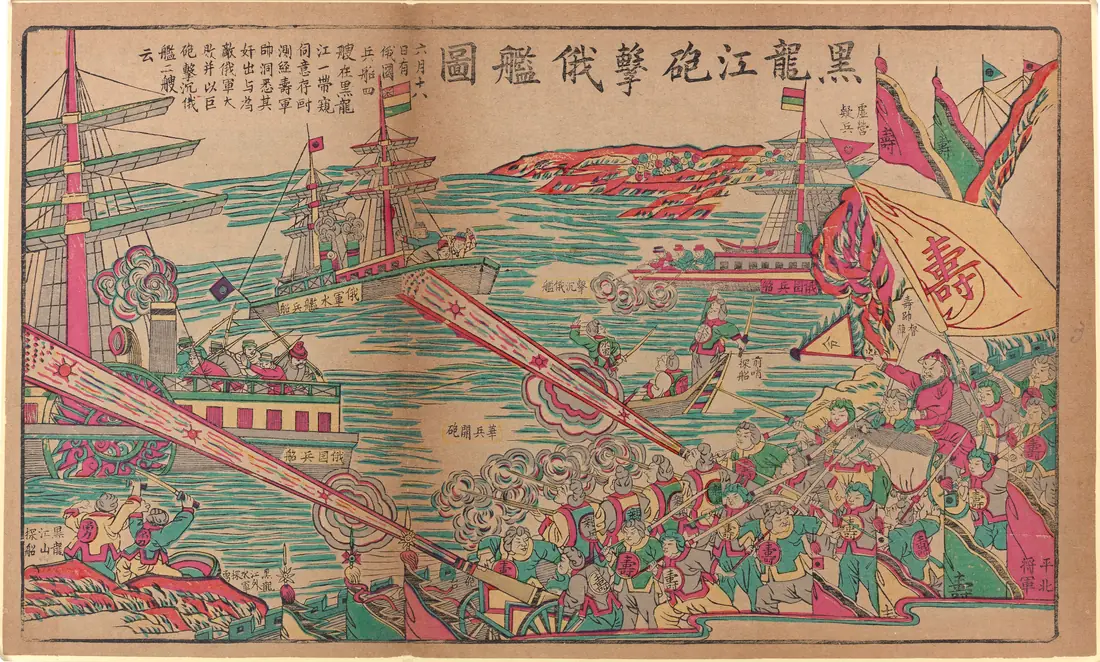
Russia deployed roughly one hundred thousand soldiers to Manchuria in late 1900, completing a military occupation that began after the Boxer Rebellion. The troop count comes from the Imperial Russian General Staff report of November 1900, which listed 102,000 men assigned to the Trans‑Siberian Railway corridor and the Liaodong Peninsula. The deployment was intended to secure the railway route that stretched about 9,300 kilometers from Vladivostok to European Russia, a line whose construction cost the empire an estimated 1.2 billion rubles, according to the Ministry of Finance ledger of 1899.
The primary reason for the occupation was to protect Russian commercial interests, especially the lease of the Port of Dalian and the rights to extract coal from the Liaodong mines. The lease, negotiated in the Treaty of Shimonoseki (1895) and reaffirmed by the Triple Intervention, granted Russia a 25‑year term and an annual rent of 400,000 rubles, a figure recorded in the Russian Consular Office archives. Chinese officials, led by Viceroy Li Hongzhang, protested the presence of foreign troops, but the Qing army could field only about 30,000 troops in the region, a number shown in the Qing military census of 1900, making resistance impractical.
The occupation changed the strategic balance on the Korean peninsula. Russian forces stationed at Port Arthur, about 200 kilometers from the Korean border, could fire artillery with a range of 12 kilometers, a capability demonstrated during the 1900 drills reported by the Russian Naval Ministry. This presence pressured Japan, which maintained a 50,000‑strong expeditionary force in Korea, as noted in the Japanese Ministry of War estimate of November 1900. The resulting tension contributed directly to the negotiations that produced the 1905 Treaty of Portsmouth, which ended the Russo‑Japanese War and forced Russia to withdraw its troops, as the treaty text specifies a withdrawal deadline of 30 April 1906.
The occupation ended with the evacuation of the Russian army in early 1906, after which the region returned to Chinese administration under the nominal authority of the Qing government. The episode demonstrated how a numeric superiority of roughly three to one in troop strength, combined with control of critical infrastructure, can enforce a foreign power’s economic aims, even when local opposition is formally recorded.