Austria-Hungary Declares War on Serbia
Vienna, Austria-Hungary
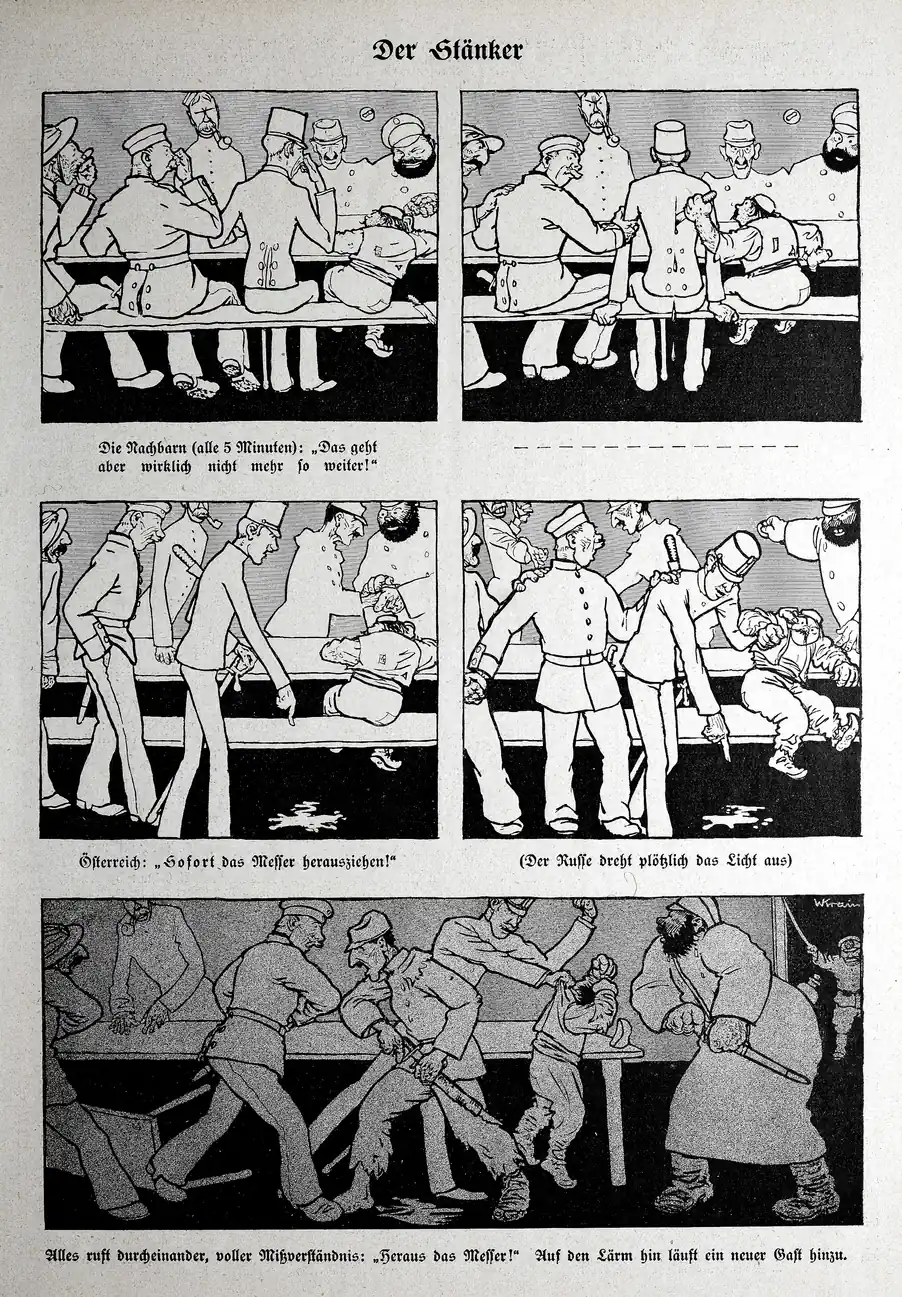
The telegram arrived in Vienna on June 28, and by July 28, Austria-Hungary had decided that the only rational response to an assassin's bullet was to fire cannons at an entire nation. The interval between those dates—exactly one month—is the July Crisis, and it reveals something crucial about how the world worked in 1914: once the machinery of empire and alliance began to turn, almost no one could stop it.
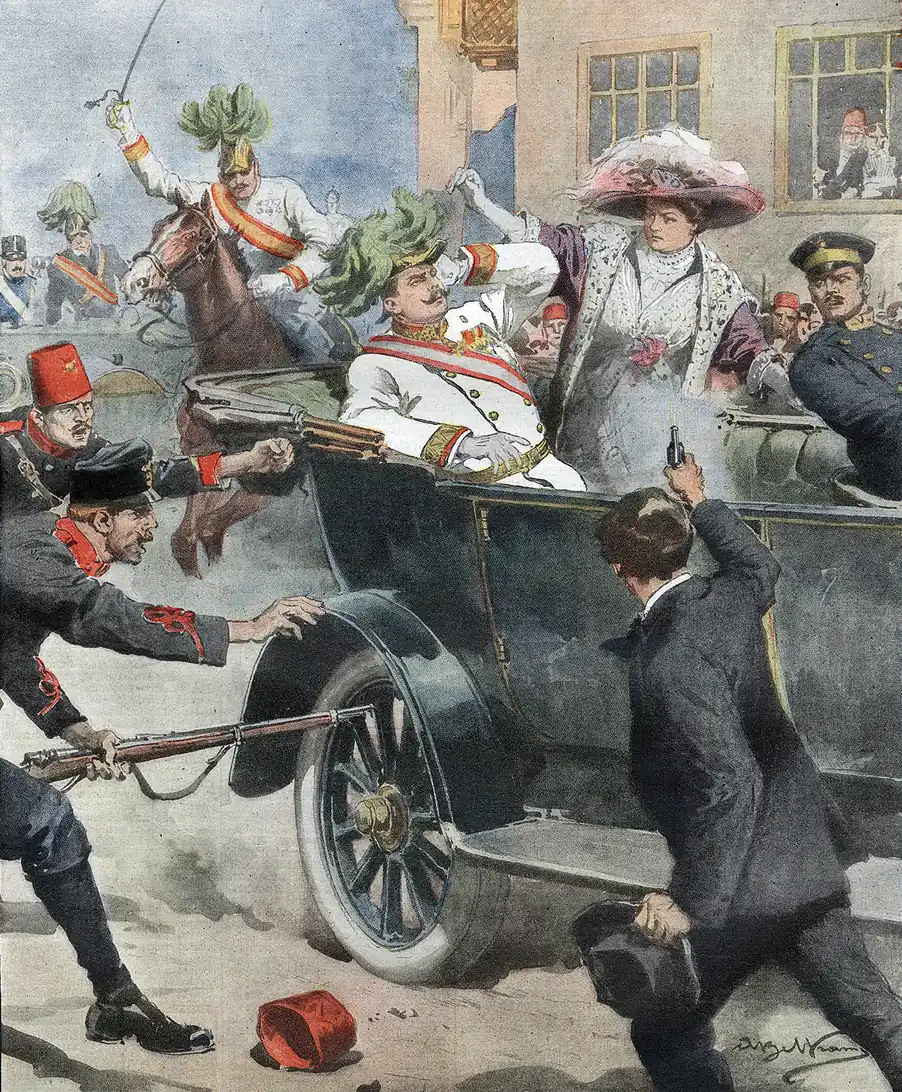
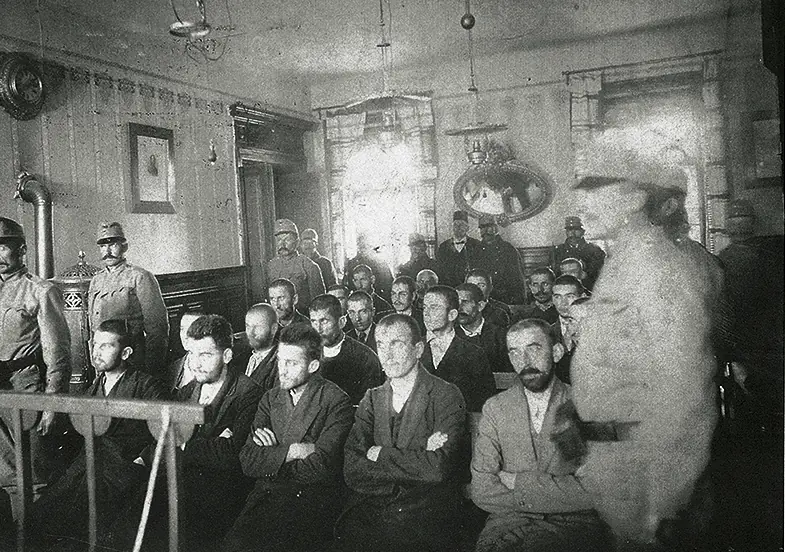
Archduke Franz Ferdinand, heir to the Austro-Hungarian throne, was shot dead in Sarajevo by Gavrilo Princip, a 19-year-old Bosnian Serb linked to a Serbian nationalist group. The assassination itself was shocking but not unprecedented—kings and heirs had been killed before. What made this different was the system built around it. Austria-Hungary and Russia were locked in a rivalry over the Balkans. Russia backed Serbia. France backed Russia. Germany backed Austria-Hungary. Britain had treaties with France and Belgium. It was a house of cards where every card was also a loaded gun.
For the first three weeks of July, diplomats tried. They truly did. The Austrian government sent Serbia a list of demands so harsh—essentially asking Serbia to surrender sovereignty—that rejection was certain. Serbia rejected them. Austria-Hungary declared war on July 28, 1914, at 11 a.m. Vienna time. What followed was not strategy but automation. Russia mobilized to defend Serbia. Germany, panicked by Russian mobilization, declared war on Russia and then on France. France mobilized. Germany invaded Belgium to reach France. Britain, bound by treaty to defend Belgian neutrality, declared war on Germany. Within six weeks, the great powers of Europe were at war.
The truly strange part: most people thought it would be brief. "You'll be home by Christmas," officers told recruits. The war that started because one man was shot lasted four years, killed roughly 10 million people, and erased four empires from the map. The technology existed to make killing industrial—machine guns, poison gas, artillery that could level a town from miles away—but the tactics were still Napoleonic. Generals sent waves of infantry into machine-gun fire as though cavalry charges still worked. Soldiers died by the thousands for advances of a few hundred yards.
What changed on July 28 was not the capacity for war—that had existed for centuries. What changed was the loss of the ability to *not* go to war. Before 1914, diplomacy, negotiation, and royal marriages could usually contain crisis. The system of alliances was supposed to deter war through mutual fear. Instead, it created a trap. Each nation's mobilization looked like aggression to its neighbors, triggering their mobilization, which looked like aggression, which triggered more mobilization. No leader wanted global war. They all wanted to protect their interests. And they all got global war anyway.
One month of diplomatic cables, ultimatums, and messages sent at midnight. Then the guns. Then a decade of consequences that remade the political map and left wounds that would fester for another thirty years. All because once the system started moving, the men running it discovered they were passengers, not drivers.