Daily History
War & conflict

Austria-Hungary Declares War on Serbia, Triggering World War I

Vienna, Austria-Hungary
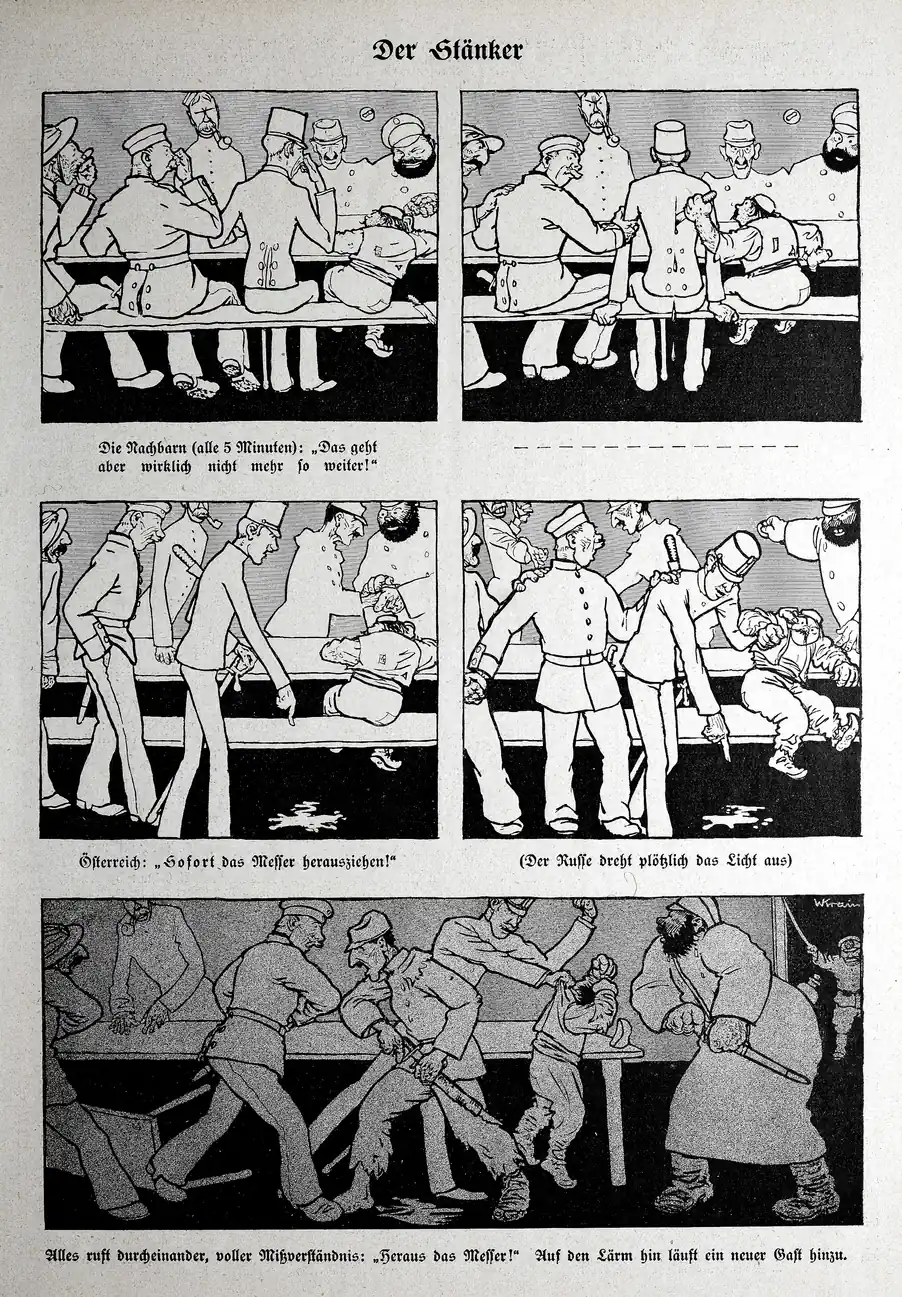
Austria-Hungary Declares War on Serbia, Triggering World War I — Vienna, Austria-Hungary
Image: Willibald Krain (1886–1945) · Public domain

On the morning of July 27, 1914, a man in Vienna sat down to write a formal letter declaring war, and nobody stopped him—because nobody really understood what he was starting.

The day before had been ordinary. Archduke Franz Ferdinand had been dead for a month. The assassination in Sarajevo on June 28 was horrifying, certainly, but Europe had absorbed worse. Emperors and grand dukes died. Empires sent stern notes. Diplomats negotiated. This was how the world worked. The machinery of statecraft moved slowly, which was precisely the point—slowness meant time for cooler heads, for compromise, for the system to absorb the shock.

Austria-Hungary's foreign minister, Leopold Berchtold, had been waiting for a moment to crush Serbia. The Austro-Hungarian Empire was visibly rotting—a multinational state held together by decreasing amounts of glue and increasing amounts of paranoia. Serbia, independent and nationalist, represented everything that threatened the empire's survival: the idea that Slavic peoples didn't need Vienna's permission to exist. The assassination was the opening Berchtold needed.

But even Berchtold couldn't move fast. Diplomacy required procedure. Austria-Hungary spent three weeks preparing its case, sending investigators, building a legal argument. This cautious approach was meant to look reasonable. Instead, it gave the world time to watch the dominoes begin to tip.
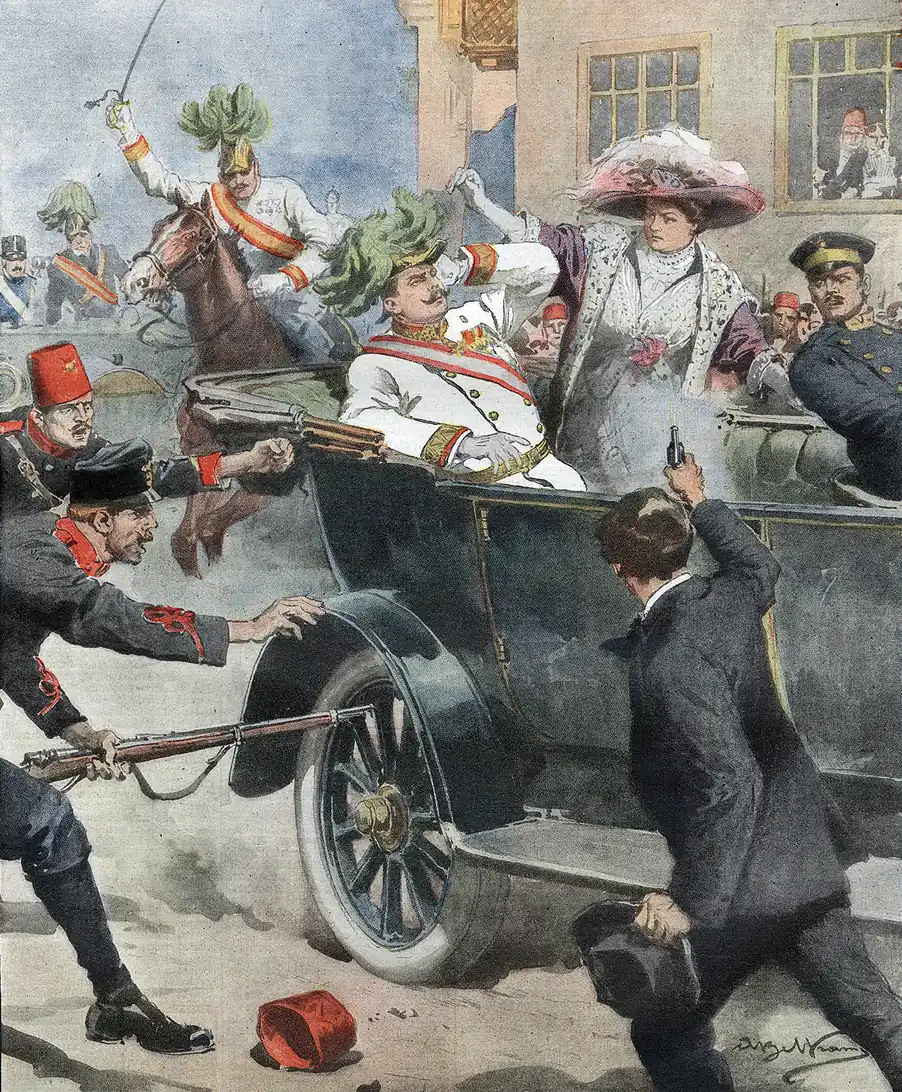
Austria-Hungary Declares War on Serbia, Triggering World War I — Vienna, Austria-Hungary
Image: Achille Beltrame · Public domain

Russia, protective of Serbia, started mobilizing. Germany, bound to Austria-Hungary by alliance, felt obligated to support it—and terrified of fighting a two-front war against France and Russia. France, bound to Russia, began mobilizing. Germany, seeing the trap close, decided the only escape was to move first and fast. On July 30, Russia mobilized fully. On August 1, Germany declared war on Russia. On August 3, Germany declared war on France. On August 4, Britain declared war on Germany, primarily because Germany had invaded Belgium, which Britain had promised to protect.

The entire structure collapsed in eight days.

What's remarkable is how little anyone actually wanted the war that broke out. The Austrian foreign minister wanted to punish Serbia. The German general staff wanted to avoid a two-front war. The Russian tsar wanted to protect his Slavic cousins. The French wanted to honor their alliance. The British wanted to honor their treaty. Everyone was responding rationally to their own situation, which meant nobody was responding rationally to the actual situation. The system that was supposed to prevent catastrophe—the network of treaties, alliances, and diplomatic protocol—became the mechanism that guaranteed it.
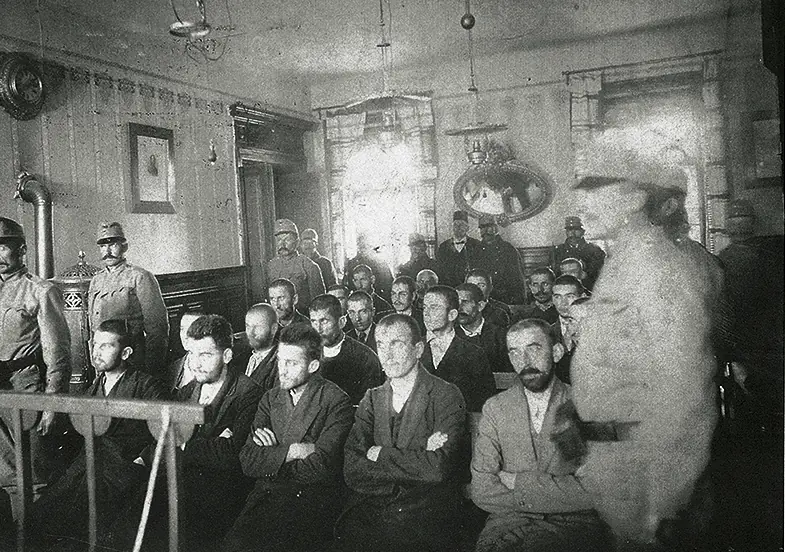
Austria-Hungary Declares War on Serbia, Triggering World War I — Vienna, Austria-Hungary
Image: Unknown photographer · Public domain

By August 1914, young men who had gone to sleep in a world of empires and certainties woke into a different one. The assumptions that had held for decades—that great powers wouldn't actually fight each other, that the costs would be too high, that someone would back down—evaporated almost overnight.

The truly strange part: the war that killed 20 million people started because people followed the rules. They honored their commitments. They did their duty. They did exactly what the system demanded, and the system devoured them.
Source: en.wikipedia.org/wiki/July Crisis

Politics & state

House Judiciary Committee Approves Second Article of Impeachment Against Nixon

Washington, D.C., USA

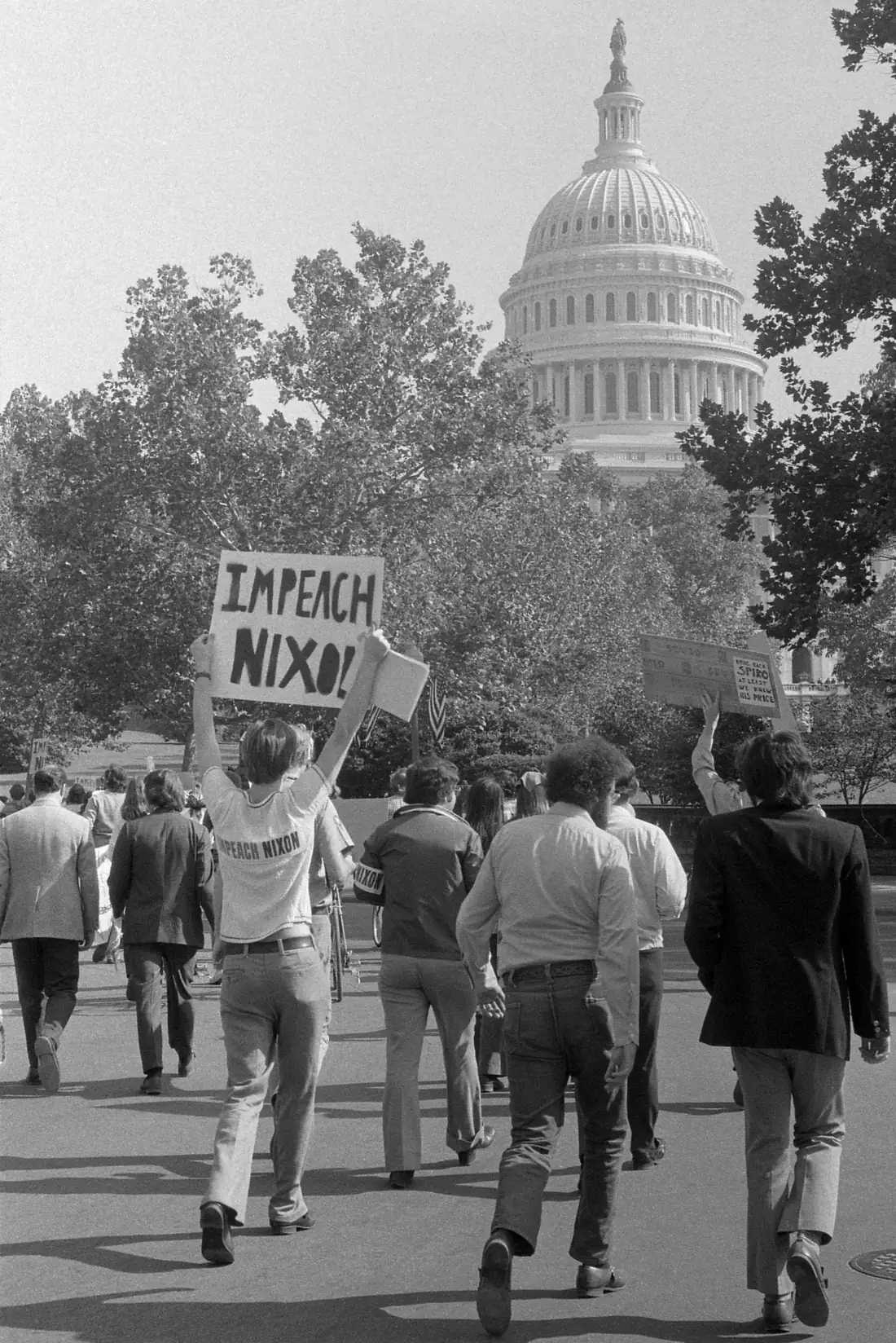
House Judiciary Committee Approves Second Article of Impeachment Against Nixon — Washington, D.C., USA
Image: Creator: Trikosko, Marion S., photographer; Related Name: O'Halloran, Thomas J. , photographer · Public domain

On July 27, 1974, a man who had won 49 of 50 states in an election four years earlier sat in the White House knowing he had maybe days left. The House Judiciary Committee had just voted to impeach him—not for the crime he was suspected of committing, but for trying to cover it up. The vote was 27 to 11. What made it historic wasn't the number. It was that six Republicans voted yes.

This is the moment the presidency became ordinary.

Not ordinary in the sense of unremarkable—nothing about Richard Nixon's fall was small. But ordinary in a specific, structural way: the moment when the office lost its shield. Before July 27, 1974, an American president could reasonably assume that his party would protect him, that the machinery of government would bend toward loyalty, that resignation was something other men did. The Constitution said he could be impeached, but the Constitution also said a lot of things people didn't actually believe applied to sitting presidents. It was a document written by people who hadn't quite imagined that one of them might actually lose.

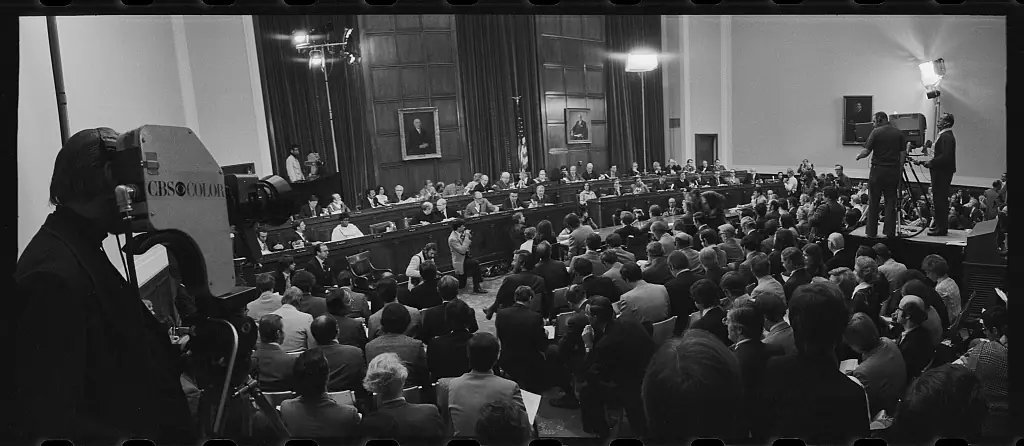
House Judiciary Committee Approves Second Article of Impeachment Against Nixon — Washington, D.C., USA
Image: Department of Defense. Department of the Army. Office of the Deputy Chief of Staff for Operations. U.S. Army Audiovisual · Public domain

Nixon had. The Watergate scandal—the break-in at Democratic National Committee headquarters, the cover-up, the lies layered on lies—had unspooled across two years with the logic of a Greek tragedy. Journalists had pursued it. Courts had ordered the release of tapes. And now, in the summer of 1974, the evidence was undeniable. He had known about the cover-up. He had helped orchestrate it. He had lied to the American people about it repeatedly.

The Judiciary Committee's vote on Article II, charging obstruction of justice, came after two weeks of televised debate. Millions of Americans watched lawyers and politicians argue about whether a president could be held accountable. What shifted on July 27 was not the facts—those had been known for weeks. What shifted was permission. Six Republicans, including the committee's ranking member Edward Hutchinson, voted to recommend impeachment. They were voting against their party's president, against the implicit expectation of loyalty that had governed American politics since the republic's founding. They were saying the law applied to everyone, including him.

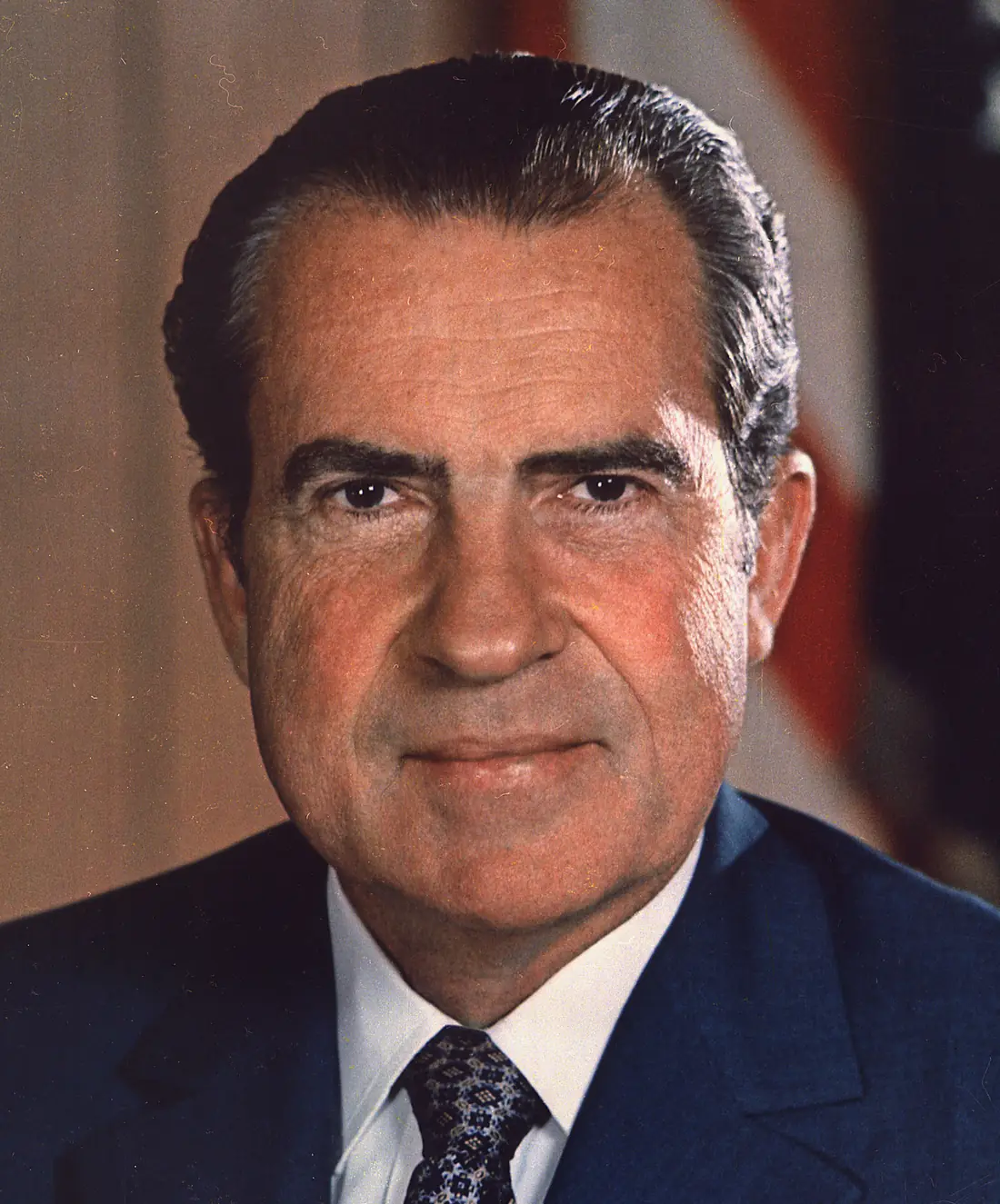
House Judiciary Committee Approves Second Article of Impeachment Against Nixon — Washington, D.C., USA
Image: Marion S. Trikosko or Thomas J. O'Halloran, photographer · Public domain

Within days, Nixon would resign. He would become the first and, so far, only president to leave office in disgrace.

The strange thing is what didn't happen next. The presidency didn't become weaker. It became more normal. Future presidents would be investigated, some impeached. Congress would reassert its actual powers. The office lost its immunity, which meant it lost its exemption from the rules that bound everyone else. That sounds like a loss. In a way it was. But it was also the moment the Constitution stopped being a beautiful theory and became a working system—one that assumed not the best of its leaders but the mechanism to replace them if they failed.

Nixon's resignation came on August 9. By then, the obstruction charge had done its work. Not by removing him from office, but by making removal possible. After July 27, 1974, a president was no longer a king who might choose to abdicate. He was an employee who could be fired.

Source: en.wikipedia.org/wiki/Impeachment of Richard Nixon

Use the arrow keys to move between days

Browse the full archive →