Daily History
War & conflict

Battle of Yarmouk Begins, Shaping Islamic Expansion
Battle of Yarmouk Begins, Shaping Islamic Expansion
Image: Unknown authorUnknown author · Public domain

The August air, thick and oppressive, shimmered above the plains of the Yarmouk River. The sun, a relentless forge, beat down on two colossal armies. For weeks, they had been maneuvering, probing, exchanging insults and skirmishes under this same unforgiving sky, a slow-motion ballet of impending catastrophe. By mid-August, the patience of both sides had worn thin, frayed like old rope under constant tension. Today, August 15, 636, the curtain was about to rise on a performance no one would soon forget, and certainly not the Byzantines, who had, with exquisite timing, chosen a valley that would soon become their tomb.

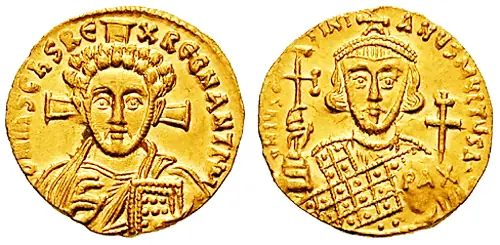
Imagine the scene: on one side, the heirs of Rome, the Byzantine Empire, a grand, multi-ethnic assembly. Armenians, Slavs, Gothic mercenaries, and the well-drilled Roman legions, all under the nominal command of the emperor Heraclius's brother, Theodorus Trithyrius, though the actual battlefield commander was the Armenian general Vahan. Their numbers were prodigious, often cited as upwards of 100,000, though more sober estimates settle closer to 50,000. They were splendidly equipped, confident in their ancient military traditions, yet burdened by internal squabbles and a general staff that, shall we say, had a diverse range of opinions on how best to proceed. One rather telling detail: many Byzantine soldiers were reportedly chained together in units of ten, a rather blunt instrument for ensuring unit cohesion, or perhaps, preventing desertion.

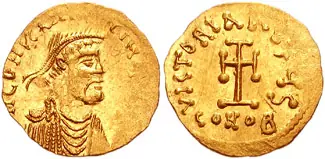
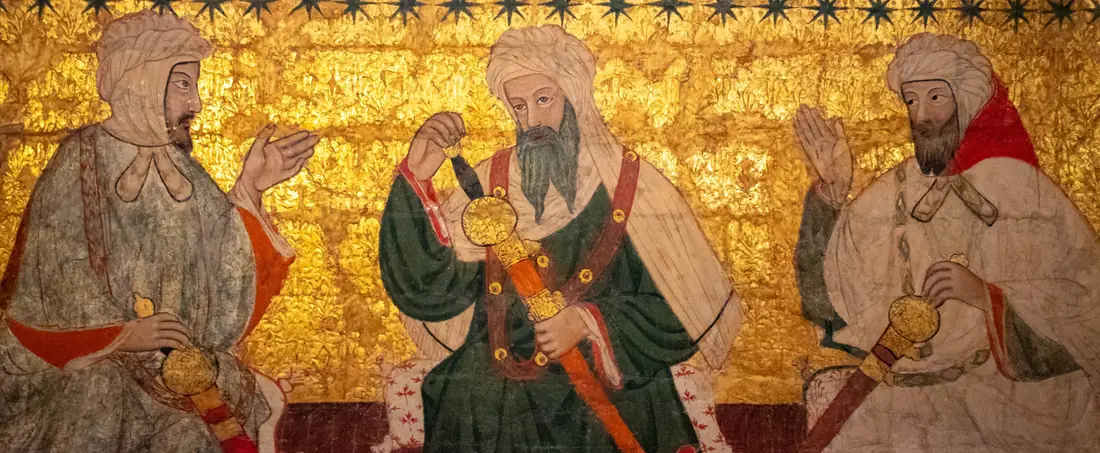
Opposite them, the Rashidun Caliphate’s forces, leaner, hungrier, perhaps 15,000 to 20,000 strong. These were men forged in the Arabian desert, hardened by earlier campaigns, driven by a faith that was both new and fiercely vital. Their commander, Khalid ibn al-Walid, the ‘Sword of Allah,’ was a tactical genius, notorious for his daring and unconventional strategies. He had a reputation for turning impossible odds into victory, a skill that would be put to the ultimate test in the coming days.
Battle of Yarmouk Begins, Shaping Islamic Expansion
Image: CNG · CC BY-SA 2.5

For weeks, the two forces had eyed each other across the dusty wadis and the meandering river. The Byzantines, with their superior numbers, felt they held the strategic advantage, able to pick the ground. The Muslims, however, were masters of deception and swift movement, content to let their opponents make the first awkward move. The air was thick with expectation, punctuated by the occasional jingle of harness, the distant shouts of officers, and the low hum of thousands of men waiting for the signal to kill. The battle would not be a single clash but a grinding, six-day affair, a war of attrition where the elements themselves would play a crucial, unbidden role.

What began as a tactical skirmish on that hot August morning would spiral into one of the most decisive battles in history. The Byzantines, for all their pomp and circumstance, their meticulous planning and vast resources, were about to discover that sometimes, the sheer force of will, combined with brilliant improvisation, can unravel even the grandest of empires. The sun, indifferent to human ambition, beat down, promising another blistering day, as the two armies, each convinced of their own righteousness, began to move towards each other, sealing the fate of an empire and birthing another in the process. The dust, once settled, would tell a stark, new story of the Middle East.
Battle of Yarmouk Begins, Shaping Islamic Expansion
Image: Panairjdde · CC BY-SA 3.0

Source: en.wikipedia.org/wiki/Arab–Byzantine wars

War & conflict

Arabs Abandon Siege of Constantinople, Saving Byzantine Empire

Constantinople

Arabs Abandon Siege of Constantinople, Saving Byzantine Empire — Constantinople
Image: Rumomo · CC BY-SA 4.0

Seventeen hundred ships, packed with men and materiel, had sailed with a single, brutal purpose: to extinguish the Byzantine flame in Constantinople. For a year, the Umayyad Caliphate, an empire that stretched from Spain to India, had thrown its full might against the city’s legendary walls. But on August 15, 718, the survivors of that grand armada, now a mere handful of battered vessels, slipped away into the morning mist, leaving behind a frozen, plague-ridden landscape littered with the corpses of their ambitions. The world had just witnessed an impossible retreat.

Before this day, the trajectory of history seemed fixed. The Islamic conquests, launched scarcely a century earlier, had swept away empires and reshaped continents with astonishing speed. Persia had fallen. Egypt, Syria, North Africa, and Visigothic Spain were now under the Crescent. Constantinople, the New Rome, stood as the last major bastion against a complete Islamic dominance of the Mediterranean and, by extension, Europe. Three times before, the Umayyads had tried to take the city, and three times they had been repelled. This fourth attempt, under the Caliph Sulayman and led by his brother Maslama ibn Abd al-Malik, was meant to be decisive. It was an investment of manpower, wealth, and faith on a scale rarely seen, involving perhaps 100,000 to 150,000 soldiers and a fleet of unprecedented size.

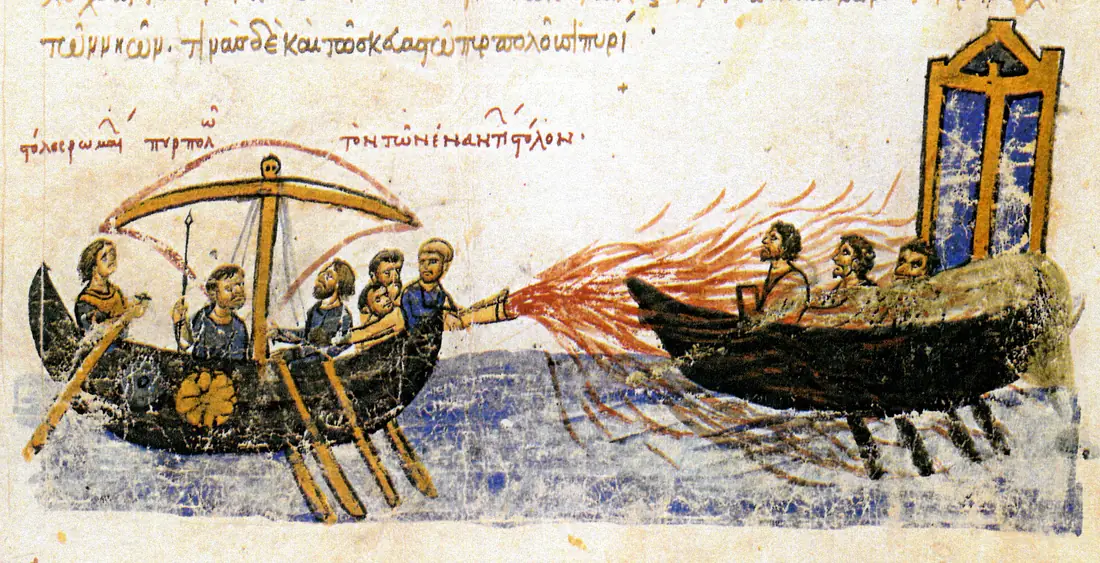
The siege was a masterpiece of strategic planning and logistical nightmare. Maslama built formidable siege works, blocking the city by land, while his fleet, armed with grappling hooks and siege engines, sought to breach the seawalls. But Constantinople had a secret weapon: Greek Fire. This mysterious incendiary liquid, likely a petroleum-based mixture, could be projected from siphons, burning on water and clinging to timber, turning the Umayyad fleet into floating infernos. The Byzantine Emperor Leo III, a general of shrewd cunning, used it to devastating effect, breaking the initial naval blockade.

Arabs Abandon Siege of Constantinople, Saving Byzantine Empire — Constantinople
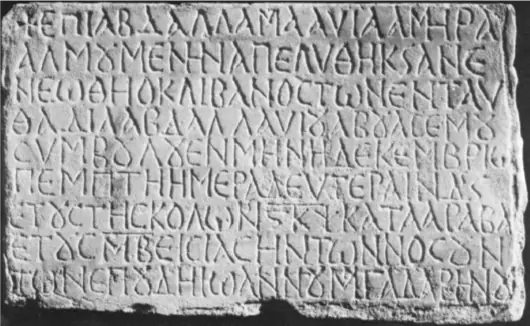
Image: Author of inscription not credited. Authorities mentioned in inscription include Caliph Mu'awiya I (d. 680), Abd Allah i · Public domain

Then came winter. The most brutal winter in decades descended upon the besiegers, freezing the Bosphorus strait. Supplies dwindled. Famine set in. Soldiers, accustomed to warmer climes, froze to death in their tents. Plague followed, decimating their ranks. The Byzantines, safe behind their walls and well-supplied, watched the slow, agonizing collapse of their enemy. To add insult to injury, Leo III forged an alliance with the Bulgarian Khan Tervel, whose cavalry harried the starving Umayyad forces from the rear, inflicting tens of thousands of additional casualties. It was a perfect storm of military genius, technological advantage, and sheer, unforgiving weather.

When the order came to withdraw, the retreat was catastrophic. Of the 1,700 ships that had set out, only a few hundred made it back, many lost to storms in the Aegean. Of the vast army, perhaps only 30,000 survived the journey home. The cost in human lives was staggering, the financial drain immense. The Umayyad Caliphate, whose advance had seemed inexorable, had been stopped cold. The psychological impact was profound; the myth of their invincibility was shattered. Never again would an Islamic army directly threaten Constantinople in such strength for centuries.

Arabs Abandon Siege of Constantinople, Saving Byzantine Empire — Constantinople
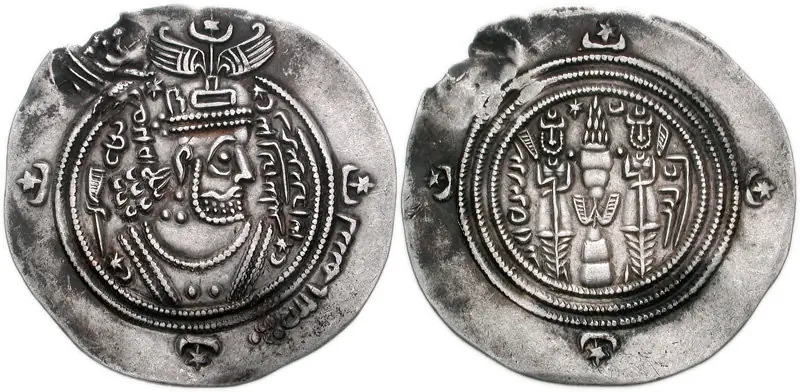
Image: CNG Coins · CC BY-SA 3.0

This single, grinding year of attrition secured the survival of the Byzantine Empire for another seven hundred years, acting as a bulwark for Eastern Christendom and, by extension, profoundly shaping the development of Western Europe. The continuous pressure on Europe from the East, which had been the defining geopolitical reality, abruptly ceased. The world, which had believed itself on the cusp of a unified Mediterranean under one banner, suddenly faced a stubborn, two-way divide. The dream of a unified Caliphate stretching from the Atlantic to China, often taken as an inevitability, dissolved in the frozen mud outside Constantinople, leaving behind a long, complicated border that would define a millennium.

Source: en.wikipedia.org/wiki/Umayyad Caliphate

Use the arrow keys to move between days

Browse the full archive →