Daily History
War & conflict

Roman Siege Ends: Jerusalem Temple Destroyed

Jerusalem, Roman Judea

One million, one hundred thousand people died during the siege of Jerusalem, according to the contemporary historian Josephus. That figure, if accurate, represents more than a fifth of Rome's entire citizen population at the time. Yet, on August 30, 70 AD, the Roman general Titus, son of Emperor Vespasian, found himself staring at the smoldering ruins of Herod's Temple, a structure whose destruction he had explicitly forbidden. His father had sent him to quash a Jewish rebellion that had flared up four years earlier, and now, with the Temple gone, the conflict was less a military victory and more an apocalyptic tragedy. How did Rome, with its unparalleled military discipline, manage to lose control of its own conquest so spectacularly?

The answer lies in the sheer, unyielding desperation of the defenders and the brutal arithmetic of siege warfare. For five months, Titus’s legions – four of them, numbering perhaps 60,000 men – had systematically encircled and choked Jerusalem. They built a circumvallation wall, a full 7 kilometers (over 4 miles) long, complete with 13 forts, sealing off every escape route. Inside, an estimated 25,000 Jewish rebels, fractured into warring factions, squabbled for control, even as famine gnawed at their guts. Josephus, who witnessed much of the siege, recounts mothers eating their own children, a gruesome detail that highlights the unimaginable suffering within the city walls.

The Roman war machine, meanwhile, was a marvel of engineering. To breach Jerusalem's triple-layered fortifications, they constructed massive siege ramps. One such ramp, built by the Tenth Legion, was said to be over 200 meters long and 70 meters high, requiring countless thousands of cubic meters of earth and timber. Their battering rams, some reportedly weighing over a ton, pounded the stone for days on end. It was a methodical, grinding effort, designed to break not just walls, but the very spirit of resistance. Yet, the defenders, particularly the Sicarii zealots, repeatedly sallied forth, setting fire to Roman siege works and inflicting heavy casualties, turning each Roman gain into a bloody, contested inch.

When the outer walls finally fell, the fighting moved into the city's narrow, winding streets. The Romans, accustomed to open-field battles, faced a brutal urban grind. The Temple Mount, the spiritual heart of Judaism, became the final, desperate redoubt. Titus, recognizing its immense religious and cultural significance, reportedly ordered his troops to preserve the Temple, hoping to display Rome's magnanimity. He knew its destruction would be an enduring symbol of Roman barbarity and a perpetual source of resentment. He had seen its grandeur; Herod’s renovations had made it one of the largest religious structures in the ancient world, its main building alone standing 50 meters (164 feet) tall.

But the chaos of battle, fueled by centuries of simmering animosity and the promise of plunder, proved stronger than any general's command. As Roman soldiers fought their way into the outer courts, a fire, likely started by a stray torch or an act of defiance, erupted. The flames, fed by wood and rich tapestries, quickly engulfed the sanctuary. The heat was so intense it melted the gold plating on the walls, causing it to flow into the cracks between the stones, a detail that ironically spurred the Romans to dismantle every last stone in their frantic search for the precious metal. By the time Titus arrived, the Second Temple, which had stood for 585 years, was a raging inferno.

The destruction was total. Not one stone was left upon another, precisely fulfilling a prophecy attributed to Jesus Christ decades earlier. The plunder was immense: gold, silver, and sacred artifacts, including the legendary Menorah, were paraded through Rome in Titus's triumphal procession, commemorated on the Arch of Titus where it stands to this day. But the cost was immeasurable. The event not only ended the First Jewish–Roman War but also transformed Judaism, shifting its focus from Temple-centric worship to rabbinic scholarship and synagogue-based prayer. Two thousand years later, the mournful Tisha B'Av fast still commemorates August 30, 70 AD, a testament to the enduring scar left by a fire that defied a general's command and reshaped a civilization.

Source: en.wikipedia.org/wiki/AD 70
War & conflict

Great Northern War Ends: Russia Rises as European Power

Nystad, Sweden

Great Northern War Ends: Russia Rises as European Power — Nystad, Sweden
Image: Imonoz · CC BY-SA 4.0

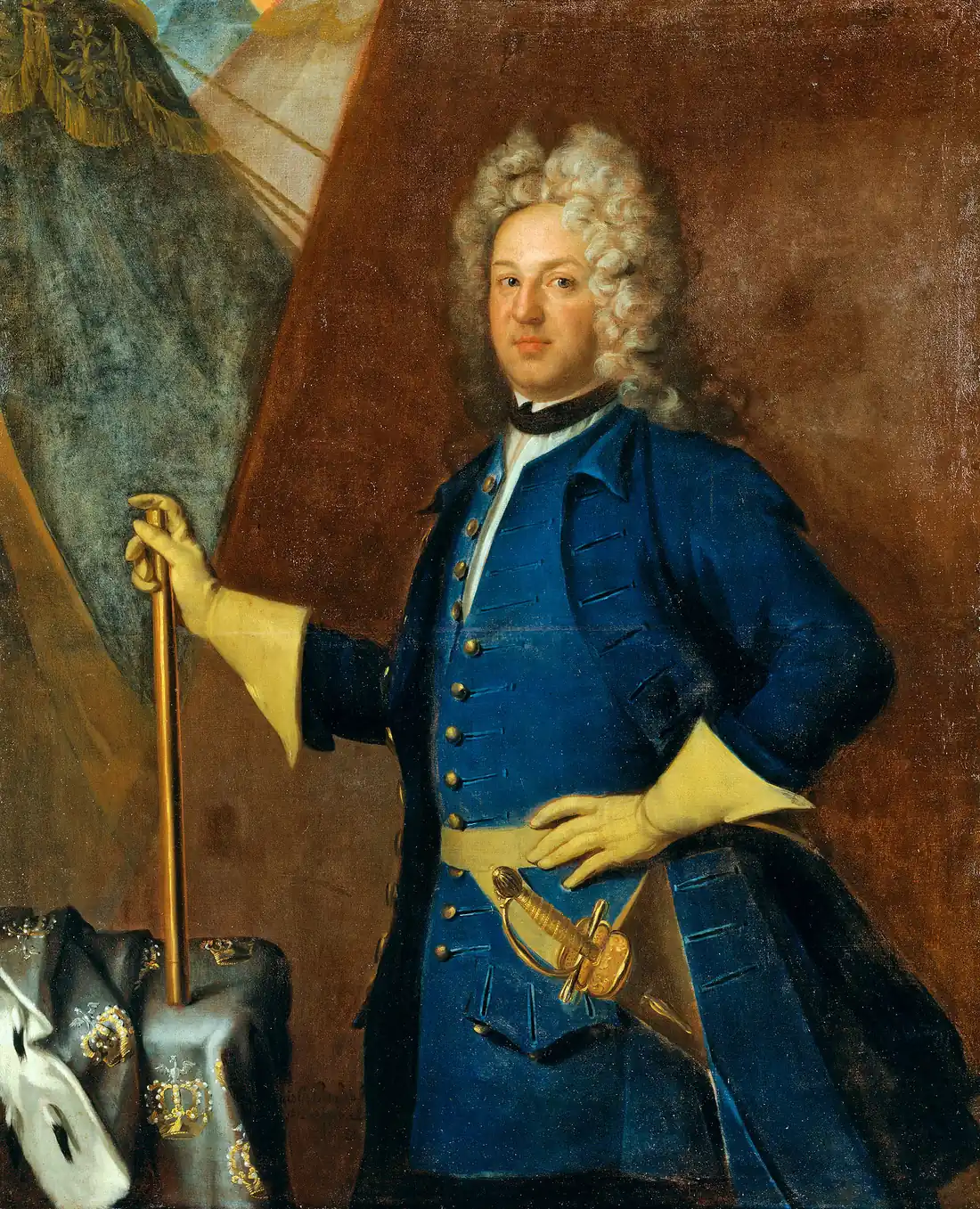
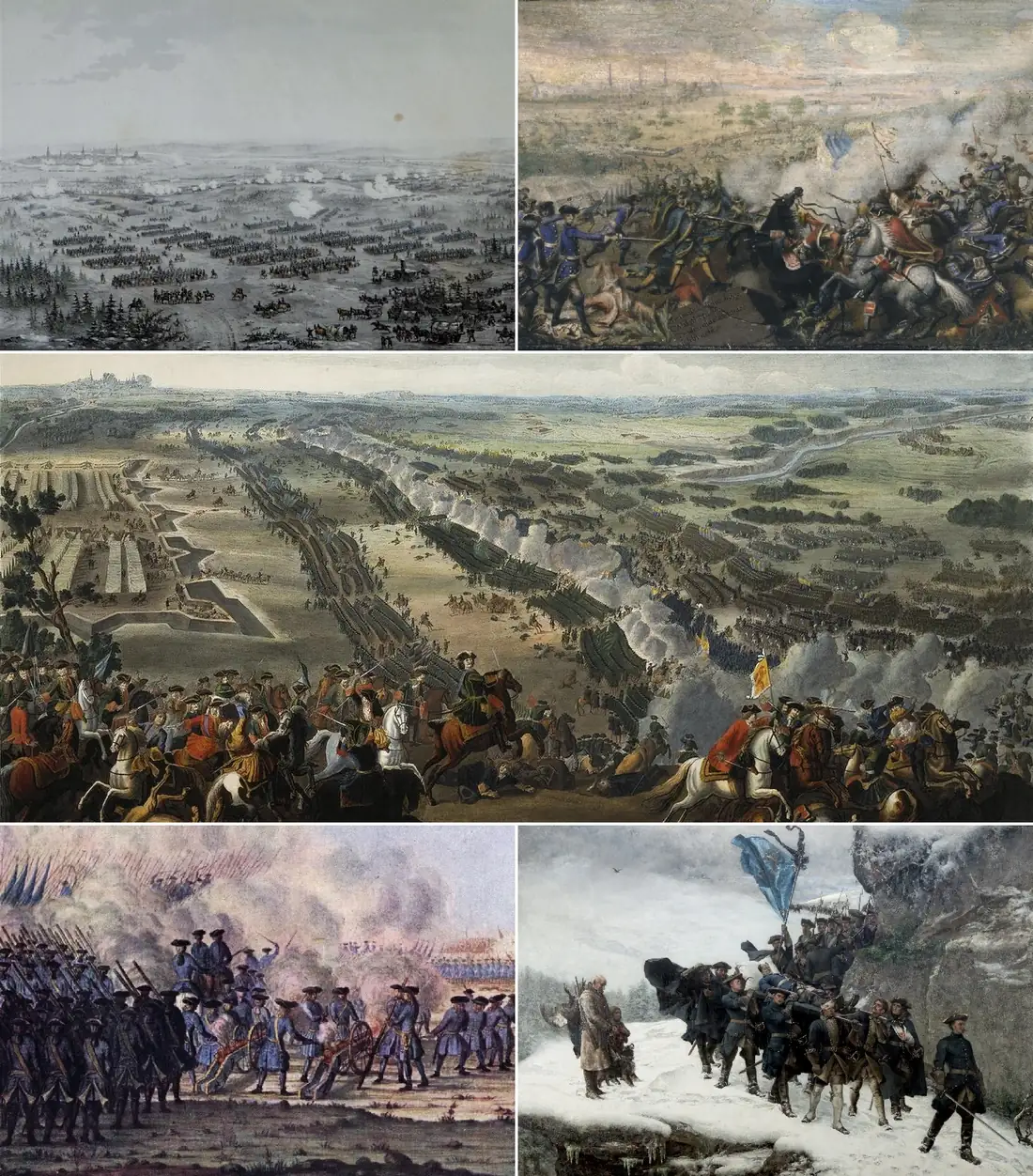
The year 1721 saw Europe exhale. After two decades of a grinding, brutal conflict known as the Great Northern War, a treaty was finally signed in Nystad, a small town in present-day Finland. The headline, simple enough, reads: Sweden’s dominion over the Baltic is broken, Russia rises. But the story behind that headline isn't merely about armies clashing; it’s about a king who loved war more than his kingdom, and an emperor who built a navy by brute force, often quite literally dragging his country into modernity.

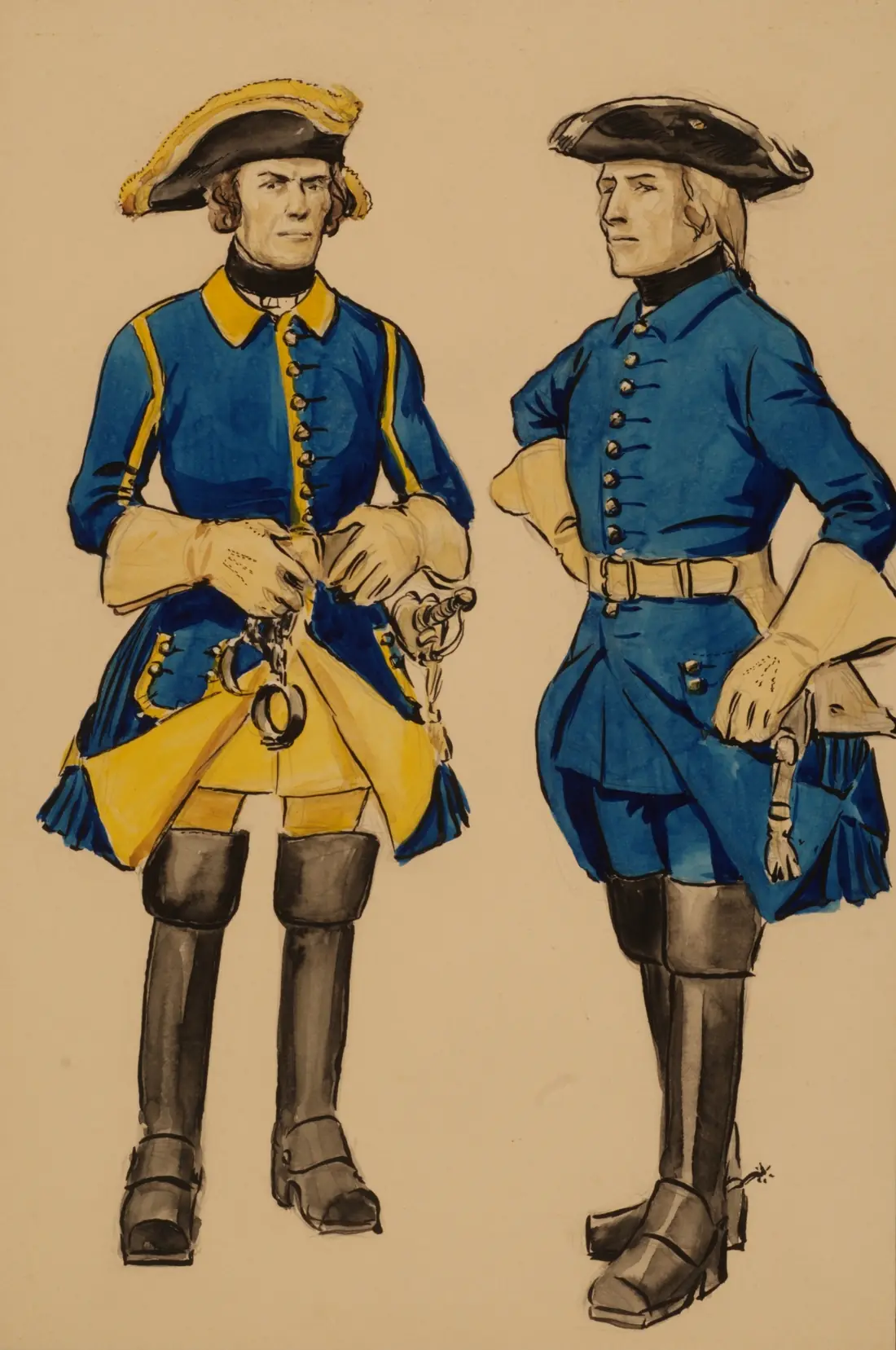
Most people remember the iconic figures: Peter the Great, the towering, driven tsar, and Charles XII, the Swedish warrior-king, often called the ‘Lion of the North’. What's often overlooked is that the war, which technically began in 1700, was initially less about Russian ambition and more about a calculated gamble by a coalition of Denmark-Norway, Saxony-Poland-Lithuania, and a then-insignificant Russia to dismember the young, inexperienced Charles XII’s burgeoning empire. They thought they had an easy mark. They were, to put it mildly, mistaken. Charles, barely a man, proceeded to dismantle each of his opponents in a series of lightning campaigns that stunned Europe.

The initial phase of the war is a testament to Charles XII’s military genius and, perhaps, his profound lack of political foresight. He knocked Denmark out of the war in weeks, thoroughly trounced the Russians at Narva with an army outnumbered four-to-one, and then spent six long, costly years pursuing Augustus II of Saxony through Poland, installing a puppet king. While Charles was off playing chess with the Polish crown, Peter the Great was doing something far more consequential: he was learning, building, and adapting. He wasn’t just training an army; he was constructing an entirely new industrial base to support it, often by tearing down older structures and forcing the pace with a whip-cracking impatience that brooked no dissent. He even founded a new capital, St. Petersburg, on conquered Swedish land, a symbolic and strategic middle finger to Stockholm.

Great Northern War Ends: Russia Rises as European Power — Nystad, Sweden
Image: David von Krafft · Public domain

The real turning point, the decision few remember but which sealed Sweden's fate, wasn't a single battle but Charles XII's stubborn refusal to make peace when he had the upper hand, and his subsequent catastrophic decision to invade Russia in 1708. He marched his army deep into the vast, unforgiving plains, seeking a decisive encounter. Peter, meanwhile, employed a scorched-earth policy, retreating and drawing the Swedes further into the wilderness. The Russian winter of 1708-1709 did more damage than any Russian army could have hoped for. When the two forces finally met at Poltava in July 1709, Charles's depleted, frostbitten army was annihilated. The ‘Lion of the North’ then spent five ignominious years in Ottoman Turkey, a king in exile, while his home empire slowly unraveled.

The Treaty of Nystad, signed on August 30, 1721, formalized this new reality. Sweden ceded Livonia, Estonia, Ingria, and a substantial part of Karelia to Russia. The once-dominant Swedish Empire, which had briefly held sway over much of the Baltic, was reduced to a regional power. Russia, by contrast, gained its long-coveted access to the Baltic Sea, becoming a major European power, a fact Peter had engineered with astonishing, brutal single-mindedness. The absurdity? Charles XII, the very king whose military brilliance initially saved Sweden, ultimately ensured its downfall through his unyielding pride and disastrous strategic choices. He had won almost every battle, but decisively lost the war, leaving his successor to pick up the pieces, and the rest of Europe to ponder the curious case of a genius who couldn't quit while he was ahead.

Great Northern War Ends: Russia Rises as European Power — Nystad, Sweden
Image: Einar von Strokirch, 1879-1932 · Public domain

Source: en.wikipedia.org/wiki/Great Northern War

Religion & philosophy

Pope Excommunicates Henry VIII, English Reformation Deepens

Rome, Papal States

Pope Excommunicates Henry VIII, English Reformation Deepens — Rome, Papal States
Image: Urban VIII · Public domain

Imagine, if you will, the early 16th century, when the spiritual map of Western Europe was, for all intents and purposes, a monochrome canvas painted in shades of Roman Catholicism. The Pope, a figure of immense power both temporal and divine, held sway over the consciences of kings and commoners alike. To challenge him was not merely political dissent; it was an act of profound spiritual peril, risking not just one's crown, but one's very soul. And then there was Henry VIII, King of England, a man whose patience had worn thinner than an old prayer book.

For years, Henry had been locked in a marital dispute of epic proportions, desperate to annul his marriage to Catherine of Aragon, who had inconveniently failed to produce a male heir that survived infancy. His grand project: securing the succession with a new wife, Anne Boleyn. The problem? The Pope, Clement VII, was not keen on invalidating a marriage approved by his predecessor, especially with Catherine's nephew, Emperor Charles V, holding him under virtual house arrest in Rome. Henry tried persuasion, legal gymnastics, and even threats, all to no avail. Rome dawdled, deliberated, and ultimately, declined.

Henry, never one to let a little thing like 1,500 years of ecclesiastical tradition stand in his way, decided to simply declare himself the Supreme Head of the Church of England. This wasn't some quiet theological disagreement; it was a seismic event. Parliament, under royal pressure, passed the Acts of Supremacy, effectively telling the Pope, with all due English politeness, to mind his own business. The English church, its lands, its doctrines, and its very soul, now belonged to the king. It was a move so audacious, it made previous monarchical squabbles with the papacy look like playground spats.

Pope Excommunicates Henry VIII, English Reformation Deepens — Rome, Papal States
Image: The Catholic news agency of the Bishops' Conference of Bosnia and Herzegovina · Attribution

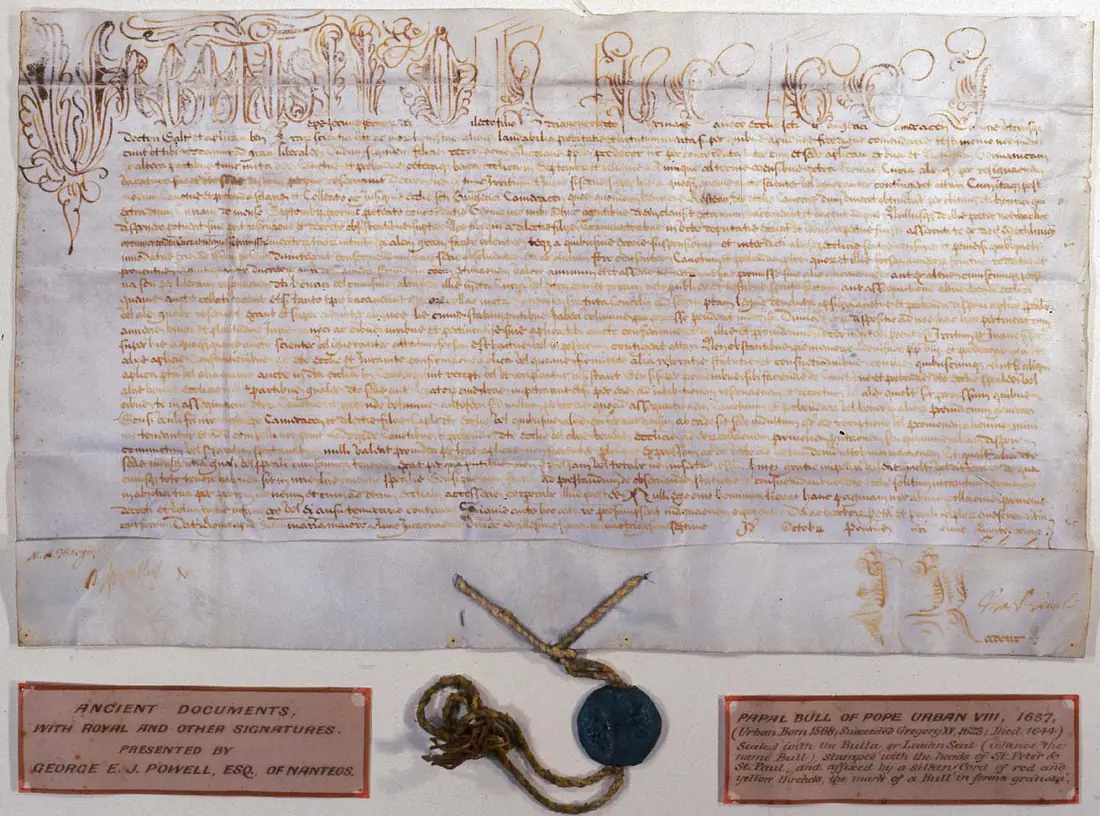
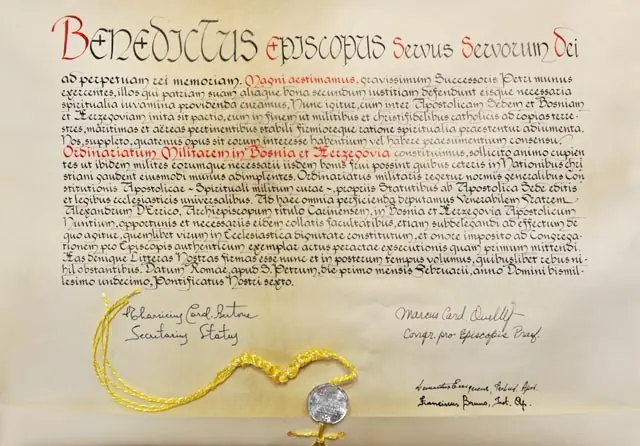
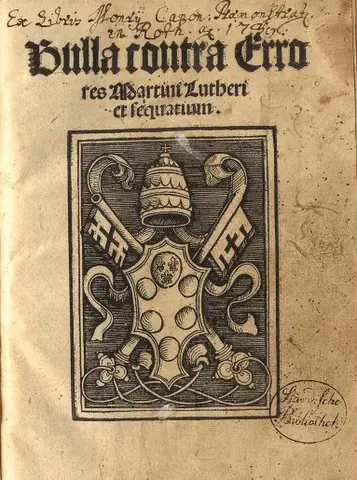
So, it fell to Pope Paul III, Clement's successor, to respond. On August 30, 1535, he penned the papal bull "Eius qui immobilis" – a document that did not mince words. It declared Henry VIII excommunicated, stripped him of his royal title, and released his subjects from their allegiance. In essence, the Pope decreed that Henry was no longer a legitimate king, nor even a true Christian. The penalties for anyone who continued to support him were dire, threatening interdict and even invasion. For a kingdom that had been Catholic since Augustine of Canterbury landed in Kent in 597 AD, this was not a mere slap on the wrist; it was a spiritual atomic bomb.

But here's where the tale takes a deliciously ironic turn: Paul III, despite his fiery pronouncement, held back. The bull, for all its thunder, was never officially published. It remained in a sort of papal limbo, a threat held in reserve, a sword dangling by a thread. Perhaps the Pope hoped Henry would come to his senses. Perhaps he feared provoking Charles V, who was already dealing with the German Reformation, into another costly war. Or perhaps, and this is the mischievous bit, he realized that publicly declaring a powerful king anathema might just galvanize English anti-papal sentiment rather than suppress it. It was a declaration of war that was never quite declared, a spiritual death sentence delivered with a wink and a promise to send it later.

Pope Excommunicates Henry VIII, English Reformation Deepens — Rome, Papal States
Image: Leo X · Public domain

This delay, this peculiar non-publication, meant that while Henry was *technically* excommunicated in the eyes of Rome, the full, devastating political and social impact of such a decree was postponed. The world didn't immediately turn upside down for the English commoner, but the foundation had been irrevocably cracked. The comfortable, unified religious landscape of England was gone, replaced by a tumultuous, often bloody, century of religious upheaval, civil wars, and a monarchy forever grappling with its own spiritual authority. All because one king desperately needed a son, and one Pope desperately needed to avoid another continental war. A quiet, un-published bull, yet its shadow stretched across centuries.

Source: en.wikipedia.org/wiki/Papal bull

Politics & state

Tokugawa Ieyasu Enters Edo: Path to Shogunate Begins

Edo, Japan

The gift, as it was framed, was a vast, waterlogged expanse of eastern Japan, miles from the cultural heartlands of Kyoto. Toyotomi Hideyoshi, the titan who had almost unified the fractured archipelago, offered it to Tokugawa Ieyasu in 1590. It was a calculated maneuver: remove the formidable Tokugawa from his ancestral lands in Mikawa, push him to a remote, undeveloped region, and surround him with loyalists. Ieyasu accepted. On August 30, he rode into Edo. What greeted him was not a city, but a promise whispered by the wind through reeds.

The keep of Edo Castle stood as a dilapidated shadow, its walls crumbling, its moat choked with weeds. The surrounding village, a scattering of thatched huts, huddled against the damp, mosquito-ridden marshland. The Sumida River, then a wild, untamed artery, snaked through a landscape more suited for waterfowl than human habitation. This was the Kanto Plain, a geographic behemoth that, for centuries, had been a backwater, a frontier. For a man accustomed to the fertile fields and strategic strongholds of central Japan, it was less a prize and more a polite exile.

Yet, this mosquito-bitten marsh was the blank canvas Ieyasu needed. For over a century, Japan had been a battlefield, a kaleidoscope of warring daimyo whose ambitions were measured in the ashes of burnt castles and the bodies of fallen samurai. The Sengoku Jidai, the Age of Warring States, was a brutal, beautiful, and utterly exhausting era. Peace was a fleeting dream, a prayer whispered in temples, never a state of being. No one could imagine a Japan where a single authority commanded the entire realm, where roads were safe for merchants, and where the clang of a blacksmith’s hammer replaced the clash of swords across the land.

Ieyasu saw not the swamp, but the strategic potential. The Kanto Plain was vast, defensible, and offered immense agricultural capacity if drained and cultivated. It was a place where he could build anew, away from the entrenched power structures of the old capital. He immediately set to work. Thousands of laborers, conscripted from his new domain, began the colossal task of reshaping the land. Hills were leveled, earth was moved by the ton to fill marshes, canals were dug to control the rivers and create waterways for transport. The dilapidated castle began its transformation into a fortress worthy of a shogun.

What followed Ieyasu’s quiet arrival in this backwater was a monumental act of will and engineering. Over the next two decades, Edo would grow from a village of perhaps a few thousand souls to a burgeoning metropolis. By the mid-18th century, it would boast a population exceeding one million, making it the largest city in the world at the time—a staggering achievement for a place that had been little more than mud and reeds. The Tokugawa Shogunate, established by Ieyasu in 1603, would rule Japan for over 250 years, ushering in an unprecedented era of peace, stability, and cultural flourishing. This long peace, the Pax Tokugawa, was built on the very mud Ieyasu inherited, a testament to the fact that sometimes, the greatest opportunities are disguised as the least desirable gifts.

Source: en.wikipedia.org/wiki/Tokugawa Ieyasu

War & conflict

Battle of Lake Poyang Begins: Ming Dynasty's Foundation

Lake Poyang, China

Battle of Lake Poyang Begins: Ming Dynasty's Foundation — Lake Poyang, China
Image: Freetrashbox at Japanese Wikipedia · CC BY-SA 3.0

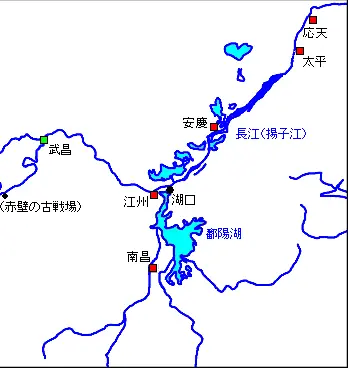
The largest freshwater naval battle in history is not some forgotten clash in the Atlantic or the Pacific. It begins on August 30, 1363, deep within the Chinese interior, on the vast, shallow expanse of Lake Poyang. Here, two rebel warlords, each commanding forces that dwarf most European navies of the era, prepare to settle the fate of a fractured empire. Chen Youliang, the self-proclaimed Emperor of Han, fields a fleet of some 600 vessels, including colossal ‘tower ships’ – floating fortresses, bristling with weaponry, some reportedly over 100 meters long, capable of housing thousands of men. His rival, Zhu Yuanzhang, commander of the Red Turbans and future founder of the Ming Dynasty, brings a mere 200 ships, smaller and more nimble, a stark numerical disadvantage that would make any sane admiral reconsider.

For weeks, Chen’s overwhelming fleet has blockaded Zhu’s forces, trapping them in the northern part of the lake. The sheer size of Chen’s ships, however, proves a double-edged sword: they are slow, difficult to maneuver in the variable depths of Poyang, and, crucially, present an enormous target. Zhu, ever the pragmatist, understands that direct confrontation is suicide. He needs an equalizer. And as the late summer winds shift, he finds it in fire.

The moment arrives. Zhu’s forces, under the command of Zhou Dexing, prepare a desperate gambit. Seven smaller boats, disguised as part of the main fleet, begin to move. They are not filled with soldiers, but with bundles of reeds and gunpowder, soaked in oil, ready to ignite. A strong northeast wind whips across the lake, a gift from the heavens for the numerically inferior. The small fleet advances, seemingly unthreatening, towards the tightly packed, arrogant mass of Chen Youliang’s armada.

Suddenly, the boats erupt. Flames climb mast-high, black smoke billows into the sky, and the inferno, propelled by the wind, races across the water. It is a terrifying spectacle. The blaze slams into Chen’s tightly clustered ships, igniting one after another. The colossal tower ships, so formidable in their design, become towering funeral pyres. The fire spreads with horrifying speed, consuming sails, hulls, and the unfortunate souls trapped within. Men leap into the lake, only to be cut down by arrows or drowned. The water itself seems to boil with the heat and the screams.

Chen Youliang’s flagship, an enormous vessel that had been his personal symbol of dominance, is engulfed. The once-proud fleet, designed to crush any opposition, is now a chaotic, burning wreck. The meticulous planning, the immense resources poured into these floating behemoths, are undone by a simple, ancient weapon and a fortunate gust of wind. It’s an object lesson in the precariousness of overwhelming force against clever desperation. Zhu Yuanzhang’s smaller, faster ships, having unleashed their fiery payload, now exploit the chaos, darting through the burning wreckage, engaging the disoriented survivors.

The battle would rage for five weeks more, a protracted mop-up operation, but the first day, August 30th, is the decisive blow. Chen Youliang, though he escapes the immediate conflagration, is mortally wounded weeks later by an arrow to the head as he attempts to break the siege. His grand ambition, to found a new dynasty on the strength of his vast fleet, literally goes up in smoke. Zhu Yuanzhang, the shrewd peasant rebel who understood the power of an unexpected gust of wind, would, five years later, ride the momentum of this victory all the way to Beijing, founding the Ming Dynasty and ushering in three centuries of imperial rule. One wonders if, in his coronation robes, he ever spared a thought for the flammability of reeds.

Source: en.wikipedia.org/wiki/Battle of Lake Poyang

Use the arrow keys to move between days

Browse the full archive →