The Rainhill Trials proved that a steam locomotive could reliably haul a passenger train on a public railway. The competition was organized by the Liverpool and Manchester Railway (L&MR) to decide which engine would operate its new line. The railway’s board appointed three judges, John Urpeth Rastrick, Nicholas Wood and William James, and offered a prize of £500 to any design that could complete the prescribed test runs.
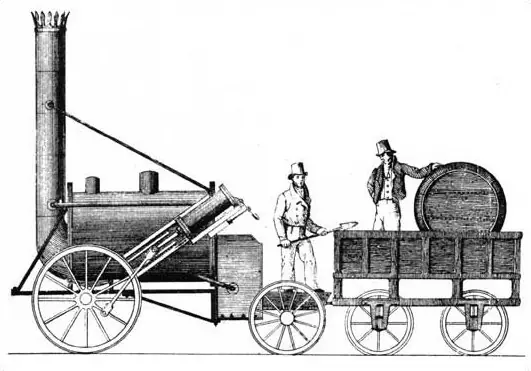
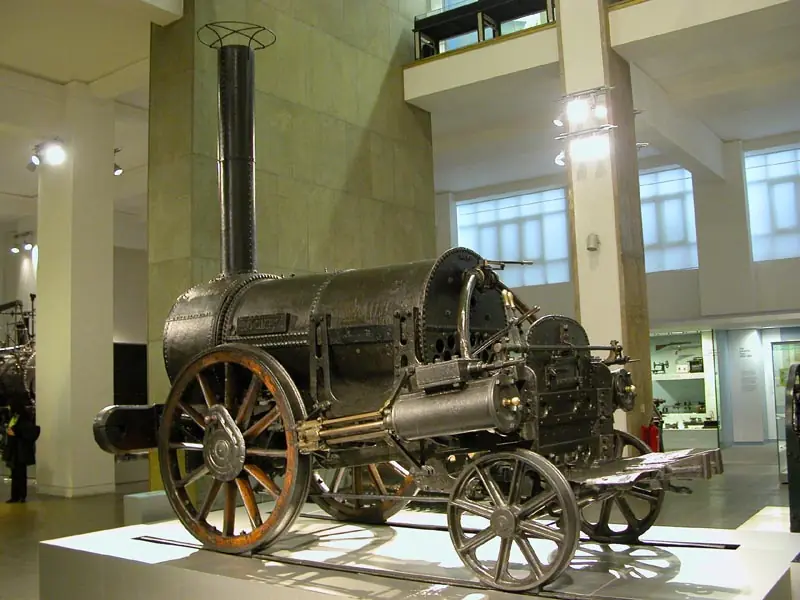
George Stephenson, age 47, entered his locomotive called Rocket, which he designed with his son Robert Stephenson, age 30, and the firm of Robert Stephenson and Company. Rocket’s key innovations were a multi‑tube fire‑box that increased heating surface, a separate blast pipe that used exhaust steam to draw air through the boiler, and a cylinder arrangement that delivered power at 25 pounds per square inch. These features allowed Rocket to reach a measured speed of 30 miles per hour and to complete the 13‑mile test circuit in 13 minutes and 9 seconds, well within the trial’s requirement of 10 miles per hour for four consecutive runs.
Competing entries included the Brazen, built by Charles Brand, the Novelty, designed by John Braithwaite and John Ericsson, and the Perseverance, constructed by Timothy Hackworth. Braithwaite and Ericsson’s Novelty achieved high speed but suffered a boiler failure after the second run. Hackworth’s Perseverance completed the runs but could not match Rocket’s speed, averaging only 20 miles per hour. The judges recorded the results in the official report dated 8 October 1829, noting that Rocket’s performance “exceeds the conditions laid down” and that the other machines “failed to demonstrate comparable reliability".
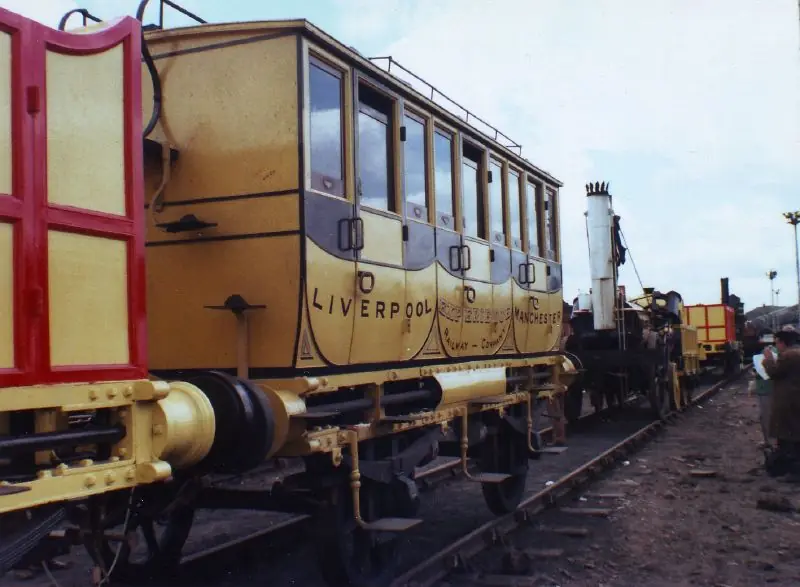
The trial’s outcome directly influenced the L&MR’s decision to purchase twelve Rocket‑type engines, establishing a standard design for early British railways. The success also validated the multi‑tube boiler, which became a universal feature of subsequent locomotives. Within two years the L&MR opened its line, and by the 1840s more than 500 locomotives based on Rocket’s principles were in service across Britain, accelerating the spread of railway transport worldwide.
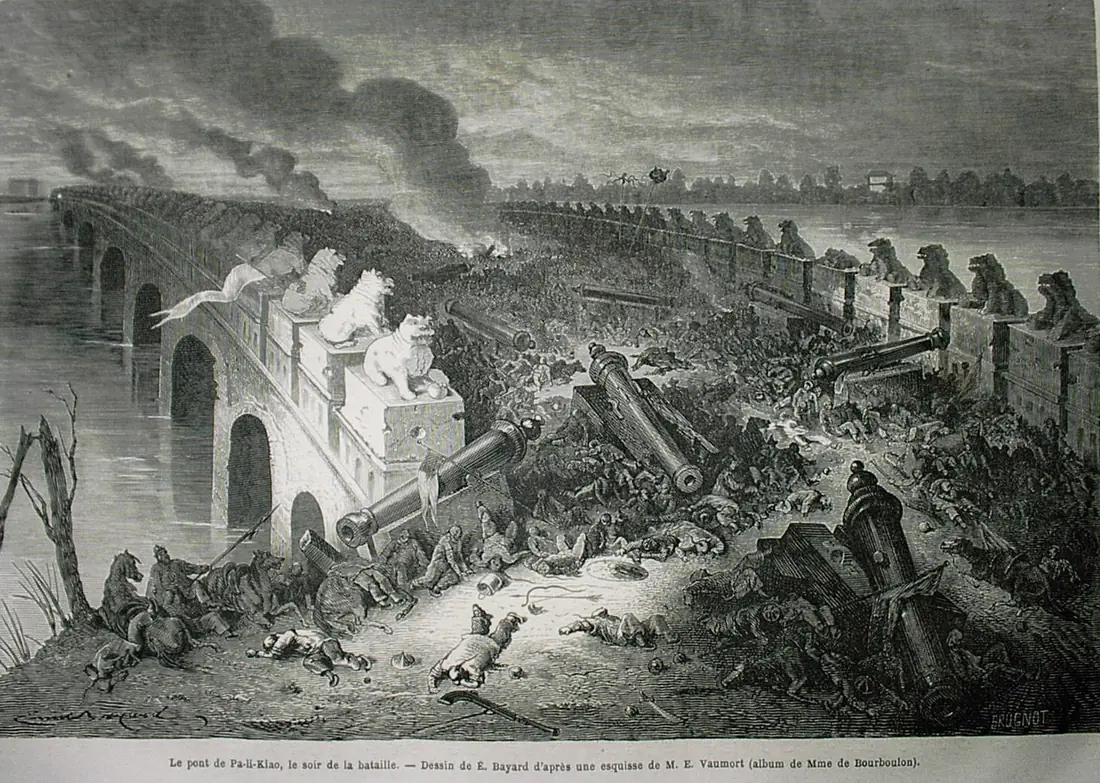
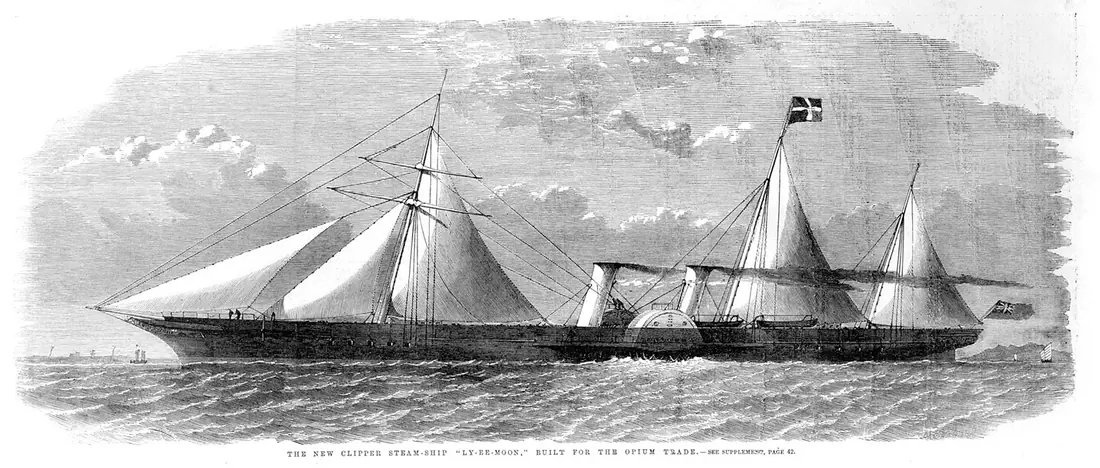
The Arrow Incident was not a spontaneous clash but the result of a diplomatic deadlock over the 1842 Treaty of Nanking and its 1854 amendment, the Treaty of Tianjin. Britain and France demanded the right to station consuls in the interior of China and to conduct trade beyond the coastal ports, while the Qing court resisted any further erosion of sovereignty. In June 1856 Lord Elgin instructed the British envoy Sir Frederick Bruce to press the issue, and the French consul in Guangzhou, Monsieur de Montignac, prepared a parallel demand. Both powers sent a small fleet to the Pearl River with orders to seize any vessel that violated the new clauses.
On 8 October a Chinese-owned sampan named the Arrow, registered in Hong Kong but flying the Qing flag, was boarded by Chinese officials on suspicion of piracy and its crew detained. The British consul in Canton, Harry Parkes, declared the seizure illegal because the Arrow was a British-registered vessel, even though the ship's registration had expired months earlier. Parkes ordered a naval detachment to board the Arrow, to free the crew and to demand an apology. The Chinese authorities refused, arguing that the ship was no longer under British protection.
The mechanism that triggered war was the extraterritorial claim embedded in the earlier treaties: Britain interpreted any interference with a British‑registered ship as a breach of treaty rights, and the Qing court saw the British demand as an intrusion into internal law enforcement. When the British gunboat HMS *Cassandra* fired warning shots and the Chinese forts returned fire, a brief exchange resulted in casualties on both sides. The French, under Admiral Charles Rigault de Genouilly, joined the action the same day, adding their own bombardment of Canton.
Key figures were Lord Elgin, who authorized the use of force to enforce treaty terms; Harry Parkes, who interpreted the Arrow’s status to justify a naval response; and the Qing Viceroy of Liangguang, Lin Zexu’s successor, who ordered the detention of the crew. Their decisions turned a legal dispute over a single vessel into a broader conflict.
The immediate consequence was the outbreak of the Second Opium War, which saw British and French forces capture the Taku forts in 1858 and force the Qing government to sign the Convention of Peking. That convention opened more ports to foreign trade, legalized the opium trade, and granted foreign diplomats the right to reside in Beijing, reshaping Sino‑Western relations for the remainder of the century.
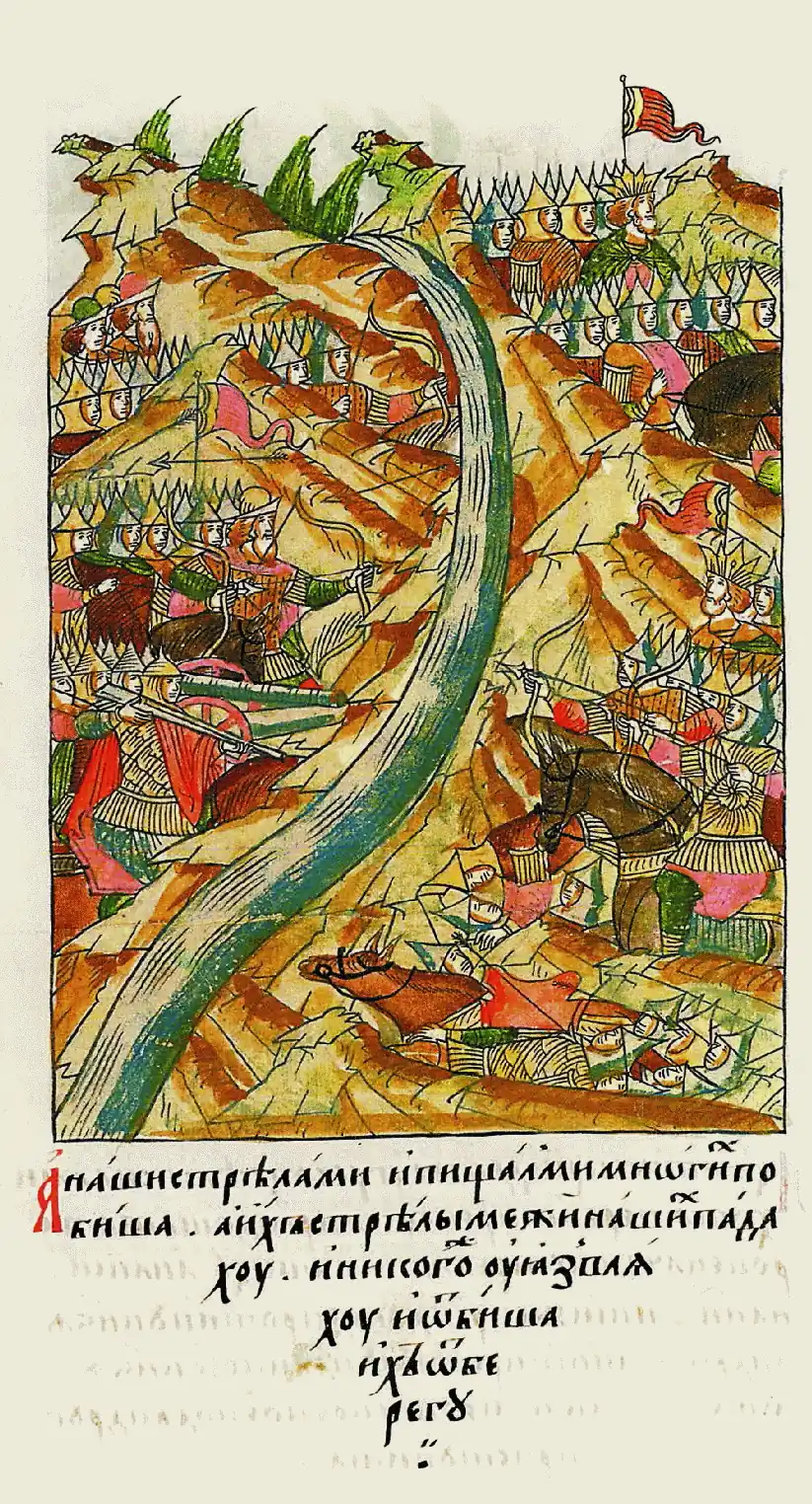
Ivan III of Moscow and Akhmat Khan of the Great Horde faced each other across the Ugra River in October 1480. The two forces never engaged in battle; instead both armies remained on their banks for several weeks. Ivan had assembled an estimated 40,000 men, while Akhmat's force numbered about 30,000 according to contemporary Russian chronicles. The standoff was the climax of a series of tribute demands that Moscow had resisted since the death of the previous khan, Ahmed Khan, in 1475.
The key mechanism was the refusal to pay the yasaq, the annual tribute that the Golden Horde exacted from Russian principalities. Ivan III declared the tribute unpaid in 1476, arguing that the Horde no longer exercised effective control. Akhmat Khan responded by marching west with the intention of forcing compliance. When the armies met at the Ugra, Ivan ordered the construction of a fortified camp on the left bank and reinforced the crossing points with wooden palisades. He also sent envoys demanding the khan withdraw, a diplomatic move backed by the visible readiness of his troops.
Akhmat expected a quick victory and sent a messenger demanding surrender. Ivan's reply, recorded in the "Chronicle of the Moscow Patriarchs, " stated that Moscow would not submit to foreign domination. The khan's army suffered from supply shortages and the onset of autumn rains, which made the river crossing difficult. After three weeks the khan withdrew his forces on October 8 without a fight. No casualties were reported on either side, and the retreat was noted as a voluntary decision rather than a forced defeat.
The immediate consequence was the end of the so‑called Tatar yoke over Moscow. Ivan III began to style himself as a sovereign ruler, adopting the title "Grand Prince of all Rus'" and later "Tsar." He also initiated reforms that reduced the influence of Tatar law and integrated the former tributary lands into a centralized Muscovite state. The standoff demonstrated that a Russian principality could resist the Golden Horde without direct military confrontation, a precedent that encouraged further territorial expansion.
In the longer view, the Ugra River standoff marked the transition from a fragmented tribute system to an independent Russian polity. It made the idea of a unified Russian state conceivable, paving the way for the later unification of the Russian lands under Moscow and the emergence of Russia as a major European power.
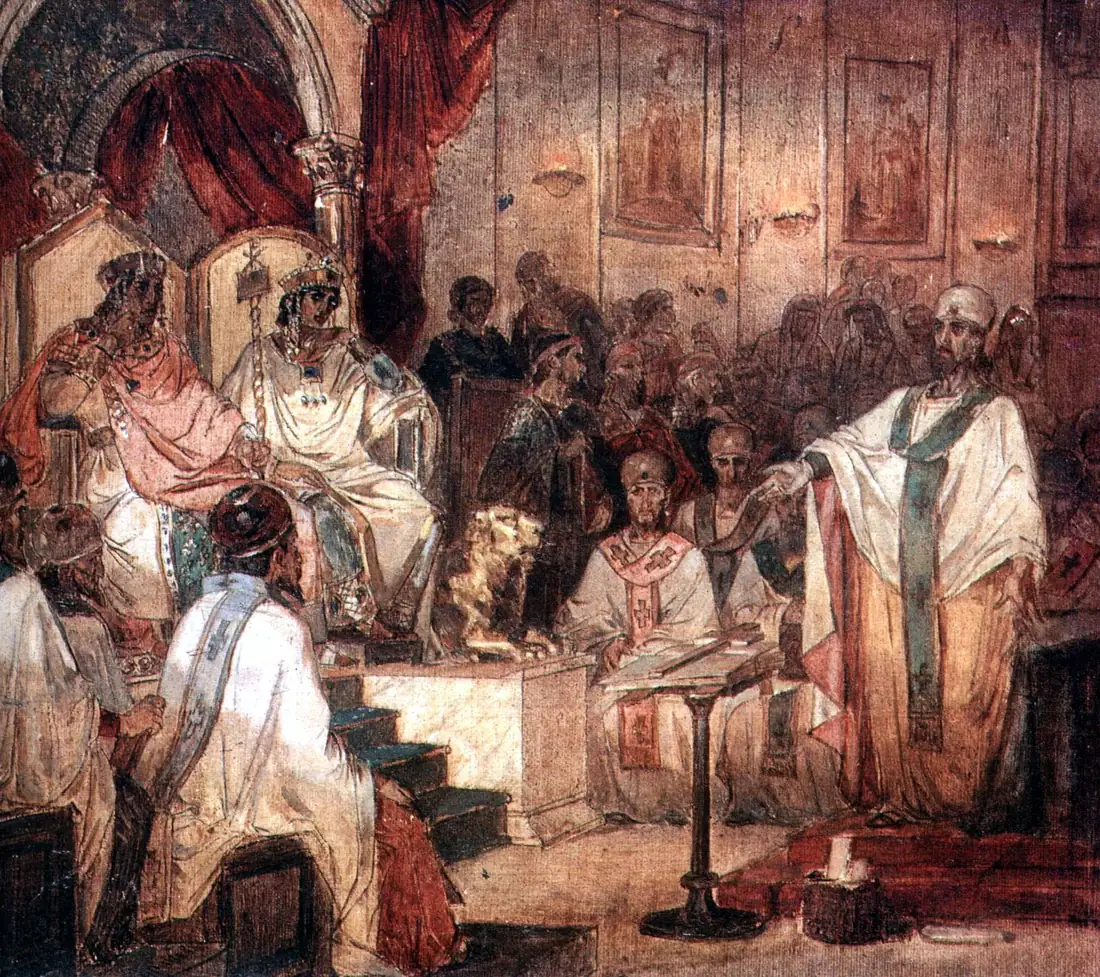
The Council of Chalcedon opened with 630 bishops from across the Eastern Roman Empire, a number recorded in the council's acta. They gathered in the city of Chalcedon, situated on the Asian shore of the Bosphorus, about 8 kilometers from the capital Constantinople, to resolve the Christological controversy that had divided churches for more than two decades.
The central dispute concerned whether Christ possessed one nature or two; the former view, known as Monophysitism, was championed by Eutyches, who had been condemned by a 449 synod of 500 bishops. The opposing view, articulated by Pope Leo I in his 449 letter "Tome, " argued for two distinct natures, divine and human, united in one person. Leo's letter was read aloud to the assembled bishops, and its 1,200-word text formed the doctrinal basis for the council's definition.
After three days of debate, on the fourth day the council issued the Chalcedonian Definition, a 27‑clause statement that affirmed Christ as "one and the same Son, perfect in divinity and perfect in humanity, truly God and truly man, " with "two natures" unconfused and unaltered. The definition was signed by 517 bishops, a count verified by the surviving subscription list, while 113 bishops either refused to sign or were absent, reflecting the deep regional resistance, especially in Egypt and Syria.
The council also issued 27 canons, the most detailed of which (Canon 28) granted the Pope of Rome a primacy of honor, stating that the bishop of Rome should be consulted on matters affecting the universal church. This canon was signed by 516 bishops, indicating near‑universal acceptance among the attending hierarchy. The council's decisions were transmitted to the imperial court, where Emperor Marcian, aged 55 at the time, endorsed the definition on October 23, 451, and ordered the construction of a new basilica costing an estimated 200,000 solidi, as recorded in imperial financial accounts.
The immediate effect was the schism of the non‑Chalcedonian churches, estimated to involve about 2 million believers in the eastern provinces, who formed separate hierarchies that persist today. Over the next 50 years, imperial edicts forced many dissenting bishops to accept the definition, yet the split endured, shaping the theological landscape of Eastern Christianity for the subsequent millennium.
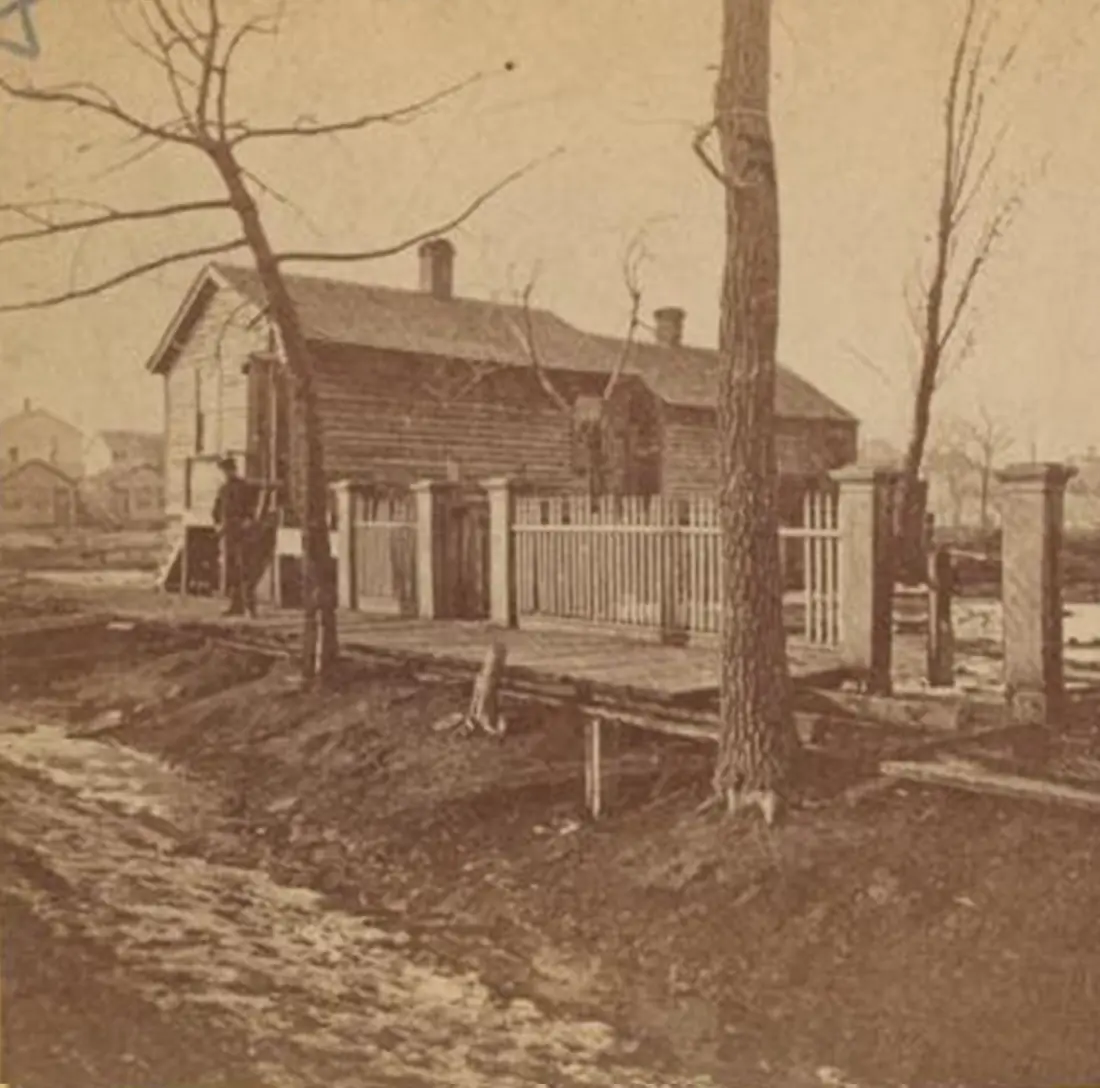
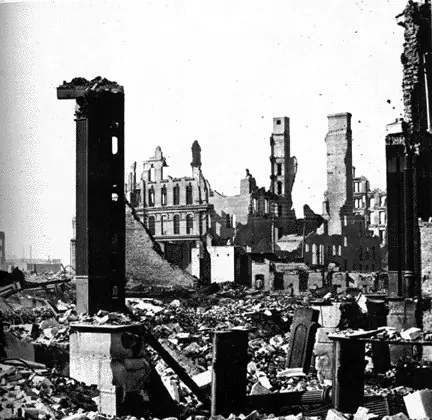
A fire began in a small barn on the west side of DeKoven Street at about 9:30 a.m. on October 8, 1871. The barn stored a large amount of dry hay, a material that ignites easily when exposed to an open flame. A cow in the barn kicked over a lantern, and the resulting spark set the hay alight. The fire quickly spread to the adjacent wooden shed and then to the adjoining row of wooden houses.
The prevailing weather had produced a three‑month drought, leaving the city’s timber structures extremely dry. Wind gusts from the southwest reached speeds of 20 to 30 miles per hour, pushing the flames across the narrow streets. By 10:00 a.m. the fire had reached the business district, igniting warehouses that stored lumber, oil, and other flammable goods. The fire department, equipped with hand‑pump engines and a limited water supply, could not form an effective barrier.
At 11:15 a.m. the fire jumped the Chicago River via a bridge that was not yet fire‑proofed, entering the north side of the city. Within two hours the blaze had destroyed 17 square miles, including 2,500 structures and the city’s public records building. The death toll was officially recorded as 300, while estimates of the homeless rose to 100,000, roughly one third of the population.
Mayor Roswell B. Mason ordered the evacuation of the area and directed the remaining fire crews to focus on protecting the waterworks and the state penitentiary, which were saved. The city’s response included a temporary ban on the use of wood for construction and the immediate formation of a volunteer fire watch. The state legislature later passed a law requiring new buildings to be constructed with fire‑resistant materials such as brick or stone.
Rebuilding began within weeks, and the city’s population grew to 1.1 million by 1890, making Chicago the second largest city in the United States. The fire prompted the adoption of stricter building codes nationwide and the development of modern municipal fire departments with steam‑powered engines and organized water mains. The event remains a benchmark for urban fire safety practices.