The Roswell UFO Mystery Begins
Roswell, New Mexico, USA
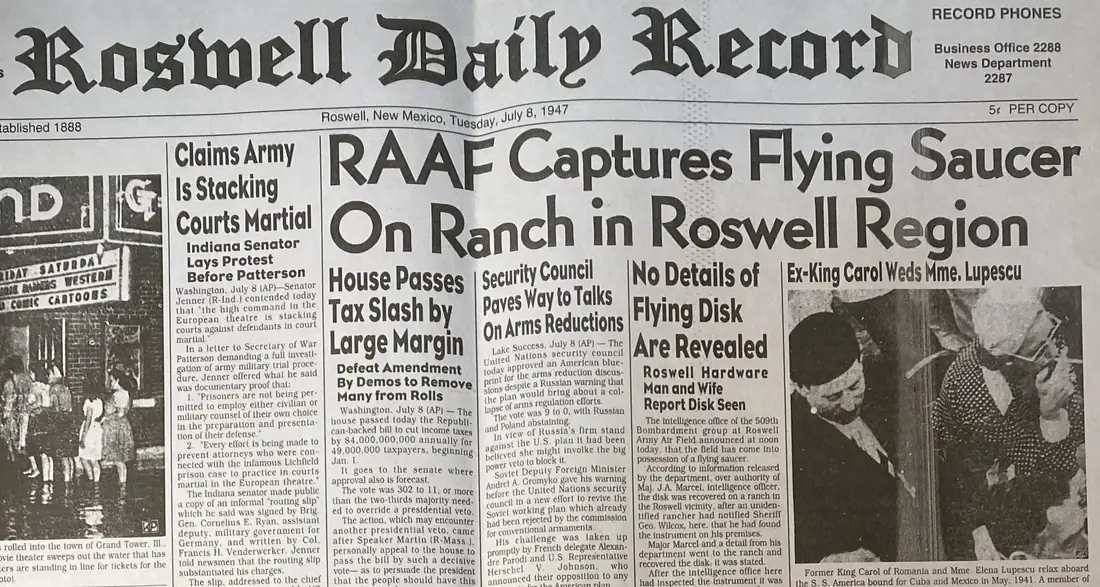
The Army's official statement lasted exactly 28 minutes.
On the morning of July 8, 1947, the Roswell Army Air Field issued a press release announcing that their personnel had recovered a "flying disc" from a ranch about 75 miles north of town. By afternoon, the story had been killed. Within hours, a senior officer held a press conference with the wreckage—now definitively a weather balloon—splayed across a table for photographers. The contradiction was total, instantaneous, and precisely calibrated to look like the panicked correction of an honest mistake.
What had actually arrived in New Mexico that summer was less a spacecraft than a confluence of circumstances: classified anxiety, rural isolation, and the peculiar physics of how rumors move through a small town.
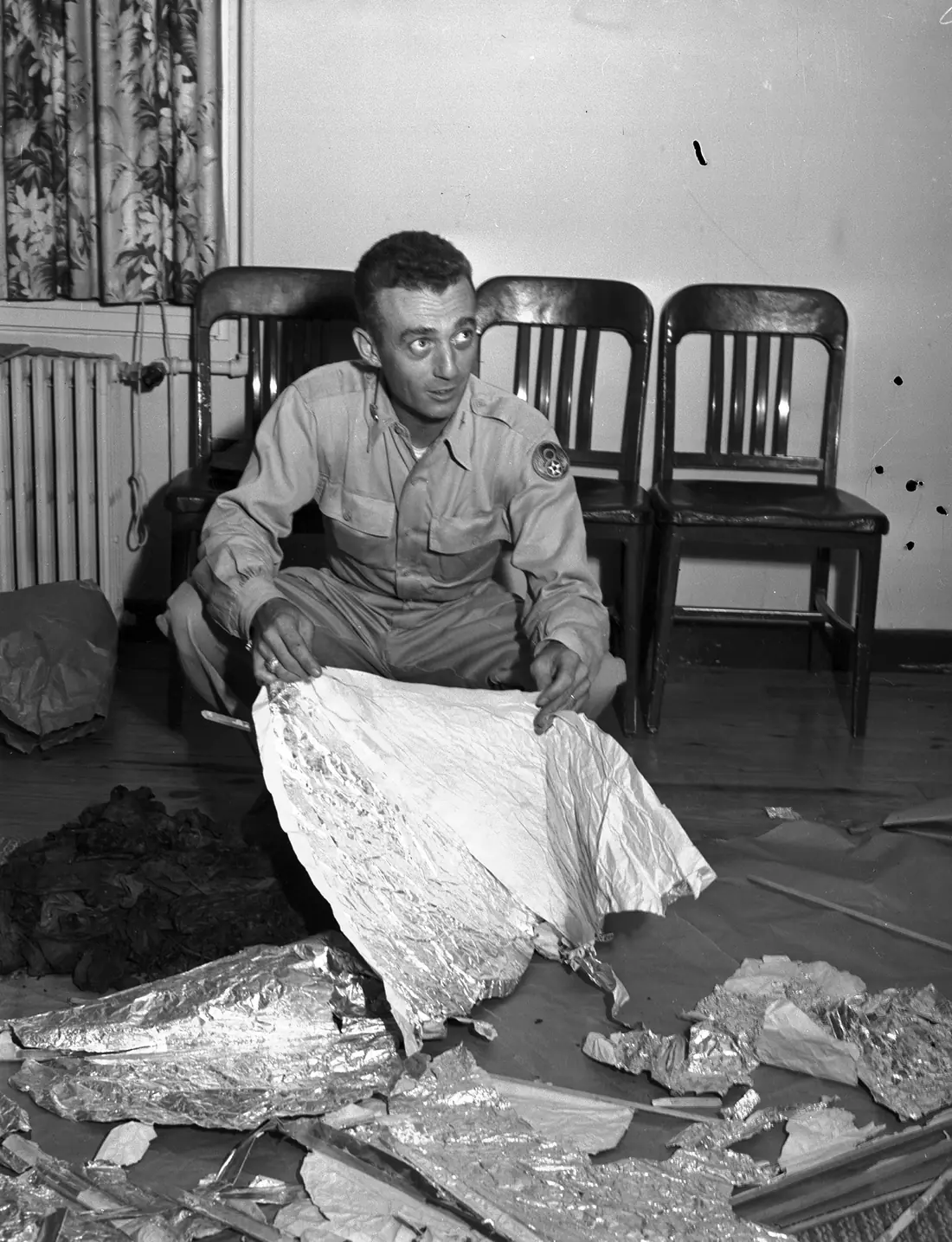
WilliamBrazel, the rancher who found the debris, didn't immediately phone the military. He found the scattered wreckage—metallic foil, wooden sticks, rubber tubing—in his pasture after an electrical storm and simply left it there for a few days. When he finally contacted the sheriff, the sheriff called the Army. The military arrived, took photographs, questioned Brazel extensively, and departed with their evidence. Then, apparently without consulting anyone, the public information officer released a statement about a "flying disc." Someone higher up read that statement, had what we might charitably call a moment of clarity, and the machinery reversed.
What the wreckage actually was didn't become public knowledge for 48 years. In 1995, the Department of Defense revealed that the debris belonged to Project Mogul, a classified program designed to detect Soviet nuclear tests using high-altitude balloons covered in reflective material. The irony was exquisite: the government had been operating a spy balloon program so secret that when one of its balloons crashed, they couldn't admit what it actually was without revealing the program itself. So they lied, unconvincingly, in a way that practically guaranteed decades of conspiracy theories.
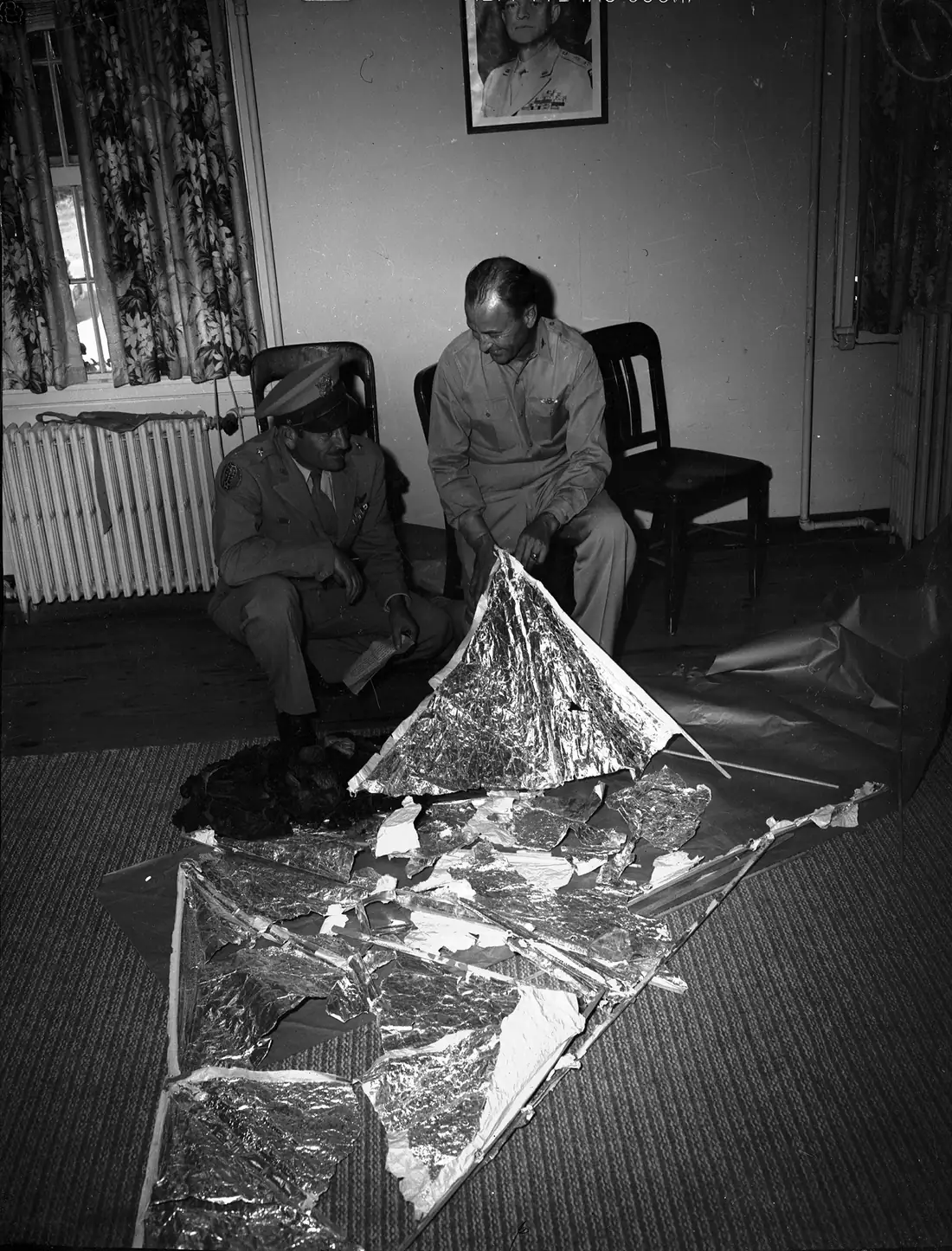
What makes Roswell interesting isn't that a UFO crashed—it didn't. What makes it interesting is how thoroughly ordinary the moment was before it became mythic. A rancher found trash. A junior officer made a guess. A superior officer made a phone call. None of these people were inventing alien mythology; they were doing the bureaucratic dance of classification and damage control. And yet, in that 28-minute window between the disc announcement and the balloon retraction, something shifted in the American imagination. The gap between what the government said and what it actually meant had been made visible.
For decades afterward, people assumed the contradiction proved a cover-up of something real—visitors from space. It never occurred to most of them that the lie might be covering up something far more mundane: the existence of a secret weapons program. When the truth finally emerged, it was so much less dramatic than the speculation that many people didn't believe it. A weather balloon, the government said again, more or less. Some people are still waiting for the actual answer.
Mac Brazel never became famous. He returned to his ranch, which is still there. The debris from Project Mogul is in a museum. And every July, Roswell holds a UFO festival that draws thousands of people who know perfectly well that nothing extraterrestrial ever landed there—and come anyway.