Daily History
Technology

Juan de la Cierva Demonstrates Autogyro

Madrid, Spain
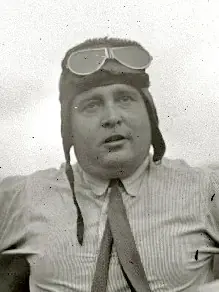
Juan de la Cierva Demonstrates Autogyro — Madrid, Spain
Image: Pascual Marín · Public domain

On July 9, 1923, in a field outside Madrid, Juan de la Cierva did something that seemed to violate the rules of flying: he went up vertically, stayed still in the air, and came down again—all without a runway.

Four years earlier, this would have been impossible. Four years later, it would seem like an obvious solution to a problem everyone had stopped noticing. But on that particular morning, it was a rupture in how the world worked.

The problem Cierva was solving was embarrassingly practical. Airplanes were miraculous, but they were also useless to you unless you happened to own a landing strip. Farms didn't have runways. Mountains didn't have runways. Most of the world didn't have runways. If your engine quit over a field, you had two choices: find a field or die. The romance of aviation looked different when you were the person nosing into trees because you ran out of suitable ground. And crashes were frequent—landing accidents were the single biggest killer of early aviators, more lethal than mechanical failure or pilot error combined.

Cierva was an engineer, not a dreamer. He'd already designed conventional aircraft and watched them behave unpredictably at low speeds, that dangerous moment when an airplane was too slow to maintain altitude but too fast to stop quickly. That's when the idea crystallized: what if you combined two machines that shouldn't exist together? Take the spinning rotor from a helicopter—a concept theorized for decades but never made practical—and use it differently. Instead of powering it directly from the engine, let the forward motion of the aircraft keep it spinning. The rotor would be unpowered, free to adjust its own angle as the wind pushed at it. The plane would move forward like an airplane, but the spinning rotor overhead would provide lift more like something that could practically hover.

He called it the Autogyro. The physics were sound. The engineering required both intuition and mathematics that few people possessed. But it looked like something from a fever dream—an airplane with a windmill bolted to the top.
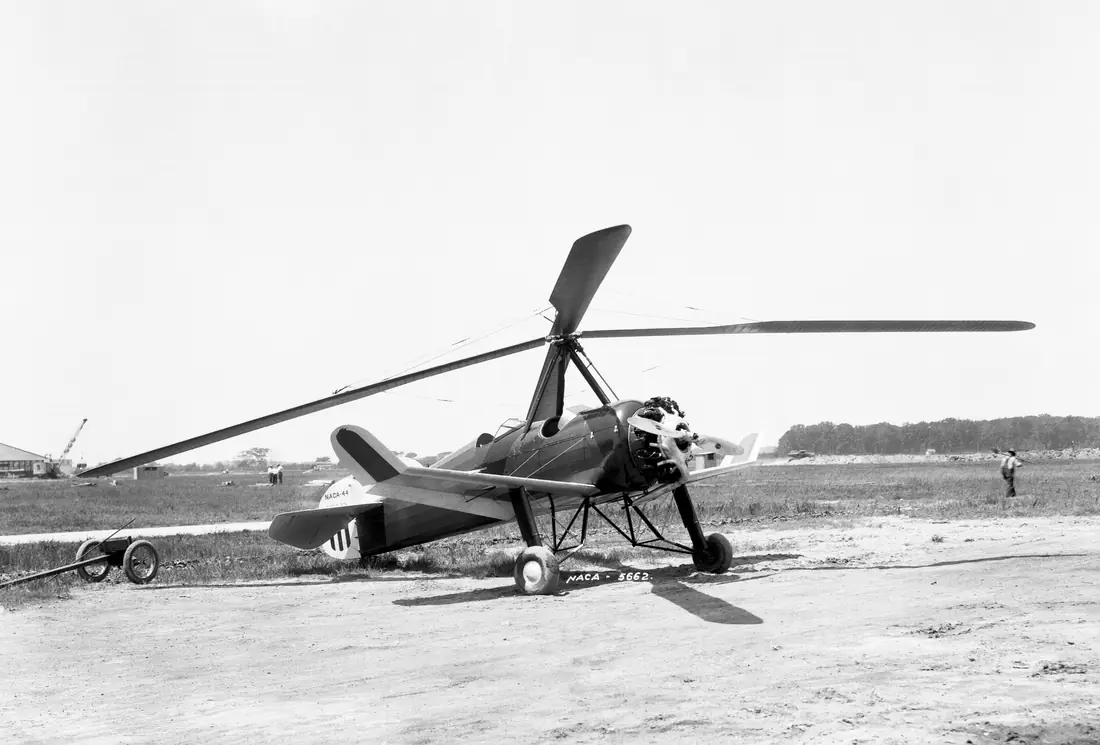
Juan de la Cierva Demonstrates Autogyro — Madrid, Spain
Image: NASA/NACA, LARC · Public domain

The demonstration that July morning was not dramatic in the way aviation history prefers. Cierva took the machine up, climbed to 60 meters, and circled. Then he descended at an angle so shallow it was almost vertical and landed on grass. A farmer could have landed a horse there.

Within a year, Autogyros were being built in half a dozen countries. Papers declared it the future. Engineers predicted the Autogyro would make aviation available to everyone—no more vast aerodromes, no more central control, just takeoff and landing anywhere. Thirty years later, the helicopter existed. It was what everyone had actually wanted. Sikorsky and others had solved the engineering problems that Cierva's hybrid approach had merely postponed. The Autogyro wasn't a stepping stone. It was a dead end that looked like a beginning.

A few thousand were built, scattered across the 1930s and 1940s, mostly for sport and reconnaissance. Then they vanished. Cierva himself died in 1936, in a plane crash near Croydon, London. Not in an Autogyro. In an ordinary DC-2 airliner. The machine that was supposed to save aviation from the dangers of conventional flight couldn't save the man who invented it.
Source: en.wikipedia.org/wiki/Juan de la Cierva

Sport

First Wimbledon Tennis Championship Inaugurated

London, England

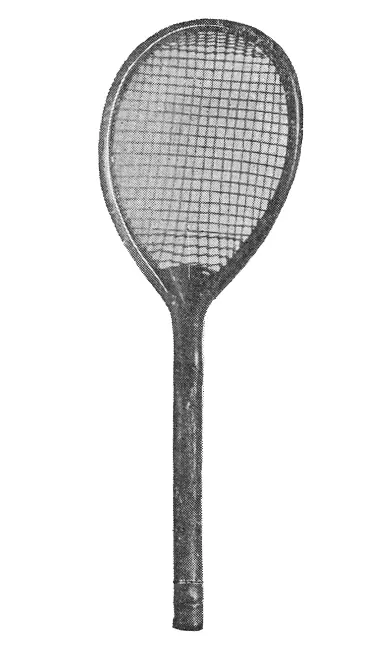
First Wimbledon Tennis Championship Inaugurated — London, England
Image: H.W.P. · Public domain

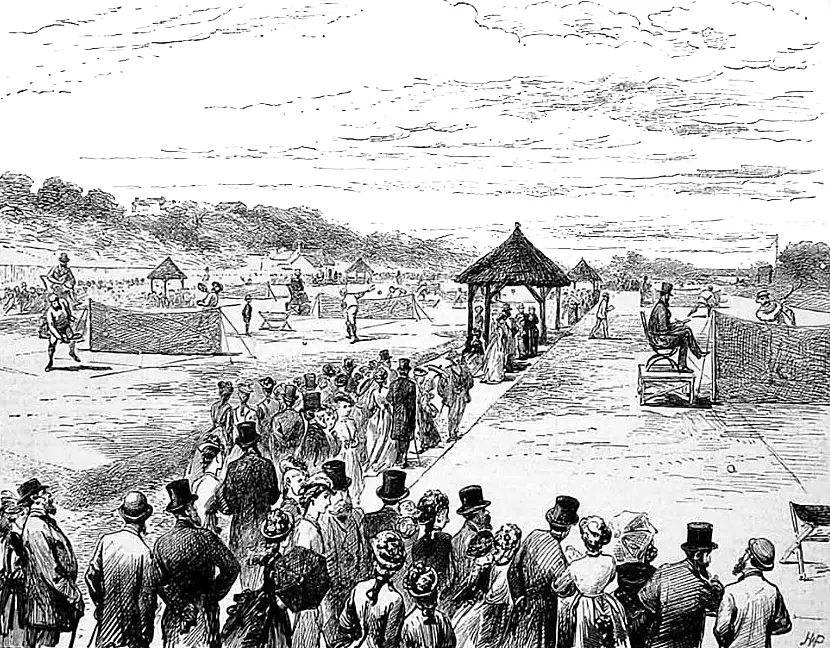
In the summer of 1877, 22 men showed up at the All England Club in Wimbledon with wooden rackets and the assumption that nobody would much care how they played. They were mostly right. Spencer Gore beat William Marshall 6-1, 6-2, 6-4 across 5 days of July tennis, collected 12 pounds in prize money, and quit competitive play for good. Of the roughly 200 spectators who paid a shilling each to watch him do it, probably none understood they were witnessing the only tennis championship that would never stop being played. Not once. Not through wars, not through economic collapse, not through the decades when tennis was purely a hobby for men with estates and nothing else to occupy their time.

This matters because tennis championships as a rule do not survive. The French Open moved venues 7 times in its first 30 years. The US Open vanished entirely from 1917 to 1918 during the First World War. The Australian Open did not exist until 1905, nearly 30 years after Wimbledon began. But the All England Club, sitting on grass in south London, held a tournament every single year from 1877 forward—unbroken, continuous, stubbornly ordinary. By the time anyone realized it mattered, it was already too late to stop it. That's the mechanism of Wimbledon's survival: not prestige at the start, but inertia so perfectly preserved that moving it became impossible.

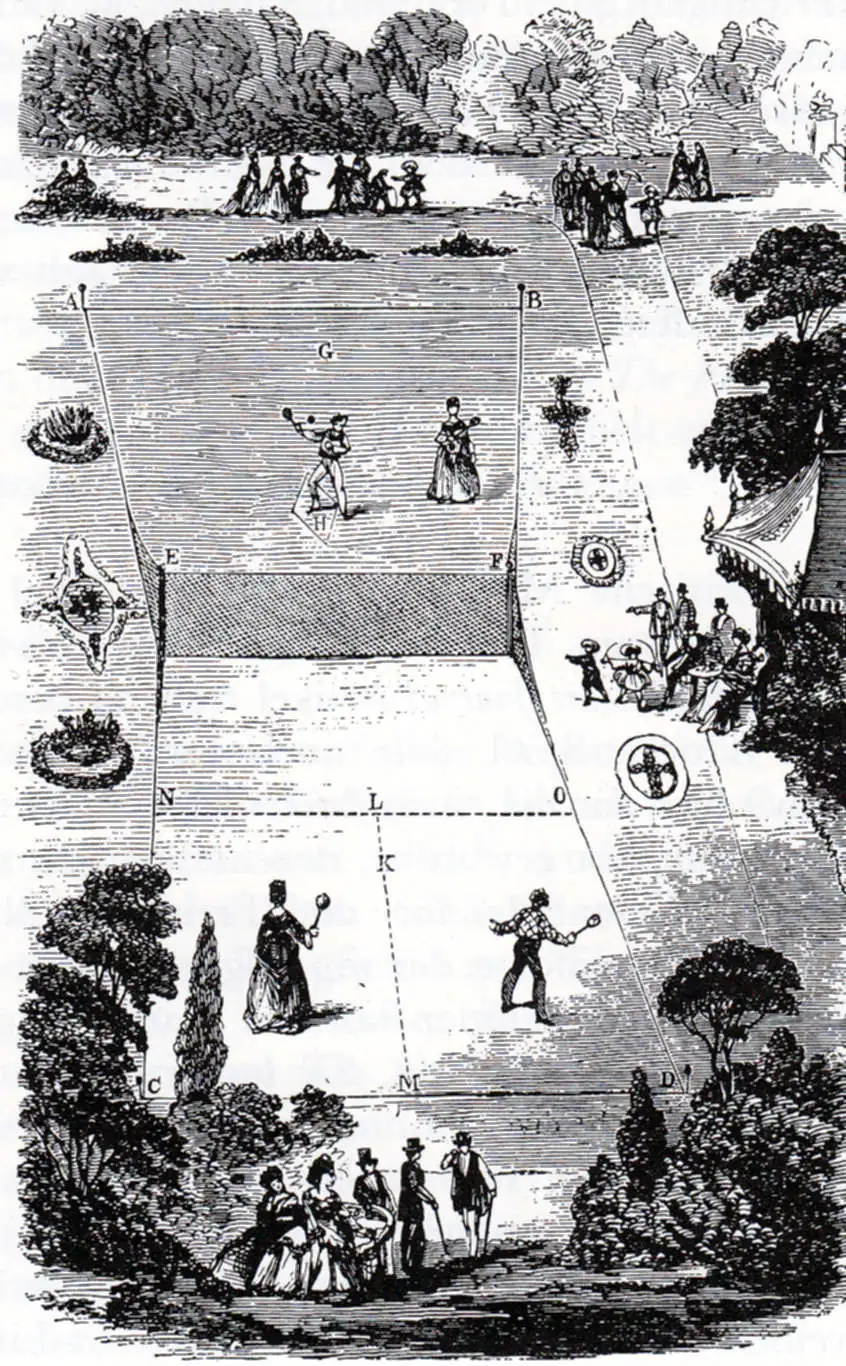
Lawn tennis itself was barely 11 years old when the first championship began. An English clergyman named Henry Gem and his friend Harry Gem had formalized the rules around 1866, and the sport erupted across England in the 1870s with the speed of gossip. Every country club suddenly wanted courts. Every court suddenly wanted a tournament. The All England Croquet and Lawn Tennis Club—originally a croquet society before tennis muscled in—simply decided to organize a championship and see what happened. Of the roughly 100 men theoretically eligible to enter, 22 showed up. A modest number, but enough. Enough that it became a thing people did again next year. And the year after.

First Wimbledon Tennis Championship Inaugurated — London, England
Image: Walter Clopton Wingfield (1833-1912) ? · Public domain

What the first Wimbledon reveals is something counterintuitive: small, stable tournaments survive better than ambitious ones. There were no television contracts because television did not exist. There was no media coverage to speak of. No international prestige to chase. The tournament was simply something the club did each summer on its own grass. That meant when sponsorship dried up—which it always does—the club could absorb the cost without panicking. The sport was too niche to be lucrative anyway. So it lived.

Women were not invited to that first championship. They would not be invited until 1884, and even then as something of an afterthought. For 96 years, Wimbledon paid them nothing while men competed for prize money. The tournament's great advantage was not moral clarity; it was structural stability, which is to say profound moral indifference wrapped in tradition.

First Wimbledon Tennis Championship Inaugurated — London, England
Image: Unknown authorUnknown author · Public domain

Spencer Gore is now a footnote because he won something and then walked away. The grass at the All England Club remained. The tournament remained. By 2023, that meant 146 consecutive years—longer than most nations last without collapse. Not because Wimbledon was the greatest tournament from the start, but because it was mundane enough, well-funded enough, and stupid enough about tradition to simply keep going.

Source: en.wikipedia.org/wiki/1877 Wimbledon Championships

Use the arrow keys to move between days

Browse the full archive →