Telstar Satellite Enables First Transatlantic Television Transmission
Cape Canaveral, USA

The picture that proved mankind could broadcast across an ocean came from a camera pointed at an American flag.
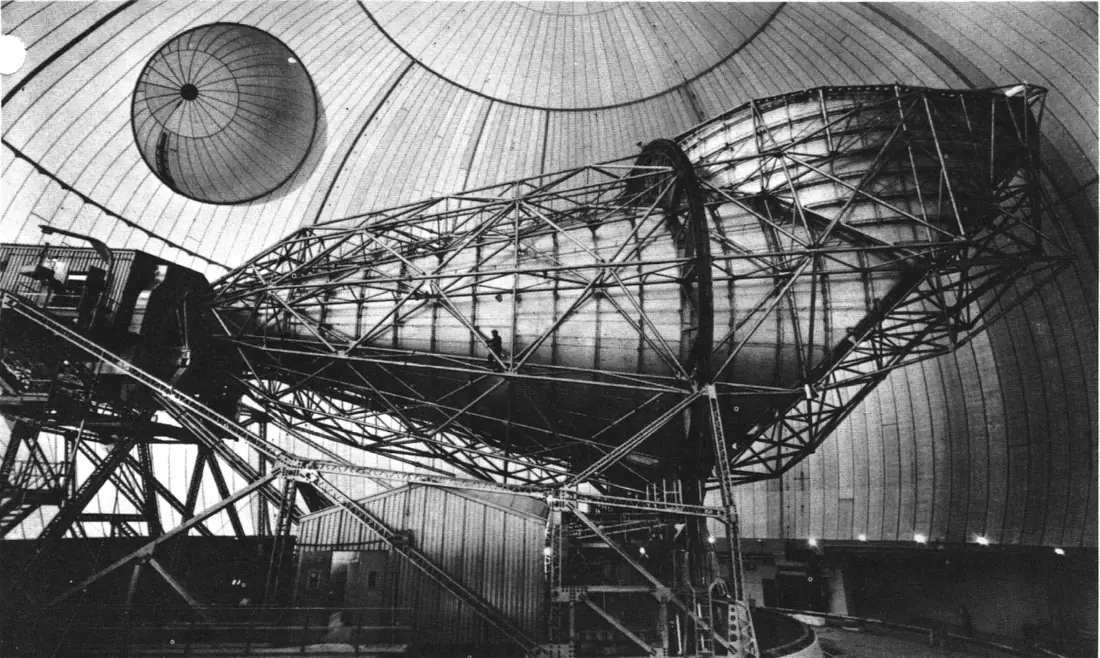
It was July 11th, 1962, at 2:37 p.m. in Maine, and a Telstar communications satellite—no larger than a beach ball, studded with 3,514 solar cells like tiny scales—was in orbit 22,500 miles above the Earth, rotating through space at 15,000 miles per hour. Engineers at AT&T's station in Andover held up a flag and aimed a camera at it, then broadcast the signal skyward toward a metal sphere tumbling through the void. The signal bounced off Telstar. It shot across the Atlantic. It landed at Goonhilly Downs, a receiving station in Cornwall, where British engineers watched a gray image flicker to life on a monitor: the American flag, transmitted through space, across an ocean, to another continent, in real time.
What the press didn't say was that Telstar was not a product of visionary thinking. It was desperation disguised as innovation. The Space Race was going badly for America. The Russians had launched Sputnik, put Gagarin in orbit, sent probes to the moon. Meanwhile, the United States was losing. AT&T saw an opening: if we could bounce a telephone call across the ocean using a satellite, we could claim a technological victory that the Soviets didn't have. Not first to space. Just first to make space useful.
They succeeded with an almost embarrassing efficiency. The satellite worked perfectly on the first try. But the content it was supposed to carry barely mattered. The first live television program through Telstar was a brief baseball game, some phone conversations, a clip of a Boston politician. The medium was revolutionary. The message was thin.
Then the physics caught them. Telstar had been built before anyone truly understood the Van Allen radiation belts—invisible rivers of charged particles that encircle the Earth, flung out by the sun and trapped by the planet's magnetic field. High-energy protons bombarded the satellite's circuits continuously. By August 1962, the transmitters failed. By February 1963, they briefly worked again. By 1965, Telstar was dead, a $61 million piece of silent metal orbiting in the dark.
But something else survived. A composer named John Barry had recorded a novelty pop song called "Telstar," a bouncy instrumental meant to capitalize on the publicity. It hit number one on the charts. Radio stations played it constantly. The song about the satellite became more famous than the satellite itself, more remembered than any broadcast it carried. Millions of people hummed the melody to a technological achievement they'd never actually seen, in an age when you could beam a television signal across an ocean but couldn't keep the satellite working long enough to know what to do with it.
The flag had made it across. The future had arrived. And the world was celebrating the wrong thing entirely.
Source: en.wikipedia.org/wiki/Telstar