Daily History
Exploration

Columbus Departs for the Americas

Palos, Spain

On the morning of August 3, 1492, three wooden ships sat in the Río Tinto near Palos de la Frontera, their hulls creaking with supplies, their crews arguing about whether any of them would ever see Spain again. Christopher Columbus was about to sail into the unknown—and the world had no idea it was about to crack open.

The night before, the Atlantic was still exactly what Europeans had always assumed it was: an impassable void. The known world ended at the Canary Islands. Beyond that lay speculation, fear, and the reasonable certainty that sailing west was a spectacular way to die. Merchants controlled established routes to Asia by going east, around Africa, and those routes had just recently opened up. Portugal was already making money hand over fist. The idea that you could get to the same place by going the opposite direction seemed not just unlikely but economically stupid—which, as it happens, it was. Columbus was wrong about the distance. He thought the Atlantic was about 2,400 miles wide. It is roughly 3,000.

But Columbus had something more valuable than being right: he had a queen who was bored with caution. Isabella of Castile had just finished expelling the Moors from Spain after nearly 800 years of warfare. She was in the mood for expansion, for glory, for tangible proof that her reign was the reign of big things. Columbus had been shopping his idea around for years—Portugal said no, England said no, he was nearly broke and living on charity. But Isabella, apparently, said yes.

The Santa María was not a ship built for legend. It was a merchant vessel, maybe 85 feet long, slow, creaky, and so unreliable that Columbus would be dead in it within years. The Niña and Pinta were smaller. The combined crew was roughly 90 men, many of them pressed into service, some of them criminals given a choice between the gallows and the ocean. They had supplies for about five weeks. They were heading into the largest ocean on Earth with a compass and stars.

What happened next moved fast. Thirty-three days of sailing. Land on October 12—not Asia, not the mainland, but an island in the Caribbean that Columbus called San Salvador. He thought he'd reached the Indies. He hadn't. He'd reached a place that would kill millions through disease, enslavement, and violence in the century to come. He'd reached a continent that would remake the entire global order—new crops, new diseases, new wealth, new slavery, new empires. He'd reached everything except what he was looking for.

The strangest part: he never knew. Columbus died convinced he'd found the route to Asia. He'd done something incomparably larger and never understood it. The world woke up on October 13, 1492, and didn't notice anything had changed. It would take decades, centuries even, for anyone to grasp what those three ships had actually done. By then, it was too late to undo.
Source: en.wikipedia.org/wiki/Voyage of Columbus

Exploration

USS Nautilus Traverses the North Pole

Arctic Ocean

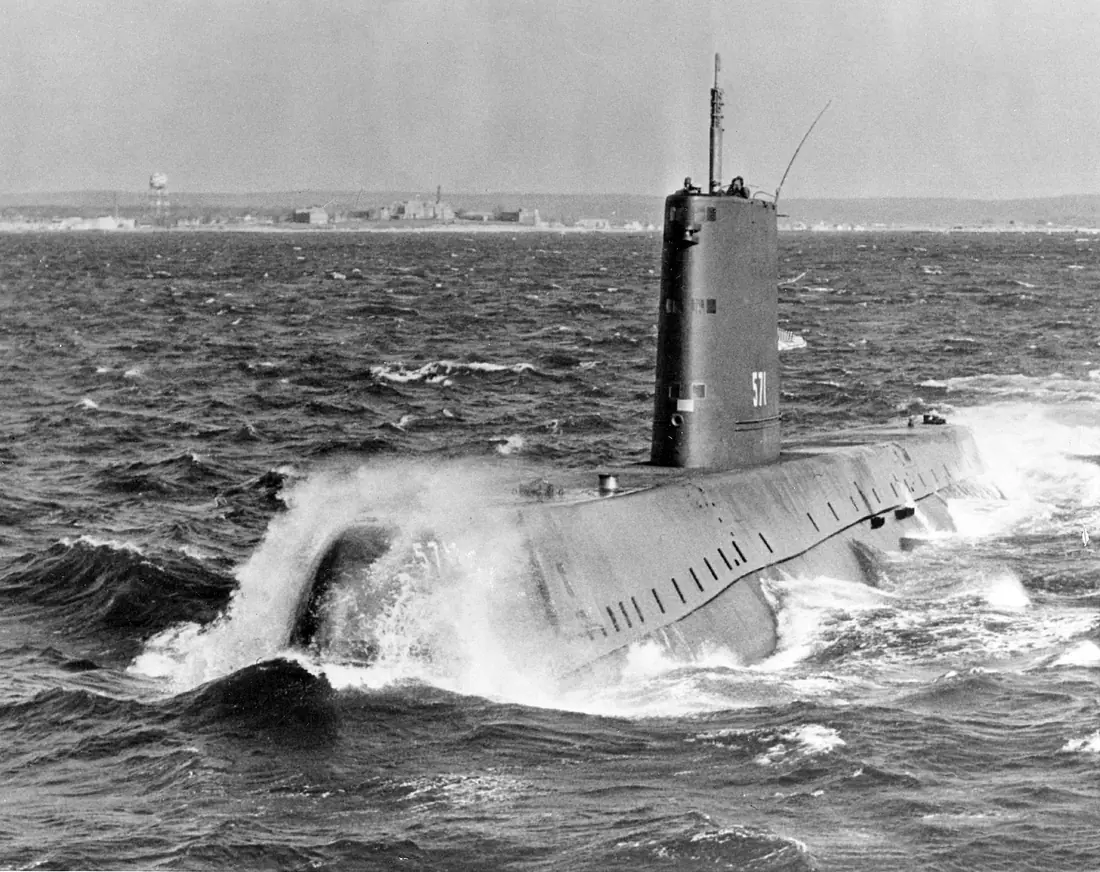
USS Nautilus Traverses the North Pole — Arctic Ocean
Image: USN official photo # 199068 · Public domain

At 11:15 p.m. on August 3, 1958, Captain William R. Anderson stood in the control room of the USS Nautilus, 420 feet beneath the Arctic ice, and gave an order that would have seemed impossible just five years earlier: proceed north under the North Pole.

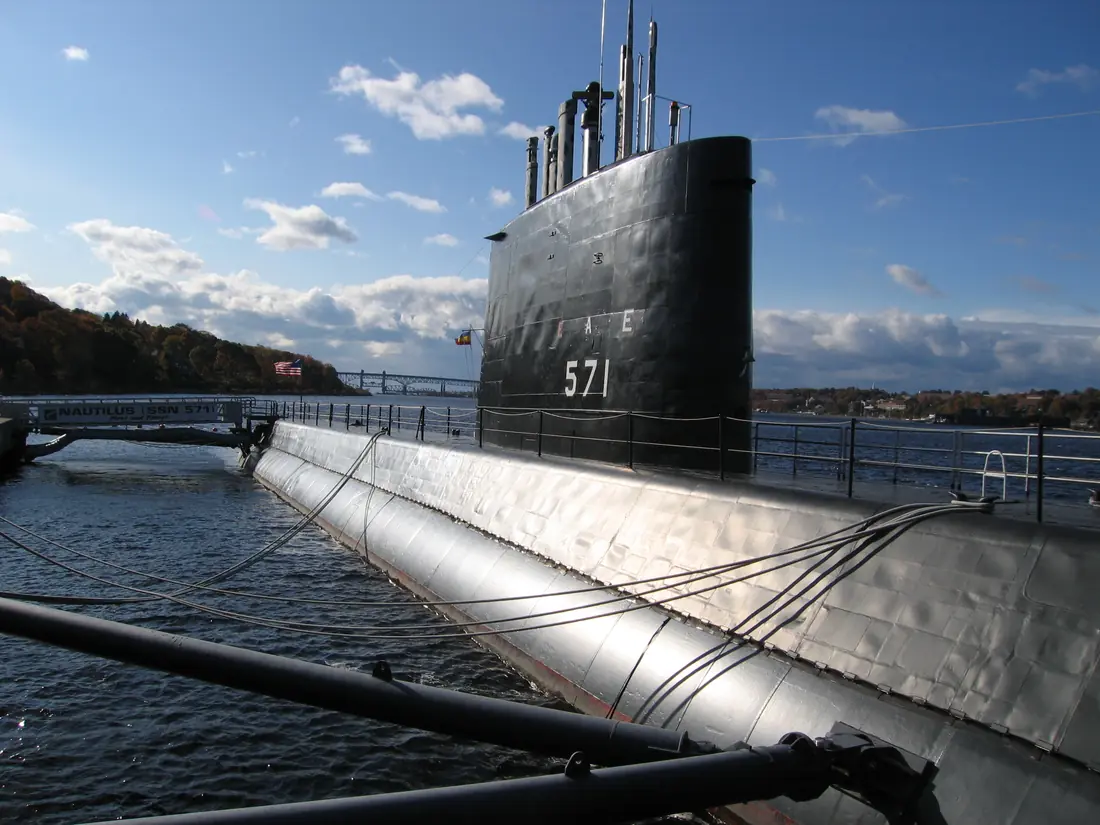
The Nautilus was no ordinary submarine. It was the first vessel ever powered by nuclear fission—a machine that could generate its own oxygen, desalinate its own water, and theoretically stay submerged for months. The Navy had built it to prove a point about American technological dominance during the Cold War. What they got instead was something stranger: a way to reach a place that had killed explorers for centuries, simply by going underneath it.

The journey to this moment had taken more than just the submarine's construction. It required a different kind of courage from the men aboard—not the visible bravery of earlier Arctic expeditions, but the quiet willingness to trust machines in absolute darkness. The Nautilus had already crossed the Atlantic under ice once, in July, but that was a practice run. This was the real crossing, the one that would put them under the pole itself, where no human had ever been.

USS Nautilus Traverses the North Pole — Arctic Ocean
Image: Victor-ny · CC BY-SA 3.0

Anderson and his crew knew the risks. The ice above them was typically 8 to 10 feet thick, but in places it could be 40 feet or more—thick enough to trap them if something went wrong with the nuclear reactor or the ballast systems. There were no rescue options. They were traveling blind, using an inertial navigation system that was accurate enough for missiles but had never been tested under these conditions. If it drifted, they might not know it until they surfaced into open water on the other side—or didn't surface at all.

For 96 hours, the Nautilus moved forward at about 15 knots. The crew maintained strict quiet. Men spoke in whispers. They ate sandwiches in shifts. The reactor hummed steadily below, splitting atoms to push 3,500 tons of steel through water colder than most people have experienced even standing still.

USS Nautilus Traverses the North Pole — Arctic Ocean
Image: Wikimedia Commons · Public domain

On August 5, at 11:15 a.m., Anderson received the navigation report. They had crossed beneath the North Pole. He typed a message and sent it back to the surface by radio, to be transmitted to the Navy: "The North Pole is ours."

The statement was pure Cold War theater—claiming ownership of a place that belonged to no one. But the real achievement was quieter. The Nautilus proved that the Arctic Ocean, which had been a barrier for three centuries, was now just another stretch of water. The age of surface exploration was ending. The age of invisible voyages—submarines armed with nuclear weapons, moving undetected beneath the ice—had begun.

Anderson's crew never saw the North Pole. They never saw anything but instruments and steel walls. They had conquered it by refusing to look at it. Which was perhaps the only appropriate way to conquer something that had spent so long refusing to be conquered at all.

Source: en.wikipedia.org/wiki/USS Nautilus (SSN-571)

Use the arrow keys to move between days

Browse the full archive →