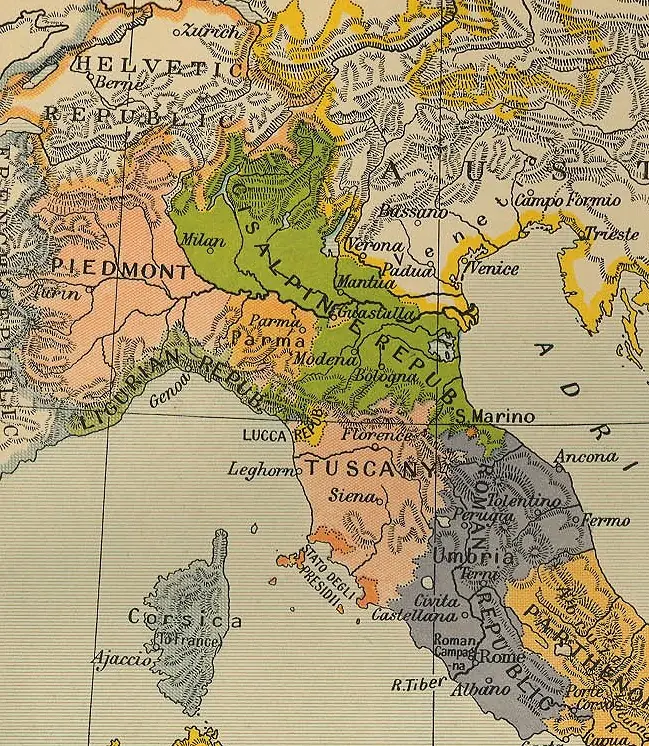
By early 1814 the French Empire had collapsed. Napoleon had abdicated on April 6, and the coalition forces of Britain, Russia, Prussia and Austria occupied Paris by late March. The map of Europe still showed French control of the Rhineland, the Kingdom of Italy, the Duchy of Warsaw and the annexed territories of the Low Countries. The victorious powers faced the problem of preventing a single dominant state and of restoring a balance that would deter future wars.
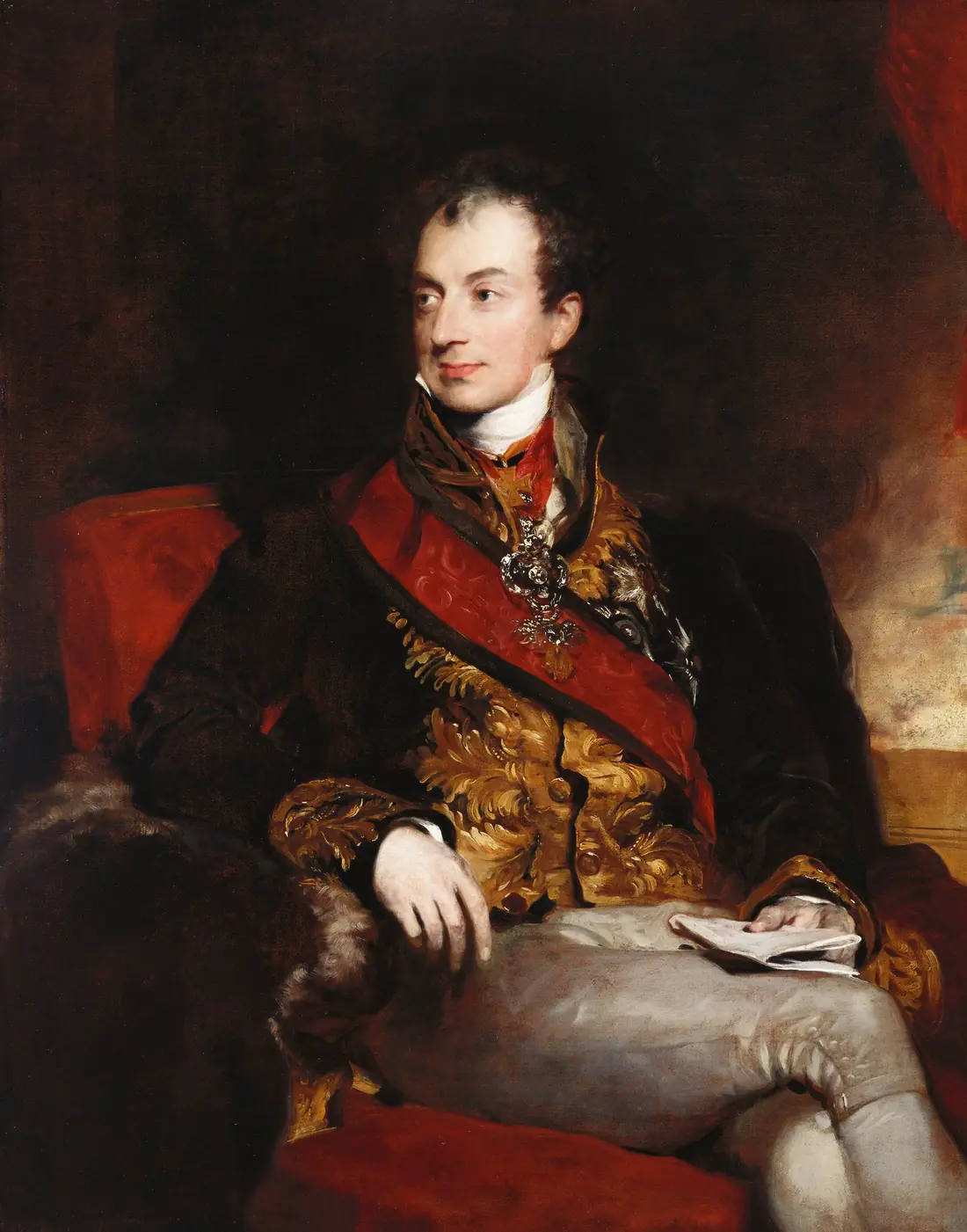
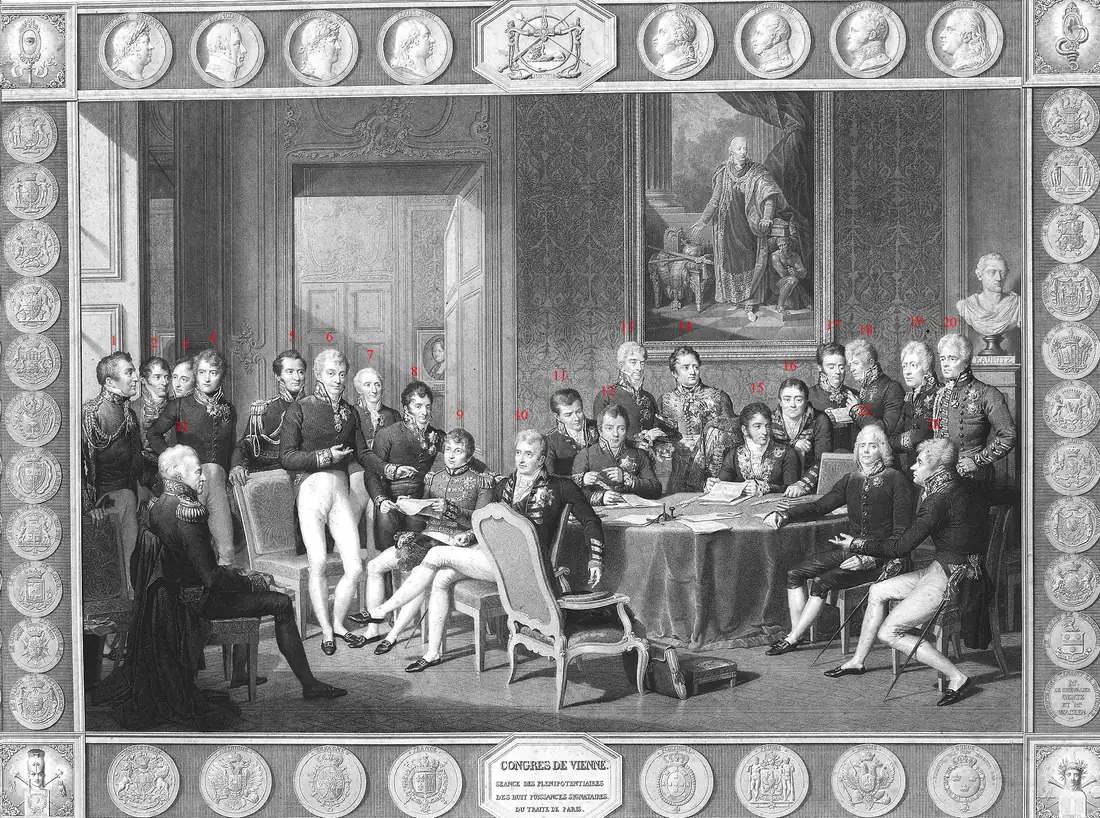
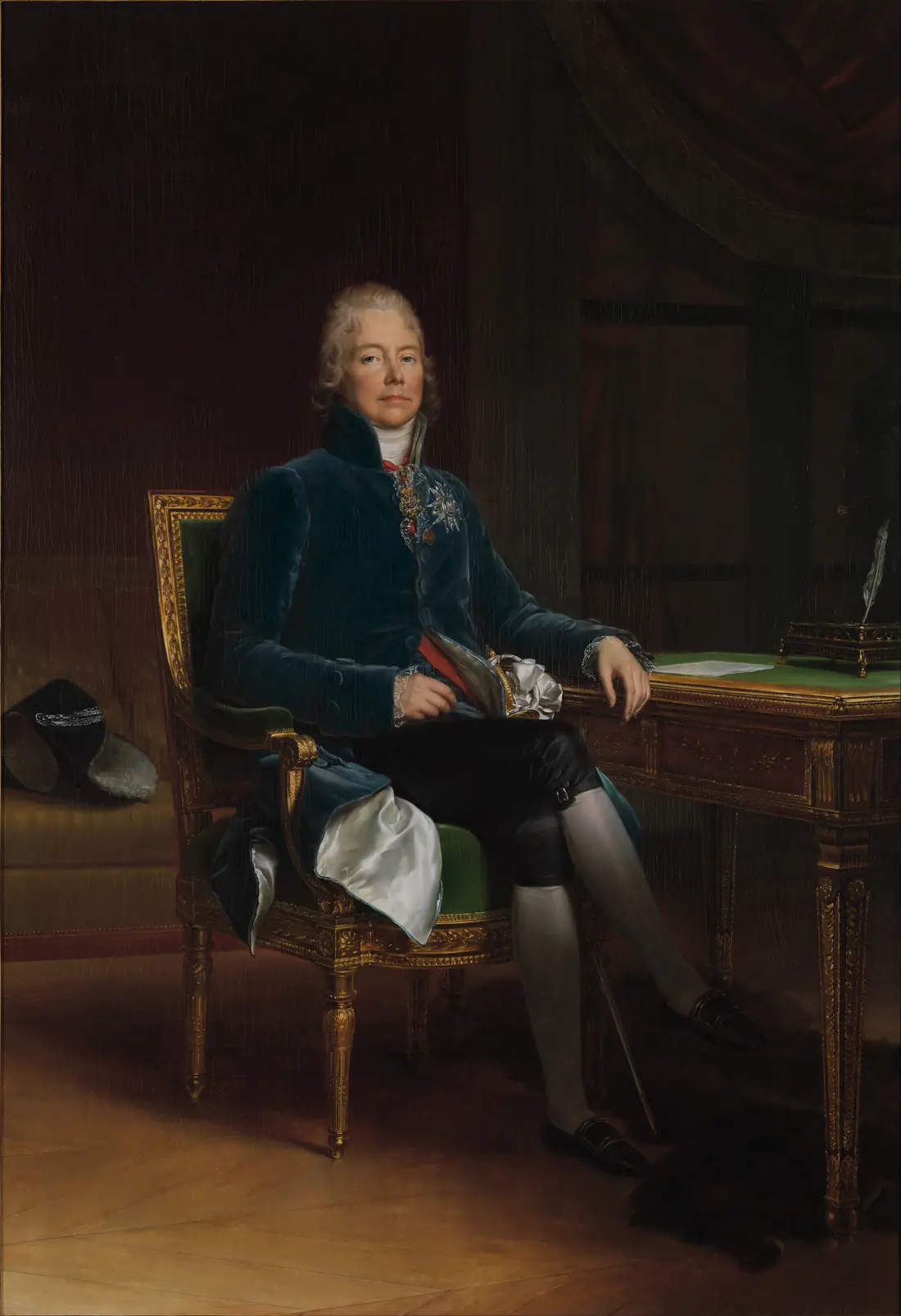
The Congress of Vienna opened on October 1, 1814 in the Hofburg Palace. The principal delegates were Austrian foreign minister Klemens von Metternich, British foreign secretary Robert Stewart (Viscount Castlereagh), Russian Tsar Alexander I, Prussian king Frederick William III and French foreign minister Charles-Maurice de Talleyrand. Metternich chaired the meetings and proposed a principle of legitimacy, meaning that thrones should be restored to hereditary rulers who had been displaced by French conquest.
The first major decision concerned the German lands. The Holy Roman Empire had been dissolved in 1806; the congress created the German Confederation of 39 sovereign states, covering roughly 540,000 square kilometres and a population of 35 million. The Confederation was led by Austria and included Prussia, Bavaria, Saxony and many smaller duchies. The second key settlement involved Italy. The Kingdom of Sardinia regained its pre‑war borders, the Papal States were restored, and the Kingdom of the Two Sicilies was re‑established under Ferdinand IV. The former French client state of the Kingdom of Italy was dissolved, and the Austrian Empire received Lombardy‑Venetia, a region of about 150,000 square kilometres.
A third decisive bargain concerned the Low Countries. The United Kingdom of the Netherlands was formed by uniting the former Dutch Republic (population 2.2 million) with the Austrian Netherlands (population 2.1 million). This created a state of 65,000 square kilometres intended to serve as a barrier against future French expansion. In exchange, Britain secured the cession of the Cape Colony and Ceylon to the Dutch, and retained control of Malta.
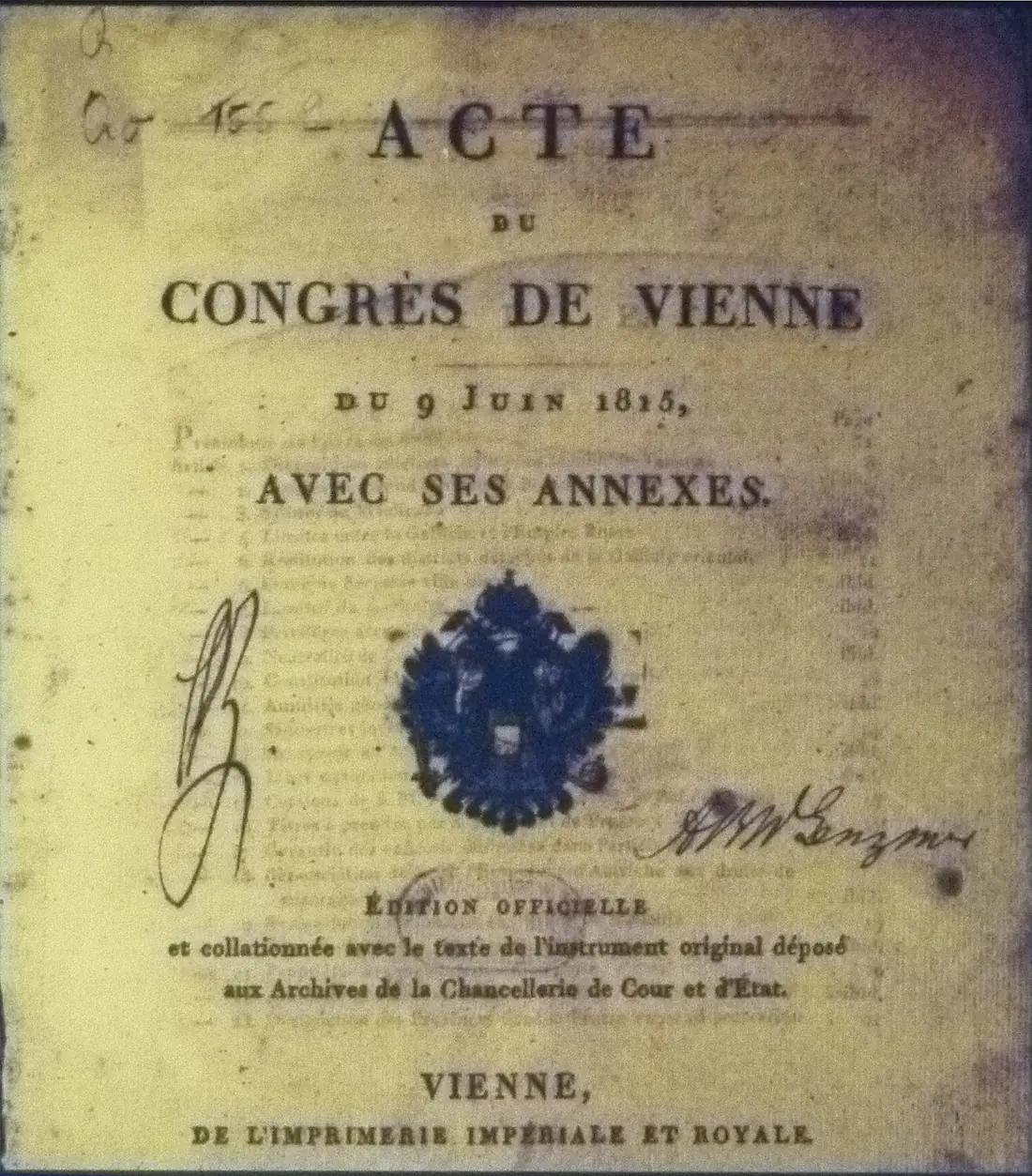
The congress concluded on June 9, 1815 after the defeat of Napoleon at Waterloo. Its final act, the Final Act of the Congress of Vienna, recorded 100 articles defining borders, dynastic restorations and the principle of collective security embodied in the Quadruple Alliance. The settlement endured for nearly a century, providing a framework that limited major wars in Europe until 1914.
The Legislative Assembly convened in the Salle du Manège on 1 October 1791, replacing the dissolved National Constituent Assembly and beginning the first constitutional legislature of the French Revolution. Its creation fulfilled the Constitution of 1791, which transferred sovereign power from the king to a unicameral parliament elected by active citizens.
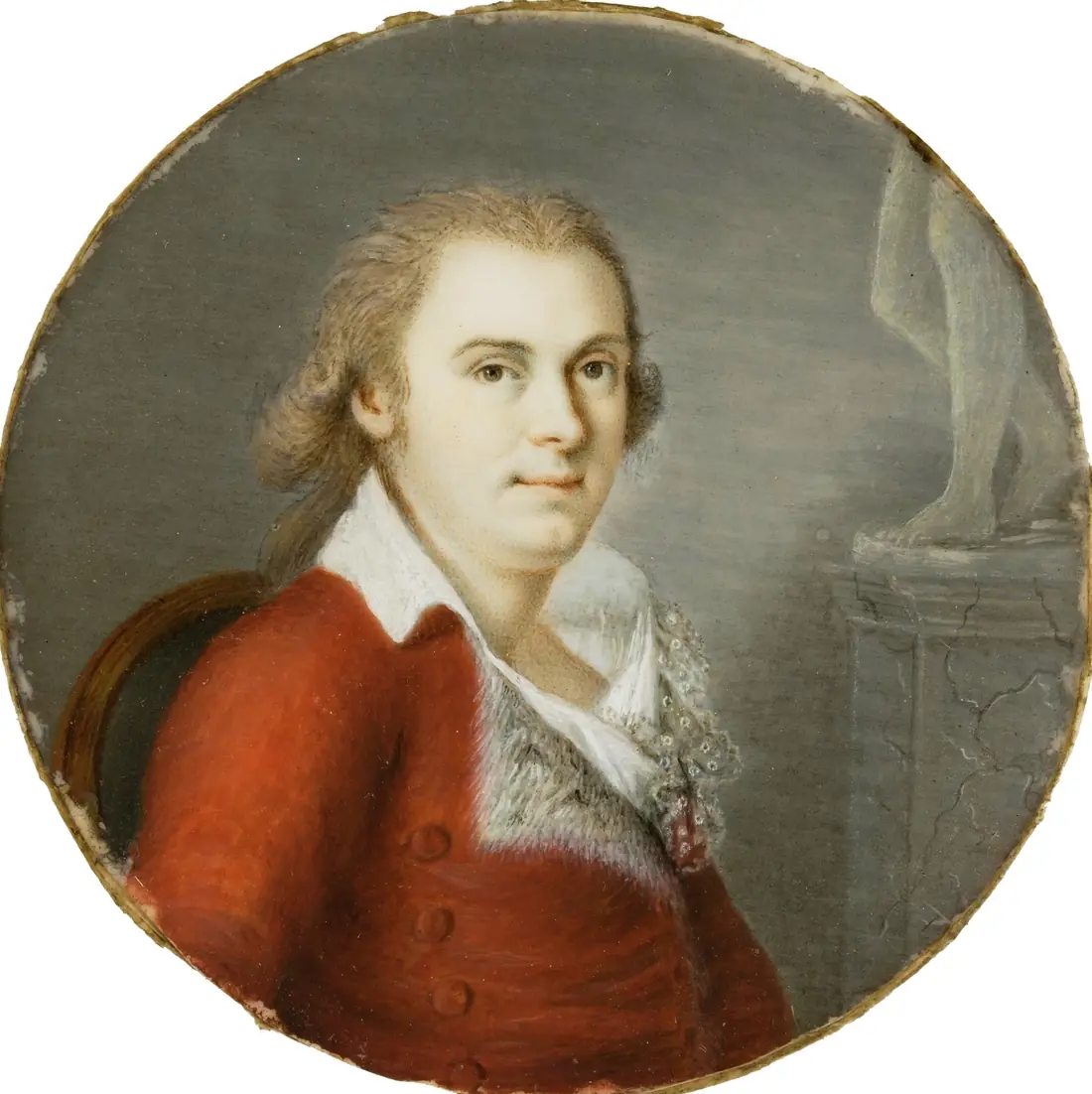
The Assembly comprised 745 deputies, of whom 330 were classified as Girondins, 130 as Jacobins, and the remainder as moderates or independents. Jean‑Joseph Mounier, age 45, was elected president and was tasked with directing debates and maintaining order. He presided over the inaugural session in which the Constitution required the declaration of the king’s new role. On 3 October the Assembly passed a decree stating that Louis XVI, then 20, was “King of the People and not of the Divine Right, ” limiting his authority to a veto that could be overridden by a three‑fifths majority.
Louis XVI, born 1754, signed the constitutional charter on 3 September 1791 but retained control of the army and foreign policy. In the first session he delivered a speech on 3 October affirming his loyalty to the constitution while warning that “the nation must not mistake liberty for anarchy, ” a remark recorded in the minutes of the Assembly. His words reflected the king’s attempt to preserve influence while accepting the legal framework.
Key deputies shaped the early legislative agenda. Abbé Sieyès, age 36, presented a report on the organization of the militia, leading to the law of 14 October that created 300,000 citizen soldiers. Deputy Maximilien Robespierre, age 34, introduced a proposal to suspend the death penalty for political offenses, which the Assembly rejected by a vote of 384 to 240. Deputy Pierre‑Paul Régis, a moderate, drafted the decree establishing the Committee of Public Safety on 6 October, giving the Assembly a mechanism to oversee national security.
The first session also addressed the financial crisis by confirming the 30 million‑livre loan proposed by finance minister Jacques‑Pierre Brissot, age 28, which was approved by a narrow majority of 389 to 356. This loan was intended to fund the new militia and stabilize the treasury.
The Assembly’s initial actions set the legal limits on monarchical power, created a citizen army, and established a security committee, all of which re‑oriented French governance toward a constitutional republic. Within three months the Assembly would dissolve itself, handing power to the National Convention, which would later abolish the monarchy entirely.
The United States Congress passed a law on October 1, 1890 that created Yosemite National Park in California. The legislation, known as the Yosemite Grant Act, was introduced by Representative John M. G. Miller and co‑sponsored by Senator John F. Miller. It declared the Yosemite Valley and Mariposa Grove of giant sequoias to be "reserved and protected for public use, resort, and recreation". The bill moved through the House Committee on Public Lands on September 24, 1890, where it received a majority vote of 120 to 45. It then passed the Senate on September 28 with a vote of 38 to 12. President Benjamin Harrison signed the act into law at the White House at 2:30 p.m., completing the legislative process.
The act responded to a series of public and private pressures. In the 1860s and 1870s, commercial logging and mining threatened the valley's granite cliffs and waterfalls. Conservationists such as John Muir wrote extensively about the need to preserve the landscape, and the Sierra Club, founded in 1892, would later cite the 1890 law as a precedent. The federal government had previously set aside the land under the 1864 Yosemite Grant, but that grant allowed private exploitation. The 1890 act transferred ownership from the state of California to the federal government, providing a legal mechanism to prevent further resource extraction.
The law allocated $1.5 million in federal funds for the park's initial administration, a sum that covered the hiring of a superintendent, the construction of basic roads, and the establishment of a small ranger force. The first superintendent, James S. Hutchinson, was appointed on October 15 and began hiring three rangers by the end of the year. The park opened to the public with an estimated 5,000 visitors in its first summer, a number that grew to 20,000 by 1900, demonstrating immediate public interest.
Creating Yosemite National Park set a model for later protected areas. The 1890 act demonstrated that Congress could use legislation to preserve large natural landscapes, a concept later applied to Yellowstone, Sequoia, and the national park system as a whole. It also established a precedent for federal funding of park infrastructure, which allowed the National Park Service, created in 1916, to manage and expand the system. The preservation of Yosemite's iconic granite cliffs and waterfalls continues to attract millions of visitors each year, fulfilling the act's original intent to protect the scenery for future generations.
Spain transferred the vast Louisiana territory to France by signing the Third Treaty of San Ildefonso. The treaty was the result of a secret diplomatic effort led by French foreign minister Talleyrand and Spanish Prime Minister Godoy, who sought to restore French influence in North America after the loss of most of its colonial empire.
The mechanism of the transfer was a formal cession of sovereignty, not a sale. Spain retained the right to occupy the land for a limited period while France organized administration. In practice the treaty stipulated that Spain would hand over the territory "in due course" and that the French crown would assume all claims. The document was sealed on October 1, 1800, but the actual handover did not occur until 1803 because France was still engaged in war with Britain and needed time to secure the region.
The parties involved were King Charles IV of Spain, who signed on behalf of the Spanish crown, and Napoleon Bonaparte, who, as First Consul of France, authorized the treaty through his minister Talleyrand. Godoy negotiated the concession in exchange for French support against Britain and for a promise of a future French loan of 30 million francs, a sum that Spain never received. The treaty also excluded the Spanish colony of Texas, which remained under Spanish control.
The cession altered the balance of power on the continent. Before the treaty, the United States regarded the Mississippi River basin as a contested frontier, with the United States lacking clear title to the lands west of the river. After France regained control, the prospect of a powerful European power on the river's western bank became a diplomatic crisis. President Jefferson responded by authorizing the purchase of the entire Louisiana territory from France for 15 million dollars in 1803, a transaction that doubled the size of the United States and established the principle of large-scale land acquisition through negotiation rather than conquest.
The treaty thus broke the long‑standing impossibility of a peaceful, state‑to‑state transfer of a continent‑scale territory in the New World. It created a new ordinary: the United States could expand westward through purchase, setting a precedent for future annexations and shaping the nation's continental destiny.
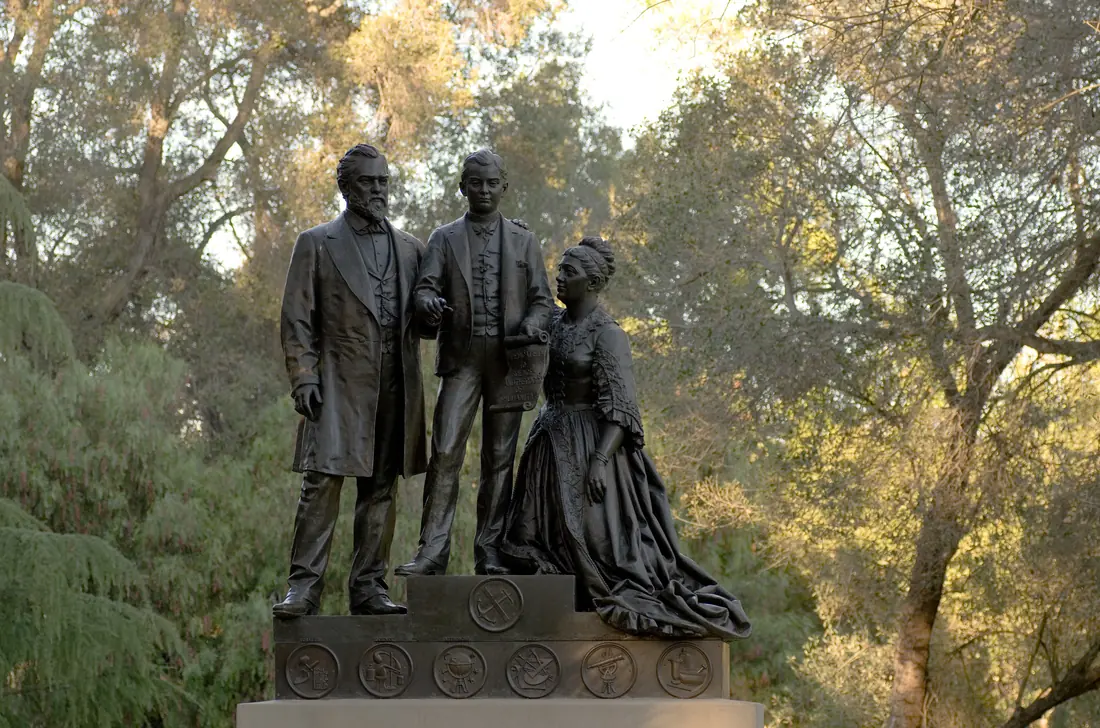
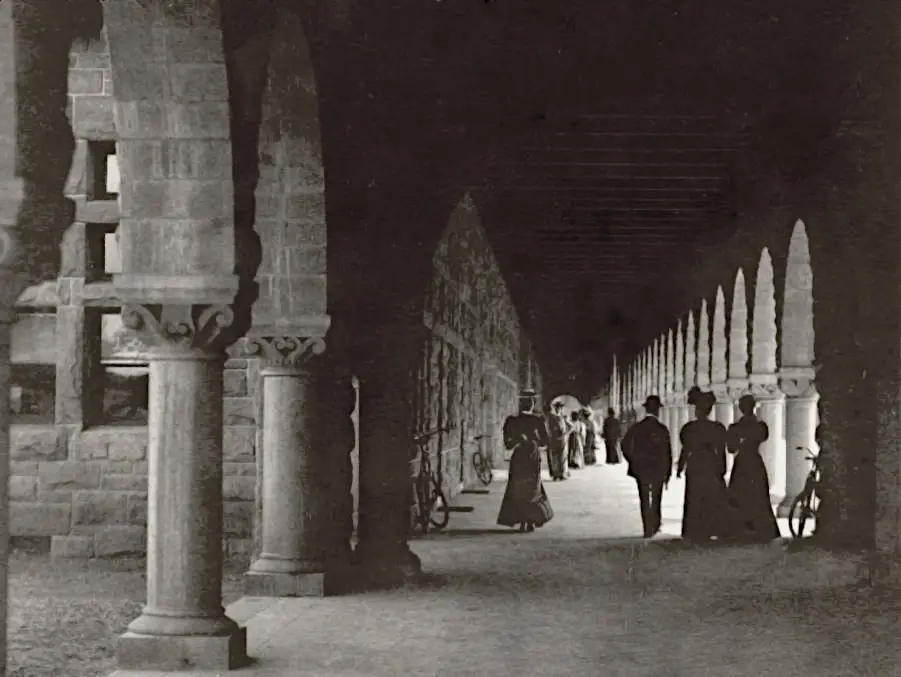
Stanford University opened its doors on October 1, 1891 in the town that would later bear its name. Leland Stanford, a former governor and railroad magnate, and his wife Jane funded the institution with $40 million, a sum intended to honor their only child, Leland Jr., who died of typhoid fever at age 15. Their endowment stipulated that the university admit both men and women without regard to race, a policy that was unusual for a private college in the late nineteenth century.
The university’s initial campus comprised 8,180 acres of farmland, redwood forest and a small town center. Construction began in 1885, and the first classes were held in the new Main Quad, now known as the Inner Quad. The inaugural faculty numbered 30, and the first freshman class enrolled 555 students, half of whom were women. Tuition was set at $15 per term, a fee covered largely by the Stanfords’ trust fund.
The opening created immediate employment for more than 200 staff members and attracted faculty from across the United States. Within five years the university awarded its first degrees, and by 1900 the student body had grown to 1,200. The presence of a research university accelerated the development of Palo Alto and surrounding Santa Clara County, contributing to a population increase of roughly 30 percent between 1890 and 1910.
Stanford’s early emphasis on research and co‑education influenced the broader American higher‑education system. Its model of a large, privately funded research university inspired the creation of similar institutions, notably the University of California system’s expansion. The university’s engineering and agricultural programs, funded by the original endowment, produced innovations such as the first commercial radio station (KZSU) in 1922 and early computer science research that led to the development of the ARPANET node at Stanford in the 1970s.
The long‑term impact of the 1891 opening is evident in the university’s current enrollment of over 17,000 students and its status as a leading research institution. The original commitment to inclusivity, while not fully realized until the civil‑rights era, laid a foundation for later policies that opened the campus to a diverse population. The endowment, now exceeding $30 billion, continues to fund scholarships, faculty positions and research initiatives, directly linking the Stanfords’ 19th‑century philanthropy to contemporary scientific and educational advances.