Battle of Gettysburg Concludes—Union Victory Secured
Gettysburg, Pennsylvania, USA
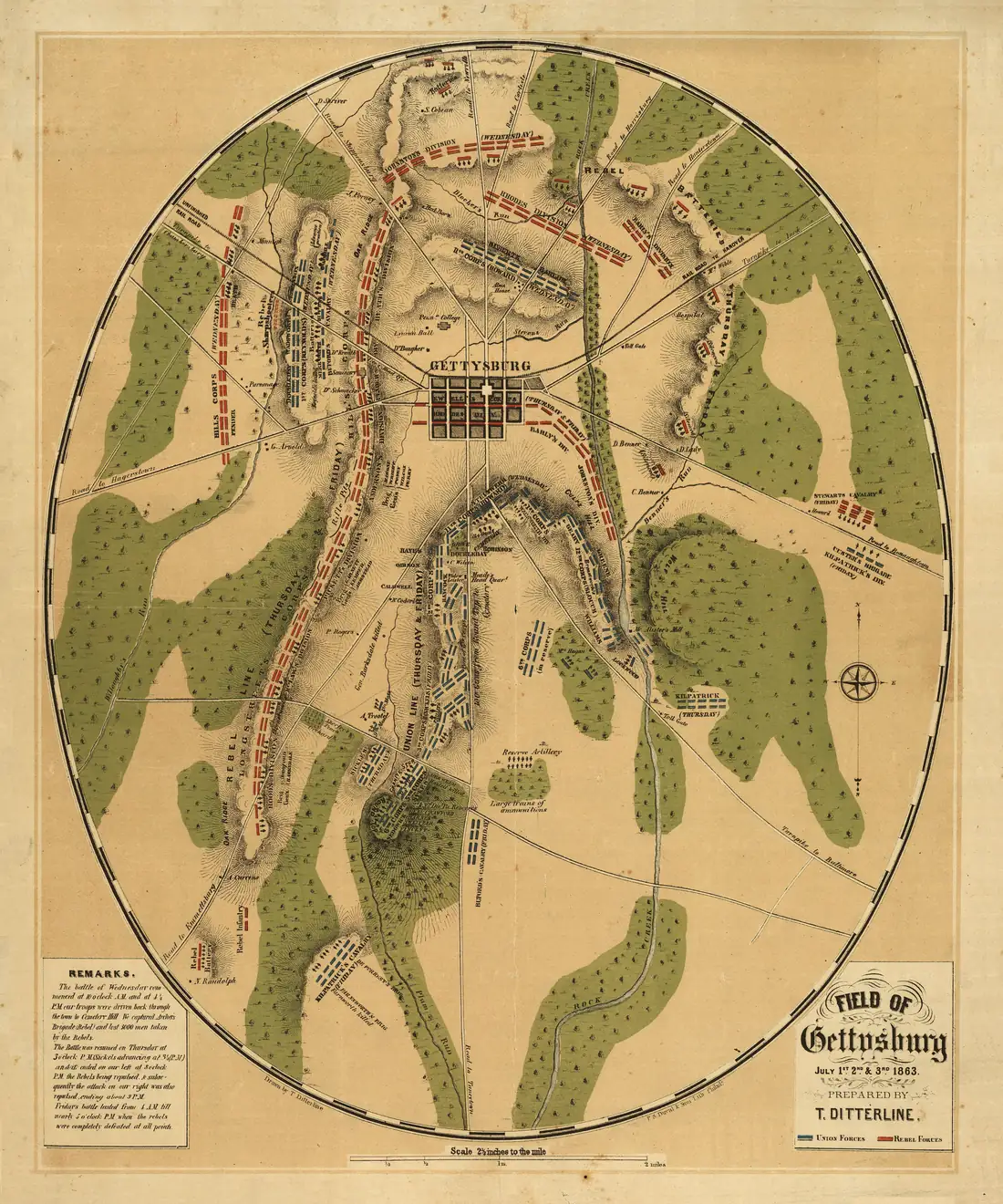
On the morning of July 3, 1863, a twenty-four-year-old Virginian named George Pickett sat on his horse and watched 12,000 men prepare to walk straight into the bloodiest twenty minutes in American military history.
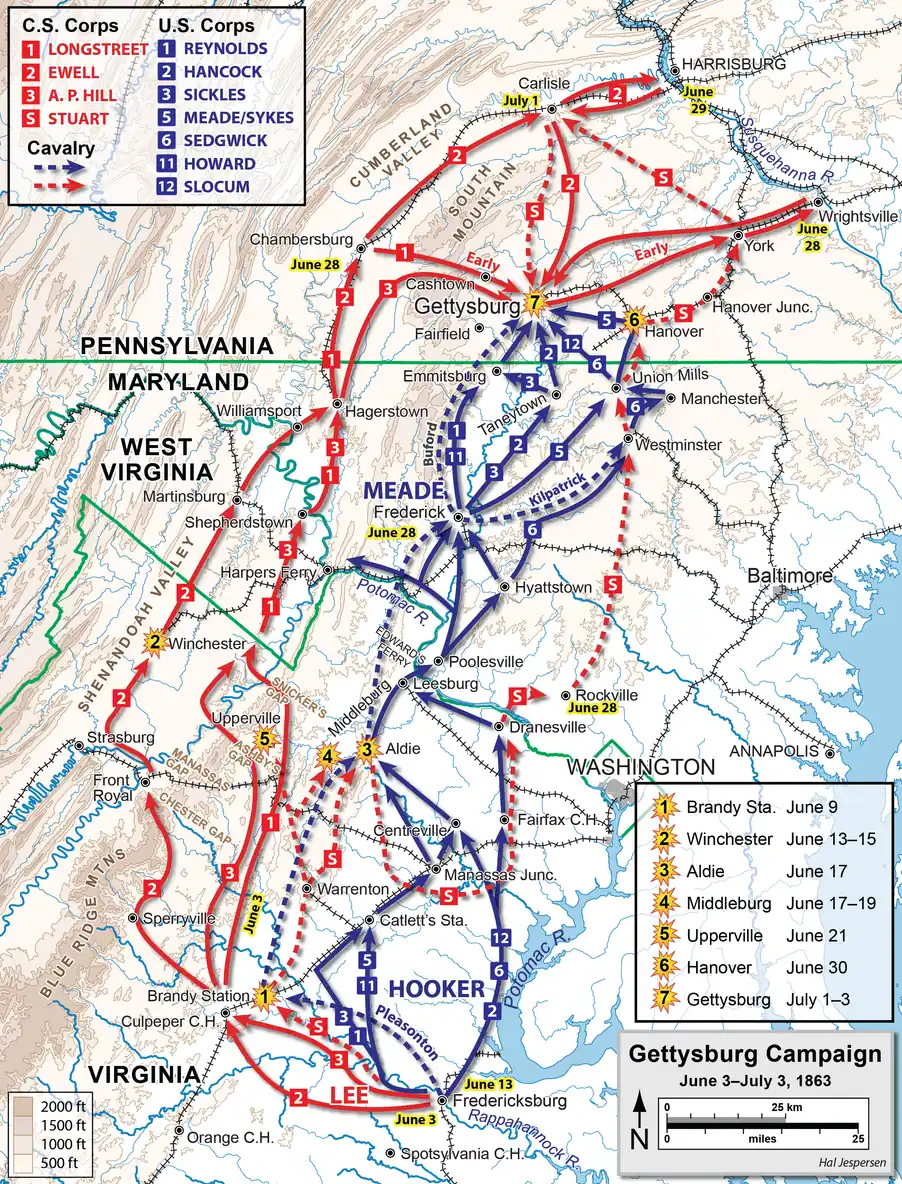
The first two days at Gettysburg had been grinding and indecisive. The Union Army of the Potomac, led by George Meade—a competent man with the temperament of a provoked wasp—had claimed the high ground. The Confederate Army of Northern Virginia, led by Robert E. Lee, was 140 miles from home, running low on ammunition, and running out of options. Lee decided on something that even his most trusted general, James Longstreet, thought suicidal: send nearly a third of his remaining men across open ground in full daylight to crack the Union center.
At one o'clock in the afternoon, about 150 Confederate guns exploded. The earth trembled. Union soldiers flattened themselves into the dirt. The Union artillery answered—75 guns, all aimed at the same stretch of ridgeline. For two hours it was pure mechanical thunder. Men covered their ears though it made no difference. Then, silence.
Pickett turned to Longstreet. "Sir, I have my orders." He rode toward his division.
At 1:20 p.m., they stood. The infantry rose from the ground, straightened their lines, dressed their uniforms. About 12,000 men—though some say 15,000; nobody was counting in what came next. They could see the Union position half a mile across an open field, grass knee-high, stone walls ahead. No cover. No woods. No cavalry to flank. Just 2,400 yards of open Pennsylvania ground between themselves and 6,000 riflemen.
They walked. Contemporary accounts say they moved like troops on parade—flags unfurled, officers on horseback, neat ranks. Union soldiers watched and something strange happened: they felt admiration, even pity. "We couldn't help but admire the gallantry," a Union officer wrote. Then they opened fire.
The first volley dropped men in rows. The ones behind stepped over the bodies and kept walking. The cannons switched to canister—cans of ball bearings exploding outward like shotguns. Men's chests simply ceased to exist. Officers screamed orders that nobody could hear. The survivors walked faster. Some actually reached the wall—a handful even vaulted it. One Confederate soldier planted his regimental flag atop the Union parapet. A Union soldier killed him. By 1:40 p.m., it was finished.
Of the men Pickett sent forward, about 9,000 were killed, captured, or wounded. Fewer than 1,000 made it back unscathed. Lee watched from the ridge, his face unreadable. When the survivors staggered back, he rode among them. "It was all my fault," he told the hollow-eyed men. "It was my fault."
Pickett never forgave him. Decades later, an interviewer asked what he did during the Civil War. Pickett paused and said: "I was there, sir. I was there when the Union committed murder." He meant the canister. He meant his own men. But he never mentioned Gettysburg again—as if naming it aloud might let the ghosts follow him north.