Apollo-Soyuz: The First Space Handshake
Earth orbit
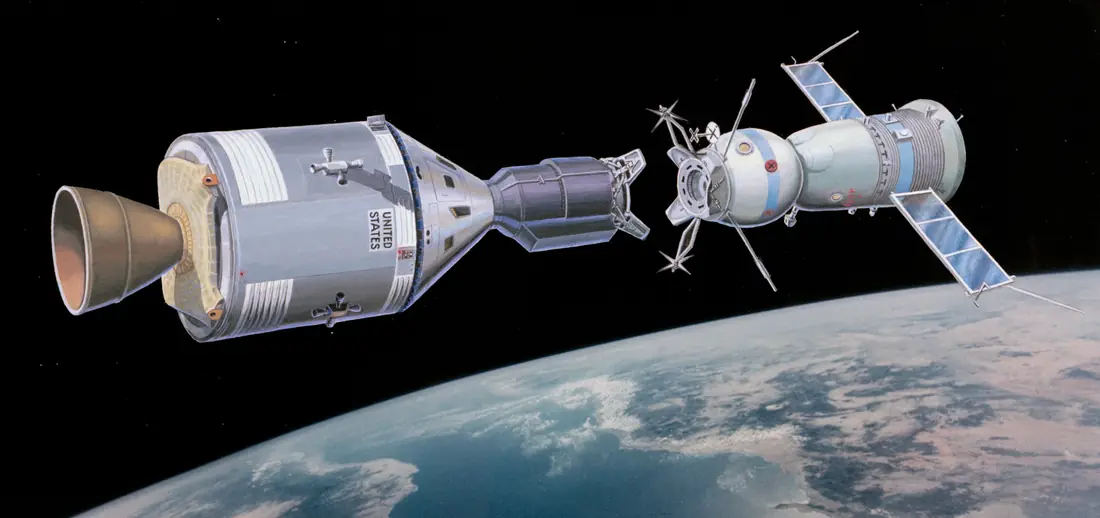
On the morning of July 17, 1975, the Soviet newspaper Pravda ran a headline that would have been unthinkable just five years earlier: "The rendezvous of Soyuz and Apollo." But here's the strange part—it wasn't announcing a mission yet. It was announcing a dream that had somehow become real enough to report on, as if saying it out loud might make the whole thing evaporate.
Two days later, 140 miles above Earth, it didn't evaporate. It docked.
The Cold War had turned space into a theater of competition so absolute that the idea of American and Soviet spacecraft sharing the same orbit felt like asking Nixon and Brezhnev to share a bedroom. For fifteen years, NASA and the Soviet space program had been locked in a race so consuming that it shaped how both superpowers saw themselves. The Americans landed on the moon first—July 1969, a victory so complete it felt permanent. But the Soviets kept flying. They sent unmanned probes deeper. They stayed in orbit longer. They built space stations. The competition was no longer about who got there first; it was about who would own the future.
Then, quietly, the math changed. Both programs had spent themselves half to death. The Apollo program was winding down. The Soviets had their Salyut stations but no clear path forward. And somewhere in the corridors of power—in Moscow and Houston and Washington—someone realized that building separate futures might cost less than building separate empires in space.
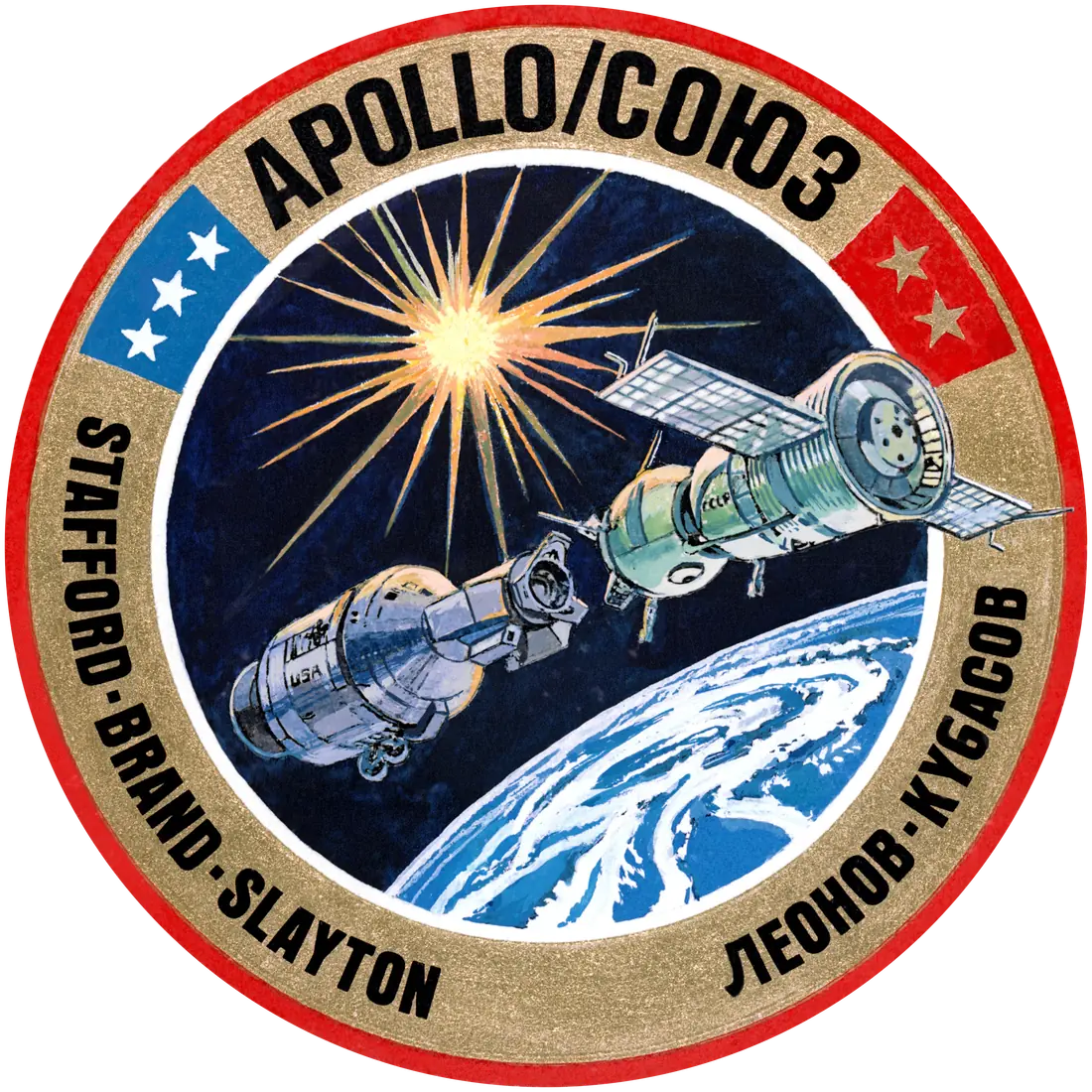
The Apollo-Soyuz Test Project was born from this exhaustion. Two spacecraft, built to incompatible specifications by nations that didn't speak the same language or share the same ideology, would meet in orbit and dock. Not symbolically. Actually. Physically. Engineers from both sides had to solve problems that shouldn't have existed: different atmospheric pressures in the two modules, different docking mechanisms, different communication protocols. They built a docking adapter—a kind of airlock that translated between the two spacecraft the way a translator works between languages. It was 4 feet long and weighed 1,000 pounds, and it represented something neither side had built before: a compromise that worked.
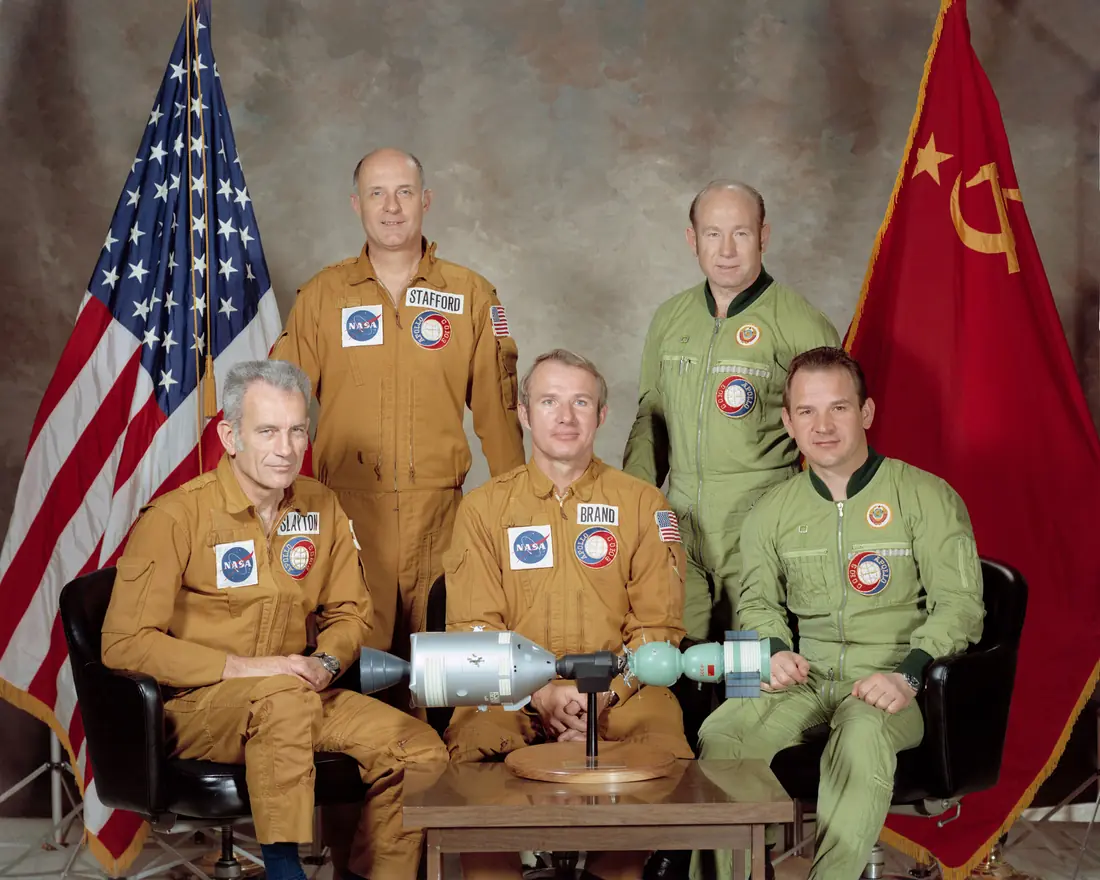
When Thomas Stafford, Vance Brand, and Deke Slayton climbed into Apollo on July 15, and Alexei Leonov and Oleg Makarov climbed into Soyuz the same day, they weren't just launching spacecraft. They were launching the idea that space didn't have to be a battlefield. That two systems built on opposite principles could work together if they had to.
On July 17, they docked. The hatch opened. Stafford and Leonov floated toward each other in microgravity and shook hands while cameras from both nations broadcast the moment to a world that had spent a generation assuming this was impossible.
What's easy to forget now is how completely the script flipped. The day before docking, the space race was still a race. The day after, it wasn't anymore. Not because anyone signed a peace treaty or admitted defeat, but because two spacecraft proved that the competition had been a choice all along.
The Cold War would grind on for another fifteen years. But something had shifted in orbit that July morning. The future wasn't owned by either side. It was shared.