Operation Valkyrie Assassination Attempt
Rastenburg (Wolfs Lair), East Prussia
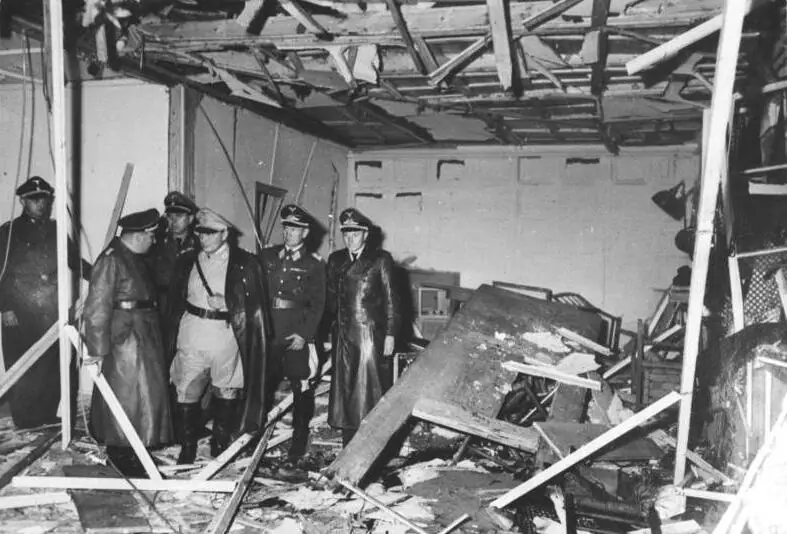
A bomb sits in a leather briefcase under a wooden table, 2 meters from Adolf Hitler's feet. Colonel Claus von Stauffenberg has just excused himself from the Wolf's Lair conference room—a sprawl of concrete bunkers buried in the East Prussian forest—and he is walking toward the door knowing he will never walk back out alive. The time is 12:42 p.m. on July 20, 1944. In 60 seconds, the bomb will detonate.
Stauffenberg was 36 years old and missing an eye, three fingers on his left hand, and two toes on his right foot—injuries collected from five years of fighting on the Eastern Front. He was also, improbably, one of the few German officers with regular access to Hitler's inner sanctum. The briefcase he carried contained 2 pounds of plastic explosive, enough to kill everyone in a room the size of a small house. The blast radius of C-4 extends roughly 30 feet; the conference room was only 20 feet long. The math said Hitler would die.
The math was wrong.
What saved Hitler's life was a piece of furniture. The heavy oak table that dominated the room had a solid wooden leg between the bomb and where Hitler stood. When the charge detonated at 12:42:45, the explosion tore through the bunker with force equivalent to 2,000 pounds of TNT—enough to kill 4 of the 24 officers present. But that table leg, that simple vertical slab of wood, absorbed enough force to shield the Führer from the worst of the blast. Hitler's uniform was torn to shreds. His hair was singed. His eardrums ruptured. But his vital organs remained intact.
Stauffenberg didn't wait to confirm. He'd heard the explosion from outside the building, seen the smoke billow up through the concrete roof, and made the calculation that no one could survive that. He sprinted toward his car, past guards who were still confused about what had happened, and drove toward the airfield 15 kilometers away. He had a Heinkel He 111 waiting, fueled and ready. He believed he was flying to Berlin to lead a military coup that would overthrow the Nazi regime.
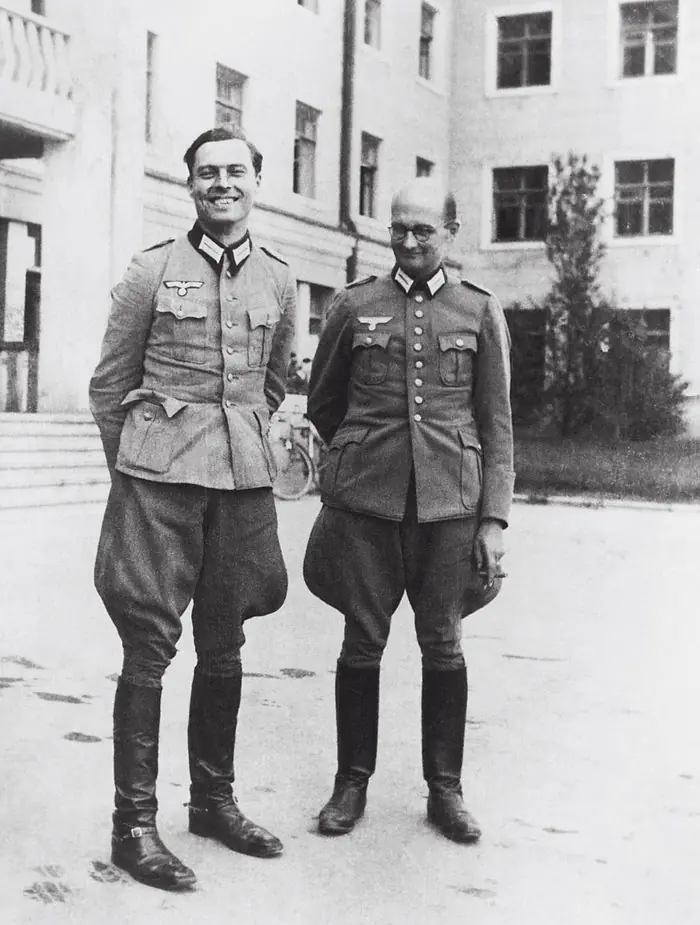
By the time his plane touched down, Hitler was already on the telephone. The Führer had walked out of the bunker under his own power, surrounded by doctors who could do nothing for a man too stubborn to admit he was wounded. Within 3 hours, the conspiracy had collapsed. Stauffenberg was arrested. Within 12 hours, he was dead—shot by firing squad in a Berlin courtyard at 12:08 a.m. on July 21.
The Reich he tried to destroy would last another 9 months.
What haunts the July 20 plot isn't that it failed—conspiracies often do. It's that it failed by inches. The thickness of one oak table leg separated the world that was from the world that might have been. Stauffenberg had spent weeks assembling a network of generals and diplomats, men willing to stake their lives on the belief that killing Hitler could stop the war. They were right about one thing: Hitler dead would have changed everything. They were wrong about everything else. And they died knowing it.